Tag: referendum

  • ‘Everyone is invited to run, we hope it will pave the way for the future’ – Outgoing president of TU Dublin Students’ Union welcomes nominations for March election

    ‘Everyone is invited to run, we hope it will pave the way for the future’ – Outgoing president of TU Dublin Students’ Union welcomes nominations for March election


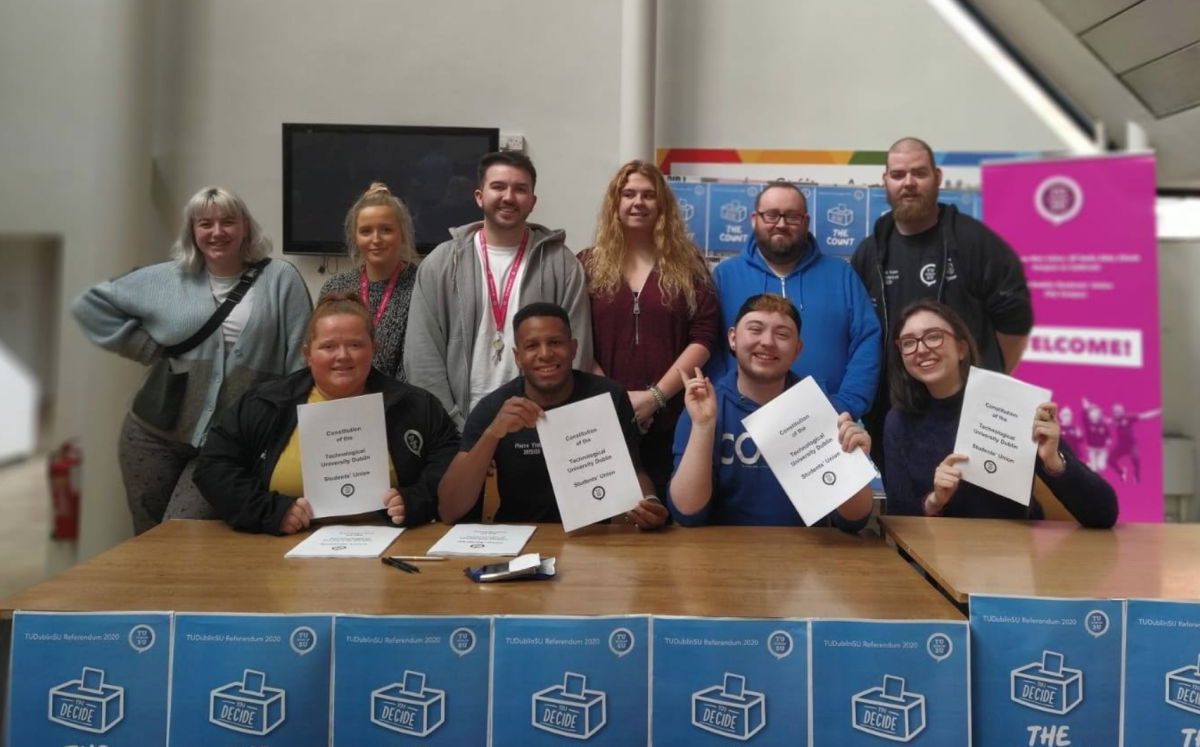
    TU Dublin SU at the count on February 21, 2020, at Grangegorman after the Referendum to amend the Constitution passed. Photo: Kim O’Leary

    Students attending TU Dublin are this March being invited to nominate themselves for full-time or part-time positions with the university’s Students’ Union for the 2020-2021 academic year. TheCity.ie’s Kim O’Leary sits down with outgoing TU Dublin Student Union president Pierre Yimbog to find out what the upcoming election means for the student body and the university itself.

    The last twelve months has seen a time of great change for our university, and on 1 January 2019, TU Dublin was formed by the amalgamation of three existing institutes of technology on the Dublin area- Dublin Institute of Technology (DIT), Institute of Technology Blanchardstown, and Institute of Technology Tallaght (ITT).

    Meanwhile, the Students’ Union was set up a mere eight months ago on 1 July following a referendum in February 2019, which saw the three existing unions merge into one single union.

    The Students’ Union is a representative body democratically elected by students each year, and its responsibilities are to provide representation and support for all students at both academic and non-academic level. 

    There are 23 elected officers in the Students’ Union who are here to represent students within the University and nationally. The officers are directly elected by students every year in the Annual Elections normally held in March. 

    There is the full-time officers, who are paid and full time elected representatives who normally would have graduated from their course upon taking on the role. The part-time officers are still full time students themselves and some have specific roles and campuses to represent. 

    After three years working for the student union at TU Dublin, its outgoing president Pierre Yimbog has seen the successful passing of two Referendums. 


    Pierre Yimbog at the count for the Referendum on 21 February, 2020.
    Photo: Kim O’Leary

    The first referendum last year saw the three existing student unions vote to merge into one union with an overwhelming YES vote of 95% and the second referendum in February saw a proposed amendment to the Student Unions’ Constitution.. Ultimately, the second referendum to amend the Constitution was officially passed on Friday, 21 February and the new Constitution is now in effect.

    In the aftermath of the successful Referendum and prior to the March Elections, Pierre said that the last year has been particularly busy for the Students’ Union.

    “It’s been a good year for us at the TU Dublin Students’ Union, it’s not been without its challenges like any role. Last year saw the three existing unions merge into one and now we are pleased that the Referendum on the amendment to the constitution has now passed so it’s been good overall.

    “The Referendum in February saw a unanimous YES vote from the students who voted with a great turn-out, there was great support and everyone went out campaigning. Now we’re hoping the March elections will ensure everyone has a say in how the Students’ Union operates,” said Pierre.

    A fully-united Students’ Union has been confirmed by a vote. Photo: Twitter

    Explainer: What was the 2020 Referendum?

    On February 19 and 20, the student body went to the polls at the various campuses across Dublin to vote whether or not to approve the amendments to the TU Dublin Students’ Union Constitution. The newly amended Constitution included a number of changes including;

    • Forming a legal entity that will allow funding for the Students’ Union to provide support staff to all officers and students, make services available across all the campuses and to ensure parity of service for all students.
    • The other major change is to reflect the move of 10,000 students to Grangegorman from Cathal Brugha Street, Kevin Street and Rathmines in September 2020. The four new College Officer positions proposed are Central Quad, East Quad, Aungier Street (including BIMM) and Bolton Street.
    • The other amendments were to refine the governance, transparency and accountability in the Students’ Union.

    How did we vote?

    3,501 votes were cast, and the result was a resounding YES for a new Constitution.

    On Friday 21 February, the ballot boxes were opened and counted at Bolton St. The total number of votes cast was 3,501 which exceeded the total required votes of 2,918. It is understood that the total valid poll was 3,489 due to 12 spoilt votes. Ultimately, it was a majority win for YES voters with a total of 3,352 votes while NO votes totalled just 137, making it a landslide victory for those in favour of the new Constitution. 

    As decreed in the new Constitution, the coming year will see the Students’ Union, already unified in principal and intent, create one legal entity as a CLG as TU Dublin prepares for the opening of the new Grangegorman campus.  Approximately 10,000 students will be moving from Cathal Brugha Street, Kevin Street and Rathmines to the new Grangegorman campus from September 2020.

    Pierre is certain that the new Constitution can only be a positive for the Students’ Union and student body.

    “This will ensure that we can work towards equal support services for all elected officers and most importantly an equal service for all students, no matter what campus you are based on,” said Pierre.

    However, Pierre confirmed that he cannot run again in the upcoming March elections as the term for a full-time officer on the Student Union is just one year, and the Constitution states that three years is the maximum in any full-time role. Pierre has already been President and Vice President for Education in DIT Students’ Union and those years are counted so his time is up.

    “The nominations for the elections opened on 27 February and will remain open until March 10, all of the details for those seeking to run for part-time or full-time Officer positions are on the Student Union website. Everyone can run in the elections and we hope it will pave the way for the future of the Students’ Union,” explained Pierre.

    How can candidates apply and what positions are open?

    The following are the positions any registered student can run for on the City Campus: President (Overall, Full-time paid),Postgraduate Officer (Overall, Part-time paid), Deputy President for City Campus (Full-time paid), Vice President for Education (Full-time paid), Vice President for Equality and Citizenship (Full-time paid), College Officer for Aungier St & Bimm (Part-time paid), College Officer for Bolton St (Part-time paid) and College Officer for Grangegorman East (Part-time paid).

    The outgoing Students’ Union Committee. Photo: Instagram

    To run in the elections, candidates must submit and fill out a nomination form, write a manifesto and include in the form, and get 100 signatures (full-time positions) or 50 signatures (part-time positions) from students and present into any SU office. Candidates must also provide a €20 refundable deposit to any SU office before 12pm on Tuesday 10 March.

    In addition, it should be noted that candidates running for election for Grangegorman Central College Officer must attend hustings in Kevin Street and Cathal Brugha Street, while candidates running for election for Grangegorman East College Officer must attend hustings in Grangegorman, Rathmines and Aungier Street.

    According to Pierre, the next important step for the Students’ Union in the wake of the successful Referendum is to negotiate the union’s funding with the University.

    “With such a strong turnout in this Referendum, the University should be in no doubt that students desire a strong and well-funded Union that truly works for them. Also, having a single union makes things easier to arrange funding but next year whoever is elected to the union will have to ensure that is maintained,”explained Pierre.

    So what is next for Pierre after his term ends as president of the Student’s Union? Pierre explained that he all ready has a degree in Law and is considering his options moving forward.

    “My initial plan is to maybe travel this Summer, to have a bit of a rest and see from there if I want to go out into the workforce or pursue further education.”

    Nominations for officer positions on the TU Dublin Students’ Union are now open until 12pm on Tuesday, 10 March. The Annual Elections are happening on 31 March and 1 April 2020.

    Students will find more details on the specifics of the different positions, how to run and how to conduct your campaign on tudublinsu.ie
  • Kenny announces referendum to allow Irish citizens abroad to vote in presidential elections

    Kenny announces referendum to allow Irish citizens abroad to vote in presidential elections


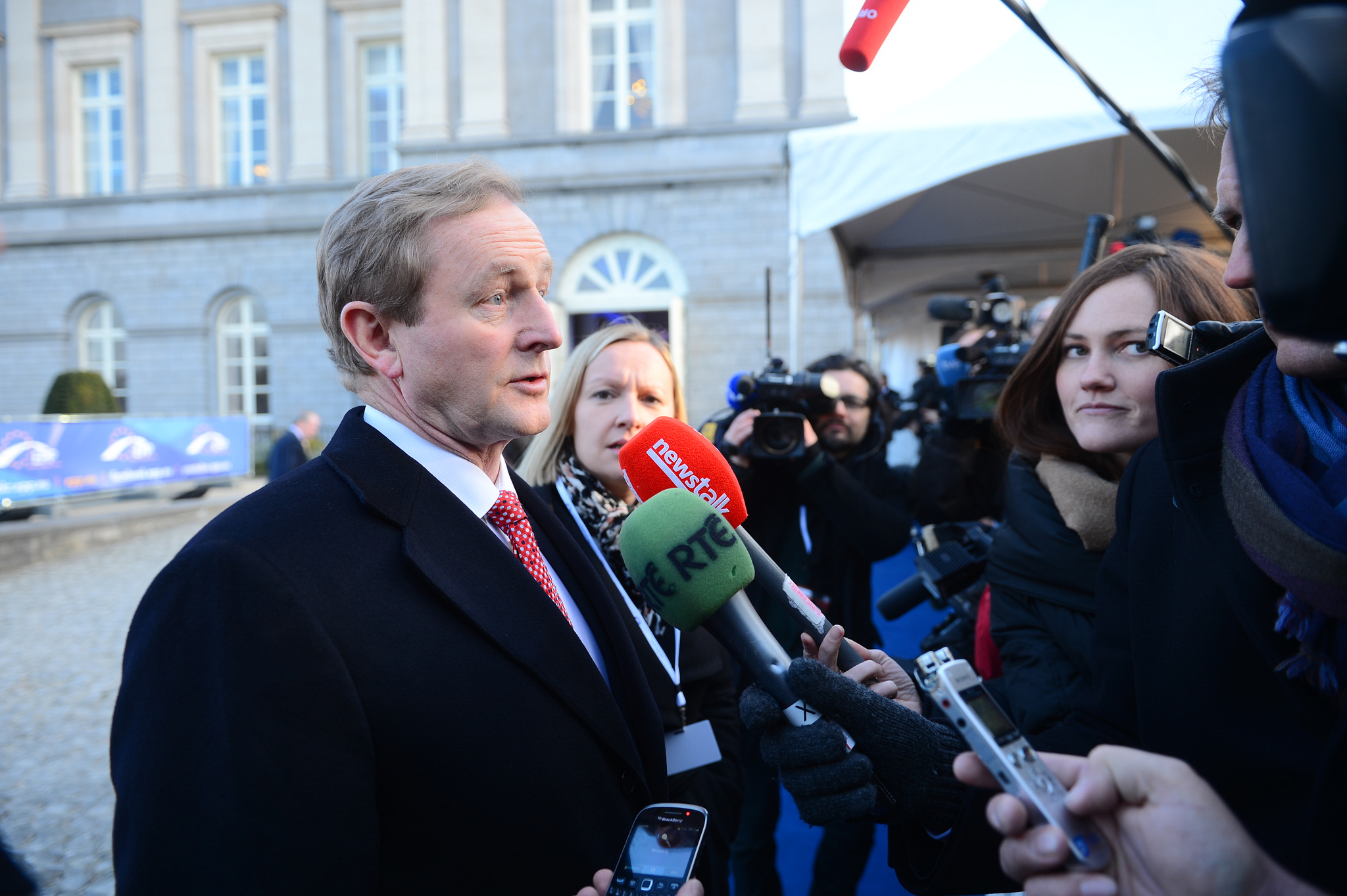
    Aoife Loughnane looks at the Taoiseach’s newly unveiled referendum plans and explores what this will mean for the Irish diaspora.

    (more…)

  • What will our Court of Appeal do?

    What will our Court of Appeal do?

    On October 4th we as a nation passed the 33rd Amendment of the Constitution in the Court of Appeal referendum.

    The yes vote consented to the establishment of a new fifth layer to Ireland’s judicial system, a new Court of Appeal which will operate as Ireland’s second highest level of judiciary in between the already existing High and Supreme Courts.

    However, a lack of informed discussion on the courts referendum, largely due to the greater importance apportioned to the Seanad referendum by the media, means that a lot of people are now wondering what effect it will actually have on our courts system.

    Function

    The Court of Appeal will hear appeals from the High Court, thereby lessening the burden of the Supreme Court which currently has a four-year backlog of appeals to be heard [that includes over 500 appeals awaiting resolution].

    The new court will be able to refer cases to the Supreme Court, which will only preside over disputes that “involve a matter of general public importance”, according to Minister for Justice Alan Shatter.

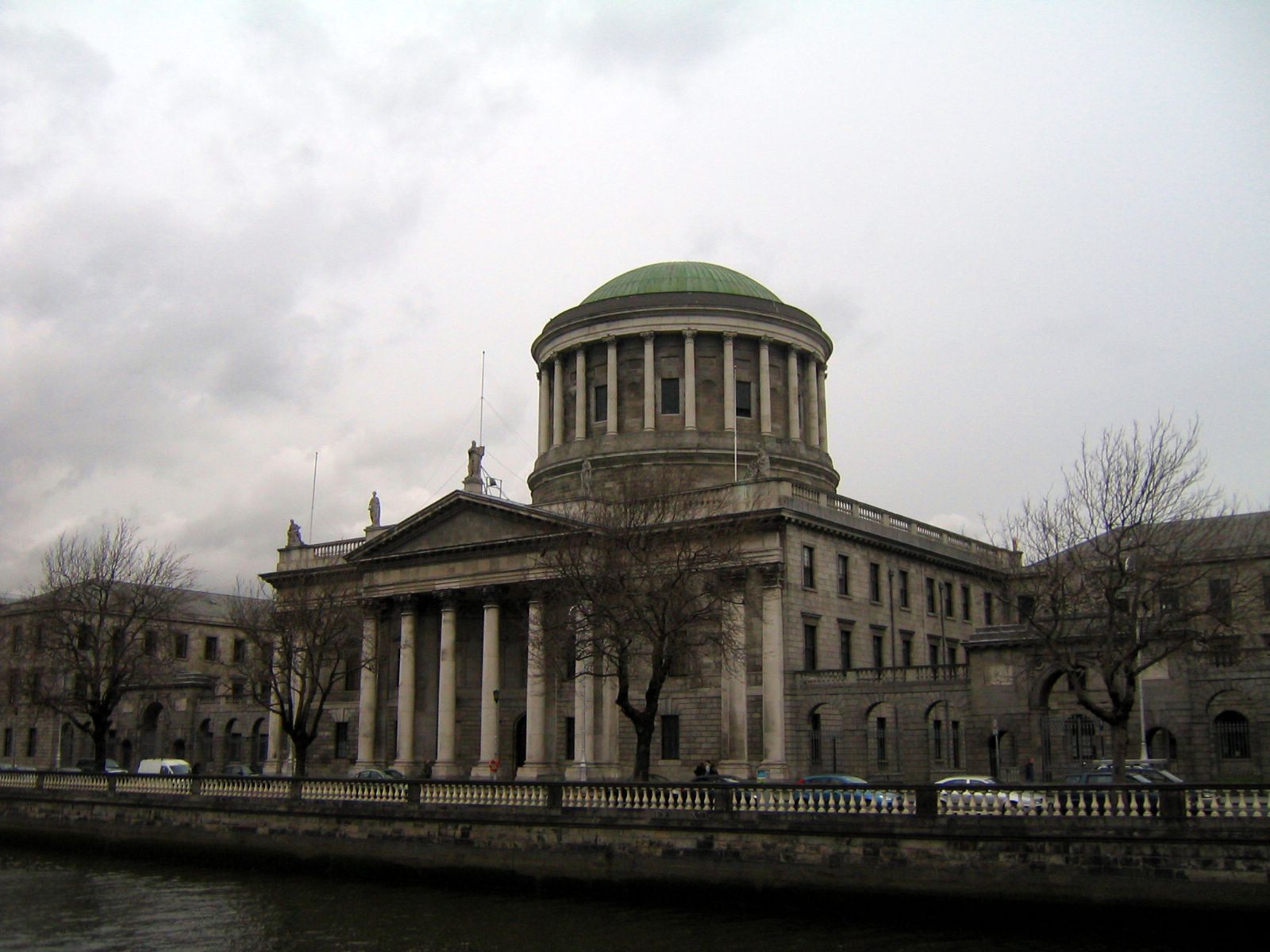
    The Four Courts in Dublin, where the country's High and Supreme Courts reside. Credit Richard Watts on Flickr
    The Four Courts in Dublin, where the country’s High and Supreme Courts reside. Credit: Richard Watts on Flickr

    The Court of Appeal will also lead to the scrapping of the Court of Criminal Appeal, which formerly comprised of a mix of High and Supreme Court judges, and was frequently derided for its inactivity.

    How much will it cost, when will it start and how many new judges will there be?

    According to the Government, the Court of Appeal will cost between €2.5-€3m per year to operate with the main expenses accruing from judges fees, support staff and overhead costs.

    All going well it should be up and running by Autumn 2014, and will necessitate the appointment of around 10 new judges (dependent on how many will be needed to get through the Supreme Court’s backlog at the time of establishment).

    How comprehensively was it passed?

    As opposed to the Seanad referendum which was defeated, all 43 electoral constituencies voted in favour of the formation of the Court of Appeal, and the yes vote accounted for 65% of turnout.

    Former solicitor and current Justice Minister Alan Shatter has endured a tempestuous relationship with lawmakers since coming to office. Credit European External Action Service on Flickr
    Former solicitor and current Justice Minister Alan Shatter has endured a tempestuous relationship with lawmakers since coming to office. Credit: European External Action Service on Flickr

    Again, much criticism was aimed at political parties and the media for prioritising one referendum over another and glossing over many of the substantive issues, however the general political consensus on the yes side effectively put paid to any meaningful public discourse on the issue.

    Any criticisms?

    The main point of contention around the new court’s function is the amount of judges Ireland will have in the upper echelons of the judicial system.

    Added to the 36 High and 10 Supreme Court judges, the 10 new appointees to the Court of Appeal will mean that we’ll have around 56 judges. That’s a third of the amount of judges that England has for 1/15th the size of population, and some sceptics have labelled this excessive.

    As such, those opposed to the constitutional change have lobbied to increase the workload of judges currently in operation, and have suggested reducing their nine-week holiday period in order to work through the massive backlog more effectively.

    (Featured image credit Richard Watts on Flickr)


  • Dublin reacts to the Children’s Rights Referendum and campaign posters

    Dublin reacts to the Children’s Rights Referendum and campaign posters

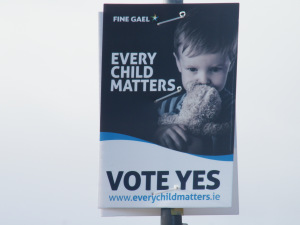
    Labour’s campaign poster

    By Sarah Reilly

    Dublin people have expressed mixed views about whether or not Children’s Rights Referendum campaign posters have influenced their voting decisions. Some voters described the poster-campaigns as “disinterested attempts at persuasion” and confirmed that the posters have not influenced their decision in any way. Others described the posters as ‘cheap’, ‘exploitative’ marketing techniques being employed by parties and advocacy groups to sell yes-votes. Either way, it seems the posters have not achieved what they set out to achieve.

    John Meaghan (65) plans on voting yes on Saturday. When asked what he thinks of the  referendum posters, he says, “I think the commercial use of children in the case of these posters is manipulative but I am going to vote yes, so they haven’t really had any impact on me.”

    John Meaghan (60) from Dublin

    Mr. Meaghan was not the only person to hold a sceptical view in relation to the posters. Many voters interviewed for this article stated that the political employment of the children featured in the campaign-posters is questionable, due to the very nature of the referendum.

    “I don’t agree with children’s faces being put up on referendum posters. These kids are being completely disrespected and are being used for marketing purposes. The use of these pictures is ironic due to the nature of the referendum, and I for one am voting no”, says Kay Ward (50).

    Kay Ward (50) from Dublin

    Anne Murray (77) said she hasn’t been influenced at all by the posters. “They’re fine and the children are little dotes but I will be voting no. The state will not protect children.”

    Another voter unmoved by the posters is Deborah Waters (44). “I haven’t been influenced by the posters but for those unfamiliar with the referendum, I suppose images of children do clarify that the referendum is about kids. I am fostering a child so I am voting yes.”

    Bobby Borwick (50) said, “I haven’t taken any heed to the images on posters and I can see both sides of the debate. I was planning to vote no, but with organisations like Barnardos on the yes-side, I have changed my mind and I am now voting yes.”

    Bobby Borwick (50) from Dublin

    Brigid Byrne (58) is planning to vote no and said she has carried out a lot of research over the last number of weeks. She said the no-side do not need any fancy posters to back up their campaign because their arguments are obvious and rational. “The images of children used in those yes-posters illustrate how the government are already taking advantage of the very beings they are promising to protect.  The use of these images is total exploitation of children”, she said.

    Another voter on no-side is Keith Nolan (33). “I have seen the yes-posters but they haven’t influenced me in any way and I will be voting no. The use of the children’s images in posters is cunning and it’s very obvious that the yes-campaigners are trying to buy votes by melting people’s hearts. This cunning move is in itself taking advantage of the children photographed, by undermining what’s in their best interest.”

    Keith Nolan (33) from Dublin

    Meanwhile, Sinn Féin North West Councillor Anthony Connaghan said that while he is supporting his party in their yes-campaign, many of the yes-campaign posters are ‘exploitative’.

    Sinn Féin Councillor Anthony Connaghan

    “Sinn Féin are calling for a yes-vote. Caoimhghín Ó Caoláin and a few other Sinn Féin representatives in Leinster House have done work on this over the last while. They are happy that this is a step forward for the rights of children in the country. Sinn Féin lead from the proclamation, which does say that we should cherish all the children of the nation equally. This hasn’t happened over the last number of years. State care has been appalling and Sinn Féin believe that this referendum is a step forward in tackling that care. I do have faith and trust in all members of the party, that they are working for the benefit of the country. Hopefully backing this referendum is the right decision.”

    On the topic of campaign-posters, Mr. Connaghan said, “I think most of the yes-posters are guilting people into voting yes by using images of sad faces.  It’s as if they are telling you that a vote against this referendum is a vote against children, which is very unfair. I also think these posters are exploiting kids.”

    Advocacy group campaign-poster

    Sinn Féin produced a campaign-poster which features the face of a two year old smiling child. Mr. Connaghan defended the poster saying, “Our campaign-poster is not as bad as the real guilt-inducing ones”.

    COUNCILLOR CONNAGHAN ON NO-CAMPAIGNERS

    In relation to the no-campaigners, Mr. Connaghan said:

    “I’m not 100 percent convinced that the power is not already there for state intervention where appropriate. Party campaigners for the yes-side have said that the passing of this referendum would stop cases such as the Roscommon case ever happening again. The truth is that the social services had the power to intervene in that case but they did not act on it.”

    He continued, “It has been said by no-debaters that this referendum is purely down to adoption, but again I do have to say that Sinn Féin are trustworthy and we would not be encouraging a yes-vote if we didn’t feel that it was the right thing to do.”

    UNDERLYING GOVERNMENT MOTIVES

    Mr. Connaghan critiqued underlying government motives in encouraging the passing of the referendum.

    “It’s like they are trying to say ‘look at us, look what we have done. We have taken action on something that has taken other governments 20 years to discuss.’ This is ironic considering they have been in government themselves within those 20 years. This behavior by the government is also taking citizen’s eyes off upcoming budget austerity.”

    RECENT DEBATES

    In relation recent televised referendum debates, Mr. Connaghan said, “I feel that no- siders, John Waters and Kathy Sinnott are winning debates. It’s as if the yes-side are reading from notes and I don’t think Francis Fitzgerald is very effective at all.”

    The councillor also commented on Minister Leo Varadkar’s public criticism of  the no-side. “The likes of Leo Varadkar really makes me laugh. He has addressed the no-side as scare-mongrels, yet Fine Gael’s use of scare-tactics before a budget is undeniable. They throw out a load of kites, in which they release budgetary details to suit their own agenda. It’s like the child-benefit. They’ll probably say they are cutting that from €140 to €100. In the end it will probably be cut to €120 and people will feel grateful that they weren’t cut down to €100. People need to understand those tactics. “