Tag: Republic of Ireland

  • Ireland U21’s European Dream Ends, but Strong Foundations Are Set for the Future 

    Ireland U21’s European Dream Ends, but Strong Foundations Are Set for the Future 

    By Sandra Dudkiewicz

    Ireland’s hopes of qualifying for the UEFA U21 European Championship were dashed after a 1-1 draw against Italy in Trieste.  

    Ireland previously drew 1-1 with Norway on October 11, with Sean Roughan scoring for Ireland, only to see their lead vanish with a last-minute equaliser by Andreas Schjelderup. This result added more pressure as the Irish needed a strong finish against Italy.   

    Ireland’s Andrew Moran scored the crucial equaliser in the 66th minute, after Italy had taken an early lead through Cesare Casadei. Despite the draw, Italy booked their place in the 2025 European Championship that will take place in Slovakia. 

    Italy’s missed penalty in the first half by Gnonto, along with other squandered opportunities, gave Ireland hope, but they were unable to find that crucial second goal. 

    Ireland’s U21 team may have missed out on qualification for the 2025 UEFA European Championship, but their journey was filled with standout performances. 

    The boys in green opened the qualifiers with a 3-0 victory over San Marino in September 2023, with Sean Roughan and Sinclair Armstrong contributing key goals and a 3-2 win over Turkey in June. 

    Scoreboard: RTE

    The Republic of Ireland U21 team concluded their UEFA European Championship qualifying campaign in third place, level with Norway on 19 points, but missing out on the playoffs due to goal difference. 

    They recorded 5 wins, 4 draws, and 1 loss across 10 matches, scoring 24 goals and conceding 12, for a goal difference of +12. 

    Bristol City player and Republic of Ireland international, Sinclair Armstrong said: “The unity and mentality within the group was incredibly strong, largely due to the belief that Jim Crawford instilled in us which is that we could win every game.” 

    “We went toe-to-toe with big nations, and we didn’t shy away from any challenge, from any fight and we gave it 100 percent. For the experience to end so early is very disappointing but it has been unbelievable, we got to travel to so many different countries and experience different cultures in the process and it’s something I will never forget,” he continued. 

    Sinclair Armstrong (9)  Photo Via Instagram

    Armstrong received his first call-up to the senior Republic of Ireland squad on September 8, 2023, for their UEFA Euro 2024 qualifier against the Netherlands and made his senior debut on September 10, 2023. 

    While the Republic of Ireland team fell short of qualification for the UEFA U21 European Championship, their solid third-place finish and impressive performances throughout the qualifiers sets a promising foundation for the future. 
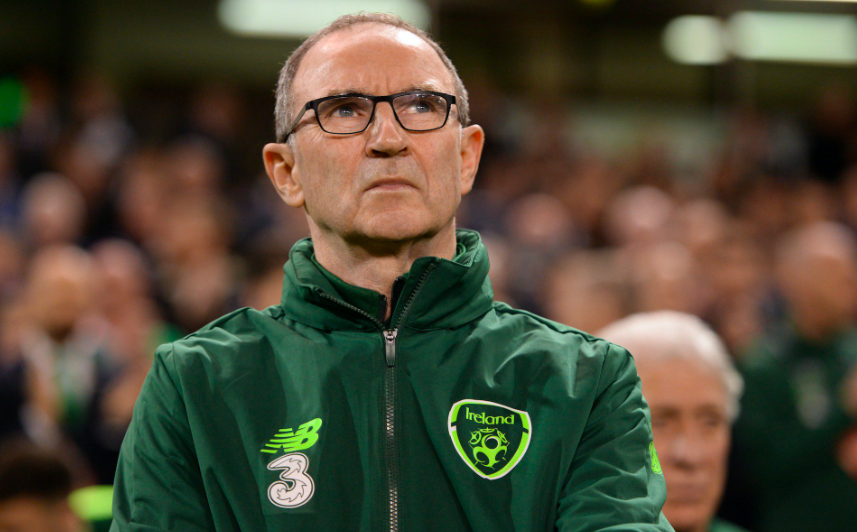
  • Irish soccer fans give a unanimous verdict on Martin O’Neill

    Irish soccer fans give a unanimous verdict on Martin O’Neill

    TheCity.ie spoke to Irish soccer fans before the game with Northern Ireland at the Aviva Stadium on November 15th.

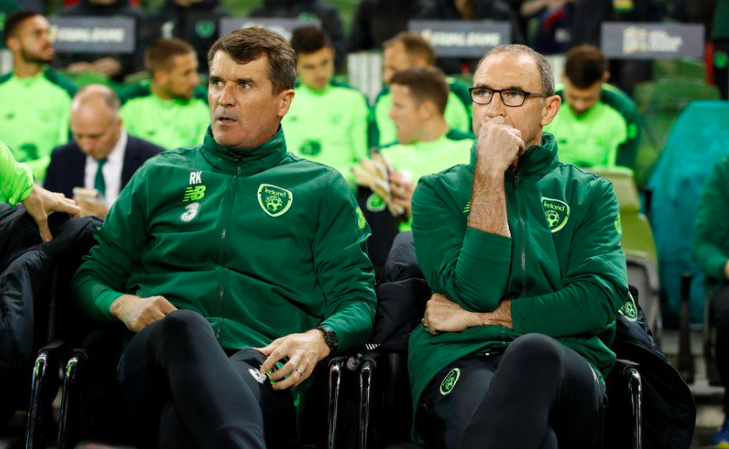
    The verdict over whether Martin O’Neill was still the man to lead Ireland was unanimous among supporters. Many have since got their wish as the Football Association of Ireland parted ways with both Martin O’Neill and Roy Keane.

    The pair endured a turbulent end to their stints in the Irish setup with a lack of quality on the pitch and an abundance of controversy off it.

    The duo had enjoyed some of Irish soccer’s fondest memories including a victory against Italy in reaching the last 16 of Euro 2016 and win over the World Cup holders Germany at the Aviva stadium.

    A crucial victory away to Wales ensured a World Cup qualification playoff in 2017 before succumbing to Denmark in an embarrassing 5-1 home defeat.

    The Euro 2020 draw takes place in Dublin on December 2nd and Mick McCarthy looks to be the man tasked with taking Ireland to the tournament.


  • Was Martin O’Neill to blame for the poor attendances?

    Was Martin O’Neill to blame for the poor attendances?

    Apathy appears to be the main word to describe the attitude of Irish football fans towards the national team these days.

    This may have played a role in the decision taken by the FAI last Wednesday to part company with Martin O’Neill as Ireland manager.

    It had been a dreadful year for Martin O’Neill’s men, who ended 2018 without scoring a single goal in their last four games. The final goal scored by the Boys in Green in 2018 was a consolation effort by Shaun Williams in a 4-1 drubbing by Wales in Cardiff back in September (less than a year after Ireland had beaten the Welsh on the same ground to clinch a World Cup play-off).

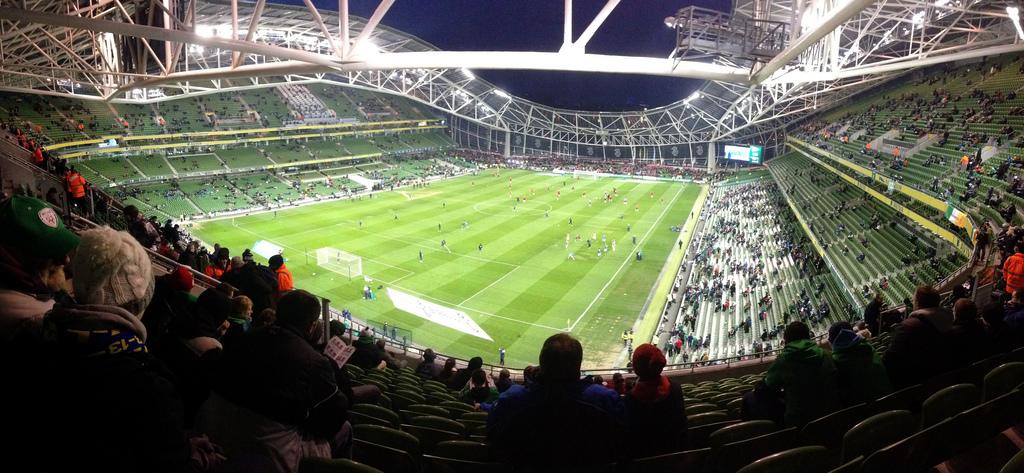
    Ireland played out two goalless draws this international break, most recently away to Denmark last Monday night. However, it was the goalless draw against Northern Ireland last Thursday night – played out in front of a sparsely packed Aviva Stadium – which displayed the apparent apathy of the Irish fans for the national team for all to see.

    There was much talk about the empty seats on social media, with many blaming Martin O’Neill’s style of play for people not wanting to go to the game. Interestingly though, the last time Ireland played Northern Ireland in a friendly match at the Aviva Stadium back in 2011, there were only 15,092 people in attendance, compared to 31,221 fans at the Aviva last Thursday night. So were the empty seats at friendly internationals a product of Irish fans tiring of Martin O’Neill, or was this an ongoing issue spanning many years?


    Ireland did not play a single friendly international in front of a sell-out crowd at the Aviva during Martin O’Neill’s five year reign. The closest friendly to being a sell-out was the 0-0 draw against England back in June 2015 which was attended by 43,486 people, followed by 2016’s 1-1 draw with the Netherlands ahead of Euro 2016 which was watched by 42,438 spectators.

    The fact that no friendly game has sold out at the Aviva Stadium since Ireland’s very first game at the ground back in 2010 against Argentina shows that problems with empty seats at friendly games have deeper roots. Although, it is fair to say that distaste for O’Neil’s regime could still be seen in attendance figures. Those friendly games mentioned earlier against England and the Netherlands had higher attendances than Ireland’s two home UEFA Nations’ League games against Denmark and Wales last month. The 0-0 draw against Denmark on 13th October was seen by 41,220, while the 0-1 defeat to Wales was attended by 38,321 fans. Ireland played both Denmark and Wales at the Aviva Stadium in 2017 also, with attendance falling by 10,000 in the respective games a year later.


    Friendly games have mostly been treated with disregard by Irish fans ever since the Aviva Stadium opened back in 2010, even when Giovanni Trappatoni was in charge of Ireland. They are arguably not the best indication of the fans’ displeasure with the manager. The sharp drop in attendances for both the Danish and Welsh games in the space of a year would be more of an indication given they were competitive games.

    The next time Ireland will be in action will be in March when UEFA 2020 qualification begins. The draw for the qualification groups will take place in Dublin on December 2nd, where Ireland will find out who they will have to get past in order to qualify for their third consecutive European Championships.

    By the time Ireland line out again in March, there will be a new man in charge with former Irish boss Mick McCarthy taking the reigns. A big crowd will of course be expected for the new manager’s first game in charge, especially given it will be a competitive match. However, once Ireland take the field for their next friendly game at the Aviva, do not expect there to be a sell-out crowd.

  • Ireland drawn in League B of UEFA Nations League

    Ireland drawn in League B of UEFA Nations League

    Following a strong finish to their World Cup qualifying campaign, Ireland have been drawn alongside Wales and Northern Ireland in League B of the newly-created UEFA Nations League.

    The Nations League splits UEFA’s 55 member nations into four separate leagues, each based on national coefficient. This means that the European big-hitters such as France and Germany will occupy League A, with Ireland in the second-tier League B, League C contains teams such as Scotland and Serbia, and League D being reserved for Europe’s traditional whipping boys such as San Marino and Andorra.

    There are 12 teams in each of League A and B, with League C having 15 teams and League D having 16 teams.

    In Ireland’s case, League B will be split into four groups of three, where teams play each other home and away. Finishing top of a group leads to promotion to League A, whereas finishing bottom leads to relegation to League C.

    It is possible that Ireland could be drawn alongside Wales and Northern Ireland in a group when the draw is made in January 2018.  

    The Nations League is set to replace the majority of friendly matches, offering a competitive competition which acts as a backdoor route into EURO 2020 for one team per league. The four best ranked teams from each league who have failed to already qualify for Euro 2020 will face a single legged semi final and final for one last chance to qualify for the tournament.

    This new backdoor entry replaces the route Ireland took to EURO 2016, where they finished third in their group and advanced to the finals via playoff victory over Bosnia and Herzegovina.

    Regular EURO 2020 qualification will commence at the beginning of 2019, where the top two teams in each group will automatically qualify for the pan-European championships. Teams that don’t finish in the top two must hope their Nations League position enables them to face-off in a playoff against three other nations in their respective league.

    uefa nations league
    The Uefa Nations League will see a change in structure to European qualifying. Source Uefa

    The reason for change was to offer a competitive alternative to the drudgery of friendly internationals. Furthermore, it also allows Europe’s big teams to face off with each other in lucrative ties which will generate income.

    By Sean Meehan

  • Student activists demonstrate solidarity with Palestine

    10750092_580495992062558_6322970258785945062_o
    Photo by Ciarán O’Rourke, Trinity College Apartheid Free Campus Campaign.

    The conflict between Israel and Palestine was brought to the forefront of public consciousness again last summer when Israel launched an offensive on the 8th of July. Increased rocket fire into Israeli territory by Hamas sparked the reaction, which in turn was due to a crackdown on Hamas by Israel, after the disappearances and deaths of three Israeli teenagers.

    The scenes of destruction and high civilian casualty rates saw strong reactions worldwide. For founders of the Trinity College Apartheid Free Campus Campaign, this has meant highlighting and protesting what they see as a compliance of Irish academic institutions in the academic oppression of Palestinians. Ciarán O’Rourke, a founder of the movement adds that the issue goes beyond the subject of the occupation itself, saying, ‘The point is to get as large a number and as wide a cross-section of staff and students on-board as possible – whether it is through the petition, through events like the poetry reading, or on social media. The whole idea is to make some noise and speak our minds about the standards that Irish universities should respect and adhere to, so the more people involved, the more people adding their voices to the campaign, the better.’

    The group object in particular to associations between Trinity College and Elbit Systems, The Israeli Security and Counter Terrorism Academy, as well as between the college and the Weizmann Institute of Science. An online petition to the Board of TCD has 450 of the intended 500 signatures and before Christmas the Graduate Student’s Union passed a majority vote supporting the campaign.

    In response to my question about whether the group has connected with other university opposition groups, O’Rourke says that ‘Lots of groups have been in touch, and have been stating their support for the TCD Campaign, which is great. The TCD Campaign is distinct from other similar campaigns, however, in not calling for boycott, divestment, and sanctions of Israel per se. We’ve kept this in mind when thinking about direct collaboration with pro-Palestinian groups elsewhere in Ireland, whose work we admire and in many ways follow from.

    The ‘Apartheid-Free’ theme, though, is precise in advocating for a condemnation of apartheid crimes, and for a severance of research ties with institutions that contribute to their continuance. Under the terms of the TCD Campaign, Trinity could still collaborate with an institution in Israel such as the human rights organisation B’Tselem without breaking its standards of ‘apartheid-free’ research.’
    TCD Apartheid Free Campus campaign is organising a Poetry for Peace reading on March 12th and on Tuesday March 10th, in a non-related event, TCD academic Elaine Bradley will give an eyewitness account of the eight months she spent in Gaza and the West Bank at 7pm in Cassidy’s Hotel on Parnell Square.

    By Sinéad Fitzgerald

  • Coleman and McCarthy recalled for Ireland’s November fixtures

    Coleman and McCarthy recalled for Ireland’s November fixtures

    Republic of Ireland boss Martin O’Neill has announced a 36-man provisional squad for the Republic of Ireland’s forthcoming Euro 2016 qualifier against Scotland in Glasgow on November 14. This squad will also play a friendly fixture against the United States in Dublin on November 18.

    Martin O'Neill addresses reporters at the FAI Headquarters in Abbotstown. Photo: James Hopper
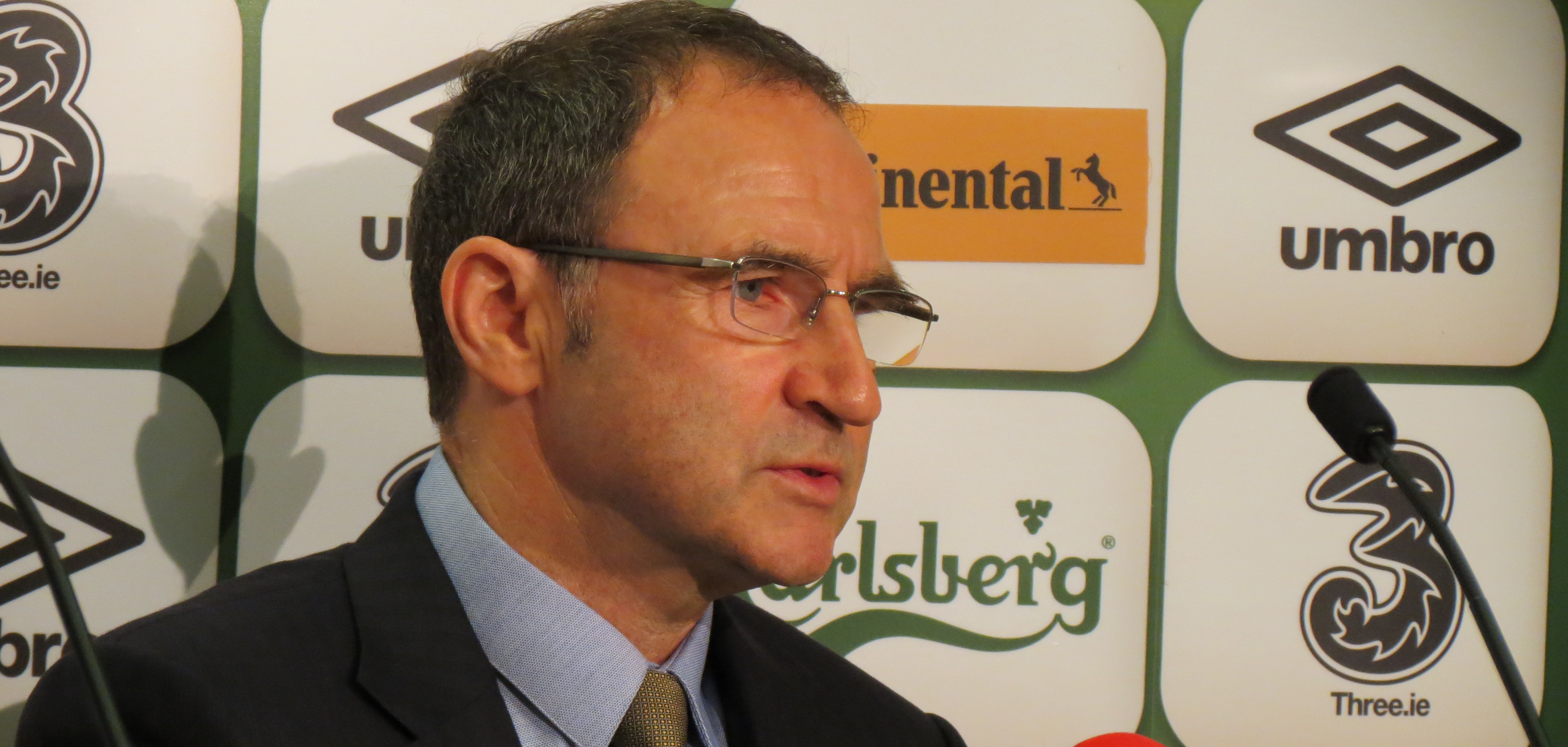
    Martin O’Neill addresses reporters at the FAI Headquarters in Abbotstown. Photo: James Hopper

    O’Neill has included the Everton duo of James McCarthy and Séamus Coleman in his squad after both missed the matches against Gibraltar and Germany in early October.

    There is no call-up however for Aston Villa’s Jack Grealish who was tipped to make his debut in the USA friendly at the Aviva Stadium. Stoke’s Glenn Whelan is included despite a broken leg suffered in the Germany game but there is no place for Wes Hoolahan of Norwich, who damaged ankle ligaments with his club after returning from international duty.

    Midfielder Whelan sustained a leg fracture in the 1-1 draw against Germany in Gelsenkirchen on October 14 and was all but ruled out of the Group D showdown against Scotland in Celtic’s Parkhead Stadium by his Stoke City boss Mark Hughes.

    However, O’Neill says that Whelan’s injury is “clearing up” after naming him in his initial squad of 36. “Glenn’s in the squad at this moment,” O’Neill said. “Initially, I thought he was going to be out for some time and while he is still struggling, the injury itself is actually clearing up and he’s giving himself every possible chance.

    “He’s getting better by the day, he’s still not weight-bearing but I’ll give him every opportunity. Even if I hadn’t included him in the squad here today, if he had felt he would be able to play, I would have reinstated him,” O’Neill added.

    Former Cork City defender Brian Lenihan has also made his way into the squad after impressing in training in the lead up to the qualifiers against Gibraltar and Germany in October. However, the uncapped fullback is unlikely to remain in the squad when the panel is trimmed down to a suitable size on November 10.

    “I thought for a young lad coming in with senior players he might have been a little bit nervous but he didn’t show it in the little games we played – in fact he did very, very well,” said O’Neill.

    “It was always going to be an ask for him to be playing in those games [Gibraltar and Germany] and while he may be a natural right-back where David Meyler isn’t, we needed some experience down that side, particularly out in Germany.”

    O’Neill went on to say, “It would have been harsh to have put him in there for that game [against world champions Germany], but he impressed enough to warrant being put in the squad at this minute. Obviously when we cut it down, we’ll see how it develops but he impressed everyone.”

    With November’s clash against Scotland proving to be a significant fixture, O’Neill is hoping that his players’ boosted confidence thanks to their result against Germany will help them secure a potentially pivotal result against their Group D rivals.

    “To score in the last minute of the game and get something from the world champions on their own pitch was really just fantastic. The players have naturally gained confidence from that.”

    “Scotland will not be easy – absolutely not. They’re flying at the moment, Gordon Strachan has them playing very well and they had a great result out in Poland. If nothing else, we must go there with some confidence.”

    Ireland currently sit in second place in Group D on seven points, three points ahead of Scotland.

  • O’Shea’s swansong?

    O’Shea’s swansong?

    “What’s rare is wonderful!”- RTÉ commentator George Hamilton celebrating John O’Shea’s 27th minute goal which saw Ireland take a 2-1 lead against Kazakhstan in the final qualifying round match for World Cup 2014.

    Could O'Shea have made his last appearance for Ireland? [credit: eurocuppictures.com]
    Could O’Shea have made his last appearance for Ireland? [credit: eurocuppictures.com]
    That goal turned out to be the turning point of the match, a late own goal sealing the 3-1 victory in the final minutes. What Hamilton failed to mention was that O’Shea’s goal, his only competitive goal in a green shirt (he did score once before, against Australia in a 2003 friendly), was scored in what could very well be his last international match.

    By far and away the most successful Irish international in years, O’Shea is now 32, and with a new club manager and Sunderland in a less-than-enviable league position, this year looks like it will be anything but easy for the Waterford man.

    After breaking onto the scene at Manchester United (we all remember THAT nutmeg on Luis Figo), O’Shea established himself as the utility player in Alex Ferguson’s squad. Equally adept at playing anywhere across the back four, as a holding central midfielder (or even in goals), Johnno was partly a victim of his own adaptability.

    After finally nailing down a spot in the heart of defence at his new club, the last thing O’Shea will want is to see the Black Cats relegated. He may feel that, with an in-coming Ireland manager and youngsters like Ciaran Clarke and Shane Duffy waiting to make the step up, now may be the time to call a halt on his Ireland career.

    Many who play under Alex Ferguson tend to retire from the international game early, in an attempt to prolong their playing careers. Paul Scholes and Ryan Giggs are just two of many who prioritised their club over their country, and looking at the ever-green United pair now it is hard to fault their choice.

    With Shay Given, Damien Duff and Kevin Kilbane already gone, Richard Dunne crippled with injuries and eager to cement his place at new club QPR, and with Robbie Keane nearing 34, O’Shea may feel that now is the right time to leave gracefully and let a new manager build his team with the long-term in mind.

    Dunne’s retirement, if O’Shea does decide to call it a day, would give the new boss a serious hole to fill in the middle of his defence. With Clarke still learning the ropes, and Shane Duffy far from the finished article, it would fall to the supporting cast to fill the void.

    Sean St Ledger would seem the obvious choice, but finding a partner for him wont be simple [credit: irishmirror.ie]
    Sean St Ledger would seem the obvious choice, but finding a partner for him wont be simple [credit: irishmirror.ie]
    While enough has been written on Paul McShane’s short-comings to fill several articles, he remains an integral part of the Ireland squad. With Darren O’Dea deemed unfit to serve in a poor Celtic team and now plying his trade in Toronto, Stephen Kelly a square peg in a round hole, and Damien Delaney nearly 33, it may indeed fall to the Hull City man to lead a new-look Ireland team into the Euro 2016 qualifiers.

  • Should Ireland amalgamate in international soccer?

    Should Ireland amalgamate in international soccer?

    credit Steven Depolo on Flickr
    credit Steven Depolo on Flickr

    When you look to Irish national teams for a source of pride, rugby comes to mind first. It is a great testament to this small nation that we compete with countries that have 10 times the population to work with.

    So based on that, one would assume that any possible question regarding an amalgamation of the Republic and Northern Ireland soccer teams has to be answered with a yes. I however, disagree.

    The Republic of Ireland national team has shown before that it has the quality in its arsenal to compete with the best in the world and to make the latter stages of major tournaments.

    In the World Cup in 1990, 1994, and 2002, the Republic’s soccer team reached the quarter finals, and made it to the final 16 twice, respectively. During the same time period Northern Ireland failed to qualify on all occasions.

    For the European Championship in 1988 and 2012 the Republic reached the group stages of the tournament. The upper quadrant of the island has never reached a European Championship.

    Despite neither side succeeding in securing a trip to Brazil in 2014, the Republic still managed  to maintain a somewhat respectable record in terms of wins and draws compared to Northern Ireland’s shambolic campaign in which the green of the North recorded a draw and a loss against both Luxembourg and Azerbaijan.

    When you move the argument away from the pitch the sensible notion still points towards the Republic remaining a separate entity.

    The Football Association of Ireland (FAI) have purpose built grounds in the Aviva Stadium which is the home of Irish soccer. Northern Ireland do not have that luxury. Instead, they have leased the rights from Linfield F.C. for the use of Windsor Park. In return for this lease, 15 per cent of all revenue of gate receipts and TV rights leaves the Irish Football Association‘s (IFA) pockets and lines Linfield’s.

    The issue surrounding political and religious difference also needs to be considered. The Irish rugby team works as a combined entity because a) it has always been this way since its inception and b) the vast majority of rugby supporters would be of a higher social class and background. Not meaning to pigeonhole, but football supporters would have a greater tendency towards unruliness and hooliganism than their rugby counterparts.

    The only foreseeable benefit gained for the Republic of Ireland by amalgamation is that the Republic of Ireland would not have to press players who are born in the six counties to declare for the Republic.

    However, most Irish managers have a tendency to acquire players not only from Northern Ireland, but also Scotland, Wales, and England. Once they were born on the island or have a grandparent who was, they can declare for the Republic – therefore all of the Northern Ireland squad is fair game for the Republic of Irish team, they just need to be ahead of the curve in terms of recruiting them.

    Another issue is that the League of Ireland, which is already on the fringes of the FAI’s agenda, would become even more so, as an amalgamation of both countries national teams would result in an inevitable combination of both football associations.

    Northern Ireland’s only potential commodities are already available to the Republic and therefore the south will be offering up a much greater investment for what are limited dividends!