Tag: rights

  • Lack of regulatory framework is leading to exploitation of au pairs

    Lack of regulatory framework is leading to exploitation of au pairs

    There is no legal framework in place specifically for au pairs working in Ireland, according to citizensinformation.ie. However, it is generally understood that there should be some specific written agreement in place between the family and the worker in relation to how many hours per week they will work and how much they will be paid.

    Unfortunately, this does not seem to prevent the exploitation of the, more often than not, foreign students who come to Ireland hoping to improve their English, both through academic courses and practical interaction.

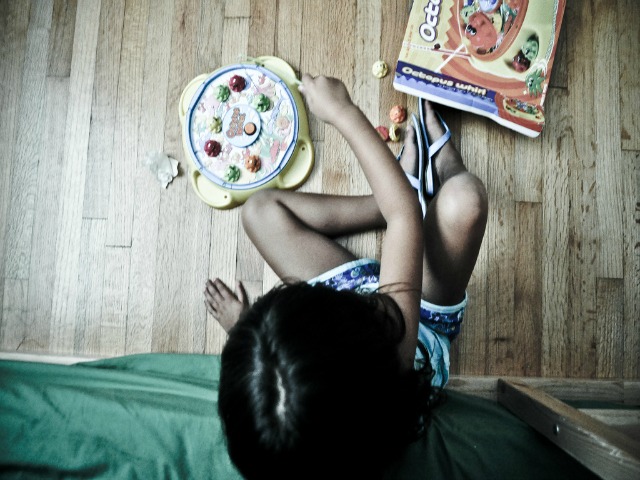
    Roberta*, a 21-year-old from Brazil was one of these students. While studying, she began to run short on money and, taking into account the conditions of her visa allowing her to work twenty hours a week, she decided to get a job as an au pair.

    She moved in with a family and agreed to look after a two year old girl, Sarah*, on weekday mornings before attending her English classes in the afternoon.

    “In the beginning it was fine, I woke up at 7am and made breakfast for Sarah, dressed her and prepared anything she might need for the rest of the day. Sometimes her mother would ask me to come to the supermarket with her and the children. Sarah didn’t like this and would often behave very badly, her mother rarely disciplined her for this and I had to distract her,” Roberta explained.

    As the months went by conditions became more difficult for Roberta.

    “They didn’t provide me with a lock for my room or cabinets and I noticed that sometimes things would be in a different position than when I left them. One day I returned to see my perfume smashed on the floor, when I asked her mother what happened she said that Sarah had gotten into my room when she wasn’t looking and had broken it.”

    Although the agreement was that Roberta would only work on weekday mornings, she was put under pressure to get up with Sarah on Saturday and Sunday mornings too.

    “I ended up working Saturdays and Sundays with Sarah, and I was also asked to clean the house while the family were gone. I was paid €120 per week regardless of how many days I worked and I rarely had any time to myself as I was studying every day too.

    “At that time I had very little English and no confidence to confront them about how unhappy I was,” she reveals.

    Roberta was later told that her services were no longer needed as Sarah’s mother couldn’t afford to pay her anymore.

    “She let me stay for one week and I had to argue with her to pay me for that week as I was still minding Sarah. I stayed for three months in total, but it was the worst experience of my life.”

    Founder of the Au Pair Rights Association, Jane Xavier, reveals that she has dealt with cases much worse than this one, where domestic workers work forty hour weeks and get paid as little as €3 an hour.

    “Domestic workers are an historically vulnerable group. Despite doing essential and important caring and cleaning work in all societies, facilitating others to work outside the home, domestic workers are undervalued, underpaid and overworked,” she explains.

    To improve conditions, Xavier says a fair wage is key and also that the National Employment Rights Authority (NERA) keeps a close eye on au pair agencies.

    “NERA has the power to inspect the employment conditions of anyone working in a private home. They must work closely with families employing au pairs to protect and uphold our rights and protections under the law, in addition to tackling au pair agencies who are in breach of employment laws.”
    *Sarah and Roberta’s names have been changed to protect their identities
  • Dublin’s streets packed for march against austerity

    Dublin’s streets packed for march against austerity

    This slideshow requires JavaScript.

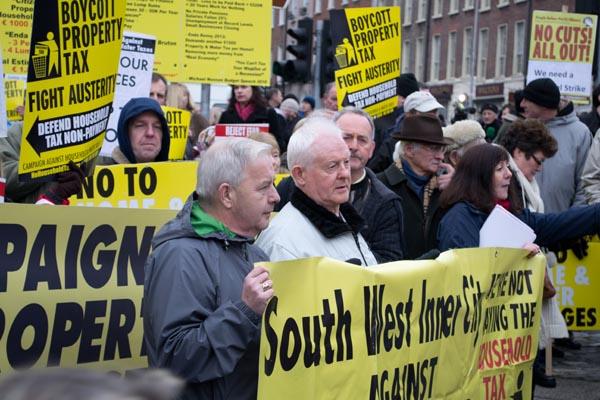
    Saturday’s anti-austerity march brought thousands out on the streets of Dublin City.

    The march, organised by the Dublin Council of Trade Unions, saw people from all corners of the country come to capital to demonstrate against austerity measures and taxes.

    Gathering at Parnell Square, live traditional Irish music – well known songs like the ‘Rare Old Times’ and ‘Dirty Old Town’ –  kept participants entertained while waiting patiently in the cold for the demonstration to take off.

    When the time came, approximately 10,000 strong left from the Garden Remembrance, with chants and banners at the ready.

    Despite the colds, spirits were high and all aspects of society marched side by side – the young, old, students, unemployed and employed alike.

    [youtube.com=http://www.youtube.com/watch?v=akQJwaG6OLc]

    Accompanying the marchers was a wide range of lively music and dramatics – including marching bands, singers, costumed performers and creative floats.

    Led by a deathly cloaked figure on a horse – demonstrators left from Parnell Square, making their way down O’ Connell Street and across College Green, before proceeding back across the O’ Connell Street bridge for a special assembly in front of the GPO.

    So many turned out for the event that tail end of the march had barely left Parnell Square while those way ahead in the lead were almost at the end point.

    This made for a parallel meeting of marchers travelling across both directions of the O’ Connell Street bridge. Here, the sound of uilleann pipes mixed with enthusiastic shouts and a lively sing along of Bob Marley’s ‘Stand Up For Your Rights’.

    Meanwhile, unified chants of “You cut, we bleed” bellowed across the Liffey. These chants echoed the general theme and feeling of the march – many hurt and worried by budget cuts and taxes to come.

    But whether marcher’s cries were heard all the way over in the offices of Kildare Street remains to be seen.

    By Liam Keegan & Aidan Knowles

  • Dublin reacts to the Children’s Rights Referendum and campaign posters

    Dublin reacts to the Children’s Rights Referendum and campaign posters

    Labour’s campaign poster

    By Sarah Reilly

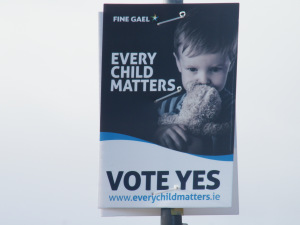
    Dublin people have expressed mixed views about whether or not Children’s Rights Referendum campaign posters have influenced their voting decisions. Some voters described the poster-campaigns as “disinterested attempts at persuasion” and confirmed that the posters have not influenced their decision in any way. Others described the posters as ‘cheap’, ‘exploitative’ marketing techniques being employed by parties and advocacy groups to sell yes-votes. Either way, it seems the posters have not achieved what they set out to achieve.

    John Meaghan (65) plans on voting yes on Saturday. When asked what he thinks of the  referendum posters, he says, “I think the commercial use of children in the case of these posters is manipulative but I am going to vote yes, so they haven’t really had any impact on me.”

    John Meaghan (60) from Dublin

    Mr. Meaghan was not the only person to hold a sceptical view in relation to the posters. Many voters interviewed for this article stated that the political employment of the children featured in the campaign-posters is questionable, due to the very nature of the referendum.

    “I don’t agree with children’s faces being put up on referendum posters. These kids are being completely disrespected and are being used for marketing purposes. The use of these pictures is ironic due to the nature of the referendum, and I for one am voting no”, says Kay Ward (50).

    Kay Ward (50) from Dublin

    Anne Murray (77) said she hasn’t been influenced at all by the posters. “They’re fine and the children are little dotes but I will be voting no. The state will not protect children.”

    Another voter unmoved by the posters is Deborah Waters (44). “I haven’t been influenced by the posters but for those unfamiliar with the referendum, I suppose images of children do clarify that the referendum is about kids. I am fostering a child so I am voting yes.”

    Bobby Borwick (50) said, “I haven’t taken any heed to the images on posters and I can see both sides of the debate. I was planning to vote no, but with organisations like Barnardos on the yes-side, I have changed my mind and I am now voting yes.”

    Bobby Borwick (50) from Dublin

    Brigid Byrne (58) is planning to vote no and said she has carried out a lot of research over the last number of weeks. She said the no-side do not need any fancy posters to back up their campaign because their arguments are obvious and rational. “The images of children used in those yes-posters illustrate how the government are already taking advantage of the very beings they are promising to protect.  The use of these images is total exploitation of children”, she said.

    Another voter on no-side is Keith Nolan (33). “I have seen the yes-posters but they haven’t influenced me in any way and I will be voting no. The use of the children’s images in posters is cunning and it’s very obvious that the yes-campaigners are trying to buy votes by melting people’s hearts. This cunning move is in itself taking advantage of the children photographed, by undermining what’s in their best interest.”

    Keith Nolan (33) from Dublin

    Meanwhile, Sinn Féin North West Councillor Anthony Connaghan said that while he is supporting his party in their yes-campaign, many of the yes-campaign posters are ‘exploitative’.

    Sinn Féin Councillor Anthony Connaghan

    “Sinn Féin are calling for a yes-vote. Caoimhghín Ó Caoláin and a few other Sinn Féin representatives in Leinster House have done work on this over the last while. They are happy that this is a step forward for the rights of children in the country. Sinn Féin lead from the proclamation, which does say that we should cherish all the children of the nation equally. This hasn’t happened over the last number of years. State care has been appalling and Sinn Féin believe that this referendum is a step forward in tackling that care. I do have faith and trust in all members of the party, that they are working for the benefit of the country. Hopefully backing this referendum is the right decision.”

    On the topic of campaign-posters, Mr. Connaghan said, “I think most of the yes-posters are guilting people into voting yes by using images of sad faces.  It’s as if they are telling you that a vote against this referendum is a vote against children, which is very unfair. I also think these posters are exploiting kids.”

    Advocacy group campaign-poster

    Sinn Féin produced a campaign-poster which features the face of a two year old smiling child. Mr. Connaghan defended the poster saying, “Our campaign-poster is not as bad as the real guilt-inducing ones”.

    COUNCILLOR CONNAGHAN ON NO-CAMPAIGNERS

    In relation to the no-campaigners, Mr. Connaghan said:

    “I’m not 100 percent convinced that the power is not already there for state intervention where appropriate. Party campaigners for the yes-side have said that the passing of this referendum would stop cases such as the Roscommon case ever happening again. The truth is that the social services had the power to intervene in that case but they did not act on it.”

    He continued, “It has been said by no-debaters that this referendum is purely down to adoption, but again I do have to say that Sinn Féin are trustworthy and we would not be encouraging a yes-vote if we didn’t feel that it was the right thing to do.”

    UNDERLYING GOVERNMENT MOTIVES

    Mr. Connaghan critiqued underlying government motives in encouraging the passing of the referendum.

    “It’s like they are trying to say ‘look at us, look what we have done. We have taken action on something that has taken other governments 20 years to discuss.’ This is ironic considering they have been in government themselves within those 20 years. This behavior by the government is also taking citizen’s eyes off upcoming budget austerity.”

    RECENT DEBATES

    In relation recent televised referendum debates, Mr. Connaghan said, “I feel that no- siders, John Waters and Kathy Sinnott are winning debates. It’s as if the yes-side are reading from notes and I don’t think Francis Fitzgerald is very effective at all.”

    The councillor also commented on Minister Leo Varadkar’s public criticism of  the no-side. “The likes of Leo Varadkar really makes me laugh. He has addressed the no-side as scare-mongrels, yet Fine Gael’s use of scare-tactics before a budget is undeniable. They throw out a load of kites, in which they release budgetary details to suit their own agenda. It’s like the child-benefit. They’ll probably say they are cutting that from €140 to €100. In the end it will probably be cut to €120 and people will feel grateful that they weren’t cut down to €100. People need to understand those tactics. “