Every Christmas in Ireland, there is one show that many people cannot wait to see flash up on their screens once again and that is The Late Late Toy Show.
The Late Late Toy Show has been a show of fun, laughter and tradition for many families across Ireland since December 7th 1974 when it was hosted by the well-known presenter Gay Byrne. Now, after the torch was passed on to Ryan Tubridy, the Toy Show has continued on for 47 years, with this year’s exclusive theme being Disney’s famous The Lion King. The annual phenomenon climbed the hashtag ladder becoming the number #1 trending in Ireland on Twitter and various other social media platforms.
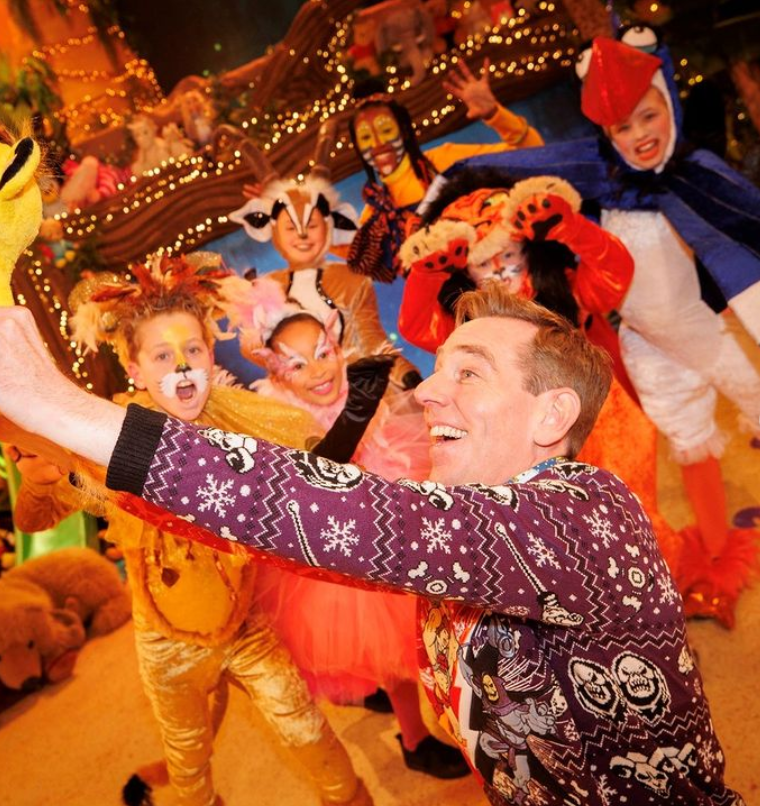
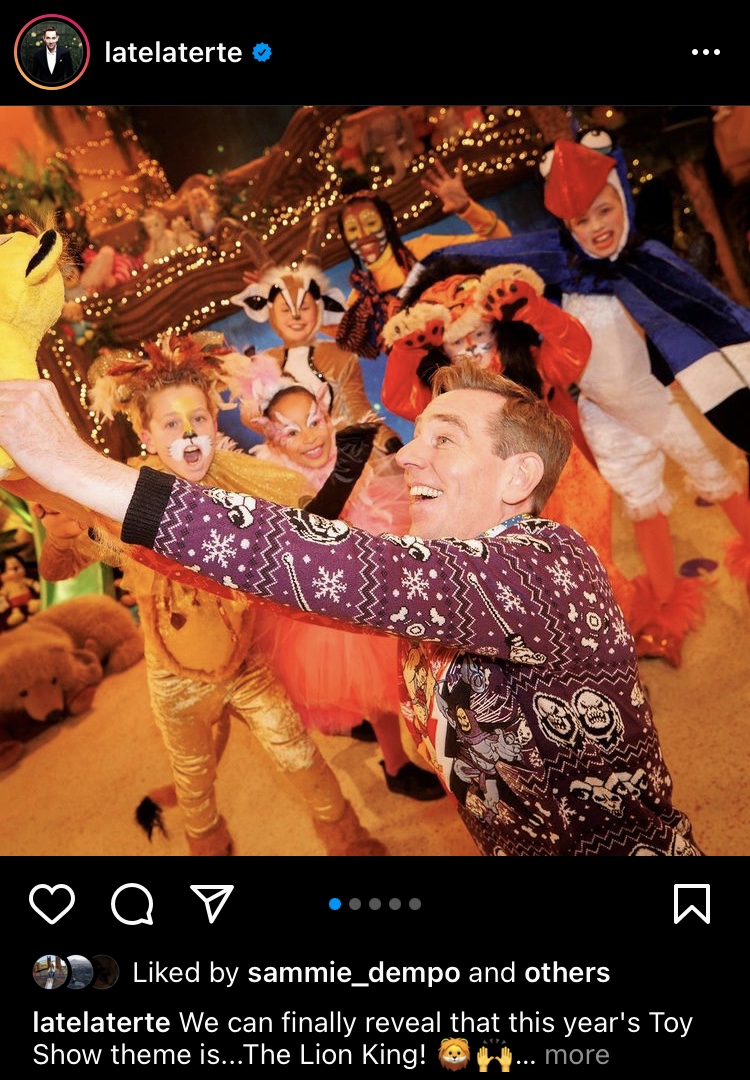
Image from RTÉ Late Late Toy Show Instagram
The show began with the opening number consisting of a mashup of Lion King classics such as ‘The Circle of Life’ and ‘Hakuna Matata’. All Spotlight Stage School performers donned zoo animal costumes with even our own Ryan Tubridy sporting Lion King Timone’s famous meerkat ears and tail.
And it only got more magical from there, with top moments on Twitter, YouTube and Instagram showing batgirl heroes, ketchup lovers, future farmers, fashionistas and even the biggest of dinosaur experts for toy testers making their appearances.
Rick O’Shea, Irish radio personality, tweeted out his joy at young burger maker and ketchup lover Lorcan followed by DJ music genius Callum and his hype man Jackson stealing the show with their glorious techno debut featuring young Irish, contemporary and ballet dancers.
Later in the show we caught Callum again playing out tunes for the showing of the kid’s vehicles such as bikes, scooters and go-karts. However, nothing was more priceless than his shock and awe reaction to ten year old Fergal’s Italian opera singing after he was called on by Tubridy to showcase his singing talents with the song Ave Maria.
Lego enthusiast and toy tester Finn Ryan, aged 8, was delighted to have been in remission from Crumlin’s Children’s Hospital after being deemed cancer free. He was able to ring the cancer free bell in hospital to celebrate during Covid-19, however he was not able to have much of an audience due to social restrictions at the time. However, at the Toy Show he was given the opportunity to ring the bell again in front of the whole country and even across to Toy Show fans around the world. “We’ll ring this as a bell for you and a bell of hope for the other children” Tubridy said. Finishing off his Toy Show debut, Finn also deservedly won a trip to the Lego capital Denmark with his family courtesy of the Toy Show. Children’s Health Ireland took to Twitter to voice their delight at seeing their well-known patient on the biggest Christmas show of the year.
The next child to steal the hearts of the nation was Isabella. After showing various fidget toys, she showcased her Adventure Book, speaking about her dream trips to the Caribbean and to Paris in France. Tubridy, working his magic, surprised Isabella with an Aer Lingus flight to Paris for both and her family along with tour trips to the Louvre and the Eiffel Tower. Many social media accounts tweeted their support including RTÉ One.
Along with all of these memorable and lovely moments, what every Toy Show audience looks forward to are the surprise famous guest appearances. This year was no different with both Olympic Gold medalist Kellie Harrington and Ed Sheeran gracing us with their presences. The Late Late Toy Show tweet featuring the two stars reached over 4.5k likes.
Not only is it a night of excitement and joy but also one of charity as The Toy Show Appeal was launched to help The Community Foundation for Ireland. All donations that were given will provide essential support, healthcare, well being, play and creativity.
As of yesterday afternoon, the figure stood at around €5.45 million. This achievement was then taken one step further after the CTO of Revolut Vlad Yatsenko took to social media to announce he had donated €100,000 with an extra €1 million in matched donations after issues occurred with the Revolut app for donations during the show. Donations have now surpassed 6.5 million euro for the Toy Show Appeal.
Many top Irish celebrities took to Twitter to praise the Toyshow and its guests including Doireann Garrihy and Dustin the Turkey, despite the fact he was less than happy by a specific Christmas jumper choice made by Tubridy.
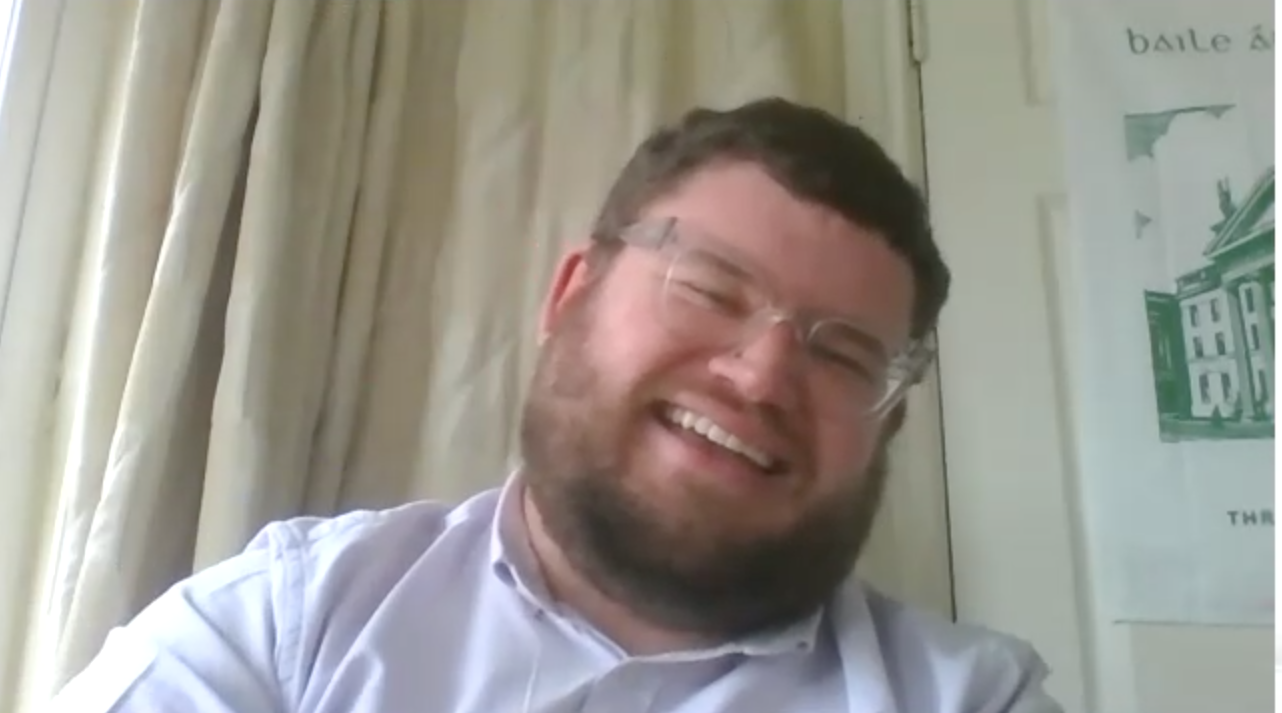
A screenshot of Donal Fallon during his virtual interview with Mario Bowden. Screenshot by Mario Bowden
It was while going for a walk around my 5km that I decided to reach out to historian Donal Fallon. In an episode of his podcast Three Castles Burning, Fallon mentions the previous life of an art deco building along the Royal Canal that now houses the new Bernard Shaw. To my surprise, it was the garage of the first Irish commercial airline – Iona National Airways. I couldn’t believe that a building that I walked and cycled by daily had such a unique life story.
Three Castles Burning is a social history podcast, capturing the tales and intricacies that make up the fabric of Dublin. Running since November 2019, each episode contains a unique deep-dive into the city’s treasures – From discussing hallmark pubs such as Grogan’s, the emergence of subcultures like the punk scene in 1977, and even the stories of migrant communities who have left their stamp on the city, like the Italian community in Dublin who helped give rise to the chipper.
Fallon, a tour guide in normal times, tells me that there’s a real chance to engage with Dubliners through the aural medium.
“When you work in heritage and tourism, the majority of the people you meet are not from here. That’s just how it is and that’s the same in any city. On a tour for visitors, you have to go from before Saint Patrick all the way to the Northern Irish peace process in two hours. So when you have an Irish audience, you have the ability to go into much finer, minute detail, which I really really like. It’s a different challenge,” Fallon says.
“There are still people interested in local history, it’s not something you can just turn on and off”
Donal Fallon
Fallon’s no stranger to capturing all things Dublin. In 2009, he started a blog called Come Here to Me. Coining its name from the Dublin slang to express the tantalising exchange of information, the blog set out to capture the essence of the capital’s nooks and crannies – from music, history, politics, and even pub crawls. Come Here to Me was a big hit amongst Dubliners – and for Fallon, it gave him an audience.
Over time, however, the art of blogging began to dwindle, Fallon admits: “I noticed that the readership on Come Here to Me was kind of dropping off. Not like off a cliff, but over time there was less and less. And I wondered, where are those people going? Because they’re still there” Fallon chuckles.
“There’s still people interested in local history, it’s not something you can just turn on and off. So the challenge for me was how do I get to reconnect with people who I knew were there from Come Here to Me. That I knew were still there,” he tells me.
It was time for a change and Fallon saw podcasts as the way forward. He tells me how he learns as he goes, taking inspirations from some of his own favourite podcasts – such as the Bowery Boys Podcasts – a social history exploration of New York City.
“In a way, Podcasts are the new pirate radio”
Fallon
Listeners might notice Fallon’s shout-out to Radio Free Kimmage at the end of each episode. Like many others, I foolishly assumed that it was a real local radio station. But as Fallon explains to me, the nod towards a faux station is simply an homage to the pirate radio scene. Fallon see the parallels between that scene and what he’s doing now – providing alternative and independent content.
“Podcasts, in a way are the new pirate radio.” Fallon laughs. “They are increasingly widening what’s on offer. And I really like that. Especially if you look at the podcast charts in Ireland, the top of it is still big radio shows – usually clips from news shows on RTE and so on. But these independent programmes produced on kitchen tables in Kimmage can compete with them. I think that’s fantastic!”
Three Castles Burning logo, by Donal Fallon
Today, the podcast is a great success. Released every week, it has attracted an audience of not just locals, but ‘Dubliners in exile’ – with strong numbers of Irish abroad, from Britain to Australia – tuning in for their nostalgia fix. This is no surprise to Fallon.
“I think that’s how it’s always been. If you go back all the way to when Joyce wrote about exile: the further you are from a particular place, the more you feel a connection to it. That’s been a very noticeable thing that Irish abroad have definitely gotten behind it. I’ve gotten very nice emails from people saying that they really miss these places. The Forty Foot in particular, that had a real emotional resonance with people,” he tells me.
Each episode has the ability to intrigue anyone in a way that’s unique to them – much like my own experience passing the Bernard Shaw. With more people out and about on their daily walks, a podcast like this can spark curiosity to something right around the corner.
“I think if you can change someone’s everyday walk, and make them think about that one little thing that they didn’t know was there before, I think that changes the way people look at the city, but the way they look at life you know, to go a little bit slower. I always try to make the podcast a bit more visual. I know it’s all audio of course but I like saying ‘Next time you pass so-and-so, look at this’, I think that can change the way you look at the city,” he says.
While Fallon is optimistic about some sort of bounce back for the heritage and tourism industry, the success of Three Castles Burning has kept the Irish history scene on the road – and in turn, our history alive.
Photographs that emerged online of a gathering that took place in RTE last week have sparked outrage as they show a number of broadcasters standing close together with no social distancing or masks. Megan O’Brien explored the reactions on Twitter.
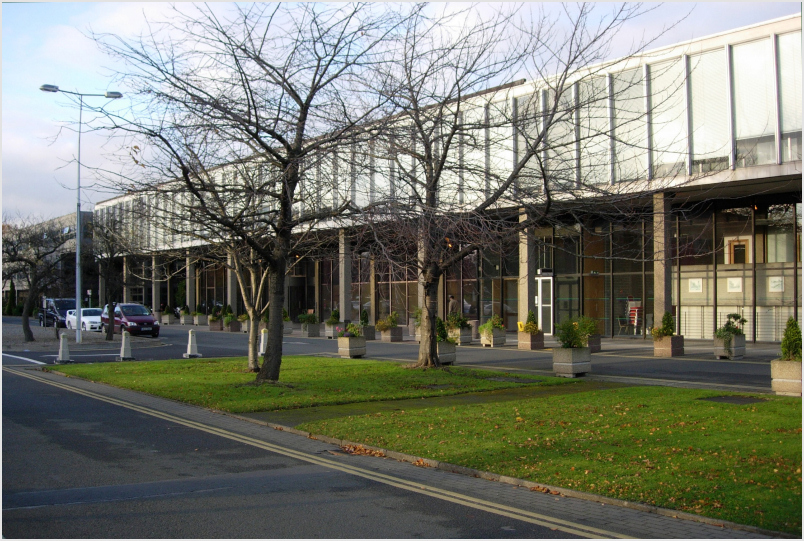
RTE Television Centre. Source: Wikimedia commons
Miriam O’Callaghan, David McCullagh, Bryan Dobson and Eileen Dunne were among the staff that appeared in the pictures as they joined in on an “impromptu” gathering at RTE HQ for their retiring colleague Phil Collins.
Shortly after the pictures surfaced, #RTEgate began trending on Twitter. Members of the public voiced their opinions on the breach of Covid-19 guidelines, which the broadcaster has so intensely promoted throughout the pandemic. Many expressed feeling “betrayed” as they considered the elderly and high risk citizens that RTE have encouraged to isolate via their broadcasts.
We have heard the #sorrynotsorry apologies for the @rtenews i̶m̶p̶r̶o̶m̶p̶t̶u̶ party. As state broadcaster you have the trust of your listeners. What about all the isolated older people who keep the radio or tv on for company. Are we #allinthistogether? What a betrayal #rtegatepic.twitter.com/QL6Wmor2oQ
Not sure how you have a lapse of judgement about not socially distancing, when you are having your photo taken, while standing on a sign telling you to socially distance!! #rtegatepic.twitter.com/qaLEGOscr4
There was also backlash from others working in the media industry including KCLR Head of Content, Eimear Ni Bhraonain and former Newstalk presenter, George Hook.
Hook among others implied that it seems an apology is sufficient in RTE and as that seems to be the case, they mockingly questioned would Sean O’Rourke be reinstated.
RTÉ's Sean O'Rourke was dumped after he attended #golfgate, when gatherings of up to 50 were permitted.
If #rtegate (during Level 5) goes no further than apologies (which O'Rourke also did) then if I was him, I'd ask to be put back on air…https://t.co/uBMnUXXNf0
The broadcasters issued apologies on air which were circulated online by RTE. The backlash continued in response to these, with many saying that the apologies weren’t genuine as they only apologised after they got caught.
I don't really need to hear any hollow apologies about #rtegate. Let's be real, they're only sorry they got caught.
The apparent acception of these apologies sparked another hashtag to trend on Twitter, #RTEbias, which discussed how it seems that rules for the public don’t apply for the RTE ‘celebs’.
Just infuriating. My Uncle passed away yesterday & my Mam isn't going to the funeral. Meanwhile #RTEbias take photos of a stupid leaving party underneath a social distancing banner on the ground. Divide between us plebs & the hierarchy grows wider & more noticeable by the day https://t.co/0hxhXJF6wd
Taoiseach Michael Martin condemned the gathering, describing the photos as “disappointing”. He said “I don’t excuse the behaviour, it’s very disappointing, particularly in those in public life across in the broadest sense, need to be leading by example.”
Three probes are now underway to investigate the event.
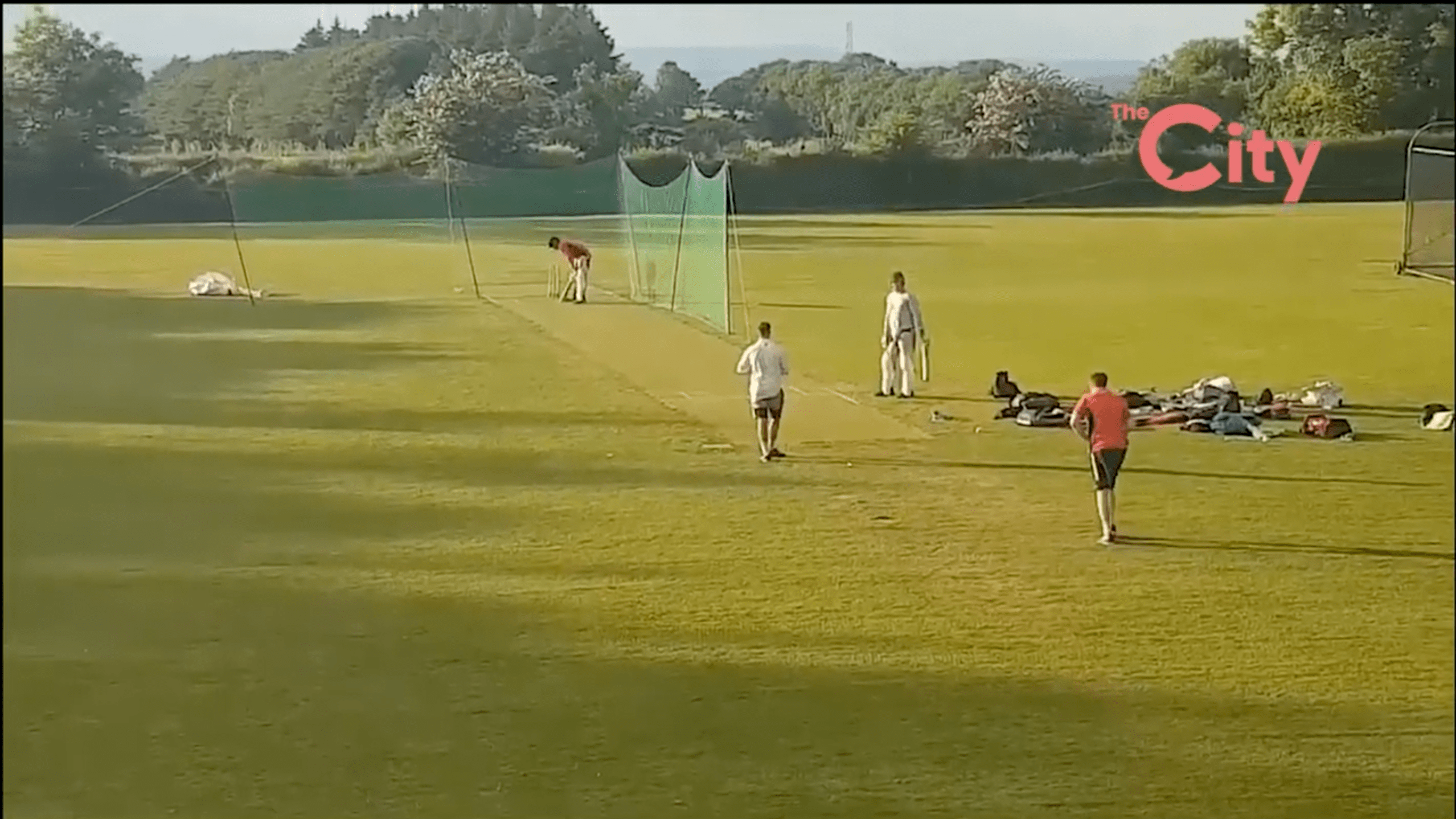
Cork Harelquins Cricket Club, June 2018. Photo: Ted Williamson
TheCity.iereporterandMunster interprovincial cricketerRuadhán Jones has been looking at how cricket clubs and professional teams are preparing for the season under lockdown. He spoke to Ted Williamson, Munster Red’s interprovincial head coach and coach Cork Harlequins CC, and Kieran Sheffron — Munster’s strength and conditioning coach.
Sports seasons have been cut-off, curtailed, or simply cancelled as a result of the coronavirus. As we enter the summer months, experts have warned that a return to contact sports is “a long way off”.
But not all hope is lost. Speaking to RTE, Dr Paddy Considine — a sports economist — said that “there will be a hierarchy. Individual sports will have an advantage, while team sports or contact sports will be under pressure.”
Sport Ireland Chief Executive John Treacy has said non-contact outdoor sports will be 'a priority' when restrictions are being lifted | Read more coverage: https://t.co/Ek8oroNQ3Hpic.twitter.com/CDwqjCfu3t
For the likes of the GAA, soccer and rugby, this still makes a summer season unlikely. However, some non-contact outdoor sports have an outside chance of playing a shortened season – this includes cricket.
As a member of an interprovincial panel, we have to do everything we can to be ready to hit the ground running. But it’s not all about the professionals – clubs are working hard to keep their members involved and active.
To find out how teams and players are preparing, I spoke to Ted Williamson, head coach of the Munster Reds and coach at his local club Cork Harlequins CC, and to Kieran Sheffron, Munster’s strength and conditioning coach.
Life under lockdown – cricketers prepare for a new season
Considering we’re (hopefully) all in quarantine, there’s no better time to check out the shows hitting our screens. TheCity.ie’sPaul Caffrey reviews the week in TV, with all series available to stream on RTÉ and Channel 4 Player: The Boys in Green Part 1 & II (RTÉ Player), Neighbours Late: Endgame (RTÉ Player) and Feel Good (Channel 4 Player).
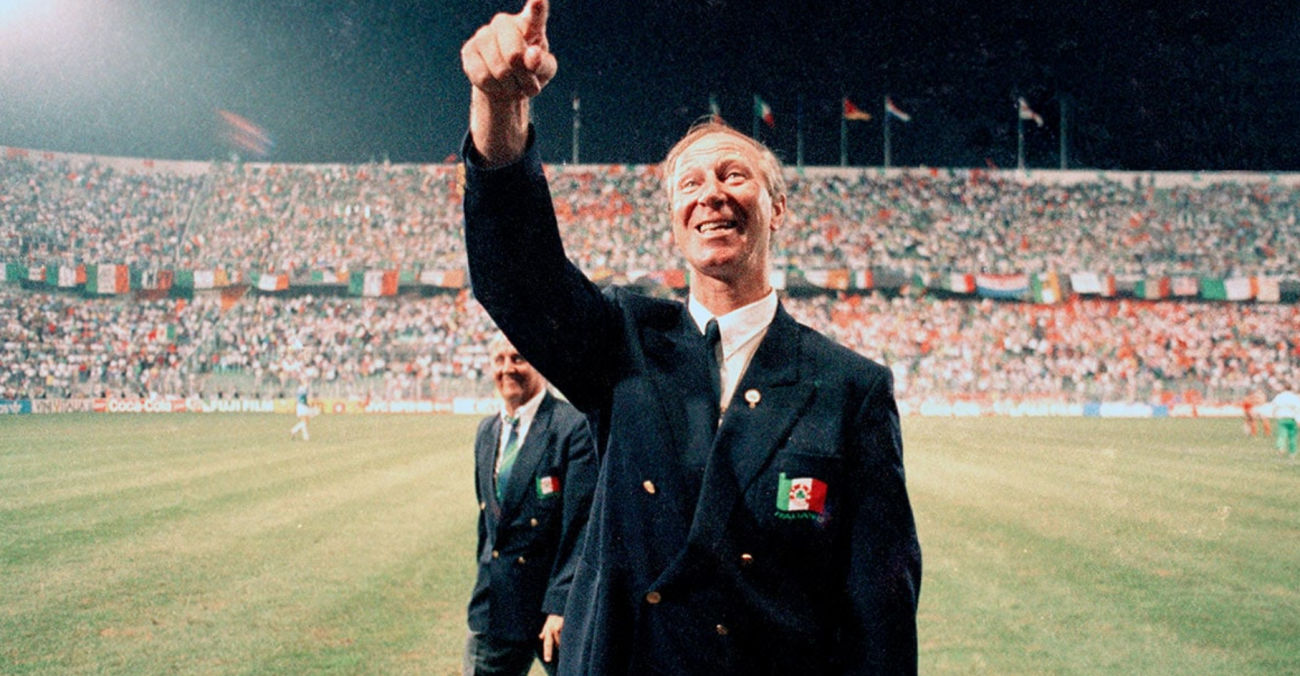
It was back to the ’90s this week with RTÉ One’s nostalgic, hard-hitting documentary The Boys in Green, which aired on Monday, March 16. The programme explored the iconic Jack Charlton years, which Match of the Day host Gary Lineker calls “the greatest era of Irish football” during his interview for this film.
When Ireland attempted to play England in a friendly at Lansdowne Road on February 15, 1995, disaster was on the cards from the very start.
🇮🇪 📺 Prepare to join us down memory lane on Monday as we take the plunge back to Irish soccer's golden age!
Part 1 of The Boys In Green will be live on @RTEOne this Monday, 9 March at 9.35pm.
“Friendlies can be dangerous because they can be anything but,” reflects Tony Cascarino, former Ireland forward, speaking 25 years on.
Back then, relations between the Dáil and Downing Street were in a feral limbo situation which appeared to encourage the proliferation of violent, hate-fuelled organisations at public events.
Neo-Nazi groups such as UK-based Combat 18 found opportunities to make their mark at high-profile gatherings, and their vicious actions forced the match to be abandoned.
After Ireland scored once and a subsequent England goal was disallowed, members of Combat 18 and another far-right group, Chelsea Headhunters, began throwing iron bars, six-foot pieces of timber and other dangerous missiles down from the top-tier stands.
Terrified families with young children made their way to the middle of the pitch to avoid injury.
“You could feel the anger and the hatred coming from the terraces,” Cascarino recalls.
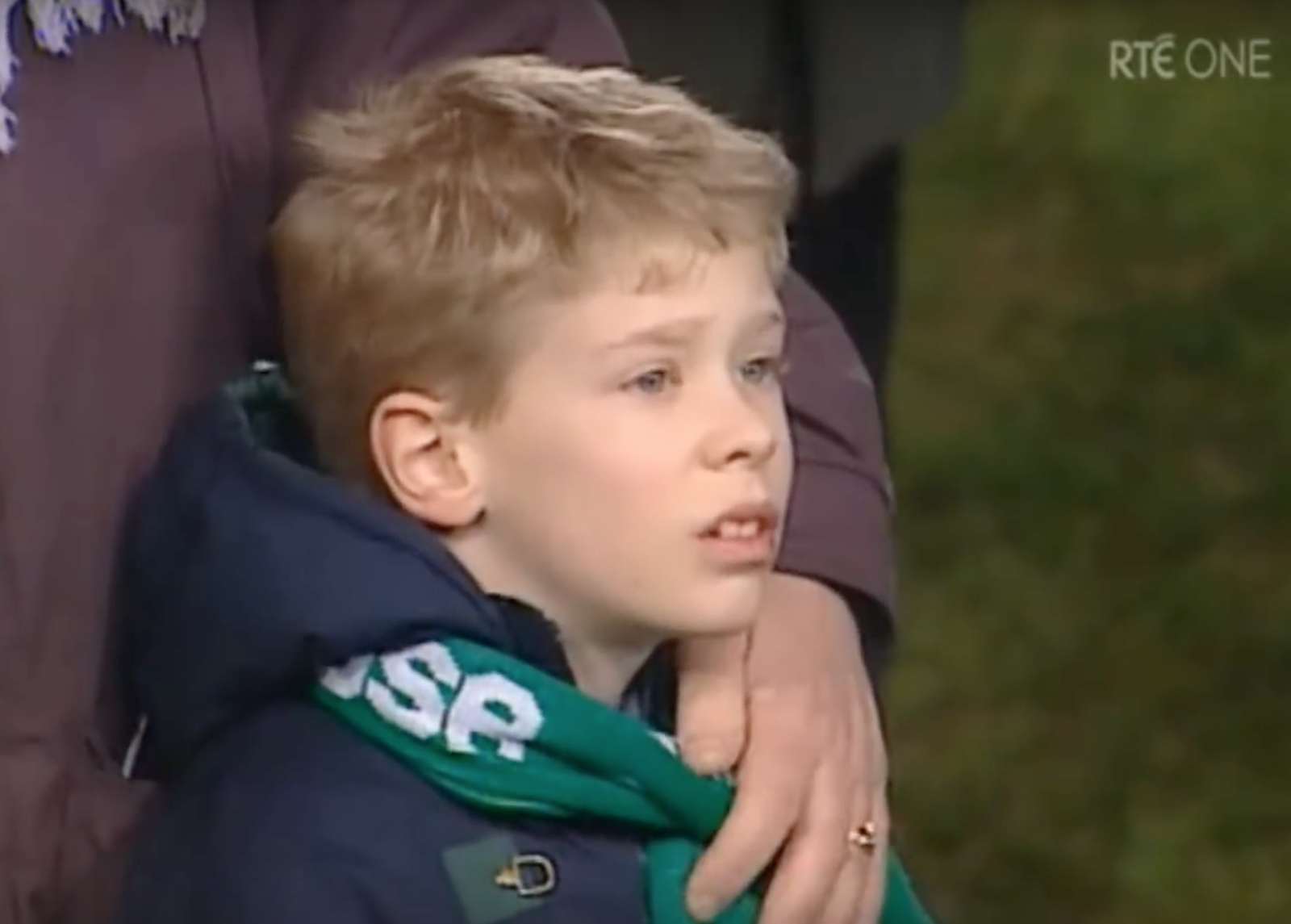
A distressed young boy being shielded by his father at Lansdowne Road stadium in Dublin during the February 15, 1995 riot became an enduring image of that night (Photo: YouTube)
By early 1995, we’d had some attempts to broker peace on these islands, but nothing that lasted. In short, it was a grim period in our shared history with the United Kingdom.
There had been the December 1993 Downing Street peace declaration by the British and Irish governments (that didn’t hold), followed by the August 1994 IRA ceasefire that proved far from permanent.
We were still three years away from the Good Friday Agreement that finally ended most of the violence of the Troubles and largely calmed hostilities between the Dublin and London administrations.
WATCH: ‘Absolute waffle’ – Eamon Dunphy discussing the abandoned match on Sky News in 1995
Why would far-right groups target a football match?
It was disparagingly dubbed “the granny rule”, even though some English-born players like David Kelly had Irish parents and were immensely proud to put on the green shirt.
But not all football fans understood. According to Cascarino, there was “always the accusation of ‘born in England, you shouldn’t be wearing the green shirt’”.
And against the backdrop of the Troubles, groups like Combat 18 weren’t happy about what they saw as Englishmen playing for an enemy State.
Former Liverpool and Ireland international John Aldridge says, tellingly:
“We’re not English, we’re Scousers and to be fair, the central government has never really done us any favours.”
In a similar vein, Merseyside-born Jason McAteer explains:
“Up North was very difficult, my Dad was in and out of work… I never, ever felt this urge to play for England.”
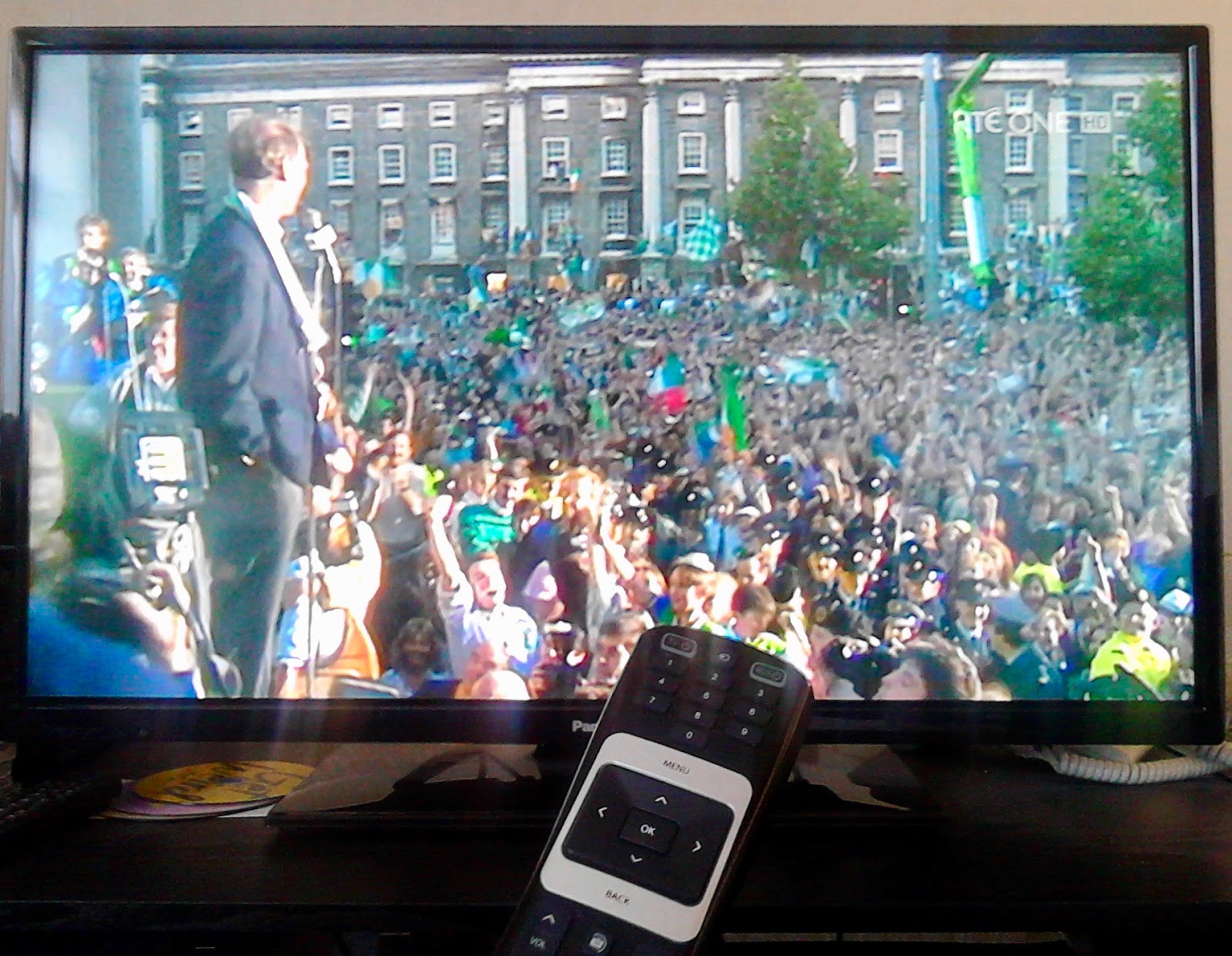
Nostalgic RTÉ documentary let us relive Jack Charlton’s address to huge crowds at College Green after Ireland reached the quarter-finals of Italia ’90 (Photo: Paul Caffrey)
With an impressive array of present-day interviews with former Ireland players and lots of well-preserved archive footage, The Boys In Green focuses on Charlton’s nine years managing the Irish national side between 1986 and 1995.
The Irish people took Charlton to their hearts because the Northumberland man “had no airs and graces, he wasn’t your quintessential Englishman – he wasn’t a toff or a snob,” explains Eamon Dunphy.
The concluding part aired on Monday night, looking back at Italia ’90 when Ireland reached the World Cup quarter-finals before taking us via USA ’94 to this infamous pre-Euro ‘96 friendly that turned violent on February 15, 1995.
In terms of stirring things up during the match buildup, RTÉ didn’t help much. Incredibly, an RTÉ Sport promotional trailer, screened just before kick-off, compared the sporting event to some of the horrors of the British occupation going back to the 12th century.
Black and white sketches depicted 14 of the most violent episodes of the occupation from the Siege of Wexford in 1169 all the way up to the 1690 Battle of Aughrim and the 1798 Wexford Rebellion. Then cut to a packed Lansdowne Road (now the Aviva) with the caption: “Lansdowne Road 1995: This one’s a friendly.”
Charlton felt “ashamed” of the events of that night and reluctantly parted company with the FAI later that year. David Kelly says:
“I think that [the England friendly] affected him more than people will ever know.”
Watching this extraordinary footage is a bit like stepping into a time machine and finding yourself at a point in our history that, politically, you’d rather forget. At the same time, The Boys in Green is compelling and essential viewing; it’s well worth looking up on the RTÉ Player if you didn’t catch it when it aired.
On St Patrick’s Day, RTÉ kicked off a week of Neighbours special episodes to celebrate its 35 years on TV. I grew up watching this Australian soap opera and it’s hard to believe it’s been on the box for so long.
Though far from intellectual stimulation, it’s a valid form of (usually) harmless escapism. Over the past week, each of the regular episodes have been followed by Neighbours Late: Endgame, a five-part, stand-alone and decidedly more risqué version of the soap that turns its long-held traditions firmly on their head. The upbeat serial with the cosy community-driven mantra — “next door is only a footstep away” — was totally transformed for the week.
It’s Neighbours gone rogue, and thoroughly unsuitable for the evening 6pm time-slot RTÉ has inexplicably put it in.
Memo to Montrose executives: the clue’s in the series title. It’s a late-night show. In Australia and Britain, this spin-off mini-series goes on air at 10pm each night, when the kids are (hopefully) asleep.
And for good reason: it’s far from from TV for all ages. A young woman is pushed down a mineshaft and left at the mercy of a deadly snake, while a long-established character is smashed over the head with a rock and sent out to sea on a speedboat. If all that wasn’t enough, guest star Denise Van Outen’s character is blown up by a bomb and there’s some explicit scenes with nudity thrown in.
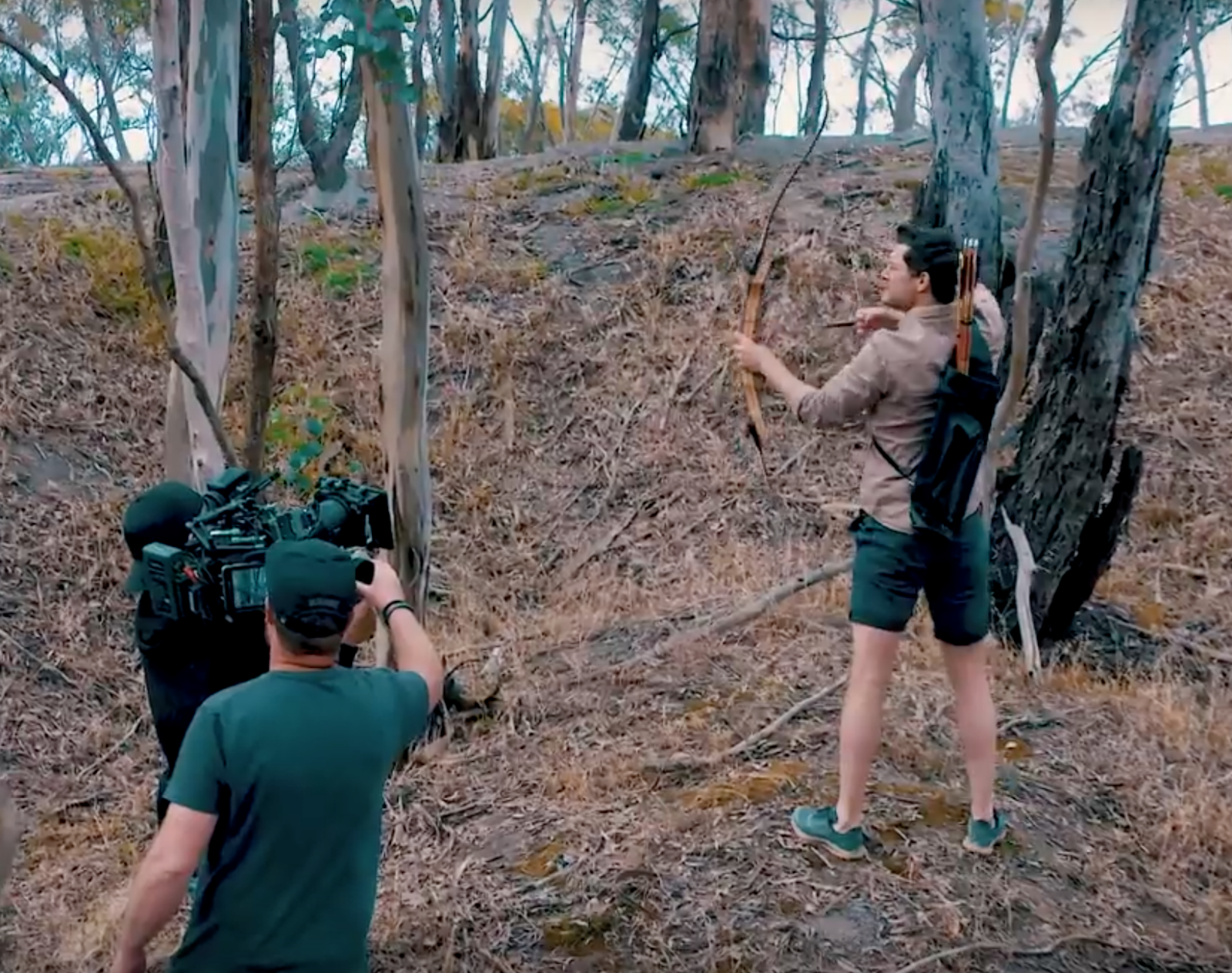
Rob Mills, who plays neighbourhood villain Finn Kelly, filming the ‘Neighbours Late: Endgame’ mini-series that definitely isn’t suitable for children (Photo: YouTube)
The culprit for this rampage is neighbourhood villain Finn Kelly (played convincingly by seasoned stage actor Rob Mills). So much for the “Good Neighbours” motto that launched the show all those years ago.
Neighbours first launched on Australia’s Channel 7 on March 18, 1985 but was axed after 170 episodes. Snapped up by the rival Ten network, it became a huge hit both in Ireland and Britain thanks to the vision it successfully sold of non-stop sun, sea and beautiful people living a generally carefree lifestyle. In a nod to the show’s enduring popularity in Ireland, it had planned to film episodes in Dublin this month, but the shoot was called off due to the Coronavirus pandemic.
The ‘Endgame’ finale airs on Monday, March 23rd, on RTÉ2.
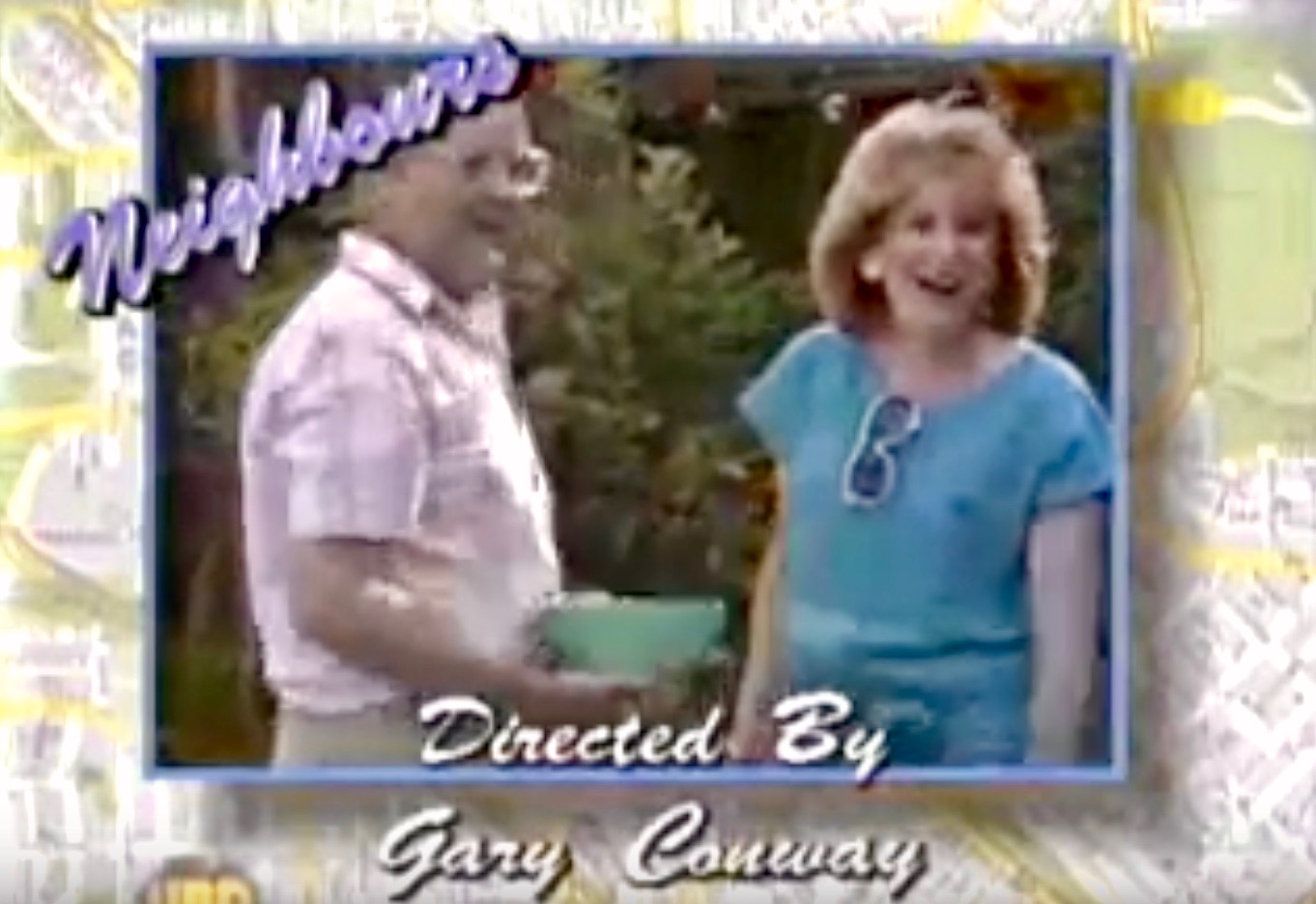
Flashback to the Eighties: The show’s original opening titles (Photo: YouTube)
Feel Good(Channel 4 Player – free registration required)
Meanwhile over on Channel 4, there’s no doubt that Mae Martin is on a mission. The young actress told BBC Radio 4 in 2016 that she wanted to eliminate “this underlying and quite insidious distaste that still exists for things like same sex affection.”
She also argued, in her Guide to 21st Century Sexuality for the station, that sexuality should be a “non-issue” and revealed she is often asked “Are you a girl or a boy?” or “Are you gay?” by intrusive strangers.
The accomplished Canadian stand-up comic and LGBT rights activist has since co-written — and stars in — this semi-autobiographical comedy-drama series in which she plays a younger version of herself (also called Mae) who’s starting out on the English stand-up circuit.
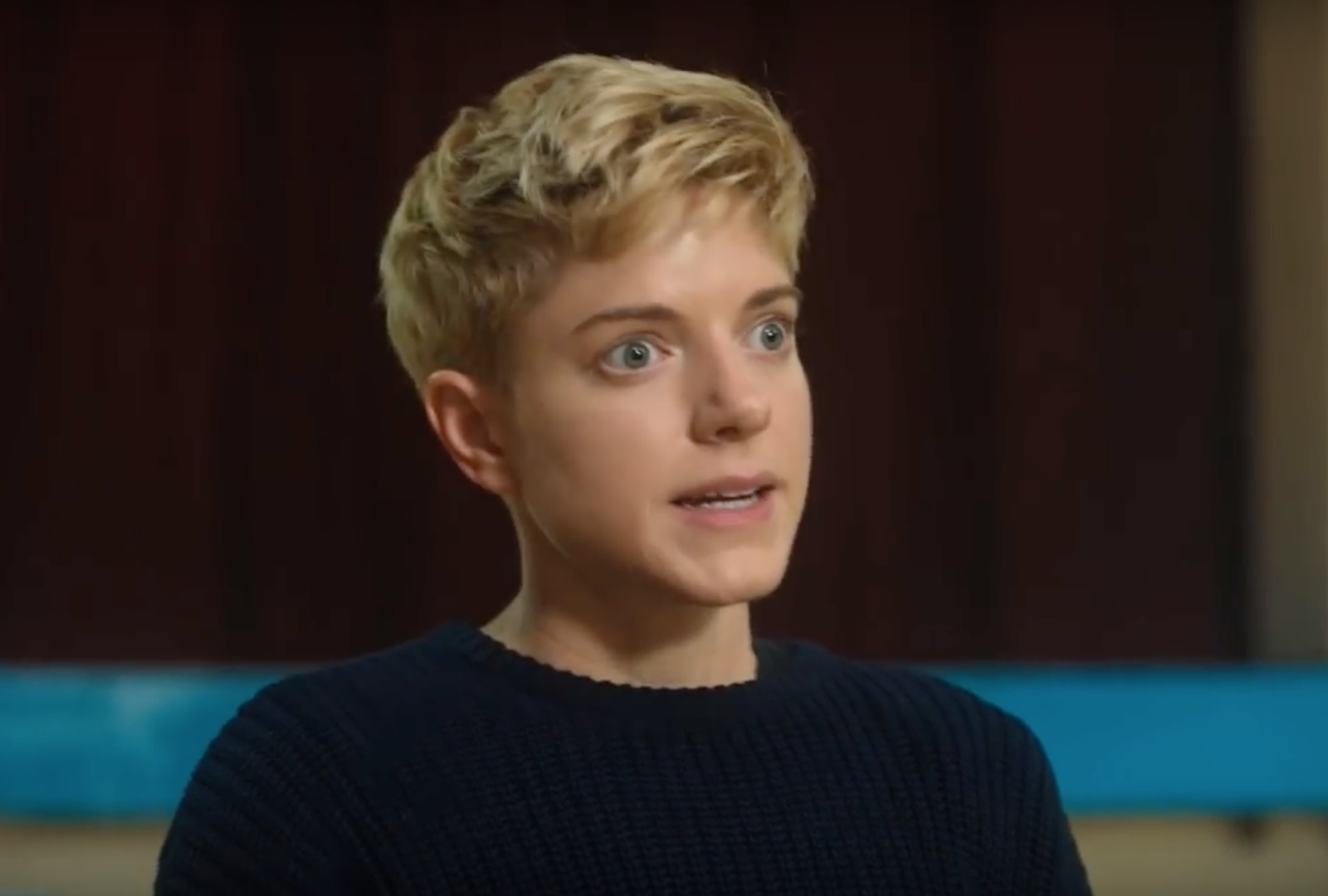
CANADIAN IN LONDON: Mae Martin in Feel Good, that uses comedy and drama in equal measure (Photo: YouTube)
The results are thoroughly entertaining. Using humour and drama in equal measure, Feel Good confronts important issues about society’s preconceptions which anyone who appears “different” still has to face in their everyday life.
Set in present-day England (filmed in London, Manchester and Blackpool), it opens with the fictional Mae about to take the stage at one of her first stand-up gigs where she meets and falls for Georgina or George, played by Charlotte Ritchie (Fresh Meat, Doctor Who), the only audience member who laughs at her jokes.
“She’s like a dangerous Mary Poppins, I’m like Bart Simpson,” Mae remarks as she struggles to get up the courage to approach her intended after the gig.
And even though George has “never been on a date with a girl before”, the pair get talking and embark on a whirlwind romance. Perhaps it’s because the episode only lasts 30 minutes that things move so fast: they kiss and within days, they’ve moved in together.
“It’s the greatest gift of my life that I get to have sex with god damn Princess Diana every day,” Mae gushes.
It’s not all plain sailing between the Canadian and her English Rose. There’s trouble when George seems very hesitant to introduce Mae to her friends who think of her only as heterosexual. Mae doesn’t understand why they can’t just conduct their relationship openly, and it threatens to drive a wedge between them.
When George is later chatted up by a male work colleague on a night out, she’s forced to tell him that she’s “seeing someone”, and pretends it’s a man.
In her Radio 4 series four years ago, Mae Martin said “tonnes of progress” had been made in changing attitudes towards the LGBT community, but that, inevitably:
“In times of economic and political uncertainty, intolerance always seems to worm its way in there; it raises its ugly head.”
Mae Martin’s insightful and really, really funny new series Feel Good premieres tomorrow — to get a taste, check out Mae’s set in Comedians of the World UK pic.twitter.com/asRVsOnmv0 via @Most
With her current six-part TV series, the actress is doing an excellent job of challenging the widely held prejudices that still persist, even in 2020. Watch out for an intriguing guest stint by Lisa Kudrow (of Phoebe in Friends fame) as Mae’s mean-spirited mother who calls herself a “repulsive old witch”.
The Boys in Green Part II (RTÉ One, Monday 16th March)
RTÉ presenter Joanne Cantwell talks to thecity.ie about her experience of being a female sports presenter in today’s climate. With the new 20×20 campaign shaping a new narrative for women in sports, is sexism still prevailing in an industry predominantly run by men?
With the Broadcasting Authority of Ireland publishing its decisions on recent complaints, Gary Ibbotson explores how the regulator deals with complaints about broadcasts(more…)
A proposed public service broadcasting charge, which was due to come into Effect on Janurary 1st 2015 has been postponed until further notice.
The charge, which former Minister for Communications, Pat Rabbitte proposed in 2013 to replace the current television licence, has been postponed due to the ongoing difficulties the current Government has faced in implementing water charges.
The new public service broadcasting charge was due to be issued to every householder regardless of whether they owns a television, and was expected to be approximately the same price as the current television license which currently costs €160.00 per year, with costs for businesses expected to be slightly higher.
Those who are currently exempt from the television license charge are thought to not be liable for the impending broadcasting charge due to being in receipt of a household benefits package.
The new charge was a plan devised by the former communications minister due to the trend of individuals watching news and RTÉ content on iPods, tablets, and smartphones.
This allowed for individuals to steer clear of paying a television license because of not owning a television, which meant that RTÉ were losing out on revenue.
According to a press release issued by the Department of Communications in July 2014: “License fee evasion is an ongoing scourge. This means that around twenty five million euro worth of potential revenue is lost annually to RTÉ
“The objective of our TV license system is to fund public service broadcasting. The revenue lost through fee evasion has an immediate impact on the quality of service that can be provided by the national broadcaster.”
Government permission had been approved to allow for An Post to access cable and satellite television subscription data for purposes of identifying potential fee evaders.
Former RTÉ producer Alex White has now replaced Pat Rabitte and is currently serving as the Minister for Communications, Energy and Natural Resources.
Last Sunday night saw more than 1 million people across the country tune into RTE’s Love/Hate season 5 finale.
The finale was a bit like the Red Wedding episode of Game Of Thrones as no one was safe. First we saw poor Janet (Janeh) meet her maker as Terence told Nidge that the “rats” he kept on about needed to be taken care of. However, Nidge didn’t seem to feel too guilty as his shiny new King Nidge runners from Trish soon took his mind off things.
Then Siobhan, ever the rat, told Detective Moynihan about Git’s death. Well, at least her own embellished version of what happened. Moynihan got mad and went from good cop to bad cop as we saw him pull over Nidge on the side of the road and chew up his tax disc. Sound.
Meanwhile, Fran the man was spotted by Nadine who promptly ratted him out to the guards and it wasn’t long before he was back in the ‘Joy. Things went rapidly downhill for Fran from here and let’s just say he’ll be walking like John Wayne for a while, if he ever walks again.
The final scenes of the finale all happened very fast. Siobhan called over to Trish for a cuppa where she admitted to a devastated Trish that Nidge was behind Janet’s death all along. Sneakily, we also saw Siobhan plant her rapist’s finger bone in the bathroom in a bid to frame her evil uncle.
As she left, Siobhan met Nidge outside where she finally flew off her rocket and confronted him about the beating that left Tommy in a coma. She then revealed that she was the rat all along and that she had framed him for Git’s murder and that the Gardaí were on their way.
Needless to say uncle Nidgey got mad, real mad, but before all hell broke loose between the two who arrives only Patrick in a Ford Transit with all guns blazing. He takes down Siobhan as he aims for Nidge and almost gets little Warren (Wardin) too as he chases Nidge around the back of the house.
With only one wear out of his new runners, a bullet to the chest sends Nidge to the ground and with one last look at his son, a second shot is fired into his chest as Patrick finally gets his revenge.
And that was it, the nation’s jaws all dropped to the floor.
So what’s next for Love/Hate?
Mary Murray has said she knew her character Janet’s demise was ‘imminent’, but was delighted she made it to the last episode of the season.
Tom Vaughan Lawlor, who played Nidge, looks set for bigger and brighter things as he released a statement saying; “The last five years working on Love/Hate have been an incredible and unforgettable journey for me…I’m hugely grateful to the show and to its fans and I am equally looking forward to the new challenges ahead for me both on screen and stage”.
Johnny Ward, who played Paulie, will “swap the guns for tights” as he is to take on the lead role of Peter Pan in this Christmas’s panto in the Gaiety Theatre, Dublin.
However, there is a tiny glimmer of hope for Love/Hate fans as when the Head of drama at RTÉ, Jane Gogan, was asked on RTÉ’s Morning Ireland if this is the end of Love/hate she simply stated; “That decision is yet to be made” before adding “It’s a very big world and it can extend far beyond what we’ve seen so far…it can go in all sorts of directions”.
All we can do is cross our fingers and hope Stuart Carolan hears the cry of the people for more. Or you never know, Tommy could wake up and it could all just have been a bad dream.
But for now, to deal with our Love/Hate withdrawal symptoms, what can we be tuning into on TV?
Unfortunately we have to wait till April for Game of Thrones to return to our screens, however the new series of The Big Bang Theory is on RTE2 every Wednesday at 7pm, The Flash has only started on Sky1, and the new season of House Of Cards is out on Netflix in February. A new series, Fortitude, is starting on Sky Atlantic in January, and both The Walking Dead season 5 and Greys Anatomy Season 11 will also be back on RTE in the near future.
On top of all this we have plenty of Christmas flicks to look forward to in the coming weeks too.









You must be logged in to post a comment.