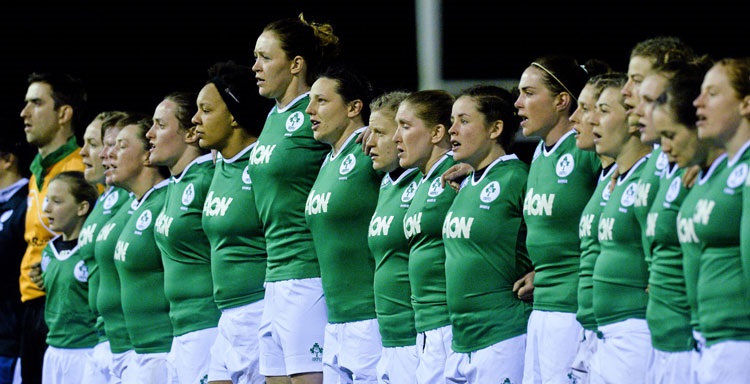
Ireland’s women may not have won this year’s Six Nations championship, but they proved themselves as a force to be reckoned with. Sarah Harford went to their last match to find out more about this team, and the perception surrounding women’s sports.
Tag: Rugby
-
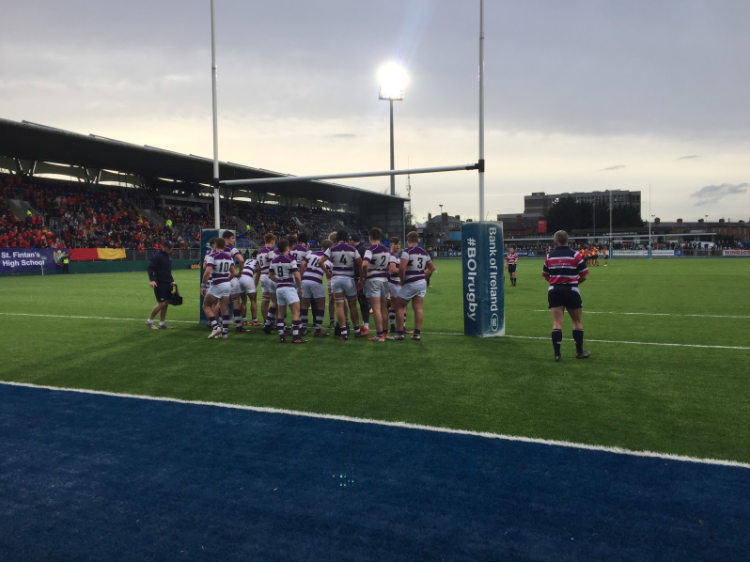
The (Rugby) Boys Are Back In Town
With the rise of the St Fintans in the Leinster Schools Senior Cup, James Carroll asks is rugby an elitist sport?
-

Preview: Ireland vs New Zealand
By Harry Hatton
On the afternoon of November 24th, 2013, the Irish rugby team seemed for one brief moment of time as if they were on top of the world.
At the Aviva Stadium that winter afternoon, Ireland had breezed into a 19-0 lead against New Zealand inside 20 minutes of action. It was incredible stuff, being in such a commanding position against the most feared and dominant rugby nation on the planet.
However, New Zealand demonstrated why they are the world’s best by overhauling Ireland’s lead with a late try and conversion to snatch victory by two points.

Source: Wikimedia The manner in which New Zealand actually came out victorious was one of the hardest things for Joe Schmidt’s weary charges to take.
The Television Match Official (TMO) had to be called in to confirm that Dane Coles’ pass to substitute Ryan Crotty was not forward. That decision tied the teams up but there would be more drama to follow.
Aaron Cruden’s conversion attempt went wide of the posts but Welsh referee Nigel Owens ordered it to be retaken as he deemed Ireland to have charged out from their goal too early.
Cruden found the target at the second attempt which left the home side stunned and still without a test victory over New Zealand. At that stage three years ago, we wondered what it would take for us to ever beat the world’s best team.
Two weeks ago, we discovered just that … the best way to beat New Zealand is to take the game to them and put them on the back foot. And that’s exactly what Schmidt’s determined band of warriors did at Soldier Field, Chicago in front of 62,300 spectators.
They stood up to the task even before kick-off. As the All Blacks performed their customary Haka war dance, the entire Irish match-day squad stood in a figure of eight in memory of the late Anthony Foley, the Munster and Irish stalwart who passed away in October.
Ireland were mentally and physically ready for the big occasion against a side that had eight survivors from their World Cup final triumph over Australia a year previously.
Tries from back row forwards Jordi Murphy and CJ Stander in addition to Conor Murray crossing the line meant that Ireland held a 25-8 lead at half-time. Winger Simon Zebo stretched Ireland’s lead with another try after the break before the inevitable New Zealand onslaught began.
The world champions displayed their strength in depth as tries from TJ Perenara, Scott Barrett and Ben Smith began to test the mental resolve of this Irish side.
Schmidt’s men regrouped and sealed the historic triumph in the ‘Windy City’ with a late try from Henshaw and a successful conversion from Joey Carbery.
The result ended New Zealand’s 18 game winning streak. It was also Ireland’s highest ever points total against the All Blacks. New Zealand don’t get beaten too often so when they do, it comes as a bitter pill to swallow.
Ireland will definitely be without the services of flanker Jordi Murphy when they renew acquaintances with the All Blacks this Saturday evening. The Leinster player suffered an injury to his left knee in the first half of the historic win in Chicago and it was later confirmed that he had suffered anterior cruciate ligament (ACL) damage, which will rule him out of action for between six and nine months.
Luckily enough, Ireland have two able replacements in Munster’s Peter O’Mahony and Leinster star Sean O’Brien, who both got game time in the facile 31 point victory over Canada last Saturday.
New Zealand were given a boost ahead of the trip to Dublin with Brodie Retallick’s second half appearance in the 68-10 rout of Italy last weekend leaving him poised for a return to the starting line-up.
Retallick could be joined in the second row by Sam Whitelock. The pair are well accustomed to each other as they were second row partners when New Zealand defeated Australia to reclaim the World Cup in October 2015.
If Ireland are to come out on top again against Steve Hansen’s world champions, they’ll need to stop winger Julian Savea. Savea scored 45 tries for New Zealand in the space of four years and the winger will aim to use his powerful presence to break down the Ireland defence.
It’s unlikely that this game will resemble the Chicago fixture in terms of such high-scoring and free-flowing rugby. New Zealand will want to reaffirm their status as the best international rugby team by whatever means necessary.
This is bound to be another physically demanding clash and it just appears that New Zealand have the greater strength in depth to emerge on top after a gruelling 80 minutes of action.
Guinness Series Ireland v New Zealand Aviva Stadium Saturday, 19th November
Kick-off 5.30pm
-
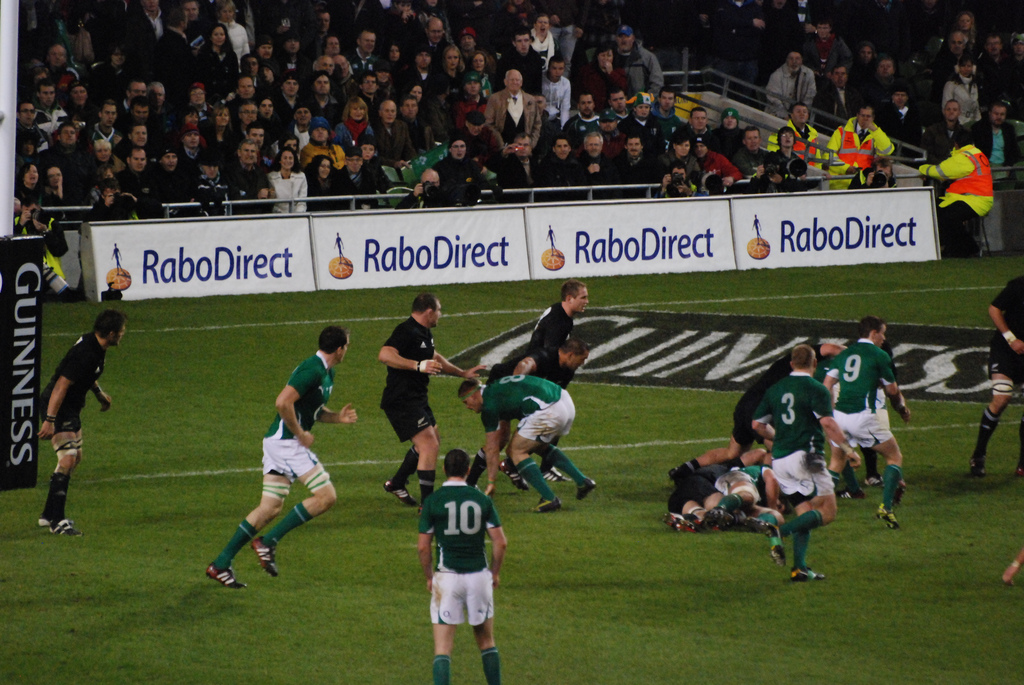
Rugby’s changing its attitudes towards concussions
Finally it seems common sense has prevailed, as players are no longer allowed play the “hero” when they have sustained head injuries on the field of play. The power is now firmly in the hands of team doctors and referees.
This was on full display in Ireland’s final game of the autumn series against Australia, where four Irish players Johnny Sexton, Gordon Darcy, Rob Kearney and Conor Murray were assessed for concussion. Murray’s case was particularly telling however as the player clearly didn’t want to come off after receiving an Australian knee to the head.
Dr Eanna Falvey the Irish team doctor took control however, and made sure that proper protocols were observed before allowing the Irish scrumhalf to re-enter the game.
Despite the potential repercussions at such a critical juncture in the game, taking a player out of the game in this instance sends out a very positive message to the rugby world.
High profile instances like this are vital in order to change the culture within rugby and put player safety number one.
Rugby still has a ways to go however, for example Ireland’s and Ulster’s Luke Marshall sustaining four concussions between March 2013 and February 2014 was not acceptable.
Perhaps the IRB can learn from the NFL who were recently hit with an $675m concussion settlement with an additional $112m in player’s lawyer fees.
This has resulted in much stricter protocols in regards to concussions especially in regards to a player suffering multiple concussions in a season. All players that suffer suspected concussions are automatically taken into the locker room for assessment and in most cases are ruled out of the remainder of the game.
Although rugby’s process for assessing concussions on the pitch are up to scratch, perhaps they should take a leaf out of the NFL’s book in regards to multiple cases. Cleveland Tight End Jordan Cameron has missed a month of action after suffering multiple concussions this season in direct contrast to how Luke Marshall was treated.
I’ve talked to Eoin Cremen who is the physio for Seapoint RFC who compete in Division 2A of the AIL. He told me how he had the power to remove a player from the pitch if they have suffered a concussion.
He also said how awareness has made his job much easier as a referee’s can now request a player leave the field for assessment if deemed necessary. He outlined how attitudes are changing but it is an ongoing process as medics have little precedent due to rugby still being in early years of professionalism making it necessary to learn on a case-by-case basis.
-
Kimmage chasing exposé on drugs in rugby
In February next year, it’ll be 25 years since Paul Kimmage took his first job in journalism. In that time, he’s written about several drug scandals and is now in the middle of investigating one in rugby. In this interview, he talks about that story and the reaction it’s been met with so far…
On first viewing Paul Kimmage and Laurent Benezech would not seem to have much in common. One is a former professional cyclist who retired into sports journalism and the other a former French rugby player turned businessman . Yet when Kimmage met Benezech, the parallels between the two were apparent.
“It was like looking at a mirror image of myself back in 1990,” explains Paul. “Eerie, except… well I never faced the threat of potentially; I think it was 270 grand he was looking at if he lost that case.”
The case Kimmage refers to is the defamation suit that the French rugby player’s union, Provale, took against Benezech for comments he made in an interview with Le Monde about doping in rugby. That case finished in September with the decision going Benezech’s way.
At the end of October, Benezech’s book, Rugby, Ou Sont tes Valeurs , was published. Paul wrote about the Frenchman in the Sunday Independent and described his book as a “brilliant expose on doping”.
In his book, Benezech charts the weights of french rugby players from year to year. Some players gained a phenomenal 20 kilos of muscle over the course of just one season; a feat he says that the human body simply cannot accomplish naturally.
So, should we be worried about drugs in rugby the same way people should have been worried about it in cycling?
“Absolutely. Oh, absolutely,” replies Paul. “It’s too dangerous. Some of the injuries are horrific. The big talking point now is concussion. And why is that? Because a guy weighing 150 kilos is running at you and he’s going to hit you hard. He’s going to hit you real hard.”
Benezech and Paul have one disagreement over drugs in rugby. Where Paul says doping, Benezech would say medical assistance.
“I said, ‘for me that’s doping’,” explains Paul. “(Benezech) said yes you can argue that but once you make the case that they’re doping, they’ve got the perfect response. ‘Okay, if we’re doping, where are the positive tests?’
“And there are no tests because the IRB, the governing body aren’t interested in this, the same way cycling wasn’t interested and that’s why (Benezech) makes a very interesting parallel between rugby being now in the position that cycling was before the ‘Festina Affair’.”
In the hour that I spent with Paul, the Benezech story kept cropping up throughout. The implications of it are huge for rugby but it’s the immediate reaction to Paul’s piece in the Sunday Independent that he feels shows the true mentality surrounding the sport.
As of the following Tuesday evening, he had yet to be contacted by anyone in the world of rugby about his piece or Benezech’s book. He mentions an argument he had with a friend the night before we met and how it left him wondering about his own attitude to drugs in sport.
“I went to bed last night and I thought, ‘what is wrong with me? Why can’t I just ignore this and move on?’” he says. “But I can’t. It just… it winds me up. It’s the parallels between when I wrote about cycling in the 80s to the response to that then and the response to that now. I mean it’s absolutely the same. ‘Ah yeah, it’s not Kelly and Roche, it’s these foreigners that are doing it, not our lads.’ Same thing.”
But it must leave him disillusioned when people would rather ignore the problem?
“I got disillusioned with it last night,” says Paul and for a brief moment he almost despairs. “But it’s a fleeting disillusionment because I find myself getting up the next day saying, ‘Right. Where are we going? We’ll go for it again.’ I just won’t back down.”
“So it’s almost like I’m constantly going around,” he explains as he leans to ground to pull something out of the air. “It’s like I’m going around constantly getting fella’s heads and pulling them out of the fucking ground and saying, ‘Look right now. Look! This is what is in front of you. Look at it now. And then putting my hand back down again, putting their heads back in the sand.
“I don’t give a fuck what you make of what you see but I want you to fucking see it and acknowledge that it’s there. After that I don’t care.”
And what about other sports journalists? Who has picked up on the Benezech story since Paul’s article was published?
“There’s a lot of guys that I would have said were very good, young journalist coming through the ranks now at the moment here. And they’re in radio shows and they’ve got TV shows and you would have thought, ‘well these guys will be on it straight away’.
“Have I had one call from any of these people [regarding Benezech’s book]? Not one. Have I had one call from any of the rugby correspndents? Not one.
“We want to be fucking cheerleaders. That’s the default position of the sports writer. He wants to be a cheerleader. And there are very, very few who won’t do that. And that’s kind of depressing isn’t it?”
So what’s the point? Sportsmen have their heads in the sand and sports writers are cheering them on. Why continue with the story?
“You see as much as I’ve highlighted the silence that’s appeared, that’s actually the bit that’s interested me,” he says. “That’s actually the bit that’s driving me to work at it again.
“That silence tells me, ‘he’s right, this is the truth we’re getting here folks’ and the silence for me is the adrenaline to go again.”
What does he think is going on in the minds of the top officials in rugby here in Ireland who have seen his feature on Benezech?
“I think that anybody involved in the sport at that level would have opened that paper, read that piece, closed it and said, ‘Oh fuck’.
“This is coming. Definitely.”
-

Ireland dig deep to takedown South Africa 32-15

Joe Schmidt’s charges are off to a flyer in the Autumn Internationals after humbling the Springboks.
Knowing they couldn’t take on the South Africans in an arm-wrestle, Ireland played a very containing game in the first half dominating possession. This dominance was not entirely reflected on the scoreboard but thanks to a couple of Johnny Sexton penalties Ireland held a narrow 6-3 lead at the interval.
Having contained the much fancied Springboks in the first half Ireland made a dream start to the second half as Rhys Ruddock, a late replacement for Chris Henry, slid in for the games opening try within two minutes. After Johnny Sexton nonchalantly slotted over the extras from the corner it became a two-possession game 13-3.
After imposing their physicality South Africa eventually managed to breach the Irish defense for their opening try after 57 minutes, when Marcell Coetzee applied the finishing touches to an attacking maul.
South Africa were clearly the dominant side at this stage as Ireland’s tackle count started to grow, however after some stout defending Johnny Sexton yet again punished a South African infringement at the breakdown with an excellent kick.
Just three minutes later after clashing with Rob Kearney in the air, replacement South African hooker Adriaan Strauss was sin binned by referee Romain Poite who had consulted his TMO, a major turning point in the game.
With ten minutes to go Ireland started to turn the screw as the new centre partnership of Robbie Henshaw and Jared Payne showed their potential as they threatened to break through for a try. However cynical play by the South Africans in the ruck resulted in another penalty which was duly slotted over by Johnny Sexton making it yet again a two-possession game 19-10.
Just two minutes later Ireland were again knocking on the door of the South African 22, After a few near misses earlier in the game Connor Murray caught out South Africa’s flat defense as he sent Tommy Bowe clear with a grubber kick for a try in the corner. In his last act before making way for Ian Madigan Johnny Sexton slotted over the extras in what was a flawless kicking display and ultimately man of the match performance.
Madigan also got his name on the score sheet with a cracking penalty from 45 meters before some slack Irish defending allowed Willie La Roux to send JP Pietersen clear for a consolation try and final score 29-15, but no one other than perfectionist Joe Schmidt really minded. Unfortunately it also meant Ireland fell just four points short of their largest ever margin of victory over the Springboks.
-
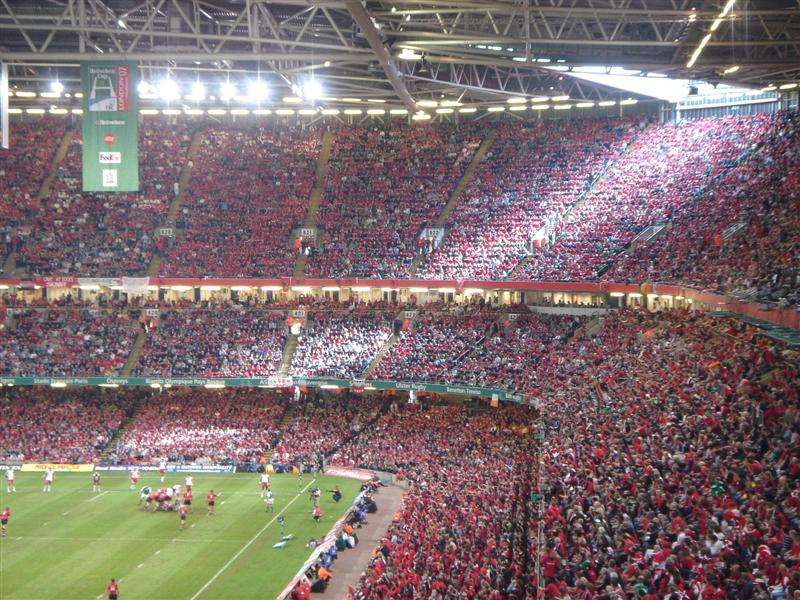
Irish sides get into gear for European Competition

With less than two weeks until the inaugural European Rugby Champions Cup, Ireland’s top two sides locked horns at the Aviva Stadium on Saturday evening; with Munster romping home to an emphatic win.
The Red Army can be very optimistic of their chances in Europe this season following their dominating 34-23 victory in what was a first win over their bitter rivals at the Aviva.
Munster are set to take on French powerhouses ASM Clermont, and English sides Saracens and Sale Sharks with rookie head coach Anthony “Axel” Foley remained cautiously optimistic, “To win the competition, you have to accumulate enough points to get out of your group. We know you don’t start talking about winning this competition until you’re in a final. It’s about getting there.”
Leinster on the other hand have to be concerned after a lifeless performance, as Matt O’Connor’s outfit rarely matched the aggression and appetite for the game shown by Foley’s charges. Further concern for the Blue Army is a growing injury list, as Fergus McFadden joined long-term absentees Sean O’Brien and Cian Healy on the treatment table.
Just like their rivals Leinster have also been drawn into a difficult pool with French side Castres and English sides Wasps and Harlequins. With a reduction of teams from 24 to 20 easy groups within the new competition should be a thing of the past.
Something that should suit both these sides who have found easy groups hard to come by the last few years, unlike Ulster whose run of easy groups has emphatically ended as they have drawn champions Toulon, Scarlets and Leicester Tigers.
Unfortunately with the restructured tournament Connacht won’t compete in the top tier this season, instead they will take part in the Challenge Cup this year. As the fourth tier Irish side they are unlikely to get a chance to achieve fairytale wins in the new structure such as those over Harlequins, Biarritz and perhaps the biggest shock in Heineken Cup history victory over Toulouse
Photo: Whoelse http://bit.ly/1vdgpmc
-
11 Top sports stories of 2013
Following 2012 was always going to be tough to match with regards sporting moments, but 2013 certainly left us with some memorable sporting events. The City took a look back at some of the most unforgettable sports stories of 2013.
Lance Armstrong admits to doping: In January 2013, Lance Armstrong shocked the world by admitting to doping during all seven of his consecutive Tour de France titles. Despite the fact that most people suspected it, it was still fascinating to hear the former record holder admit to the doping after so many years of denial.
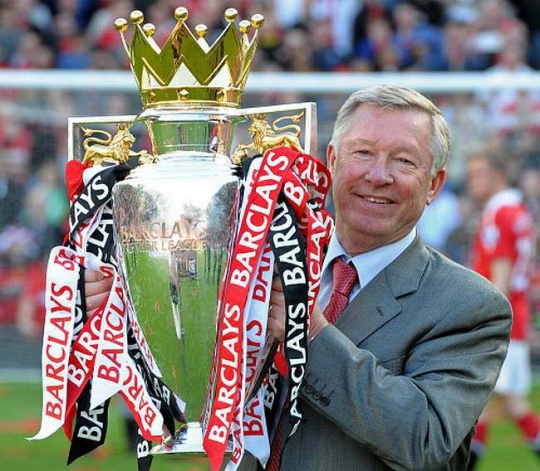
Ferguson Retires: The premier league said goodbye to one of its longest serving and most successful managers when Sir Alex Ferguson announced his retirement as manager of Manchester United in May this year. The 26 year stint at the club saw him win 13 Premier League titles, 5 FA Cups, 4 League Cups and the Champions League twice. He ended his final season at the club in great fashion leading United to their 13th Premier League title and 20th English title overall.
Oscar Pistorius murder charges: On February 15th, the world was shook by the news that famous Paralympian Oscar Pistorius may have murdered his girlfriend, Reeva Steenkamp. Pistorius has yet to stand trial for the case in which his 29 year old girlfriend was shot dead at his luxury home in South Africa.
Andy Murray wins Wimbledon: It was the moment the British public had waited so long for, and the pressure was higher than ever for the young Scottish man, but Andy Murray held his nerve to win his first Wimbledon title in July this year. The 26-year-old Scot became the first British player to win the Wimbledon men’s singles title in 77 years with his victory over Novak Djokovic.
4000th winner for McCoy: Northern Irish jockey Tony McCoy made history in November when he won his 4000th career win over jumps. McCoy, who had made no secret about his desire for a 4000th win, reached the milestone during a second of two races at Towcester Racecourse, Northamptonshire.
Irish Ladies bring home the grand slam: The Irish ladies Rugby team made history in March winning their first ever Grand Slam after a muddy battle against Italy in Parabiago. Irelands captain Fiona Coghlan led the side to a 6-3 win as they secured their fifth win of the 2013 six nations campaign.
Boston Marathon bombings: On April 15, the world watched in horror as bombs went off near the finish line of the Boston Marathon. The horrendous and cowardly act killed 3 people and left 264 gruesomely injured.
Heffernan takes gold: Irish Walker Robert Heffernan won gold after triumphing in the 50km walk at the World Championships in Moscow earlier his year. After narrowly missing out on a medal on four occasions at the championships, the Cork native took a clear lead after 44km to secure his victory. He became only the third Irish athlete to win a Gold medal at the World athletics championships, following on from Sonia O’Sullivan and Eamonn Coughlin.
The Lions Tour 2013: The British and Irish Lions tour took place during the summer and saw the team take a 2-1 victory over Australia in a three test series. The win was perhaps overshadowed from an Irish person’s perspective by the controversial dropping of Brian O’Driscoll by Coach Warren Gatland before the final game.
Clare Hurlers win All-Ireland: Clare won the All-Ireland hurling title for the first time since 1997 in September. They overcame a strong Cork side to win 5-16 to 3-16 in Croke Park. Hero of the day, Clare hurler Shane O’Donnell scored three goals in the opening 19 minutes of the game to help his county to victory.
Ireland narrowly defeated by the All Blacks: Hearts shattered throughout the country as New Zealand made a remarkable come back to bring the sides level in the last seconds of Ireland’s test match against the All-Blacks at the Aviva Stadium in November. A conversion was all the separated Ireland from the biggest win in its rugby history. As the ball soared between the posts Ireland’s almost brilliant victory turned into one of the country’s most heart-breaking defeats.
-

Could Ireland realistically host the Rugby World Cup?
It is now common knowledge that the IRFU, as well as the governments of both the Republic and Northern Ireland are working on a plan to submit a bid to host the 2023 Rugby World Cup.
The two biggest sporting events ever to be hosted in Ireland are the 2003 Special Olympics and the 2006 Ryder Cup. Both these events were viewed as great successes. However, the Special Olympics only lasted eight days, while the Ryder Cup lasted for just under a week.
To host the Rugby World Cup, Ireland would have to take on a task, the likes of which it has never seen before. To give an example, the next RWC will be held in England in 2015. Visitors from 20 countries will be landing in 11 cities all across England and Wales, to witness an event lasting a month and a half. 13 state of the art stadia will be used throughout the tournament, ranging in capacity from 16,500 (Kingsholm Stadium, Gloucester) to 90,000 (Wembley Stadium, London).
The problem for the IRFU is that in order to host the tournament in 2023, solely in Ireland, with no games being played in a joint host country, would be to get full participation from the GAA.
Nine of the ten biggest stadia in Ireland are owned by the GAA. The only stadium in the top ten, is the Aviva Stadium, which is part owned by the IRFU. The only problem with these stadia, is that the majority of their capacity crowds, come from terraced stands. To host a successful international tournament, all stadiums would need to be fully seated.
The stadia which would be recommended in the bid, as well as the infrastructure surrounding them would need to be greatly improved.
It will not be an easy task by any stretch of the imagination, but with a lot of work put in over the next ten years, it is definitely a possibility.
-
Are we happy to accept failure?

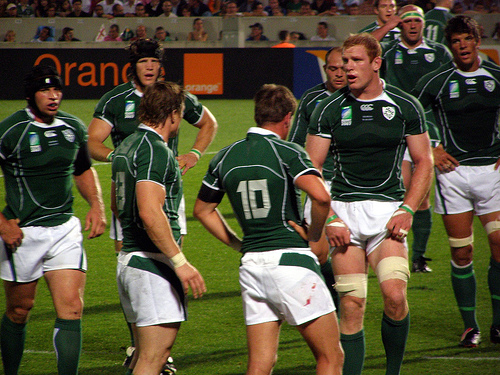
Image courtesy of Wikipedia commons Ireland’s agonizing defeat against New Zealand’s All Blacks in the Autumn Internationals last weekend signaled yet another disappointment for Irish sports. Having lead the game the whole way through, all it took was one try from the Blacks to crush Irish dreams in a matter of seconds.
Within minutes of the final whistle being blown, Facebook and Twitter were awash with comments from members of the public expressing their anger and disgust. Then, just like that, the public’s words of resentment were replaced with words of consolation for a team that had “played so well.”
In his post-match interview to BBC, Seán O’ Brien expressed his frustration at his teammates for letting such a monumental victory slip through their fingers. Despite receiving words of encouragement from the journalist, he summed it up for all of us when he said: “we lost.”
The question that must be asked then is, are we as a country happy to accept failure?
Ask yourselves, would New Zealand have been so quick to emphasis the positives had the roles been reversed? The answer: probably not.
As the Irish sporting history books would suggest, we have come to be known as a nation of “second bests.” Back in 1990, Ireland suffered a harrowing loss to Italy in the world cup quarterfinals. Despite not managing to win a single game during the tournament, thousands thronged the streets to welcome home our “heroes.”
Evidently, there are those who will argue that it was a massive achievement for a country so small, but Portugal and Switzerland who are of similar population size to us have both managed to reach the top level in various sports, so why can’t we?
Ireland is a small nation that punches well above its weight in many aspects of life. We are home to some of the world’s greatest writers like Oscar Wilde, and great musicians like U2, so why doesn’t the same success transcend to sport?
Of course, we have produced many champions such as Ronnie Delaney, Michael Carruth, Robert Herffernan, Eammon Coghlan, and Sonia O’ Sullivan among others, but in recent times, our results have failed to match our potential.
Sports Psychologist Canice Kennedy believes that this is because “ we have a national inferiority complex which is typical of small, young nations previously occupied by a large foreign power. This transfers into low levels of expectation in terms of sporting success in some sports particularly where we have not been successful in the past or where we do not have modern training facilities. In these sports we cannot compete with our neighboring countries…while we are never happy to lose, we are often happy not to lose badly.”
The reality is that there is a very thin line between success and defeat. In his famous poem entitled If Rudyard Kipling said “If you can meet with triumph and disaster, and treat those two imposters just the same…you’ll be a man, my son!” However, Roy Keane, one of Ireland’s leading sportsmen is one who is unwilling to accept this mentality as he famously once said, “show me a good loser, and I’ll show you a loser.”
Ultimately, if you can find happiness in defeat, then you’ll never be a winner. Keane has recently taken up post as assistant to Ireland’s new football manager Martin O’ Neill. Only time will tell if he’ll be able to communicate his winning ideology to a bunch of players who are in desperate need of some tough love. And, who knows, if he can succeed, then maybe other sports will follow suit.


You must be logged in to post a comment.