Tag: Running

  • Strength in Every Step: How Runner Defies Diabetes on the Road to Clontarf Half 

    Strength in Every Step: How Runner Defies Diabetes on the Road to Clontarf Half 

    By Daniel Keegan 

    The half marathon. 21 kilometers of grit, determination, and sheer endurance. Many people compete in Ireland’s several half marathons each year, but even for the fittest individuals, the thought of running such a distance is daunting. 

    For type 1 diabetic, Aisling Ní Aogáin, she not only has to worry about running, but she also must worry about regulating and managing her chronic illness. 

    She describes how she began running not long after her diabetes diagnosis, which came at age 11. 

    “My parents used to take me to my local parkrun on Saturday mornings when I was about 12 and I really enjoyed them,” Ní Aogáin said. 

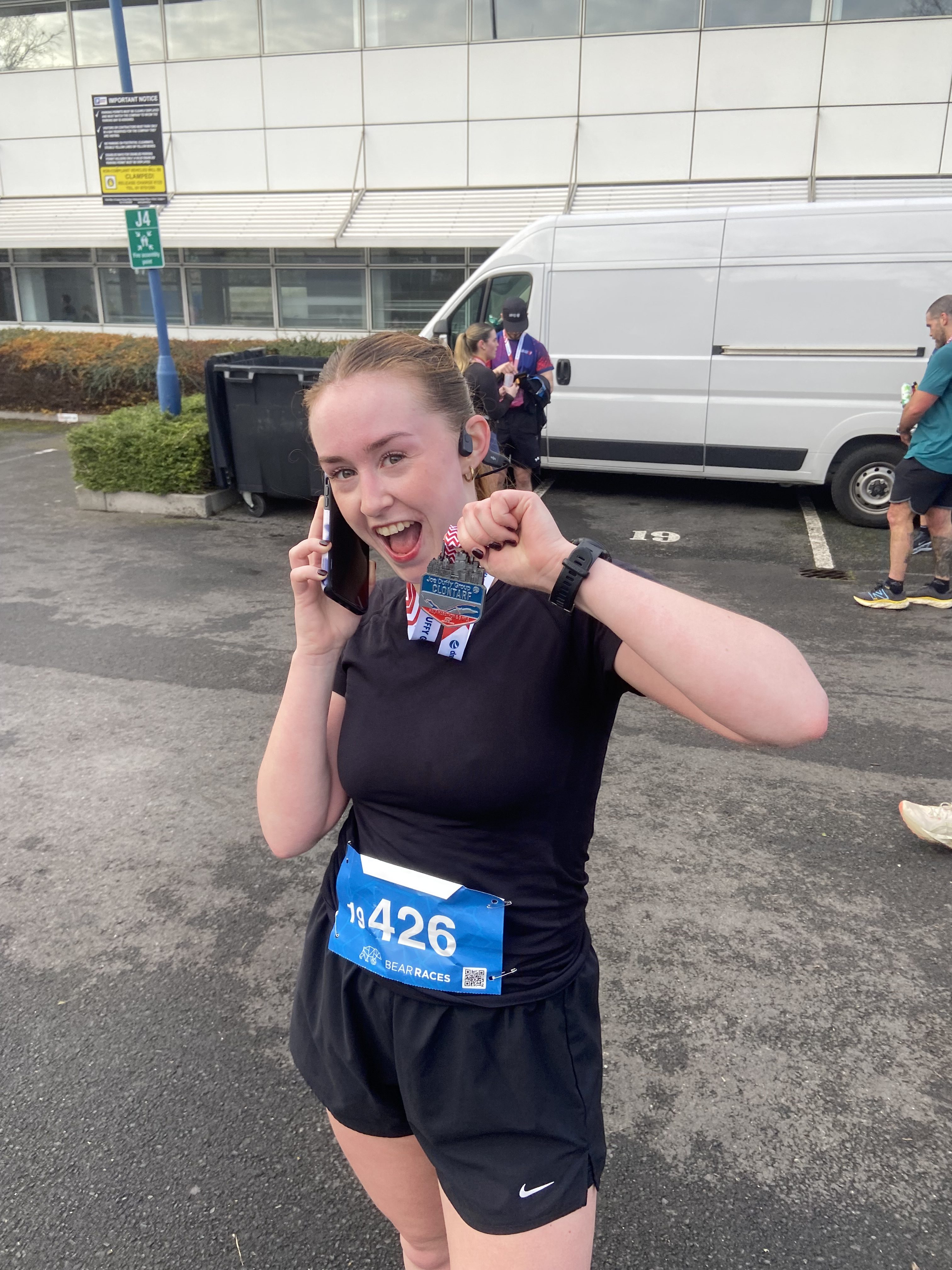
    “As I got older, I started running more. I progressed by doing 10k’s and then during the 2021 lockdown me and my sister trained and ran our own half marathon and then in 2023 I completed the Clontarf half marathon which I really loved and enjoyed,” she added. 

    On November 30, she will take part in her 2nd Clontarf half marathon. For her it’s much more than just the distance – it’s a statement showcasing that she can do incredible things regardless of her health misfortunes. 

    However, this isn’t her first phenomenal feat as a diabetic endurance runner. Her most remarkable race came in October 2024 when she completed the Dublin City Marathon in aid of Diabetes Ireland.  

    “In 2024 I decided I wanted to do a marathon. So, I applied for a charity spot and raised €1,500 for Diabetes Ireland and the whole experience of running the marathon was amazing,” Ní Aogáin said.  

    Although she thoroughly enjoyed the experience, she explains the struggles that came with managing her illness with the stress of training and running her first marathon. 

    “It was very difficult alongside diabetes trying to manage blood sugar and making sure I was well enough to run. If I had very high blood sugar levels, I would feel lethargic, ill and lack energy. If I had low blood sugar levels, I would feel very weak and faint and it would be dangerous for me to run,” Ní Aogáin said. 

    “For most of the run [marathon] I had high blood sugars because I was fearful I would have to stop and treat a low blood sugar, and I really didn’t want to interrupt the good momentum I had,”, she added. 

    She describes how having diabetes can make her feel lonely at times, but she is continually reminded that she is not alone in her quest to manage her condition while accomplishing other goals and accomplishments in her life. 

    “When I’m finding it difficult balancing life, running and diabetes it’s nice to remind myself that I’m not alone even though it can feel very lonely,” Ní Aogáin said. 

    “I follow a lot of people on social media with type 1 diabetes who run, so it’s a nice reminder that even with all the odds stacked against me to keep going,” she added.  

    The Clontarf half marathon is held twice annually in November and July. However, this year’s November race did not go according to plan. Aisling and fellow participants are left to wait an additional two weeks to complete the race as severe weather conditions from the arrival of storm Claudia resulted in the race being postponed. 

    The original race was due to take place on November 15. 

    Aisling didn’t let the poor weather dampen her spirits and is still eager to break her own personal records in the upcoming race. 

    “I chose to do the Clontarf half this year again because I know the route and the last time I did it, I didn’t really train for a time. So, this time I wanted to do a sub-2-hour half marathon,” Ní Aogáin said. 

    “Even though the race got postponed, I’m still really looking forward to trying and pushing my limits this time.”  
  • The Runner taking on Dublin Public Transport 

    The Runner taking on Dublin Public Transport 

    By Aidan O’Boyle 

    Daniel Toal is a Dublin runner who can run faster than the Luas. Kind of. 

    His YouTube channel Craic and Kilometres shows him take on unique challenges while exploring Ireland’s finest trail running destinations as well as doing the country’s best and worst races. 

    Since Toal started the channel 5 months ago, he’s amassed over 1,740 subscribers, with his videos gaining over 138k views. 

    Toal has been running for six years, taking it seriously the last four and more recently got into trail running about two years ago.  

    Speaking to TheCity, Toal said: “Ireland has such stunning landscapes and trails, and I really wanted to share that with people. Starting the channel with those POV trail races felt like the perfect way to kick things off.”  

    Toal remarked that he always had a “huge passion for running” and loves watching running content. However, he felt like there wasn’t much Irish running content. 

    “I felt like there wasn’t much Irish running content out there. That really motivated me to start my own channel and share fun races and crazy challenges in Ireland,” he said.  

    Toal was also inspired by popular Swedish runner Goran Winblad who he watches regularly. “My favourite running YouTuber would definitely be Goran Winblad.” 

    Toal’s most viral video ‘I Raced Dublin Bus to the Airport (POV)’ highlighted just how slow Irish transport can be. Toal races the number 16 bus from O’Connell Street to Dublin Airport. 

    “I got the idea from using that bus myself to get to the Airport. I thought to myself I’d easily beat this running! It took about an hour to drive 11.5km but it felt like an eternity.   I also thought it could be a fun challenge for runners and also non-runners.” he said. 

    “I knew it would be a bit too easy if I didn’t have any rules.” 

    “So, I put a couple of rules in for myself, ‘I have to stop at all the traffic lights, slow myself down, and follow the exact route’,” he added. 

    In an enthralling watch Toal leads the bus at many stages, with his friend Niall on the bus watching giving us a rather amusing view of Toal trying his heart out to beat the bus to the airport. 

    Ultimately, after sitting at traffic lights for five to six minutes of the run, Toal arrived at Terminal 1 at 55:57, which was heartbreakingly close to the Dublin Bus arrival time of 54:10. 

    The video got a great reaction, with 1.5k likes and many comments praising Toal for his great effort. 

    Many comments exclaimed how it showcased just how bad our transport can be at times. “Really sums up the inept public infrastructure in this country,” said one viewer. 

    Another user said: “You can see why we really need that metro to the airport now haha, well played anyway, amazing video”, while another suggested that Ryanair CEO Michael O’Leary should watch the video. “Send this to Michael O’Leary when he says Dublin has adequate airport transit…” 

    Toal said the video had a great impact on his following. “My YouTube channel doubled last month from racing Dublin Bus.  ‘The Irish Independent’ and ‘Dublin Live’ got in contact with me which also helped to boost the video.” 

    He agreed with many of his followers on Dublin’s transport issues. “The transport isn’t great in Dublin compared to other major European cities. I wanted to highlight that during the race to the airport with Dublin Bus.” 

    A week later he took on the Luas, racing from Connolly train station to Heuston train station, and to his delight comfortably won. 

    “I ran the lights when the roads were safe. I thought that was going to be difficult, but I ended up overtaking another Luas on the way. It was much, much easier than I thought.” 

    Toal doesn’t plan on stopping anytime soon and he happily told me he has a few more transport challenges lined up. “I want to take on the E1 Dublin Bus from Dublin city to the airport, and I’ll also take on the dart for a few stops around the city.” 

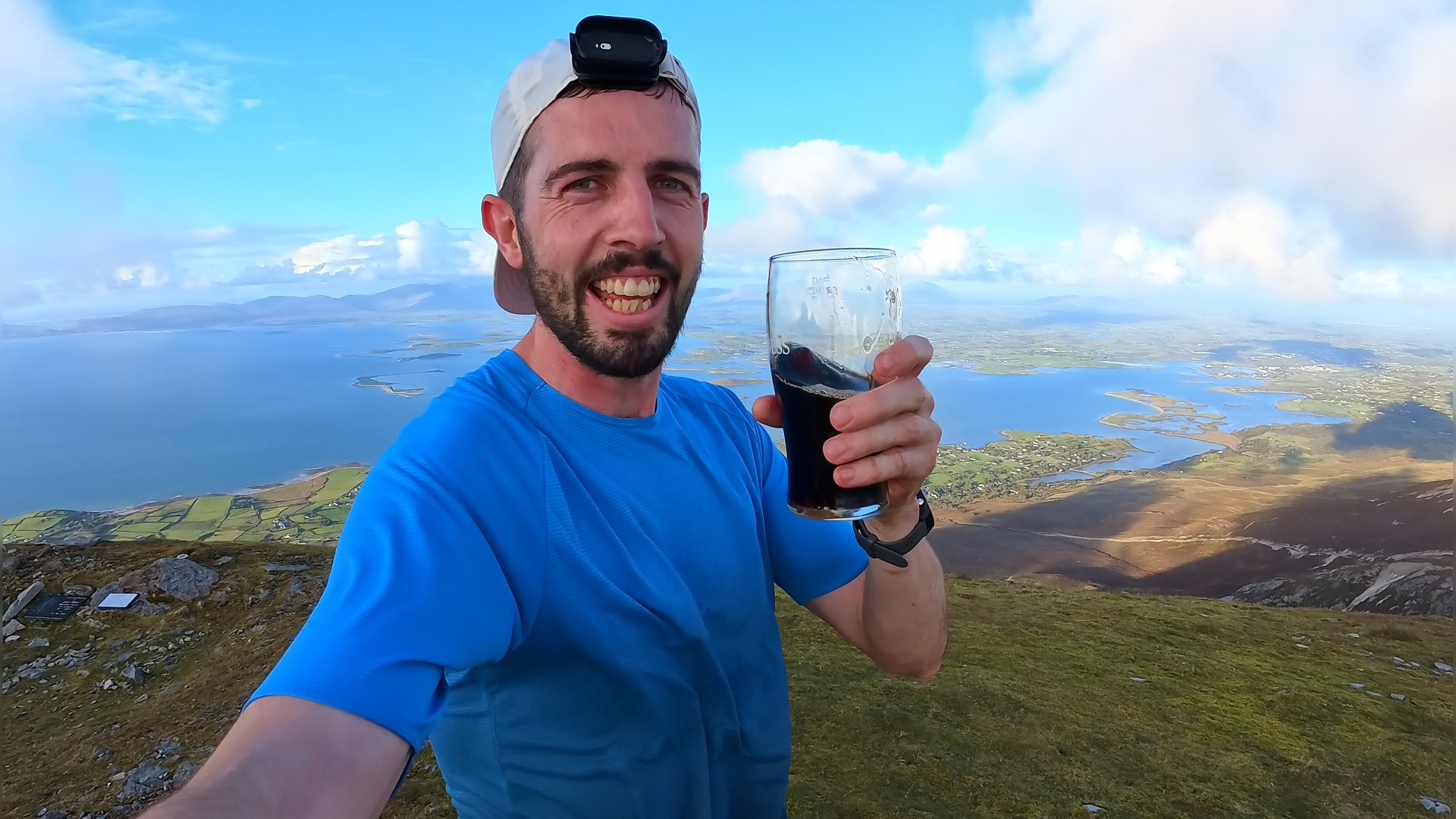
    Toal’s enthusiasm is clear in all of his videos but none more than his video a few weeks ago ‘Can a Pint of Guinness Survive Croagh Patrick

    His infectious energy is shown clearly in this video with his quick-witted responses to fellow hikers a staple of the video. 

    One of the first interactions shows this when a passerby exclaims “Is that a pint of Guinness fair play to ya”. Toal’s prompt response is “I swear to God it was water when I started”, which draws a laugh from the bemused lady. 

    Seeing all the positive reactions to Toal’s absurd but great challenge makes it a wholesome and enjoyable watch.  

    So, it was no surprise that when I asked Toal what his favourite video to record was, he was quick to say: “ ‘Can a Pint of Guinness survive Croagh Patrick’ was definitely my favourite to record, everybody along the way had funny reactions and was cheering me on.” 

    There’s a notable absence of “hate” comments under any of Daniel’s video which is a nice change to the sometimes toxic nature of social media comment sections. 

    When I quizzed Daniel, he agreed saying “I haven’t really paid attention, it’s been mostly positive comments.” 

    His channel is an example of the positivity online creators can bring to our screens. 

    To finish off our chat I asked Toal his favourite moment since making the channel and his response sums up the character he is. “I’ve a small channel but I love the impact it’s having, people have come up to me to say they’ve starting trail running because of the channel or it’s helped them get back to running again, so I love that I can inspire some people.” 

  • Dublin Marathon: a history in facts and figures

    Dublin Marathon: a history in facts and figures

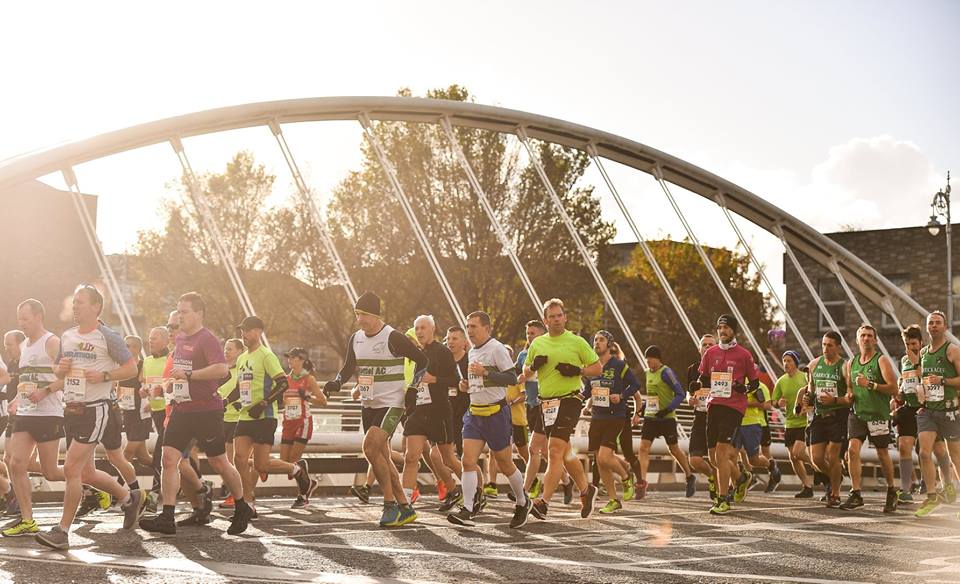
    20,000 people showed up to the startline of the 39th Dublin marathon, from runners just hoping to finish to elite athletes looking to get their share of the €120,000 prize pool.

    The Dublin Marathon began in 1980 and has since been an annual event. Over the years, roughly 306,000 runners have taken part in what is now one of the biggest marathons in Europe.

    This year’s event pulled in 20,000 runners compared to its year of inception, when only 2,100 runners braved the 42.1km course.

    Since the Marathon began there have been 12 Irish lady winners. Christine Kennedy (1990 + 1991) and Cathy Shum (1993 + 1996) both winning two marathons each. In that time there have also been 11 Irish Men’s winners, Dick Hooper holding three wins to his name.

    However, Sunday’s gold medals were claimed by two Ethiopian athletes: Asefa Bekele who finished with a time of 2:13:23, and Mesera Dubiso with 2:33:48.

    There are two trends we can see by looking at the data graphs. Firstly, women’s times are getting faster, and the graph shows a positive correlation with faster times being posted as the years go on. However, times for men don’t seem to follow such a consistent trend.

    The second thing we notice is the number of Irish athletes winning the Dublin Marathon effectively stopping after the 2000s. That is apart from 2013 when there were two Irish winners, Sean Hehir and Maria McCambridge, the first Irish winners in their categories since 1993 (John Tracey) and 2000 (Sonia O’ Sullivan).

    The reason for this was the event failed to get a headline sponsor, and the usual invitations that are sent out to East African athletes were not issued.

    The first major sponsorship was in 2001 when Adidas sponsored the race. Since then, the number of participants and the size of the prize money has increased with this year’s race having a prize pool of €120,000.

    The splitting of the prize pool between the runners and wheelchair athletes raised controversy on Twitter, with many users confused about the disparity in the winnings. First male and female received €12,000 each, while first male and female wheelchair athletes receive €750.

    There is also time bonus prizes for Irish athletes who complete the marathon in certain time brackets starting at 02:35:00 for males and 03:00:00 for women.

    The first Irish athletes over the line this year were Lizzie Lee who took third place overall but won the women’s Irish National Marathon title in a time of 2:35:04. Mick Clohisey won the men’s Irish National Marathon title with a time of 2:15:57 (which is only five seconds slower than the 2017 winner’s time).

    The Dublin Marathon takes place every year on the Sunday of the October Bank Holiday. Registration starts at €70 for the early bird and gradually reaches €90 as it reaches capacity.


  • Dublin Marathon in Pictures

    Dublin Marathon in Pictures

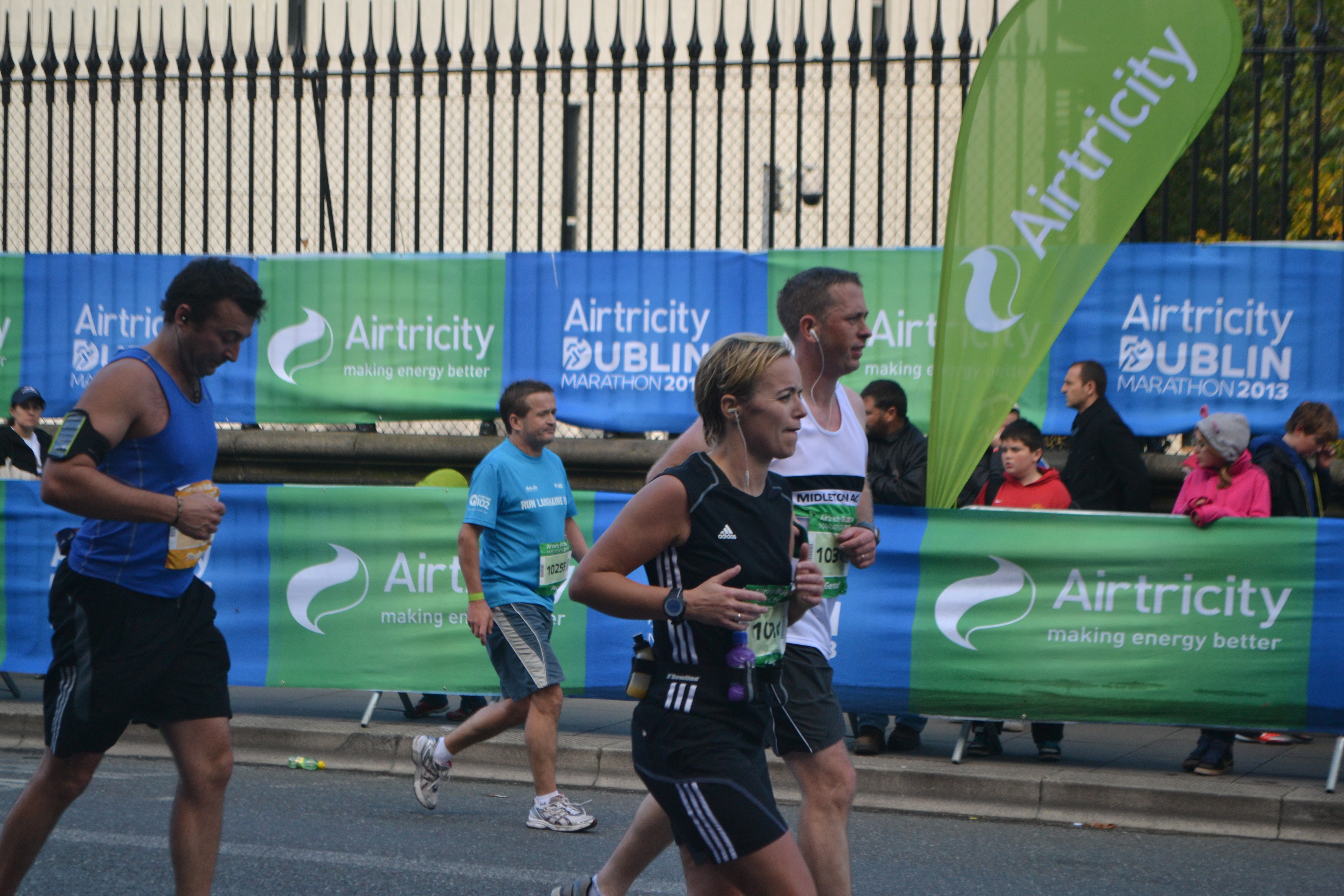
    Almost 14500 people ran in the Dublin marathon on Monday.

    The men’s race was won by Irishman Sean Hehir with a time of two hours, 18 minutes and 19 seconds with Dublin’s Maria McCambridge winning the women’s race in two hours, 38 minutes and 51 seconds.

    Liz O’Brien,  Irish Girl Guides leader, completed the Marathon in eight hours 30 minutes, making her the first Irish woman to complete a marathon on crutches.

    Below is a series of images from the finishing line at the marathon.