Tag: sexuality

  • IMMA presents Primal Architecture

    IMMA presents Primal Architecture

    This slideshow requires JavaScript.

    It might be getting cold outside but in the Irish Museum of Modern Art (IMMA), things are getting all hot and bothered. Clammy palms and rosy cheeks at the ready.

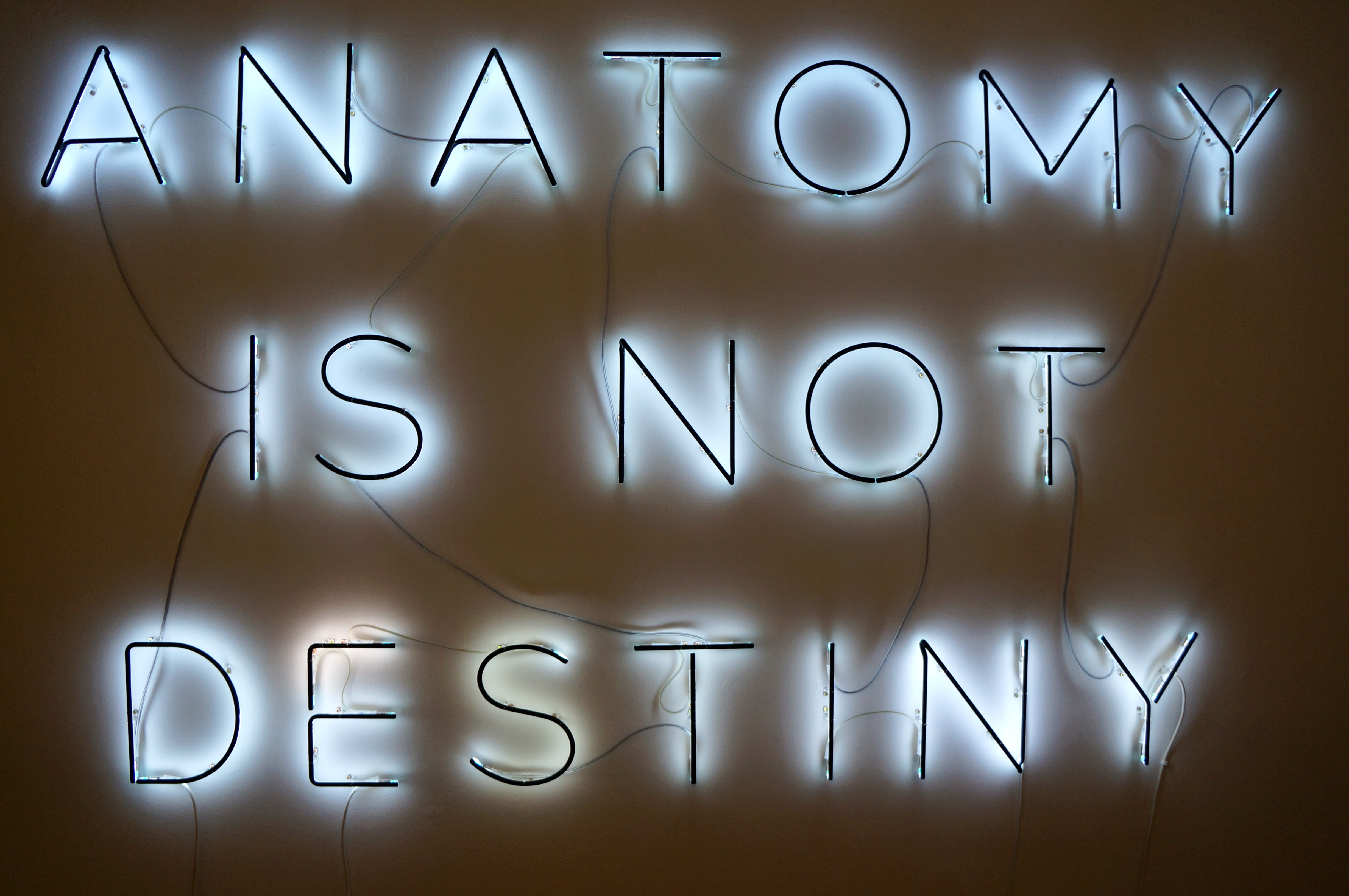
    The new exhibition, Primal Architecture, combines works from international and Irish artists exploring sexuality, pseudo-autobiography, identity, power and nostalgia.

    It is art so let’s not be immature. I said Art; you know art for arts sake, which explains a room, filled with coloured lumps of clay. But it’s art so therefore it must be brilliant, right?

    There is a disclaimer at the door warning visitors and perverts alike that this exhibition contains adult themes and explicit imagery.

    However, the warning is a futile attempt in the face of Irish conservatism, which has led to a nation with the sexual maturity of a gnat. That is, a very small and repressed gnat.

    With baited breath you cross the threshold. I have read the disclaimer, I’m ready for it.

    Entering the exhibition you are met with an assortment of books piled on wooden platforms. After reviewing the first book of poorly sketched vaginas I fell subject to my cultural identity, profusely blushing, with my equally awkward Irish counterparts gazing deeply and thoughtfully at the floor. No doubt wishing it would swallow them up.

    The exhibition is split into eight rooms, forming an autonomous sequence of chapters displaying the artist’s interpretations of the human condition.

    Borrowing its title from the work of influential American artist Mike Kelley in which he uses sculptural forms to map the history of his personal genealogy.

    The highlight of the exhibition was the work of Kevin Atherton. His piece shows the artist arguing and conversing with his younger self on two screens. The double self-reflexive portrait is both amusing and poignant.

    Leading to a series of photographs by artist Linder. The images are softly pornographic and to be frank, mundane; naked women with their flowers covered with large flowers.

    As a whole the exhibition has the distinct feeling of something too big being pushed into a space too small leading to a disappointing performance and leaving the viewer feeling confused, a little frustrated and waiting for the all important climax which didn’t quite happen. Sigh.

    As an art lover, I hate to criticise. It was an interesting exhibition. The name is perhaps too large for the tame portrayal of sexuality; a glimpse of renaissance cleavage or the tiny penises of Roman sculptures are arguably more erotic.

    Quite simply, Primal Architecture, did not live up to what it said on the tin – or the disclaimer.

    Exhibition runs from November 8th 2014- March 1st 2015. Entry is free.

    Images: Sarah Fitzgerald
  • The  “it”  Generation

    The “it” Generation

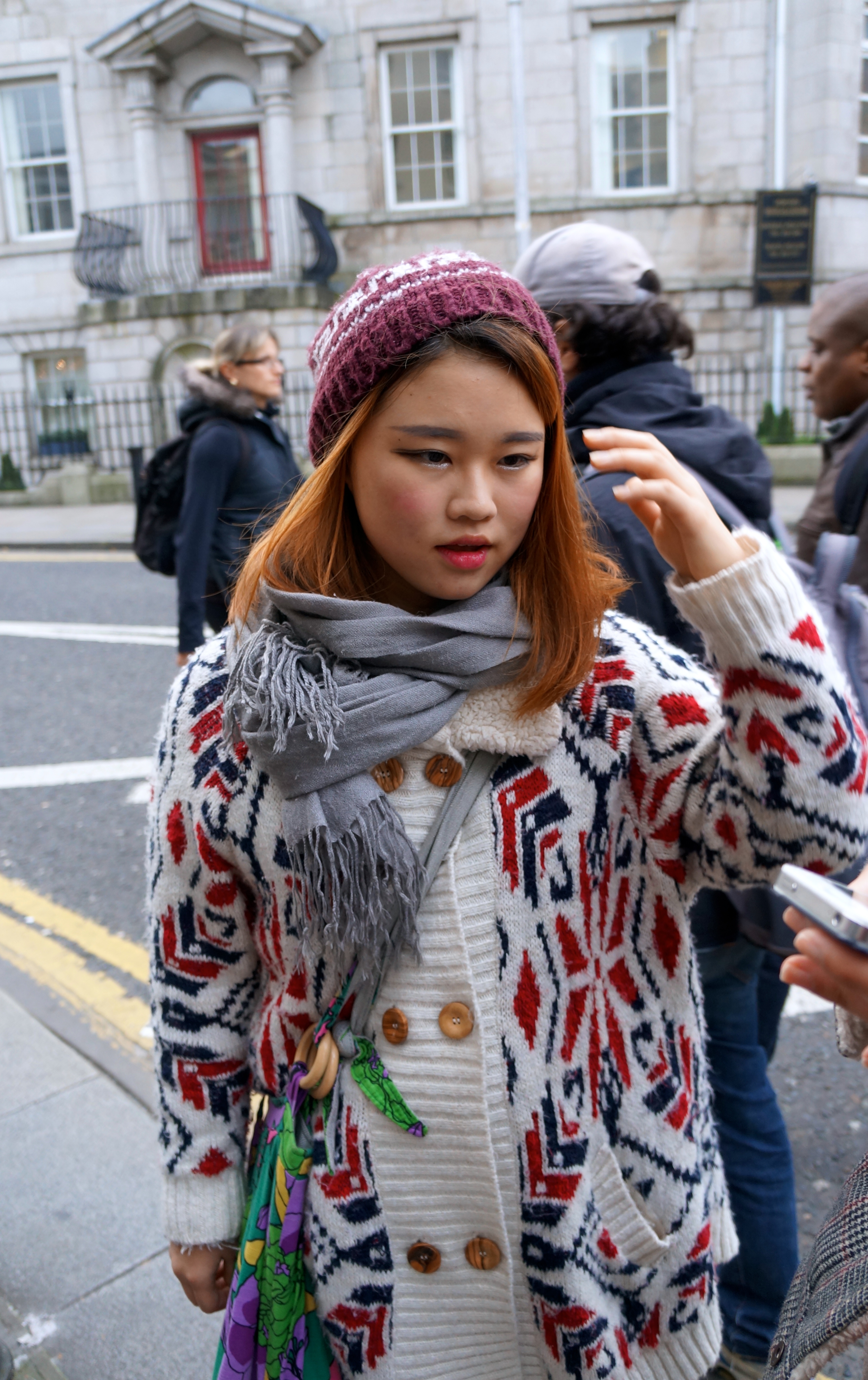
    Winter has finally arrived and with it gender-bending fashion is becoming a style staple for how we wrap up. It liberates gender stereotypes and sexuality.

    Combining a male and female style aesthetic, androgynous fashion is giving way to a unified gender whose ambiguity defies social and psychological roles within society. A third gender has arrived and “it” is here to stay, (pun intended).

    To put it in to context, stylist Louise Cassidy explains the current trend:

    “I am a straight female, with a doting boyfriend and a keen appreciation for the female form. Experimentation is so prudish. The niche now is to be ‘blasé’ when it comes to his and hers.

    “You love men, loathe boys, and lust after women not girls. I don’t question my sexuality for noticing an ample bosom, nor do I question my femininity for donning a crisp shirt with baggy jeans.

    “The crossing between male and female stereotypes is arousing and has opened borders of non-specific sexuality. Androgyny simply allows you to have your cake and eat it in as many different flavours as you can fantasise. So why choose?”

    The fashion reins have been loosening; Androgynous styling is continuing to dominate the collections of top fashion houses and the high street has been hot on their heels to follow.

    Top Shop released their new AW14 collection; silk shirts, sharp tailored basics, wide legged tuxedos, crushed velvet collars and printed cigarette trousers were all staples of the eagerly anticipated collection.

    COS, an independent line from the ever growing H&M group, prides itself on designing collections for the contemporary man and woman. There is uniformity in their androgynous collections, which demonstrate a quintessential retake of the wardrobe basics interchangeable between genders.

    Major fashion houses like Helmut Lang and Armani have also featured uni-sex clothing in their recent collections.

    While an androgynous aesthetic might be of the moment now, its popularity has remained an undercurrent within the history of fashion.

    Emma Mullen is a fashion buyer and has been working in retail for six years; “I hate discussing trends because being trendy is not the same as having style. Style is transcendent of time, like when Coco Chanel designed the iconic Chanel suit, or when Katharine Hepburn became an unconventional icon with her wide legged trousers and oversized blazers. These women were not trying to set trends, they simply had style.”

    The 1960’s were the climax of androgynous fashion. Glam rock introduced feather boas, hip hugging jeans, and lavish jewellery as integral items of effeminate dress. This revolutionised sexual and masculine stereotypes. In a stark contrast, models like Twiggy were changing the runways with boyish frames and short hair.

    David Bowie in his free spirited reincarnation as Ziggy- hello spandex and glitter and the rise of Grace Jones and Prince paved the way for a new and undefined style, capitalising on their sexual ambiguity.

    Padraig Murray is a fashion student at NCAD and outspoken member of the LGBT community. He believes fashion is more than clothes but a representation of the person and a reflection of the society we live in “as we get more liberal with our wardrobes, it seems to mirror society as a whole becoming more liberal”

    “Traditional gender roles can be extremely narrow. As a homosexual, growing up I felt restricted to choose between masculinity or femininity, as the only acceptable social norm to follow. Androgyny has opened peoples minds, the LGBT community no longer feel like a misunderstood minority within society.”

    “Some see androgyny as a ‘neutered’ nature or existence, having no strict aversion to either sex but masturbation is an androgynous act too, you are playing both roles within the sexual scenario. Would you consider that a neutered experience too? Androgyny open the gates for sexual experimentation and an open platform for self expression.” He said.

    In 1994, Calvin Klein released their first gender neutral cologne, CK One. The face of the fragrance Jenny Shimizu became the poster girl for female androgyny with her boyish frame and shaved hair. The 1990’s also saw the arrival of the metro-sexual male as the boy band was born.

    Elliot Sailors, Jana Knauer, Stella Tennant, Krisitna Salinovie, and Jamie Bochet are all models known for their androgynous appearances. Hitting the catwalks in 2010 model Patricia Arajo changed the face of androgynous modelling, becoming the first transgender model to break in to high fashion.

    Since her arrival, catwalks in London, Milan, New York and Paris have been set alight with androgynous, transgender and cross dressing models. Paul Smith, Marc Jacobs and Jean Paul Gautier have introduced these models in to the mainstream, having them walk in their ready-to-wear collections.

    The newest face of androgyny is Andrej Pejic, originally scouted as a girl his long blonde hair and delicate features have seen him in hot demand from all the largest fashion houses.

    Today it seems sexual barriers barely exist and gender ambiguity is here to stay. Androgynous fashion is no longer a taboo but a fact of life.

  • Are females exploited by the music industry?

    Are females exploited by the music industry?

    Robin Thicke and Miley Cyrus performing at the 2013 VMA's.

    Robin Thicke and Miley Cyrus performing at the 2013 VMA’s.

    It is a well-known fact that the music industry’s sole purpose is to generate one thing and one thing only, and it is not music.

    Music is merely the by-product of the industry’s ravaging thirst to generate money. An industry whereby female sexuality – and sexuality in general – is one of the tools that the industry uses to increase potential profits. However, to say that females are exploited by the industry is a step to far.

    Exploitation is the unruly use of a person or a group of people in a cruel and unjust manner

    The vast majority of females who are “exploited” by the music industry receive (quite handsome remunerations for their services.

    Just like in advertising, the music industry employs the idea that “sex sells”. Miley Cyrus is not the first, nor will she be the last female artist to use her sexuality, her figure or her desirability in an attempt to increase her profile within celebrity culture.

    Cyrus is merely just the newest recruit to enlist into the sexuality culture to which the music industry has adopted – not created.

    Men find women desirable, women find other women desirable. These human elements are used to help generate profit in whatever manner possible.

    In 1981, Duran Duran hired female actresses to wrestle one another in mud, topless, in the video for ‘Girls on Film’.

    Madonna has been infamous for her use of sexuality throughout her music career – be it in her music videos or during her stage performances.

    The use of sexuality is not confined to just female artists.

    The gesture of crotch-grabbing is synonymous which Michael Jackson, while R’n’B artist D’Angelo starred completely naked, and oiled, in his video “Untitled (How Does It Feel)”.

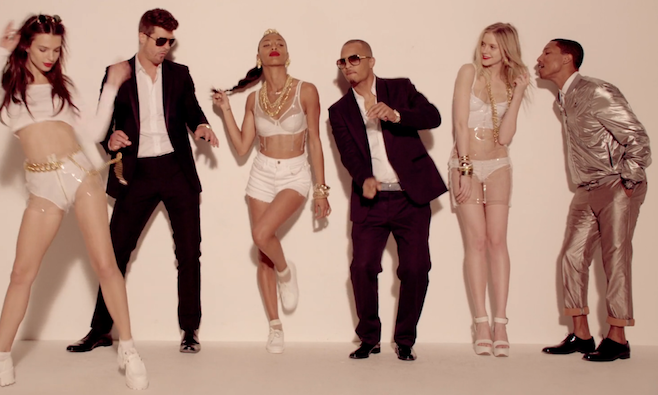
    Females are not portrayed favourably in some sections of the music industry – especially in hip-hop or rap –  there is a strong case to claim that there is a high levels of misogyny in the aforementioned genres of music, but the females are not exploited. They are paid. If they are comfortable with flaunting what god gave them for the world to see in music videos, or gyrate in a sexual manner, that is their prerogative as professional female adults earning a living.