Viewing sustainability as a trend is hindering its potential success as when reflecting on similar product-based trends in Ireland, the push for sustainability looks to be following a very familiar path.
Pat Kane, an
advocate for sustainability and winner of the
Inspiration in Environmental Change 2019, has shown the public there are simple ways to be sustainable, through her
shop Reuzi.
When setting up Reuzi, Kane had one driving factor: “My two
little boys, Thomas and Conor. Every day, I’d read the papers, watch the news
and then think to myself, I need to find a way to contribute to a better world for my
kids, I had to do something about it… and so, Reuzi was born.”
Reuzi in Foxrock Village. Credit: Andrea Byrne
Pat said: “Sustainable living can be affordable. As I like
to say, we all have lunch boxes, tupperware, bottles and cutlery – that’s a start. Carry a little minimal
waste living set around everywhere you go, you
will be surprised by how much waste you will avoid. Carry a shopper bag – I am
sure by now we all have at least one sitting at home – and avoid extra bags.”
“Learn how to say no and only buy what you need.
Start small, set yourself three to five
goals and master them. You don’t have to spend money to live a more sustainable
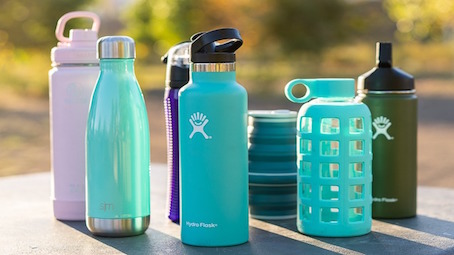
life. Use your own cutlery on-the-go, carry a water bottle and a mug, items you
most likely already have at home, to avoid single-use products,” she said.
Kane’s motto is “sustainable living made simple”, which she tries to
reflect in Reuzi. The store stocks over 500
products and tools to help “get your eco on”. Customers can try products before
bringing them home, and are encouraged to ask questions and find solutions to the
sustainability issues they are facing. Kane also tries to help customers find ways to influence others that might not be quite there yet
when it comes to sustainability.
“On top of that, we have partnered with Minimal Waste Grocery to introduce
customers to refill stations, which offer anything from snacks to cleaning
products. Bring your own containers and have
fun,” she said.
“Each detail has been carefully put together, from our store
scent, to the plants we have used around the store. Everything is there to
create a balanced, welcoming ambience.
Customers are invited to join our free talks and workshops, as we go through subjects such as food waste and
recycling, all the way to DIY Body Butter or Nappy Creams.”
Reuzi also offers lunch and learn
sessions to businesses and schools, as well as sustainability audits. “We run House Parties where small groups of friends and
family members can come together and learn about sustainability and also
purchase products they may have heard of but have never had the chance to see,”
Kane added.
The world is changing, and as a society when buying, we can’t only think of now, we need to be thinking with longevity in mind. As shoppers, we need to learn to be mindful. Our choices need to outlive not just a season, but last for a lifetime.
Even the savviest of coffee consumers have experienced the coffee lid confusion. At the condiments counter you’ve asked yourself; do I take the regular lid, or this slightly off white compostable, but just as effective version? Any one of us concerned about the climate crisis will choose whatever option sells us a more environmentally sound version of ourselves. But how compostable is this new phenomenon, really?
On November 6 of this year, the Minister for Climate Action, Richard Bruton announced that he will be introducing a coffee cup levy to single-use and compostable cups. The new levy, which will be introduced within three years, aims to encourage a pivot towards more sustainable options when it comes to coffee containment.
Today I’m announcing a range of new environmental levies to crack down on Plastics, Single Use Cups, Landfill and Takeaway Waste. Vital that we reduce the amount of waste created. This is a key part of the Climate Action Plan https://t.co/x6v3RYxtO4
Compostable coffee lids have become increasingly popular among cafe culture in recent years. Any sustainable alternative has to be a good thing, right? This would be the case if the right infrastructure was in place in Ireland for the industrial composting required of ‘compostable’ cups and lids.
A typical compostable coffee cup lid
Understanding domestic recycling is not intuitive so it’s not surprising that many people believe a cup or lid labelled ‘compostable’ is a better choice for the environment. Arguably, they can be, but only when they’re correctly disposed off. Composting these ‘compostable’ lids and cups, can only happen in a controlled environment – commercial composting.
Composting these ‘compostable’ lids and cups, can only happen in a controlled environment – commercial composting.
Our public system
In Dublin, we are somewhat in the junior infants equivalent of European waste management services. German cities have made a positive example of themselves by providing segregated waste bins on their streets, for better, more efficient recycling. According to Simon Brock from Dublin City Council (DCC), Dublin has attempted to implement a segregated bin system in the past. These trials, the DCC said, yielded a high contamination rate of recyclable waste, which means they cannot be recycled.
Dublin City Council collects over 16.5 thousand tonnes of waste per year. This includes waste from public bins, street sweeping and illegal dumping. When our city is collecting this much waste, should it not be utilising the same system as our European counterparts? A second trial of this segregated system is planned to be introduced in the new year in certain areas of Dublin.
A segregated system can only work under a unified public effort to ensure we are correctly separating our waste, be it at home or out and about. Chucking a milky coffee cup in on top of dry, mixed recyclables means anything spoiled is returned to our general, non recyclable waste bin.
Understanding what happens to our coffee cups and lids, compostable or not, allows us to make a better judgement when it comes to choosing how we contain our hot drinks. Scroll through our timeline to discover what happens to any one of the options you might choose.
Treefree Cups are made from the fibres of sugar-cane waste and are fully compostable under controlled conditions.
Closing the loop
Coffee shops using these compostable products will ideally separate them from other waste. Once returned the coffee cups and lids are commercially composted in an environment designed to be a perfect place for these products to break down. These conditions will contain the correct balance of microbes, warmth and moisture which makes the process quick and easy.
Take the Treefree Cup, for example. Zeus, the Irish global packaging company, produces one of the only paper-free compostable cups in Ireland which instead, opts for fibrous materials from sugar-cane waste. Businesses that use their products are provided with a special cup collection bin that are returned back to Zeus for composting in order to ‘close the loop’ on biodegradable waste management systems.
Its estimated that less than 1% of compostable cups are actually being composted properly worldwide and so closed loop systems ensures that these cups and lids are composted properly and do not find themselves in a landfill.
Become a VegWare Vigilante?
If we can’t put them in our domestic waste, in public bins then you might think to compost these items at home yourself. While you’re welcome to try your hand at it, according to Vegware.com: “Home composting conditions vary with the skill of the householder, so we don’t make any claims there, but there have been successful trials using hot compost bins.”
Dublin City Council collects over 16.5 thousand tonnes of waste per year. This includes waste from public bins, street sweeping and illegal dumping. When our city is collecting this much waste, should it not be utilising the same system as our European counterparts? A second trial of this segregated system is planned to be introduced in the new year in certain areas of Dublin.
A segregated system can only work under a unified public effort to ensure we are correctly separating our waste, be it at home or out and about. Chucking a milky coffee cup in on top of dry, mixed recyclables means anything spoiled is returned to our general, non recyclable waste bin.
How is our public waste managed?
“All waste that is deposited in public litter bins goes through processing at a waste facility to extract waste streams for a variety of uses including recycling and for use as SRF (Solid Recovered Fuel) or RSF (Refuse Recovered Fuel),” said Brock.
Dublin City Council collects over 16.5 thousand tonnes of waste every year.
Solid recovered fuel refers to fuel created through a process of dehydrating combustible waste such as biodegradable food waste, paper and kitchen waste, dirt, rocks and clothing.
Refuse recovered fuel is produced by using whatever is left over from the process of creating an SRF. An RSF is a non-specified waste, this makes it difficult to assure quality and environmental-soundness.
The future of coffee cups
The current infrastructure does not allow for recycling or composting the coffee lids and cups we’re using every day. So what options have we?
According to MyWaste.ie, a reusable cup used only seven times is more sustainable than a single-use coffee cup and lid – compostable or not. So next time you turn to the condiments counter at your local coffee shop, the only thing you should plan to reach for is the milk.
A better understanding of how our waste and recycling is managed is required to make more environmentally sound decisions about our single-use, non-recyclables and compostables. Often, we might think we are making the right decisions about products which may not mean to be misleading in how environmentally friendly they are. With little infrastructure currently in place to maximise the environmental impact of these new compostable lids, the catering industry and our government alike should place focus and incentives on the use of reusable cups.




You must be logged in to post a comment.