Tag: Sinn Féin

  • Opinion: are Sinn Féin really agents of change?

    Opinion: are Sinn Féin really agents of change?

    Sinn Féin are the first serious challenger of Fianna Fail and Fine Gael’s two-party hegemony in Ireland’s 100-year history as a state. There’s a sense, then, that we have experienced radical change.

    Sinn Fein received the majority of the popular vote and have a mandate for change, as the phrase goes. They face a great challenge, with crises in the housing and health sectors reaching exceptional levels. If change is to come, it will have to be far-reaching.

    But for all the talk of change afoot, there’s barely a breeze, let alone a gale.

    Regardless of what Sinn Fein do, we will still live in a broadly liberal state, whether liberal conservative or liberal liberal – right or left liberal. What do I mean by this? It seems confusing, given that the media typically delineates the battle lines along binary left-right grounds.

    What I mean is that the foundation of our political system – the nation state – is the inheritance liberal individualism’s precursor: The Protestant Reformation. This enshrined the principle of non-conformist individualism, stressing the individual’s agency to interrogate received traditions for him or herself.

    Dominion: How the Christian Revolution Remade the World. Photo: Amazon

    In his insightful new book, Dominion, Tom Holland argues that the modern secular state originates in Christianity. The efforts of Pope Gregory VII resulted in the first systemic split between Church and State, the sacred and secular. However, the balance of power rested with the Pope.

    Martin Luther feared this power and demanded that princes be given the ultimate right to govern. And so, due to the Reformation, the power shifted hands from the Pope to the princes. As democracies were formed, it passed from princes to, ostensibly, the people.

    Of course, the issue with this narrative is that the people do not have “the power”.

    This is a very rough sketch, but you get the idea. Of course, the issue with this narrative is that the people do not have “the power”. Or rather, they consider their political engagement, whether that means voting, protesting, lobbying, or striking, to be the guarantee that their voice is heard – to be the guarantee of their “power”.

    What this has effectively created, however, is an “elite” whose job it is to engage with political questions, to come up with solutions, and to convey these solutions to the public. But for this relationship to be maintained, the modern electorate must have only a simplified and impoverished account of the issues at hand.

    I don’t know how many of you read every party’s political manifesto. I have no background in political science, but I attempted it. The promises made were about vast sums of money and huge infrastructure, the kinds of promises the average citizen is unable to evaluate but which sound attractive. 

    What this highlighted to me is that the art of modern politics is to conceal more than you reveal – to imply more than is true. This is reinforced by the existence of spin gurus, that professionalised form of lying.

    What the narrative I outlined fails to convey, therefore, is that we, the West, have come to accept the nation-state as the best system for organising our society, and with it, the second pole, that of the market.

    Effectively, the state is no more than a “giant utility company”

    This narrative also fails to convey that the modern nation is broadly utilitarian in its functioning. Effectively, the state is no more than a “giant utility company” according to philosopher Alasdair MacIntyre.

    It is organised to provide services to individuals, not to pursue the common good. It guarantees the maximum amount of happiness to the maximum number of people. The role of the modern state, therefore, is to negotiate between the competing interests of individuals and the interest groups they form. The fundamental unit is, whether left or right, the individual citizen, and his or her happiness is paramount.

    What the left, in terms of Marxism and other forms of communitarianism, seeks to create is a community-oriented society. It seeks the good of the people, not the individual. It is also striking that it is the “good”, rather than the happiness, of people which is its ultimate aim. 

    Modern forms of democratic socialism, the type Sinn Fein purveys, similarly purports to work for the good of the people. It promotes a very active state and the sponsorship of public goods such as healthcare and education.

    Photo: Pexels

    This is not to say that the right does not seek the good of the people. But contemporary conservatism is effectively neoliberal, that is it supports an exceptionally strong market with limited intervention by the government. 

    What both of these ideologies accept is the idea that the state is the fulcrum around which their ideas pivot. And with the state, they accept the aims of their policies to be the maximising of happiness for the maximum number of citizens.

    To think therefore that Sinn Féin will produce any change in this regard, the most fundamental, would be wrongheaded. What Sinn Féin will do, by themselves or as part of a left-wing coalition, is repeat the mistake of left-wing governments in attempting to apply communitarian values to the nation state.

    Communitarian values emphasise the common good of communities over individuals. It supports the individual’s active participation in and identification with the community. By this means, the individual develops his or her practical reason and comes to understand how best to act.

    It is like making a deep commitment to your local supermarket, not realising that it is part of a multinational chain.

    But to attempt such an identification with or participation in the modern state is to misunderstand its function and its nature. It is like making a deep commitment to your local supermarket, not realising that it is part of a multinational chain. The loyalty is misplaced.

    So, whatever the government, whatever the policies they may promise, we are still stuck with a state no more our own than the stores we shop in. Our lives are still determined by an elite, whether left or right.

    Perhaps that’s why we don’t bat an eye at Saoirse McHugh’s idea of a devolved state. Is there a sense that the nation-state model isn’t working? It does seem to be the case, as dissatisfaction with democracy rises.

    So, while the political machinations continue and a government is formed, while historians and economists fill columns and airtime, and while the links between Sinn Fein and the IRA are investigated, you and I might sit here and wonder where all this “change” will take us?

    Hardly very far, it seems.
  • An island of refuge? Ireland’s political parties and ‘Fortress Europe’

    An island of refuge? Ireland’s political parties and ‘Fortress Europe’

    Photo: Pixabay

    TheCity.ie’s latest series, ‘An Island of Refuge?’ tackles the immigration policies of seven political parties, highlighting their views on asylum seekers, the Direct Provision system, migrants, climate refugees and open borders. Editor Kate Brayden gives an overview of the findings.

    While Ireland’s recent General Election was undeniably focused on issues based at home, we have turned our focus to the increasingly unstable global landscape and its influence on our nation’s attitude towards migration and foreign affairs.

    Éire may be known as a welcoming place, but the strain of climate breakdown is impacting far-right rhetoric worldwide – examining whether our politicians are succumbing to this issue is a key concern.

    TheCity.ie’s team of journalists interviewed TD candidates and councillors from Sinn Féin, People Before Profit, The Green Party, Labour, Fine Gael and Fianna Fáil after dissecting each party’s manifesto statements on immigration and foreign policy to garner our coverage.

    In the aftermath of the election, the parties must now organise a government that will withstand the tests of the international stage. This includes policies relating to justice and climate breakdown. 

    Photo: Pixabay

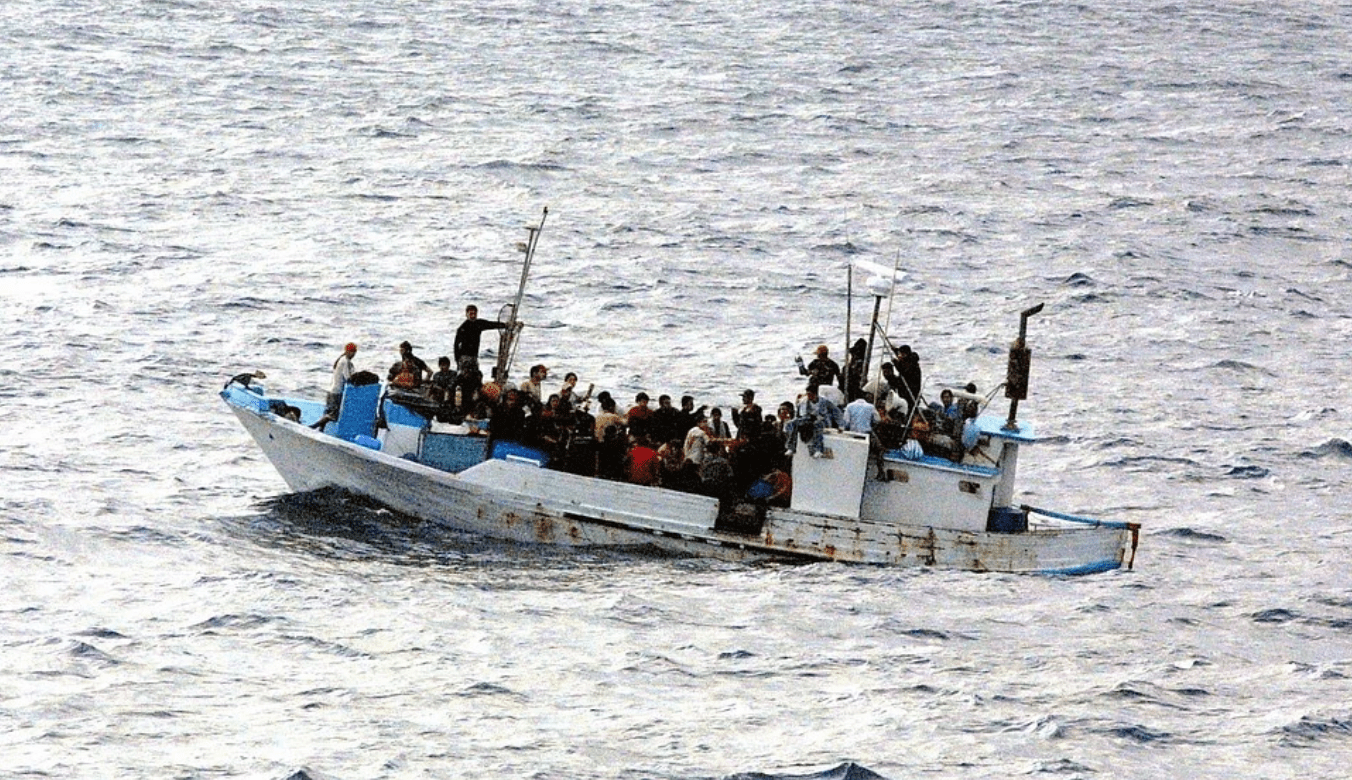
    Refugees are a core part of this, with thousands risking their lives to cross the Mediterranean every year, and some losing their lives in the fight to escape war. The policies of ‘Fortress Europe’ aim to keep people from nations specifically outside of this continent out, the very people who are affected by the planet’s destruction despite having the lowest carbon footprint. How do Ireland’s political parties hope to treat them?

    Sinn Féin, possibly writing the most intriguing manifesto in terms of economic promises, have claimed that they are against open borders, but also hope to end Direct Provision. What they would replace the system with, however, is a mystery. Should they find themselves in power, they intend to avoid a situation of mass climate-related migration – not solely for the difficulty it will pose to recipient nations, but because people deserve to live in their own nations and communities. Their stance certainly needs more explanation. 

    Mary Lou McDonald celebrates Sinn Féin victory. Photo: Instagram/africaworld_news

    People Before Profit and the Green Party have socialist and left-wing policies embedded in their manifestos, with PBP acting as fierce critics of imperialism and of tyranny abroad. References are also made to the UN Security Council seat Ireland is hoping to win, as well as US military presence in Shannon Airport. The party condemn the murderous regime of Bashar al-Assad – someone largely responsible for the flight of Syrians towards Europe

     The progressive stance of the Greens is reflected in their emphasis on freedom of movement, open borders and refugee housing, and they are highly aware of climate breakdown’s role in the displacement of innocent communities in developing countries.

    Labour’s political director Nat O’Connor has taken an arguably weak stance, admitting that Ireland is not playing the part of a wealthy country, accepting a low number of refugees, but “we can’t promise to do something that we cannot do”. Housing and health are first on the priority list for the party, which are worryingly diminished following the election.

    As the party competes for control of the Dáil, Fianna Fáil is proposing long overdue complete reform of the asylum system and to improve refugee accommodation. Their manifesto has figures and policies backed up by plans, which is a (welcome) change from some of the other vague manifestos. However, it could be all talk rather than action. Pledging to speed up the asylum process, they take a leaf out of the Greens book by promising an integration plan as well as allowing asylum seekers to access driving licences. 

    In 2015, the Fine Gael-led government pledged to take 4,000 programme refugees fleeing war-torn countries like Syria by the end of 2017. Even now, we’re still well short of that quota – having resettled only 3,206 such refugees. The government has faced fierce criticism over their handling of Direct Provision, with Fine Gael ministers exhibiting resistance to change. Former Minister for Justice Charlie Flanagan promised to improve the party’s numbers when it comes to refugee placements, but are they to be believed?

    Irish communities held protests last year nationwide, rejecting the possibility of new Direct Provision centres opening in their area. Migrants rights groups such as the Movement of Asylum Seekers of Ireland insisted that these protests were not to support asylum seekers, but were rooted in racial undertones “dressed up in human rights language”.

    “The Irish of #Fingal have voted once again for their own extinction,” O’Doherty posted on Twitter following the result.

    Interestingly, only 1 per cent of respondents cited immigration as a main voting concern of GE2020 in the Ipsos MRBI exit poll for The Irish Times/RTÉ/TG4/UCD. Within this umbrella topic, climate refugees, asylum seekers  as well as migrants are all grouped. 

    Desolate refugee camps. Photo: Pixabay

    There are important distinctions to be drawn between asylum seekers, migrants and refugees – but these terms often get mixed up in the course of public debate on what is a complex topic. The issue will only become more onerous as CO2 emissions cause further destruction in the Global South, South-East Asia, Australia, Canada and the US. 

    The movement of people has already led to dangerous, inhumane situations in the refugee camps of Libya and Greece, with the European Union recently rejecting a voting to ask members to step up search-and-rescue missions in the Mediterranean.

    An asylum seeker is someone seeking refugee status – but whose application has not yet been approved. In the meantime, as long as they’ve made an application for asylum to the country they’ve landed up in – usually on the basis they were forced to flee their home country – they are entitled to remain in the destination country while their request is being processed. If it’s ultimately approved, then they have permission to remain. If it’s rejected, then they’ll be deported. 

    Though some, who fail to qualify as refugees, are granted subsidiary protection to remain.  Migrants are not fleeing persecution; instead they choose to move country – often for economic reasons.  

    Those defined as refugees have been recognised as such under the 1951 Refugee Convention of the UN, while programme refugees have their claims formally assessed in refugee camps overseas – and are invited to the destination country under a resettlement programme.   

  • ‘We’re no open borders party…climate-related migration must be avoided’ – examining Sinn Féin’s immigration stance

    ‘We’re no open borders party…climate-related migration must be avoided’ – examining Sinn Féin’s immigration stance

    As Mary Lou McDonald’s party soars in the General Election 2020 polls, Sinn Féin’s manifesto reaffirms their emphasis on domestic policies of health and housing. TheCity’s Kate Brayden examines their immigration stance and statements on climate refugees.

    Sinn Féin’s rise in popularity in this General Election campaign — especially with younger voters — is a historic change to the usual Fianna Fáil/Fine Gael power duo. 

    But does their manifesto prove that they are ready to ascend to the global stage of foreign affairs, which is changing by the day as a result of climate breakdown? And what is their policy on refugees fleeing persecution?

    In a recent landmark ruling, the United Nations Human Rights Committee stated that “without robust national and international efforts, the effects of climate change in receiving states may expose individuals to violations of their rights.” 

    Therefore, a country cannot send a person back to their home state if their life is threatened by climate change. 

    Much work must be done to ensure that this ruling becomes legally binding to protect citizens from developing countries who are destitute as a result of C02 emissions altering the climate, creating dangerous weather events and pollution. 

    Under Justice Minister Charlie Flanagan’s latest plans, Ireland is set to accept up to 2,900 refugees over the next four years – using a combination of resettlement and community sponsorship. 

    The new arrivals will mostly be Syrian refugees who are currently living in refugee camps in Jordan and Lebanon – and 150 Eritrean refugees living in Ethiopia.

    In 2015, the Irish Refugee Protection Programme (IRPP) was created as part of Ireland’s response to the global humanitarian migration crisis.

    That crisis has become steadily more concerning as extreme weather events and wars decimate poorer parts of the world. 

    A new phase of the IRPP will see 650 resettlements in 2020, 700 in 2021, 750 in 2022 and 800 in 2023. 

    But if Fine Gael return to power, will they live up to these claims – and are these numbers high enough to make a valuable impact?

    Does Sinn Féin have any better plans? 

    SF’s election manifesto states the party is “determined to avoid the failed policies that have fostered resentments and tensions in other countries” as a result of immigration and foreign policy decisions.

    Sinn Fein Councillor Chris Andrews. Credit: Twitter – @an_phoblacht

    The party declares unequivocally that they are not an “open borders” party – and do not believe in any such thing. 

    SF Councillor Chris Andrews, who’s standing for election to the Dáil in Dublin Bay South, told TheCity.ie: “I don’t think I’ve ever heard anyone advocating ‘open borders’, but rather, it’s a dog whistle used by the far-right to spread fear. 

    “It’s used to give fair migration systems a bad name.

    “Every state has to have an immigration system with well-functioning rules and regulation that everyone understands and that serves the interests of the people of the country – but which also protects people fleeing persecution and war. 

    “Our international obligations must be fulfilled, and in an orderly manner.

    “This system must have regard to how many people are needed to meet shortfalls in the labour market and how many people can be integrated effectively with adequate support and resourcing.”

    Plenty of progressives have pledged their support for open borders, such as Israeli-Irish Jewish political sociologist and author Ronit Lentin. The activist for Palestinian liberation and for the Palestinian right of return opposes all deportations in Ireland.

    Andrews’ remarks match up with his party’s manifesto, which states that: “Where we do need migrant workers, such as to fill vacancies in our health system, our migration system should facilitate this efficiently.”

    While some may read this as viewing human beings only in terms of their economic worth, the party stresses that Ireland must cope with issues of housing and health before tackling migration issues. 

    Sinn Féin are also in favour of ending the Direct Provision system of accommodation for asylum seekers.

    In terms of climate refugees, the party says a pledge to take in climate refugees “does not solve the problem which caused it”.

    “We must avoid a situation of mass climate-related migration – not solely for the difficulty it will pose to recipient nations, but because people deserve to live in their own nations and communities,” their manifesto reads. 

    “They should not have to flee their land because of polluting activities of far-away nations and, most of all, foreign corporations.”

    The party also pledge to ensure that the Irish Navy plays an active role in search and rescue missions in the Mediterranean.

    Seán Crowe, Sinn Féin TD for Dublin South-West, told this website: “Internationalism is at the core of Irish republicanism. 

    “We will never be blind and ignorant to injustices abroad.

    “I have long called out the Government for not reaching its targets on the resettlement and relocating of refugees in Ireland.”

    Twitter/@SeanCroweTD

    “We need to reach these targets and ensure we do more to protect people fleeing persecution and war.

    “Sinn Féin will restore and enhance our international reputation.”

    Irish aid is currently about 0.4% of Gross National Income.

    Ireland’s “A Better World” development strategy emphasises gender equality, climate action, governance and humanitarian need – and commits Ireland to achieve a target of 0.7% by 2030. 

    Sinn Féin pledges to strongly support Irish Aid, would increase funding on Overseas Development Aid (ODA), ensure the State works towards its ODA targets and would commence work on an interdepartmental plan to increase Irish ODA to reach the 0.7% GNI target.  

    Historically, our nation is strongly in favour of neutrality – but participates in peace operations, deploying 623 peacekeepers (not including U2′s Bono).

  • Who’s going to run the country?

    Who’s going to run the country?

    Over the last few months we’ve seen a number of opinion polls showing a spectacular rise in popularity for independent politicians and smaller parties. How Dáil Éireann is going to look after the next election is anybody’s guess.

    The latest poll conducted by Ipsos MRBI and published in The Irish Times showed independents and others on 32 per cent, a whole 10 per cent ahead of the next biggest grouping, Sinn Féin.

    So how exactly is this going to work? Independents and smaller parties are never going to manage to come up with an agreement to form a government so it looks like a hodge-podge coalition is the only solution.

    With Fine Gael on 19 per cent and Fianna Fáil on 21 per cent, even a coalition of these two unlikely bedfellows wouldn’t manage to come up with a majority.

    Is a ‘grand coalition’ the only option left? John A. Costello was Taoiseach and head of a government made up of five different parties, as well as a number of independent TDs. That coalition managed three years before collapsing during the fallout from the Mother and Child Scheme.

    But would a modern day grouping like Costello’s manage any longer, or even that long?

    Following every poll we hear how people are disillusioned with the political system and are desperate for change. Those changes might yet occur, but if they do who is going to get into bed with who?

    The City spoke to representatives of the main parties to find out what they think.

    Image Jean Housen http://bit.ly/1sfKZvv


  • What’s it like being Ireland’s youngest Mayor?

    What’s it like being Ireland’s youngest Mayor?

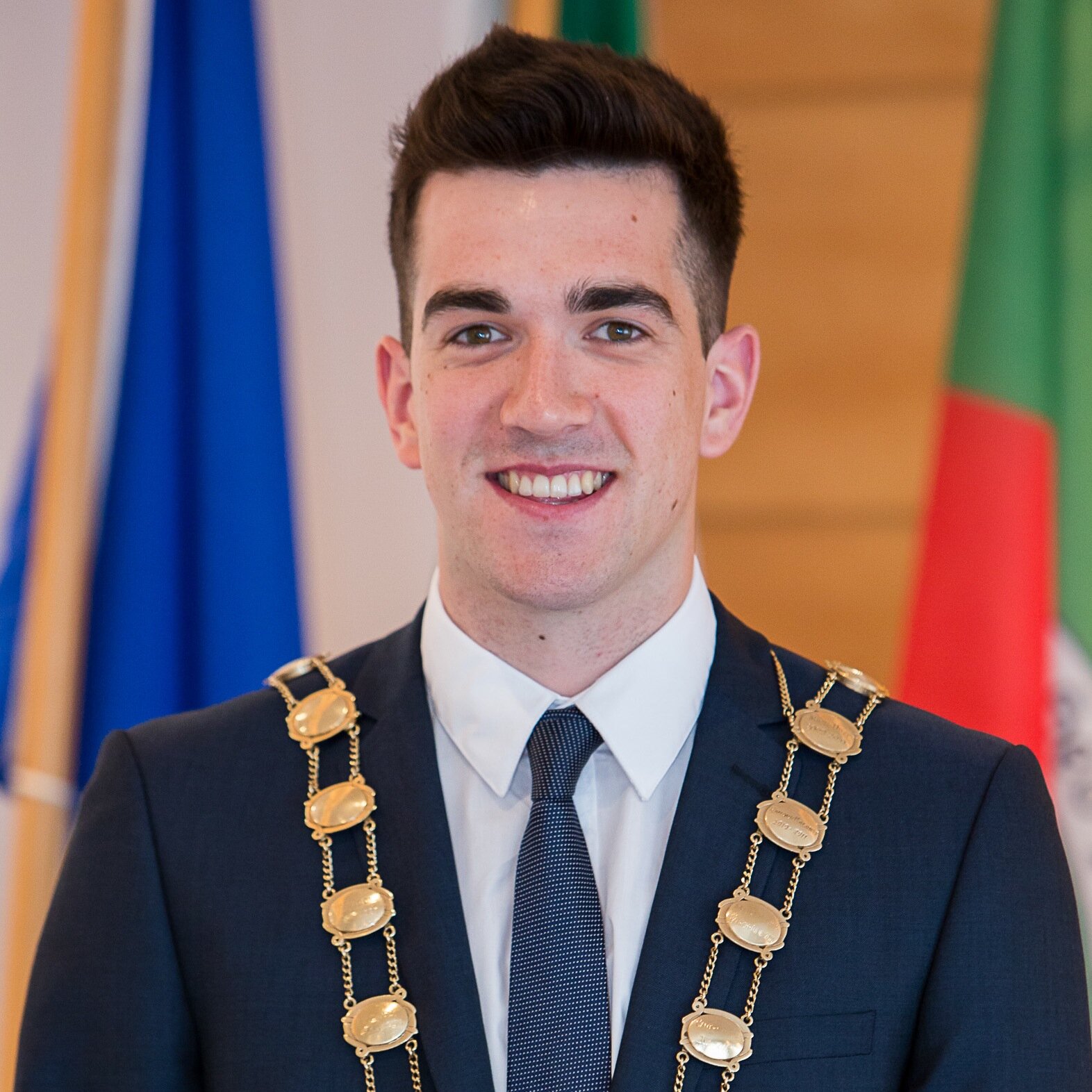
    Mayor of South Dublin County Council Fintan Warfield
    Mayor of South Dublin County Council Fintan Warfield

    These days you might think somebody is a little bit crazy when they tell you they’ve decided to run for election.

    However, that didn’t stop Fintan Warfield from putting himself forward. The 22 year old ran for a seat on South Dublin County Council, won the seat as a Sinn Féin Councillor and is now the youngest council Mayor in the country.

    So why did he decide to put himself in the firing line and run in May’s local elections?

    For him it’s because “politics should represent the people and our political system isn’t representative of Irish people at all.”

    Despite his decision to run, Fintan says he never expected to actually be successful and take a seat. He puts the victory down to the hard work that he and his team put in, but he admits that they “didn’t know what it took to win”.

    Despite that pessimism, he’s now the youngest Mayor in the country and he’s proud to be a member of the LGBT community.

    Almost six months into office, you can’t say he hasn’t been working hard – youth unemployment, gay rights and homelessness are all areas he feels need work.

    He’s taken a 10 percent pay cut and is donating the difference to three local charities, Saoirse Women’s Refuge in Tallaght, BeLonGTo, a national organisation for LGBT young people and Citywise who provide educational support for young people in Jobstown.

    He’s also ensured that South Dublin County Council has become the first public service to join GLEN, the gay and lesbian equality network.

    One of his first actions as Mayor was the raising of the rainbow flag outside the County Buildings.

    “It only takes a poster in school to know there’s somebody who’s approachable and that you can talk to”, he says.

    So, will we see his face on posters around the city before the next general election?

    The short answer is no. “The Council does a lot of worthwhile work and I’m happy to be a part of it”, he says.