Tag: smoking

  • Is It Time to Say Goodbye to Vapes?

    Is It Time to Say Goodbye to Vapes?

    The Government announced during Budget 2025 that e-cigarettes will increase in purchasing due to new taxes being introduced. 

    The tax will apply to all e-liquids at a rate of 50c per ml of e-liquid. A typical disposable vape contains 2ml of e-liquid and costs in the region of €8.  

    This new tax will bring the price of such a product to €9.23 including VAT. 

    The tax will come into effect in the middle of next year. 

    It is not a surprise that vapes are seeing this new tax being implemented as it can be seen as a way to discourage young people in Ireland from using vapes. 

    Minister for Finance Jack Chambers told the Dáil he was introducing the tax “on public health grounds as there has been a significant rise in their use”. 

    The Government believes the tax on vapes is a step in the right direction.  

    The Government is also working on legislation to ban the sale of disposable vapes on environmental and public health grounds. 

    If that is achieved there could potentially be a big decline in the smoking industry and shopkeepers that primarily sell vapes could be at risk.  

    The City.ie was able to sit down with Mohammed, a store owner at Moore Street who sells various items in his store like Prime, keychains, and vapes. 

    “See my friend, I don’t mind the new tax coming to my store, I will still get my customers why? Because the vapes sell very well, I just do not want the ban of disposable vapes many people come and buy it here and if it is no longer available, I will lose business”. 

    Vape/Cigarette store on Moore Street, Dublin Photo credit: Mene Agbofodoh 

    Occupational Therapist Adora Maxell spoke to the City.ie about some of the health risks associated with vaping amongst young people. 

    “One of the most common effects of vapes is that they are highly addictive due to their nicotine content and with the youth there are multiple flavourings that create this feel of a different taste with each vape”. 

    “During my internship, I saw cases of EVALI (E-cigarettes Vaping-Associated Lung Injury). This condition has been linked to vaping especially vapes that contain THC, it can cause serious lung damage, with symptoms like difficulty breathing, coughing, chest pain, and even hospitalization or and it more severe cases in death fortunately I have not experience to that level. 

    “The chemicals within vapes are possibly the worst things about them, they contain very harsh substances like formaldehyde, acrolein, and diacetyl which are damaging to the body when inhaled. Some of the substances can be responsible for what is commonly known as ‘popcorn lungs’ which is another way of saying bronchiolitis,” said Maxell. 

    The City.ie also took to the streets of Dublin to ask the general public how they felt about the new taxes being put in place on the vapes. 

    “Honestly, I think it is a good incentive going forward, it helps younger and older people alike the question of whether they should be spending their money on vapes right now or use it for something beneficial for themselves”. said Lee Mullen from O’Connell Street. 

     Jane,19 from Cork, also spoke to The City.ie on the issues of vapes. 

    “As a young person who buys the occasional vape on a night out or whenever I need to calm myself down it feels unfair going forward, I’ll have to spend even more to do now”. 

    “I feel the Government should focus more on helping younger people in other areas like education and housing instead of stuff like this honestly, at least the tax isn’t coming into effect until next year, so I’ll probably stock up or something I don’t know”. 
  • Ireland’s relationship with tobacco – the stats

    Ireland’s relationship with tobacco – the stats

    An estimated 80,000 fewer people are now smoking in Ireland according to the annual Healthy Ireland Survey that was published in October.

    This means the percentage of smokers has gone from 23 percent in 2015 to 20 percent in 2018.

    The survey, launched by Minister of State for Health Promotion Catherine Byrne TD and conducted by Ipsos MRBI, also shows figures for how the recently introduced plain packaging on cigarettes and graphic health warnings affects the motivation of smokers to quit, as well as how many smokers have attempted to quit in the previous year.

    According to the Irish Cancer Society, the fifth most common cancer in the country is lung cancer, with an estimated annual diagnosis rate between the years 2015 and 2017 of 2,566.

    Lung cancer is also the fourth most common cancer in both men and women, with an estimated nine out of ten instances of lung cancer being either a direct result of, or partially caused by smoking.

    In addition to this, only one out of ten lung cancer patients will live for five years or more following diagnoses, as opposed to other types of cancers i.e. prostate cancer where nine out of ten patients will live for five years or more following their diagnosis.

    Up to 5,200 people die annually from smoking-related diseases throughout the country, which is approximately 100 deaths per week according to the Health Service Executive (HSE).

    There are many reasons why the percentage of smokers has changed, not only due to new packaging regulations but also rising prices with each budget.

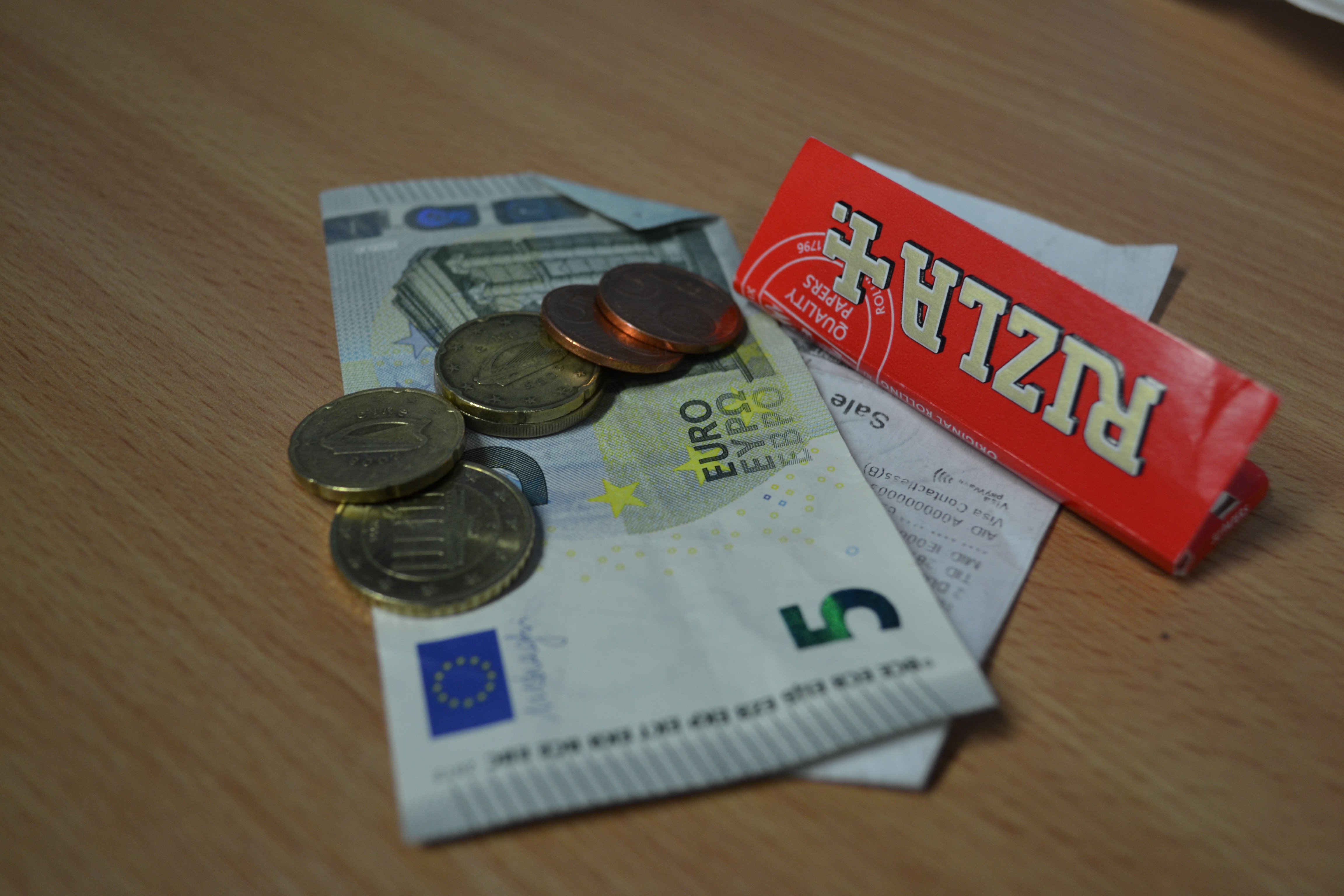
    Roll your own cigarettes, according to the HSE, have risen in usage from just 3.5 percent of smokers using roll your own in 2003 to 24.6 percent in 2014.

    This latest figure has also risen significantly since then, with an estimated 30.3 percent of smokers using roll your own cigarettes and 6.2 percent of the overall population using e-cigarettes according to the HSE’s mid-year report for 2018.

    Another reason for the change in numbers can be attributed to the prohibitions put in place as well as the ‘old reliable’ for budget increases each year.

    Without fail since 2011 the price of cigarettes has risen every year in Ireland, the average price of a pack of twenty cigarettes in 2010 being between €7.50 and €7.75.

    At the time, Irish legislation mandating a minimum pricing on cigarettes was deemed to be an infringement of European Union competition laws, yet this has not stopped the almost continual increase on prices and tariffs.

    It was not until 2015 that the price of twenty cigarettes rose to over €10, with the average price nowadays being approximately €12.50.

    These spikes in prices have no doubt contributed to the lower numbers of people smoking today, although advertising campaigns and other similar efforts have also contributed.

    The rise in roll-your-own cigarettes has also had an impact in other areas of tobacco consumption, as they tend to represent better value for money than cigarettes. These two have seen drastic price increases, however, in addition to the removal of smaller, 12.5 gram boxes from the market.

    The government has plans to reduce the percentage of the population that is smoking and by extension the number of deaths related to it.

    The Departments of Health and Welfare, and by extension the current government, has plans to reduce smoking in Ireland to just three percent, or to below five percent, which would allow for the title of “tobacco-free” by 2025.

    While this may or may not happen, it gives good incentive and allows for quite an optimistic projection of where the country may become 2025 and beyond in the numbers of people who succumb to smoking-related diseases.

    If it is assumed that the population is 4,800,000 in 2018, that leaves 960,000 smokers today.

    If the projections are met, and around three percent of the population is smoking in 2025, and we allow for an increase in population every year of approximately one percent (total estimations of yearly change, just for simplicity, with numbers rounded to the nearest whole number and estimating by average yearly percentage increase), the approximate population of Ireland in 2025 would be in the region of 5,197,712 (give or take quite a few in either direction).

    Three percent of this would be just 155,931, markedly lower than current numbers.

    While there will be people who unfortunately die as a result of smoking during and after 2025, if we assume that 5,200 people out of 960,000 die every year, a rough estimate of the change in deaths come 2025 would be something closer to 845 (5,200 being roughly 0.54% of 960,000, 845 being roughly 0.54% of 156,000).

    This, remarkably, means that if the Department of Health and the government are successful in creating a ‘tobacco-free’ Ireland, around 4,355 fewer people would die each year of tobacco-related diseases.

    (Data sources: CSO, HSE, Irish Cancer Society, Ipsos MRBI)

  • The Phase of the E-Cigarette Craze

    The Phase of the E-Cigarette Craze

    This slideshow requires JavaScript.

    Over a decade ago they were unheard of, unimaginable, and non-existing. Who would possibly consider an alternative method to smoking a traditional tobacco cigarette? Yet this unrealistic idea was the brainwave of Korean-war veteran Herbert A Gilbert in 1963, and in 2004 the electronic cigarette was introduced in China. Today, the electronic cigarette industry is becoming one of the fastest growing industries worldwide, reportedly worth in excess of €1.1bn.

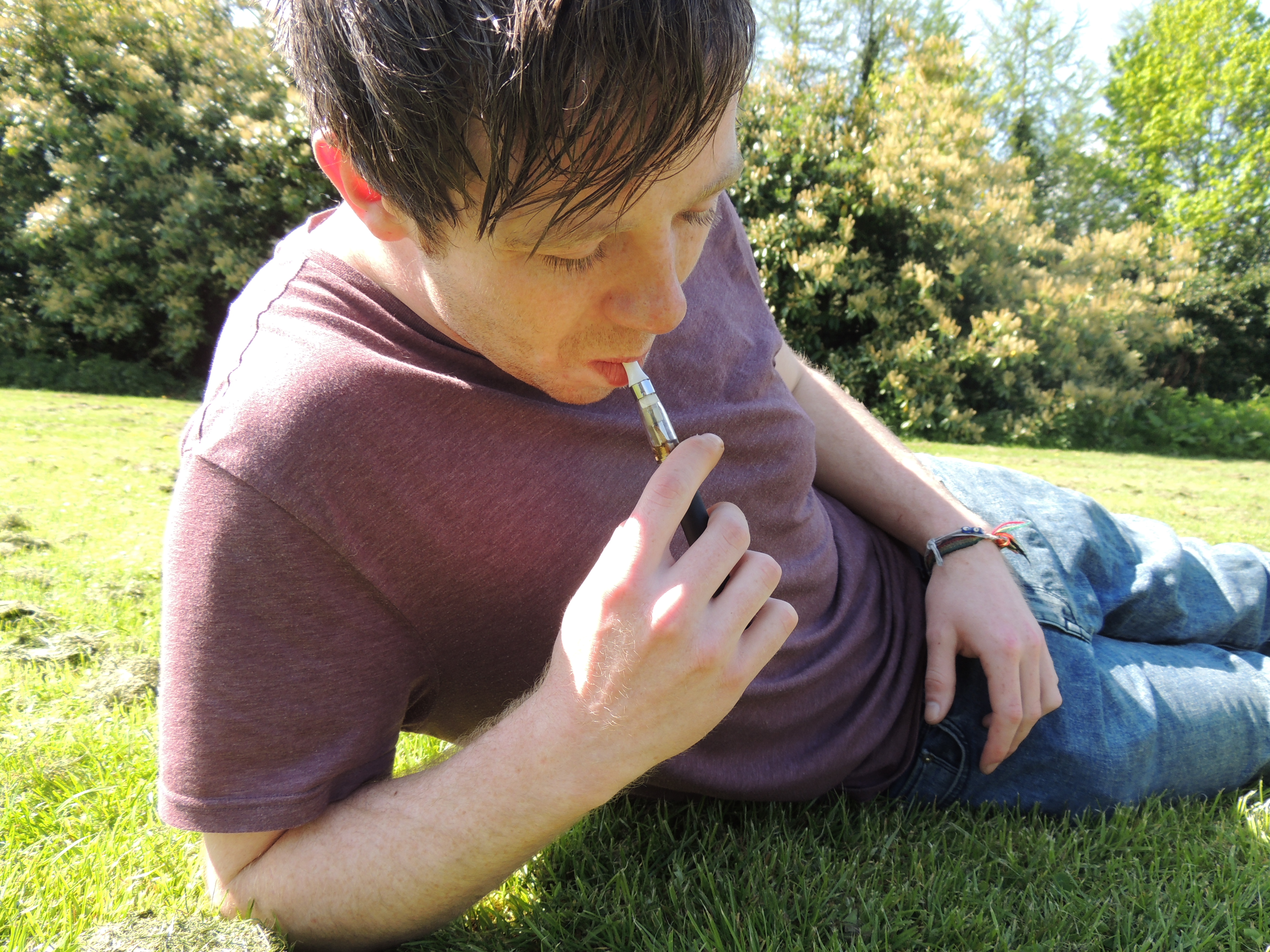
    The electronic cigarette, or e-cigarette for short, is a battery operated device that replicates the experience of smoking a genuine cigarette. The e-cigarette contains liquid nicotine which is stored in the atomizer chamber. Once the user inhales, the electronics aka the micro heating element, heat up the liquid and the nicotine is drawn in and then furthermore released out as vapour. The vapour gives the impression of smoke which misleads many to presuming an individual is smoking an authentic cigarette when in reality the individual is using the e-cigarette. The practice of smoking an e-cigarette is known as ‘vaping.’

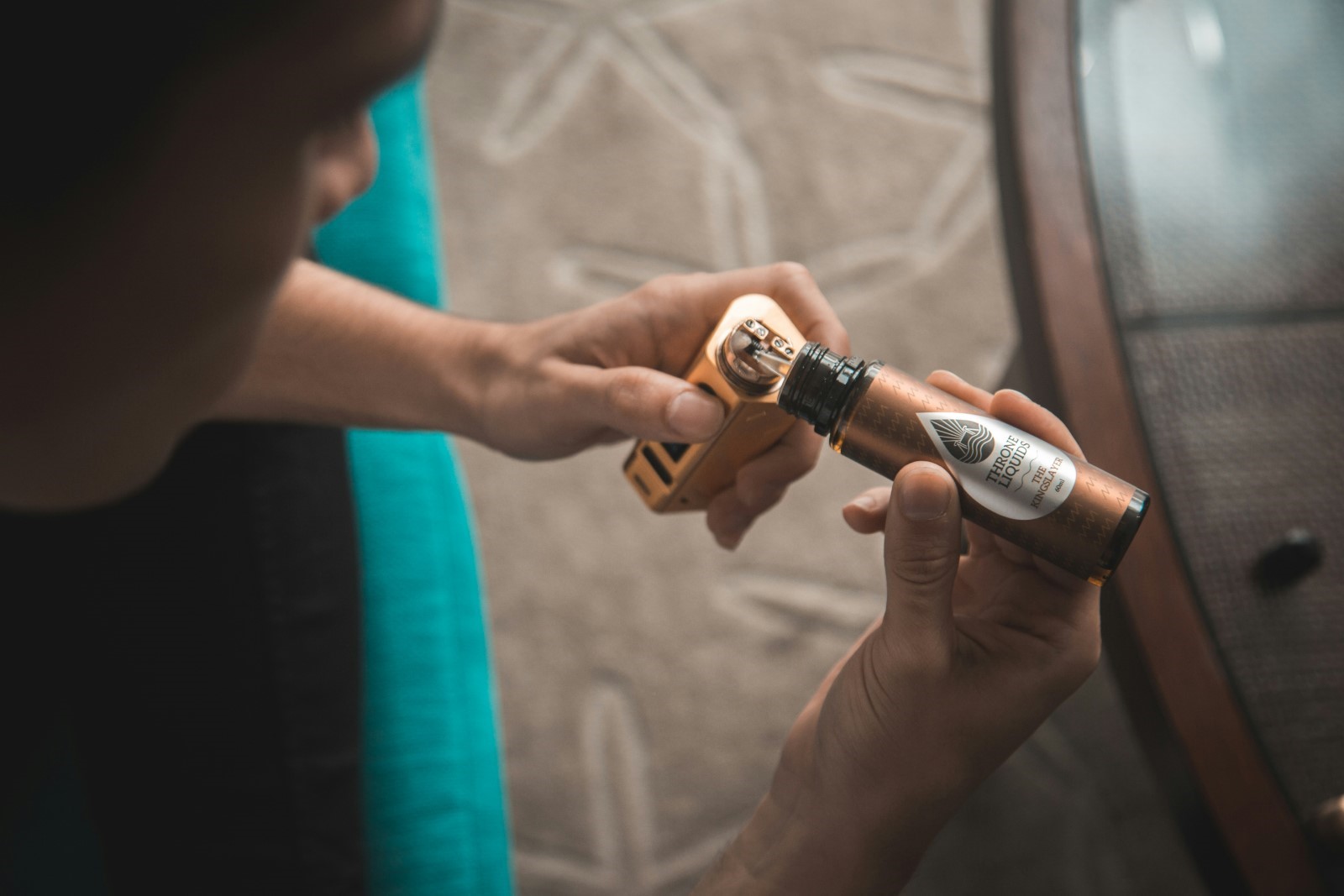
    A feature of the e-cigarette that makes it remarkably different to that of a real cigarette is the ability of the user to smoke an array of flavours. The liquid nicotine, also known as e-liquid, can be purchased in participating stores or online in bottles of 10 ml, 12ml, and 30ml.

    The variance in flavours available caters for the taste buds of each individual e-cigarette user. They range from original apple, cherry, vanilla and strawberry to more exotic tastes including John Player Blue (JPB), Sex on the Beach, mango and bubblegum.

    There are two types of e-cigarette, which vary in price. Firstly there is the standard e-cigarette kit that contains an e-cigarette with LED light, filters/refills, a rechargeable battery and a USB charger. However, with this particular e-cigarette flavours cannot be inserted.

    The more popular of the two is a kit that contains an e-cigarette, a mouthpiece, USB charger and a chamber for inserting the various e-liquids.

    Speaking about the quantity of nicotine present in the substance, twenty-three year old electronic cigarette user Gary Corrigan commented: “I wanted to quit smoking so I decided to turn to e-cigarettes in order to gradually reduce my intake of nicotine, and eventually be nicotine free.

    “In my opinion it is a healthier alternative to smoking and it’s working perfectly for me. I’m reducing my nicotine intake, I’m spending less money, and my clothes are rid of the smell of stale tobacco,” he said.

    With more and more people turning to e-cigarettes and health specialists constantly reviewing the associated risks, several businesses and companies throughout the country are looking to put a stop to the products being smoked on their premises. These include Dublin’s DART Service and Irish Rail.

    The Irish Government is also keen to regulate the seemingly popular commodities even though the products are free of hazardous tobacco, tar, and cancer-causing chemicals.

    In February 2014 new tobacco rules were passed by the European Parliament. The draft legislation introduced would make it compulsory for all cigarette packages to bear picture warnings which would cover sixty-five per cent of the product packaging.

    In the near future member states will also be able to decide on whether e-cigarettes are classified as medicines or tobacco products.

    Minister for Health James Reilly has publicly spoken about his desire to ban e-cigarettes in Ireland to anyone under the age of eighteen.

    According to Alan Baker, Executive Officer at the Department of Health, “as electronic cigarettes do not contain tobacco they are currently not regulated under tobacco legislation. Products which do not fall under any regulatory framework come under the European Communities (General Product Safety) Regulations 2004 which specify the duties of producers and distributors placing products on the market.”

    Mr Baker also added that “Minister Reilly is currently reviewing the evidence on the potential harm and the potential benefits of e-cigarettes before deciding the best approach to their wider regulation.”

    In February 2014 Irish Rail banned e-cigarettes from all DART and train services because of feedback and complaints by customers. Irish Rail state that they treat “replacement devices such as e-cigarettes in an identical manner to traditional cigarettes and they cannot be used onboard trains, within offices or in enclosed station areas.”

    Also jumping on the band wagon are Dublin Bus and Bus Éireann, who have both prohibited e-cigarettes under their policy on tobacco smoking.

    According to Dublin Bus spokesperson Maria Brennan, “Dublin Bus has a designated anti-smoking team which comprises of uniformed and plain clothes inspectors. The buses are also fitted with an automatic ‘no smoking’ announcement.”

    In June 2011, The Pharmaceutical Society of Ireland disallowed for electronic cigarettes to be sold in general sales outlets and over the internet due to the lack of appropriate regulation.

    In Ireland there are several manufacturers and suppliers of electronic cigarettes including VIP, FoxyCig, Nicofresh and Healthier Smoker.

    Stalls selling electronic cigarettes and e-liquids have been placed in several nationwide shopping centres including Dublin’s Jervis Shopping Centre and Ilac Centre.

    Sales assistant Niamh*, who works in a shop that sells the electronic devices, commented:

    “They’re really popular. There’s a mix of age groups buying them, but younger smokers, under fifty say, are much more open-minded to them. Older people seem to be happier to stick with cigarettes because they say they don’t know what’s in the e-cigarettes and that they are not regulated. There are 4000 chemicals in a cigarette and 4 in an e-cigarette,” she said.

    Several shopping centres may look to banning the devices, with Dublin’s Liffey Valley shopping centre one step ahead. According to customer assistant Owen McGovern, the devices are banned: “E-cigarettes are banned on the premises but there are no signs stating this, and so I have seen some people use them anyway,” he said.

    Tobacco Free Ireland, Ireland’s tobacco control policy, have stated that the general consensus at European level is that there is a lack of research in relation to the long term health effects of e-cigarettes, and a lack of sufficient evidence that they aid with smoking cessation.

    Tobacco Free Ireland is currently working towards a regulatory framework for nicotine products including e-cigarettes.

  • Should colleges ban smoking on campus?

    Should colleges ban smoking on campus?

    Students of University College Dublin recently voted in a UCDSU referendum to ban smoking on campus. Although the ban is not in place yet, it looks likely to come into force in the coming years. Could this be the start of a trend among Irish colleges?

    If Health Minister James Riley’s new ‘Tobacco Free Ireland’ document is anything to go by, the answer could be yes.

    The document includes recommendations to encourage a ban on smoking on the grounds of primary schools, secondary schools, child care facilities, health care facilities and third level campuses.

    The City asks students how they would feel is smoking was banned on their campus:

    Report: Saoirse Ivory

    Video Editing: Greg Synnott