
Tag: Society

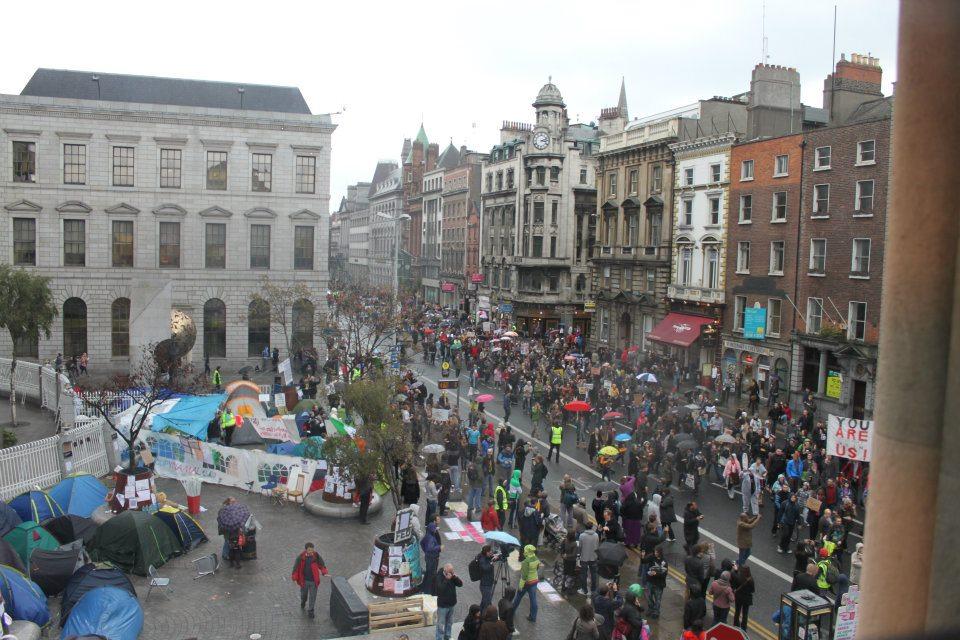
  • Whatever happened to Occupy Dame Street?

    Whatever happened to Occupy Dame Street?

    This slideshow requires JavaScript.

    Last Saturday saw, according to whoever’s statistics one chooses to believe, 30,000, 100,000 or even 150,000 protesters marching through Dublin.  But what became of the people we were all talking about three years ago: the Occupy Dame Street Movement?

    The short answer is that, like Monty Python’s legendary parrot, it is dead and deceased.  It is no more.  The only visible surviving remnant is the group’s original Facebook page, still active, but according to the original members, long-since hijacked by outsiders.  The vast majority people who marched on Saturday did so of their own volition; others were part of larger protest groups and organisations.

    Rob Dunlop was one of those original members of Occupy Dame Street and was one of the first to arrive at the steps of the Central Bank.  He had protested a week or so earlier outside the Dáil on the night of the now infamous signing of the bank bailout and was excited to hear of the planned Occupy protest.  “I took myself and my sleeping-bag down there straight away” he says. “I was really concerned about how the economy and society in general were going and did not want to have it on my conscience for the rest of my life that I stood idly by and did nothing.

    “At first there was a good atmosphere.  People were on our side, and that included the gardaí, who would stand around chatting to us.  Anyone was free to come along; the only rules we had were no drugs, no alcohol and no politically affiliated parties.  Unfortunately this meant that we had no way of keeping certain flaky elements out, and it was they who were mostly responsible for eventually turning public opinion against us.”

    The protest came to an end when the gardaí eventually moved in to clear the camp in February 2012, concerned as they were that conflict might arise as the forthcoming Patrick’s Day parade, with its inevitable component of alcohol, passed right by it.

    The protesters were offered the option at the time of moving out for the duration of the parade and returning after, but many were suspicious and refused, believing that once out they would be stopped from coming back.  Rob believes that they should have accepted the offer.

    Another core member at the time was Darragh Kenny.

    “When I heard I went straight down, full of enthusiasm, and ended up camping for two months” he says.  “Within a few days I had somehow become treasurer.  Someone had to do it because we were getting a lot of donations at the time.  The problem was that there was no structure for appointing the right person to the right job; people just volunteered.  I was probably the worst person to be treasurer, I knew nothing about it but did my best.  There was a lot of that sort of thing going on.”

    Would the movement have survived had its members agreed to absent themselves over Patrick’s day and return after?  Darragh thinks not: “To be honest it [the protest] was on life-support by Christmas anyway.”

    Helena Sheehan, a respected academic and a professor emerita at DCU, was instrumental in the original setting up of the protest.

    In November 2011 Occupy Wall Street was making headlines around the world and she tweeted “#OccupyIFSC. Up for it?”  The result was a flurry of communications via Facebook and Twitter and on October 8th a group of people came together on the steps of the Central Bank.

    A veteran of anti-Vietnam war protests in Washington exactly 40 years previously, Helena deemed it “inappropriate at my age” to camp out and instead slept in her own bed.  Nonetheless she says “I look back on that day with fondness, because the atmosphere was so fresh and open, because all voices were equal, because there was such hope in the air.”

    So why did the hope eventually die?

    Helena advocated political inclusion rather than exclusion right from the start, believing that the way forward was to unite and work with all parties with a similar mandate; however, the general consensus was that ‘this is our movement, it stays our movement and others can leave their own politics at the door if they wish to enter’.  Many did turn up at the door, and many were turned away. The result was much bickering and bad feeling, leading to groups which really should have been pulling together pulling in opposite directions instead.  From here the movement went into an irreversible decline.

    Helena attempted an initiative on a different front.  She set up “Occupy University”, an academic forum intended to encourage structured debate on the issues of the day.  Sadly this is now also defunct.

    Despite this she remains positive.  “The movement may have ceased to exist but nonetheless it had an effect.  It provoked debate and raised an awareness of social issues.  Its members might have all gone their separate ways, but many are still politically active in their chosen spheres and many of those cut their teeth on the Occupy movement.”

    And the current Occupy Dame Street page on Facebook?

    “They do not represent us.  They do not like us and we do not like them.  They do not believe in dialogue; they are mostly concerned with antagonism and getting themselves arrested for the publicity it brings.  If they cannot get arrested they are not happy.”

    Strong words, but words which might go some way towards explaining why no-one from that group, despite repeated requests, came forward to be interviewed for this article.
  • Young People in Crisis?

    Young People in Crisis?

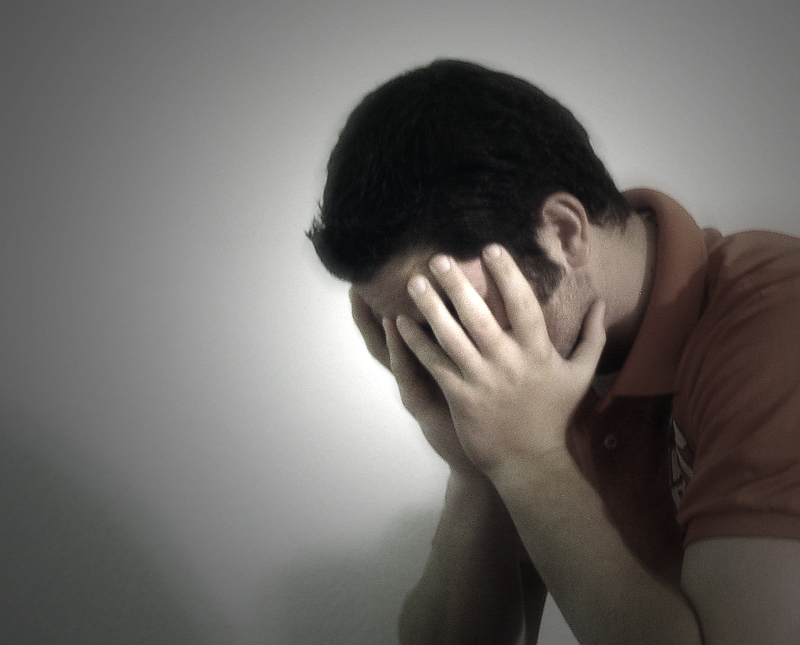
    A report published by the Royal College of Surgeons in Ireland last month pointed towards a crisis in the emotional well-being of young people in Ireland. The studies showed that one in two are likely to experience a significant problem by the age of 24 – worse rates than those in similar European societies.

    From The Catcher in the Rye, back through The Sorrows of Young Werther and Hamlet, literature is full of evidence that the passage through late adolescence and young adulthood is one fraught with difficulties. But modern society has introduced a new set of pressures and expectations that serve to make the transition into adulthood even harder. It is at this age that young people are struggling to find their place in the world. They might be entering the world of work or living away from home for the first time and sometimes it is also a time of experimentation with drink and drugs.

    But why do young people in Ireland seem to be faring worse than their peers in Europe? An economic recession, binge drinking culture and a traditionally taciturn approach to issues of mental health are all aggravating factors. Economic recession has put a strain on family life and sometimes left young people depressed or anxious about their future.

    “Life in Ireland has changed in the past few years with the downturn of the economy. Family life has become pressurized and young people often find home life stressful,” said Marguerite Kiely, who is clinical manager at Pieta House. “Parents are struggling financially which puts pressure on relationships. Very often parents cannot afford to separate and the atmosphere at home becomes strained.”

    Young people are still learning the life skills which allow them to adapt to difficult or new situations. And in a society where young people’s sense of self-worth and status among their peers is often wrapped up in their material possessions, financial pressure cannot often hit harder than we think.

    There is still a negative social stigma attached to those suffering emotionally, an attitude which is especially prevalent amongst young people for whom image is all important. It is a pressure which young men feel particularly. At Pieta House they advise using the words emotional well-being instead of mental health because of the negative connotations of the word mental, especially amongst younger people.

    The research was conducted by the RCSI Psychiatric Epidemiology Research across the Lifespan Group (PERL) and is the most comprehensive study on the subject ever conducted in Ireland, relying on over 400 first hand interviews conducted with young people aged between 16 and 24.

    PERL found that high numbers of young Irish people are experiencing mental health problems at any given time. By the age of 13, one in three will have experienced some kind of mental disorder, a number which increases to one in two by the age of 24. The report revealed that high numbers of adolescents abused alcohol and other substances and engaged in self harm.

    “There has being an increase in addictions because of an increase in alcohol consumption and drugs where young people can develop psychosis and become impulsive in their behaviour,” commented Marguerite Kiely.

    Learning to spot the warning signs is an essential element in protecting young people who are experiencing difficulties. These might include changes of moods or angry outbursts, isolating themselves from family and friends and social media, giving away processions or a loss of interest in the future. Significant life events like bereavement or parental divorce can also be triggers.

    At Pieta House they emphasise the need for young people to look out for each other. The organisation recently launched the ‘Mind Your Buddy’ campaign so that teens worried about their friends can approach a nominated teacher in confidence.

    “If a young person is worried about a friend it is a big responsibility so they can really look after their friend by talking with an adult they trust,” said Marguerite Kelly.

    Pieta House provide crisis intervention for those who have suicide ideation and engage in self harm. The service is free of charge and they also provide one to one therapy. Pieta provide a weekend service and anyone can make contact to arrange an appointment on 01 6010000.

  • Little Museum gives Dubliners taste of the Rare ‘aul Times

    Little Museum gives Dubliners taste of the Rare ‘aul Times

    This slideshow requires JavaScript.

    WHERE ELSE in the capital city can you be in the same room as objects such as Nelson’s Pillar, War of Independence Documents and a ‘I’ve Been To Switzer’s Santa’ badge? The Little Museum of Dublin, of course.

    Just over a year old, this new museum – housed inside a beautiful Georgian building on St Stephens Green – brings the rare ‘aul times to life.

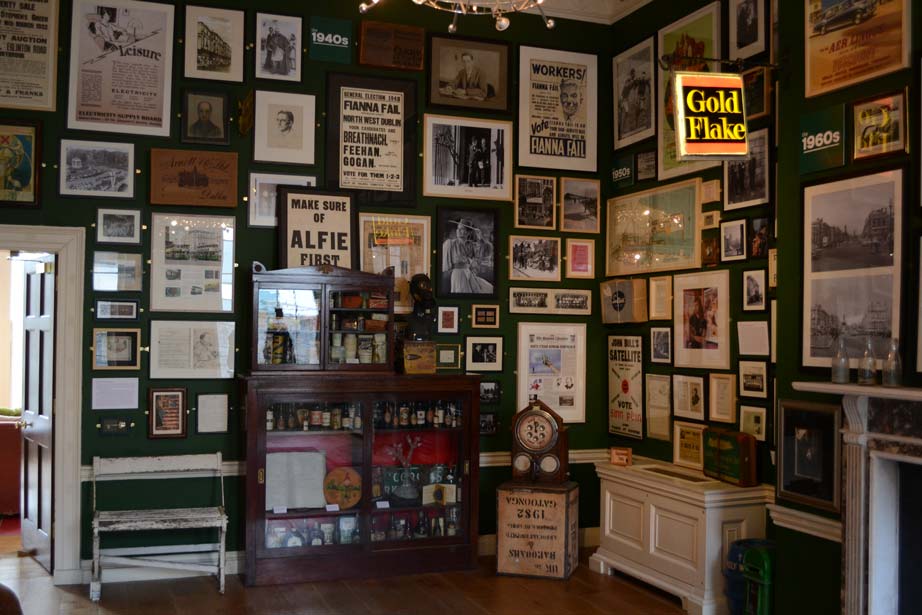
    Spread over just two rooms, the Little Museum’s tall walls are packed floor to ceiling with artefacts telling stories of Dublin in the last century.

    Displayed chronologically, the artefacts are an eclectic mix of specialist and general interest objects: from original documents, photos and publications to furniture, food stuff and quirky domestic items.

    Some objects give you a glimpse of domestic Dublin – harking back to a time of Gold Flake cigarettes, elephant rides at Dublin Zoo and when Aerlingus offered a return “Rolls Royce powered” service across the pond for just £12.

    While other memorabilia – recalling famous visitors to the capital,  such as Pope John Paul II to John F Kennedy – appears alongside belongings of legandary Dubliner James  Joyce and politician and former President  Eamon De Valera.

    There is also political artefacts – like Bertie Ahern’s first election poster, and a dated Green Party poster from the 80s which claims “Others promise the moon, we only guarantee the earth”.

    The Little Museum of Dublin even has a couple of items from our not so distant past – a membership card from Renards Nightclub or a Ryanair ‘business class’ sticker will raise a few smirks.

    Meanwhile, downstairs there is a rotating exhibition space – which currently houses an excellent display on the life of Dubliner Bram Stoker.

    One gripe visitors may have when visiting the museum is there is scarce contextual information provided on the collection. Additionally, space constraints mean that some artefacts are placed very high up on the building’s tall walls, making them difficult to see up close without a ladder or a stiff neck.

    Fortunately, tours are run regularly by the staff and are included in the admission price. Experiencing the museum through a tour is definitely preferable; as discovering the story behind the objects on display can really bring the collection to life.

    Visiting this place won’t break the bank either – tickets are surprisingly affordable. On the door tickets are priced at €5, where concessions are available for students and senior citizens. Additionally, children under 10 and jobseekers can visit free.

    As an added bonus – if you visit the museum on a Wednesday between 1pm and 6pm – admission to the museum is free to all, courtesy of Johnston Mooney and O’Brien.

    At just two rooms – the Little Museum of Dublin certainly deserves its title, but regardless of its small size, this eccentric and unique mix of Irish memories is well worth a visit.

    After all, great nostalgia comes in small doses.

    All Pictures courtesy of the Little Museum of Dublin

    http://www.littlemuseum.ie/

    15 St Stephen’s Green
    Dublin 2
    Telephone +353 1 6611000

    By Aidan Knowles & Lynne Swan