Tag: stand-up

  • Stand-up comedy: is it just for laughs or does it have a deeper meaning

    Stand-up comedy: is it just for laughs or does it have a deeper meaning

    The world is suffocating in sad, depressing news at the moment. Another life-wrecking storm, worrying UN reports on climate change and a president in the United States who is a divisive figure, to say the least. How can we keep our spirits up and a smile on our face amongst all this doom and gloom? Is stand-up comedy the answer?

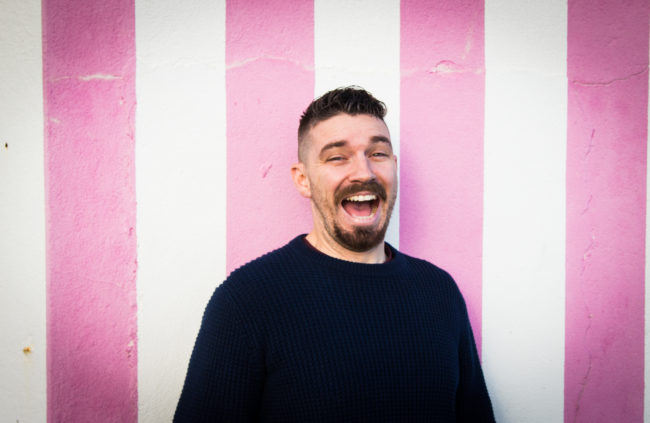
    Connecting comedy to our positive mental health is not something we truly consider. However, watching stand-up can relieve our everyday stresses, pull our attention away from our mobile phones, and let us simply laugh. I spoke to comedians Adam Burke and Marise Gaughan on their distinctive approaches to stand-up, and how it has impacted their positive mental health.

    “I’m not trying to change the world with my comedy,” laughs Irish comedian Adam Burke.

    Burke is currently touring his The Big Happy Head On Ya tour, with shows at the Vodafone Comedy Carnival Galway forthcoming. In the show, Burke jokes about daily anecdotes, but he also talks about positive mental health. Speaking on a personal note, Burke says: “I delve in deep into mental health and comedy and the connection between both, because it’s an area I’m interested in … I’ve written a show that’s loosely based on mental health and that’s why some of our shows have supported mental health charities.”

    Burke, a comedian by night and youth worker by day, shares his opinions on how, or if, stand-up comedy impacts our society and mental health. Burke says: “It [comedy] is just a form of entertainment and light relief … comedy is a form of escapism.” Although Burke does not think comedy impacts our society on a large scale.

    “People should put it [comedy] into their daily routines and regular practices that help them to be happy.”

    Burke has been performing comedy for the past 12 years. As well as stand-up, Burke hosts comedy nights in various comedy clubs around the country.  Burke is also the founder of Hardy Har Comedy Club and co-founder of Bray Comedy Festival. He continues: “It [comedy] hugely impacts my personal life and happiness, most performers will feel the same way.”

    Burke admits he does have good mental health and as material for his show, he explores the little things he does which have positive effects on his outlook. In the show, the comedian covers the five-a-day for a positive mental health, such as physical fitness. He says: “So you are leaving with a little bit of learning without even realising it.”

    On a final note from Burke exploring comedy on a deeper level, he says: “I love when people look at comedy as something more than just someone with a microphone trying to make people laugh.”

    Darkness into light

    “I know it [stand-up] helps me, because if you laugh it makes whatever the problem is a lot easier. But there’s some people that do not find darkness funny,” says Marise Gaughan.

    Screen Shot 2018-10-19 at 16.12.26
    Gaughan’s comedy has a distinctly dark focus // Instagram @mariseg

    Gaughan focuses on dark comedy, her show Drowning shows her truly unique approach to comedy. The show was initially based on her father’s struggle with mental health and suicide, before Gaughan brought herself into the show. “It became more of a show about me and my mental health problems, it is a comedy show with light-hearted parts in it, but in general it’s a very heavy, dark show.” Gaughan performed Drowning at the Dublin Fringe Festival in September and aims to bring it to the Edinburgh Festival Fringe next year.

    Gaughan, a Dublin based stand-up, does not think stand-up comedy impacts our society, she says: “It’s probably the only art that people do not consider, especially in Ireland, people don’t really care about stand-up.

    “All the people that are great comedians in Ireland are barely making a living from it, or are not making a living … I don’t think Ireland respects it as a craft.”

    How has stand-up comedy helped and impacted Marise? “It’s been the best and the worst thing for me, I don’t think it really helps with your mental health exactly because it’s the most rejecting thing you can do … when it’s great, it’s the best thing ever. I don’t think if you have bad mental health you should start stand-up comedy.”

    In comparison to Burke, Gaughan does not think it’s important to explore a deeper meaning in comedy. “Comedy is whatever you want it to be … I don’t think comedy needs to be deeper in order for it to matter. I know I’m doing a show about it [mental health], but people mainly write from their personal experiences,” she says.

    There are some comedians using stand-up to voice political opinions or trying to enforce change. However, it’s refreshing to see Irish stand-ups using comedy to talk about mental health, one of the biggest topics in our country at the moment, and using their craft to benefit their own positive mental health.


  • Will the real comic please stand-up?

    Will the real comic please stand-up?

    We Irish are usually typecast as a rowdy, drunken bunch with good anecdotes and generally fun to be around. Not the worst stereotype out there, not by a long shot! Would you rather be identified as loud-mouthed, fat and stupid or unhygienic with terrible teeth?

    But we tend to be a good-humoured group and are praised for our ability to take a joke on the chin. With recent outbursts in the media and considerable public backlash, notably by infamous comic Ricky Gervais, is there a line that should not be crossed when it comes to stand-up comedy?

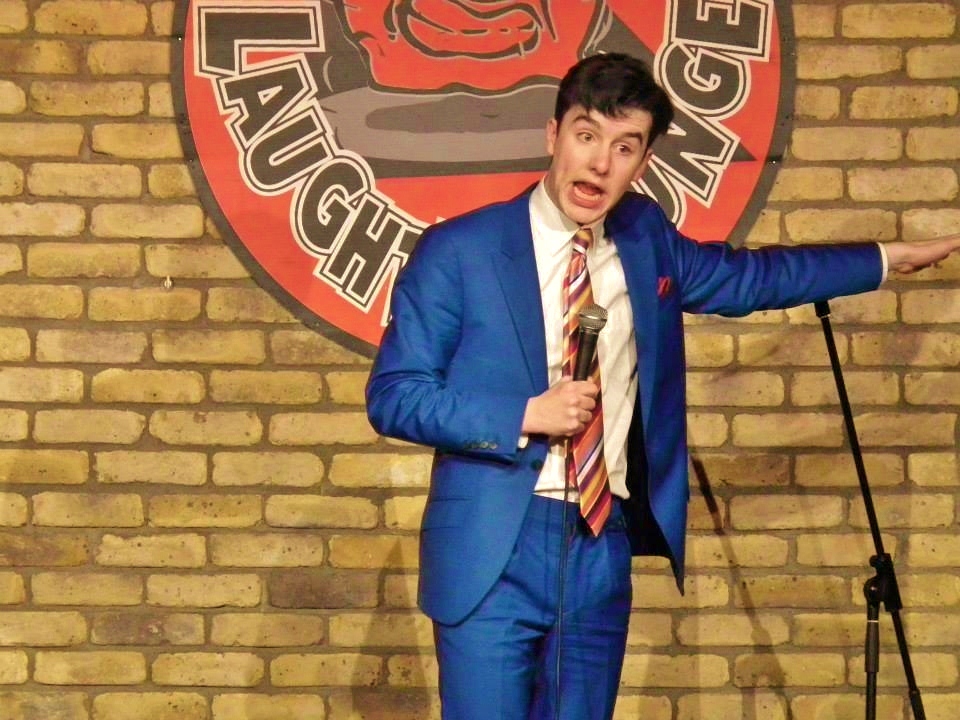
    Irish comedian Al Porter talks to The City to give his opinion on the nature of the art.

    “As a comedian, it’s our jobs to address the things going on in peoples’ minds that maybe they don’t want to say. If you even go back to Shakespearean or Medieval times, you have the court jester. He was the only one permitted to slag the king. He was the only one allowed to rock the boat and talk about the establishment.”

    Al recalls a night in the Laughter Lounge where the issue of people taking offence on behalf of others arose at a comedy gig. Do people have a right to take offence on behalf of others, even if the butt of the joke may not necessarily concern them?

    Al Porter performing at the RTE New Comedy Awards
    Al Porter performing at the RTE New Comedy Awards

    MC on the night Steve Cummins usually pokes fun at the audience, luring them into a sense of comfort at the beginning of the shows. On this particular night he had 40 people in wheelchairs in the audience.

    “He usually tells people the emergency rules and that night said: ‘in case of a fire you’re f*cked’, looking over at the 40 people in the wheelchairs,” said Al.

    However, they all found it hilarious but eight people rang in to Joe Duffy the next day to complain about how rude Steve had been. Following this, members of the group in the wheelchairs rang in jumping to the comic’s defence, explaining that they recognised it was a joke and found it quite funny.

    “In Ireland, and anywhere in the Western world, I think freedom of speech comes with the right to be offended but also the right to offend. If you have the right to be offended then I have the right to offend you. I mean I have the right to say things in the name of entertainment.”

    Although there are very sensitive issues in regard to race, religion, culture and sexuality, many comics have successfully incorporated these topics into their routine – Chris Rock on race, Louis C.K. on homosexuality etc. Are there issues comedians should avoid joking about and how does one know where to draw the line?

    “The problem is that you can’t mark something out as taboo – as something not to be talked about, because that is the reason that comedy exists. It’s there for these things to be talked about.”

    “A sensitive issue for an audience is one where you are going to upset people inadvertently, and that’s not doing your job. And that’s things like people who can’t defend themselves, people who have issues that they can’t change about themselves. You can’t change the fact that you are disabled; you can’t change the fact that you have a mental disability; you can’t change the fact that you’re blind.”

    “I do religious material and one of the elephants in the room in Ireland is child sex abuse. Now that’s very hard to make fun of. How do you make fun of child sex abuse? It’s a very difficult thing to do comedy on.” said Al.

    Al is a regular feature on the Irish comedy circuit, performing here at the Laughter Lounge
    Al is a regular feature on the Irish comedy circuit, performing here at the Laughter Lounge

    Although child sex abuse is the overriding sensitive topic in Irish culture, we have seen the likes of Tommy Tiernan achieve success in his comedy on the subject, taking a light-hearted approach on the matter.

    “My way of doing it is to take a light-handed approach. For example, ‘I was an altar server until I was seventeen but I was only in it for the action’. And people tend to laugh at that. And then I say, ‘if you think the Jews were cruel to Jesus you should have seen how Father Billy nailed me’ and it gets a good reaction,” said Al.

    “If we’re going to say that everything is okay for you to talk about, then the only lines we can draw are moral, ethical or boundaries of taste and decency. The problem there is that everybody differs. If you really want to be a top comedian, you should have enough audience entity to know your audience’s moral compass.”

    “For example I don’t do those religious jokes down the heart of the country. If I’m in a bar in Sligo or a small village in Tipperary, and that’s because I understand that these audiences don’t particularly want to hear this. I’m here to entertain. I’ll do those jokes up in Dublin where people are more accepting.”

    It is obvious that audience entity and knowing your particular audience’s moral compass at any given show is vital for a comedian’s outlook. Pushing the boundaries in comedy comes with great success if done correctly, but it is such a difficult skill to master and one has to accept that they are not going to please everyone. Someone will usually always be offended where sensitive topics are joked about.

    “I watched a video of David Walliams recently which made me uncomfortable. He brought a man from the audience up on stage, The man didn’t know what he was volunteering for and he pushed him to the ground, pulled down his trousers and dry-humped him on stage. I think that’s gone too far.”

    “The line can be drawn there because it’s not immoral to talk about dry-humping somebody with their trousers down, but he has breached an ethical code, where his audience was not given a yes or no choice here. If that was a verbal joke, the man hears it, but he can hear it, get offended, leave and never buy a ticket to see David Walliams again. The fact that this guy didn’t have the choice to leave and that his own personal space was invaded was wrong.”

    “I do stuff that I flirt with men in the audience and they might be rubbed on the shoulder or the leg, but believe me, I am looking at his face and for his reaction. I know when to move away and who to leave alone.”

    “That is when it becomes immoral – when somebody else’s freedom is being breached. Nobody is breaching your freedom by censoring you. You’re allowed say what you want and nobody is breaching the audience’s freedom by making them stay there and suffer because they can leave whenever they want.”

    “If people are going to allow you the freedom to do what you want, you should allow them the freedom to consent as to whether they want it done or not.”

    Al Porter has hosted a set of successful comedy shows in Dublin’s Woolshed Baa & Grill, the last of which takes place on December 16th in a Christmas comedy special.