Tag: sustainability

  • Green Bubble: A unique business paving the way for less packaging waste  

    Green Bubble: A unique business paving the way for less packaging waste  

    by Niamh Dobbs

    “I haven’t found another company in the world doing this.”

    Peter Gregory

    Have you ever wondered where all that bubble wrap goes after opening your new kitchen appliance? 

    According to an article published by ‘Pack to the future’, the global bubble wrap market is forecast to reach $4.78 billion by 2033. The article explains that most bubble wrap is made from polymer film which takes “hundreds of years to decompose”. 

    Peter Gregory, founder of Green Bubble, is treating bubble wrap a little differently.  

    Green Bubble is a business that focuses on sustainable packaging solutions. Where they focus on selling reused packaging. The company works with businesses collecting their un-used packaging and further selling it on. A system that benefits both the environment and your business. 

    Their simple mission outlined on their website is to ‘Reduce Ireland’s demand for raw materials, low CO2 emissions and add value to materials already in circulation.’ 

    It all began during COVID-19 with a package. “My wife received something in the post,” said Gregory, “Huge box with a tiny item and loads of bubble wrap. So, it sat in the corner in the bubble wrap for quite a few weeks. She kept saying to me, ‘When are you going to throw that bubble wrap out? And I was like, I can’t, it’s good material.”  

    This sparked an idea for Peter, and he decided to further research bubble wrap and how it is disposed of.  After speaking to numerous waste management companies in Dublin Peter shared that, “one confirmed that they incinerate 100% of the bubble wrap that they collect.” Suddenly, there was an opportunity. After just being made redundant a couple of days before COVID from his previous job as print manager, it was the perfect time for him to explore and create a new business.  

    “I was looking for something to do, and I was like, okay, I’m passionate about the environment and reducing waste etc,” said Gregory. “That’s always been my mindset. That’s the way my dad and mum brought me up, turn off the lights and not throw this stuff out, because it’s good material, so that’s the way my mind works, so I thought it’d be a good opportunity let’s give it a go.”  

    So, he did. The project started in none other than his garden shed, where he began to collect materials and go from there. “I did a few start your own business courses and accountancy courses. And what I used to do was I had one supplier who I met through a mutual friend and their removals company. So, I had to drive out, collect as much material, bubble wrap, in my car as I possibly could, bring it back to my garden shed, and then I’d try and sell it online through adverts or done deal.” said Gregory. 

    Photo credits: Peter Gregory

    The company has since then successfully grown and is now working with a social enterprise, Sunflower recycling, where the material goes to be sorted and distributed. “About 18 months ago, I had my first sort of frictionless transaction where I didn’t actually touch any bubble wrap. So that was a big moment,” expressed Gregory. 

    “Now we have two or three suppliers, so I don’t have to put it in my garden shed anymore. So, my wife’s delighted about that,” said Gregory. 

    Peter stands alone with this unique business and explains that he has not found another country in the world that is doing this. 

    “I’ve done a lot of research, especially at the start of the business, to try and find anyone else that was doing this. My brother lives in New Zealand, and he works for the Auckland City Council and, so, he’s got a lot of good contacts. We’ve got a similar mindset, so I’ve spoken to people in New Zealand, and they’re like no one else is doing this. A lot of companies would say they’re recycling it, yeah, but no one’s actually reusing it in its original form in this sort of quantity.” 

    Despite its uniqueness, Peter would not discourage others at risk of competition and expresses that “I think there’s more than enough material to go around, and I think if there were two companies doing it, I think that might be better for Green Bubble because then it would improve the standards. We wouldn’t be competing against each other, we’d be supporting each other,” said Gregory. 

    With all startups comes challenges. When asking Peter about the obstacles he has had to overcome, he indicated that there were points where there was no future for Green Bubble. “There were quite a few tough points, and I’m thinking I’m putting all this effort in, and I’m not getting any reward. People were saying, ‘Oh I love what you’re doing and everything’, but at the end of the day I needed to pay the bills and look after my kids and support the family.

    Really like thinking back on that, it was like ‘oh my goodness what have I got myself into’ but now, I’m at a point where I’m paying myself something, and I’m contributing,” says Gregory. 

    Every day is different for Peter, and he is constantly working on ways to improve his business. With two children, he ensures to keep a steady work-life balance.  

    “I’m very fortunate because I pick my oldest son up at one o’clock from school and I spend the afternoon with him. It’s brilliant. I spoke to my wife a few months ago and I was like, ‘okay, do I really push Green Bubble?’, which I’m trying to do anyway. But do I want to do full time and put my son into after school. But I said, ‘no, I’m happy with what I’m doing at the moment’. I think I can grow the business in the time that I have in the morning. So, I’ve got a good work-life balance.” 

    Looking into the future of Green Bubble Peter has realised that his goal of becoming the “the biggest bubble wrap supplier in Ireland” is not going to happen and he is okay with that. For reasons as simple as that, they cannot compete with huge companies who need mass amounts of bubble wraps every single day. He has since navigated his audience towards smaller demographics. 

    “So, I’m trying to target the individuals, people moving homes, storage units that want the smaller roles as well. So, that’s been a learning curve for me to actually, no, I’m not going to be the biggest supplier because some companies are supplying huge rolls and in large quantities each month,.” said Gregory. 

    To date Green Bubble has reduced CO2 emissions by 2.61 tonnes. According to their website ‘That’s the equivalent of flying from Dublin to New York and back three times’. 
  • This year’s SDG Fest showcases the climate crisis through comedy, community, and conversation

    This year’s SDG Fest showcases the climate crisis through comedy, community, and conversation

    by Niamh Dobbs

    An evening full of comedy, jazz, and of course, climate chats.  

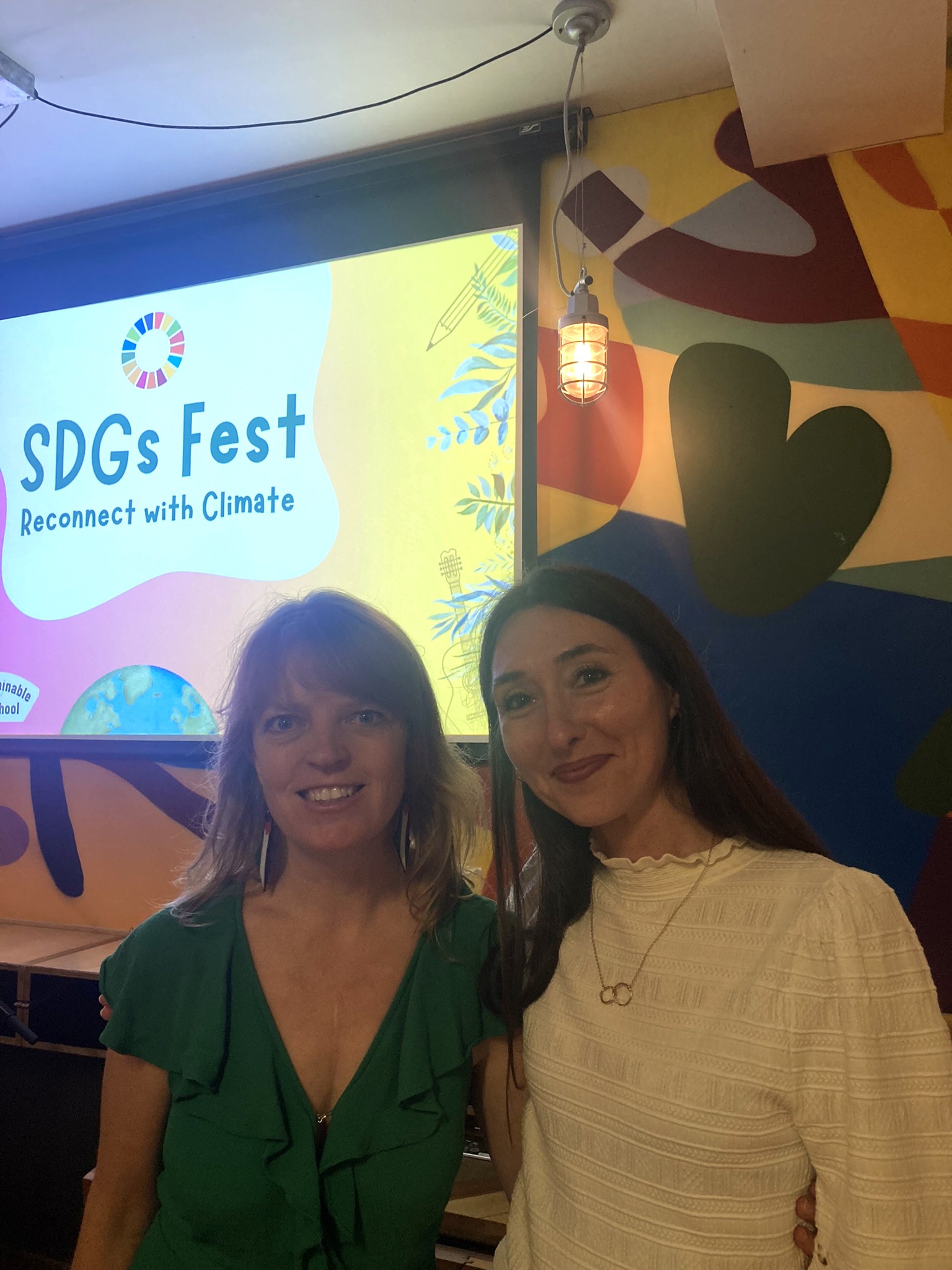
    The third Sustainable Development Goal Fest kicked off on Thursday, the 18th of September. 

    The event was organised by co-founders of the Sustainable Life School, Nathalie Pavone and Dianne O’Connor, an organisation that provides impact-driven programmes in the hope of addressing the climate crisis and providing positive solutions and lifestyle changes in workplaces and communities. 

    The event was partnered with and took place at The Tara building, where they have previously held clothing swap events and helped members of the Tara community to live more sustainably.  

    The mini festival ran from 7 to 9.30pm and began with three guest speakers: Tom Popple (Climate Cocktail Club), Keith Maggie (Global Action Plan), and Catriona Kenny (Connecting Cabra). They shared heartfelt stories about what they do and how climate change has affected their own lives. 

    After this, the guests were asked to split up into smaller groups and have their own chats about how they feel about the climate and what brought them to the event. This included an opportunity to write some inspiring quotes on their ‘Good Vibes Wall’.  

    Women reading the good vibes wall

    This was the main goal of the evening described by Pavone, creating the type of atmosphere to encourage conversation: “This year we wanted to actually get people to have a chat, because the theme is reconnecting, and we wanted people to hopefully make new friends and new connections.”  

    Another important aspect of the event was to make it free. “It’s a free event because it’s part of our social mission, because we really want to make sure that everybody can afford to have a conversation, and we don’t want to leave anybody behind,” explained Pavone.  

    Following this was a live jazz performance by Luisa Annibali, where guests were offered to sing and dance alongside Luisa, which added an element of playfulness to the event.  

    Guests at the event participating in an exercise

    The evening wrapped up with two comedic performances, firstly by co-founder Dianne O’Connor and secondly by Colm O’Regan, which centred around the climate crisis.  

    Taking a step back to where it all started with the Sustainable Life School and where they are at now, co-founder Nathalie Pavone was first motivated through sustainable fashion. “I watched a documentary called ‘The True Cost of Fashion’, which showed me the social and environmental negative effects of the fashion industry,” said Pavone. “And that’s how I became passionate. So, I started with fashion, and then I started to learn about climate and how everything was connected.”  

    The business offers a sustainable living programme in some of Ireland’s largest organisations. In which they provide six sessions that cover many areas, including but not limited to fashion, food, digital pollution, and travel, which on average results in 160 changes per programme.  

    Through these sessions, Pavone also explained the importance of recognising the struggles that come with living more sustainably. “What we do as well is that we are honest with each other and with how difficult it is to live sustainably, because obviously you’re going against the grain, because we’re not in a system that’s very sustainable. So, it’s really about kind of sometimes going out of your way.”  

    One piece of advice Pavone shared to start living a sustainable life is “just start in an area of your life where you know, where you’re passionate about or interested in. Whether it’s clothes, travel, or food, focus on that area and see what you can do to adapt or change in a more climate-conscious fashion.”

  • Why are electric car sales continuing to decline? 

    Why are electric car sales continuing to decline? 

    By Luke Hurson

    2024 has been a disappointing year for the electric vehicle market, so far.  

    Latest figures from The Society of the Irish Motor Industry (SIMI) revealed that in September 1010 new electric cars were registered which was a massive 30.8% lower than the 1,460 that were registered in September 2023.  

    16,133 new electric cars have been registered so far, this year, as of the end of September. This is a 25.8% decrease compared to the same period in 2023 when 21,726 electric cars were registered. 

    Brian Cooke the Director General of SIMI commented: “The new electric vehicle segment has experienced another month of decline in registrations, marking the eighth consecutive month of this trend.” 

    “It is vital that we see positive measures from the Government to support the EV project and help reverse this drop in demand for EVs. Reinstating and extending EV supports, as well as investing in a reliable charging infrastructure, can help regain lost momentum in the electric vehicle project. The industry remains committed to supporting the transition to electrification,” he said.   

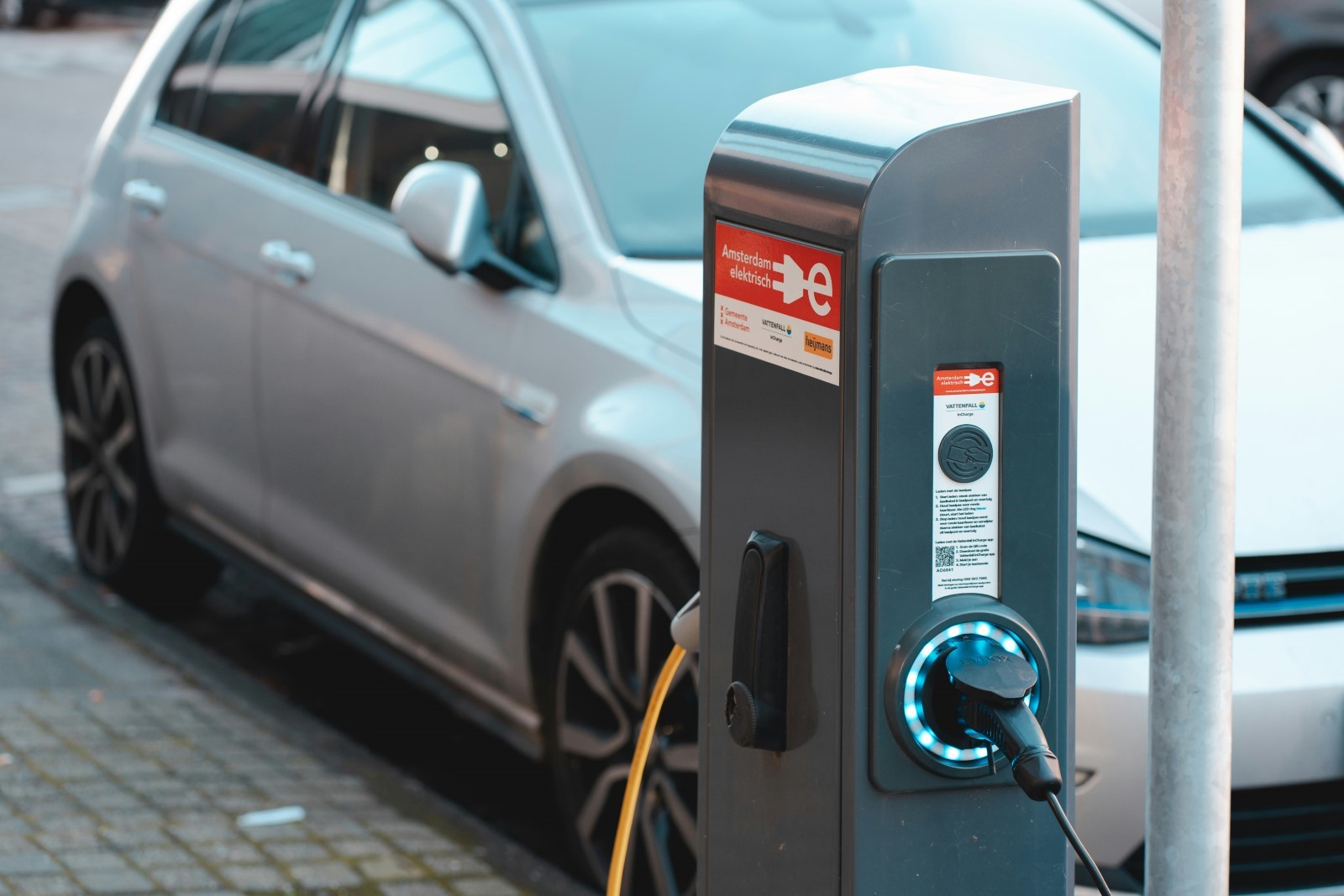
    An electric car charging at a charging station. Credit: Pixabay

    So why has there been such a steep decline this year? 

    In January 2022, the Irish Government got rid of the €2,500 grant for new plug-in-hybrid-electric vehicles (PHEVs). This resulted in a reduction in PHEV sales and an increase in battery electric vehicle sales (BEVs), which was the intention.  

    In July 2023, the Government reduced the grant for new BEVs from €5,000 to €3,500. Although there wasn’t a sudden impact, there is now a slowdown in sales of BEVs, whereas PHEV sales are increasing again. 

    Many people in the EV scene find that it is harder to get the mass market to make the switch to electric compared to the early adopters.  

    The early adopters tend to be more comfortable with risks like range anxiety or queuing at charging points – whereas the mainstream adopters are less likely to be wealthy and are not as comfortable with the same risks. 

    Luke Donnellan, a mechanic for Renault spoke to The City. “A lot of the cars we sell are either hybrid electric or petrol. Not a lot of people are ready to make that change to fully electric yet. 

    “A lot of people are still very reliant on diesel and are very unsure of the range of electric cars, as well, because with a petrol or diesel cars, when they run out of fuel, it’s not a big deal, you can just fill it up and away you go but with an electric car you’re almost stranded. 

    “A lot of people do have that range anxiety and It’s also made harder when there isn’t the infrastructure there to charge all these cars. 

    “A big thing that we’re seeing as well is people trading in their brand-new electric vehicles because they buy the electrics and realise there’s nowhere to charge them and how much it is to charge them. A lot of them realise they can’t charge the cars at work, so then they’re left with these cars where they have to plan everything. You can’t just go do something; you have to plan your entire trip from start to finish and it’s a lot,” he said. 

    An electric car plugged in at an integrated charging station parking space. Credit: Unsplash

    EVs can also provide different mechanical problems to that of a petrol or diesel car.  

    “One thing that we are noticing is because all these electric cars use regenerative braking systems, where they don’t actually use their brakes and they use the slowing down of the wheels to try to charge the battery up – the brakes are getting completely rusted out,” said Donnellan.  

    “Even though they’ve only used 20% of their brake pads, their brake discs are so badly corroded, they need to change their brake pads and discs more frequently than a petrol car, so there’s more maintenance in that sense,” Donnellan added. 

    Hybrid vehicles, however, are rising in popularity. There has been a 12% increase in regular hybrid sales this year, totaling 26,079 new registrations at the end of September.  

    Similarly, there has been growth in plug-in hybrid sales, now amounting to 10% of total sales with 11,766 registrations. 

    Petrol remains the most popular choice for Irish buyers, with 36,339 registrations, followed by diesel with 26,947. 

    More support and infrastructure are needed if the Government has any hope of reaching their target of 845,000 EVs by 2030. 

  • Weaving in the years: Meeting Ireland’s fresh face in the fashion industry

    Weaving in the years: Meeting Ireland’s fresh face in the fashion industry

    Woven pieces by Sarah Flynn Textiles and designer Sarah Flynn. Images courtesy of Sarah Flynn

    Celebrating a prestigious award ceremony in your living room is a strange dichotomy. 

    That’s how up-and-coming fashion designer Sarah Flynn, of Sarah Flynn Textiles, describes the experience of winning the 2020 Institute of Designers in Ireland Graduate Awards for the Fashion and Textiles category. Nonetheless, the champagne was popped. 

    The project she won it for, entitled Colourfully Conscious, was almost never completed. 

    Weeks before Flynn finished her final year in the National College of Art and Design, universities closed up shop due to Ireland’s first Covid-19 lockdown – leaving many students stranded with unfinished work.

    “We were at home with no equipment and no machinery. It was so hard to work out of a box room with absolutely nothing. We had no access to weaver looms. I discovered my love for hand-knitting during lockdown and based a lot of my collection on hand-knitting and weaving,” Flynn tells me.

    “Thankfully, Ncad got us back in for Makers Month and that’s when we had three weeks to make our full collection.”

    The project

    Colourfully Conscious is a collection of luxurious woven, hand-knit and digital-print fabrics for women’s wear spring summer collection 2020-21. 

    Una Curran modelling a scarlet red knitted piece in the Colourfully Conscious series. Image courtesy of Sarah Flynn

    Inspired by Moroccan tile patterns and fabric materials, Flynn combined traditional textile techniques with the geometric patterns most often seen in Marrakesh. At its core, the collection promoted slow fashion. 

    “I sourced natural materials such as cotton, wool, silks and seaweed yarns. The seaweed yarns I got from a supplier in Belgium,” Flynn says. “As well as that, I sourced dead-stock waste yarns from a local Irish mill, which would have gone to landfill otherwise. So it was nice to up-cycle these materials – they’re natural and still high-quality as well.”

    Una Curran wearing sapphire inspired top from the Colourfully Conscious collection. Image courtesy of Sarah Flynn

    “I think people need to investigate and realise why fast fashion is so cheap. Because the reality is if you’re not paying for the cost, someone else is”

    Sarah Flynn

    Ethical and sustainable production were the driving factors behind this collection. 

    By documenting these sustainable practices, Colourfully Conscious tries to demonstrate alternative practices that can be adopted by the textile industry as a whole. 

    For example, Flynn’s project incorporates natural dyes in an effort to combat the fact that the fashion industry is responsible for one-fifth of the world’s water waste and textile dying is the world’s second largest polluter of water globally

    “Dye is so potent and toxic,” explains Flynn. “It seeps into rivers and oceans and pollutes everything. I thought it was good to focus on that and how you can incorporate a more natural approach and stop using toxic chemicals in the process.”

    Flynn continues: “In Morocco, they concentrated on using natural dyes in their yarns and wools and then weave them into textiles such as rugs and fabrics – turmeric used as a dye is a big one. Paprika is another spice they use and there are loads of flowers too. But obviously, they can’t be grown in Ireland.” 

    While turmeric and paprika may not be readily grown in Ireland, there are sustainable methods being practiced for making natural dyes. For instance, the Apple Oak Fibre Works project in county Clare, who make dye from composted onion skins. 

    Getting down to business

    Woven Frames patterns. Image courtesy of Sarah Flynn

    With the leftover materials from her graduate project, Flynn decided to keep the sustainable cycle going and start up her own business – Sarah Flynn Textiles.

    “Instead of throwing it out, I was like ‘what will I do with this?’ So I decided to make these woven frames and basically use this zero-waste method and turn it into art. Each piece takes about two hours to put together.” explains Flynn.

    Flynn’s pieces don’t shy away from colour. Each squared frame has its own unique design, fixating you into a portal of otherworldliness. 

    I ask Flynn about growing her brand and getting her business up and running. 

    “It’s definitely a learning process. I love being creative so I’m always looking for ways to improve. I think it’s key to recognise that you don’t know everything. So it’s good to be open to new ideas and approaches,” she says. 

    Still in its early days, Flynn wants to stick to her guns and keep her fashion sustainable – a conflict she feels many brands face once they get off the ground. 

    “My brand’s mission is to get customers to see the impact you can curate through strong design processes. And to see the value of hand-made products. Instead of something that’s made a hundred times from plastic or clothes made en masse from cheap materials.” says Flynn. 

    Fast fashion is a problem facing the world over, and with online consumption increasing during the pandemic, lots more garments will find themselves in landfill.

    “I think people need to investigate and realise why fast fashion is so cheap. Because the reality is if you’re not paying for the cost, someone else is.” 

  • Meet the young entrepreneurs using Depop to revolutionise the fashion industry

    Meet the young entrepreneurs using Depop to revolutionise the fashion industry

    Clothes Rack, photo via pixabay

    Fashion has never been more disposable. A quick scroll through the fashion hashtag on Instagram will present you with an endless feed of bloggers’ Shein hauls and Boohoo Ootds.

    Because mass produced clothing is sold at cheap prices, it is often treated as disposable by consumers. It feels like every day there’s a new trend, promoted by the latest influencer, that’s being swept off the rails and destined to spend eternity gathering dust in a wardrobe or decomposing (slowly) in landfill. 

    Keeping up with these trends seems like harmless fun, and it may not be obvious that the clothes we wear are one of the biggest culprits when it comes to harming the planet. Carbon emissions, excessive water consumption and the release of microplastics into the environment are just some of the problems fast fashion presents – not to mention the exploitation of garment workers.

    The good news is that slow fashion is on the rise. With well-known Irish personalities like Roz Purcell and Tara Stewart using their platforms to educate others on the sins of the fast fashion world, as well as to advocate for shopping second-hand, it seems thrifting is now on trend.

    “The fast fashion era arose from the manufacturing of low quality clothes needing to be replaced faster, which in turn created the mindset of clothing being disposable.”

    Blathnaid Devilly

    Depop is at the forefront of the sustainable fashion movement. Experiencing a massive influx  of users since the pandemic hit, it describes itself as “the fashion marketplace app where the next generation comes to discover unique items”.

    The platform is a godsend for young designers and entrepreneurs looking to grow their small companies.

    Caitlín Ní Dochartaigh, owner of Sugar and Spice Vintage, uses Depop to host her store which specialises in 90s and early 00s clothing and accessories.

    “I really love being able to curate the style and aesthetic of my shop to build my brands image. I’m not very tech savvy so it takes away the pressure of maintaining my own website because Depop hosts my shop. The app also has several features to highlight their sellers which from my experience has been beneficial for gaining followers and boosting sales,” she says.

    Ní Dochartaigh, who describes her personal style as a hybrid of a gothic Bratz doll and Sporty Spice, handpicks the majority of her stock from European thrift markets.

    “Sustainable fashion is really important to me,” she says. “Fast fashion has an undoubtedly negative impact on the environment and the people producing our clothes, so sustainable fashion is a great way to avoid these harmful consequences. I also really love finding funky items that you won’t find on the high street. It definitely helps you to cultivate your own distinctive personal style. And it stops clothes from going to landfill which is always a bonus.”

    Blaithnaid Devilly is a Dublin-based stylist who is also reaping the benefits of Depop for her store, Bedelic. A lover of all things 1970s – she tells me she could watch Reeling in the Years on repeat just to see what people wore – Devilly uses Depop to sell handpicked pre-loved garments.

    Bedelic stemmed from her love of fashion’s ability to express one’s personality and a nostalgia for the charity shops she would frequent as a child. Through uploading aesthetically pleasing images and styling unique looks, Devilly garnered attention and built a following on social media.

    “I wanted to create a place where people of any style, size or gender could find what they are looking for and feel comfortable in standing out from the crowd and being whoever they want to be,” says Devilly.

    Devilly admits that her lifelong love for sustainable fashion was less to do with an eco-conscious mindset and more so a desire for an original personal style.

    “It was only when I started to sell online did I realise the importance of someone purchasing second-hand and the positive impact this new obsession could have in fighting climate change.”

    If you’re a fast fashion addict, starting your journey can be a bit daunting. Devilly’s advice is to start with what you already own.

    “Take everything out of your wardrobe and try to style new looks together. It can be quite fun to play dress up while blaring your favourite tunes. Guaranteed you will come up with 10 new looks that you would have bought straight out of a magazine.

    “If you’re not ready to drop fast fashion completely, then I have this rule where if you do buy from brands, buy something that would last over ten years. You see the fast fashion era arose from the manufacturing of low quality clothes needing to be replaced faster, which in turn created the mindset of clothing being disposable.

    “The price of these garments don’t reflect on their true cost. You will certainly have to spend more money on your new garments but the clothing would be better quality and down the line you will purchase less.”

  • Bread 41: meeting the knead for sustainability

    Bread 41: meeting the knead for sustainability

    By Jade Carpenter and Paula Bowden

    Located at 41 Pearse Street, Bread 41 is a cafe and bakery striving for sustainability. From their commitment to no single use cups on Mondays, to the ingredients and produce in their kitchen, sustainability is always a priority.

    Thecity.ie spoke to owner Eoin Cluskey about going green and future plans for the business.