Tag: swimming

  • Dublin swimmers at risk of sewage exposure from heavy rainfall

    Dublin swimmers at risk of sewage exposure from heavy rainfall

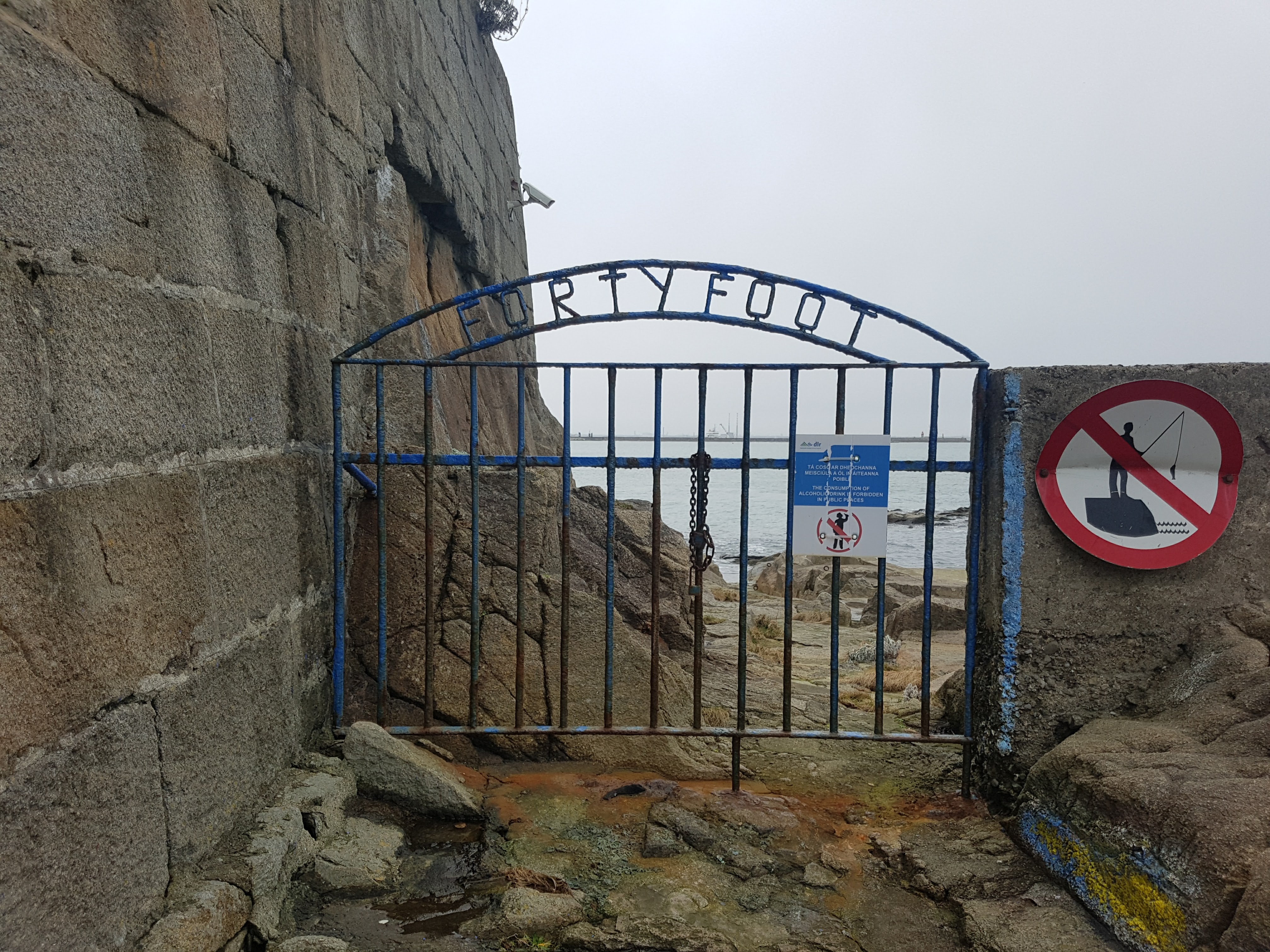
    Image of Forty Foot – Photo credit: Oscar Meagher

    Dublin swimmers are advised to take caution after periods of heavy rainfall as there is an increased risk of contaminated seawater.

    By Oscar Meagher 

    As Dublin continues to face poor weather conditions, swimmers have been warned to take precautions before returning to the sea.

    Ireland’s bathing season runs from June 1st to September 15th. During this period, local authorities monitor swimming areas for the presence of harmful bacteria.

    These conditions are largely unsupervised during the remaining months. 

    “Heavy rainfall is one of the key factors in water quality contamination,” said Wim Meijer, Professor of Microbiology in UCD School of Biomolecular and Biomedical Science.

    “Treatment plants and sewers can’t contain the increased volume of wastewater during periods of extreme weather. That excess ends up bypassing the complete treatment process,” he said.

    “When sewers overflow, that water will need somewhere to go. It may flow back through the toilet, or it will wash onto our beaches.”

    Swimming in this contaminated water can lead to infection, skin rashes, dysentery and may even result in diarrhoea and vomiting in extreme cases.

    “I would advise swimmers to wait at least 48 hours to swim after periods of heavy rainfall – particularly in areas where sewage may pose a risk,” added Professor Meijer. 

    Image of Blackrock Baths – Photo credit: Oscar Meagher

    Bathing areas are tested for the presence of two bacterial markers, E. coli and Intestinal Enterococci. They are often resident within the intestines of humans and animals.

    Waste from dogs and sea birds is one of the key factors in water pollution.

    “Dogs account for 30% of water contamination,” said Professor Meijer.

    “Even a small amount is enough to contaminate water in an area the size of a tennis court. This can result in temporary bathing prohibition notices being issued by local authorities.”

    Image of Sandycove beach – Photo credit: Oscar Meagher

    Frank Kelly is a member of The Gollymocky Whalers, a local swimming group that began as a result of the Covid pandemic.

    “I’ve been swimming at Sandycove ever since the plague started six years ago. I go swimming three or four times a week,” he said. 

    Kelly is one of many taking part in the ‘Freezbrury’ challenge – which involves submerging yourself in the icy cold water for one minute every day throughout February. Every day, another minute is added.

    “It was 17 minutes today, and we’re hoping to get up to almost half an hour by the end of the month,” he added. 

    “I know to steer clear of the sea after lots of heavy rain. Thankfully, Sandycove is well protected, but I’m worried about some of the other beaches,” said Kelly. 

    One young swimmer at Seapoint Beach, who did not wish to be named, also expressed uncertainty regarding water quality.

    “I only started swimming recently as a sort of New Year’s resolution. There’s still a lot of things I’m unfamiliar with,” she said.

    “I was advised not to swim after it’s been raining. I haven’t really gone much because of the terrible weather we’ve been having for the last month.”

    Image of Seapoint Beach – Photo Credit: Oscar Meagher

    While water quality is generally monitored exclusively from June to September, out-of-season sampling is voluntarily reported by local authorities.

    “I would advise swimmers to regularly check sites like Beaches.ie for information regarding water quality,” said Professor Meijer.

    Dublin City Council monitors bathing water quality at three designated locations: Dollymount Strand, Half Moon and Sandymount Strand. 

    The DLR website regularly publishes findings from water quality samples.

    Recent findings from February 4th in areas like Dún Laoghaire Baths and the Forty Foot were categorized as “excellent”, while labelling others like Blackrock Baths as “poor”. 

    The Bathing Season will continue on June 1st

  • Braywatch: Local Sea Swimmers Making Waves Along Ireland’s Coast

    Braywatch: Local Sea Swimmers Making Waves Along Ireland’s Coast

    By Jamie Ryan

    The City caught up with the ‘Bray Beach Bathers’, who are a group of men and women who all share a common love for swimming in the ocean, as they brave the cold water on a brisk, but beautiful October morning – which made for perfect swimming conditions. 

    In seaside towns across the country, sea swimming has become a rapidly rising phenomenon – but for many, it’s become much more than just a hobby – it’s become a way of life.  

    As part of their now daily routines, sea swimmers have formed several groups who come together for their daily dips into the Irish Sea all year round.  

    While every swimmer has their own respective reasons for being involved in taking part, one thing is for sure – no matter the weather, sea swimming is here to stay. 

  • Podcast: Olympians! Just like us?

    Podcast: Olympians! Just like us?

    The Olympics are every athlete’s dream. Nicholas Quinn is hoping to swim his way to gold in Tokyo this year. Photo courtesy of Anthony vis Pexels.com
    Listen to “Olympians! Just like us? “

    The Tokyo 2020 Olympic Games was one of the long list of events casually swept aside last year by Covid-19.

    Although restrictions are still in place in many countries globally, the games are scheduled to go ahead this summer instead — as the ‘2020’ Olympics.

    Irish Olympian Nicholas Quinn took time out of his hectic training schedule to sit down with The City. The 27-year-old athlete, who’s currently based in Scotland, hasn’t been home in over a year due to the intervallic travel restrictions.

    Quinn’s first time competing at the Olympics was in the Rio Games in 2016, where he took part in the men’s 100m breaststroke as well as the 200m race. Despite the pandemic, Quinn has been able to keep up with his training as well as his postgraduate work and will be arriving soon to compete in a series of trials to earn his place in this year’s Olympics. 

    Believe it or not, there was a time when Quinn thought the 2016 Rio Games would be out of his reach. It’s hard to imagine that someone who has amassed such success so early in life could lacking certainty about their own talents, but it just goes to show that underneath it all, even renowned athletes have insecurities.

    “I’ve tried to use the time since Black Lives Matter was trending last year to educate myself and learn more about systematic racism in our society”

    Nicholas Quinn
    A Photo of the five Olympic rings. Taken by Kyle Diaz from Unsplash

    During our conversation, I asked Quinn about the Black Lives Matter card in his social media bio.

    “I’ve tried to use the time since BLM was trending last year,” he says, “to educate myself and learn more about systematic racism in our society and what we can do to help end it.”  

    #Deletebanreport is a scheme by the Olympic Federation Ireland calling for a zero tolerance approach to online hate speech by pushing the public – as well as sporting stakeholders – to take action when they see online abuse and discrimination, by deleting comments, banning the offenders and reporting them to the approriate platform. 

    LEN European Long Course Swimming Championships Preview, National Aquatic Centre, Abbotstown, Dublin 12/8/2014. Irish swimmer Nicholas Quinn prior to departure for the LEN European Long Course Swimming Championships in Berlin, Germany from 18th-24th August 2014. Mandatory Credit ©INPHO/Cathal Noonan (No Reproduction Fee)

    Japan will be expecting over 10,000 competing athletes to arrive and once they do, they’ll be confined to the Olympic village. As of this moment, Japan has over 508,350 cases of Covid-19 and over 775,000 citizens have received a dose of the Covid vaccine. 

    The Tokyo 2020 Olympic Games will commence on Friday 23rd July 2021. 

  • Freezebruary boys: South Dublin group embrace the challenge of sea swimming for 28 days in a row for charity

    Freezebruary boys: South Dublin group embrace the challenge of sea swimming for 28 days in a row for charity

    Cian Murphy, Conor Murphy, Neville Godfrey and Derek Dunne moments before attempting the Freezebury challenge for 16 minutes on 16 February. Photo courtesy of Tom Murphy

    Participants across the country have undertaken the Freezebruary challenge for the month of February, in aid of numerous charities throughout Ireland – and that means sea-swimming each day of the month.

    Those opting for the more extreme version of the challenge are required to having an increase of time spent in open water, starting from one minute on 1 February, rising to 28 minutes on 28 February.

    The Freezebruary Boys, four young men based in South Dublin – Cian Murphy, Conor Murphy, Derek Dunne, Neville Godfrey – are taking part in the challenge, in aid of the heart and stroke charity, Croí. 

    Currently, they have raised over €12,000 for their chosen charity, with donations coming from people throughout Ireland and abroad.

    “At the beginning of the month, we had to swim whilst being in the middle of a snow shower”

    Neville Godfrey

    “My mother died last year due to a stroke, so we agreed collectively that Croí was the charity we wanted to go with,” Godfrey says. “We have seen some of the amazing work that Croí has put in throughout the years for [those] who have suffered a stroke or heart conditions,” he continues.

    When coping with the harsh circumstances for sea-swimming at this time of the year, Godfrey says the task has been “highly demanding” for the group as they have experienced a variety of weather conditions throughout February.

    ‘’At the beginning of the month, we had to swim whilst being in the middle of a snow shower and by mid-February, there were high gusts of winds down by the coast that made it difficult for us. We are decent swimmers and do it regularly in the summer months, so the tough conditions have only spurred us on more to face the challenge,’’ says Godfrey.

    “You find out a lot about yourself when you’re staring in the face of adversity’’

    Neville Godfrey

    According to Swim Ireland, open water temperatures in the sea tend to dip below 10 degrees Celsius during the winter months and will not rise above that level until April at the earliest.

    What about the mental benefits of sea swimming?

    “Physically it is quite daunting for the body, but at the end of the day, it’s just you against the water. Each swim we’ve done has been so beneficial towards maintaining positive mental health,” Godfrey says.

    The support for the campaign has exceeded the expectations of Godfrey and his three counterparts, as they expected to garner some attention but nothing close to the over 500 donors contributing to the fundraiser.

    “In the beginning, we expected to raise a few hundred euro for Croí, by 6 February we had already raised €8,000. We couldn’t believe how much we raised in such a short space of time,” Godfrey says.

    The Freezebruary Boys pose with the tricolour after having their ninth dip of the month. Photo courtesy of Tom Murphy

    “We have the advantage of having four of us running the campaign, so we could reach out to several people through our friends and family – but it just blew up to the point where everyone in the area was donating towards the cause.

    ‘’People have been so generous when donating to us. People with [whom] we have no affiliation were donating hundreds. We received a donation of €200 from one individual, who then gave another €280 moments later, it’s surreal,” he continues.

    The vehicle for pushing the fundraiser was their Instagram page, which gained 1,000 followers in a week. On their Instagram, they post daily updates of their experience with the difficult challenge.

    Through social media, they managed to target numerous people in their community while also receiving assistance from some notable names. Some include TV presenter Laura Whitmore sharing the social media page and former rugby player and originator of the Freezebruary challenge Damien Browne, who backed the fundraiser online.

    Thus far, they have raised €14,500 in donations with a target of €15,000.

    You can donate towards Freezebruary Boys here

  • Swimming for the soul – the benefits of sea swimming

    Swimming for the soul – the benefits of sea swimming

    By Amy Connaughton

    For over 250 years, the Forty Foot near Dún Laoghaire in South Dublin, has seen people swimming every single day, rain, hail or sunshine. It’s no secret that the Irish water is not quite like swimming in the Caribbean. So, are these people crazy? Or are we the crazy ones for not reaping all the benefits of sea swimming.

    For centuries, people have believed in the power of the sea, however, health professionals have started to accept the idea that the sea has a positive effect both mentally and physically.

    On the VHI’s website, they list some of the physical benefits of regular sea swimming. Sea water is rich in vitamins and minerals which is of huge benefit to people with skin conditions. Magnesium lowers cortisol which calms your nervous system and therefore reduces the potential for stress-prompted skin issues. People with psoriasis and eczema may benefit.

    Due to the sea water being salty, this acts as nature’s own saline solution which helps the cilia to move mucus, clearing the sinuses. Since the water is extremely cold in Ireland, this can give the body a boost of adrenaline which can give relief for some types of pain.

    Not only are there physical benefits, but people who make a habit of swimming in the sea regularly also reap the mental health benefits of swimming.

    Swim Ireland is the national governing body of open water swimming in Ireland and on their website, they talk about the mental health benefits to sea swimming. According to Swim Ireland, scientific research has shown that exercise not only leads to a healthy body but also leads to a healthy mind.

    Hydrotherapy has been shown to decrease the symptoms of anxiety and depression. Focusing on your breathing can act almost as a form of calming meditation and this breathing control involved in swimming can slow you down and reduce stress.

    The shock on our bodies from the cold water also releases dopamine and serotonin, both of which are mood boosting chemicals. Swimming can reduce stress due to increased blood flow to the brain which promotes the growth of new brain cells which can break down in times of stress.

    Today, a growing number of cold-water swimmers swear by the mental and physical benefits.

    One of these committed swimmers is regular, Billy Morrison, 75 of Ballsbridge. Billy, although currently residing in Ballsbridge, originally grew up in Blackrock by the sea and has been swimming almost every day for 60 years.

    “I drive down every morning. It gets me out of bed and it keeps me going. Physically it’s good exercise, I usually swim for about 10 to 15 minutes which is just enough for me. Some days in the winter you come down and it’s miserable but you have a couple of seconds in the water and then you feel great for the rest of the day.

    “So, it’s good physically but also there are maybe 20 to 25 people who would come around at this time so it’s social as well as everything else. It’s grim at times in winter and you come down here and we’re saying to each other what are we doing here. You get in and it’s cold and you get out and you feel great, so long as you don’t stay in too long.

    “What’s great about this spot is that irrespective of which way the wind is blowing, there’s always somewhere to swim. If it’s too windy at the Forty Foot and the sea is too rough, we can go around the corner to Sandycove and swim there where it’s more sheltered. So, we very rarely have an excuse not to get in, unfortunately.” Billy said.

    The Forty Foot used to be a gentleman-only bathing spot as demonstrated by a large sign at the entrance, however now it is open to everyone. Emer White, 73 of Dún Laoghaire, is one such woman who enjoys swimming in the Forty Foot daily.

    She said, “I swim every day from May to December. It’s handy for me because I live just a 10 minute walk down the road. I’ve been swimming here for 20 years. I come whenever it’s high tide because if it’s too low you can’t really swim at Sandycove. But at the Forty Foot you could swim any time of the day because the tide never goes too low. In the really nice days of summer, I come down in the morning and then come again in the evening for sun up and sun down.

    “It’s just so lovely being in the seawater; you can’t compare it to the pool. I swim in the pool from December to May but with the chlorine and everything, there’s no comparison. But it’s good exercise and for me, I like it because it’s easy on my joints and once you’re in the water you feel weightless.

    “I swim because it makes me feel good, it gives me something to do to start my day off and then I feel great for the rest of the day.”

  • Taking a dip in the water

    Taking a dip in the water

    Clodagh Moriarty talks with some of Dublin’s sea swimmers at the Forty Foot.

    (more…)