Tag: Syria

  • The Human Rights Violations Seen From Space

    The Human Rights Violations Seen From Space

    The City’s Cameron Weymes compares historical Google Earth imagery to illustrate human rights violations committed by various governments in the Middle East.

    Human rights have been defined as “norms that aspire to protect all people everywhere from severe political, legal, and social abuses.”

    Each event shown below has been documented by rights organizations to be contrary to these principles.

    Slide the bar left and right to reveal differences

    The Iraqi government assault on the Marsh Arabs

    [twentytwenty]

    marshhawizah121984

    marshhawizah122002

    [/twentytwenty]

    What Human Rights Watch said:

    “HRW believe that many of the acts of the Iraqi government’s systematic repression of the Marsh Arabs constitute a crime against humanity”

    The Background

    In March 1991, in the aftermath of the Gulf War, uncoordinated uprisings against Baath Party rule broke out in Iraq, one in the Kurdish majority north and another in the Shia south. The revolts were in response to George H.W. Bush’s appeal for the Iraqi people to “Take matters in to their own hands and force Saddam Hussein to step aside.”

    While the Kurds achieved success by establishing an autonomous zone in the north, the Shia rebellion had been put down by Saddam by early April.

    During the conflict many rebels had sought refuge in Iraq’s marshlands, home to 200,000 people who relied on the area for fishing and agriculture. In response to the perceived disloyalty of the Marsh Arabs, Saddam executed hundreds of locals, forcibly transferred its population to the cities and began draining the wetlands.

    The Satellite Photos

    The tragic environmental and humanitarian effects of these actions can be seen from the above satellite photos. The ‘Hawizeh Marshes’ were left almost entirely devoid of water, halting a way of life that had existed for centuries.

    Systematic destruction of Kurdish towns in southeastern Turkey

    [twentytwenty]

    nusaybin782015

    nusaybin9132016

    [/twentytwenty]

    What the UN said:

    “The UN Human Rights Office published a report detailing allegations of massive destruction, killings and numerous other serious human rights violations committed between July 2015 and December 2016 in southeast Turkey, during Government security operations that have affected more than 30 towns and neighbourhoods and displaced between 355,000 and half a million people, mostly of Kurdish origin.”

    The Background

    Nusaybin is a city of 80,000 people in southeastern Turkey, a region with an ethnic Kurdish majority. In late 2015, fighting broke out between the Turkish army and Kurdish militants. By the summer of 2016, Turkish government forces had put down the insurrection and began demolishing thousands of homes, leading to accusations of collective punishment against Nusaybin’s residents.

    The Satellite Photos

    The above images show houses destroyed by the Turkish government in Nusaybin.

    [twentytwenty]

    sur2014

    sur2017

    [/twentytwenty]

    The Satellite Photos

    Similarly to Nusaybin, large parts of Diyarbakir, the largest Kurdish majority city in Turkey, were flattened after fighting broke out in 2016 between Kurdish militants and the Turkish army.

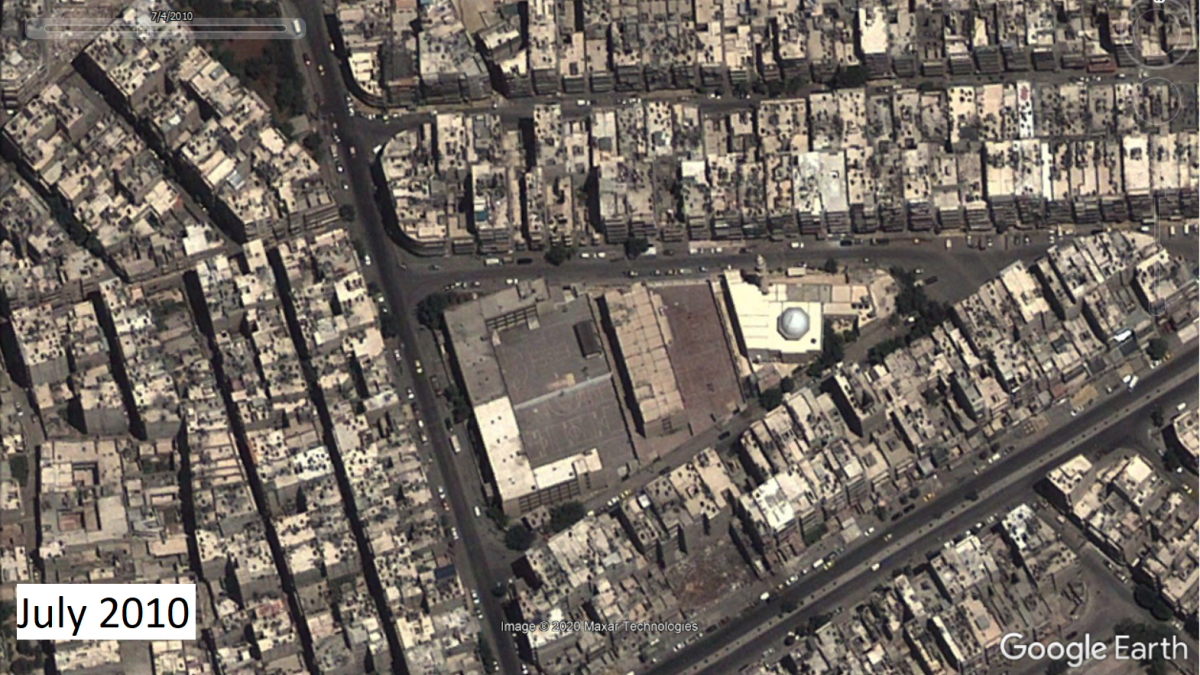
    The indiscriminate aerial bombardment of rebel-held Aleppo

    [twentytwenty]

    eastaleppojuly2010

    eastaleppofeb2017

    [/twentytwenty]

    What Human Rights Watch said:

    “The Syrian military has dropped barrel bombs, sometimes dozens in one day, on opposition-held neighborhoods in Aleppo, Idlib, Dara’a and other cities and towns. They have pulverized markets, schools, hospitals and countless residences. Syrians have described to me the sheer terror of waiting the 30 seconds or so for the barrel bomb to tumble to earth from a helicopter hovering overhead, not knowing until near the very end where its deadly point of impact will be.”

    The Background

    In 2012, Syrian rebels fighting Bashar al-Assad began taking control of large swaths of Aleppo, Syria’s largest city. The rebels would eventually take the eastern half of the city, before a regime offensive backed by Russian airpower regained control in late 2016.

    The conduct of the Syrian regime and its Russian allies during the battle led to widespread allegations of war crimes, as highly inaccurate barrel bombs (barrels full of scrap metal and explosives) were dropped on densely populated rebel-held areas.

    The Satellite Photos

    The above images show the effect of regime and Russian airstrikes on buildings in eastern Aleppo.

    The expansion of Illegal Israeli settlements in the West Bank

    [twentytwenty]

    westbanksettlements2

    westbanksettlements1

    [/twentytwenty]

    What Amnesty International says:

    “Israel’s policy of settling its civilians in occupied Palestinian territory and displacing the local population contravenes fundamental rules of international humanitarian law.”

    The Background

    Israel took control of the West Bank following a Six-Day War with its Arab neighbours in 1967. The territory has subsequently undergone a process of colonisation as over half a million Israeli settlers have moved into the West Bank and East Jerusalem, an act illegal under international law.

    The Satellite Photos

    The above image shows the illegal expansion of the Nofei HaSela settlement in the occupied West Bank.
  • ‘NaTakallam has been my window to the world’ – The refugee language service ideal for lockdown learning

    ‘NaTakallam has been my window to the world’ – The refugee language service ideal for lockdown learning

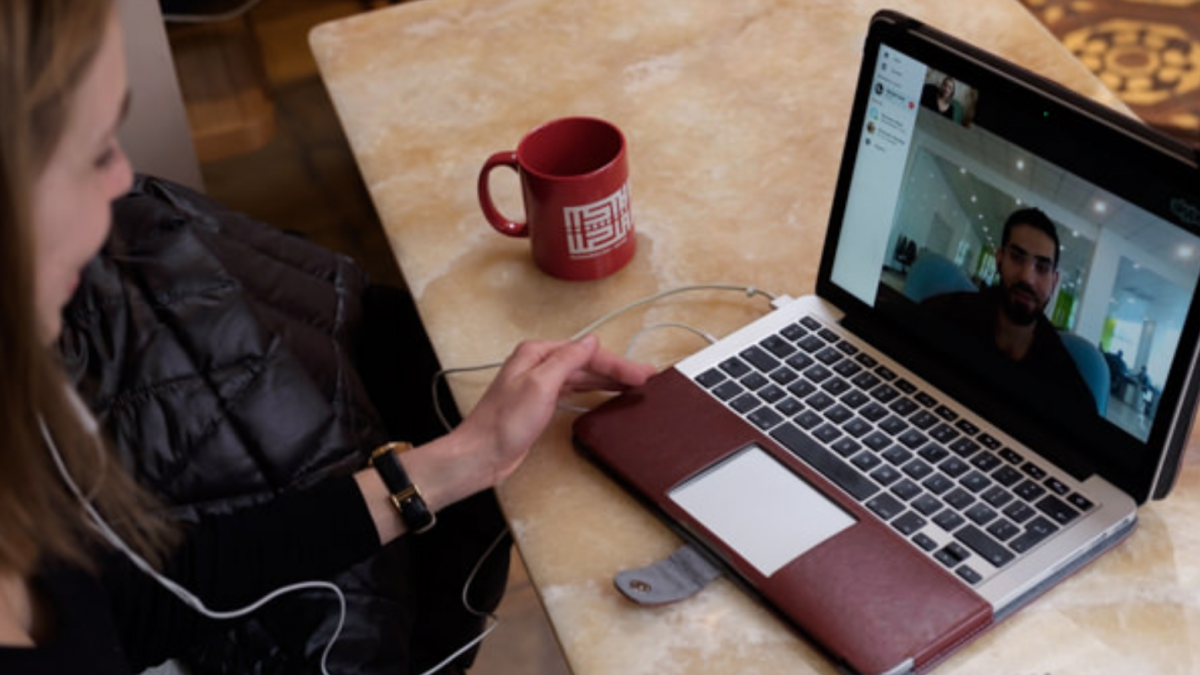
    Learners and conversation partners connect online
     (Photo: NaTakallam)

    The City’s Cameron Weymes examines the work of NaTakallam, a business that hires displaced people as language teachers online.

    NaTakallam, which means “We Speak” in Arabic, was launched in 2016 by Aline Sara, a Lebanese-American woman who was looking for an affordable way to improve her native Levantine dialect of Arabic while living in New York.

    At this time, millions of Syrians were fleeing the brutal civil war in their country, mostly to neighbouring countries such as Lebanon, Turkey, Iraq and Jordan. 

    Sara saw an opportunity to provide an income to displaced people through an online teaching service that would connect Syrians with learners from around the world, and decided to establish NaTakallam.

    The company now works with over 100 conversation teachers and provides Arabic language courses in partnership with Cornell University in the US.

    NaTakallam has subsequently expanded to include Persian, Spanish and French, hiring displaced people from Iran, Afghanistan, Venezuela and Central America.

    Shadi Khaled is one of NaTakallam’s dozens of refugee employees.

    Shadi was a music teacher in northern Syria when the war forced him and his family to seek refuge in neighbouring Iraq in 2013.

    Despite this, Shadi found his teaching qualifications were not recognized by authorities in northern Iraq. 

    Shadi Khaled at his home in northern Iraq
    Photo: Shadi Khaled

    After almost four years of working in a variety of jobs, including carpentry, he was hired by NaTakallam in 2017 as a language teacher.

    Shadi now conducts online conversation classes in Arabic to students around the world from his home in a refugee camp near the Iraqi-Kurdish city of Erbil.

    “The best thing about the programme is that it gives students an opportunity to practice their language skills and allows teachers to provide for themselves and their families,” he said.

    “At the moment I currently have ten students, some of who are now fluent in Arabic. We do grammar and vocabulary along with discussions about various topics like politics, economics and history.”

    Many displaced Syrians in the Middle East are unable to work due to a lack of work permits and other impediments.

    As a result, millions of people, often highly educated, are reduced to handouts and cash in hand labour jobs. 

    NaTakallam allows displaced Syrians to overcome some of these obstacles by providing them with an income.

    For example, Shadi is unable to send and receive bank transfers due to his refugee status in Iraq, but can now get paid by NaTakallam through the local Western Union.

    According to Shadi, the coronavirus crisis has increased demand for classes, as learners seek to make use of their free time.

    “The situation here in Northern Iraq is the same as other countries, we’ve been partially on lockdown, giving us more free time. 

    “Since the coronavirus crisis began many of my students are calling me from around the world and saying ‘we have extra time now, it’s a good opportunity for us to do extra practice’,” he added.

    NaTakallam founder Aline Sara
    Photo: NaTakallam

    Shadi uses his income from NaTakallam to provide for his wife and two children, who have also gotten to know some of the Arabic learners.

    “My students speak with my family and I with theirs. Our lessons are an exchange in cultures and traditions,” Shadi added.

    “We are not just teachers and students, our bond is greater than that. I tell my students not to be shy in asking anything from me, we are like family and it’s common to keep in touch after a course has come to an end.

    “Natakallam has been my window to the world, each program allows me to travel the globe.”

  • Intervention in Syria : international peace or escalating conflict?

    Intervention in Syria : international peace or escalating conflict?

    Léa Pelard reports on the conflict in Syria in the wake of air strikes from the United States, United Kingdom and France. 

    (more…)

  • How does Dublin feel about Great Britain bombing Syria?

    How does Dublin feel about Great Britain bombing Syria?

    Just hours after parliament in London approved Prime Minister David Cameron’s plan to strike at Islamic State militants in Syria, British Tornado bombers conducted their first air strikes.

    The Tornados from the Royal Air Force targeted the IS-controlled Omar oil fields in eastern Syria. The oil fields are used to fund the Islamic State, also known as ISIS or ISIL.

    As the fight moves closer to home, we asked the people of Dublin how they felt about it.

    Follow us on twitter at @NiamhHaskins, @MichelleDardis_ and @StephenFLarkin.

    By Michelle Dardis, Niamh Haskins and Stephen Larkin


  • From the Frontline

    From the Frontline

    Hamas Rally in Damascus
    Hamas Rally in Damascus

    “Syrians have come to believe that the world knows what’s happening to them and just doesn’t care.”

    Two leading journalists in the field of war corresponding and foreign affairs were in Dublin last night to speak about the conflict in Syria and the challenges of reporting it. The Guardian correspondent Martin Chulov and freelancer Rania Abouzeid were the guest speakers at a From the Frontline talk hosted by the Clinton Institute, UCD in partnership with the Irish Times.

    The civil war in Syria is almost 3 years old and both journalists spoke eloquently of the way the story has failed to galvanise popular opinion and the role of journalism in combating this.

    “It is getting harder to get stories published”, said Abouzeid, “there is this emotional fatigue people have. The rising doesn’t seem to invoke the same passion. We haven’t seen any popular mobilisation and I don’t know what as a journalist to do about it.” She went on to recount that Syrians have become more reluctant to talk to journalists as the conflict has worn on, “the Syrians have come to believe that the world knows what’s happening to them and just doesn’t care.”

    As the war has dragged on so have the dangers in reporting it increased. Some 56 journalists have been killed and over 30 kidnapped. Both speakers recounted how their ability to report had been curtailed by the difficulty of gaining entry to Syria. Ramia Abouzaid told how, barred from getting a visa, she must smuggle herself across borders, substantially increasing the dangers she is exposed to.

    “The issue of safety has become so vexed, especially in the last 6 months”, said Chulov.

    Both guests had interesting and challenging things to say on the issue of social media and its role in journalism.

    “Twitter can be useful…but it is also a bubble which some people tend to live in instead of the real world…there is no substitute to being there” said Abouzeid.

    Martin Chulov sounded a similar note of caution,

    “Twitter can be an echo chamber. It’s a value add but must be handled with care. It’s easy to get burnt if you rely on it.” In a succinct summing up he said “social media is information and journalism is what you do with that.”

    Neither journalist had any optimism that there was any end in sight to the civil war or the suffering of the Syrian people. Martin Chulov was particularly downbeat in his analysis,

    “There is a real danger of a potential Balkanisation of the region, with divisions along sectarian lines and that is the nightmare scenario…something simply must be done.”