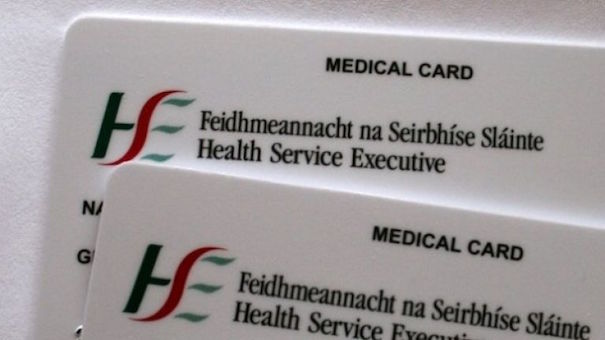
TD Seán Crowe has called on Minister of Health Simon Harris to “scrap his review into issuing discretionary medical cards to terminally ill citizens and introduce the scheme immediately”.
According
to the Budget 2020, the HSE will review and extend arrangements for the
provision of discretionary medical cards for those with a terminal illness.
This review is expected to be completed by Christmas. However, TD Crowe has
raised concern that this is not soon enough.
“They shouldn’t have to be spending their limited time lobbying politicians for change”
He said: “Terminally
ill citizens and their families don’t have the time to wait for the outcome of
his review. Worrying about paying medical bills should not be dominating and
overshadowing the last days of their life on this earth.
“They
shouldn’t have to be spending their limited time lobbying politicians for
change. They have received the most devastating news and the least the
State can do is to give them a medical card throughout their illness.
He continued: “We are talking about a small but an important number of our citizens. I am calling on Minister Simon Harris to do the right thing for them by scrapping his review and agree to issue medical cards to everyone who has a terminal illness.”
Minister for Finance Paschal Donohoe has announced new measures in the 2020 Budget to reduce Ireland’s contribution to the current climate crisis.
In the Dáil on Tuesday morning, Minister for Finance Paschal Donohoe delivered his speech on the package, describing climate change as being “without doubt our defining challenge.”
The Minister announced a €6 increase on the carbon tax, applicable to fuels including petrol and diesel. These changes were implemented from midnight on Tuesday, but the increase to other fuels will follow in May of next year, after the winter heating season. The Government ultimately intends for the tax on carbon to rise from €20 in 2019 to €80 in 2030.
Minister for Finance, Paschal Donohoe Photo Credit: Wikimedia Commons
The Minister said this will raise €90 million, which will be ring-fenced for the funding of “new climate action measures”.
A portion of the revenue gained from the carbon tax will go towards funding a package targeted at the midlands. The Minister said, “€20 Million will be dedicated to the creation of a new energy efficiency scheme targeted initially at the social housing stock in the region. This aims to create new, sustainable employment in the region.”
The €6 million will go towards the Just Transition Fund, targeted at The Midlands to re-skill workers and assist local communities and businesses in The Midlands. €5 million will also be dedicated to restoring bogs to their natural habitat. The bogs will become “carbon sinks”, which will be able to absorb carbon.
Another €5 million will go towards the reduction of greenhouse gas emissions and enhanced biodiversity.
The earnings from the carbon tax increase will also include €11m for electric vehicle grants and charging networks – which will double the number of electric car charging outlets currently available to the public, as well as €9m for greenways.
“little more than a government cash-grab dressed up as a green initiative”
AA Roadwatch has warned that the carbon tax increase will do very little to reduce Ireland’s over-reliance on the private car, criticising the move as “little more than a government cash-grab dressed up as a green initiative.”
Director of Consumer Affairs for the AA, Conor Faughan stated: “Investing in public transport infrastructure, LUAS-like systems across our main cities, quality cycle lanes, all these measures would do far more to get people out of the car than a tax increase ever will.”
The 1% diesel surcharge has been replaced with a nitrogen oxide emissions charge. This will apply to new cars registered from January 1st of next year. The charge will apply on a euro per milligram/kilometre basis with the rate increasing in line with the level of nitrogen oxide emitted. The first 60mg per kilometre of nitrogen oxide emissions will be charged at €5 per milligram. Above 60mg per kilometre, the charge will amount to €15 per milligram. Above 80mg, it will be €25.
This means a new diesel car with emissions of 43mg per kilometre will have a charge of €215 added. A new petrol car with emissions of 23mg per kilometre will have a charge of €115.
“The Government ultimately intends for the tax on carbon to rise from €20 in 2019 to €80 in 2030”
The Government is aiming this charge at older, more polluting cars, which could cost some owners several hundred euros. This charge will not affect electric vehicles, as they do not directly emit nitrogen oxide. €8 million has been reserved for grants awarded to consumers who purchase fully electric cars.
Contrary to this, the Government is scrapping the grant scheme for businesses who purchase electric vehicles.
Richard Bruton, Minister for Communications, Climate Action & Environment said in a statement, “the generous benefit-in-kind tax relief that is available for these vehicles is considered adequate incentive to drive growth in this sector.”
Taoiseach Leo Varadkar, Health Minister Simon Harris and
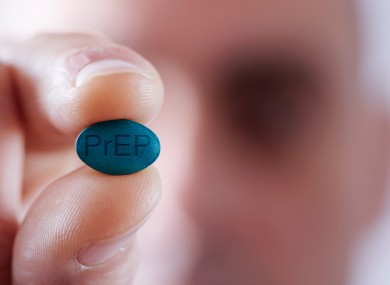
Health Promotion Minister Catherine Byrne have announced that a HIV PrEP
(pre-exposure prophylaxis) programme will begin from November.
The programme will initially be rolled out in a limited
number of clinics and will expand in 2020 following Minister Byrne’s
announcement that €5.4 million is being made available in Budget 2020 for the
full roll-out of a “world-class” PrEP programme in Ireland.
PrEP is a pre-emptive oral anti-retroviral medication for
HIV-negative people to reduce their risk of getting HIV through sex or sharing
needles. The combination of tenofovir and emtricitabine (sometimes known as truvada)
is proven to be 92-99% effective.
To date, PrEP has been prohibitively expensive and has only
been available to buy in Ireland on prescription at a price of over €400 a
month for the brand-name medication, and around €100 for the generic
equivalent.
“To date, PrEP has been prohibitively expensive and has only been available to buy in Ireland on prescription”
“The budget announcement of a PrEP programme for Ireland in
2020 is welcome although long overdue,” said Noel Donnellon, member of ACT UP
Dublin, a group committed to ending the HIV crisis. ACT UP Dublin reformed in
2016, following the dramatic spike in HIV diagnoses.
Photo Credit: Dept of Health
HIV diagnoses reached a record high last year, with 531
cases in 2018 according to figures released by the HSE. The number is an 8%
increase from figures in 2017. However, many experts are keen to point out that
this rise is also related in part to an increase in the number of individuals
getting tested.
“We will be carefully monitoring the roll-out, but we are concerned
at the continuing underfunding of sexual health services that are needed to
underpin a successful programme,” said Donnellon.
Those eligible for free PrEP, will need to get a drug payment scheme (DPS) card. There is no means test for a drug-payment scheme card but it does require a PPS number.
“For decades we have confined conversations about HIV to the shadows. Those living with HIV have felt stigmatised and shamed”
Minister for Health Simon Harris highlighted the importance
of reaching this milestone.
“For decades we have confined conversations about HIV to the
shadows. Those living with HIV have felt stigmatised and shamed,” he said.
“Today, all that changes. From next month, the State will
introduce a PrEP programme and confront the increase in cases of HIV in a real
and practical way.”
Dr Fiona Lyons, Consultant in Genitourinary and HIV
Medicine, GUIDE Clinic, St. James’s welcomed the imminent availability of PrEP
without charge to those at risk of acquiring HIV.
“PrEP is an important part of the HIV prevention jigsaw
puzzle that together with other HIV prevention interventions, should reduce the
number of new HIV infections in Ireland,” she said.
“I also welcome the announcement by the Government of the
roll out of a PrEP programme which includes resources to support services to
implement PrEP. This is crucial to successful PrEP implementation. I would like
to thank everyone who has worked so hard to make this happen.”
Taoiseach Leo Varadkar spent €877.83 on twelve gifts since his inauguration in June this year.
This is a substantial increase from the same period in 2016 when Enda Kenny was Taoiseach and spent only €98.59 on just four gifts for the Lord Mayor of Liverpool, the governor of Georgia, the mayor of Atlanta and the President of Cyprus Nicos Anastasiades.
Varadkar spent €518.67 alone on the Trudeau family with gifts ranging from €14.99 to €198.78. The most expensive gift was a framed photograph of Skellig Michael given to Canadian Prime Minister Justin Trudeau who also received a rare copy of a book of W.B. Yeats poems along with a pair of Book of Kells socks.
Madame Sophie Gregoire Trudeau received a Salmon of Knowledge brooch and a green wool scarf, which together cost €109.95. The Prime Minister’s youngest son wasn’t forgotten. Hadrien received a W.B. Yeats book for children – The Moon Spun Round.
Varadkar also spent €189.16 on four pairs of spiral cuff links for Philippe Couillard, Premier of Quebec, and the mayors of Montreal, Seattle and San Francisco.
While Varadkar spent much more in the second half of the year in 2017 compared to 2016, the Department of the Taoiseach as a whole spent more than double the amount on gifts in 2017.
St. Patrick’s Day gifts were the main contributors to this increase with over €1,200 being spent on gifts for that day, a significant jump from the previous year where only €382 was spent. Although that was partly because the Shamrock Bowl provided by House of Waterford Crystal didn’t cost the Department of the Taoiseach anything in 2016 when it was given to then President Barack Obama.
However, the Shamrock Bowl designed by Criostal na Rinne in Waterford for President Donald Trump did cost the department €300.




You must be logged in to post a comment.