Tag: Tipperary

  • Surge in Off-the-Ball Incidents in GAA Sparks Concern at Underage Level 

    Surge in Off-the-Ball Incidents in GAA Sparks Concern at Underage Level 

    By Jason Quigley

    In recent months, GAA matches across the country, particularly at juvenile level, have seen a worrying increase in off-the-ball incidents.  

    These occurrences, ranging from pushing and shoving, to more aggressive acts – have marred what should be a showcase of youthful talent and the spirit of fair play.  

    As tensions rise, so too has the involvement of parents and spectators, often leading to chaotic scenes on the sideline. 

    One individual who has witnessed this growing issue firsthand is John O’ Shea, former Public Relations Officer (PRO) for West Tipperary GAA. 

    John, a well-respected figure within the GAA community, believes that this current trend is deeply concerning and calls for immediate action, both from the GAA and the coaches overseeing these young teams. John expressed his frustration over the lack of concrete measures to curb these incidents. 

    “What we’re seeing now is not just the odd scuffle or disagreement. It’s consistent, particularly in juvenile games. I’ve seen parents running onto the pitch, furious over a referee’s decision, and that only escalates the situation. The referees are doing their best, but they are often left vulnerable.” 

    He recounted several matches where tempers flared beyond control, not just between the players but also among the supporters.

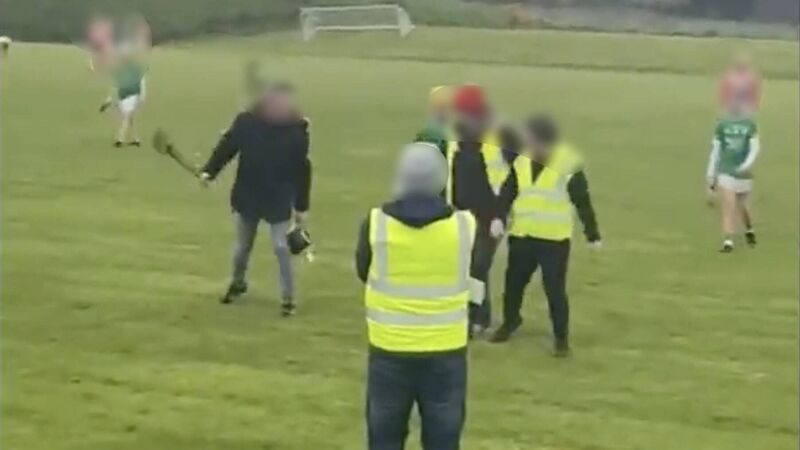
    Under 14 Hurling match fight. Mitchelstown v St Vincents. Pictures: @CraicOfTheAsh on twitter 

    “I was at a minor match a few weeks ago,” John said, “and after one controversial call by the referee, a parent stormed onto the field. It led to complete chaos—players were getting distracted, coaches were shouting, and the focus shifted from the game to the argument. This shouldn’t be happening, especially with kids on the field.” 

    John believes that a lack of discipline and respect for match officials is a core reason behind the rise in such incidents. However, he also feels that the GAA itself needs to take a firmer stance. 

    “The GAA has been slow to address this. We need more accountability from the top down. Stronger penalties for violent conduct and off-the-ball incidents need to be enforced consistently across all levels of the game. It’s not enough to just talk about it anymore. We need action.” 

    However, John is quick to point out that responsibility also lies with the coaching staff. He believes that some of the pressure to win, particularly in competitive juvenile games, is being projected onto young players in a negative way. 

    “Coaches need to remember that their role is to develop these players—not just in terms of skill but also in terms of attitude and sportsmanship. When coaches are constantly shouting and criticising officials, that behaviour gets transferred to the players, and they start seeing it as acceptable. It’s a vicious cycle, and it’s happening far too often,” John said. 

    Patrick Ryan,  who has been refereeing GAA games for over 30 years, says he’s very concerned about the rise of violence at matches. 

    Referee Patrick Ryan (middle) at a semifinal county minor game. Picture: West Tipperary GAA 

    “There’s a shortage of referees at the moment, and this kind of behaviour only discourages them further. If we lose more referees, we lose games. It’s that simple,” he says 

    While the GAA continues to promote respect, discipline, and a love of the game through its “Give Respect, Get Respect” campaign, Patrick insists that more needs to be done at the grassroots level. In particular, he suggests that educational programs for both coaches and parents should be implemented, alongside increased security measures at games to ensure safety for all involved. 

    “As the GAA community reflects on the escalating issues, the message is clear: the future of the sport at minor and juvenile levels is at stake, and immediate action is required to preserve the core values of the game.” 
  • Hundreds line the streets of Nenagh to celebrate Shane MacGowan mural launch

    Hundreds line the streets of Nenagh to celebrate Shane MacGowan mural launch

    By Jason Quigley

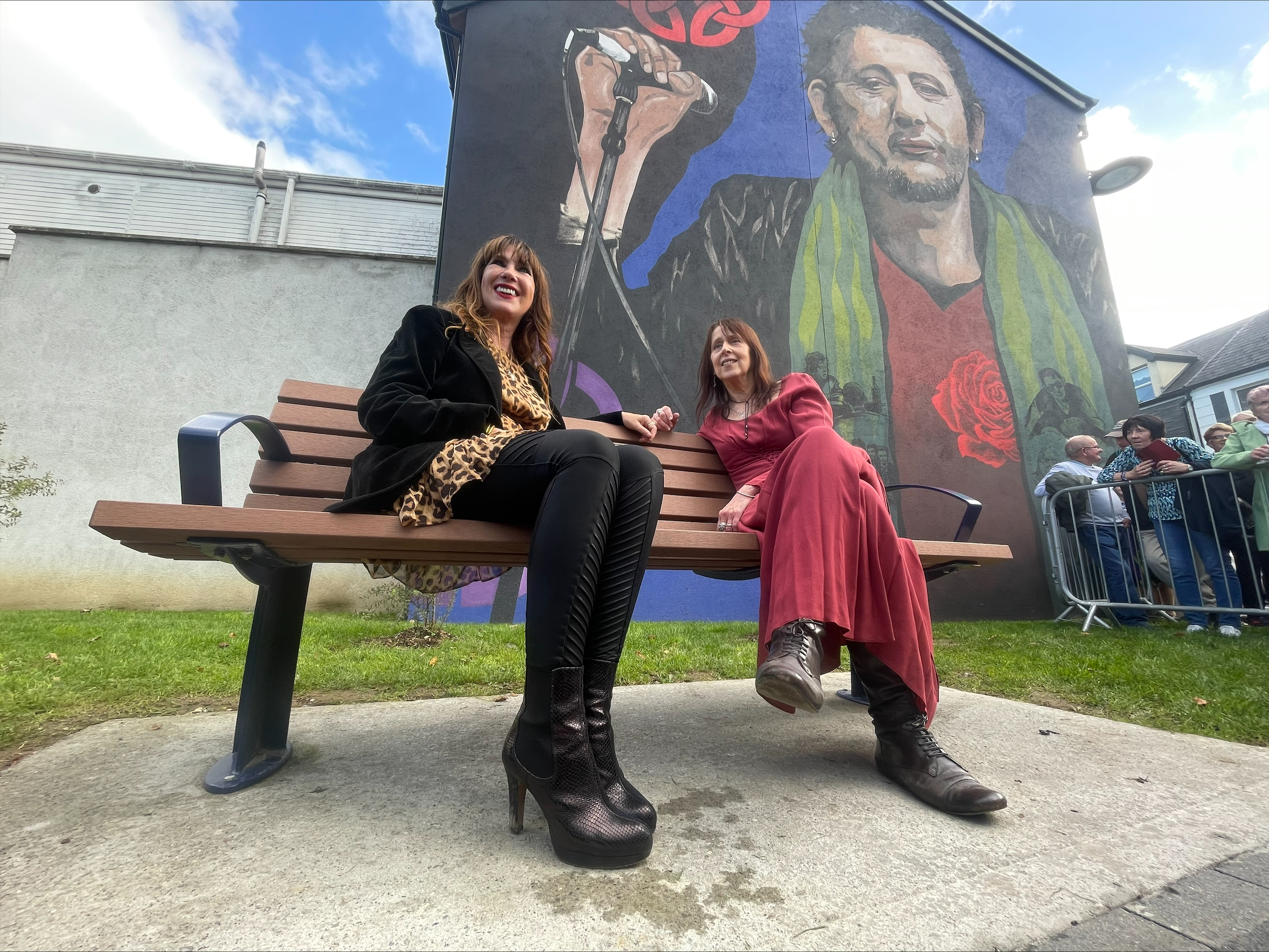
    The wait is finally over for locals in the town of Nenagh, Co Tipperary, many of whom have watched and waited for the mural of the late Shane MacGowan to be completed. 

    The official launch ceremony took place at the gable end of a building at Emmet Place just off Mitchell Street. 

    Shane’s wife, Victoria Mary Clark and his sister, Siobhan arrived marking the launch with speeches about the famous song writer. The painting of the mural was proposed by members of Tipperary County Council and for artist, Neil O’Dwyer it was the opportunity of a lifetime. We spent the day at the mural event in the “Premier County” and spoke with some familiar faces. 

  • Gaelic games players reflect on importance of competitions lost to level five

    Gaelic games players reflect on importance of competitions lost to level five

    Aishling Moloney and Sarah Rowe celebrate winning the 2018 O’Connor Cup. Photo courtesy of Eóin Noonan/Sportsfile

    Let’s not kid ourselves here; the cancellation of camogie, football and hurling competitions for higher education students measures fairly low on the adversity scale in the current scheme of things.

    Parking perspective for a moment though, to compete and succeed in these tournaments is often a huge honour for young players, and an important formative experience on and away from the pitch. It’s another experience the class of 2020/21 will have to do without.

    Tipperary star and Ladies Gaelic Football Association ambassador Aishling Moloney has, at 22, a mantlepiece for a veteran to envy — two intermediate football All-Ireland medals, two national league titles, and a Player of the Year award, not to speak of club honours. Representing her university, DCU, has brought more glory.

    “I was honoured to be captain of the O’Connor Cup winning team in 2018, and to live that all over again would be a dream,” she says. “It’s sad to see that it won’t be going ahead this year but, given the circumstances, it is the appropriate call.”

    “I’ve made best friends for life playing with DCU, and will always cherish the wonderful memories”

    Aisling Moloney

    Sporting accomplishment is one thing; forging friendships that can long outlast a student’s playing days is at least as valuable for many players. Moloney describes her time playing for DCU as “a very special part of my experience as a student. It’s different from any other competition; your social life mixed with playing football. It’s a roller-coaster. I’ve made best friends for life and will always cherish the wonderful memories.”

    Dozens of competitions across four codes give students of all levels the chance to compete, and the upper tiers feature much of the best young talent around. 

    “Getting the opportunity to play among and against some of the best players in the country is a real privilege,” Moloney says.

    Aishling Moloney receives the Player of the Match award for the 2018 O’Connor Cup final. Photo courtesy of Eóin Noonan/Sportsfile

    Monaghan footballer Conor Boyle agrees. Now a regular starter with his county, he was on the fringes when he won a Sigerson Cup with DCU in 2015.

    “It’s a very high standard and it’s a great opportunity to get onto your county squad. If you start on a UCD team, for example, you’re not going to be far off getting on your county panel, even for the top counties.

    “The DIT team of 2013 was ridiculous! I remember their full-forward line was Darren O’Sullivan, Aiden O’Shea and Jason Doherty. You’re looking at those three walking on and thinking, ‘What have I signed up for here?’”

    He remembers, too, the confidence he gained from excelling among such company.

    “I found after a while it made you see that you’re at a similar level to a lot of these players you’d play against on the inter-county scene. The year before we won it we were playing with the likes of Johnny Cooper, James McCarthy, Dean Rock, and when you were playing with Monaghan you’d nearly look at these boys like they’re at a different level. But playing with them on the college team can open your eyes that there’s no big gap between players in a lot of these top teams, and those from smaller counties.

    “I trained with Dean Rock for a full year and I can’t say that he’s any better than [Boyle’s club-mate] Conor McManus. It’s a good leveller because you put a lot of these boys from more successful counties on pedestals sometimes.”

    While undergrads missing out this year may at least get another bite at the cherry, there may be, in the words of Kildare hurler Martin Fitzgerald, “no tomorrow” for postgraduate students.

    “Most of what I learned in hurling, I learned playing Fitzgibbon Cup”

    Martin Fitzgerald

    Fitzgerald captained Limerick Institute of Technology in hurling’s coveted Fitzgibbon Cup while studying for a Master’s in 2013, before going on to win two Christy Ring Cups with his county.

    He sees that year in Munster — under the management of Davy Fitzgerald — as crucial to his development.

    “Most of what I learned in hurling, I learned playing Fitzgibbon Cup. That was the best year I had of my playing career, and if I hadn’t had it, I probably wouldn’t have experienced that level of hurling ever.”

    Martin Fitzgerald in action for his club Ardclough

    He notes the value of training and preparing alongside county players from the country’s top sides.

    “I found it really interesting when I went in there to see what the Laois hurlers, the Clare hurlers, the Limerick hurlers were doing. Everybody brought something different that you might not be exposed to at club and county level. So you got insights into how the rest of the country was preparing.

    “You pick up things that you can implement at home, that I could have implemented with Kildare and my own club Ardclough as well.”

    Fitzgerald says the self-discipline and focus required to lead his LIT team fed into his studies too.

    “Playing Fitzgibbon cup put a huge amount of structure on my college life,” he tells The City, “because it’s the highest level of hurling there is really at that age group.”

    Camogie player Sinead Murphy has represented Dublin at intermediate level and should have been playing in the Ashbourne Cup for UCD this year.

    “I think it’s great for player development,” she says. “Especially for players like myself that don’t play senior inter-county. It allows you to play at a higher level and train with and play against some of the best camogie players in the country.”

    Murphy is next in line to stress the value of these tournaments for their off-field perks.

    “From a social side, I think, especially in first year, it’s a great way to get to know people and to have a few more familiar faces around campus. I think what’s great about college sport is the mix of people you meet that you wouldn’t have met otherwise. You’re playing with girls doing a wide range of courses from different counties.”

    Darragh Biddlecombe, GAA Development Officer at TU Dublin, feels sorry “for this year’s freshers cohort especially, who have missed out on their camogie, ladies football and GAA experience. It can be so important for making friends and settling into university life.

    “In light of public health and the safety of everyone, [cancelling the tournaments] was the right thing to do. If it’s safe to return, hopefully a dedicated second year championship can be run next year for this group.”