
Tag: Training

  • Chef shortages leading to restaurant closures

    Chef shortages leading to restaurant closures

    A shortage of chefs will result in the closure of restaurants, according to the Restaurants Association of Ireland (RAI).

    The RAI says that 5,000 chefs are required by 2016 to fill the thousands of vacancies in the industry.

    The RAI is calling for the re-establishment of ‘CERT’, which is a former State Training Agency for Tourism in Ireland, in order to train chefs to fill these jobs.

    According to the RAI, it has gotten to the stage where some restaurants now face closure, let alone being able to stay open for 7 days.

    “Restaurants are closing midweek now,” said RAI CEO Adrian Cummins. “Usually on Mondays, Tuesdays and Wednesdays, because they can’t have a 7 day operation, due to not having a chef.

    “They might have a head chef, but they mightn’t have enough chefs to keep it going for the rest of the week. Because of this … you’re talking about 5% of all restaurants currently closing because of that reason across the country.”

    Cummins believes that CERT should be re-established, yet at the moment there is no talk to suggest it will happen.

    “We believe that bringing back CERT is the right thing to do, and at the moment the ball is in her [Minister of Education Jan O’Sullivan’s] court,” he said.

    “We would be advocating that she would, and we will be doing everything in our power to work with her to do that.”

    When asked if it was an issue concerning wages, Cummins replied: “It’s not an issue of wages at all, it’s because chefs aren’t training enough.”

    Conor Roban is currently Kitchen Manager in Boojum, Dublin (Millennium Walkway).

    “Cases of people getting paid €450 to work 70 hours and more a week are common,” Roban said.

    As someone who deals with staff in restaurants, Roban explained that, “A stressful environment results in a large turnover of staff and so a lot of people will head off to other countries where they know they will be paid a real wage as a skilled workforce.

    “I think people being under paid feel under-valued,” he added.

    Many people applying for the positions currently are deemed not to be appropriately qualified and this reflects the fact that there is not enough chef training centers, according to the RAI.

    Currently 1,800 chefs qualify each year from certified culinary training programmes.
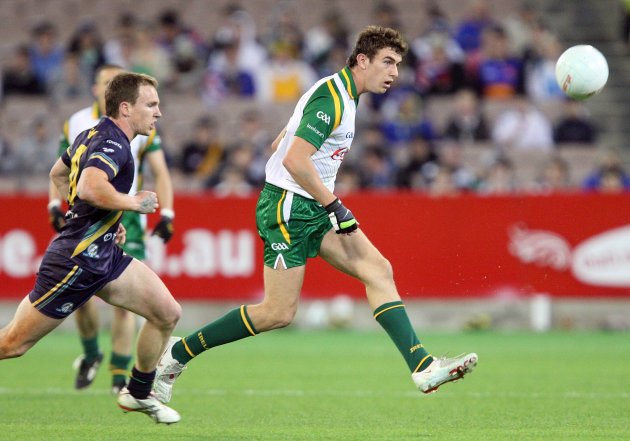
  • “It’s not amateur anymore”: Colm Begley on Gaelic Football’s increasing professionalism

    “It’s not amateur anymore”: Colm Begley on Gaelic Football’s increasing professionalism

    “An amateur game played at a professional level” was how Colm Begley described Gaelic football this week.

    “The gap has been closed” between GAA and AFL in recent seasons stated the former Brisbane Lions Rookie of the Year, speaking ahead of last weekends second International Rules test.

    Echoing Ireland captain Michael Murphy’s comments last week, Begley believes that the only real difference between football and professional sport is that while GAA players are “focused on work or college, anything like that”, professionals can concentrate on rest and recovery.

    The 2011 Laois senior captain also warned that if the GAA don’t address the problem of burnout in their players, the recent upward trend in physical preparation will result in long-term damage to the game.

    “If they don’t look at it in the next few years, they’ll see a lot of players retiring at a younger age. Players love playing, but it’s just a massive, massive effort, and very mentally draining for those who don’t get a break”.

    Begley, who in addition to Ireland and Laois will also represent DCU and Dublin club Parnells this year, pointed to a recent change in AFL preseason training where players will only be allowed train three days a week to prevent burnout as”something the GAA will maybe have to look into”.

    The rise in strength and fitness levels has aided Ireland in the International Rules series however, Colm pointing to the fact that “we’re not being physically out-matched”, players endurance and speed levels on par with their professional opponents.

    This increase in training has led to a more competitive domestic game as well; “In the past, the top six or seven teams in Ireland would be fitter or stronger, whereas now teams are realising if we cant match them skillfully, we’ll try and surpass them in training, in strength or endurance. We’ll outrun them, out-tackle them. If you can control a players playing ability, skills etc, you can control how fit or strong they are”.

    “Whatever people say, it is professional”, continues Begley, “The game is getting faster and faster, all the small details are being looked at; Body Mass Index, GPS, stats, all the things that really, in an amateur game, you wouldn’t have to look at,  but it’s not amateur anymore, it’s run in a professional way”.

    While he stops short of calling for professionalism in GAA, Begley does admit he would like to see some rewards for inter-county players. “I’m not sure how they’re going to do it, even its just some form of tax benefit or even expenses being increased a little more. Players don’t want alot, just a bit of a benefit for the effort they put in during the year”.

    Begley 2 image INPHQDan Sheridan
    Colm Begley ahead of Saturday’s second test match [image: INPHQ: Dan Sheridan]
    After being nominated for man-of-the-match in the first test match, the Laois man is convinced that the indigenous Australian side will improve in Saturday’s up-coming second round. “They learn very fast. I think they’ll carry the ball, work it into the danger zone and try work off the breaks. I also expect a bit more physicality from them as well”.

    Ireland carry a 57-35 lead into the second test, to be played in Croke Park at 7PM on Saturday.