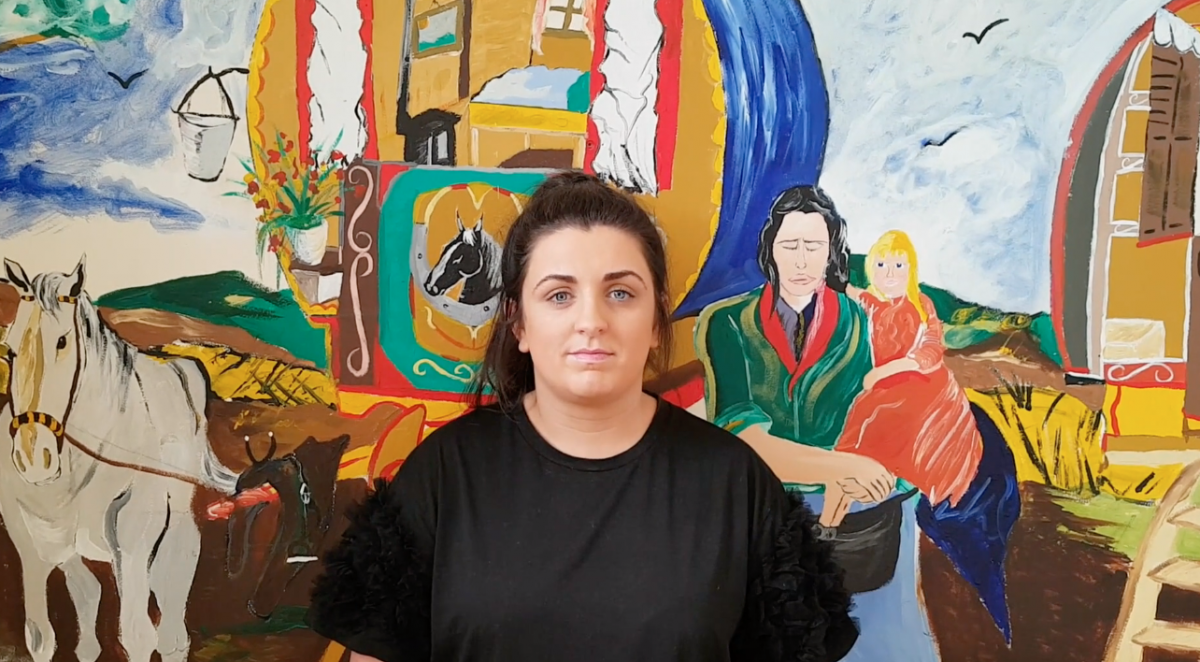

Photo: Pavee Point Traveller and Roma Centre
Members of the Traveller community are at a disadvantage in terms of health status and access to adequate health facilities. Kate Brayden explores why their organisations are calling for specific instructions for the minority group during the Coronavirus pandemic.
Prominent members of the Irish Traveller community have called for answers from the HSE and the Irish Government regarding the issue of self-isolation for the minority group.
The community has been urged to self-isolate and practice social distancing by the Government – as has the rest of Ireland’s inhabitants – but this is potentially more difficult for Irish Travellers. Many of them live in close proximity to family members and have significantly less access to sanitary facilities.
“We know that the COVID-19 is presenting clear challenges for all communities in Ireland,” Ronnie Fay, Co-Director of Pavee Point Traveller & Roma Centre, commented.
“But we know that for Travellers and Roma, the disease is particularly concerning”
Traveller communities experience overcrowding at seven times the national rate, and many Travellers don’t have access to proper hand hygiene facilities on sites, or running water. Chronic health conditions are also experienced in disproportionate rates by members of this minority.
“The stark reality is that Travellers are one of the most vulnerable groups in relation to this crisis and yet they will not be able to effectively self-isolate (where advised). We know this is not new and has been an ongoing issue given the persistent failure of Local Authorities to address the ongoing accommodation crisis within the community, despite having the budgets to do so,” Fay added.
“Every year substantial parts of Traveller accommodation budgets remain unspent by Local Authorities. For instance, in 2019, according to the Department of Housing Planning and Local Government, only 30% of the Traveller accommodation budget was drawdown by local authorities, with over half (14) of local authorities failing to draw down any of the allocated Traveller accommodation funds.”
Traveller Health Units and the HSE are working to mitigate the situation as far as possible and their Traveller Primary Health Care Workers are at the forefront of this work ensuring accurate and timely information is made available to their families and wider Traveller community, while at the same time protecting themselves.
Fay insists that these issues are more complex, than suggested by the HSE and urges councils to take heed of Pavee Point’s stark warnings before a crisis emerges within Traveller communities, who are already being left behind by much of the health services:
“An interagency approach is required, as is stronger leadership and engagement from local authorities to ensure Travellers are protected. “
It has been suggested that local councils work to disinfect and sanitise living facilities on lands where members of the Traveller group are currently settled.
According to the HSE website, the health service is continuing to work closely with the Traveller Health Units and Traveller Representatives in responding to Covid-19.
The Irish Traveller Movement put out a statement on the pandemic via Facebook, stating that all planned ITM events or gatherings have been postponed “with immediate effect”:
“The Irish Traveller Movement is guided by the Health Service Executive and the Government response to COVID-19/Coronavirus. Currently, there is no vaccine or drug available for COVID-19 and it is expected that there will be community spread of the virus, which is now being classified as a global epidemic.
“Daily government bulletins are being issued to the public on measures that may require immediate decisions which help limit the spread of the virus and protect people who are most vulnerable. Where possible we recommend one-to-one meetings by phone,” they wrote.
Where there is further Government advice, or if an ITM staff member is infected, this will entail the closure of ITM’s premises for 14 days:
“ITM staff who are not infected will be supported to carry out work remotely and with some staff cover at our office. Please contact staff by email or on mobile if you cannot reach them on our landline 01 6796577.” Employees have been encouraged to work remotely,” the post concluded.
The Irish Traveller Movement conducted a Risk Assessment of their working environment and recommended a Risk Assessment audit to be carried out daily by Local Traveller Organisations to determine the level of risk to your organisation and the community.
The All Ireland Traveller Health Study, which took place in 2010, reported multiple health inequalities which have contributed to poor health status.
Traveller women live 11.5 years less than women in the general population, on average, while Traveller men live roughly 15 years less. The number of deaths among Traveller infants is also estimated at 14.1 for every 1,000 live birth compared to 3.9 for every 1,000 live births among the general population.
Deaths from respiratory and cardiovascular diseases and suicides have also increased in Travellers, as opposed to the general population.
The HSE are applying the same protocols to the community, despite health disadvantages:
“If you develop symptoms you will need to self-isolate and phone your GP. Do not go to a GP surgery, pharmacy or hospital. The GP will assess you over the phone. If they think you need to be tested for coronavirus, they will arrange a test,” the website instructs.
“You will need to self-isolate if you have coronavirus or have symptoms of coronavirus. This could be before you get tested for coronavirus, while you wait for test results or when a positive result is confirmed.”
Dublin City Council are working closely and are in communication with the Local Traveller Accommodation Consultative Committee and all local Traveller Representative Groups. The Council is also working closely with the HSE’s Social Inclusion Unit Northside and Southside to provide Travellers who may have contracted the virus with support.
For full instructions on social distancing, self-isolation and protocols to follow if you do become infected with Covid-19, check the HSE website.


You must be logged in to post a comment.