Tag: vegan

  • Plant powered athletes

    Plant powered athletes

    Do veggies make you run faster? Image via Pexels.com

    There’s no doubt that veganism has been rising in popularity in recent years – a lifestyle that was once obscure has now become common. Still, the words vegan and athlete don’t seem to go together.

    When it comes to sports nutrition, we are told protein is key. This is often wrongly assumed to be something a plant based diet can ultimately lack – conjuring the image of one who follows the diet as a frail, weak, possibly malnourished person.

    Thankfully it’s 2021 and that particular image is, slowly but surely, dying out. 

    “I was always interested in nutrition, especially for improving performance,” says Gerard Prendergast, a gym owner, personal trainer, triathlon coach and yoga instructor.

    “I felt [veganism] would suit my training at the time which was endurance sports. I was blown away at how my body adapted to eating a wholefoods, plant-based diet. I had more energy, felt lighter, my stamina improved and even my mood and mental health seemed to improve.”

    Prendergast began boxing and weightlifting at an early age and went on to play for the ROI VI International Futsal team at 28. At 32, he completed his first triathlon, which encouraged him to take on bigger and more challenging events.

    Gerard Prendergast crosses the finish line at DecaUK – Image courtesy of Gerard Prendergast

    “In 2017 I entered into DecaUK, 10 Ironman distance triathlons in 10 consecutive days. Every day for 10 days I was required to swim 3.8k, Cycle 180k, and run a full marathon – 42k. I won that event 4.5 hours ahead of the second place finisher.

    “In 2018 I completed 52 Ironman distance triathlons in 52 weeks to raise money for Mental Health Ireland. I have completed other challenges such as 100 mile run on a 500m loop and cycling the height of Everest on an indoor trainer.”

    Judging by Prendergast’s impressive lifestyle, it appears there’s no doubt a vegan diet can provide an athlete with the power they need to succeed.

    “Athletes absolutely can thrive on a plant based diet,” he says. “It’s been proved all over the world over the past few years with athletes like Serena Williams, Novak Djockovic and Lewis Hamilton all seeing great benefits to their careers by eating plant-based. I myself can back that up, after struggling to finish a 5k run in 2012 to becoming a Deca Ironman champion.”

    “Athletes absolutely can thrive on a plant-based diet and it’s been proved all over the world over the past few years.”

    Gerard Prendergast

    “I had always worked out and eaten well but I really wanted to go even further with knowing what is in my food,” says Dawn Butler, a 35-year-old athlete from Kildare. 

    An ex professional wrestler, Butler now trains in Brazilian jiu jitsu as well as partaking in weightlifting. On days spent away from the intensity of the gym and training, Butler enjoys long walks, hikes, and hill climbing.

    After recovering from stage four Hodgkin’s Lymphoma, Butler turned to veganism as a way to repair and nourish her body.

    Dawn Butler on a plant powered hike in the Connemara mountains. Image courtesy of Dawn Butler

    “I took my time and looked into lots of research and eventually I just couldn’t stand dairy anymore. I was really put off when I saw where dairy comes from and I knew I couldn’t be a part of that world,” explains Butler.

    “I knew with the level of training I do that I have to really pay attention to my nutrition. I always check in with how I’m feeling and I always get a good variety of foods. I notice that I have more energy being vegan.”

    Despite her fitness level and rigorous training, Butler admits she is no stranger to ridicule from her gym buddies due to her diet choices.

     “I train as hard as anyone I know – I have muscles and strength and I train with a lot of men. I definitely do not feel I am any weaker because of my diet. I get very frustrated when some people try to tell me about my protein intake when, in fact, they can’t tell me theirs. They assume because they eat meat they get more than me when in truth I probably get twice the amount of protein.

    “If I am seen having a protein shake, it’s because my diet is ‘wrong’, but that does not apply to a meat eater who also uses protein shakes. I don’t use protein shakes because I am vegan. I use them as part of the diet and lifestyle that I have.

    “People assume and don’t ask. If somebody asks me about it I’m happy to chat and educate but when someone assumes my protein intake it gets very disheartening. It feels like a throwaway ‘fact’ and a way to debunk veganism.”

    As annoying as such remarks might be, Butler has no plans to ditch her plant based diet any time soon and has her sights set on pursuing Brazilian jiu jitsu, currently training to take part in a tournament later this year.

    Veganism undoubtedly has the potential to enhance one’s athletic performance, but Butler has some advice for those starting out.

    “I do believe it’s possible for athletes to thrive on a vegan diet. I do however think it is harder. There is less room for error and I think you need to keep on top of it. It’s very important to keep the range of foods wide and get sources of everything in there.”
  • Get behind me seitan: Viral TikToker Futurelettuce on his vegan journey and his recipes for success

    Get behind me seitan: Viral TikToker Futurelettuce on his vegan journey and his recipes for success

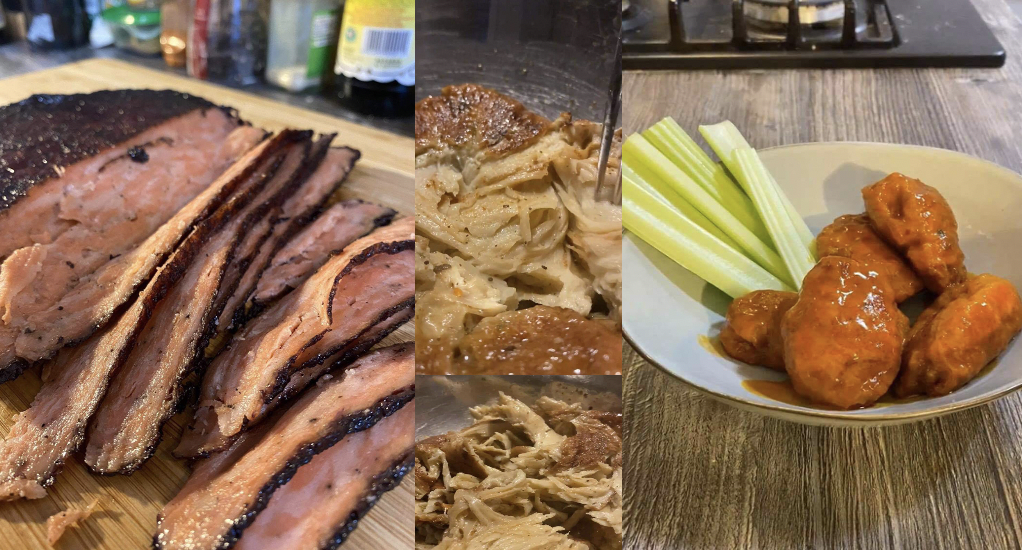
    Futurelettuce creates delicious vegan recipes from chicken wings to washed pastrami. Photo provided by Futurelettuce

    It’s difficult to predict what TikTok trend will be next to go viral – and for an Irish college student who prefers to go by the pseudonym Futurelettuce, it was a surprise when one of his vegan cooking videos joined sea shanties and maid costumes as one of the app’s unexpected crazes.

    “I first became vegan after writing a paper on veganism for a college philosophy class,” Futurelettuce tells me, “I couldn’t argue against it and that stuck with me after the assignment was done.” 

    While it was initially a struggle to adjust to a plant-based diet, Futurelettuce began to enjoy researching nutrition and experimenting with vegan dishes – a particular favourite was the “two-ingredient vegan chicken” that he decided to share to TikTok on 20 February.

    “I think it got popular because people like to be shocked and the unexpected outcome of what began as flour looking like chicken got people to share it around.”

    Futurelettuce

    The video features a step-by-step tutorial on how to make a meat substitute based on the Chinese dish seitan, and became an instant hit on the app – it has since been viewed over 10 million times and gained the Futurelettuce account nearly 70,000 new followers over the course of three weeks. 

    “I first saw it done in a Facebook group and thought I’d give it a try,” Futurelettuce says about the process of his seitan recipe.

    “You make a ball of flour and water, keep kneading it and rest it for a few hours ideally. Then you wash it underwater, and you’ll be left with a lot of starch water. Finally, you can add your seasoning, cook it up and it will resemble something like meat.

    “I think it got popular because people like to be shocked and the unexpected outcome of what began as flour looking like chicken got people to share it around.

    “It was very strange when it began to get popular, especially watching people make reaction videos to it. Watching people watch me is the weirdest feeling for sure,” he continues. 

    The success of the video has since extended its reach beyond the confines of TikTok – Google Trends shows a notable uptick in searches related to seitan starting from the video’s February release. 

    Off the back of his newfound virality, Futurelettuce was asked to make a video on Buzzfeed’s massively popular Tasty Facebook page – where he made sure to acknowledge the East Asian cultural origins of seitan. 

    “When there’s a TikTok trend going around people aren’t going to want to explore the history of the trend, so I felt a bit uncomfortable that I didn’t mention its origins in the original video,” Futurelettuce states. 

    “I do think there is a problem with people taking these ideas and not crediting them, so I felt it was necessary,” he adds.

    “I didn’t want to use the usual talking points, I wanted to let it be known that veganism shouldn’t be restricted to just saving animals”

    Futurelettuce

    “I’ve seen a lot of comments saying I was virtue signaling, but anything right-wingers disagree with they’re going to be outraged, they’re just an attempt to distract from the conversation.”

    An avowed leftist and union organiser when not in the kitchen, Futurelettuce is committed to the idea that veganism must go hand and hand with a wider commitment to social justice and the human rights of marginalised groups.

    “I didn’t want to use the usual talking points, I wanted to let it be known that veganism shouldn’t be restricted to just saving animals,” he says.

    “It’s hypocritical if you’re a vegan and you’re also racist. Intersectional veganism is the way forward.”

    “Both veganism and socialism are grounded in the idea of liberation. One is for the working class, one is for animals. It’s about decommodifying animals and treating them as living things,” he says.

    With EU Green Week just around the corner, our conversation then turns to the environmentalist element of veganism.  

    “There was a UN report a couple of years ago that said eating a plant-based diet is the most effective thing an individual can do to prevent climate change and one of the biggest contributors to Irish CO2 emissions is animal agriculture,” he tells me. 

    So, if you’re looking for a greener meal this week, head over to TikTok and take inspiration from one of Futurelettuce’s creations.

  • If you build it, they will come… Eventually

    If you build it, they will come… Eventually

    Lavanda (left) and V-Face (right) on Lower Grangegorman Road. Photo by Colm McGuirk

    “The fact that this unit was close to TU Dublin was a huge factor in the decision to go ahead with it.” Sarah Boland, owner of V-Face, is talking about her vegan fast-food restaurant’s proximity to the impressive new home of Technological University (TU) Dublin.

    The city campus of what used to be called DIT, built as the centrepiece of a major regeneration programme for Grangegorman in north Dublin city, is ready to welcome around 10,000 students plus staff – once Covid restrictions are no longer necessary. 

    Boland’s is among a number of independent businesses on the Lower Grangegorman Road that had factored those numbers into their plans. 

    “It’s going to be a huge campus, so obviously footfall will increase massively,” Boland says. 

    In the turbulent 10 months since it opened, V-Face has had to make some think-on-your-feet adjustments to compensate for lost bums on its 40 seats. Among them is the outdoor eating area installed on the opposite corner, in cooperation with Dublin City Council, and the window hatch through which Boland speaks to The City

    “Coffee and sandwiches were never in the business model,” Boland says, “but we said ‘let’s bring out a lunch offering.’ The burgers were doing really well, but were more for the evening offering. [The hatch and coffee counter] have been designed in a way that, once the pandemic is gone, you can also swing around and serve people that come in.”

    Dining tables installed by V-Face. Photo by Colm McGuirk

    While V-Face benefitted from a model partly geared towards takeaway from the off, former Mediterranean restaurant Lavanda on the opposite corner has had to reset completely in the last year. 

    “We tried to do takeaway Mediterranean food during the first wave,” says Croatian owner Robert Velic, “but it didn’t work very well.”

    Lavanda’s enforced rebirth was planned with the new TU Dublin campus in mind – it now sells toasties, slices of pizza and sweet treats.  

    “We’ll see when the students come back if we made the right choice”

    Robert Velic

    “The second wave came and then we completely changed. We were expecting those students. We adapted the prices to four or five euro,” Velic says.

    “When the lockdown ends,” he continues, “it’s going to be a proper takeaway and we can add a few more things to the menu when business picks up and the colleges are back. We’ll continue to target students and walk-ins. We’ll see when the students come back if we made the right choice.”

    A few doors up, Russia native Alexander Yegorov’s print and copy shop should be bustling. 

    His unit is next door to one of two new student apartment complexes on this stretch of road built in the controversial ‘co-living’ mould (and, in the ultimate symbol of the area’s gentrification, on the site of the former ‘Squat City’).

    “We opened our shop three months ago,” Yegorov tells us. “They move the lockdown every two months. I expected the students would be here from the new year. But now, it won’t be until summer time. 

    “But it’s OK,” Yegorov adds. “We can survive until summer.”

    “We knew it was a long game, but it’s been a lot longer than anticipated”

    Rebecca Feely

    On the next corner, Rebecca Feely of Kale+Coco tells The City that when she chose the location for her plant-based healthy food cafe in 2019, “it was under the assumption that there’d be lots of students.”

    “We knew it was a bit of a long game,” Feely says, “because they were moving students bit by bit. But it’s been a lot longer than anticipated.”

    While noting that her prices might be a little above the average student’s range, she tells us, “it’s always been in my head to focus more on marketing to students, but I haven’t had the chance yet because we haven’t had the students there yet.”

    Kale+Coco has leaned more towards retail of food products to help stay afloat in what has been a difficult year.

    Rebecca Feely in her cafe Kale+Coco. Photo by Colm McGuirk

    “We were never actually told to close, so you feel almost obligated to keep trading because you have bills to pay,” Feely says. 

    “You have rent due. If you’re not ordered by the government to close, you’re not covered by any insurance, your landlords aren’t going to give you a break,” she adds.

    While the eventual arrival of students should help jump-start these Lower Grangegorman businesses, it could well signal the end for Happy Days Coffee Van on the new campus a little further up the road. 

    The mobile cafe was set up by local resident Olivia O’Flanagan in response to the “inertia and isolation” her neighbours were faced with during the first lockdown last spring. 

    O’Flanagan, a former lecturer with no background in business, was given the green light to operate on TU Dublin’s campus for as long as its own catering services were closed. 

    “It’s a lockdown project to keep us all busy and connected and give some kind of focus for the local community,” she tells The City.

    Happy Days Coffee Van set up at the entrance of TU Dublin’s Grangegorman Campus. Photo by Colm McGuirk

    Hiring only locals helped her secure the temporary contract – staff can return to their own homes for the mandatory bathroom access.

    “For me, it’s not a business endeavour,” O’Flanagan says, “though it has made money and is paying eight people’s wages on 20 hours a week. They’re all delighted and their parents are saying they were all sitting in their bedrooms cracking up.”

  • Don’t blame vegans, Blame Beyonce: The Beyoncification of Veganism

    Don’t blame vegans, Blame Beyonce: The Beyoncification of Veganism

    By Robert Geoghegan

    Ireland has recently topped the list as one of the most Vegan-friendly countries in the world, at least when it comes to our number of restaurants. This is, incredulously, despite the fact that vegans make up only 2% of the Irish population, according to Bord Bia.

    This research, conducted by HayesandJarvis.co.uk, started with a seed list of the 50 most visited countries in the world. Each city chosen needed to contain a minimum of 500 restaurants to even qualify. Finally, they scraped information from TripAdvisor, a process involving the importation of data from a website into a spreadsheet.

    HayesandJarvis.co.uk came to the conclusion that Dublin City might be the vegan capital of the cuisine world, with over 21.2% of the city’s restaurants classified as Vegan-friendly.

    And Voila; Ireland is now the most Vegan-friendly country.

    To look at these numbers alone, you might be led to believe that this is beneficial to customers. However, if you go onto TripAdvisor and look for restaurants to eat in, you get a whopping 2,269 options to choose from. And that’s just restaurants.

    Filter in all the eating options and you get 2,657 options. Of those options, 586 are Vegan-friendly, meaning 22.1% of the restaurants in Dublin are classed as, debatably, Vegan-friendly restaurants.

    CREDIT: Robert Geoghegan

    In short, when looking at the numbers there are not a lot of actual vegan restaurants and being Vegan-friendly doesn’t mean it is actually vegan.

    Semantics has always played a huge part in the narrative of being vegan.

    From the fringes to the mainstream: What came first the vegan or, the vegan option?

    Within the history of veganism, the language around the word vegan has been contested. According to the Vegan Societies website, it is argued that there could have always been vegans, often for religious or spiritual reasons.

    Their literature goes on to describe that the original use of ‘vegetarian’, in the 1830s, indicated a person who did not eat any animal products.

    It was only after the formation of the Vegetarian Society in 1847 did the word vegetarian indicate eggs and dairy products would be included in a vegetarian diet.

    From 1902 until 1912 the Vegetarian Society discussed within their journal whether eggs and dairy products should be eaten. 

    It was not until 1943, after one Mr Donald Watson gave a talk to the Vegetarian Society called ‘On Vegetarianism and Dairy Products’, did a subgroup of non-dairy vegetarians form.

    The Vegetarian Society didn’t want to limit the scope of the Vegetarian Society journal to this new group, as “they wanted to give their full attention to the abolition of eating flesh”, and suggested the non-dairy vegetarians start their own group.

    It was in November 1944 that Watson called the first meeting of non-dairy vegetarians, consisting of five other members. Together they founded a new movement called Vegan.  Bore from the word vegetarian, vegan used the first three letters and the last two letters of the word vegetarian.

    In 1949, veganism was defined as “the emancipation of animals from the exploitation of man”, further refined in 1988 to “exclude, as far as possible and practicable, all forms of cruelty to animals, for food, clothing or any other purposes”.

    The Beyoncification of Veganism

    There are not a lot of statistics on veganism in Ireland, and a great deal of existing information comes from the U.K and the U.S. Now, more than ever, do people identify as a vegan in large quantities, with over 725,000,000 vegans worldwide according to the Bord Bia report.

    You can, however, get an understanding of how interest in veganism in Ireland has grown over the years from Google Trends.

    Mining into the data of Google Trends is where the information gets more interesting. As you can see in figure 1, interest in the word vegan began to grow rapidly in Dublin after 2014, up 47% in 2015.

    Fig.1 Google trend on the word “vegan” in Ireland per year.

    Fig.1 Google trend on the word “vegan” in Ireland per year.

    Why? Well, Beyoncé made headlines for being vegan in 2015, and interest in veganism online grew 15% in the first month and has steadily increased month on month to 196% as of October 2019.

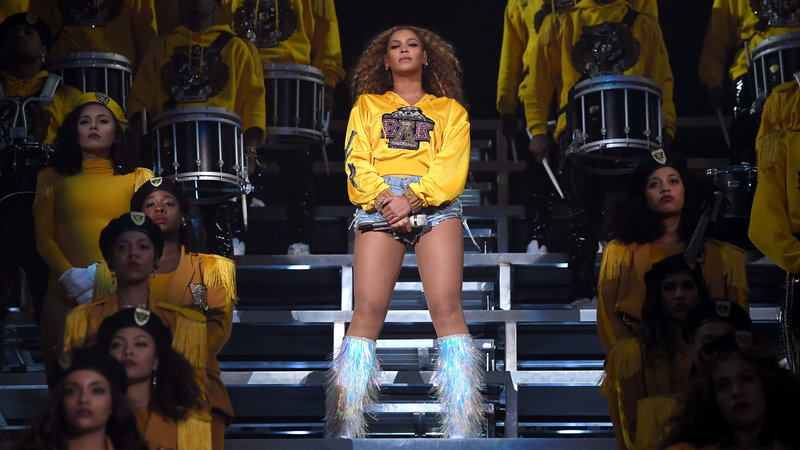
    Then, commodification began. Celebrities started heralding veganism as the next amazing diet. Athletes claimed going vegan had helped them achieve new heights in their sporting careers. And Beyoncé announced that in preparation for Coachella 2018 … she was going vegan?

    It then became apparent that Beyoncé was not actually vegan. A distinction between plant-based and vegan had to be made, which was helpfully cleared up by an article by the New York Times, after the fact.

    Yet, it was too late. The damage was done.

     CREDIT: Kasper Delaney-Petersen

    Dublin may be Vegan-friendly?

    Calling Dublin vegan-friendly is dependent on who you talk to.

    Laura Broxson from the National Animal Rights Association [NARA] expressed concern when asked about the direction veganism has gone.

    “Veganism is so much more than a diet,” she said. “It’s about respecting animals and acknowledging their autonomy in every circumstance.”

    And therein lies the problem of Dublin being vegan-friendly. Dublin has a love affair with exploiting animals for commercial gain. You only have to walk to the top of Grafton Street to find horse-drawn carriages.

    Dublin Zoo, for example, would be, or at least it should be, morally reprehensible to vegans. The idea that zoos are used as a place to conserve animals gets thrown on its head when you consider not all the animals are on the endangered list, so why are they there? 

    And then there was the RTÉ Investigates program, that covered greyhound racing and caused outrage from viewers. Not enough outrage, however, for the government to refuse funding to greyhound racing in the 2019 budget.

    All against the ethos of the original philosophy of veganism.

    Broxson continued: “No animals should be used, in any way, against their will. So that means not supporting circuses, zoos, greyhound racing, horse racing or any form of animal use.”

    Semantics has always been a problem for vegans, but now this problem is encroaching on everyone. Vegan-friendly does not make it vegan.

    However, we shouldn’t blame each other, we should blame Beyoncé for blurring the lines even further.