
Tag: veganism

  • Away with the dairy: Going vegan for Green Week

    Away with the dairy: Going vegan for Green Week

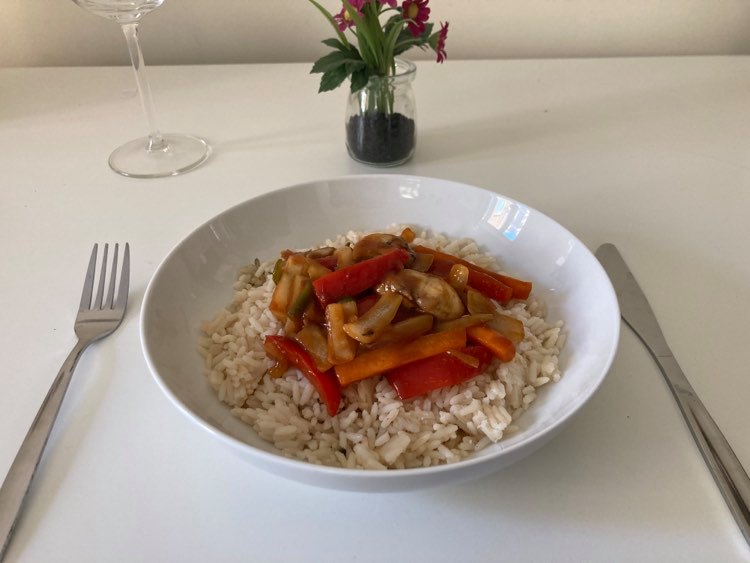
    This vegan stir-fry is so full of flavour, you won’t notice the lack of meat. Photo by Niamh Alexander

    It has become widely accepted that when it comes to reducing our carbon footprint, going vegan is one of the most impactful things we as individuals can do.

    It is a little bit surprising then that just under 1% of the world’s population is vegan.

    Numerous studies have proven that the food production industry is one of the largest contributors to climate change, with livestock production alone contributing around 14.5% of total greenhouse gas emissions (higher even than the transport sector). While some meat industries are more sustainable than others, even the most eco-friendly meat products are more harmful than the ‘worst’ vegetables.

    Further studies have shown that a global reduction in our meat and dairy intake by 2050 would cause a reduction in emissions of over 72%.

    You do not realise how many food products contain dairy until you’re not allowed to eat it

    Faced with facts like these, it’s hard to argue against adopting a vegan diet, especially when our planet is steadily approaching the point of no return. 

    With this in mind, I decided to try and switch to veganism for a (brief) period of time to see how difficult it can be. (Answer: very.)

    I knew going into this challenge that it wouldn’t be cutting out meat that would be the most difficult part, but the lack of dairy.

    I definitely found that it was dairy products like milk and cheese that I missed the most. You do not realise how many food products contain dairy until you’re not allowed to eat it.

    My first challenge was finding something to eat for breakfast that wasn’t just a quick and easy bowl of cereal.

    A quick google search told me that most cereals are not actually vegan because of the added vitamin D that apparently comes from sheep (who knew?), which ruled out my foolproof plan of simply substituting my usual milk with a soy or almond alternative.

    I found that smoothies made with almond milk and dairy-free yoghurt were a good way to start the day, and tasted amazing. I used frozen fruit, which is a good way to reduce food waste by ensuring the fruit doesn’t go bad before you get through it, and it’s cost effective. 

    Lunch was also a bit tricky, as I struggled to come up with something that wasn’t just a sandwich or wrap with a meat filling and copious amounts of cheese. 

    I may have cheated a little bit here by making a large pot of butternut squash soup with enough to last me several days. Served with a slice of soda bread, this is a really simple and filling lunch option. 

    I did switch things up at the end of the challenge and tried out this sweet potato salad recipe, which tasted amazing and was so easy to make.

    Butternut squash soup, photo by Niamh Alexander

    I opted for a vegan burrito instead – and honestly, it was hard to tell the difference

    Surprisingly, dinner was probably the easiest meal to find vegan alternatives for.

    One of my favourites was a vegetable stir-fry with cashew nuts added in as a protein-rich substitute for meat. For the sauce I used this maple syrup and ginger recipe – which tasted just as good as it sounds.

    I definitely found my willpower being tested when my housemate suggested a takeaway towards the end of the week, and I wanted nothing more than a cheesey pizza.  Thankfully, I resisted and opted for a vegan burrito instead – and honestly, it was hard to tell the difference. 

    I am a self-confessed picky eater, so going into this I was unsure if I would be able to stick it out. I found I was putting a lot more thought into what I was eating, which had the knock-on effect of making me eat a lot healthier. 

    I do have a lot of admiration for people who stick to a vegan diet full time – it takes a lot of effort to make sure everything you are eating is definitely vegan, but that is probably something that gets easier over time. 

    I don’t think I had long enough to notice most of the benefits I’ve read about, but I did feel more energised throughout the day – probably because I was making healthier choices (and chocolate had been ruled out).

    While I probably won’t be switching to a full-time vegan diet any time soon, I will definitely be putting more effort into reducing my meat intake and doing what I can to source sustainable products.
  • Don’t blame vegans, Blame Beyonce: The Beyoncification of Veganism

    Don’t blame vegans, Blame Beyonce: The Beyoncification of Veganism

    By Robert Geoghegan

    Ireland has recently topped the list as one of the most Vegan-friendly countries in the world, at least when it comes to our number of restaurants. This is, incredulously, despite the fact that vegans make up only 2% of the Irish population, according to Bord Bia.

    This research, conducted by HayesandJarvis.co.uk, started with a seed list of the 50 most visited countries in the world. Each city chosen needed to contain a minimum of 500 restaurants to even qualify. Finally, they scraped information from TripAdvisor, a process involving the importation of data from a website into a spreadsheet.

    HayesandJarvis.co.uk came to the conclusion that Dublin City might be the vegan capital of the cuisine world, with over 21.2% of the city’s restaurants classified as Vegan-friendly.

    And Voila; Ireland is now the most Vegan-friendly country.

    To look at these numbers alone, you might be led to believe that this is beneficial to customers. However, if you go onto TripAdvisor and look for restaurants to eat in, you get a whopping 2,269 options to choose from. And that’s just restaurants.

    Filter in all the eating options and you get 2,657 options. Of those options, 586 are Vegan-friendly, meaning 22.1% of the restaurants in Dublin are classed as, debatably, Vegan-friendly restaurants.

    CREDIT: Robert Geoghegan

    In short, when looking at the numbers there are not a lot of actual vegan restaurants and being Vegan-friendly doesn’t mean it is actually vegan.

    Semantics has always played a huge part in the narrative of being vegan.

    From the fringes to the mainstream: What came first the vegan or, the vegan option?

    Within the history of veganism, the language around the word vegan has been contested. According to the Vegan Societies website, it is argued that there could have always been vegans, often for religious or spiritual reasons.

    Their literature goes on to describe that the original use of ‘vegetarian’, in the 1830s, indicated a person who did not eat any animal products.

    It was only after the formation of the Vegetarian Society in 1847 did the word vegetarian indicate eggs and dairy products would be included in a vegetarian diet.

    From 1902 until 1912 the Vegetarian Society discussed within their journal whether eggs and dairy products should be eaten. 

    It was not until 1943, after one Mr Donald Watson gave a talk to the Vegetarian Society called ‘On Vegetarianism and Dairy Products’, did a subgroup of non-dairy vegetarians form.

    The Vegetarian Society didn’t want to limit the scope of the Vegetarian Society journal to this new group, as “they wanted to give their full attention to the abolition of eating flesh”, and suggested the non-dairy vegetarians start their own group.

    It was in November 1944 that Watson called the first meeting of non-dairy vegetarians, consisting of five other members. Together they founded a new movement called Vegan.  Bore from the word vegetarian, vegan used the first three letters and the last two letters of the word vegetarian.

    In 1949, veganism was defined as “the emancipation of animals from the exploitation of man”, further refined in 1988 to “exclude, as far as possible and practicable, all forms of cruelty to animals, for food, clothing or any other purposes”.

    The Beyoncification of Veganism

    There are not a lot of statistics on veganism in Ireland, and a great deal of existing information comes from the U.K and the U.S. Now, more than ever, do people identify as a vegan in large quantities, with over 725,000,000 vegans worldwide according to the Bord Bia report.

    You can, however, get an understanding of how interest in veganism in Ireland has grown over the years from Google Trends.

    Mining into the data of Google Trends is where the information gets more interesting. As you can see in figure 1, interest in the word vegan began to grow rapidly in Dublin after 2014, up 47% in 2015.

    Fig.1 Google trend on the word “vegan” in Ireland per year.

    Fig.1 Google trend on the word “vegan” in Ireland per year.

    Why? Well, Beyoncé made headlines for being vegan in 2015, and interest in veganism online grew 15% in the first month and has steadily increased month on month to 196% as of October 2019.

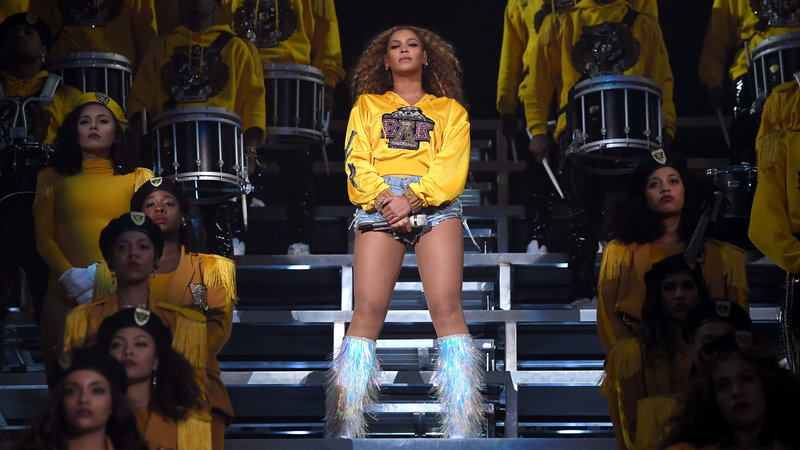
    Then, commodification began. Celebrities started heralding veganism as the next amazing diet. Athletes claimed going vegan had helped them achieve new heights in their sporting careers. And Beyoncé announced that in preparation for Coachella 2018 … she was going vegan?

    It then became apparent that Beyoncé was not actually vegan. A distinction between plant-based and vegan had to be made, which was helpfully cleared up by an article by the New York Times, after the fact.

    Yet, it was too late. The damage was done.

     CREDIT: Kasper Delaney-Petersen

    Dublin may be Vegan-friendly?

    Calling Dublin vegan-friendly is dependent on who you talk to.

    Laura Broxson from the National Animal Rights Association [NARA] expressed concern when asked about the direction veganism has gone.

    “Veganism is so much more than a diet,” she said. “It’s about respecting animals and acknowledging their autonomy in every circumstance.”

    And therein lies the problem of Dublin being vegan-friendly. Dublin has a love affair with exploiting animals for commercial gain. You only have to walk to the top of Grafton Street to find horse-drawn carriages.

    Dublin Zoo, for example, would be, or at least it should be, morally reprehensible to vegans. The idea that zoos are used as a place to conserve animals gets thrown on its head when you consider not all the animals are on the endangered list, so why are they there? 

    And then there was the RTÉ Investigates program, that covered greyhound racing and caused outrage from viewers. Not enough outrage, however, for the government to refuse funding to greyhound racing in the 2019 budget.

    All against the ethos of the original philosophy of veganism.

    Broxson continued: “No animals should be used, in any way, against their will. So that means not supporting circuses, zoos, greyhound racing, horse racing or any form of animal use.”

    Semantics has always been a problem for vegans, but now this problem is encroaching on everyone. Vegan-friendly does not make it vegan.

    However, we shouldn’t blame each other, we should blame Beyoncé for blurring the lines even further.