
Tag: Violence

  • ‘I don’t want to stay here anymore’ – Prince Singh opens up about the reality of violence towards international students

    ‘I don’t want to stay here anymore’ – Prince Singh opens up about the reality of violence towards international students

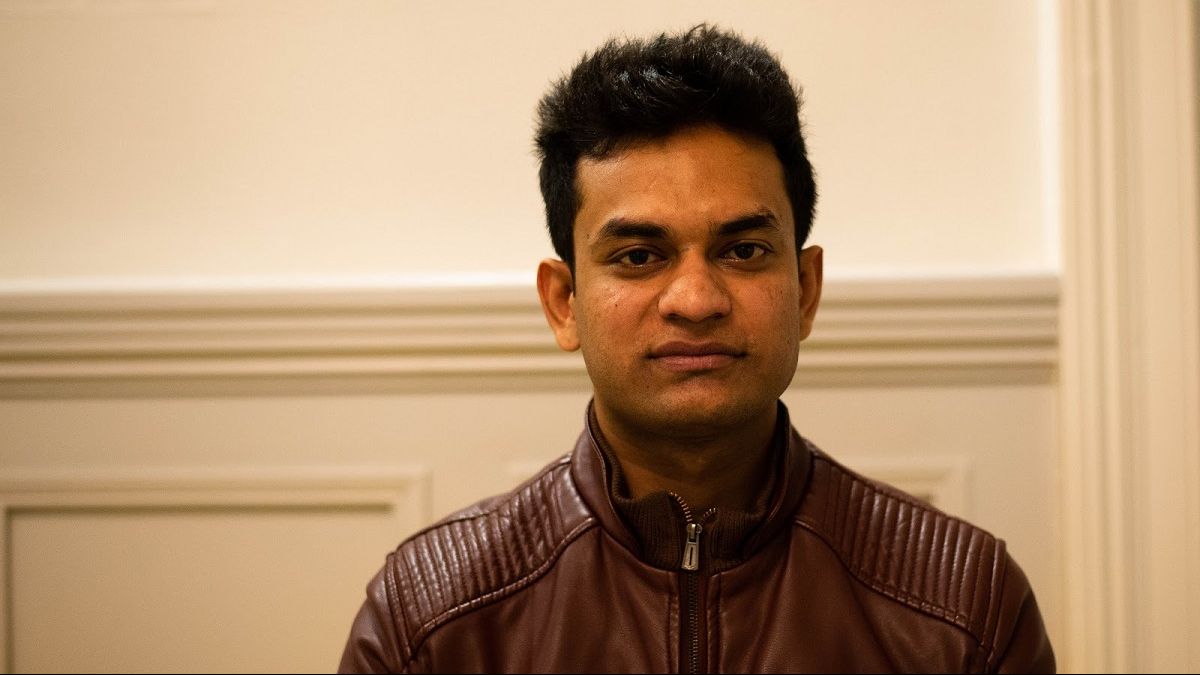
    Caption: Prince Singh studies International Business Management at Griffith College 
    Photo: Ayumi Miyano

    After a barbaric assault, one international student studying in Dublin has called for Ireland to try ensure the safety of students coming here from all over the world. Ayumi Miyano sits down with Indian national Prince Singh to hear his experiences as an international student studying in Ireland.

    On January 15, Singh and his friend Ambarish Kumar — Masters students at Griffith College — were attacked by a group of eight to ten children in the Sundrive Park area of Dublin.

    The group of children began following the two Indian students when they entered the park and eventually threw a bicycle lock at both of them. 

    Kumar was hit by the bicycle lock and was left bleeding. The Gardaí arrived 30 minutes later, followed shortly by an ambulance to aid both students.

    Singh and Ambarish were then sent to St. James Hospital but had to wait there for five more hours, before Kumar could finally receive treatment – two stitches on the back of his head.

    “When I asked the Irish police what I can do as self-defence, they told me that running is a good option. You can run, but you cannot do anything for self defence,” he said.

    Photo: William Murphy — Flickr

    “You cannot do anything to the minors. Because if you do anything harmful to them, they will report you. They will report you instead which would abolish your career.”

    In Ireland, the law deals with children found in breach of the criminal law in the Children Act 2001. Under the act, children who have not reached the age of 12 years cannot be charged with an offence. In addition, the consent of the Director of Public Prosecutions is necessary to charge a child under 14 years with an offence. With regards a child under the age of 18, for which they have been found guilty, can be automatically expunged from the record once certain conditions are met. The act also explains “any penalty imposed on a child for an offence should take the form most likely to maintain and promote the development of the child”.

    “I’m thankful to my college – they are supporting me. My Embassy – they are supporting me. My college is also supporting me. But I don’t get any support from the Irish Government,” he said.

    “At least, the Irish Government needs to re-educate them so they will not do these kinds of things to anyone else,” he said. 

    “I think moral education is important. They should try doing the Yoga activity which creates some peacefulness in kids’ minds and invent some sports activity for those types of kids who are wandering all the time, here and there on the streets.’’

    Also, Singh recommends that the Government provide security for international students.

    According to the Statement by Minister Stanton on Racism affecting Ethnic Minorities in Ireland, the Irish Human Right and Equality Commission (IHREC) has been dealing with the discrimination, including against ethnic minorities, and to seek legal support for persons experiencing discrimination. One of its new functions under the IHREC Act 2014 is to encourage the development of a culture of respect for human equality in the State.

    However, the Reports of racism in Ireland by iReport.ie shows a “continuing steady rise” in the number of violent crimes in the second half of 2017. In the same period, 256 racist incidents, including racist assaults, threats to kill or harm, and hate speeches were reported to the iReport.ie. According to the report, “crime and discrimination are targeted most at ethnic minority people who were born or have become Irish citizens”.

    The report also shows two-thirds of racist crime victims did not report these to the police. The most common reason for not reporting to Gardai was “I did not think the Gardai (Police) would do anything”.

    “Will they do anything for the safety of international students?” he said.

    “Lots of students are coming from all over the world to study in Ireland,” Singh explains.

    In May 2019, the European Migration Network announced that more non-EEA students are coming to Ireland to access higher education, with numbers increasing by 45 percent between 2013 to 2017. 

    In India — Education in Ireland, the Irish education brand managed under the authority of the Minister for Education and Skills organises seminars — Official Government of Ireland education fairs. The events are held occasionally in prominent cities such as New Delhi, Mumbai, Bangalore. 

    International students are a big part of third level revenue for Ireland. About 20 Irish higher education institutions attend the seminar to attract many Indian students from their sales talks. 

    Although the number of foreign students is increasing, EMN describes the problem which international students are facing; The inefficiency of the immigration registration system is one of them. 

    When non-EEA students start their life in Ireland, they need to register as immigrants at Irish Naturalisation and Immigration Service office. 

    Photo: iua.ie

    However, the number of available dates for an appointment is often quite limited and it requires a long time for students to get an appointment. 

    In addition, most students have to wait six to seven hours at the immigration office on the day of registration. 

    According to EMN, these processes “cause stress and anxiety in relation to their legal status and have a negative impact on their academic experience in Ireland”. 

    Also, there is a difference in fees between EEA (European Economic Area) students and non-EEA students in some higher education institutes as applies to other EU States.

    In the master’s course of International Business Management at Griffith College, the fee for non-EEA students is €14,000, which is €4,300 more expensive than the one for EEA and Irish students. 

    “We are like fixed assets for the Irish Government. We are paying lots of money. If we stopped coming to Ireland, they will definitely suffer in their education industry,” Singh comments.

    “We have only one option – we go back to our country. But we have already paid lots of money here. We need our degrees also. We want to educate ourselves.

    “Now I realise I will try to go back to my country as soon as possible. I don’t want to stay here anymore,” Singh commented. 

    The hurdles for foreign students are already high enough, with expensive fees and complicated immigrant registration process. 

    On the official Education in Ireland website, they boast that international students can expect “world-class standatds. Warmest of welcomes”. Prince Singh and others, sadly might argue that their welcome did not fulfil that promise.

  • Harassment in The Parisian Subway

    Photo taken by Defné Cetin
    Photo taken by Defné Cetin

    “The Métro is Paris.”

    The métro is a huge system of public transportation. You can be lost in the middle of Paris and there will still be a station waiting for you somewhere, at a maximum of 500m from where you are desperately trying to go.

    It is used by 1.5 billion commuters per year (Source RATP), and by 48 people per second.

    The Parisian métropolitain has never been a place in which you would spend your whole afternoon with your friends, chatting about how nice this place is and how the wonderful fragrance that tickles your nose is reminding you of your holidays in Greece. It has never been a place where you would stay for a long time anyway. Except if the RATP is experiencing some troubles with the railway, or if you have to commute from one side to the other side of Paris. In that case, good luck.

    But more than wishing luck to you all, we should also wish some courage to the women and young girls who need to use this transportation system.

    The Joys Of Being a Woman in the Métropolitain.

    According to a survey made in July 2014, 94 per cent of the women have experienced sexist violence. The term “sexist violence” is grouping several types of violent acts that, in this case, women faced while taking the subway.

    In the graphic below, the feminist organisation Osez Le Féminisme established a rather frightening graphic which enables us to see what most of the women have already faced during their commute.

    94% women already faced sexist violence
    94% women already faced sexist violence

    The most widespread kind of violence is about the unappropriated looks that someone gives you. 72 per cent of the women participating in the survey have experienced it. Some people might say that looking is not something violent, but they clearly have not experienced it. It is as if you were judged from head to toes, every single part of your body is being analysed by disgusting eyes.

    You have to keep in mind that you are underground, in a closed wagon that only opens when arriving to a station. You have to keep in mind that this wagon can be packed, and that you can not really move. You feel trapped. The person watching you knows it, and takes a kind of perverted pleasure to watch you struggle. This person wants you to feel ill-at-ease.

    You are stuck, and there is not much to do about it. You have to try to ignore it. But note down that you might experience this several times per week, and your daily journey in the métropolitain will be a stressful part of your day.

    But that is not all. The survey also shows that 57 per cent of the women have already been followed in the subway, that 36 per cent already had to face exhibitionist and men masturbating in front of them and that 34 per cent of the women already experienced sexual aggression.

    Female Commuters, This Doesn’t Mean That You Have to Stay at Home.

    Being a woman born in Paris, I used to take the métro on a daily basis. And those things are happening, it’s a fact. I have already been followed. I have already been a victim of what we call the “frotteurs”, those guys who are rubbing their parts against you when the wagon is packed. And I’ve been shocked.

    But I never stopped taking the subway to go from a point A to a point B. The métro allows you to move from one side of the town to the other, and women should not stop using it. Authorities have to take this problem more seriously. And it would deprive me from the freedom to move.

    I won’t stop using it, because I am not the one responsible for what is happening.


    … Or Am I ?

    Let’s make it clear. Women are not responsible for what’s happening concerning the sexual harassment in the Parisian subway. Yet some people are thinking that because she wore this or she wore that, she deserved it. Campaigns have been made by organisations such as Terre des Femmes in order to fight against this type of prejudice.

    Campaign made by Terre Des Femmes
    Campaign made by Terre Des Femmes

    If you want to wear a dress, wear a dress. If you want to wear a mini skirt, wear one. No one should tell you how to dress, and you shouldn’t have to dress in a special way to avoid being raped. No one should have an “anti-rape outfit” in their cupboard. The way you dress should not be the thing that people should be concerned about. People should be concerned about how to stop those people to act in such an inhuman way.

    Yet, according to the survey made by Osez Le Féminisme, three out of four women are adapting their outfits and behaviours when they are taking the métro. Because they fear what might happen to them. And this is not normal.

    75% Women are adapting their behaviours when taking public transportation.
    75% Women are adapting their behaviours when taking public transportation.


    So once more, no. If you are wearing a skirt, you’re not responsible for what the others might do to you. You feel better when you wear a dress? Go for it.

    It’s Time to Fight Back.


    Several organisations are fighting for the rights of women. As seen above, Terre Des Femmes did some powerful visuals to fight against the idea that a woman’s outfit might make her responsible for what is happening to her.


    Osez Le Féminisme decided to fight back with some humour. By using the visual codes already used by the RATP – French public transportation company – they started to put up some stickers in the métro in order to raise awareness on this horrific problem.


    Reaction found on twitter to Osez Le Féminisme 's campaign.
    Reaction found on twitter to Osez Le Féminisme ‘s campaign.


    On Tumblr, several illustrators started to take their pens and start illustrating what women are confronted to in the streets … and in the subway. The Tumblr “Projet Crocodile” – from which the illustration below is taken – is receiving several e-mails from witnesses and victims of sexist violences.


    Taken from the Tumblr Projet Crocodile
    “Ok. I’m going to throw up.” Taken from the Tumblr Projet Crocodile


    Via drawings and events organised by such persons, the awareness is brought on this issue. And if things are not going to change immediately, those actions are surely going to help.


    Defné Cetin

  • Violence against women in Brazil: a heinous crime

    Photo by Concha García Hernández
    Photo by Concha García Hernández

    Domestic violence, particularly against women and children, kills more than war.  A study carried out last year found that aggression against women costs the world economy more than $8 trillion per year.  This study urged the United Nations (UN) to pay more attention to domestic abuse, which receives less attention than armed conflicts such as Syria and Ukraine.

    In Brazil, violence against women is a common practice. For every 100,000 women, four of them are murdered every year. This places Brazil seventh in the world for this type of crime. Many Brazilians suffer more violence at home than in public spaces, and they do not feel safe living with their own husbands.

    Last week, The House of Representatives proposed a bill that increases the penalty for men who commit these crimes against women.  This bill had already been approved by the Senate and now it is waiting for Presidential approval. Its text considers domestic violence as contempt and discrimination against womanhood.  Once this proposal is approved, this crime will be included in the Penal Code and it will be considered as a heinous crime.  Mrs Maria do Rosário, Former Minister for Human Rights, said, “It [bill] will penalize women’s deaths due to violence.”

    Many Brazilians are waiting for their reality to change with this bill and hoping that the perpetrators will now be duly punished.

    By Maira De Gois