Tag: Weather

  • Dublin swimmers at risk of sewage exposure from heavy rainfall

    Dublin swimmers at risk of sewage exposure from heavy rainfall

    Image of Forty Foot – Photo credit: Oscar Meagher

    Dublin swimmers are advised to take caution after periods of heavy rainfall as there is an increased risk of contaminated seawater.

    By Oscar Meagher 

    As Dublin continues to face poor weather conditions, swimmers have been warned to take precautions before returning to the sea.

    Ireland’s bathing season runs from June 1st to September 15th. During this period, local authorities monitor swimming areas for the presence of harmful bacteria.

    These conditions are largely unsupervised during the remaining months. 

    “Heavy rainfall is one of the key factors in water quality contamination,” said Wim Meijer, Professor of Microbiology in UCD School of Biomolecular and Biomedical Science.

    “Treatment plants and sewers can’t contain the increased volume of wastewater during periods of extreme weather. That excess ends up bypassing the complete treatment process,” he said.

    “When sewers overflow, that water will need somewhere to go. It may flow back through the toilet, or it will wash onto our beaches.”

    Swimming in this contaminated water can lead to infection, skin rashes, dysentery and may even result in diarrhoea and vomiting in extreme cases.

    “I would advise swimmers to wait at least 48 hours to swim after periods of heavy rainfall – particularly in areas where sewage may pose a risk,” added Professor Meijer. 

    Image of Blackrock Baths – Photo credit: Oscar Meagher

    Bathing areas are tested for the presence of two bacterial markers, E. coli and Intestinal Enterococci. They are often resident within the intestines of humans and animals.

    Waste from dogs and sea birds is one of the key factors in water pollution.

    “Dogs account for 30% of water contamination,” said Professor Meijer.

    “Even a small amount is enough to contaminate water in an area the size of a tennis court. This can result in temporary bathing prohibition notices being issued by local authorities.”

    Image of Sandycove beach – Photo credit: Oscar Meagher

    Frank Kelly is a member of The Gollymocky Whalers, a local swimming group that began as a result of the Covid pandemic.

    “I’ve been swimming at Sandycove ever since the plague started six years ago. I go swimming three or four times a week,” he said. 

    Kelly is one of many taking part in the ‘Freezbrury’ challenge – which involves submerging yourself in the icy cold water for one minute every day throughout February. Every day, another minute is added.

    “It was 17 minutes today, and we’re hoping to get up to almost half an hour by the end of the month,” he added. 

    “I know to steer clear of the sea after lots of heavy rain. Thankfully, Sandycove is well protected, but I’m worried about some of the other beaches,” said Kelly. 

    One young swimmer at Seapoint Beach, who did not wish to be named, also expressed uncertainty regarding water quality.

    “I only started swimming recently as a sort of New Year’s resolution. There’s still a lot of things I’m unfamiliar with,” she said.

    “I was advised not to swim after it’s been raining. I haven’t really gone much because of the terrible weather we’ve been having for the last month.”

    Image of Seapoint Beach – Photo Credit: Oscar Meagher

    While water quality is generally monitored exclusively from June to September, out-of-season sampling is voluntarily reported by local authorities.

    “I would advise swimmers to regularly check sites like Beaches.ie for information regarding water quality,” said Professor Meijer.

    Dublin City Council monitors bathing water quality at three designated locations: Dollymount Strand, Half Moon and Sandymount Strand. 

    The DLR website regularly publishes findings from water quality samples.

    Recent findings from February 4th in areas like Dún Laoghaire Baths and the Forty Foot were categorized as “excellent”, while labelling others like Blackrock Baths as “poor”. 

    The Bathing Season will continue on June 1st

  • “If You Choose to Stay, You’re Going to Die”: Hurricane Milton Makes Landfall in Florida 

    “If You Choose to Stay, You’re Going to Die”: Hurricane Milton Makes Landfall in Florida 

    By Jessica Lee

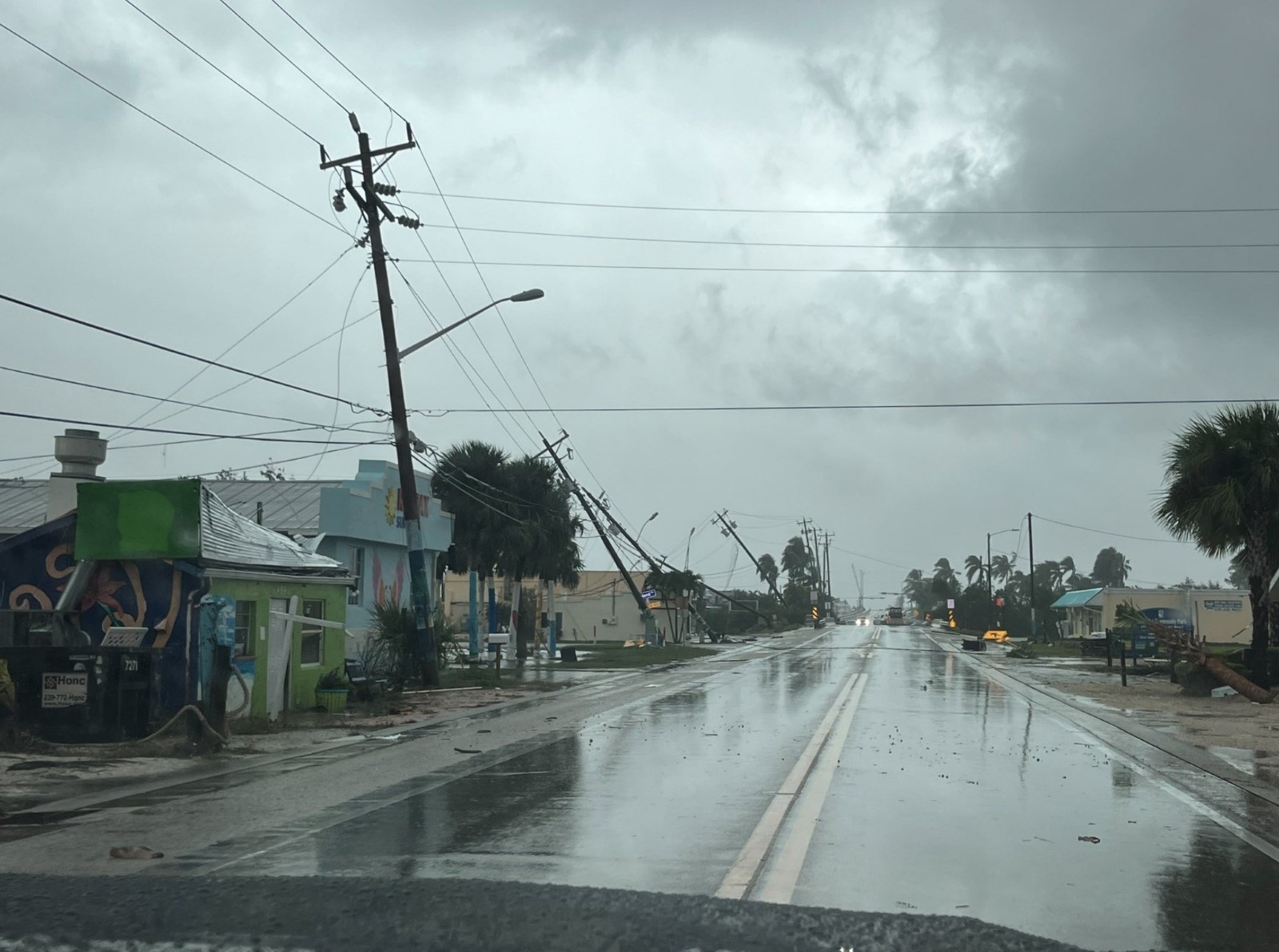
    Hurricane Milton made landfall in Florida as a Category 3 storm on the night of Wednesday October 9th. The hurricane made its way across the coast of Florida- downing trees and power lines, flattening homes and flooding roads. 

    This hurricane comes just days after Hurricane Helene devastated the southeastern coast of America and claimed the lives of 230 people, the largest loss of life in the US from a natural disaster since Hurricane Katrina. 

    The death toll for Hurricane Milton has increased to 16 people, with the number climbing as more bodies are recovered.  

    Evacuation orders were in place for over one million people living in the coastal areas of the state of Florida and 3 million people are currently still without power. 

    The hurricane caused so much rain to fall in the Tampa Bay region of Florida, it is being considered a once in a thousand-year rainfall event. 

    Radar map of Hurricane Milton. Source WMTV News 

    Mayor of Tampa Jane Castor issued a stark warning to Floridians in mandatory evacuation zones who chose to stay put in their homes; “I can say this without any dramatisation whatsoever: If you choose to stay in one of those evacuation areas, you are going to die.” 

    Despite this warning, some residents chose to stay in their homes- many of whom had nowhere else to go. 

    Images spread on social media of people writing their names and date of birth on themselves and their children’s arms in permanent marker in order to be identified if they were killed as a result of the hurricane.  

    A mother writes on her child’s hand with identification details. Source Ashten Lee on Tiktok

    Sinéad Gleeson, an Irish woman living in Florida told the City about her experience staying in her home during the hurricane. 

    “I had no choice but to stay in my house, I was not in a mandatory evacuation zone, but it was strongly encouraged by the mayor. I had nowhere else to, I didn’t have the money to fly somewhere…I just had to stay put and hope for the best.” 

    “Thankfully, it was not as bad as it was thought it would be but there was still a lot of damage done, we just hope this is the last hurricane of the year,” said Sinéad. 

    Damage caused by Hurricane Milton in Lee County, Florida. Source: Lee County Sheriff’s Office. 

    Despite warnings from President Biden and meteorologists alike, Hurricane Milton was not as severe as feared.  

    Although the hurricane spared much of the western coast of Florida, airports in the region including Tampa and Palm Beach have remained closed. 

    According to analysis by the National Hurricane Center, the storm surge spiked to 5 to 10 feet above ground level in some areas. However, it was initially estimated that the surge would reach 15 feet.  

    So far this year there have already been 13 named Atlantic storms. With more than six weeks left of Hurricane season there are fears that another severe weather event will occur. 

  • This weekend will be Ireland’s coldest of the year so far

    A winter weather advisory for Ireland has been put in place until Monday, with temperatures set to reach as low as minus seven degrees overnight.

    The advisory was issued by Met Eireann on Tuesday – which takes effect on Thursday – with an extra yellow warning for ice set to be in place from 10pm on Thursday night until 10am on Friday. 

    The most severe impacts will be on driving conditions which could be treacherous in places on Thursday morning, particularly during commute times,” said Meteorologist Andrew Doran Sherlock. 

    “An Arctic air mass will bring sharp to severe frosts with ice on footpaths and roads. Showers of hail, sleet, snow and freezing rain are likely with fog and possibly freezing fog towards the weekend,” said Andrew. 

    Ice in Ireland during December 2010, the country’s coldest recorded month

    “A cold front will hit Ireland on Wednesday, that’s going to introduce Arctic air, the air mass will be coming directly down from the Arctic,” said Met Éireann’s head of forecasting Evelyn Cusack.

    “That’s coming down into all of northern Europe, Ireland and the UK. That’s going to introduce very cold weather for Thursday, Friday, Saturday, Sunday and next Monday, possibly longer.

    We will have daytime temperatures really close enough to zero, just low single figures at best. The nighttime temperatures will be gradually dropping down,” said Evelyn. 

    A statement from Met Eireann reads: ‘Fog is essentially thick, low-lying cloud composed of tiny water droplets where visibility is reduced below 1km. The reduced visibility is a major hazard for those travelling on or near roads. 

    ‘Freezing fog is where the water droplets are supercooled, and while suspended in the air, can be converted to ice upon contact with a surface such as a car windscreen. This leads to further hazardous driving conditions.

    ‘Black ice is especially dangerous as it is invisible and can be mistaken for wet surfaces – leading to treacherous conditions on roads and paths. Freezing rain can also lead to ice build-up on car windscreens impairing visibility,’ the statement read.

    A statement has not yet been issued by the department of education on the closing of schools due to the cold weather. If various factors are at play, such as the conditions of the school, its facilities and population will determine whether they will be advised to close. 

    Cold weather can have quite a few negative effects, as noted by the HSE: 

    ‘The negative health effects of cold weather start at temperatures of 4-8°C (39 – 46°F) or below’. 

    ‘It can affect your body’s ability to fight off viruses and infections. The body is not as effective at fighting a virus when cold air enters the nose and upper airways, so viruses such as the common cold, the flu and COVID-19 often spread more easily in the winter.

    It can worsen underlying health conditions such as heart and lung disease and can increase the risk of a heart attack, stroke, falls, injuries and hypothermia. It is also associated with an increased risk of mental health problems, such as depression and anxiety.’

  • Ophelia to cost between €500 and €800 million

    Ophelia to cost between €500 and €800 million

    Storm Ophelia made landfall early Monday morning leaving three dead and hundreds of thousands without electricity. Gavin Hyland reports on the recovery operation from the worst storm to hit Ireland in half a century.

    The cleanup from storm Ophelia has begun and early estimations expect the damage to cost between €500 and €800 million with hundreds of millions more lost in the shutdown.

    Three people lost their lives in Monday’s storm which caused winds of over 100Km/h. Over 80,000 homes are without water with 216,000 homes and business without electricity.

    The National Emergency Coordination Group provided updates throughout the day through the Chair of that group, Sean Hogan.

    Ophelia image CG
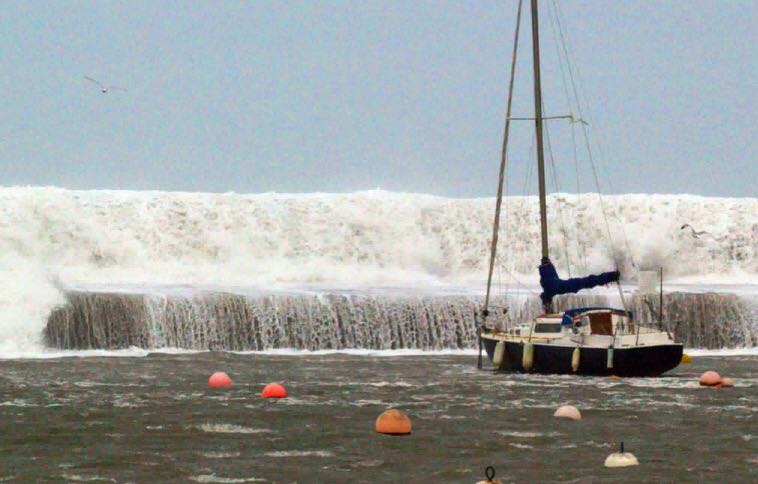
    Storm Ophelia caused rough sees around the country on Monday. Source: Irish Coast Guard

    RTÉ ran continuous coverage from all over the country, while Met Eireann has been roundly praised for their accurate forecasting of the storm which allowed for planning and warnings days in advance.

    Journalist, Alison O’Connor took to Twitter to praise some of the organisations involved as well as the government.

    Alison O'C Tweet

    Schools and colleges were closed on Monday, with schools remained closed on Tuesday. The Luas also remained closed on Tuesday as its depot in the Red Cow suffered some damage in the storm.

    There were reports of at least five rescue operations from the Irish Coast Guard as people failed to heed the warning of authorities and the Taoiseach to remain indoors during the storm.

    The National Emergency Coordination Group also reported several near misses involving emergency services personnel.

    Videos and images on social media showed trees torn down, school roofs blown off and flooding in Galway, among other structural damage.

    ESB has also been praised as over 100,000 people had their power restored Monday night and into Tuesday morning.

    The National Emergency Coordination Group also announced that help is being brought in from Scotland and France to help restore power and water to those affected.

    The good weather on Tuesday and Wednesday will help the recovery, but bad weather forecast for the weekend will likely delay or setback the recovery.

    Storm Ophelia is the worst storm to hit Ireland in over 50 years and although the recovery has begun, it is likely to take days and cost hundreds of millions to return the country to full functionality.