
Tag: wexford

  • Hard times for former Gresham owner who once had world at his feet

    Hard times for former Gresham owner who once had world at his feet

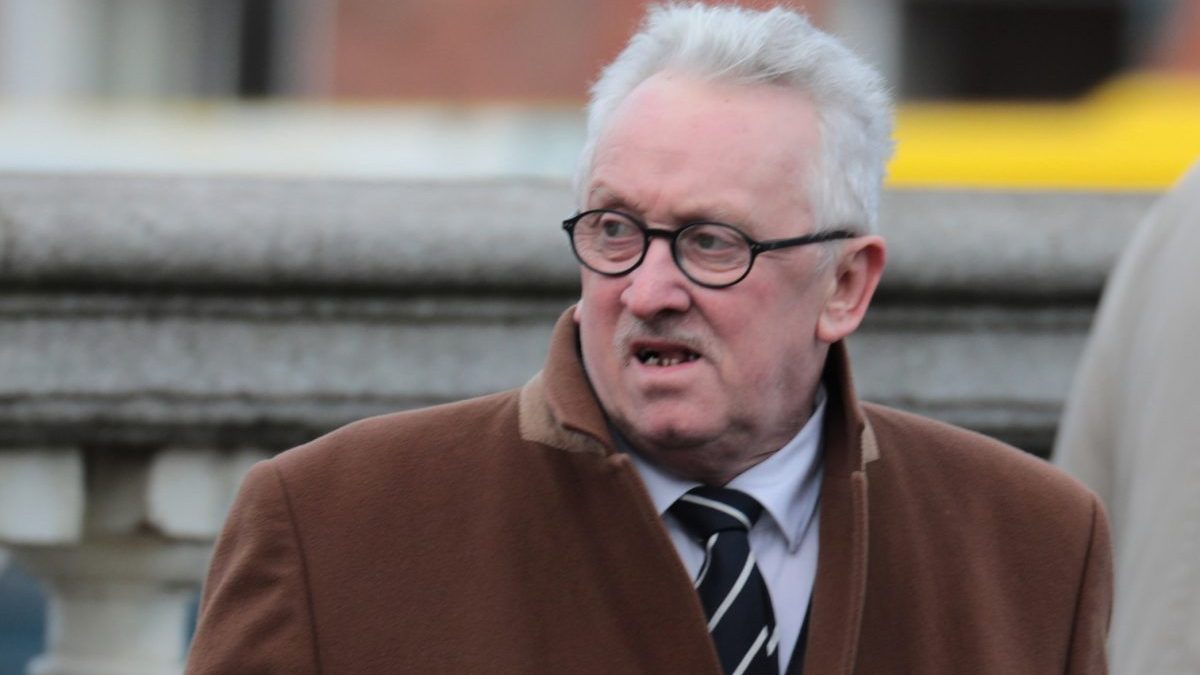
    PRESSURE: John Joseph Murphy at the High Court in February where he was questioned about his debts (Photo: Collins Courts)

    John Joseph Murphy recently suffered a heart attack 24 hours after being questioned in court about his unpaid €3.5million bank loans. TheCity.ie’s Paul Caffrey, who’s been in court covering this extraordinary case as it’s developed since February, profiles this Wexford businessman and explores his rise and fall over the past two decades.

    As a co-owner of the landmark Gresham Hotel in Dublin during the boom years, property developer John Joseph Murphy was riding high.

    Brimming with hope and confidence when interviewed by The Irish Times in July 2004, having just won control of Ireland’s oldest hotel, he brushed aside fears that he might turn it into one big apartment block.

    “The Gresham will always be the Gresham. There will be no change there. It’s business as usual,” he told the newspaper. 

    The 200-year-old Gresham Hotel on O’Connell Street, Dublin, that John Joseph Murphy once owned (Photo: YouTube)

    Irish Times business journalist Jane O’Sullivan reported that Murphy told her with a laugh: “We are not going to knock anything down and build apartments. We do believe in the underlying business and the value it can deliver.”

    Perhaps at the time, he could afford to be light-hearted. It was the height of the Celtic Tiger era and he was one of a consortium of three investors who’d just won control of the Gresham Hotel Group

    This included its flagship, 200-year-old, 323-bedroom hotel that dominates Upper O’Connell Street in the capital, along with Cork’s Gresham Metropole, London’s Gresham Hyde Park and the Gresham Memphis in Amsterdam.

    The group also controlled the Gresham Belson in Brussels, the Gresham Carat in Hamburg and the Royal Marine Hotel back home in Dún Laoghaire.

    WATCH: Explaining the historical significance of the Gresham Hotel that’s welcomed guests from the Beatles to Princess Grace (Video: Dublin City Public Libraries/YouTube)

    Sounding like a man who was ready for anything when interviewed 16 years ago, Murphy told The Irish Times about his apparent plans for world domination – in the hotel domain, at least.

    “We are not afraid to invest where we see fit. We are not afraid to acquire more hotels. But where we see any particular asset that can’t deliver, we won’t be afraid, if necessary, to dispose of it.”

    John Joseph Murphy speaking in 2004

    Back in the early to mid-Noughties, the easy availability of credit created endless temptation for those with any stake in the booming property sector. 

    This all came to a shuddering halt with the September 2008 global economic crash that was exacerbated in Ireland by the collapse of our then-bloated property market. 

    Known as JJ to his friends, Murphy was a seasoned developer with a solid pedigree in the property industry. He appeared to be set up for life as he embarked on a range of projects.  

    Between 2000 and 2007, he drew down loans totalling €6.2million from Bank of Scotland (Ireland) with a business partner to buy and develop Castle Oaks Hotel that overlooks the Shannon in Castleconnell, Limerick, the High Court heard.  

    PICTURESQUE: Castle Oaks Hotel in Limerick that John Joseph Murphy sold in 2018 to pay off about half of his bank debt – but it wasn’t enough to get him off the hook (Photo: YouTube)

    Resulting from the December 2018 sale of that hotel property, that dates back to the 19th Century, the father-of-three managed to reduce his debt by nearly €3million, the High Court heard.

    After signing a deal to purchase the 64-bedroom hotel in December 2018, Supermac’s owner Pat McDonagh told the Limerick Leader: “It is going to be business as normal.” 

    But it’s Murphy’s failure to repay the remaining €3.45million that has led him to the High Court where he’s now being sued for the full return of his bank borrowings.

    Bank of Scotland having pulled out of Ireland in 2010, his loans were later purchased by finance fund Feniton Property Finance. It was Feniton that took the legal proceedings against him. 

    The High Court’s commercial wing first ordered him to pay back the €3.45million to Feniton in April 2019. 

    When he didn’t pay the debt, the fund looked for other ways to pursue him. 

    The Four Courts in Dublin, where John Joseph Murphy’s case is being heard (Photo: Paul Caffrey)

    On February 18 last, Feniton’s lawyers cross-examined Murphy in court about what assets he may have at his disposal to satisfy the unpaid judgment.

    In robust exchanges, Feniton’s barrister Micheál O’Connell SC told him: 

    “You are going to have to answer these questions.”

    CROSS-EXAMINATION: Seasoned barrister Micheál O’Connell SC questioned property developer John Joseph Murphy at length about his unpaid debt on February 18 (Photo: The Bar of Ireland)

    But Murphy’s lawyers later claimed in court that on the following day, February 19, the father-of-three suffered a heart attack after getting an email from Feniton’s legal team that was “of concern in terms of its content”. 

    The exact contents of the email was not outlined in court. 

    Murphy, of Stony Park, Wexford, was rushed to the Mater Hospital in Dublin and underwent quadruple bypass surgery for his “very serious condition”, the High Court was told. 

    When his lawyers announced this in court on March 5, Feniton’s lawyers argued it was “extraordinary” to suggest an email from their side had brought on his heart condition.

    But Mr Justice David Barniville, who was presented with a GP’s report detailing Murphy’s condition, agreed to put the case on hold for at least a month.

    Timeline infographic: Paul Caffrey

    TheCity.ie was in court in February for Murphy’s testimony 24 hours before his health scare. We returned on March 5 when the court was told of his health condition.

    Dressed in a three-piece grey suit with white shirt, black and white striped tie and bronze-coloured cufflinks, he was questioned for almost three hours about what assets (any property or cash) he may have to satisfy the debt. 

    From the witness box, the waistcoated Wexford developer claimed he had “no assets” to pay back the millions. 

    Under questioning by Micheál O’Connell SC, for Feniton, Murphy claimed he was “kept” by his three adult children who paid his bills for a decade after he fell on “hard times”.

    His three offspring “supported me for many years when I was on hard times,” the developer told the court, adding: 

    “I had no money. Over a period of ten years, these people kept me.”

    Murphy explained: 

    “They’d have paid my bills, my ESB insurance. I had no income during that period.”

    Murphy has a 41-year-old son who’s a chef and two daughters in their 30s, one who works for a US tech company, it was heard. 

    HISTORIC: The Four Courts complex in Dublin is where all High Court commercial cases are heard and decided on (Photo: Paul Caffrey)

    Asked by Mr O’Connell SC if the children helped “out of the goodness of their hearts”, Murphy replied: “Completely out of family…This was a family matter.”

    Murphy later “decided to reimburse” them by giving them €250,000 collectively, it was heard. 

    But Feniton struggled to find any record of that payment, it was heard.

    Later, Murphy told the court: 

    “I don’t have any assets. This is the whole point here.”

    Asked if his attitude was that his creditors “can wait”, Murphy said the outstanding €3.45million debt related to a partnership with a man he hasn’t seen nor spoken to “in eight to ten years.”

    And he added: 

    “I don’t even know what this [€3.45million] debt is for – it’s ten years old.”

    (Factfile infographic: Paul Caffrey)

    Before he left court on February 18, Murphy was ordered to provide further information and/or documents to Feniton about his assets by 5.30pm on Tuesday, March 3. 

    He was due to appear in court again on Thursday, March 5. Instead on that day, his lawyers brought news of his February 19 heart attack.

    The case is currently on hold as the courts are dealing only with urgent cases during the Covid-19 lockdown. Chief Justice Frank Clarke recently made a statement on the matter.

    According to official Companies Registration Office (CRO) records seen by this website, Murphy hasn’t been a director of the Gresham Hotel Company Ltd since December 2006 when he resigned from that position. 

    His December 7, 2006 resignation was recorded in documents filed with the CRO in February 2007. 
  • The formation of the suicide-prevention group Marinewatch that has saved 156 lives

    The formation of the suicide-prevention group Marinewatch that has saved 156 lives

    Established in December 2012, the suicide-prevention group Marinewatch has worked tirelessly every single night for the past six years. During this time, they have dealt with a total of 334 incidents, 156 of which were suicide interventions.

    Wexford town has been well known for its high suicide rate –– so much so, that it became known nationally as a ‘suicide blackspot’.  As Mayor of Wexford, Frank Staples, put it “Wexford is in crisis”. Wexford Bridge has been a regular spot for these tragic events.

    After a particularly harrowing few months that saw three deaths in close succession in October and November 2012 at Wexford Bridge, Frank Flanagan, founder of Marinewatch, felt something needed to be done about this epidemic, rather than ‘just expressing shock and sympathy at each death and doing nothing further to prevent it”. Frank decided that person would be him.

    It was through his part in creating the online campaign that fought government cutbacks of the Irish Coast Guard’s ‘Rescue 117’ helicopter base in Waterford (which gained both international recognition and 25,000 signatures, forcing the Government into “an unprecedented U-Turn” on their decision) that Frank met a lot of key contacts in the Coast Guard and emergency services. He not only became friends with the helicopter crew but also many members of the gardaí, ambulance and rescue services crew.

    In December 2012, Frank decided to put these contacts to “good use”, calling a “private meeting” between them. He invited the mayor, local councillors, the gardaí, the National Ambulance Service, the Irish Coast Guard, the Civil Defence, Waterford Marine Search & Rescue, the Order of Malta Ambulance Corps, the Fire Service and the RNLI amongst others. To his “astonishment” the room was “packed to capacity and even more chairs had to be brought in”.

    It was through this very meeting that Wexford Marinewatch was born. Following subsequent meetings, a management team was formed. This included one representative from each emergency service, who would “provide advice and expertise” to the organisation. These people still sit on the board of management today and continue to “guide Marinewatch on a daily basis”.

    The team developed a concept that was central to their mission of suicide-prevention. Frank describes this concept as straightforward:

    “Train volunteers and put them out on the street to patrol the bridge and ‘known’ suicide blackspots, where they could intercept these people in time and offer them help and support whilst getting them to safety.”

    This community of co-operating voluntary emergency services and community volunteers is the first of its kind that Wexford has seen, and possibly Ireland too. Therefore, this new concept came with some “understandable” scepticism from the public. However, Frank says that once they heard that the organisation was being “driven from the top-down by key players in the emergency services”, it gained huge credibility.

    The next thing to do was advertise for volunteers and it was a huge success, gaining an overwhelming response from the public. Although “eager to get feet on the street before another life was lost”, Frank says that the newly elected professionals “rightly” pointed out that risk assessments, health & safety, garda vetting and volunteer training were all required before anyone was “exposed” to a patrol.

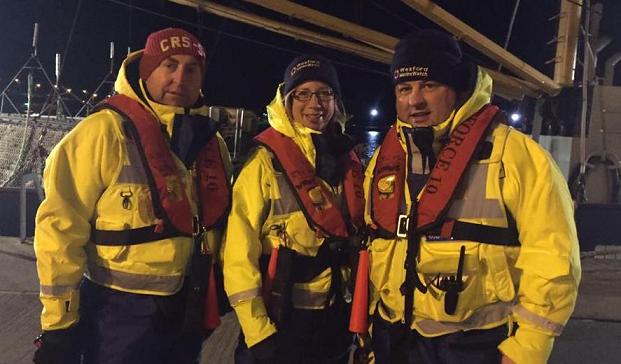
    The patrol consists of four or six volunteers, sometimes reaching to eight, volunteers who patrol the bridge and quay area of the town, wearing high visibility vests and life jackets. Their remit, as Frank put it, is to “identify anyone who may be distressed, in a bad place, contemplating suicide, or even just putting themselves at risk near the water edge”.

    Frank says that apart from suicide, there are drunk revellers who “unwittingly” put themselves in danger near the water. This has “regularly” led to Marinewatch recovering people from the water who have accidentally fallen in, using a rescue rope or ring buoy. As a rule, all teams stay in “constant contact” by radio and carry “several rescue devices” including first aid kits and rescue ropes. As the patrols are land based, and do not enter the water, there are strict procedure that are “tried and tested” which include alerting the Coast Guard, RNLI and emergency services.

    In order to create a suitable and effective patrol timetable, research on times and days where people in the past had taken their own lives in the area was carried out by the team, Frank says, allowing them to identify certain times and days where the patrols needed to concentrate on the most.

    Like any charity, funding is a very important part of how Marinewatch function. Given the failings in the Health Service and the lack of support for mental health in Wexford, it is “nothing short of a disgrace” that Marinewatch “do not receive any grand aid or funding of any description” from the government, Frank says.

    Every cent needed to operate comes from the local community, local authority and donations from other similar organisations involved in suicide prevention. The first of the fundraisers six years ago was a “huge success” and the efforts from community groups and individuals who held these fundraisers in the charity’s name, and who continue to do so, is very much appreciated by the Marinewatch team.

    There are many expenses involved in the scheme including vehicles, diesel, searchlights, throw-bags, first aid, training, foul-weather clothing, radios, maintenance, storage, and more, all necessary for saving lives. Help is always needed and is critical to survive, therefore assistance from the public is always welcomed and much appreciated, whether through fundraising, donating or volunteering.

    Public support from the community continues to keep the wheels turning and is hugely appreciated by the team – from the complimentary tea, coffee and biscuits that the Talbot Hotel and the Riverbank Hotel provide for the patrolling volunteers every night for the past six years, to the patrol vehicles donated by Wexford Volkswagen and the local authority who pay for insurance and energy bills.

    Frank believes that without a doubt that it is this generosity and support that drives the organisation.

    It is no wonder with Marinewatch’s success story and outstanding results in the last six years that it is classed as one of the best assets ever created in the Wexford community. In 2017, they became a registered charity with the new Charity Regulator and released a new handbook outlining the process and training for volunteers, and in all have won three awards for the work they do, the most recent being the Special Recognition Award by the Lifesaving Foundation.

    For the first four years of operation, “not one single life was lost” in Wexford Harbour. This was a stark contrast from the “16 people a year” who were entering the water prior to 2013.  Frank speaks sadly about the lives lost in 2017, one due to a tragic accident on the river, and a further two deaths that occurred “further up the river”.

    Having dealt with a total of 334 incidents, including numerous people having been safely removed from the water, Franks says that some incidents are “not necessarily self-harm related”, sometimes it is the case that a person requires First Aid, or someone endangering themselves near the water.

    Many will be taking time off over the Christmas period, but not MarineWatch, who will continue to save lives.

    Marinewatch will continue to tackle the problem with suicide not only in Wexford, but around Ireland, as Frank says they have made approaches to other towns and cities in Ireland in the hope of introducing similar patrols in those areas and will be “happy to mentor and assist the setting up of a similar organisation elsewhere”.

    This is because Frank is passionate that these services are vital:

    “Our services are needed now more than ever, and we are filling a void … Marinewatch continues to grow and are currently seeking further recruits for 2019. More details and an application form can be found at: www.wexfordmarinewatch.com/volunteering

  • Video: Outside of Dublin, how is the Marriage Referendum debate shaping up?

    On May 22nd, the country will vote on the same-sex marriage referendum which will decide if gay marriage is voted into law. 

    If you haven’t heard anything about the referendum, you quite simply must have been living under a rock for the past few months. In recent weeks, the ‘Yes’ and ‘No’ campaigns have been in full flight with both sides vociferous in their criticism of the other.

    There has been some controversy, with the ‘No’ side complaining that their banners are being defaced and pulled down. Then there was the mural on the side of the building in Dublin, depicting two men hugging, which was brought to the nation’s attention when Dublin City Council threatened to remove it.

    But the vast majority of the referendum debate and news coverage has been focused around Dublin. The capital is obviously of huge importance but we already know that the majority of Dubliners are voting ‘Yes’, what about the rest of the country and how they view the upcoming referendum?

    In light of this Donal, Daniel and James took the City.ie on a tour of Wexford to explore people’s opinions on the referendum in the sunny south east and investigate whether there is a rural-urban divide.

    The key finding was that the majority of people were firmly in favour of a yes vote. This would appear to be in line with the popular view in the capital. Whatever way the vote goes on May 22nd, it is important not to forget the rest of the country and be sucked into a city only view of the vote.

    By Donal Lucey, James Cox and Daniel Pim.