
Tag: winter

  • When to wed – The best time of year to walk down the isle

    When to wed – The best time of year to walk down the isle

    By Jade Carpenter

    Ahh Christmas time, one of the most romantic times of the year, handheld walks under the twinkly lights  on a frosty evening, cosy movie dates curled up in front of the fire with that special someone maybe some Ice- skating. Even every day activities seem more romantic once you add a bit of snow, waiting for the bus with your partner? SWOON.

    With romance at an all-time high, it’s no wonder that winter is a popular time for proposals, so we decided to take a look at the most popular times of the year to get married to get all you future bride and grooms to be prepared should this winter bring you a ring…

    According to the CSO the most popular month to tie the knot in 2018 was August, with 2,850 of all couples saying I do in the late summer month. The most popular day that month was Friday with many modern couples spreading celebrations over a weekend.

    Duty manager in Killashee Hotel in Kildare, Jennifer Carroll said: “this is due to bright evenings and good weather, which makes for better photo opportunities. Brides and Grooms particularly seem to like the idea of having an outdoor wedding reception and this is usually not possible in the winter months.”

    The least popular month of last year was January with 591 out of the total 21,253 starting off the year with their vows. The least popular day was Sunday, no one wants a Monday morning hangover after all.

    Carroll said: “around Christmas and New Year’s, couples are attracted to the idea of a double celebration for the fairy tale of a white Christmas wedding. But come January to March, everyone is still recovering from the cost of Christmas and most couples would not tend to want to pressure their guests. Routines are back and it can be hard for people to get time off work. If you were planning your wedding during this period, you would probably receive discounts as the demand is low and organisations are keen to pick up business to kick off the new year.”

    In 2018, 47.6% of all weddings had Catholic marriage ceremonies, with the second most popular ceremony being a civil marriage with 29.8% opting for this.

    “I have noticed in recent years that some weddings are staying away from the traditional type. Couples are opting for in house ceremonies such as a civil or humanist. This means that there is less travelling involved for guests which gives them a longer time to enjoy the reception.

    “Weddings can be personalised of course, with themes and gimmicks and are now being made into large social events with large amounts of money being spent bringing in dancers, candy carts and extravagant cakes.  There is that pressure to put on a show for your guests, but at the end of the day the experience will be enjoyable anytime of year with any size of budget, it’s a really special day.”
  • Seasonal Affective Disorder – What is it?

    Seasonal Affective Disorder – What is it?

    Seasonal Affective Disorder (SAD) is a form of depression closely related with the darker months of the year. Sometimes referred to as the winter blues, SAD is a condition that affects up to one in 15 people in Ireland every year. 

    According to the HSE, the symptoms of seasonal affective disorder (SAD) are similar to those of normal depression but become particularly heightened during the Autumn and Winter months, sometimes lasting until Spring. The nature and severity of SAD varies greatly among sufferers with some finding the condition a bit irritating while others experience a severe and significant impact on their daily life.

    The symptoms of SAD can include but are not limited to:

    • a persistent low mood
    • a loss of pleasure or interest in normal everyday activities
    • feeling irritable
    • feelings of despair, guilt and worthlessness
    • low self-esteem
    • tearfulness
    • feeling stressed or anxious
    • a reduced sex drive
    • becoming less sociable

    Sandra O’Loughlin is a nurse from county Kildare. For Sandra, her SAD was further aggravated by her shift work.

    Sandra said: “I think everybody feels a bit crap when the long nights draw in and you get to the stage where you’re getting up and going to bed in the dark, but for me I think it’s another level. I genuinely used to experience really high levels of depression and anxiety that I wouldn’t otherwise feel during the brighter months.

    “If I could have worked a regular 9-5 I think I wouldn’t notice it as much, but I was starting work at half 7 in the morning and finishing at half 8 at night so on days where I was working I literally wouldn’t see the sun for pretty much four months of the year,” she continued. “Even in the hospital there are very few windows as it is.

    “At my lowest, I was ignoring my family and friends and calling in sick to work. No one knew what was going on with me, I didn’t even know what was going on with me, I just thought I was going mad,” said Sandra. “When I finally went to my GP, she suggested pretty quickly that it was SAD. I actually had chronically low levels of vitamin D as well so she prescribed me a supplement amongst other treatments.”

    Two years ago Sandra made a career change, and left the hospital wards to become a public health nurse. Her new job means she can spend a lot more time outdoors and has a constant change of scenery.

    “The job change has made all the difference for me,” said Sandra. “I also do light therapy which I find really effective. I know not everyone does, maybe it’s a placebo thing for me but the light therapy definitely makes me feel good.”

    According to Mental Health Ireland: “SAD may begin at any age, but it most commonly starts between 18 and 30. It occurs throughout the northern and southern hemispheres but is extremely rare in people living within 30 degrees of the Equator, where daylight hours are long, constant and extremely bright.

    “Symptoms generally appear between September and November and continue until March or April, when there may be a sudden burst of energy and activity accompanying the longer, brighter spring and summer days. A diagnosis is usually made after you’ve experienced two or more consecutive winters of symptoms.”

    Mental Health Ireland list these six treatments for seasonal affective disorder:

    If you’re experiencing symptoms of seasonal affective disorder contact your GP or go to Mental Health Ireland for further information and options.

  • Keeping warm in Dublins Winter

    Keeping warm in Dublins Winter

    With the cold spell set to stay for another while yet, the city took to the streets of Dublin to find out how you are keeping warm this winter.

    Credits:

    Photography: Stephanie Quilligan & Niamh Casey

    Voice recordings: Stephanie Quilligan

    Production: Graham Barry

  • Festive fun lights up Grafton Street

    Festive fun lights up Grafton Street

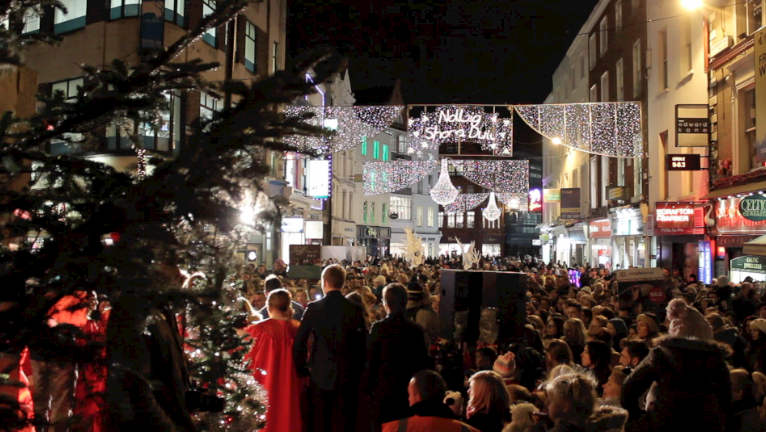
    Spirits were high on Thursday as crowds from all over came out to see the annual turning on of Grafton Street’s Christmas lights.

    This year saw X Factor star Melanie McCabe, along with the Dublin football team lend a hand as the lights were switched on at 5.30pm outside St. Stephen’s Green shopping centre.

    Jack White MC’d the event, while the Hallelujah gospel choir led the crowds in some festive singing.

    A popular tradition among Irish people, previous years have seen Canadian popstar Michael Bublé and Downton Abbey actor Allen Leech do the honors of lighting up one of Ireland’s most iconic streets.

    This occasion marks the beginning of the illumination of Dublin City as Henry Street is set to be lit up on the 17th of November, while O’ Connell Street’s lights will be turned on next Sunday.

    Reporter: Claire Mc Quaid

    Video: Jonathan Crean

    Production: Kay Cairns