Tag: women in sport

  • The Silent Champions: The Battle for Recognition in Women’s Sport 

    The Silent Champions: The Battle for Recognition in Women’s Sport 

    By Áine McKeon

    Despite breaking records, winning major championships and motivating generations, female athletes are frequently overshadowed by their male counterparts.  

    Even though their performances on the field, court or track are on par with that of any male athlete, they are continuously having their achievements overlooked, and they receive an unfair level of media coverage, sponsorships and public attention that they receive. 

    This not only downplays these women’s achievements, but also worsens the restrictions that have prevented women up until now from participating in sports, especially in Ireland. This begs the question; why does this disparity still exist today, and how can it be improved?  

    Media Coverage: The Numbers Tell the Story 

    According to a survey carried out by HerSport, gender disparity in sports participation is only at 3.4% in Ireland, with women’s sporting efforts receiving only 6% of the country’s sports media coverage. Despite this, the study also found out more than 60% of Irish people wanted to see women’s sports receive greater attention. 

    Less than 20% of all sports coverage goes to women’s sports, according to the Irish Sports Monitor. This coverage is typically saved for high-profile events, or when women’s teams accomplish something remarkable, such as their historic 2022 World Cup run. 

    In contrast, regardless of the importance of their games or events, male sports receive regular and everyday attention. For instance, the success of local or national women’s teams frequently remains unrecognised until they hit a significant milestone, while men’s club football or rugby matches frequently receive media focus.  

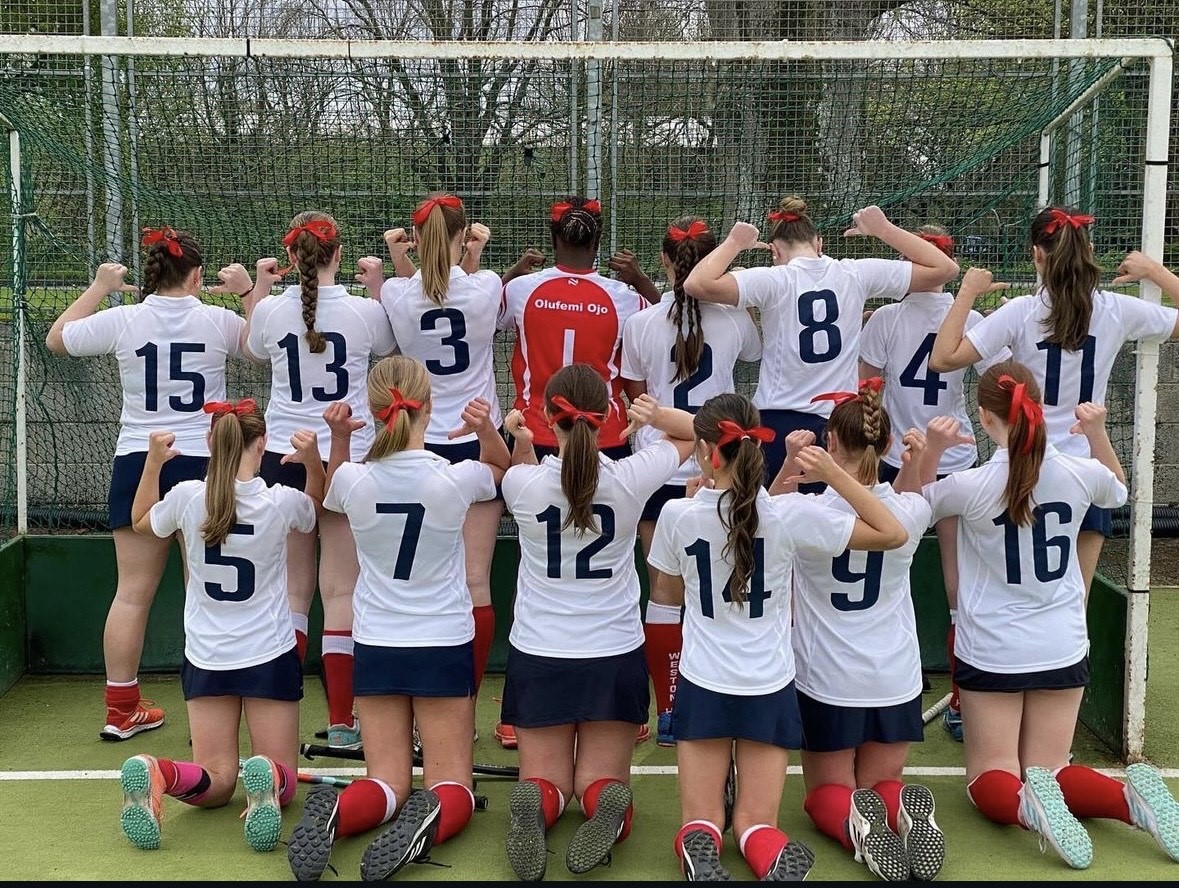
            Photo credit: Weston Hockey Club 

           “We have to do more to be seen”

    Síofra Ní Dhonghaile, a midfielder for Lucan’s Weston Hockey Club, has been playing the sport for several years. Despite her team’s consistent effort at a senior level, she feels the media attention that their achievements receive is only a fraction of what the men’s hockey team get. 

    “Even when we do win a major championship, it’s nothing more than a little headline in the occasional publication – but when compared to the men, it’s disappointing,” she admitted. “We seem to have to put in twice as much effort just to get noticed, I’ve seen my male counterparts receive attention for much less.” 

    Many Irish female athletes in a variety of sports feel the same as Ní Dhonghaile. Women’s sports are frequently confined to smaller portions and are only highlighted during significant international achievements, while men’s sports like hurling and Gaelic football receive hours of coverage throughout radio, television, and print media. 

    TheCity.ie spoke to Brian Percy, who has been coaching both men and women’s field hockey teams for over a decade now.  

    “To be honest, the gap is pretty clear,” he said. “Even for smaller matches, our men’s team receives significantly more media attention than the women’s team, who may win a major tournament and yet not garner a lot of buzz. The ladies put in just as much work, if not more, which is frustrating.” 

    Women’s sports lack sponsorship, which creates an endless cycle whereby companies are reluctant to make investments when there is no media attention, female athletes find it difficult to gain recognition. When the Irish women’s soccer team went public with their complaints in 2017, it became apparent that they were forced to share kit bags and change in airport restrooms. While improvements have since been made after their strike, sponsorship and money are still major problems 

                 Photo credit: Maynooth University Volleyball team via Trisha Zaragoza 

    Despite the challenges, there are signs that change is on the horizon, and the media is slowly starting to catch up.  Sports such as volleyball are mainly female dominated, although more male teams are forming. 

    Kildare native, Trisha Zaragoza, plays volleyball for Naas Cobras, Maynooth University and Valkryies. 

     “I’ve been playing since I was 11, for nearly 10 years now, because volleyball is a female dominated sport in Ireland I haven’t felt left out – although there are many male teams beginning to form,” Zaragoza said. 

    “Regardless of gender, sport to me is my outlet, my way of blocking out reality and stress. I’ve made many friends through volleyball and that’s been the most rewarding part for me,” she added. 

    What needs to happen next? 

    Experts, campaigners, and female athletes all concur that prioritising funding for women’s sports should begin with equitable access to sponsorship opportunities, more regular media coverage, and structural adjustments within sports organisations. 

    “We’re not asking for favors, we’re asking for fairness,” said Zaragoza. 

    Irish female athletes will continue to work hard, achieve success, and break down barriers even if the spotlight isn’t always shining as brightly on them as it should be. 
  • Irish women weightlifters snatch the spotlight

    Irish women weightlifters snatch the spotlight

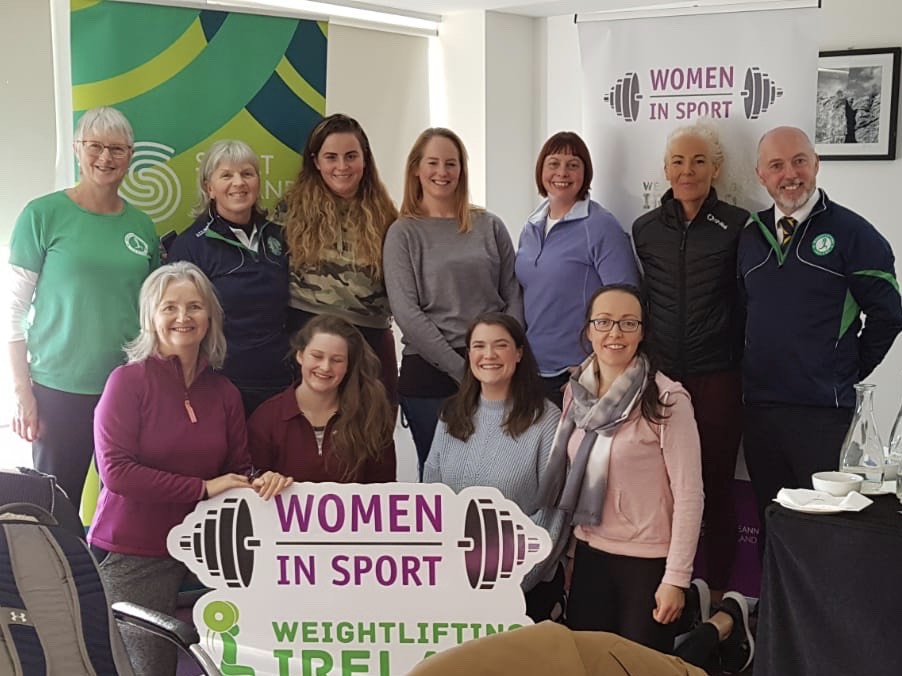
    The Women in Sport Initiative by Sport Ireland was supported by Weightlifting Ireland. Change is afoot? Front row: Ruth Deasy, Isla Hoe, Aoife Bradley, Sinead Ryan. Back row: Lucy Moore, Phil Brown, Freya Hammer, Kathy Boylan, Shauna Kane, Kate Meenan, Peter Carroll (General Secretary, Weightlifting Ireland). Photo courtesy of Harry Leech

    There’s no doubt about it – weightlifting is a traditionally male dominated sport.

    Women’s weightlifting didn’t even make it into the Olympics until 2000, while their male counterparts had been there since 1896.

    Thankfully, times are changing. 

    “We have a very high representation of women within the sport in Ireland. There are instances of people being sexist – there’s that underlying bias that exists in people, but I don’t think that’s inherent to the sport,” says Isla Hoe, an amateur weightlifter and self-described ‘casual competitor’.

    “Within weightlifting in Ireland, the issues are wider systemic issues that have to be addressed by society as a whole, rather than just the sport,” Hoe explains. “Where I would see sexism appear is in how non-weight-training people perceive females within weight training sports.”

    There are undoubtedly stereotypes held about women weightlifters – one only has to go to the more misogynistic corners of the internet to find people babbling about how weightlifting makes women ‘look like men’ – apparently a fate worse than death.

    The instagram account You Look Like A Man is a wild read – each post chronicling typical sexist comments made to women in sports, including weightlifting.

    “Certainly, for an older generation of women, there’s been a misconception that lifting weights is dangerous or it’s not feminine – all of these are very outdated ideas,” says Harry Leech, the head coach and co-founder of the Dublin-based weightlifting club, Capital Strength.

    “There’s no reason why women shouldn’t do weightlifting, so we thought: what are the potential barriers going to be to them? It’s important that you have that welcoming environment and ethos, then the only other barrier is investing in equipment that’s suitable for men and for women,” he says.  

    “Where I would see sexism appear is in how non-weight-training people perceive females within weight training sports”

    Isla Hoe

    Traditionally, 20-kilo bars were the standard in weightlifting clubs and gyms. These best suited men’s, on average, larger hands. Women are, on average, smaller, and have smaller hands than men, which required the introduction of the 15-kilo bar. It weighs less simply because it’s narrower – making it easier to grip for female weightlifters.

    From left to right: Isla Hoe, Aoife Bradley, and Sorcha Brady at Capital Strength gym. Image courtesy of Harry Leech

    Initially, these bars were very expensive and as the sport was so small in Ireland, clubs didn’t have enough money to invest in much equipment. As the sport was male dominated, it was more common for clubs to purchase 20-kilo bars than 15-kilo ones. However, now the market has opened up and the equipment is more affordable.

    Currently, Leech reckons that Capital Strength owns more 15-kilo bars than 20-kilo ones.

    “It’s always been important to have a very equal, very welcoming, very gender-neutral aspect to our club,” Leech says.

    “I think some people have an image of a weightlifting gym in their head, and it’s guys in leotards, making crude, offensive jokes, and lifting heavy weights – but that couldn’t be further from the truth,” he tells me.  

    Clubs like Capital are a fantastic addition to weightlifting in Ireland, however, there are still issues that have to be dealt with.

    “The sport needs to encourage more women’s coaches and women’s officials now. They are coming through, but it’s probably something that’s going to take time to get to the point where it should be,” Leech says.  

    “If you can’t see it, you can’t be it,” says Dr Lucy Moore, a masters athlete, and athletics and weightlifting coach who feels that positive representation for women is an important factor in creating equality.

    “There are very few women coaches at senior level, and if you want to be it, you have to see it. It’s the same issues in the professional world, why don’t women go forward for promotion? Why are women underrepresented on boards?

    “Women tend to hold themselves back – and that’s not just in weightlifting,” Dr Moore explains, suggesting that issues of imposter syndrome and a lack of confidence plague women in sport.

    “I think some people have an image of a weightlifting gym in their head, and it’s guys in leotards, making crude, offensive jokes and lifting heavy weights – but that couldn’t be further from the truth”

    Harry Leech

    “Sport also tends to operate at very un-family friendly hours,” she continues.

    “You’re expected to do things at weekends and the evenings, and to travel. That’s grand when you have a partner at home who will do anything that needs to be done, but traditionally, it’s the man who is going out while his [female] partner stays at home. You only have to look at the pressures people are under at the moment with Covid – who’s doing the lion’s share of the home schooling, trying to keep the house running, and working from home?” Dr Moore explains.

    Fortunately, things are taking a turn for the better.

    “It’s very recently in weightlifting that women came to be referees in any significant numbers, but it is improving, there has been a specific drive to get more women involved in these roles,” Dr Moore says, who has been involved in programs specifically intended to train female weightlifting referees.

    “It’s going in the right direction, but it just needs to push on.”

  • Ireland fall but women’s rugby continues to rise

    Ireland fall but women’s rugby continues to rise

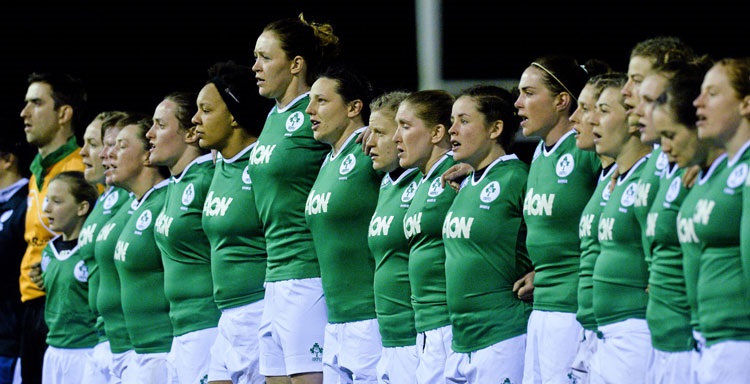
    Ireland’s women may not have won this year’s Six Nations championship, but they proved themselves as a force to be reckoned with. Sarah Harford went to their last match to find out more about this team, and the perception surrounding women’s sports.

    (more…)