The women’s Six Nations had only an eighth. of the average television viewership of the men’s ix nations in 2025, according to the Central Statistics Office’s Women and Men in Ireland hub. This statistic shows a lack of engagement with women’s rugby from the Irish public. However, when compared with previous year’s statistics, it seems that this might be a positive trend for women’s rugby.
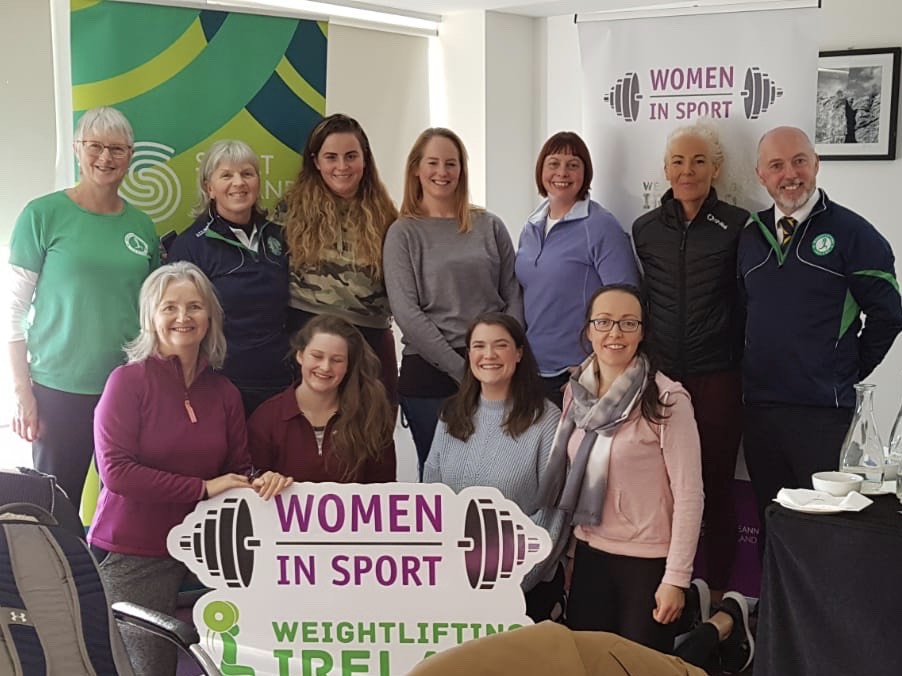
The Women in Sport Initiative by Sport Ireland was supported by Weightlifting Ireland. Change is afoot? Front row: Ruth Deasy, Isla Hoe, Aoife Bradley, Sinead Ryan. Back row: Lucy Moore, Phil Brown, Freya Hammer, Kathy Boylan, Shauna Kane, Kate Meenan, Peter Carroll (General Secretary, Weightlifting Ireland). Photo courtesy of Harry Leech
There’s no doubt about it – weightlifting is a traditionally male dominated sport.
Women’s weightlifting didn’t even make it into the Olympics until 2000, while their male counterparts had been there since 1896.
Thankfully, times are changing.
“We have a very high representation of women within the sport in Ireland. There are instances of people being sexist – there’s that underlying bias that exists in people, but I don’t think that’s inherent to the sport,” says Isla Hoe, an amateur weightlifter and self-described ‘casual competitor’.
“Within weightlifting in Ireland, the issues are wider systemic issues that have to be addressed by society as a whole, rather than just the sport,” Hoe explains. “Where I would see sexism appear is in how non-weight-training people perceive females within weight training sports.”
There are undoubtedly stereotypes held about women weightlifters – one only has to go to the more misogynistic corners of the internet to find people babbling about how weightlifting makes women ‘look like men’ – apparently a fate worse than death.
The instagram account You Look Like A Man is a wild read – each post chronicling typical sexist comments made to women in sports, including weightlifting.
“Certainly, for an older generation of women, there’s been a misconception that lifting weights is dangerous or it’s not feminine – all of these are very outdated ideas,” says Harry Leech, the head coach and co-founder of the Dublin-based weightlifting club, Capital Strength.
“There’s no reason why women shouldn’t do weightlifting, so we thought: what are the potential barriers going to be to them? It’s important that you have that welcoming environment and ethos, then the only other barrier is investing in equipment that’s suitable for men and for women,” he says.
“Where I would see sexism appear is in how non-weight-training people perceive females within weight training sports”
Isla Hoe
Traditionally, 20-kilo bars were the standard in weightlifting clubs and gyms. These best suited men’s, on average, larger hands. Women are, on average, smaller, and have smaller hands than men, which required the introduction of the 15-kilo bar. It weighs less simply because it’s narrower – making it easier to grip for female weightlifters.
From left to right: Isla Hoe, Aoife Bradley, and Sorcha Brady at Capital Strength gym. Image courtesy of Harry Leech
Initially, these bars were very expensive and as the sport was so small in Ireland, clubs didn’t have enough money to invest in much equipment. As the sport was male dominated, it was more common for clubs to purchase 20-kilo bars than 15-kilo ones. However, now the market has opened up and the equipment is more affordable.
Currently, Leech reckons that Capital Strength owns more 15-kilo bars than 20-kilo ones.
“It’s always been important to have a very equal, very welcoming, very gender-neutral aspect to our club,” Leech says.
“I think some people have an image of a weightlifting gym in their head, and it’s guys in leotards, making crude, offensive jokes, and lifting heavy weights – but that couldn’t be further from the truth,” he tells me.
Clubs like Capital are a fantastic addition to weightlifting in Ireland, however, there are still issues that have to be dealt with.
“The sport needs to encourage more women’s coaches and women’s officials now. They are coming through, but it’s probably something that’s going to take time to get to the point where it should be,” Leech says.
“If you can’t see it, you can’t be it,” says Dr Lucy Moore, a masters athlete, and athletics and weightlifting coach who feels that positive representation for women is an important factor in creating equality.
“There are very few women coaches at senior level, and if you want to be it, you have to see it. It’s the same issues in the professional world, why don’t women go forward for promotion? Why are women underrepresented on boards?
“Women tend to hold themselves back – and that’s not just in weightlifting,” Dr Moore explains, suggesting that issues of imposter syndrome and a lack of confidence plague women in sport.
“I think some people have an image of a weightlifting gym in their head, and it’s guys in leotards, making crude, offensive jokes and lifting heavy weights – but that couldn’t be further from the truth”
Harry Leech
“Sport also tends to operate at very un-family friendly hours,” she continues.
“You’re expected to do things at weekends and the evenings, and to travel. That’s grand when you have a partner at home who will do anything that needs to be done, but traditionally, it’s the man who is going out while his [female] partner stays at home. You only have to look at the pressures people are under at the moment with Covid – who’s doing the lion’s share of the home schooling, trying to keep the house running, and working from home?” Dr Moore explains.
Fortunately, things are taking a turn for the better.
“It’s very recently in weightlifting that women came to be referees in any significant numbers, but it is improving, there has been a specific drive to get more women involved in these roles,” Dr Moore says, who has been involved in programs specifically intended to train female weightlifting referees.
“It’s going in the right direction, but it just needs to push on.”
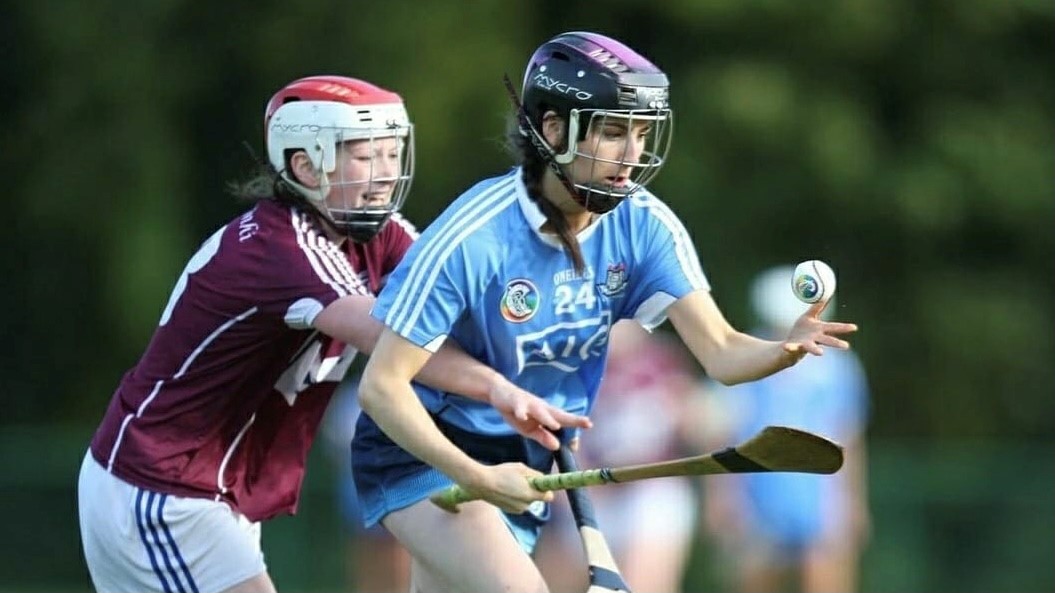
Julia Buckley in action for the Dublin senior camogie team. Photo by iLivePhotos.com
The sporting world is still, primarily, a man’s world.
While huge strides have been made in recent years, there is still a long way to go before men and women have equal opportunities across all sports.
The lack of coverage of both ladies Gaelic football and camogie is stark when compared to their male counterparts and is “completely disproportionate to the amount of women playing sport”, says Niamh Tallon, founder of HerSport.ie – a website aimed at promoting women’s participation in sport and increasing the coverage they receive.
Despite women making up 40.8% of the people playing sport in Ireland, they receive just 6% of the total sports coverage, says Tallon.
“You can’t say it has to be 50/50. That isn’t fair either, and you’re going to have different weeks where there’s more news in women’s sports or more news in men’s sports, but it’s not even near comparable at the moment.”
Of course, this disparity has quite a knock-on effect for female players.
While male Gaelic football and hurling players can enjoy the many perks that come with the high profile – it can be a lot harder for women to achieve the same status.
“It’s about making them feel supported; making them feel that they have the opportunities and showing them what the possibilities are”
Niamh Tallon
“It’s important to make sure that female athletes get the recognition that they deserve because there is such a knock-on effect when it comes to sponsorship opportunities, the funding that they get, the level of support, and also trying to inspire the next generation,” says Tallon.
This is what websites like HerSport.ie and others have been set up to do: highlight the high level of talent in women’s sports and provide role models for the next generation of All Stars.
It is important that young girls understand that there is a space for them in the sports world.
Other organisations are working to increase people’s awareness of ladies Gaelic games.
20×20.ie have created a campaign, ‘If she can’t see it, she can’t be it‘, that aims to increase media coverage and participation at all levels of women’s sports.
Campaigns such as this one are extremely important as a way of improving overall attitudes to women in sport, among both men and women.
“It’s about making them feel supported; making them feel that they have the opportunities and showing them what the possibilities are,” says Tallon.
The drop-out rate among young girls from their local clubs is noticeably higher than it is among boys, with many people believing that this is due to the fact that the world of sports is still primarily a male-dominated scene, with women in sport not being taken as seriously as men.’s.
40.8% of participants in sport are women while almost 3 in 5 Irish people WANT more visibility for women in sport.
Tallon believes it is down to individual clubs to do everything they can to foster the talent in the young female athletes.
“Sometimes it’s as simple as having someone at their level that can talk to them. You know if you have a coach who is a 40 or 50-year-old man coaching a 14-year-old Gaelic team then there’s no link. Sometimes it might just take someone who is 20 and a girl to be there and just interact and help out here and there.”
Dublin senior camogie player, Julia Buckley, believes that many of the issues faced by women in camogie and Gaelic football are down to lack of funding, and stresses the importance of providing expenses for players that may have to travel long distances for training or games.
“No one should be out of pocket for playing for their county,” she says.
“Women don’t always have the same access to facilities, media exposure and funding that their male counterparts do. Fixing this would definitely bridge the gap tremendously.”
This particular issue was recently brought to the forefront when the ladies Gaelic football semi-final switched venues twice and had the throw-in brought forward at the last minute.
The venue was initially changed in order to accommodate a training session for the Limerick hurlers, and then again due to frost. The situation was made worse when the throw-in was brought forward to ensure the game would be finished in time for the upcoming men’s game between Tipperary and Mayo.
“These are things that just wouldn’t happen in the men’s game. If we’re going to talk about equality, there has to be some substance to it, not just pushing things under the carpet like they’re not happening. They are happening – every year. The ladies game is probably one of the fastest growing sports in the country, but we don’t seem to have the officialdom in the association that can keep pace with it and to bring the professionalism that is required,” Galway manager Tim Rabbitt told the Irish Times.
Instances like this where women’s sports are forced to play second fiddle to men’s sports are common. But there are also inequalities within women’s sport itself.
With campaigns such as Lidl’s Level The Playing Field campaign promoting ladies Gaelic football, camogie is being left behind.
Lidl ‘level the playing field’ ad campaign highlights the gender-disparity in Irish sports
Buckley believes that camogie’s lack of profile is a major issue, and that low participation rates are “an obstacle that its counterparts don’t have to deal with”.
While there has been a shift in attitudes in recent years, and more is being done to improve the coverage of camogie as well as ladies Gaelic football, there is still a long way to go.
Ex GAA president Liam O’Neill recently told Off The Ball AM that bringing the GAA, LGFA, and Camogie Association under the one organisation would go a long way towards bridging the gap between men’s and women’s sports.
Whether this actually comes into fruition remains to be seen.
However, the future for both ladies Gaelic football and camogie is bright:
“It’s certainly exciting to see what’s going to happen in the next while, and it’s important to appreciate where we’ve come from. But we also need to make sure we are always pushing on for a more balanced sporting world for girls,” says Tallon.
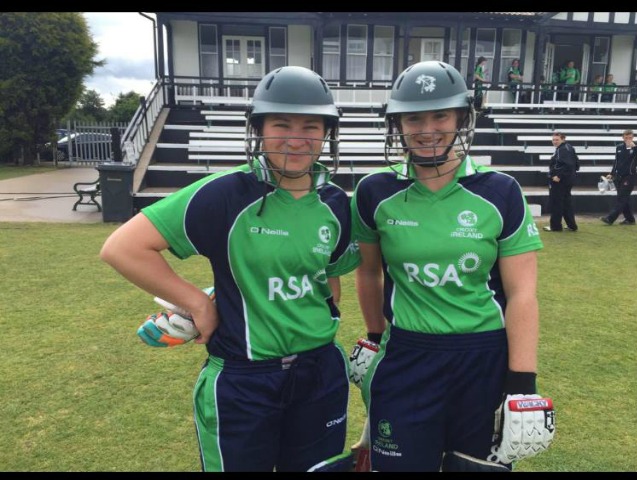
Irish international cricketer Shauna Kavanagh sat down with The City’s Niamh Haskins to discuss her views on women’s sport coverage.
When a woman steps into the ring, pitch or court representing her club or country, it is one of the most exciting yet challenging tasks she can face. In the history of sport, some of the most incredible success stories came from brave and talented women, who not only faced competition from their opponents, but also battled sexism, discrimination and the constant struggle to be treated equally.
Gender bias is an issue that occurs in many areas of life, but it is extremely prevalent in sports coverage. Internationally, only 10 per cent of all sports coverage is of women’s sports. The most recent Irish analysis by the Dublin Sport and Recreational Council revealed that only 78 out of 6,503 sports photos taken by six national newspapers over a 15 day period were of women. The same study showed that over a five year period only 3% of sports photos were of women.
While coverage is limited, Irish international cricketer Shauna Kavanagh emphasised the need to recognise the improvements that have been made.
“The lack of coverage obviously hinders the growth of women’s sport. But it’s important to recognise the strides that have been made over the years in terms of women’s sport in the media. Coverage has definitely improved. When I was younger I don’t remember many female athletes in the media, all my sporting heroes were male athletes,” she explained.
“Obviously there is still greater coverage of men’s sport in the media and I suppose the impact of that would be young girls wanting to play with boys rather than girls, because they may feel it holds a greater importance.”
Despite the same levels of skill, competition, training and dedication, Shauna argues that there is a lot more interest in male dominated sports.
“The interest in women’s sport is on an upward curve and hopefully it will just continue to grow and result in more coverage. I don’t think so much in the way it’s represented in the media, but rather just the frequency of it … it’s not that the calibre of female athletes has changed, just the publicity [for] them,” Kavanagh explained.
“Generally, I think when female athletes are represented in the media, it’s done so in a positive way. It’s just not done enough. I think Irish women’s sports can assist each other in promoting women’s sports in Ireland, which will keep encouraging the coverage of it.”
Having represented Ireland on more than one occasion, Kavanagh said, “The Irish media has covered events that we have been involved in quite well. Our most recent series against Australia in August was live streamed. This was such a boost for women’s cricket in Ireland. It was the first time Cricket Ireland had broadcast any of the women’s games and it was a great success in terms of the number of views and coverage which it secured.
“It’s Cricket Ireland’s intention to stream as much cricket as possible going forward which will increase the awareness of the game, along with the exposure of women’s cricket within the media.
“The Women’s T20 World Cup Qualifiers are being held in Thailand in November and hopefully the Irish media will get on board and ensure there is plenty of media surrounding the event,” she concluded.



You must be logged in to post a comment.