
Tag: work from home

  • Technology causing differing opinions on working from home

    Technology causing differing opinions on working from home

    2020 has seen a severe change in how we work and more importantly, where we work. People have had to learn how to use new technologies as working from home and remote working has become essential to keep people safe against the coronavirus. Eibhin Kavanagh talks to workers about the pros and cons of working from home.

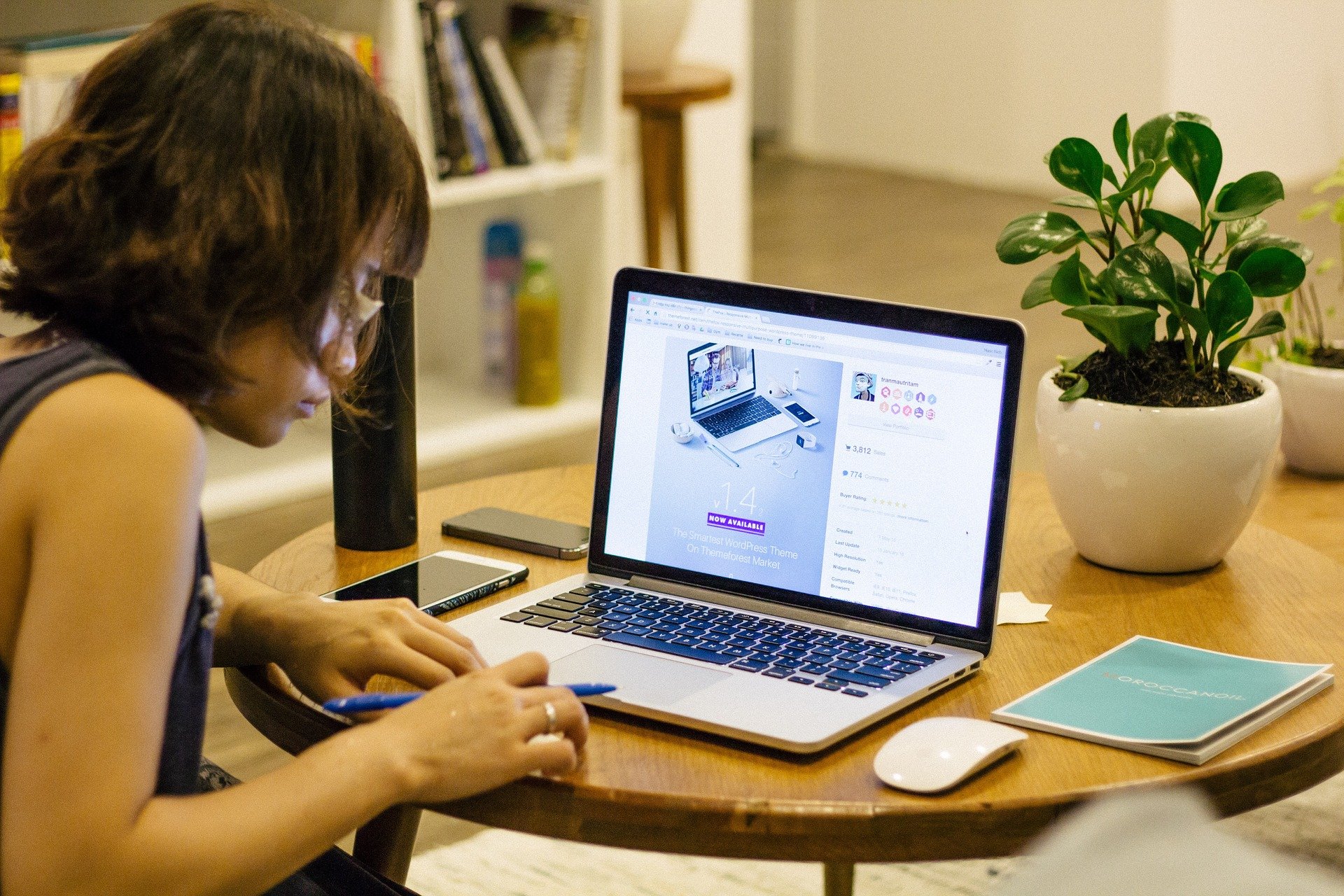
    Love it or hate it, we’ve all experienced a change in how and more importantly where we work this year. Image: Pixabay

    Working from home is a term we are all more than familiar with by now. However, it is something that people certainly have differing opinions on.

    Ireland had one of the highest numbers of people working from home during the coronavirus pandemic, according to labour market think tank Eurofound.

    The technology available to people at home is different than what is available in a work environment. Reliance on your own internet or own equipment can either be something that can be very beneficial or can negatively impact your work.

    TheCity.ie talked to a number of people on this topic to see if working from home works for them.

    Emma Read, UJ Virtual assistant and Mailchimp partner, has been working from home for five years now. “Working from home is much better for my mental health and wellbeing,” Read said.

    As Read is self-employed, she supplies her own technology to work from home, so there has not been an adjustment from office work to working from home. “I choose my own hours, work in my own space, whether that be at my desk, on the sofa or in the garden in summer. There are no office politics to deal with, no commute,” Read said.

    “Why anyone would choose to work any other way beats me!” she said.

    Izzy Glazzard is a marketing manager for Reworked. Glazzard has also seen the benefits of working from home and how employee attitudes have also adapted to this major change in how we work.

    “Working from home has really challenged my ability to manage my time and multiple projects consecutively,” Glazzard said.

    There have also been reductions in businesses expenses, such as office maintenance that has benefitted Glazzard and Reworked.

    “I think overall I’ve gained some really valuable skills. I can see a shift in employed attitudes towards working from home  as they realise the mental health benefits for staff,” Glazzard said.

    Lisa Murphy, who works for a research organisation, has been working at home since the pandemic began in March.

    “It’s extremely frustrating,” Murphy said. Her work provided her with the technology required to work from home, but her internet can cause issues and even something like the weather can affect it and impact her work.

    “The thing for me is just more about how isolating it can be you know, I’m very social,” she  said. Murphy only started her job 3 months before lockdown and feels like working from home has impacted her ability to get to know her colleagues.

    Mhairi Cochrane, 22,  co-founded her own business, Lilypads. Cochrane graduated from University amongst the “Covid chaos” and went straight into working from home on her own business.

    “I would say the main challenge was trying to learn a lot of new skills and use a lot of new online tools,” Cochrane said.

    “I have never been that tech savvy, also when my Wi-Fi at home has a mind of its own and regularly just crashes. Me and my co-founder were not even able to meet and help each other out, we had to just chat over Zoom.”

    Working from home has not been Cochrane’s favourite experience, as someone who “loves being around people and someone who hates boring routine”.

    Living in a family home when working from home has also added to Cochrane’s opinion on working from home.

    Going walks and mixing up where I work in the house – floor, kitchen table, standing chester drawer make-shift desk – has definitely helped,” Cochrane said.
  • Working remotely doesn’t always mean working from home

    Working remotely doesn’t always mean working from home

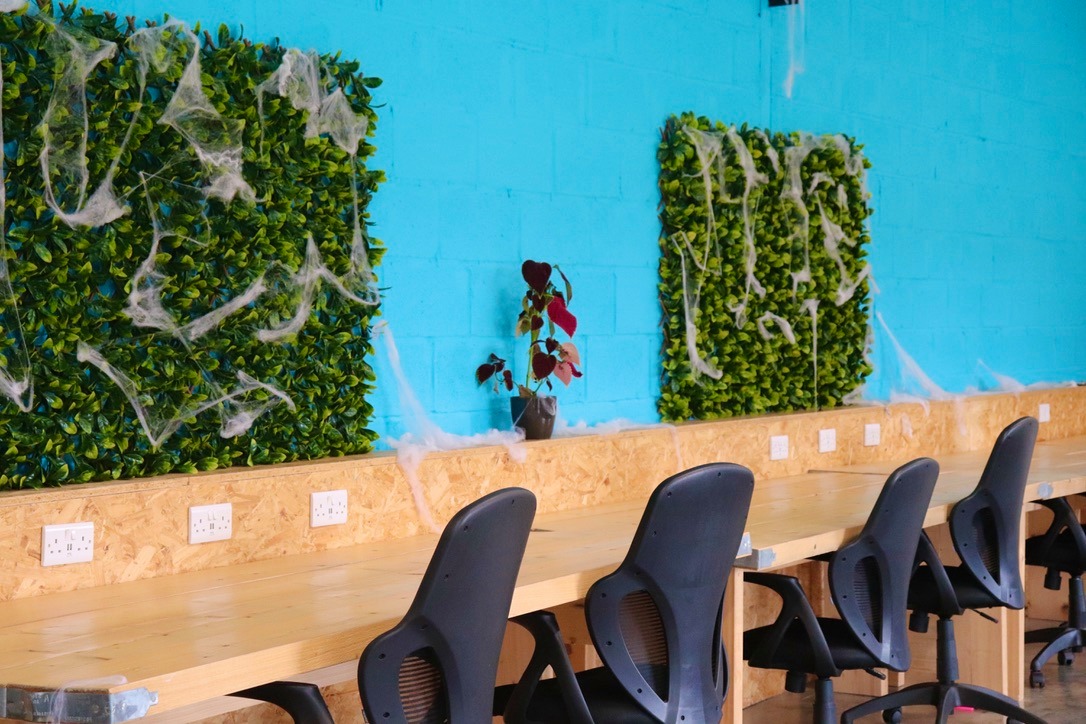
    Co-working spaces were a growing phenomenon before the pandemic hit here in Ireland and now that more people are abandoning the office they could be the perfect place for people who want to draw a line of separation between their work and home lives. Megan O’Brien explores how they’ve fared throughout the crisis. 

  • What does Budget 2021 mean for self-employed taxi drivers?

    What does Budget 2021 mean for self-employed taxi drivers?

    Last week, the Government announced details of the 2021 budget. Some of the new measures announced were in support of the self-employed and those working from home. Dhai Almutairi spoke with a taxi driver directly impacted by these changes.

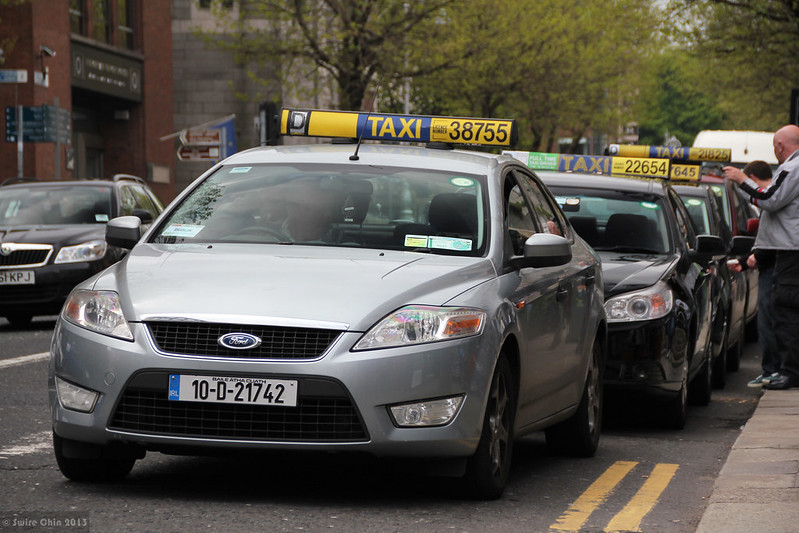
    Photo taken by Canpac Swire. Sourced from Flickr.

    Budget 2021 is one of the most anticipated budgets in the State’s history, aimed at tackling and recovering from the fallout of two major issues, the COVID-19 pandemic and Brexit.  

    The public waited to see how the Government would respond to the hard challenges facing the State. 

    The Government declared that people who are self-employed would be able to request the Pandemic Unemployment Payment (PUP) while taking up intermittent work.  

    This measure is directed at supporting those who have been severely affected by the pandemic. This means that self-employed workers will be able to obtain a total of €480 a month, or €120 a week without losing the payment. 

    Self-employed workers are set to also benefit from increased tax credits announced in the budget.

    The income tax credit for self-employed workers is set to rise by €150, and this increase will also retroactively apply for 2020. The income tax credit will be included in line with the PAYE tax credit that workers can claim. 

    While many self-employed workers welcomed the new measures, others, including taxi drivers, believe these measures are not enough.  

    Adedayo Odin, a Nigerian-Irish taxi driver in Dublin, has been a taxi driver for over ten years.

    He talked to TheCity.ie about the changes taxi drivers have experienced since the lockdown and the new remarks announced in Budget 2021. 

    “As a taxi driver myself, we need support from the state at this incredibly difficult time; with the budget announced last week, things became more difficult and unbearing,” said Odin. 

    “As a taxi driver myself, we need support from the state at this incredibly difficult time; with the budget announced last week, things became more difficult and unbearing.” 

    This pandemic has deeply affected the taxi industry with the collapse in tourism and the complete absence of sporting and social activities. Many taxi drivers are “struggling to make ends meet now,” he said. 

    “I expected that there would be particular measures aimed for taxi drivers in the budget meeting; we need support, and the government should put special support in place for this sector,” he said.

    The Budget 2021 included some new measures that could negatively affect taxi drivers.

    The Finance Minister, Paschal Donohoe announced many new changes last week, including an increase in fuel prices. 

    Green vehicle tax breaks and higher VRT rates for polluting vehicles were some of the other measures to impact commuters nationally. 

    “Many of my taxi driver friends and others are working in the pandemic at low payment in important services, driving frontline workers to their jobs and from their jobs, and yet we weren’t specifically mentioned in the budget,” said Odin.

    Over the past ten years, Odin had always parked his taxi at the end of Grafton Street, along with many other taxi drivers. Due to the introduction of level 5 restrictions this week, this street will be quiet and they will see far less customers. 

    “I miss this part of my morning so much, things started to look good in the summer, but I couldn’t see my friends and hang out with them like before,” expressed Odin.

    “My mother lives with my family and me, and being a taxi driver does scare me that I might infect her,” he said.

  • Students facing more challenges than ever studying from home

    Students facing more challenges than ever studying from home

    With restrictions now in place once again across the country, many third level students are struggling with the effects of working from home. According to research by the Commission for Communications Regulation,  3 in 5 people are seeing an increase in their home broadband use since March 1st, showing that internet connections and computer software are some of the issues facing students this semester, not to mention the social side of starting college. Amber Baxter spoke to a number of students about their challenges.

    Photo taken by Bonjkarn Thanyakij. Sourced from Pexels.

    Emily Ní Aogáin, a first year NCAD student, spoke about her bad connection and how it is affecting her. “Personally, I have found my internet connection has not been the best recently, typically, as soon as I need it most. 

    “Sometimes on Zoom call lectures it might buffer briefly, but I will have missed out on something the lecturer may have said that could have been important. I feel like we’re all at a disadvantage working from home and online rather than physically on campus. It’s very different and not as beneficial especially for practical courses because you can’t do your work as well at home as you would on campus.”

    Ní Aogáin also mentioned how the Level 5 restrictions will further this: “Level 5 restrictions are going to affect my college experience quite drastically as I’ve only started in first year at NCAD, in a practical course.

    “It’s been hard settling in and trying to make friends while socially distanced with masks on, because you can’t see their faces and the conversation is so muffled. I feel like we’re missing out on so many opportunities that come up in the first year of college – it’s not the same and it’s understandable but it still sucks.”

    Isobel Lord, a final year Technological University Dublin student said: “In regard to Wi-Fi connection, my one has held up so far. I haven’t actually had any issues with it surprisingly. There was a girl in my course last year who did not have a computer so she literally couldn’t do online college.

    “There are some people in my course and my friends who share bedrooms with people, and both of them could be doing college work at the same time, which can be very stressful. Then there are people who have family members who are working from home as well so when they’re all on the same Wi-Fi box at the same time they’re going to be running slow.”

    Lord also mentioned how online work is affecting her studies on a practical course. “I’m doing an arts degree which is 99% practical work,” she explained. “We did hands on stuff in class such as how to manipulate fabric and stuff like that which is not really something you can teach through a computer screen.

    “I also had to complete window displays which usually would be all practical, but we had to move online to Sketch Up, which is a graphic design program and became a huge part of our course working from home. I cannot even tell you how difficult, stressful and pressurizing that was. My grades went down so much [working from home] because I’m someone who is terrible with computers and tech.”

    “My grades went down so much because I’m someone who is terrible with computers and tech.”

    Teresa Walsh, a third-year student, spoke about how her mandatory attendance is being affected as a result of working from home. “I’d say overall my internet connection is fairly average but because I live slightly out of the town it’s not always the best,” she said. “If there are many people at home working from home or doing schoolwork, I find then the internet wont work. This is obviously very annoying if my class won’t load as I have mandatory attendance so at times, I feel like I’m at more of a disadvantage than my friends.”