
In a rapidly evolving digital landscape, understanding the intersection of technology and society is more crucial than ever.
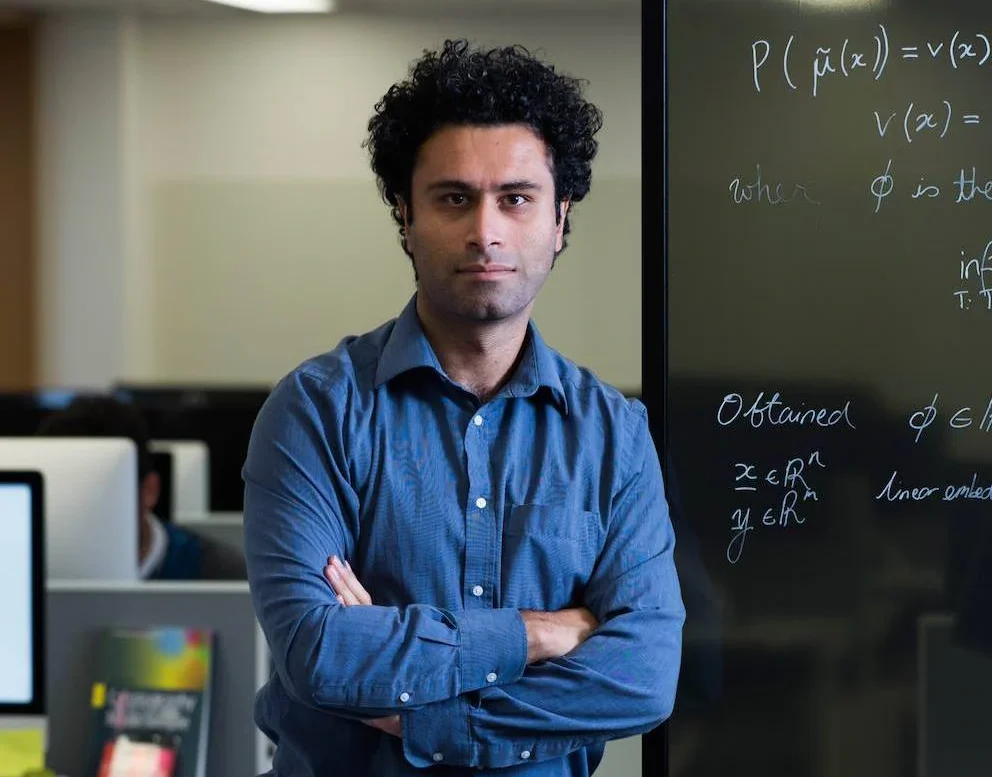
Professor Taha Yasseri, the inaugural Workday Professor of Technology and Society at Trinity College Dublin (TCD) and Technological University Dublin (TU Dublin), is at the forefront of this research. With a background in computational social science and a career spanning physics and sociology, he brings a unique interdisciplinary perspective to one of the most pressing conversations of our time: how technology—especially artificial intelligence—shapes our lives, governance, and public discourse.
In this interview, Professor Yasseri discusses his vision for the new TCD-TU Dublin joint center, the challenges of interdisciplinary research, the societal impact of AI, and Ireland’s role in global tech ethics.
Professor Yasseri sees his new position as an opportunity to bridge the gap between technology and society through three main pillars: research, education, and public engagement.
“This is the first academic chair in Ireland focused on technology and society, which is very exciting,” he says. “I have a few things in mind. First of all, I need to create a community around this theme. Second, I’d like this chair to have a very active community engagement aspect to it because technology and society—particularly AI—are crucial topics that impact everyone. I see this role as an opportunity to foster public discourse on technology, particularly AI. And finally, there is of course the research and education which is the basic part of any academic role.”
A central aim of the Workday Professorship is to create a platform where experts from different disciplines—engineering, sociology, ethics, and policy—can come together. “The knowledge we generate in the center is crucial. When studying issues like technology and society, or human-machine interactions, interdisciplinary research groups are essential,” he explains.
As an expert in computational social science, Professor Yasseri is well aware of the transformative nature of AI. When asked about its impact on human behavior and decision-making, he acknowledges the complexity of the question.
“It’s a billion-dollar—perhaps even trillion-dollar—question. While there’s no simple answer, one thing is certain: this will be a disruptive technology,” he says. “It’s going to change the way that we do things and it’s going to change us and of course we are going to affect the technology and the way it is developing and it is regulated.”
He points out that while AI as a concept has existed since the 1950s, recent advances have made it an undeniable force in society. “With large-scale datasets and the digitalization of society, AI has rapidly become an undeniable reality with profound effects on our lives.”
With AI becoming increasingly pervasive, ethical considerations are paramount. According to Professor Yasseri, academia has a crucial role to play in guiding the ethical deployment of AI.
“Our role is to generate knowledge and not only to shape and inform policies but also to feed back to the industry to people who are making these technologies and who are developing these services,” he says. “This is uncharted territory—we are dealing with intelligent actors that are not human. We’ve never encountered this in society before. It’s like we have landed on a new planet. We do need to understand how this new planet works. What is the physics of it? What is the chemistry of it? And of course, what is the social science of it? Without having this knowledge, we cannot regulate it, and we cannot further develop it.”
When asked if Ireland is prepared for the societal impact of AI, Professor Yasseri provides a nuanced response.
“Ireland is about as prepared as any other EU country, let’s say. That doesn’t mean that we are overly prepared,” he admits. “I cannot say that we are prepared but it’s not because we live in Ireland. I think the situation is more or less the same everywhere. I mentioned EU countries because the European Union is one of the entities that started looking into regulation and we had the AI Act last year. So, in a way we are ahead of the rest of the world but that doesn’t mean that we have done much.”
He draws a historical comparison to electricity regulation. “When electricity was first commercialized, it remained unregulated for nearly 50 years in the US. And in those 50 years, lots of people lost their lives, lots of buildings burned down to the ground. Hopefully, this time it doesn’t take us that long to come up with safety regulations and ways of minimizing the harm and maximizing the benefit of this new technology.”
Building an interdisciplinary research center dedicated to technology and society is no small feat. Professor Yasseri is already facing some of the challenges associated with this endeavor.
“We are developing the center and recruiting new researchers, including a community engagement officer. The main challenge is finding people willing to work across disciplines in an interdisciplinary culture,” he says. “Unfortunately, academia is structured around disciplines. You become a physicist, you become a computer scientist, you become a social scientist. Someone like me—holding a PhD in physics yet a professorship in sociology—often surprises people. It’s not the norm, but there is a need for experts from different areas to come together to study issues around technology in a holistic way.”
PhD students and postdoctoral researchers will be integral to the success of the center. “They are really the engine, and they are really the powerhouse of our research center because they are the ones who are developing the research ideas and conducting the research,” he explains. “Of course, they’ll be supervised by me and other faculty members, but they’re truly the brain and muscle of the center.”
His own research interests lie in AI’s role in collective intelligence. “How AI could be a member of our teams or how AI could manage human teams. These are the topics that I’m looking into,” he notes. “How AI can improve our collective intelligence.”
Given that the professorship is funded by Workday, a major tech company, there are natural questions about balancing academic independence with industry involvement. Professor Yasseri addresses these concerns directly.
“Of course, my chair is named after Workday, which is a private company, and this might be misleading to some individuals who are not familiar with this sort of named chair. But that doesn’t mean Workday tells me what to do,” he clarifies. “Workday has donated a sum of money to the universities, and that’s the extent of their involvement. There is nothing beyond that, which gives me all the freedom I need as an academic. Nevertheless, we do share a vision, and our informal conversations will mutually benefit us, Workday, and the broader industry sector.”
Public engagement is another key pillar of his work. “Unfortunately, there is a lot of myth around AI. For many of the members of the public, the main resource for information about AI is Hollywood, and I can tell you Hollywood is not very accurate in describing how AI will shape and form our societies,” he says. “We have to demystify AI for the public.”
Professor Taha Yasseri’s work at TCD and TU Dublin represents an important step in bridging the gap between technology and its societal implications. By fostering interdisciplinary research, engaging with industry and policymakers, and promoting public understanding, he hopes to ensure that technology serves humanity—rather than the other way around.
You must be logged in to post a comment.