Author: Áine Hennessy

  • Growing up blind

    Growing up blind

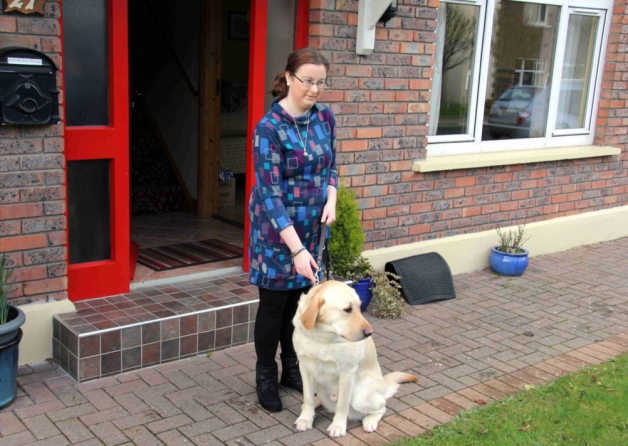
    Noreen McInerney and her guide dog Huw
    Noreen McInerney and her guide dog Huw

    Growing up blind was, for the most part, a positive experience for one young Irish woman. 21-year-old Noreen McInerney from Portlaoise has been severely visually impaired since birth. At times, however, she has found it ‘pretty stressful’ to do the normal things, like getting around by herself or having a social life. The City’s Áine Hennessy spoke to Noreen about what it is like to be blind, and how her life has changed for the better since she received the gift of her guide dog Huw.

    “Before I got Huw (pronounced “Hugh”), it was pretty stressful, and I hadn’t much of a social life. I had to use a long cane the whole time to get around and it was a lot harder to do things. People weren’t as obliging and friendly, because they didn’t understand I suppose. But now they see Huw and they know.”

    The Irish Guide Dogs Association provided their services to a record number of 197 people in 2013, all of which are free of charge. Noreen McInerney was one of them.

    Huw, who is a cross between a labrador and a retriever, was trained for two years in the Irish Guide Dogs Training Centre in Cork. Noreen also received three weeks of free training at the centre last August, where she learned how to use and care for Huw. As a guide dog, Huw adapts very well to new environments, and Noreen commands him using different words and actions.

    Huw has brought a sense of normality to Noreen’s life. She’s says she is more independent now and has made many new friends.

    “The reaction I’ve been getting from people is a lot more positive and friendly, and I’m treated more like a normal person now. He’s changed my life, I’ve so many new friends now because of him. I can go out for food, to the cinema, the hairdressers, the beauticians, everywhere!” she said.

    Like any dog, Huw is quite playful and attention-seeking, and very clever. Noreen likes to bring him for long country walks.

    “I have to be careful because he goes mental if you bring him near ducks.

    One day I was walking down a narrow path, and he kept pushing me in with his paw. My mother was laughing, she said ‘He’s not going to let you walk down this path’. He’s very protective over me.

    Although Huw’s training was fully funded by the Irish Guide Dogs Association, the expenses don’t end there. All expenses after training are paid for by the dog owner. The lifetime cost of a guide dog, including training, is €38,000.

    “Once I got him I had to pay for everything. I buy a 20kg bag of food for him for €50 and that lasts about six weeks. Then he has his visits to the vet, for checkups and vaccinations. And I had to get him insured too,” she said.

    More than 80 per cent of Irish Guide Dogs’ income comes through voluntary donations, and it costs more than €4.8 million annually to run the organisation and meet the demand for services. Noreen wants to give something back to the Irish Guide Dogs Association, for providing such an excellent service, and changing her life.

    “I got involved in fundraising for the Irish Guide Dogs Association as soon as I got Huw. The both of us sit outside various different places, like Dunnes Stores, collecting now. I really want to give something back,” she said.

    The Irish Guide Dogs Association was delighted to announce that, while working in a difficult financial climate, it managed to raise more money through fundraising in 2013 compared with 2012. CEO Padraig Mallon said that the charity exceeded expectations.

    “This is a great achievement in challenging times and it is reassuring that the public continue to value our work and trust us to deliver much-needed services for people who are vision impaired. With the public’s support and the hard work of our team we aim to train 240 people in 2014 and looking further ahead we have a target of training 266 people in 2016. The targets are not just a number. What is really important is 266 lives we will change for the better,” said Mr Mallon.

    While there is a long waiting list of people who desperately need a guide dog, Mr Mallon said that all of the dogs must be trained to very exacting standards so that they can be a life-changing resource for the recipient.

    “Training is a lengthy process and every single dog that goes through the programme is trained to the highest possible standards. The fact that all of our services and supports are offered free of charge means that anybody who needs our services can get them without having to worry about whether they can afford it,” he said.

    With her new-found independence, Noreen hopes that she can finally pursue a career in sports massage therapy.

    “I’m hoping to start a level 7 Fetac course in sport massage soon, and it’s for two years. I’m really interested in massage and alternative therapies and medicines, and I love helping people.

    “I cannot emphasise enough how much Huw has changed my life. He plays such an important role in being my guide, and I wouldn’t be able to achieve all of this without him.”
  • The Little Things

    The Little Things

    What are the little things you do when you’re down? For some people it may be going for a walk, or chatting to a friend. 

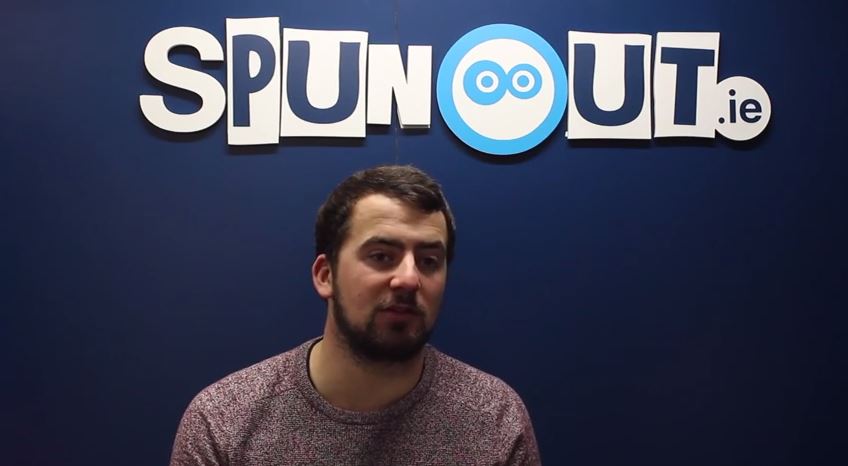
    The Little Things campaign was set up by the HSE’s National Office for Suicide Prevention to get people talking about the little things they do to feel well again. The City’s Áine Hennessy and Alison O’ Hanlon spoke to young Cavan goalkeeper Alan O’ Mara, who is an advocate for positive mental health, about his involvement in the campaign. They also went out onto the streets of Dublin to ask people what little things they do to pick themselves up when they are feeling down. Check out the video here…

  • The best European city breaks

    The best European city breaks

    This slideshow requires JavaScript.


    Whether it be a romantic getaway or some fun and frolics with friends, Christmas is the perfect time to book a weekend break in one of Europe’s cities. Stuck for ideas of where to go? Check out The City’s pick of the best European destinations, with plenty of tips and things to do.

    Munich

    “Ein bier, bitte!” First things first, when that plane hits Bavarian soil, you must grab one of Munich’s famous beers. The touristy thing to do is head to the Hofbräuhaus, where you can enjoy some Hofbräu beer together with some traditional Bavarian music and dance. The “Haus” also serves food, however, you can save your euros and grab much nicer bratwurst, or german sausage, on the street. Some other famous beers to try include Augustiner, Paulaner and Löwenbräu. If you’re not a big beer fan, then order a radler, a combination of beer and lemonade that’s very popular in Munich.

    The Englischer Garten, German for “English Garden”, is a large public park in the centre of Munich, and is well worth the stroll. Kleinhesseloher Lake in the centre offers a nice seating area where you can grab a beer and some food, or bring your own picnic. Release your inner child and take a peddle boat out on the lake.

    For the boys and their toys, a trip to the BMW museum is a must. The museum is basically a gigantic showroom, displaying hundreds of models of cars, jeeps, and bikes for you to climb into, or on. Grab a selfie in that red convertible you’ll never afford! If it’s any consolation, the museum is free. Good of them, eh?

    Munich lies at the foot of the Alps, so if you have the time then hop on a train and head to the mountains. Neuschwanstein Castle, “the fairytale castle”, is one of Bavaria’s finest castles to visit, with breath-taking views of the surrounding countryside. With a nice hike up, you’ll even get some exercise in to work off that beer belly.

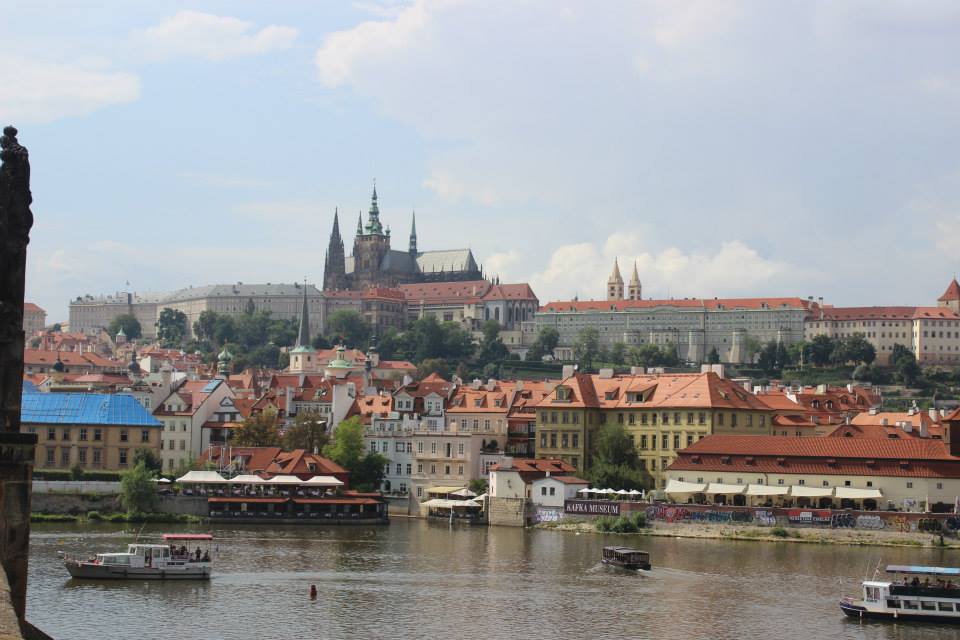
    Prague

    If you’re looking for a laid back getaway and some “good vibes”, then the Czech Republic’s capital Praha is for you. Old Town Square is a charming place to start, located in the heart of the city. The architecture by itself is pretty eye-catching, but the combination of buskers, street traders and al fresco dining in this cobbled square provides a great atmosphere.

    Known for its great partying scene and never-ending supply of absinthe, nights out in Prague can get quite interesting. For those of you still yolo-ing out there, it is a must that you attempt one of Prague’s infamous pub crawls. The night starts off with a t-shirt and an unlimited supply of some lethal alcoholic mixture that’s impossible to drink. After a quick pep talk with your friends you’ll put your head down and drink it anyway, because hey, it’s free. Nobody really knows what happens after this, and then if you’re lucky you might even wake up in your own hostel the next day. Happy days!

    If you can manage it, a visit to the John Lennon Wall is sure to reach into your soul and soothe your hangover blues. Bring a marker and spread your words of love on the wall, every inch of which is covered in colourful graffiti from the thousands who have come to visit before. Some guy is sure to be killing it on his guitar singing “Let It Be” or “Hey Jude”, so chill out and enjoy!

    Overlooking the entire city is Prazsky Hrad, or Prague Castle, which is well worth the visit for the views alone. If you’re a history head, then the castle is the best place to learn about the city’s past. Some parts are free to the public, if you just want to have a stroll around the castle grounds, while others require a ticket for entry.

    If you’re wondering what that sweet, sugary scent is in the air as you wander around the streets of Prague, then that would be Staroceske Trdlo – a chewy, cinnamon, sugar-dusted pastry. Just try it. That is all.

    Krakow

    Referred to by locals as “The Real Capital of Poland”, Krakow is definitely underestimated when it comes to European cities. Post-communism, it has developed into a cultural hub of excellence – from its exciting galleries and museums to its quality cafés, pubs and nightlife. The Main Market Square, an impressive 10 acre square in the centre of Krakow, is one of its main attractions. Here you will find Kosciol Mariacki, otherwise known as The Church of the Virgin Mary, where a trumpet player sticks his head out of the tower on the hour, every hour, and gives you a tune. Legend has it that during the 2012 UEFA Euros the English team, who stayed in a hotel just around the corner, blamed the trumpet player for their poor performance on the field as he “kept them up all night”.

    If you like walking tours, then Krakow is top of the list when it comes to witty guides and really interesting tours. A general tour of the city will bring you to all the main attractions, such as the hilltop castle. The tour of the Jewish Quarters is particularly interesting. Like most central European cities, Krakow is steeped in WWII history, and this tour gives a great insight into the life of the Jewish community in Krakow during Hitler’s reign. Famous sites include the old ghetto walls and Schindler’s Factory. The infamous Auschwitz Concentration Camp is just an hour outside the city, and buses travel to and from the site daily.

    Budapest

    Hungary is famous for its thermal springs with healing qualities, and you cannot visit Budapest without a few hours of relaxation in the baths. Also known as ‘The City of Baths’, Budapest has many different medicinal baths to try. Széchenyi is one of the best public baths, with both indoor and outdoor baths of varying temperatures and medicinal qualities. If you’re visiting during the summer months then hit it’s famous bath parties for a night you’re guaranteed (not) to remember.

    If you fancy some sightseeing, Gellért Hill offers the best view of Budapest and the river Danube, which separates Buda on the west bank from Pest on the east. Dohány Street Synagogue is Europe’s largest synagogue, and marking the border of Budapest’s Jewish Ghetto, is steeped in the history of World War II. If you take a stroll along the banks of the Danube on the east, you will come across ‘The Shoes on the Danube Bank’, a Jewish memorial for the jews who were ordered to take their shoes off and line up to be shot into the river. You will also find Hungary’s impressive Parliament Buildings along this bank.

    The hop-on hop-off City Bus Tour is probably the best way to get around to all of the attractions in Budapest, working out about €20, the buses come around every 15 minutes and will save you time and walking on a short city break. As for the local cuisine, you cannot leave without trying some traditional goulash, a perfect dish for a cold winters day.


  • Confidence, culture and childcare – The challenges for women in politics

    The Cabinet Women: Minister Heather Humphreys (left) pictured with An Tánaiste Joan Burton, Justice Minister Frances Fitzgerald and Education Minister Jan O'Sullivan
    The Cabinet Women: Minister Heather Humphreys (left) pictured with An Tánaiste Joan Burton, Justice Minister Frances Fitzgerald and Education Minister Jan O’Sullivan

    “I am proud to be one of four women serving at the Cabinet table – that’s the most number of senior female ministers we’ve ever had. Having a female perspective at the decision making table is essential.”

    Heather Humphreys is one Irish woman who has been very successful in her political career. The Fine Gael TD for Cavan Monaghan was appointed Minister for Arts, Heritage and the Gaeltacht earlier this year, taking the number of women who sit around the cabinet table to four.

    “I don’t think I suffered as a result of my gender, but the challenge of balancing home and political life is definitely a considerable difficulty for female politicians.  I have two daughters in their early 20s, but if my children were younger, I’m not sure how I would manage my current workload.

    “I juggled a full time job with being a county councillor when my children were young, which was tricky. I consider myself lucky, however, to have gotten involved in local politics when my children were young and by the time I got into national politics, the girls were that bit older. Timing was on my side,” she said.

    The 2014 local elections saw a historic number of women elected in Irish politics. Female representation in Local Government is now at 21 per cent, an increase of 5 per cent since 2009, and two newly elected TDs have brought the number of women in the Dáil to 27, the highest ever number. Despite this, the gender gap remains substantial, and women are still inadequately represented in politics.

    Minister Humphreys, who is a former mayor of Monaghan, believes that confidence has a big part to play when it comes to women putting themselves forward.

    “I think often women don’t have the confidence. They certainly have the ability, but confidence can be an issue. The long hours, the level of travel if you are a rural TD, and the notion that politics is an old boys club would also have put women off entering politics in the past.

    “However, while the hours involved will probably always be pretty intensive, I think the culture within politics is changing. Politics is a professional endeavour these days, the game has entirely changed, thankfully,” she said.

    The Irish Government has introduced gender quotas for the next general election, which will ensure at least 30 percent of candidates on ballot papers are female. Minister Humphreys says that she is in favour of this move.

    “Fine Gael has been specifically targeting female candidates and has professionalised its approach to recruiting women to run for the council or for the Dáil.

    “While I have always believed in the best person getting the job, regardless of gender, I am in favour of the gender quotas because they will help to give voters a better choice,” she said.

    Fine Gael TD Marcella Corcoran Kennedy 2
    Fine Gael TD Marcella Corcoran Kennedy

    Fine Gael TD for Laois Offaly Marcella Corcoran Kennedy came from a political family, so she was familiar with the work involved when she set out on her political career as councillor.

    “My father and grandfather were councillors on Offaly County Council. When my father announced his retirement in 1999 the local party organisation asked me to consider seeking the nomination. I had been active in my father’s campaigns over the years and so it was not a big step for me to consider,” she said.

    Despite her political background, Marcella said that she faced “all the usual challenges” as a female candidate.

    “Organising the campaign, the financial side and childcare, was challenging. Also, overcoming prejudices from some people who were of a generation that saw politics as a male preserve.

    “There are comparatively few Irish female role models available to women due to a traditionally male dominated political culture. The anti-social and anti-family working hours, and the sometimes confrontational aspect of the role may not appeal to women,” she said.

    Marcella offers her advice to women who may be interested in becoming involved in politics.

    “Join a political party, take on officership positions, consider running as a candidate, help out other people in their campaigns, connect with groups such as ‘Women for Election’. Political parties are under pressure to find female candidates for the next General Election as a result of gender quota legislation,” she said.

    Independent TD Clare Daly
    Independent TD Clare Daly

    Clare Daly, an Independent TD for Dublin North, became politically active as student in DCU, when she became president of the students union. She then joined the Labour Party, where she became actively involved in the campaign for the Divorce Referendum in 1986. Clare believes that fewer women are involved in politics than men because they “have more sense”.

    “The manner in which politics is structured in this country means that very little is achieved, certainly at local level, with the decisions being very much top heavy and top down, rather than bottom up.

    “I think women feel that they achieve greater results by being organised on the ground in their communities. Also, with very few role models of woman in politics, it isn’t seen as a natural path, although that is obviously changing,” she said.

  • Reilly ready for second test in Hurling/Shinty International Series

    Reilly ready for second test in Hurling/Shinty International Series

    Laois Goalkeeper Eoin Reilly in action during the All-Ireland Senior Championship. Picture credit: Diarmuid Greene/SPORTSFILE
    Laois Goalkeeper Eoin Reilly in action during the All-Ireland Senior Championship. Photo: Diarmuid Greene/SPORTSFILE

    Scotland shocked Ireland with a 3-14 to 2-8 win in the first test of the Senior Hurling/Shinty International Series this weekend. However, the Irish team have won the series for the past four years in a row and remain hopeful ahead of the second test. Goalkeeper Eoin Reilly talks to The City’s Áine Hennessy about this minority sport and what it involves.

    “I got involved in hurling/shinty when I was 19 years old back in 2009. I was selected as first-choice goalkeeper for the Irish U21 team ahead of three others from across the country,” he said.

    The Laois native is representing Ireland for his sixth year running in the International Series, a game which combines hurling with the traditional Scottish sport of shinty.

    The 24 year old, who is the current senior hurling goalkeeper for Laois, explains the basic rules of hurling/shinty.

    “The main difference between hurling and shinty is that you can’t catch or kick the ball. A player usually scores goals only, but the International Series uses a scoring system consisting of both goals and points.

    “We use hurls and the Scottish boys use shinty sticks. Their game is very skillful on the ground, whereas hurling is more skillful with high balls,” he said.

    The International Series is played on a home and away basis. The Irish team travelled to Scotland on Friday October 17, where they had a training session that day, followed by the game in Bught Park in Inverness on Saturday October 18 which was aired live on TG4.

    Eoin said that it was a great honour to play for his country, and is hopeful that Ireland will win their home game in Newry on October 25.

    “We have a strong team this year and all the lads are very skillful. The Scottish boys take it very seriously too. We’ve won it (the International Series) the past four years in a row but it has always been very close.

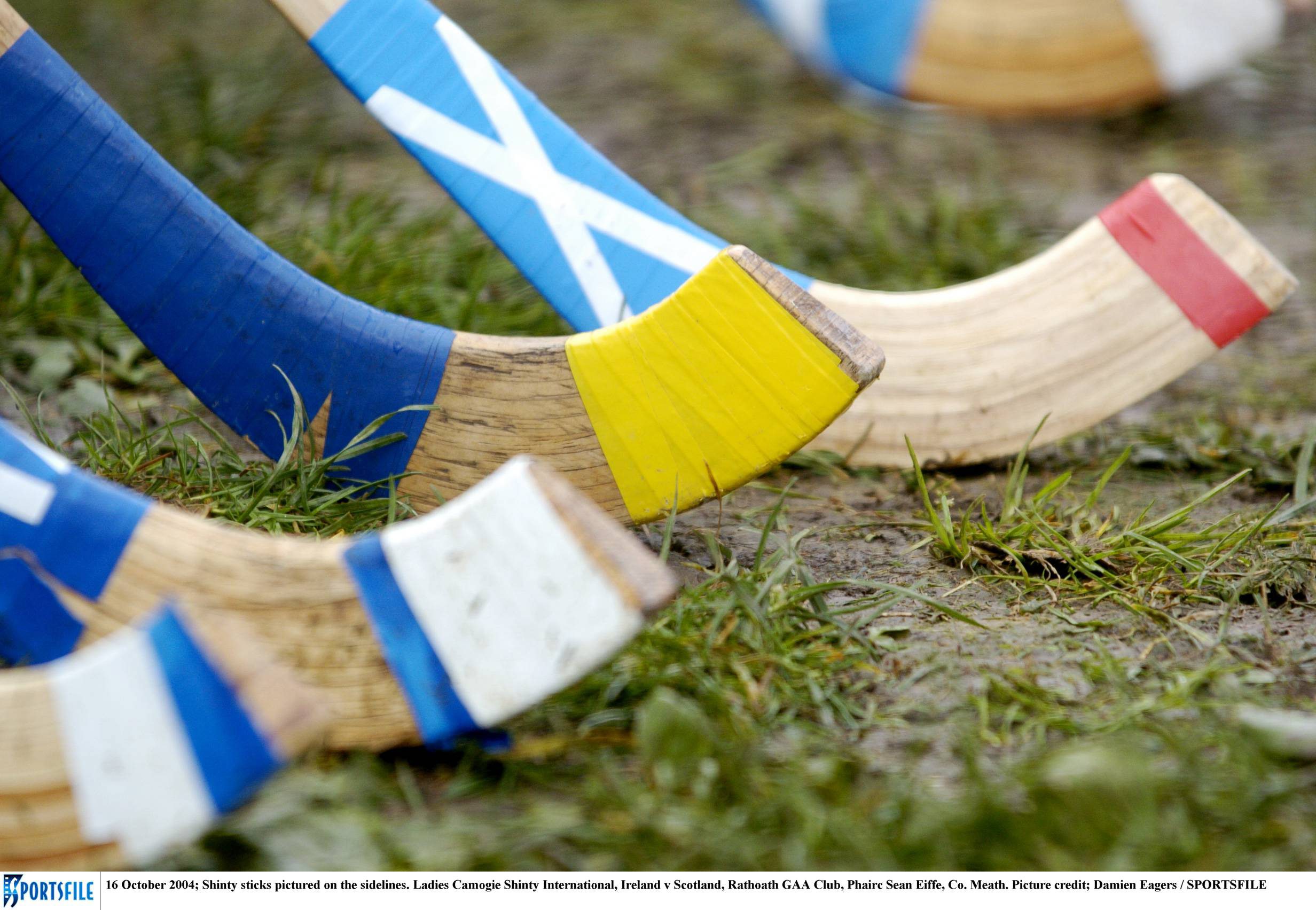
    Shinty sticks pictured on the sidelines. Picture credit: Damien Eagers/SPORTSFILE
    Shinty sticks pictured on the sidelines. Photo: Damien Eagers/SPORTSFILE

    “It’s not often that you get to play for Ireland, so it’s a great honour. The series is a date in my calendar that I look forward to every year,” he added.

    The Hurling/Shinty International Series gets little publicity in comparison to the Australian Rules Series. Eoin says the reason for this is probably centred around a lack of funding.

    “Shinty is a minority sport in Scotland. It’s only played in the Highlands. Aussie Rules on the other hand is a professional sport in Australia, so the funding for it is incredible.

    “As well as that the Irish Aussie Rules team is made up of an All-Star selection. In hurling/shinty, the team is made up of players from the so-called weaker hurling counties. Only a few players would come from the likes of Cork, Clare, Kilkenny and Tipperary,” he said,

    Around 2,000 spectators attended the first test of last year’s series in Scotland, a big crowd for shinty supporters in Scotland, and up to 3,000 attended the second test in Croke Park before last year’s Aussie Rules game.

    This year’s return game will take place in Newry on October 25 and will also be shown live on TG4. It kicks off at 5pm.