Author: Amy Grehan

  • I, Am Optimus Spine

    I, Am Optimus Spine

    second(R) versus third (L)
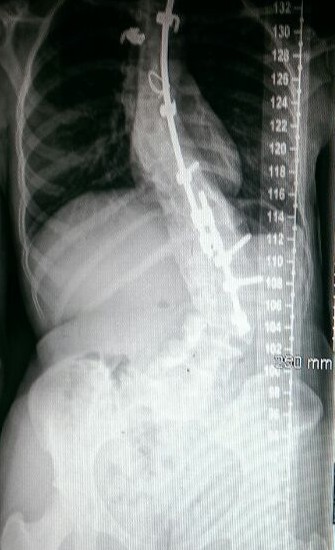
    At only 21, Niamh O’Donoghue has already had three spinal operations and nine epidurals. She, is optimus spine. This image shows the change to her spine over the years. (Image courtesy of Niamh O’Donoghue)

    Scoliosis is a disorder that affects less than two per cent of the world’s population. It causes the spinal cord to grow into an ‘S’ shape, rather than being straight. TheCity.ie’s Amy Grehan spoke to Niamh O’Donoghue about her experience with the condition.

    “I still remember the night before it happened: It was a warm Friday night in September 2006 and I was out playing football. I had done nothing out of the ordinary. The next morning I was getting into the shower and I stood staring at my scrawny body. Something just wasn’t right. My hip was elevated so high that my two feet couldn’t touch the ground together, I had a hump on my back, and I was completely lop-sided. In less than eight hours, my spine had gone from the normal curvature of less than 20 degrees to almost 80 degrees.

    “I was brought to Temple Street where even the doctors were baffled at how fast my spine had twisted around my body. My curve was so severe that surgery was the only option. I had no idea what was ahead of me. What killed me was that I could no longer take part in the things I loved – horse riding, dancing, and football. I had to give it all up.

    “Then the pain started to set in. I was in first year in an all-girls secondary school, and I didn’t want any unwanted attention. I had to use a bag on wheels to take the pressure off of my lungs (which I got horrendously bullied for), and I had to constantly carry cushions around with me.”

    Niamh on the morning of her first operation
    Niamh on the morning of her first operation (Image courtesy of Niamh O’Donoghue)

    My first surgery was due for April 11, 2007 in Cappagh Hospital. It was pretty routine surgery: I would have two titanium rods screwed into place on each side of my spine, which would straighten and support it. The rods would eventually fuse and act as one giant bone. Unfortunately the surgery went horribly wrong.

    “The surgeons performed an ‘awake test’ during the surgery where they subconsciously wake you up to check that you can still move your arms and legs. I could not. When the second rod was being screwed in, a major nerve was cut that controlled my motor censors. Miraculously, when the second rod was taken out I was able to move my legs again, but now I was left with one limp rod to support my spine that was being dragged sideways by gravity. On top of that, I had lost every ounce of blood and had to have several blood transfusions after bleeding out profusely. My parents and family were told to make ‘the call’ – something I only learned last year. Cappagh hospital didn’t have the facilities at the time to deal with my huge blood loss, so mid surgery the decision was made to transfer me to Temple Street where specialists were waiting for me.

    “Even though I was unconscious, I still remember hearing the sirens of the ambulance. The feeling of waking up was so surreal. My mam was beside me holding my hand telling me where I was. What was a routine operation turned into an 11 hour nightmare. I had three tubes in my mouth and I was hooked up to a ventilator. There were wires and drains and bags of clear fluid everywhere. My tiny hands were covered in sticky tape to keep all six needles in place, and I had to turn my neck a certain way to avoid the large needle that was sewn into an artery. Then there was the sickness. There is nothing worse than violently heaving with a massive fresh wound down your back.

    “But this was only the start of my journey. They don’t tell you about the aftermath of the operation, they just tell you that they will make you better. I had to learn how to walk again, how to sit, climb stairs- you name it. On top of it all I had to wear a Plaster-Paris cast that went around my torso for eight months. If ever I thought there was a hell I was living it then! The itch alone drove me crazy. I was totally dependent on other people, not to mention that I had to adjust to not being able to bend again. Recovery time was long but I looked forward to being a ‘normal’ teenager.

    “So life went on and a year later I was back enjoying life. However there was the constant threat that my spine would buckle under the pressure without the second rod; and then it did. It was the summer of 2010, I was on our trampoline when suddenly I heard an almighty crunching sound. I just got up and shook it off though. It wasn’t until that September when I was standing in my school uniform that my mam noticed my shoulders starting to tilt again. An x-ray confirmed my fears that the rod had snapped in half and revision surgery would be needed. So I was booked in again for April 2011. The thought of going through the whole process again put me through hell. You don’t just wake up and go in for surgery, there is months of planning ahead. You have to donate blood in case of emergency, you have to get your body ready to be cut open and tampered with, you have to take supplements; the list is endless.

    Again I learned how to walk, how to dress myself, how to wash myself; and again I was totally dependent on others around me. I missed out on a lot of teenager stuff like going out and going to parties– and that’s stuff that I will never get back.

    Niamh's spine after her second surgery (Image cortesy of Niamh O'Donoghue)
    Niamh’s spine after her second surgery (Image courtesy of Niamh O’Donoghue)

    “After my second surgery I really struggled with pain and required heavy pain medication, as well as getting spinal epidurals every few months. So far I have had nine epidurals, and they are excruciatingly painful; but it was worth it if it meant I was out of pain for a few weeks. These epidurals were not a long-term solution however, and have decreased my chances of conceiving later in life.

    “At 20, it was no longer up to my parents to make surgical decisions for me. I was struggling with daily tasks and was also developing other problems such as high blood pressure, on-going kidney problems, and sensitivity to pain killers. For me, epidurals were just not enough and I needed a more solid long-term solution. Scoliosis was affecting my social life dramatically, I was falling behind with college work, there were days when I couldn’t get out of the bed, and then in December 2013 I was forced to leave my job. This was a major turning point me for; I didn’t want to continue living in constant pain so I arranged a meeting with two surgeons.

    “They seemed confident that their plan would work; but there was a catch. I would lose any bit of flexibility that I had left and would only be able to bend using my knees; but they assured me that this would be my third and final operation, their confidence reassured both myself and my parents. So I was scheduled in for surgery on March 11, 2014; eight years after my first nightmarish surgery. Their plan this time was to totally fuse my spine from the top, right down into my pelvis; this would mean that my spine would become one giant mass of bone that would hopefully hold in place for the rest of my life. I was horribly frightened because of the huge risk of paralysis – I wasn’t ready to be wheelchair bound for the rest of my life.

    “The morning of surgery came. Saying goodbye to your loved ones and being wheeled into a room to be put asleep is a sinister feeling and one that I will never forget. I have grown such a strong bond with the nursing staff at Cappagh that they too shed a few tears for me; they know how much I’ve been through. Surgery started at 8am and I was awake and groggy by 5:30pm that evening. Morphine does strange things to the brain; you hallucinate and see things which can be a bit frightening. I was unbelievably stiff and swollen. A few days later a young doctor got talking to me, he was so excited about me having so much metal inside my body. He wheeled me over to a big monitor to show me my latest x-ray; the colour ran from my face. I couldn’t actually believe that this was MY body. It looked like something from a horror film.

    An x-ray of Niamh’s spine after her 3rd operation compared to an x-ray of her spine after her 2nd operation. This time, her spine was fused to her pelvis. (Image courtesy of Niamh O’Donoghue)

    “Recovery is hard this time, and I’ll continue to be in recovery until next year. I am required to put on weight in order to stop the large screws at the bottom of my back protruding through my skin. Daily tasks have become chores and I have had to totally adapt my life.

    You take the little things for granted in life; like being able to bend down and tie your shoes, or get into the bath or just be able to throw on a pair of heels and go out. It’s really not a great situation to be in, but there are people who are far worse-off than I will ever be.

    “I still am in a great amount of pain some days but I know it will get easier. Hopefully this is the end of a long road for me. I’m enjoying the time off however and I have a lot of time to focus on my passion – writing. I now work alongside Scoliosis Ireland to help and counsel other families who are going through what I went through. I had nobody to talk to during my surgeries and there was no counselling available for me or my parents.”

    Niamh learning how to walk again after her 3rd and final operation at Cappagh hospital. (Image courtesy of Niamh O’Donoghue)

    “I am currently fighting to get a medical card and register myself as a disabled person so I can become an independent adult, and eventually return to work. I do struggle with my appearance quite a lot now and I’m quite conscious of my new body shape, my scar, and my lack of ‘curves in the right places’. But my body has gone through enough and so I have to learn to love and respect it.”

    You can follow Niamh’s recovery on her blog here or find her on Twitter and Instagram @CulturedCuppa.


    “My body has gone through enough and so I have to learn to love and respect it” – Niamh is now getting on with her life and is a 3rd year journalism student in DIT. (Image courtesy of Niamh O’Donoghue)
  • But First, Let Me Take A Selfie

    But First, Let Me Take A Selfie

    According to Snapchat in May 2014, the app's users were sending 700 million photos and videos per day. (Photo: wikimedia commons)
    According to Snapchat in May 2014, the app’s users were sending 700 million photos and videos per day. (Photo: Wikimedia Commons)

    The public has been asked to think before taking out their mobile phones to capture pictures of horrific accidents.  the appeal follows the death of toddler on the way to kindergarten in Waterford.

    The Waterford City Fire Station had to make the plea on it’s Facebook page after a fatal road accident in the city centre claimed the life of two-year-old Daenerys Crosbie earlier this month.

    To think people could stand there and watch a toddler fight for her life, let alone video it on their mobile phones, turns my stomach and I’m sure many more around the country.

    On the city’s fire service’s Facebook status, they described how a few onlookers immediately reached for their phones to take “ghoulish, thoughtless and extremely distasteful” videos and images of the horrifying scene.

    The Facebook post read:

    “The crew at the scene were astounded by the number of people trying to capture the incident on their phones. This has been an ongoing trend for a number of years now, never better illustrated than at an RTA not too long ago where a man (In his thirties, not a teenager) crept up, phone poised and recording, to within ten feet or so of a car where we were trying to extricate the driver while the ambulance crew were treating him. The driver died en route to hospital.

    “Why do people do this? It’s ghoulish, thoughtless and extremely distasteful. We could fill this page with photos of the injured and dead that we see. But we don’t.

    “Sometimes it’s enough to know that horrible things happen without having to see them. Most obviously there’s the matter of respect for the dignity of the people involved and the desire of paramount importance to not add to the grief and anguish felt by their families and friends.

    “So if you know somebody who considers this kind of thing alright ask them to think about it just a little more.”

    To give my own honest opinion, I think the selfie craze in general has gone too far, so much so that the term is now featured in the Oxford Dictionary and the rumour mill has it that Kim Kardashian is set to release her very own 352-page selfie book, aptly named Selfish.

    For me, it was the ‘funeral selfie’ that really took the biscuit. This, I feel, needs no explanation and can be seen here.

    The selfie craze has become dangerous, even life threatening, as a Polish couple recently plunged to their deaths after trying to take a selfie on a cliff in Portugal. And that’s not all: in Manila, reports have said a 14-year-old student fell down her school stairs and died while she was trying to snap a selfie. In Mexico City, it was reported that a 21-year-old man died when he grabbed a gun with the intention of posing with it for a selfie and it went off, accidentally shooting himself in the head.

    And then to make matters worse, along came the selfie stick, which has somehow made it to Time magazine’s list of 25 best inventions of 2014.

    The selfie stick in action (Photo: Flickr)
    The selfie stick in action (Photo: Flickr)

    Mental health professionals are increasingly seeing patients who have become obsessed with and addicted to taking selfies.

    Psychologist Jason O’Callaghan of The D4 Clinic said “We now offer social media addiction therapy sessions in our D4 Clinic. It shows a narcissistic side to people’s personalities when they obsess about taking selfies. The odd one or two is fine but when people obsess about it to the extent to when they are not living in the now but living in the online world, then it becomes an issue. Only recently, cases have been seen where people have taken selfies at accidents instead of helping the people involved.

    “We also find a lot of anxiety and stress causes by online addiction where young people are more open to getting bullied online because it never stops, unlike school when they can leave and go home. They take what they see and what they read online to be factual, rather than understanding that some posts are fakes. Lies and options and views may be misunderstood. When it comes to body image, we often see celebrities posting images of themselves which are clearly photo shopped to make them look slimmer or fitter, then young people get upset with their own body image, not realizing the image they see is not really what the person looks like.”

    At some point, at least I hope, we will get tired of these “look at me” type photos bragging about how our lives are better than all the people’s we just sent the photo to. I don’t particularly want to see what you are having for lunch today; or how Starbucks spelt your name wrong on your overpriced coffee again; how many squats you did at the gym; or a video of a concert you’re at (all I can hear is screaming anyway). These are your experiences, enjoy the moment instead of watching it happen through your phone screen. Go out and actually live your experiences, if you wanted to watch it on your phone screen you could have stayed at home and saved your money.

    Let me take a selfie.. (Photo: Amy Grehan)
    Let me take a selfie..
    (Photo: Amy Grehan)
  • Christmas is coming and the geese are getting fat..

    Christmas is coming and the geese are getting fat..

    16 reasons why Christmas is already here:

    1. The Grafton Street lights are up and already switched on.
    2. Starbucks has its Christmas beverages out and the red cups are already here.
    3. Brown Thomas has revealed its Christmas windows.
    4. Jack Frost is well and truly nipping at our toes as temperatures dropped by an astounding 18 °C at the start of November, although they have bounced back a bit since.
    5. Miracle on 34th Street was on Sky2 last weekend.
    6. Tesco has their selection boxes on sale since August 31st.
    7. Coca-Cola has rolled out their annual Santa-themed products. Who wants to “Share a coke with Rudolph”?
    8. The John Lewis Christmas Advert is on TV screens now.
    9. Pennys are already running out of Christmas jumpers.
    10. The constant radio ads for booking your Christmas party have begun.
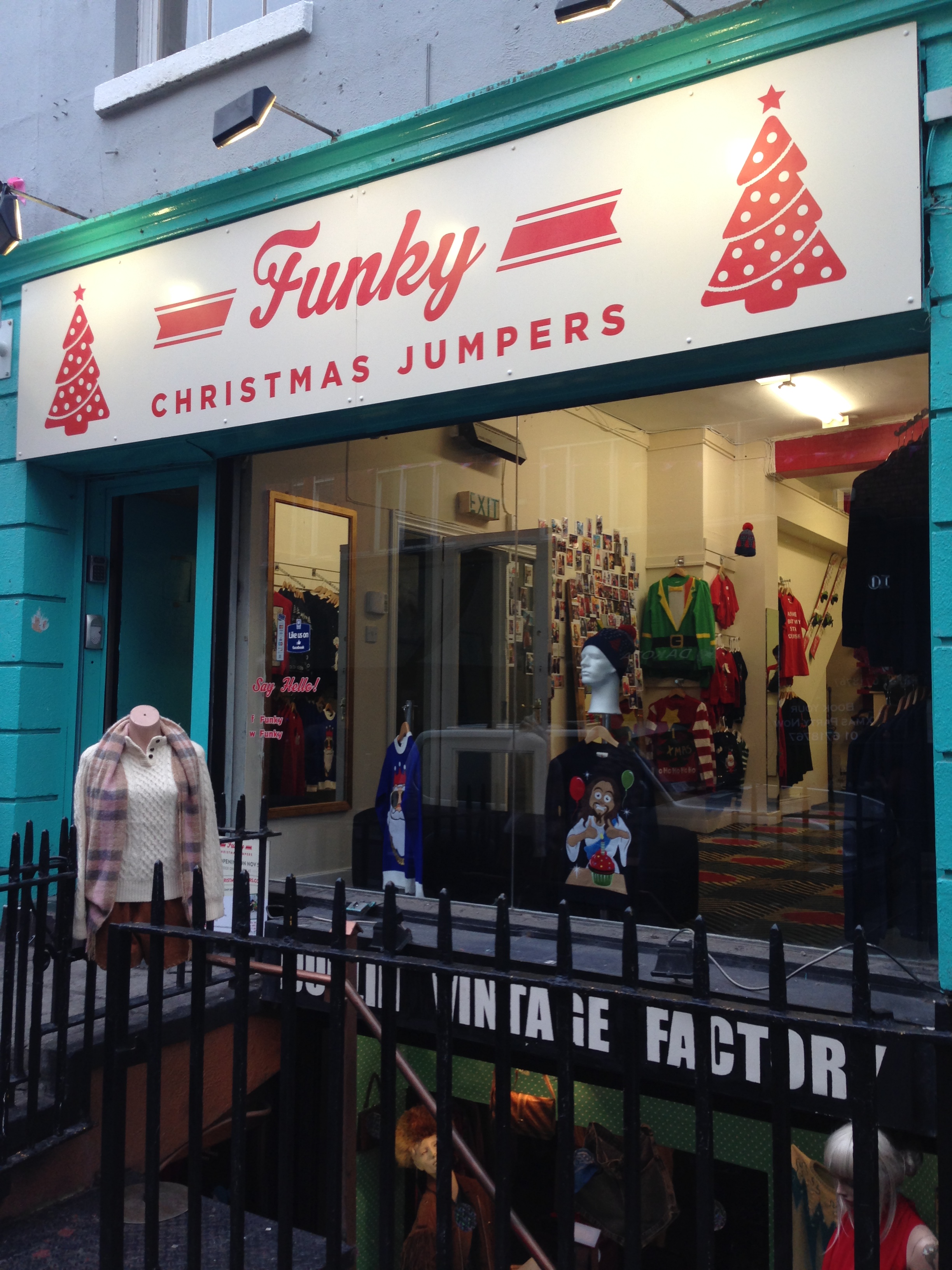
    11. The Funky Christmas Jumper Pop Up Shop is now open on South William Street.
    12. The Brown Thomas Christmas store has been open for all your decoration needs since August.
    13. Christmas cards are on sale for weeks now.
    14. Tickets for The Gaiety’s Christmas Panto, Peter Pan, are on sale.
    15. Tins upon tins of Roses, Celebrations and Quality Street can’t be missed upon entering any Dunnes, Tesco or Supervalu.
    16. Christmas markets are opening on St Stephens Green this week.

    I got the opinion of many facebookers to see if they felt that the hype about Christmas is starting too early, while Leah Louise King,Jennifer McDonald and Orla Stafford took to the streets of Dublin with their video camera.

  • Is this goodbye for King Nidge?

    Is this goodbye for King Nidge?

    Ado, Nidge, Fran and Elmo (c)Rte
    Ado, Nidge, Fran and Elmo (Photo courtesy of RTE)

    Last Sunday night saw more than 1 million people across the country tune into RTE’s Love/Hate season 5 finale.

    The finale was a bit like the Red Wedding episode of Game Of Thrones as no one was safe.  First we saw poor Janet (Janeh) meet her maker as Terence told Nidge that the “rats” he kept on about needed to be taken care of. However, Nidge didn’t seem to feel too guilty as his shiny new King Nidge runners from Trish soon took his mind off things.

    Then Siobhan, ever the rat, told Detective Moynihan about Git’s death. Well, at least her own embellished version of what happened. Moynihan got mad and went from good cop to bad cop as we saw him pull over Nidge on the side of the road and chew up his tax disc. Sound.

    Meanwhile, Fran the man was spotted by Nadine who promptly ratted him out to the guards and it wasn’t long before he was back in the ‘Joy. Things went rapidly downhill for Fran from here and let’s just say he’ll be walking like John Wayne for a while, if he ever walks again.

    The final scenes of the finale all happened very fast. Siobhan called over to Trish for a cuppa where she admitted to a devastated Trish that Nidge was behind Janet’s death all along. Sneakily, we also saw Siobhan plant her rapist’s finger bone in the bathroom in a bid to frame her evil uncle.

    As she left, Siobhan met Nidge outside where she finally flew off her rocket and confronted him about the beating that left Tommy in a coma. She then revealed that she was the rat all along and that she had framed him for Git’s murder and that the Gardaí were on their way.

    Needless to say uncle Nidgey got mad, real mad, but before all hell broke loose between the two who arrives only Patrick in a Ford Transit with all guns blazing. He takes down Siobhan as he aims for Nidge and almost gets little Warren (Wardin) too as he chases Nidge around the back of the house.

    With only one wear out of his new runners, a bullet to the chest sends Nidge to the ground and with one last look at his son, a second shot is fired into his chest as Patrick finally gets his revenge.

    And that was it, the nation’s jaws all dropped to the floor.

    So what’s next for Love/Hate?

    Mary Murray has said she knew her character Janet’s demise was ‘imminent’, but was delighted she made it to the last episode of the season.

    Tom Vaughan Lawlor, who played Nidge, looks set for bigger and brighter things as he released a statement saying; “The last five years working on Love/Hate have been an incredible and unforgettable journey for me…I’m hugely grateful to the show and to its fans and I am equally looking forward to the new challenges ahead for me both on screen and stage”.

    Johnny Ward, who played Paulie, will “swap the guns for tights” as he is to take on the lead role of Peter Pan in this Christmas’s panto in the Gaiety Theatre, Dublin.

    However, there is a tiny glimmer of hope for Love/Hate fans as when the Head of drama at RTÉ, Jane Gogan, was asked on RTÉ’s Morning Ireland if this is the end of Love/hate she simply stated; “That decision is yet to be made” before adding “It’s a very big world and it can extend far beyond what we’ve seen so far…it can go in all sorts of directions”.

    All we can do is cross our fingers and hope Stuart Carolan hears the cry of the people for more. Or you never know, Tommy could wake up and it could all just have been a bad dream.

    But for now, to deal with our Love/Hate withdrawal symptoms, what can we be tuning into on TV?

    Unfortunately we have to wait till April for Game of Thrones to return to our screens, however the new series of The Big Bang Theory is on RTE2 every Wednesday at 7pm, The Flash has only started on Sky1, and the new season of House Of Cards is out on Netflix in February. A new series, Fortitude, is starting on Sky Atlantic in January, and both The Walking Dead season 5 and Greys Anatomy Season 11 will also be back on RTE in the near future.

    On top of all this we have plenty of Christmas flicks to look forward to in the coming weeks too.

  • Emigrated? How’s yer mammy?

    Emigrated? How’s yer mammy?

    Because I'm leaving on a jet plane, don't know when I'll be back again..
    Because I’m leaving on a jet plane, don’t know when I’ll be back again..

    Irish mothers are more likely to be depressed if their children have emigrated according to a new report by Trinity College’s Irish Longitudinal Study on Ageing (TILDA).

    The new report shows that the mental health of Irish mothers is suffering as a consequence of their children emigrating during the recession.

    It also shows that these mothers experience increased symptoms of depression and greater loneliness than mothers whose children did not emigrate.

    The researchers found, however, that with the exception of fathers aged over 65, fathers did not suffer an equivalent decline in mental health following the emigration of one or more of their children.

    In the year ending April 2006, 36,000 people had emigrated from Ireland, emigration numbers hit 89,000 in 2013 and are still rising.

    These high rates of outflow meant that a large number of TILDA participants saw their children emigrate.

    Dr Irene Mosca of TILDA says that the report shows the effect on those left behind:

    “Emigration is often discussed in terms of the people who leave, but our study shows that there are also real impacts on the people left behind.”

    “There is a narrative out there that this was a recession that impacted on young people, as negative equity and debt primarily affects young people,” said Alan Barrett of the Economic and Social Research Institute, who co-authored the study with Dr Irene Mosca.

    “But we have now identified a group of older people who have suffered a mental health difficulty as a result of the recession, because of the emigration of their kids… Mental health difficulties often develop into physical health difficulties, so the massive increase in emigration in recent years has public health implications.”

    Some Irish mammies who were left behind when their children emigrated spoke to The City about how they are coping.

    Margaret Hennessy saw her son hop the water to London in search of work as did Elaine Keoghan’s daughter, while Kathleen McCormack’s son James went further afield to Brisbane to work on the pipe lines.

    When Kathleen found out her son was moving to the other side of the world in search of work she said she felt “sad and broken-hearted. I knew I was going to be lonely. James and his wife, Ursula, were only supposed to be going to Australia for two years but that soon changed as they found good, well paid jobs and started a new life together over there. They are there almost four years now.”

    “I still miss them so much, especially now that they have just started their family over there. It was heart-breaking not being part of that. As any mother would I wanted to be there for my son on the birth of his first child, but physically I just couldn’t. I Skype them all the time but it’s just not the same as having them home”

    “Whenever I think about the huge distance that’s between us and all that he is missing out on, I just start to cry. I think it’s a maternal thing. Luckily, I have three other children at home, and grandkids too, so I am kept busy. I can only imagine what it would be like for a mother with only one child having emigrated, their whole life torn away.”

    Una Nannery, 53, took a different approach. With two of her sons gone to Australia she was fed up of being lonely and depressed so three years ago Una, her husband Eugene and their youngest son Ciaran packed up their bags and followed their two older sons, Brendan and Declan, to Melbourne.

    “‘The main influencing factor for our move was unemployment, as Eugene had no work for two years previous to our move and had no prospects of getting anything.  Also, the fact that both our eldest sons had already emigrated and were starting families here influenced our decision in a big way, we were stuck at home missing out on the most important time of our son’s lives and we missed them terribly.” So Una upped and left Ireland and hasn’t looked back since.

    “We are living in Melbourne now, in a lovely suburb called Ivanhoe.  There are many Irish over here for the same reasons as us.”

    So how does life on the other side of the world compare to home? “There’s a much better standard of living here in Australia. Eugene is working full time and on a good wage, I’m not working and we still are way better off. The weather is a huge plus also. Life here compared to life in Ireland is similar, in that during the week it’s the usual routine of work, school etc.  The main differences are work and the weather.” Una continues “Living day to day is similar here to Ireland.  Depending on the supermarket you go to and the brands. Meat is dearer here; chicken and lamb are a lot more expensive. However petrol is cheaper. Clothes and footwear are expensive.  Both eating out and alcohol, like home, can range from expensive to fairly reasonable depending on the areas you are in.  A pint of lager is $7.00 that would work out pretty similar to Dublin pub prices.”

    Speaking about the work situation Una says “There is plenty of work in the building, mining, and general outdoor work. Men seem to get work easy enough. It seems harder for women, but yet not as hard as at home. There are good agencies here, so the ladies get sorted after plenty of interviews and that, but can take 3 to 4 weeks.”

    Emigrating is a tough decision to make, no matter what age, says Una “Emigrating is ok if it is for the right reason, but right now it is the only option for many.  But yes, I would tell all young people to travel, as it really is the best experience and learning curve in any person’s life.  Ciaran is living proof, also the older boys. They love it here and have adapted so well. For me, well I’m just happy to have all my family together again.”


  • Gone Girl: It will grip you – and frustrate you

    Gone Girl: It will grip you – and frustrate you

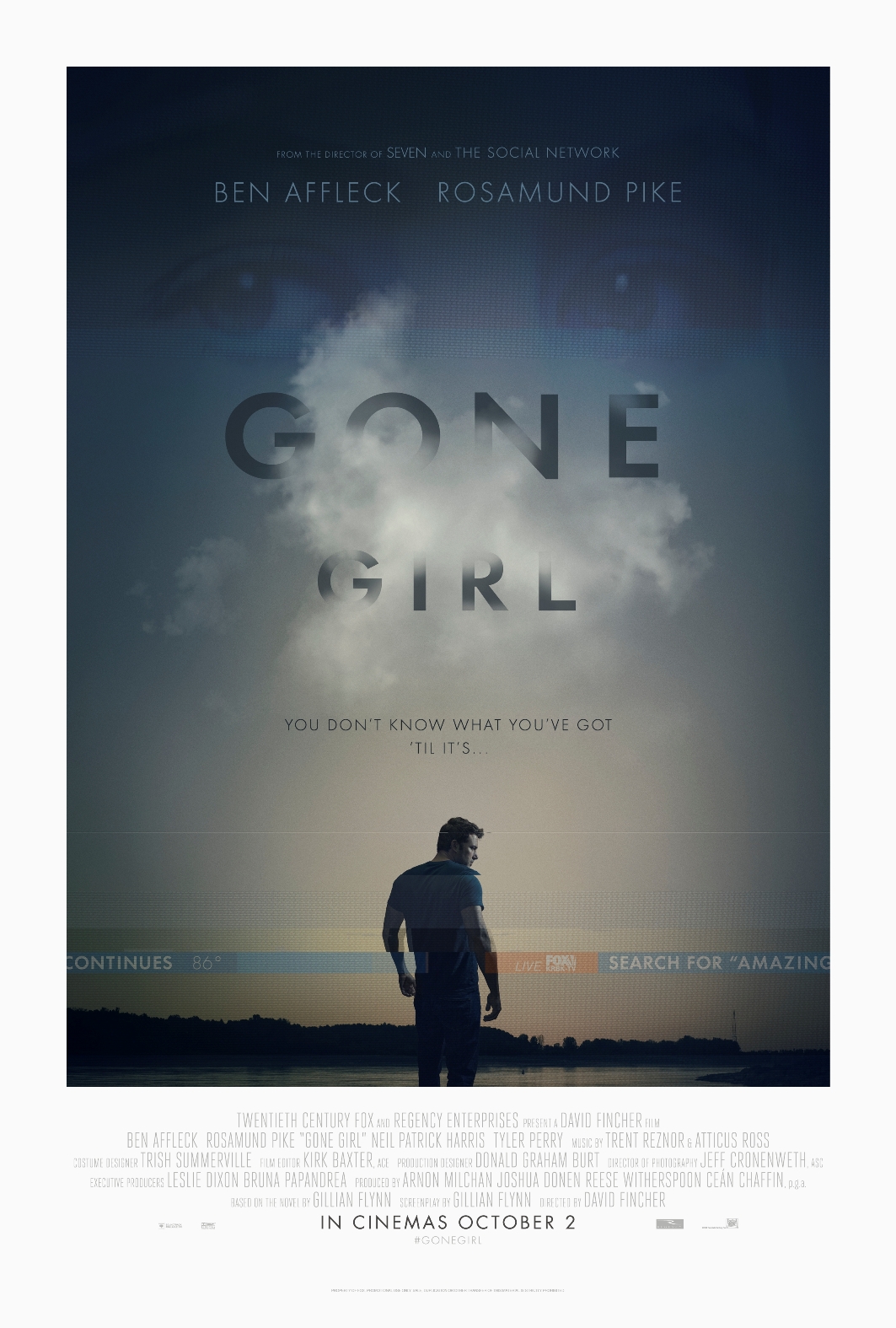
    Gone Girl is the 2014 mystery film directed by David Fincher of Fight Club, The Social Network and The Girl With The Dragon Tattoo and is adapted from the 2012 novel of the same name by Entertainment Weekly journalist-turned-novelist Gillian Flynn.

    It stars Ben Affleck, Rosamund Pike, Neil Patrick Harris, Tyler Perry, and Carrie Coon who equally played their roles to perfection in my opinion.

    When Amy Dunne (Rosamund Pike) disappears from her home on her fifth wedding anniversary, her husband, Nick (Ben Affleck), finds himself at the centre of a media frenzy, his every little move interpreted as a sign of guilt and dishonour. Suspicions begin to arise that Nick murdered his wife, and his awkward behaviour is interpreted as characteristic of a killer. While he hides out at his sister’s (Carrie Coon) house, the no-nonsense detective, Boney (Kim Dickens), combs through his personal life, uncovering a trail of evidence indicating financial troubles and domestic disputes, a report indicating the purchase of a gun, and poorly concealed evidence of a struggle which all suggest Nick’s hiding something. Eventually, Nick is forced to seek out the services of Tanner Bolt (an excellent Tyler Perry), a larger than life lawyer who specialises in defending “wife-killers.” Yet still there’s no body or proof that Nick had something to do with his wife’s disappearance and something niggles at the audience that there’s more to this than we know.

    Gone Girl most certainly isn’t a love story, but a movie about the way people can so easily manipulate and entrap one another.

    In the first half of the movie we see Amy Dunne as the beautiful, doe-eyed girl who got caught up in the perfect whirlwind romance but as the movie progresses we see strains on the marriage. We begin to realise that this doe-eyed girl is capable of menace. She’s an ice Queen, passive-aggressive, manipulative, devious style of menace. The exact sort of menace you need to pull off the Amy Dunne in the second half of the movie. The Amy who’s not evil so much as cunning. The Amy you will come to hate.

    Fincher’s style—think along the lines of motel-murder-scene lighting — adds perfectly to the puzzling and mysterious feel of the movie.

    Gillian Flynn’s novel Gone Girl became a sensation for its ingenious plotting and complex net of twists and the film does the exact same. It has the narrative logic of the film noir, with a mishandled, awkward, yet ultimately victimized and unfortunate male at its core, and Amy as the ultimate femme fatale.

    The movie’s most alluring mystery is the question of what’s really going on in both husband and wife’s heads. Who is crazier? Who’s side are you on? Who gets the final revenge? All this remains unanswered, and it’s sickening. For this reason myself and the majority of viewers in the cinema last Friday night let out a sigh of sheer frustration as the credits rolled. For a film I liked so much I don’t think I have ever been as frustrated leaving the cinema and that is why Gone Girl gets a rating of 3.5/5 from me.

    What the punters say

    Margaret (54): “Gone Girl was good, I would give it a 4/5. I was a little bit disappointed with Ben Afflek’s acting and the way the film ended wasn’t great, but Rosamund Pike was outstanding as Amy Dunne – she definitely deserves an award for her role in the film.”

    Michael (21): “I thought the first half of the film was very good, but the second half was a bit too unrealistic and long winded for me. I would give Gone Girl a 3.5/5.”

    Seamus (57): “I thought it was a great film but the ending left the audience a bit high and dry, I’m wondering will there be a sequel but It’s hard to know.”

    Leah (21): “I’ve only read the book, but I thought it was amazing. The reader knows what really happens throughout while the characters in the book still don’t so it was exciting to read. I cant wait to see the film.”

  • Why SADS is baffling doctors and families around the country

    Why SADS is baffling doctors and families around the country

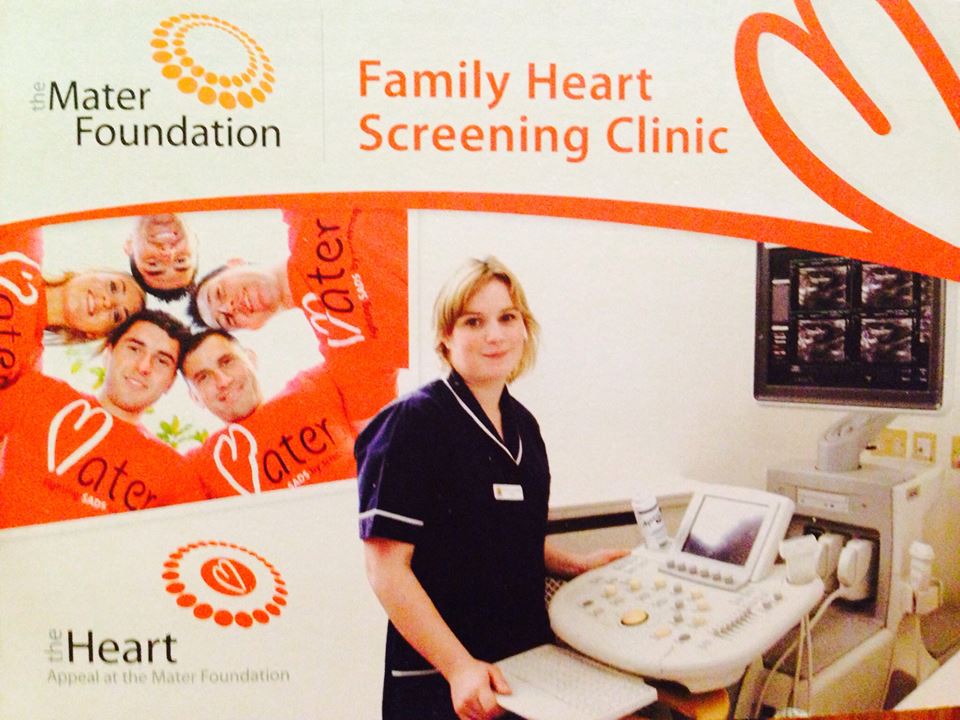
    Family Heart Screening Clinic
    There is only one screening clinic in the country currently.

    Two months off his 21st birthday, Ciaran Carr collapsed and later died during an indoor training session with the Clondalkin Round Towers football team.

    The nearest defibrillator was half a kilometre away, too far to save the seemingly healthy young man.

    Last weekend, a 15-year-old Junior Cert student from Galway died after collapsing during a football match.

    Merlin Woods player Hassan Taiwo suddenly collapsed on the pitch while he was playing against Salthill Devon on Sunday afternoon.

    Emergency services rushed to the scene and the match was suspended as medics tried to resuscitate the teenager. A post mortem examination was carried out on the teenager at University Hospital Galway and is expected to confirm ‘natural causes’ for the sudden death – Taiwo hadn’t suffered any injury during the match.

    The same phenomenon has hit the celebrity world. Actress Sarah Goldberg died last month. Her mother said that Goldberg just “went to sleep and didn’t wake up”. She was only 40.

    In a statement, her mother, Judy, said that an autopsy had failed to determine the exact cause of death but that a heart ailment is suspected.

    This is a harsh reality for many families both in Ireland and around the world today: young, seemingly healthy people dying without reason and autopsies proving inconclusive.

    A condition called Sudden Arrhythmic (or Adult) Death Syndrome (SADS) may be the cause of death in all these cases. It is similar to Sudden Infant Death Syndrome in which the cause of death is unexplained.

    Experts estimate that one young Irish person under the age of 35 dies suddenly from cardiac disease almost every week.

    What is SADS?

    According to the Irish Heart Foundation: “The heart has an inbuilt electrical system, which makes it work. If this is interrupted, the heart cannot pump enough blood around the body. Without a supply of blood pumped by the heart the brain can’t function, the victim faints and death follows within minutes. If treated quickly with an electric shock delivered by an automated external defibrillator (AED), normal heart rhythm can often be restored (the survival rates decreases by 10% per minute).

    “A sudden cardiac death may be the first sign that the victim has had of a heart problem. In many cases, no definite cause of death can be found, even at autopsy. These deaths are thought to be caused by an arrhythmia and are labelled a Sudden Arrhythmic Death (SADS).”

    What causes it?

    “SADS can be caused by a number of different heart problems, many of which are inherited,” the Irish Heart Foundation says. “Some of these conditions include Coronary Heart Disease, Cardiomyopathy – heart muscle problems, Heart rhythm abnormalities, Diseases of the heart valves, and Disease of the heart’s electrical system, such as Wolff Parkinson White Syndrome.”

    100 or more people under 35 years die in Ireland each year from sudden cardiac death, according to the Irish Heart website.

    Working against SADS

    Heart House on Eccles Street, DublinA spokesperson from The Family Heart Screening Clinic at the Mater Heart House on Eccles Street took the time to talk to me about SADS and how they are working to make people more aware of the condition and if it can be prevented.

    They explain:

    “SADS often gets misquoted, the collapse is called a cardiac arrest but usually in an older person doctors will be able to find a reason for that person dying, most likely blocked arteries or a heart muscle problem, which is usually something associated with the aging process or their lifestyle choices. However in a younger person, younger than 40 say, doctors are less likely to find these sort of problems. So when a young person dies and when the post mortem shows inconclusive, that’s what SADS is.

    “It’s often only young sports players who we hear of dying from SADS, that’s simply because it gets more publicised. However many young people die at home from SADS, on their couch or in their bed, For example Cormac McAnallen the senior Tyrone football captain died at home in his bed, not out on the pitch. At the time his death was unexplained, but doctors went on to find the family had a genetic heart condition and that was the most likely factor in his death.”

    “What the Family Heart Screening Clinic here in Dublin do is look at families who have heart problems in their genes and we look to see if someone young in their family has passed away. You might be wondering why is it worth coming to us for screening if SADS won’t show up, well we know the signs to look out for here in the clinic. There’s a few things that will show up on an ECG (a graph of someone’s heartbeat) on someone who is alive and well and if we see any slight changes on that graph then we know you could be at risk. However on somebody who has died, that change doesn’t leave a scar on the heart tissue and therefore it won’t show up on scans in a post mortem and that is SADS. So if there is a family history of SADS or if an ECG is showing up any abnormalities, that person will be referred to come see us at the screening clinic. A good number of families who come for screening, I would say between 30% and 50% will get a diagnosis that they didn’t know they had. In turn we would then advise these people as to certain medications they should avoid which could trigger SADS, or if they should avoid intense exercise or sports which could also be a trigger for these people. ”

    The clinic has been open since 2007 and all the screening and care provided is funded by generous donations to the Heart Appeal at the Mater Foundation.

  • The life of a commuter

    The life of a commuter

    Amy Grehan
    A commuter waits patiently for the next bus

    According to figures released by the Dublin Institute of Technology (DIT) this summer, a student living away from home can expect to spend at least €10,980 per year, while living at home is nearly €4,000 cheaper.

    The Higher Education Authority (HEA) has said around 18 per cent of students are in “serious financial difficulty” and with the rising costs of housing and lack of student accommodation in Dublin many students now have no choice but to commute.

    President of the Union of Students in Ireland, Laura Harmon, has said; “There is already growing evidence of students commuting daily to Dublin over extremely long distances. Some opt to spend multiple nights sleeping on couches or in hostels every week, others aren’t even able to attain that.”

    Amy Grehan
    A busy commuter spot in Dublin

    31% of students in Ireland still live with their parents, according to the latest data from the HEA’s Eurostudent survey.

    I am one of the 31%. I live at home, get up at 6am each morning and travel on a stuffy, overcrowded bus for two hours (on a good day) from Westmeath to Dublin and two hours home again. I hate it, I am constantly tired, I miss out on the whole college social life, and my parents still have to know where I am at all times. However, by the end of the week I am not broke, the simple fact is I can afford to commute but I can’t afford to live in Dublin.

    My weekly commuter ticket amounts to €60 and give or take €20 a week on food and other necessities. That’s €80 a week or €320 a month, where as if I lived in Dublin I would be forking out at least €400 a month on accommodation alone and let’s not forget bills, a weekly food shop and transport costs on top of that. So for now I will suck it up and get on with it and as the guy beside me on the bus falls asleep on my shoulder I try to remind myself that it could be worse, I could have a huge student loan hanging over my head.

    Amy Grehan
    CityLink bus service

    I am not the only one in this situation; Ellen, 20, from Offaly says “I chose to commute because it was too expensive to live up in Dublin and I couldn’t afford it. I spend 3 hours commuting each day. I mostly use the train but it is quite expensive, however it is still cheaper than paying rent. I dislike the early mornings and always having to plan ahead, like what time to leave and rushing for the bus or train home. I sometimes feel I can’t relax in college or call home for a coffee in the middle of the day like many of my friends do.”

    Cathal, 21, from Westmeath says “finding a house this year was either too expensive or too far away from my college to not be worth my time moving up, so I commute to Dublin from Westmeath, I’d say it takes me about 3 and half hours a day, 5 days a week. The bus company I travel with sell multi journey tickets and they are most definitely cheaper than rent! I suppose I can’t really complain much, as this year has been much cheaper for me.

    The only real negatives I have found about commuting to Dublin is having to get up early in the mornings and also the loss of your time is also rather annoying. I find that by the time I get home I only have a few hours to get college work done, have dinner and time to myself before I have to go to bed to get a decent night’s sleep. Although I do miss getting a lie in in the mornings, having to commute has made my attendance in college improve significantly. Rather than deciding to maybe skip that one class in the morning I’m pushing myself to get to class, because my mam would go mad if I stayed at home in bed.”

    Amy Grehan
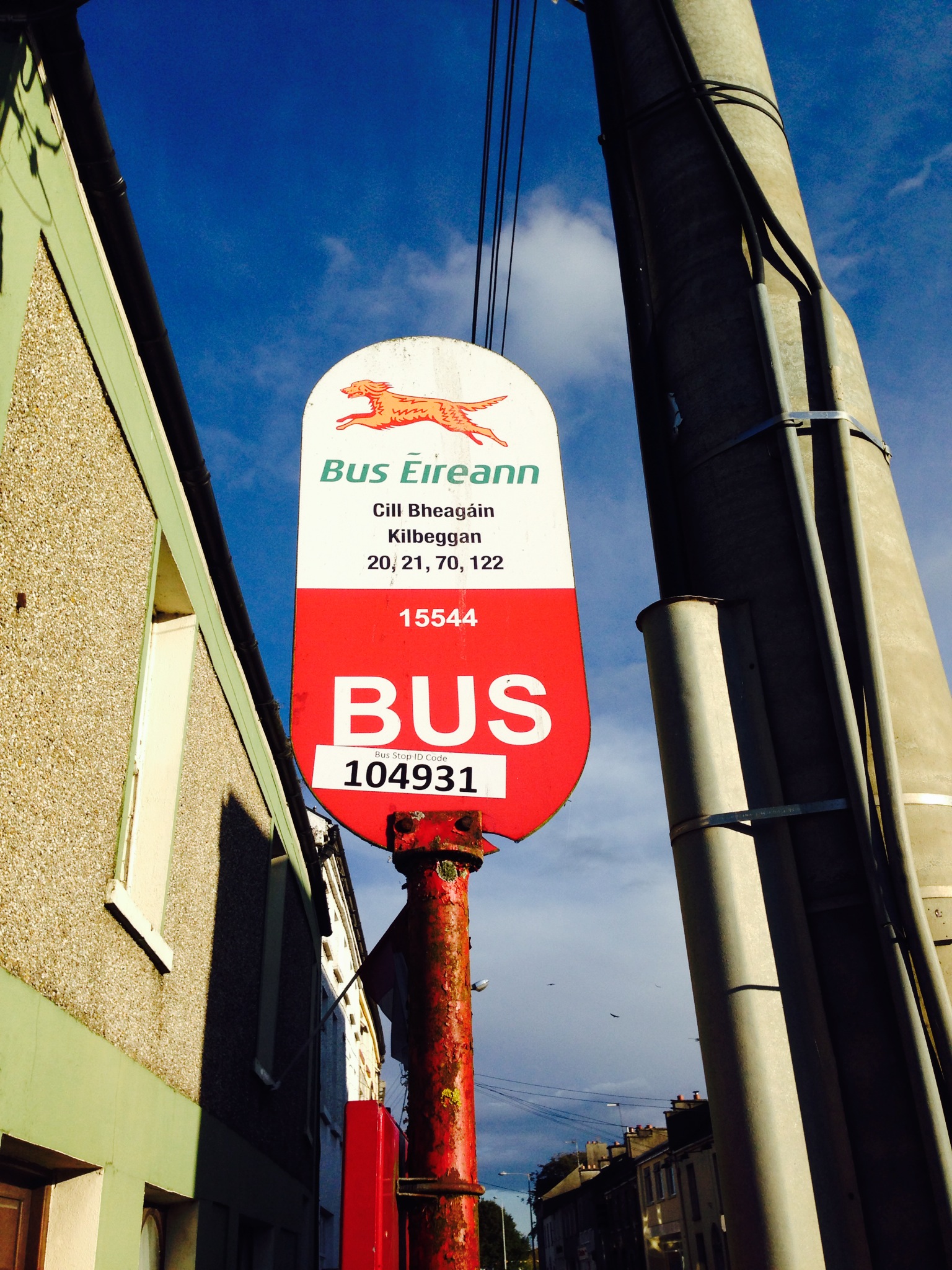
    Bus Eireann bus stop in South Dublin

    David, from Newtownmountkennedy Co. Wicklow, says “I’m far enough away from Dublin that it’s a pain to commute but at the same time I’m close enough for it to not be worth the money I’d have to pay on rent. I spend 2 hours in total commuting each day so it’s not bad really, 1 hour each way. I always get the bus. It’s only €7.40 for a return ticket so I save a fair bit commuting versus what I’d pay on rent. The only downside is how I’m forced to sleep on someone elses house if I decide to stay up in Dublin for a night out.”

    Conor, from Kildare, actually likes his daily commute; ”I commute because I’m close to Dublin and would rather save than pay rent. This is the first year where I am earning enough at my job to pay rent, but would rather put it towards my savings. I spend a total of 2 hours 15 minutes commuting every day. I’m saving about €60 a week compared to paying average rent. I like commuting because it gives me time to read – something I don’t get to always do due to work constraints. I also enjoy the pleasure of travelling, there’s a certain level of solitude I enjoy, provided someone sitting next to me doesn’t start yapping! I only dislike the time constraints of a timetable, and that I have to prepare for my day without knowing the outlook, that’s why I always end up wearing a rain coat on a sunny day!”

    Jane Cregan of Iarnród Éireann says “We have seen a large growth in a student numbers this year, particularly on Intercity Services. This could be due to some students commuting longer distances due to shortage of accommodation and also our great value fares for students.”


    Photos: Amy Grehan