
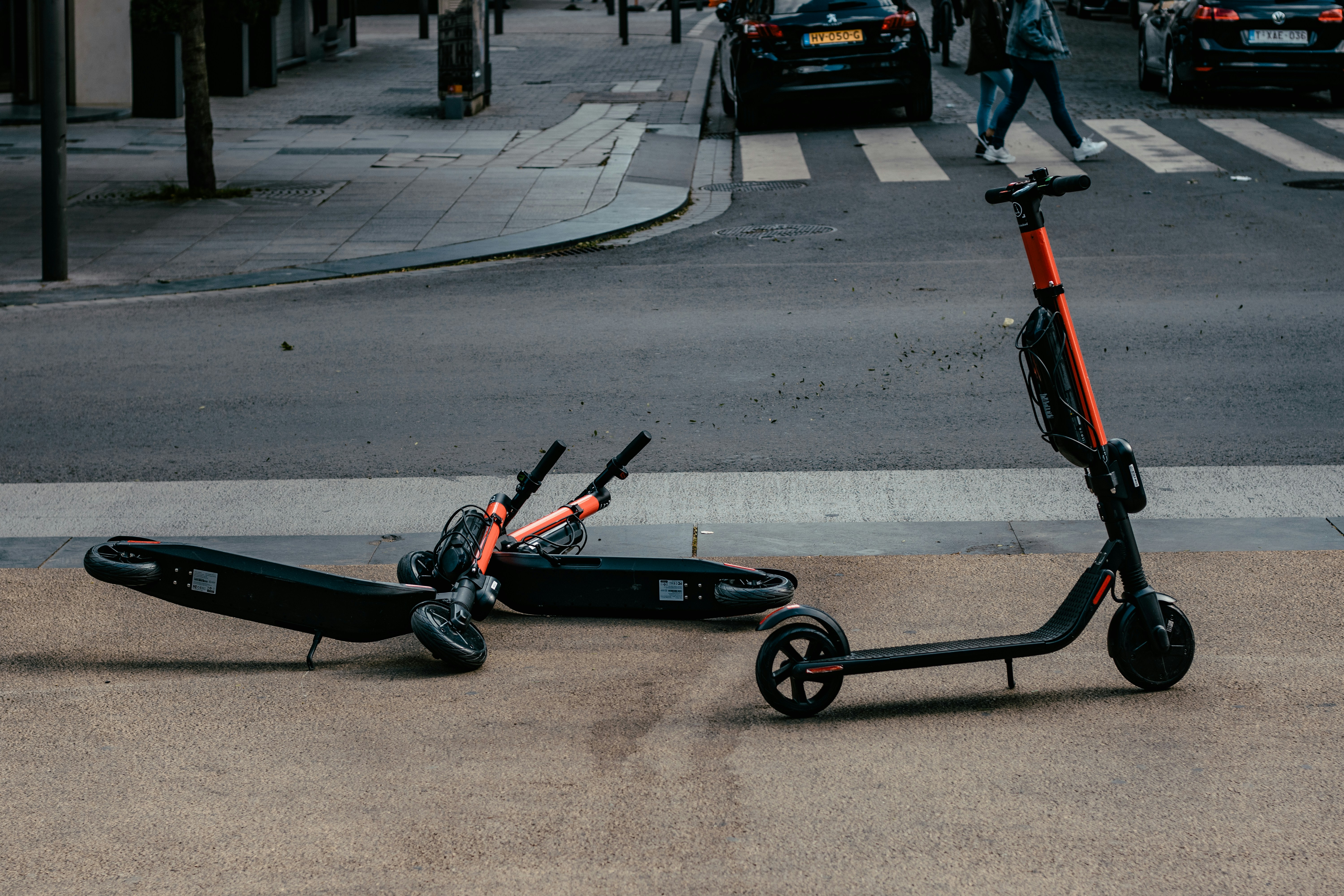
Photo by Ernest Ojeh on Unsplash
The recent ban on e-scooters for under 18s has left many questioning the practicality behind the new legislation.
Speaking on behalf of Minister of State for Transport Sean Canney, his private secretary Amanda Corley said that “Several EU member states already require insurance cover for e-scooters”.
In early September, following legal advice from the Attorney General’s Office, the European Commission was notified that the legislation was an “urgent procedure” citing an increased number of injuries.
According to Children’s Health Ireland (CHI) there have been 1130 reports to emergency departments from January 2021 to August 2025, all relating to e-scooter accidents and between May 2024 and June 2026, 30 children were admitted to emergency wards for e-scooter-related traumatic brain injuries.
According to Corley “the Department has met with Insurance Ireland to discuss the insurance industry’s views on the proposed introduction of mandatory insurance for e-scooters in Ireland.”
Corley also added that “legal advice is being sought in respect of treating e-scooters in the same way as other mechanically propelled vehicles.”
She said this would “potentially involve requirements for registration, potential requirements for licensing, insurance and taxation, prohibition of the supply of e-scooters to minors and prohibition of the sale of e-scooters that do not meet the legal requirements for use on public roads.”
Corey explained how mandatory registration would require coordination with the Department of finance and revenue commissioners alongside multiple changes to legislation changes on vehicles to apply any changes to e-scooters, while also requiring “extensive IT development” and practical decisions to work effectively.
“An outright ban on e-scooters remains under consideration and the situation will be actively monitored by Government.”
On the topic of whether the new legislation is enough to stop dangerous e-scooter use on roads, Aidan Farrelly, TD and spokesperson for transport for the Social Democrats party said that he thinks “that the new legislation is a very blunt instrument employed by a government who is maybe well intentioned, but ill informed.”
Farrelly believes there will also be revisions considered for the new legislation “sooner than expected” to make sure they are ” aligned with other pieces of legislation.”
When asked about Garda resources and training for the new rules, Farrelly said, that “any law enacted by the Houses of the Oireachtas is only as useful as its enforcement”.
An Garda Síochána were questioned on enforcement and reports for e-scooter, but they didn’t respond.
“As it currently stands, we know that the Gardaí do not have the necessary training or resources to pursue anyone that they perceive to be breaking the law on an e-scooter,” said Farrelly.
Farelly also wants other measures for decreasing underage injuries and dangerous driving/riding. He has previously proposed a universal road safety and driver theory test programme in secondary schools.
“During the summer, I launched a proposal to completely overhaul the way in which young people receive education about road safety. For a little over 5m euro’s, the Road Safety Authority could employ 50 development officers to travel to schools and facilitate a 10-week road safety programme, that would culminate in a free Driver Theory Test for participants. The main aim of the programme would be, alongside covering the rules of the road, to give young people the opportunity to talk about road safety, from the perspective of a pedestrian, cyclist, driver, HGV driver etc. and to challenge cultural norms that have evolved.”
For now, Farrelly says he will “continue to support the safe and legal use of e-scooters on the roads but repeat his calls for mandatory registration of all vehicles”.

You must be logged in to post a comment.