Author:

  • Pandemic as muse? Artists on their art in a year of lockdowns

    Pandemic as muse? Artists on their art in a year of lockdowns

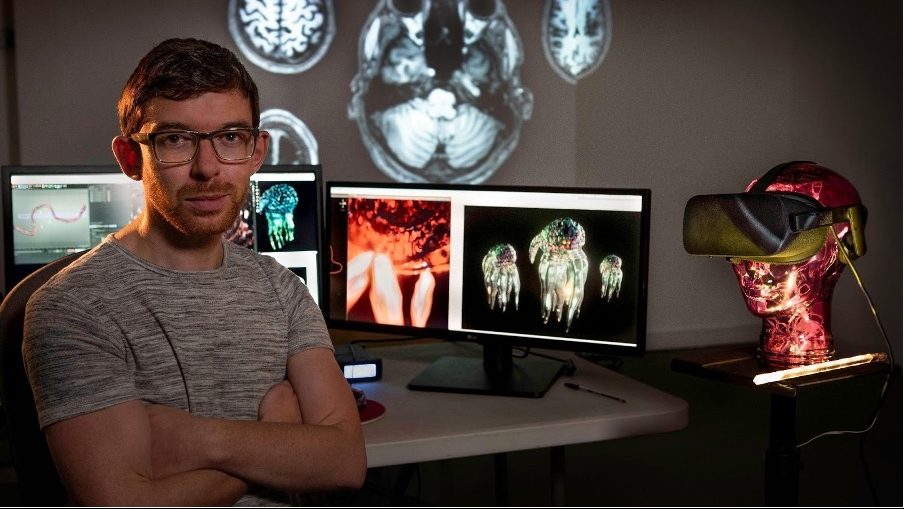
    Alan James Burns in his studio. Photo courtesy of Trevor Whelan

    Alan James Burns

    “I’ve had to move a lot of work online, which is quite interesting because it’s something that I never thought would be possible,” says Cavan-born visual artist Alan James Burns. “I usually create large events with up to 50 people attending, so that went completely out the window. Moving online has opened me up to be able to work from my bedroom, or work with international partners because you kind of break down the idea of having to be in the studio together.”

    Burns says he “can’t work now without putting in the context of the pandemic somehow.”

    “When I’m writing up my ideas and developing new works, it’s all with the context and background of this last year.

    “Everyone’s gone a lot more digital now, and the idea of the human machine – the digital world and our interconnectedness with that – has started feeding into a lot of new works I’m creating. I’m working with brain computer interfaces – looking at the idea of the human machine and what possible futures are like when we become more integrated with technology, which the pandemic has forced us all into.”

    Along with Sinead McCann, Burns is currently collaborating with users of intellectual disability services at St John of God Hospital in Dublin, as part of an artist in the community project. Participants are receiving training in audio recording and editing, and the piece they’ll create together will be exhibited on Culture Night in September.

    “That came about because of the pandemic. With everyone being at home, we decided to create a work, and the one medium we could think of that people would have access to tools, like a phone and stuff, was sound. So we’re all recording sounds and editing them together remotely online.”

    Tonally, Burns says his latest output has been “actually more hopeful than what it probably had been before the pandemic. The works that I’m creating have more joy within the production and also within what they’re trying to achieve for an audience when they do engage with it. So rather than looking negatively outward, they’re looking positively outward.”

    Burns says the Irish government’s Pandemic Unemployment Payment (PUP) has been a lifeline in compensating for cancelled projects.

    “Actually, I’m better off [than before the pandemic] thanks to the PUP. As an artist, you have no regular income, you live on minimal amounts of money, so the PUP was the first time many of us got a living wage that you could rely on.”

    Upcoming work: “Open Mind, Closed System”, Carlow Arts Festival, Co Carlow (June 2021)

    Ella Bertilsson

    Ella Bertilsson. Photo by Ella Bertilsson

    For Swedish multidisciplinary artist Ella Bertilsson, the initial lockdown last March was a case of life imitating art.

    “In the month before lockdown,” she tells The City, “I was working on a piece where I did a performance from inside a cardboard box, which was all about being trapped in a domestic space. That opening was I think two weeks before [the first] lockdown. So that was a super-odd coincidence.”

    In terms of concepts, Bertilsson feels the pandemic “will probably feed into my art at some point, but I think at the moment I find it hard to tell.”

    In terms of practice, however, her studio’s closure forced a rethink, as her workspace became “a tiny sewing machine table in a tiny room” at home.

    “I was like, ‘What do I do now?’ So, that was nice because it really brought me back into drawing a lot. I ended up illustrating a book cover and went back and sold a lot of prints, and I did a lot of photography. So the circumstances had an impact on my practice. It definitely had a creative impact. I’m now working with 35mm photographs I took around my neighbourhood every day for six months, and I’m turning them into digital collages with written text. That will be in my solo exhibition in Ballina next year.

    LOOPING SQUIRREL by Ella Bertilsson, music by Economusic

    “I hadn’t been doing drawings since my BA really,” continues Bertilsson, who’s been based in Ireland for the better part of two decades. “Now I’m drawing, and I’m printing and I’m doing things that I would have done a long time ago, so I think that’s kind of nice because I’ve done a bit of a circle and now it’s part of my practice again.”

    Bertilsson says she has “really enjoyed” the slower pace of the last year, in which she’s had “time to reflect on the work, and not have the pressure of exhibitions”.

    She counts herself fortunate to have been funded by the Arts Council for a number of projects in the lead up to and during the pandemic.

    “I think I was kind of lucky that I had that time to apply for awards,” she says, “and didn’t really have to use the PUP at all.”

    Upcoming works: Solo Exhibition, Ballina Art Centre, Co Mayo (2022),  Solo Exhibition, The Complex, Co Dublin (2022)

    Marcel Vidal

    Marcel Vidal. Photo by Marta Faye

    Sculptor and painter Marcel Vidal came into 2020 having picked up three prestigious awards in the previous year and landed a partnership with a commercial gallery.

    “I was in the midst of making work for a solo show,” Vidal says, “so that work had been established and the ideas were in place of how that might manifest itself. In a way, the work, as it’s developed, it’s changed in terms of what the overall show might have or potentially could have appeared like. It has a lighter tone. 

    “Some of my work would be large-scale cultural installations that are predominantly black, with paintings hung around the sculptural objects, whereas now the show is going to take on a lighter tone. The weight of [the work he is known for], its energy, is at this time unnecessary. So that all left my brain, and then it became about being in the studio [to focus on painting].

    “But it’s also maybe just that, as an artist,” continues the Wicklow native, “you find a way to manage the work. So for me, painting has been the easiest form to work in, in terms of just the practicalities of getting into the studio and being motivated. So in that way, [the pandemic] has influenced my art, in that I haven’t thought about sculpture, or that overall idea of making sculpture. But in conceptual or thematic elements, it wouldn’t play in that way. The type of art I make is never trying to speak on current or topical issues in that way.”

    The possibility of exhibiting Vidal’s show online was mooted, which he found “quite difficult, because it’s imagery that has a materiality, a physicality and a present. If it goes digital, the viewer is not having their own personal experience with it in a space. 

    “You come to a gallery or exhibition space with a set of criteria or a set of expectations as a viewer. And for me, the image and how it’s displayed and how you navigate that space – that brings out something else and that’s personal to that viewer. But if it goes into a digital format, you lose that context and it becomes something that could be viewed in distraction while doing something else. The subtlety of the work would be diminished and it could be misrepresented too.”

  • High heels, big problems?

    High heels, big problems?

    The idea has graced the internet for over a decade: the economic climate determines the fashionable height of heels in women’s shoes. Is this an undeniable fact or just fabulous fiction?

    The stiletto – typically ranging from one to five inches – has been adored for decades. The designers credited with its creation were Salvatore Ferragamo, Roger Vivier and André Perugia. The shoe, rising to prominence in the 1950s, came at a time when Europe’s economy began recovering from World War II. The stiletto swiftly became a staple for many women across the globe. The shoes were famously seen on the character Carrie Bradshaw who spent a small fortune on Manolo Blahnik. Popular luxury brands such as Jimmy Choo, Christian Louboutin and Oscar de la Renta still carry this style today  

    In 2009 – at the ‘height’ of the recession – it was reported that the average size of women’s heels mentioned in social-media posts was an incredible seven inches. However, by the year 2011, the average dropped to a far more comfortable two inches.

    Clogs first appeared in 1300s European fashion. Their transformation to platform state – like many popular shoes – began in the 1970s, when clogs were worn by both men and women. Their demand slowly decreased until they resurfaced in Viktor & Rolf’s 2007 Winter Ready-To-Wear fashion show

    Also in 2011, Researchers at computer company IBM analysed fashion data to determine what the most popular pair of shoes were. They found that during those times flat shoes and kitten heels were in high demand.

    The evolution of the platform sandal started with 13th-century middle eastern kabkabs, which then led to the European chopine. Other periods where there were major spikes in heel height were in 1929 following the Great Depression and in the late 1960s and early 70s. Notably, the 1970s brought with them another economic downturn for the Western world

    “Usually, in an economic downturn, heels go up and stay up — as consumers turn to more flamboyant fashions as a means of fantasy and escape,” says Trevor Davis, a consumer product expert at IBM’s Global Business Services Unit.

    Even trainers couldn’t escape elevation. By 1990 the original trainer – the plimsole – was a thing of the past. Collections by Buffalo London, Fila, Nike and Northwave in the 90s paved the way for today’s chunky sneakers. Could the West’s recession of the early 1990s be a part of this trend? The fad originally died out in the early noughties only to be revived again in 2013 by the Adidas Ozweego
    In 1938, designer Salvatore Ferragamo presented a multi-coloured platform wedge named ‘The Rainbow’. Coincidentally (or not), the US faced a brief recession between 1937 and 1938 – America’s third worst downturn of the 20th century
    During World War II, wedges grew in popularity because of the lack of leather and rubber available. The materials were needed for the war effort and women were forced to use alternative materials to make their footwear. The desire for wedges faded as the fashion cycle turned to other heels for inspiration. However – along with platforms – wedge heels were all the rage in the 1970s
    One of the most iconic wedges was seen on Ginger Rodgers in 1945, where she sported a pair with no mid-soles
    Fashion is not only an art form but a means of escapism. The fluctuation in heel size has distracted consumers from focusing on economic failures in the past and may continue to do so

    Despite the fact that for the last year the majority of heel wearers have traded their stilettos for slippers, even a pandemic can’t stop the fashion wheel from turning.

    In terms of footwear, it seems like the only way is up. Luxury brands such as Miu Miu, Versace and Moschino lure us onto greater heights with their current collections. Could it be an indication that the worst is yet to come?

    [poll id=”2″]

  • Cleanup in Ireland’s dirtiest old town

    Cleanup in Ireland’s dirtiest old town

    Watch Colm McGuirk investigate cleaning up the streets in Dublin

    According to work carried out by Irish Business Against Litter and An Taisce, the level of littering in Ireland reached a 13-year high last year. Of the 37 towns and cities inspected, the amount of litter increased in 24.

    With parts of Dublin ranked worst overall for litter volume and illegal dumping, community cleanup groups in the capital are a welcome sight. The City joined one such group as they treated a sports court in The Liberties area to a spring clean.

    “We’re aiming to do cleanups around Dublin within our 5k,” says Kathleen Reilly, referring to the allowed travel limit under Covid restrictions.

    Spurred into action by the state of the stretch of the Royal Canal near her home, Reilly’s friend Ciara Haughney proposed the group’s first cleanup in March.

    “I just got so down and disheartened looking at all the trash in the canal,” she says. “Especially when you see nesting birds and swans trying to make a nest, and they’re picking up litter with their beaks. It’s just really depressing.”

    After being supplied with litter pickers, bags and gloves by Dublin City Council, Haughney put the word out to friends in the area, “and surprisingly loads of them were like, ‘yeah it’s a disgrace, I really want to help.’”

    The success of the first cleanup effort encouraged Kathleen Reilly to set up an Instagram page, and more volunteers signed up.

    “Whenever you actually look,” says Reilly, “it’s very dirty. There’s a lot of litter, there’s a lot of dumping. It’s not pretty to look at. So it’s just kind of encouraging people to be looking after their city.”

    A number of factors connected to the Covid-19 pandemic have contributed to the recent spike in littering. Firstly, restrictions on indoor activities have meant a massive increase in outdoor recreation, where not everyone, it seems, pays the appropriate respect to the surroundings they’re enjoying.

    Another factor is the deluge of disposable containers produced by a shift to a takeaway model for restaurants, bars and cafes, while PPE equipment also featured high up on An Taisce’s list of most common litter items.

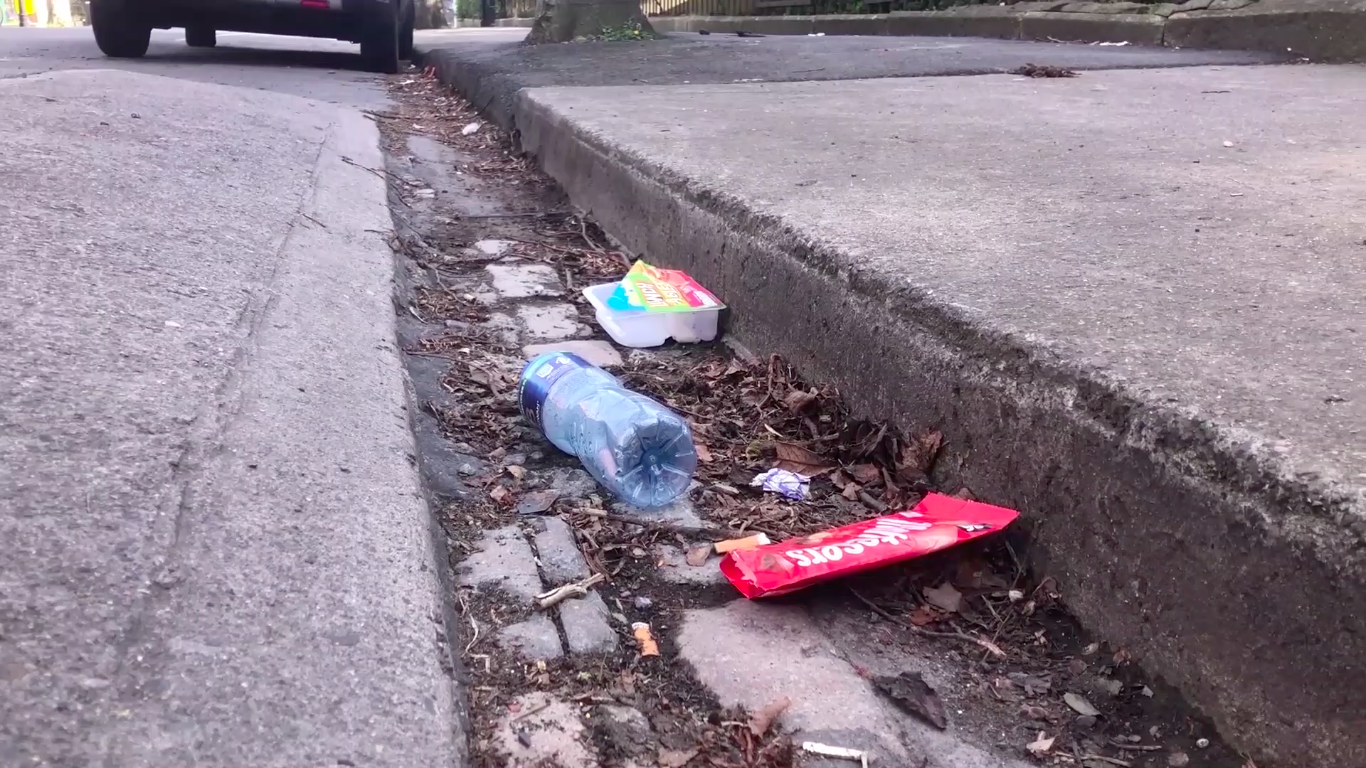
    How rubbish! An image of torn bin bags with their content scattered across the pavement. Photo by Colm McGuirk

    Cleaning up the streets during Covid-19 has brought its own unique challenges for councils.

    “We’ve broken our [street cleaning] crews into pods,” says John McPartlan, Dublin City Council public domain officer. “If someone is sick or is a close contact, you lose that person; you can’t take anybody from another pod to make up for it.”

    McPartlan also explained the rationale behind the positioning of bins in the city – many have suggested there aren’t enough around.

    “The rule of thumb for a bin is that the area has to have heavy footfall or else have food outlets like chippers or takeaways, sandwich shops, that type of thing. Where someone comes out and eats their food and then wants a bin. We don’t put bins in housing estates, or quiet streets.

    “A lot of the parks only have bins at the entrance to the park. The workers in the park are there to maintain the park and then the waste management function is to empty the bins. But you won’t have vehicular access into the parks, which is generally how we empty bins; we send the side loader around. But we do try to put as many bins in heavily used areas as we can. We’ve started putting out beach barrels now in these locations [that have recently become popular for outdoor recreation].”

    Today’s snack, tomorrow’s problem? Photo by Colm McGuirk

    To date, Haughney and Reilly’s group have done six cleanups and counting, and anyone can join in; look for Make Our Streets Clean on Instagram if you’d like to get involved. The floor is open to suggestions on where to tidy up next – the scene of today’s mission is beside the home of one of the volunteers.

    Alternatively, search online for a similar group near you, or ask your local council for litter-picking equipment.

  • Plant powered athletes

    Plant powered athletes

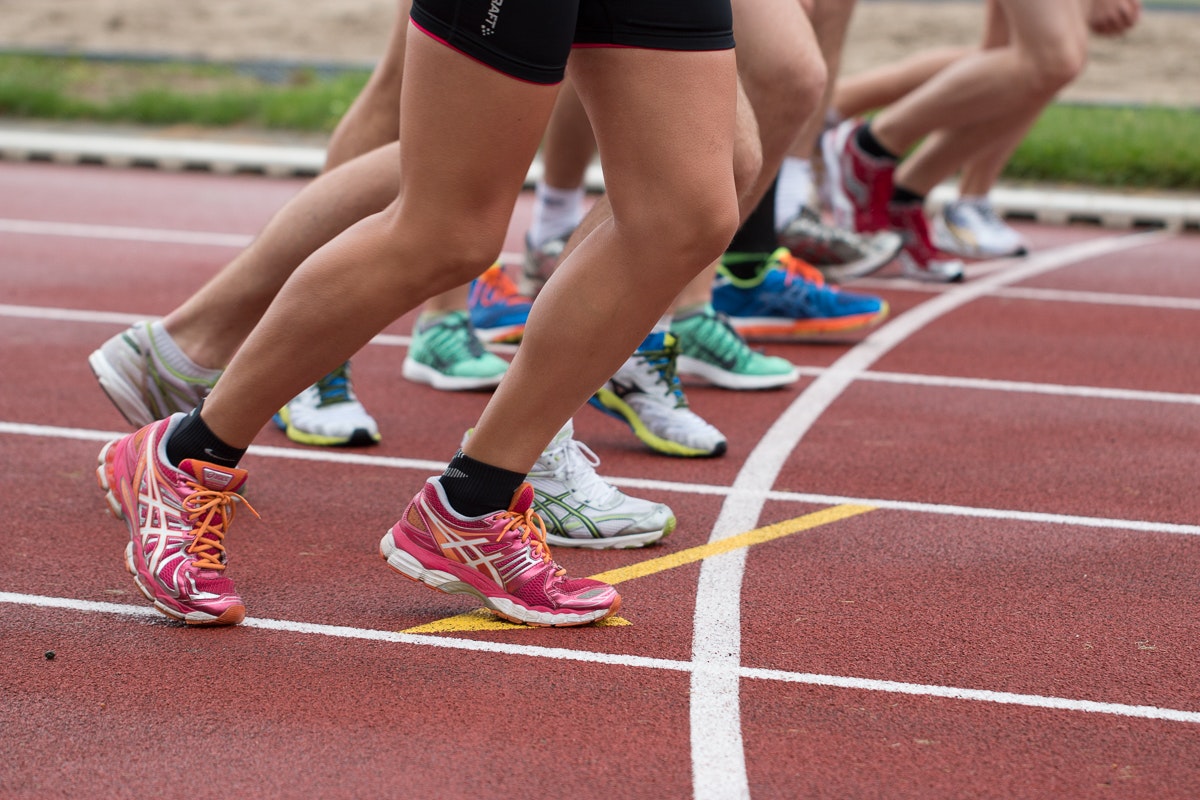
    Do veggies make you run faster? Image via Pexels.com

    There’s no doubt that veganism has been rising in popularity in recent years – a lifestyle that was once obscure has now become common. Still, the words vegan and athlete don’t seem to go together.

    When it comes to sports nutrition, we are told protein is key. This is often wrongly assumed to be something a plant based diet can ultimately lack – conjuring the image of one who follows the diet as a frail, weak, possibly malnourished person.

    Thankfully it’s 2021 and that particular image is, slowly but surely, dying out. 

    “I was always interested in nutrition, especially for improving performance,” says Gerard Prendergast, a gym owner, personal trainer, triathlon coach and yoga instructor.

    “I felt [veganism] would suit my training at the time which was endurance sports. I was blown away at how my body adapted to eating a wholefoods, plant-based diet. I had more energy, felt lighter, my stamina improved and even my mood and mental health seemed to improve.”

    Prendergast began boxing and weightlifting at an early age and went on to play for the ROI VI International Futsal team at 28. At 32, he completed his first triathlon, which encouraged him to take on bigger and more challenging events.

    Gerard Prendergast crosses the finish line at DecaUK – Image courtesy of Gerard Prendergast

    “In 2017 I entered into DecaUK, 10 Ironman distance triathlons in 10 consecutive days. Every day for 10 days I was required to swim 3.8k, Cycle 180k, and run a full marathon – 42k. I won that event 4.5 hours ahead of the second place finisher.

    “In 2018 I completed 52 Ironman distance triathlons in 52 weeks to raise money for Mental Health Ireland. I have completed other challenges such as 100 mile run on a 500m loop and cycling the height of Everest on an indoor trainer.”

    Judging by Prendergast’s impressive lifestyle, it appears there’s no doubt a vegan diet can provide an athlete with the power they need to succeed.

    “Athletes absolutely can thrive on a plant based diet,” he says. “It’s been proved all over the world over the past few years with athletes like Serena Williams, Novak Djockovic and Lewis Hamilton all seeing great benefits to their careers by eating plant-based. I myself can back that up, after struggling to finish a 5k run in 2012 to becoming a Deca Ironman champion.”

    “Athletes absolutely can thrive on a plant-based diet and it’s been proved all over the world over the past few years.”

    Gerard Prendergast

    “I had always worked out and eaten well but I really wanted to go even further with knowing what is in my food,” says Dawn Butler, a 35-year-old athlete from Kildare. 

    An ex professional wrestler, Butler now trains in Brazilian jiu jitsu as well as partaking in weightlifting. On days spent away from the intensity of the gym and training, Butler enjoys long walks, hikes, and hill climbing.

    After recovering from stage four Hodgkin’s Lymphoma, Butler turned to veganism as a way to repair and nourish her body.

    Dawn Butler on a plant powered hike in the Connemara mountains. Image courtesy of Dawn Butler

    “I took my time and looked into lots of research and eventually I just couldn’t stand dairy anymore. I was really put off when I saw where dairy comes from and I knew I couldn’t be a part of that world,” explains Butler.

    “I knew with the level of training I do that I have to really pay attention to my nutrition. I always check in with how I’m feeling and I always get a good variety of foods. I notice that I have more energy being vegan.”

    Despite her fitness level and rigorous training, Butler admits she is no stranger to ridicule from her gym buddies due to her diet choices.

     “I train as hard as anyone I know – I have muscles and strength and I train with a lot of men. I definitely do not feel I am any weaker because of my diet. I get very frustrated when some people try to tell me about my protein intake when, in fact, they can’t tell me theirs. They assume because they eat meat they get more than me when in truth I probably get twice the amount of protein.

    “If I am seen having a protein shake, it’s because my diet is ‘wrong’, but that does not apply to a meat eater who also uses protein shakes. I don’t use protein shakes because I am vegan. I use them as part of the diet and lifestyle that I have.

    “People assume and don’t ask. If somebody asks me about it I’m happy to chat and educate but when someone assumes my protein intake it gets very disheartening. It feels like a throwaway ‘fact’ and a way to debunk veganism.”

    As annoying as such remarks might be, Butler has no plans to ditch her plant based diet any time soon and has her sights set on pursuing Brazilian jiu jitsu, currently training to take part in a tournament later this year.

    Veganism undoubtedly has the potential to enhance one’s athletic performance, but Butler has some advice for those starting out.

    “I do believe it’s possible for athletes to thrive on a vegan diet. I do however think it is harder. There is less room for error and I think you need to keep on top of it. It’s very important to keep the range of foods wide and get sources of everything in there.”

  • Covid-19 abroad: Brazil setting the wrong kind of records amid deadly second wave

    Covid-19 abroad: Brazil setting the wrong kind of records amid deadly second wave

    Photo by Matheus Bertelli via Pexels.com

    Brazil is in the grip of a devastating second wave of the coronavirus, that claimed around 66,500 lives in March. 

    Watch Colm McGuirk talk to Maria Lombardini about Covid-19 in Brazil

    With the native, more transmissible P1 strain pervasive, Brazil’s health system is at breaking point, with many intensive care units across the country unable to cope with patient numbers.

    Brazil, the sixth-most-populated country in the world with around 211 million people, is now second only to the USA in total Covid-19 fatalities.

    Brazilian president Jair Bolsonaro’s response to the pandemic has come under much fire. The ex-army captain, who has reminisced fondly about Brazil’s violently oppressive military dictatorship of 1964-85, was elected in 2018 on a promise of law and order in a country dogged by crime – in spite of a catalogue of misogynistic, racist and homophobic public utterances.

    Bolsonaro has left it to state and city governments in Brazil to implement lockdowns, and refused to do so at a national level. Instead, he has downplayed the severity of the virus, attended large gatherings, and promoted and purchased unproven treatments for Covid-19. 

    The president won support last year after signing off on generous cash handouts that left many of Brazil’s most impoverished better off than before the pandemic, but the trauma of this second wave has seen his approval rating sink to an all-time low in recent weeks.

    In keeping with global patterns, a recently published study by The Lancet concluded that “existing socioeconomic inequalities [in Brazil], rather than age, health status, and other risk factors for COVID-19, have affected the course of the epidemic, with a disproportionate adverse burden on states and municipalities with high socioeconomic vulnerability.”

    As mutating variants continue to ravage and vaccination programmes falter, Brazil’s crisis looks set to rage on.

  • Apollo Monroe is ready to rule Dublin’s hyperpop scene

    Apollo Monroe is ready to rule Dublin’s hyperpop scene

    “Pull up, pull up to the party” – after restrictions have been lifted of course. Image courtesy of Apollo Monroe

    One day while procrastinating and scrolling through TikTok, I came across this invasive, glitchy, pixelated sound that both irritated and confused me – but it was also catchy as hell.

    Hyperpop was one of the most talked about new genres of music in 2020. It dominated TikTok and enthralled gen Z with its surreal futuristic sound – giving the generic pop we all know a makeover for the modern age.

    I’d be lying if I said Elyotto’s SugarCrash! hasn’t been playing on repeat in my head for months now.  A blend of old and new, hyperpop grew on me as artists like 100 gecs layered emo vocals over distorted beats, making me nostalgic for my early teens.

    It’s pretty much what it says on the tin – imagine hyped-up, jittery pop music on pixie sticks and skittles: excessive, exaggerated and excited.

    Every decade has its defining sound. The 80s brings to mind synth pop, the 90s conjures alt rock and Cobain’s grunge, and in the future, when we look back, the 2020s might just sound like hyperpop.

    In the UK, hyperpop rose to popularity alongside A. G. Cook’s PC Collective, pioneered by artists such as Charli XCX and SOPHIE. But despite its popularity, it is yet to have its moment on the Irish music scene. Could this be the new sound for a post-pandemic Ireland?

    Dublin based artist Apollo Monroe, aka Dale Malone, is one of the few (if not the only) exploring the genre here. The singer songwriter, who previously performed with electro-pop band Apollo 6 during his undergrad at BIMM, has his sights set on pushing the boundaries within the Dublin music scene.

    “I find queer artists in mainstream pop tend to be apologetic about their queerness”

    Apollo Monroe

    Monroe notes artists such as Charli XCX and 100 gecs as some of his biggest influences, as well as the late SOPHIE, who he describes as always sounding “like the future of music while everyone else was just trying to catch up”. 

    Explaining what drew him to the genre, Monroe says: “I really was enthralled by the balance of commercial pop and experimental elements. It pretty much was everything I loved about pop music – with an extra edge and extra attitude. I also really appreciated how queer artists are able express themselves freely within the genre as I find queer artists in mainstream pop tend to be apologetic about their queerness.”

    Hyperpop, in many ways, is a genre that acts as a voice for queer culture. Largely shaped and pioneered by queer artists, it offers creative freedom while embracing the unique and celebrating the different. Monroe cites Dorian Electra’s My Agenda as an example of this creative freedom; a track that sarcastically pokes fun at the alt-right gay agenda conspiracy theories.

    We can attribute the appeal of hyperpop to a generation of digital natives, born and bred on iPhones, tablets and laptops.

    “Hyperpop has this rowdy energy to it that I think is super appealing to gen  Z. The songs are short, sometimes finishing between 2 and 3 minutes. Kind of perfect for a generation brought up on TikTok.

    “Not to mention, hyperpop is a product of internet culture, which resonates with a lot of Gen Z and younger millennials,” Monroe says.

    His stunning debut single Soda Pop, which debuted back in February, mixes elements of dance pop, bubblegum bass, EDM, and trap. With such an explosive introduction, he’s undoubtedly made his mark.

    “It has this bouncy, bright bubblegum pop chorus that contrasts these heavier, distorted trap beats in the verse. I was really focused on having a sound that constantly keeps you guessing where it’ll go next. 

    “Lyrically, it tackles the subject of pop artistry and its mass produced and highly processed nature, all wrapped in a soda metaphor. Given that I think there’s many parallels there, with them both ultimately being products built or created to bring in cash,” explains Monroe.

     The latest Covid restrictions mean no live music for the foreseeable future, but Monroe is eager to keep growing his presence from his home production studio – ready to set ablaze the post-pandemic hyperpop scene in Dublin. 

    “I want to keep making music. I’m already focused on the next single. I feel Soda Pop has made people pay attention, so I’m excited to see what I can do with that attention. Plus, I want to prove Soda Pop wasn’t a fluke, and that I’m an artist with some real substance here,” he says.

     Stream Soda Pop here on Spotify

  • Podcast: Olympians! Just like us?

    Podcast: Olympians! Just like us?

    The Olympics are every athlete’s dream. Nicholas Quinn is hoping to swim his way to gold in Tokyo this year. Photo courtesy of Anthony vis Pexels.com
    Listen to “Olympians! Just like us? “

    The Tokyo 2020 Olympic Games was one of the long list of events casually swept aside last year by Covid-19.

    Although restrictions are still in place in many countries globally, the games are scheduled to go ahead this summer instead — as the ‘2020’ Olympics.

    Irish Olympian Nicholas Quinn took time out of his hectic training schedule to sit down with The City. The 27-year-old athlete, who’s currently based in Scotland, hasn’t been home in over a year due to the intervallic travel restrictions.

    Quinn’s first time competing at the Olympics was in the Rio Games in 2016, where he took part in the men’s 100m breaststroke as well as the 200m race. Despite the pandemic, Quinn has been able to keep up with his training as well as his postgraduate work and will be arriving soon to compete in a series of trials to earn his place in this year’s Olympics. 

    Believe it or not, there was a time when Quinn thought the 2016 Rio Games would be out of his reach. It’s hard to imagine that someone who has amassed such success so early in life could lacking certainty about their own talents, but it just goes to show that underneath it all, even renowned athletes have insecurities.

    “I’ve tried to use the time since Black Lives Matter was trending last year to educate myself and learn more about systematic racism in our society”

    Nicholas Quinn
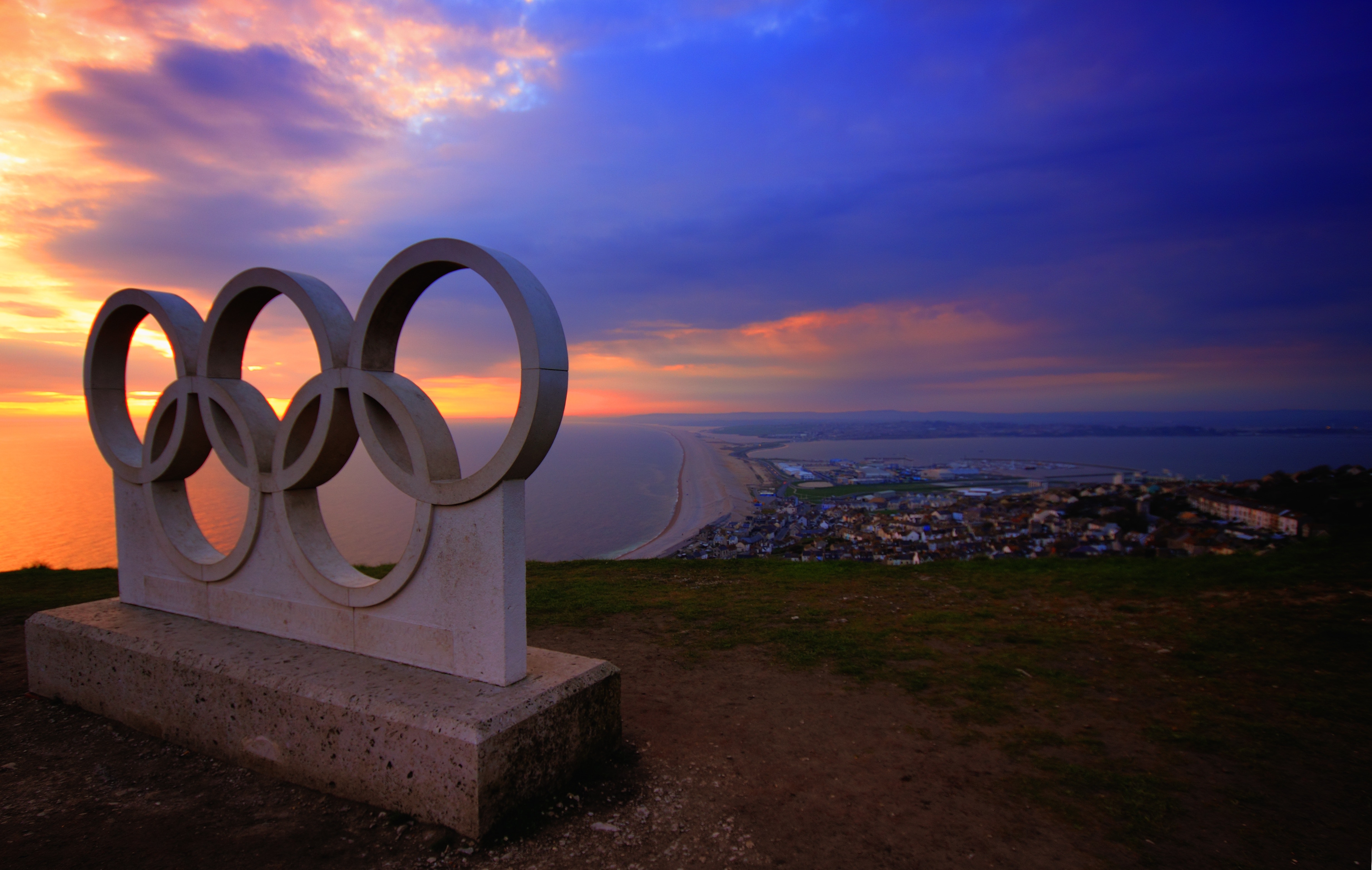
    A Photo of the five Olympic rings. Taken by Kyle Diaz from Unsplash

    During our conversation, I asked Quinn about the Black Lives Matter card in his social media bio.

    “I’ve tried to use the time since BLM was trending last year,” he says, “to educate myself and learn more about systematic racism in our society and what we can do to help end it.”  

    #Deletebanreport is a scheme by the Olympic Federation Ireland calling for a zero tolerance approach to online hate speech by pushing the public – as well as sporting stakeholders – to take action when they see online abuse and discrimination, by deleting comments, banning the offenders and reporting them to the approriate platform. 

    LEN European Long Course Swimming Championships Preview, National Aquatic Centre, Abbotstown, Dublin 12/8/2014. Irish swimmer Nicholas Quinn prior to departure for the LEN European Long Course Swimming Championships in Berlin, Germany from 18th-24th August 2014. Mandatory Credit ©INPHO/Cathal Noonan (No Reproduction Fee)

    Japan will be expecting over 10,000 competing athletes to arrive and once they do, they’ll be confined to the Olympic village. As of this moment, Japan has over 508,350 cases of Covid-19 and over 775,000 citizens have received a dose of the Covid vaccine. 

    The Tokyo 2020 Olympic Games will commence on Friday 23rd July 2021. 

  • Podcast: ‘This is way bigger than Covid’: The pandemic’s effect on climate activism

    Podcast: ‘This is way bigger than Covid’: The pandemic’s effect on climate activism

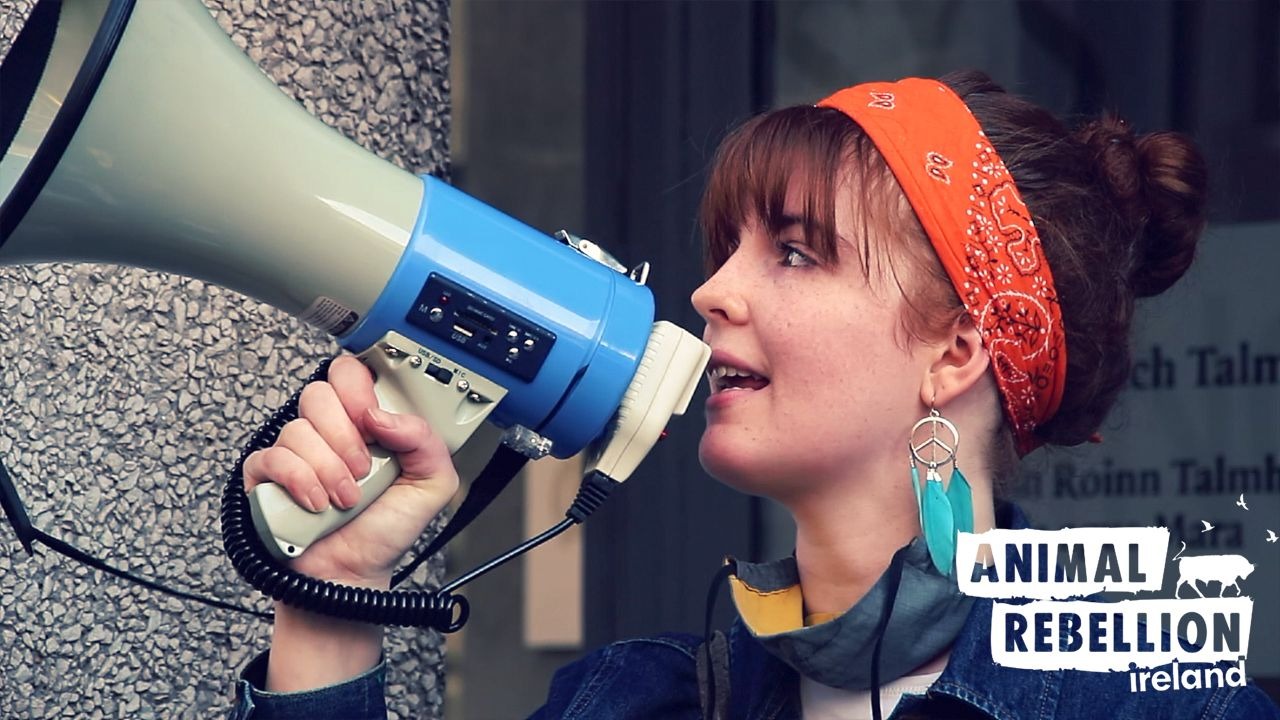
    Ceara Carney protesting at the Department of Agriculture with Animal Rebellion – a subgroup of Extinction Rebellion. Photo courtesy of Animal Rebellion Ireland

    Prior to the pandemic, Extinction Rebellion were one of the biggest groups at the forefront of climate activism, making headlines worldwide. But ongoing lockdowns saw them forced to take a step back and rethink their plans.

    “We are very much on the way back with some new tactics and we can’t wait to get back to the streets in huge numbers again” 

    Ceara Carney

    Actress, podcast host, and activist Ceara Carney wants to make it clear that the group hasn’t gone anywhere.

    “Our main tactic of mass mobilisation was taken away from us,” she explains. “But we’ve had some activists and rebels throughout the pandemic and lockdowns constantly meet to figure out our strategy going forward.

    “We had our People’s Assembly meeting a few weeks ago where there were 116 people on a Zoom call and we came out with some visions of where to go next. We are very much on the way back with some new tactics and we can’t wait to get back to the streets in huge numbers again.”

    Carney attending a protest with Extinction Rebellion and Irish Wildlife Trust to highlight overfishing in Irish waters. Photo courtesy of Ceara Carney

    For the past year, activism hasn’t quite looked like it used to – large scale protests have been replaced with smaller actions and social media posts.

    Last week, two Cork rebels broke Covid restrictions by travelling to Dublin to live stream a graffiti attack on the Department of Foreign Affairs.

    After dousing the building with red paint, the two spray painted phrases such as “no more empty promises” along the exterior.

    The activists explained that the purpose was to highlight the lack of action from the government in response to the global climate crisis.

    Carney portrays a sea goddess at Killiney Bay as part of a campaign to raise awareness for rising sea levels. Photo courtesy of Ceara Carney.

    Following the live stream, many people took to social media to express their disgust at the act of vandalism.

    “People were just really upset that this historical building had been destroyed, and the irony of that just gets to me,” Carney says. 

    “If we don’t change, and the government doesn’t change, that building could be subject to water damage from rising sea levels because Dublin is a coastal city. So if people really cared about that building they would be putting pressure on their government too to act now and fight the climate crisis. Nothing like that will matter if we keep going the way we are going.”

    If you are interested in getting involved with Extinction Rebellion, email welcomexri@protonmail.com

  • Meet the young entrepreneurs using Depop to revolutionise the fashion industry

    Meet the young entrepreneurs using Depop to revolutionise the fashion industry

    Clothes Rack, photo via pixabay

    Fashion has never been more disposable. A quick scroll through the fashion hashtag on Instagram will present you with an endless feed of bloggers’ Shein hauls and Boohoo Ootds.

    Because mass produced clothing is sold at cheap prices, it is often treated as disposable by consumers. It feels like every day there’s a new trend, promoted by the latest influencer, that’s being swept off the rails and destined to spend eternity gathering dust in a wardrobe or decomposing (slowly) in landfill. 

    Keeping up with these trends seems like harmless fun, and it may not be obvious that the clothes we wear are one of the biggest culprits when it comes to harming the planet. Carbon emissions, excessive water consumption and the release of microplastics into the environment are just some of the problems fast fashion presents – not to mention the exploitation of garment workers.

    The good news is that slow fashion is on the rise. With well-known Irish personalities like Roz Purcell and Tara Stewart using their platforms to educate others on the sins of the fast fashion world, as well as to advocate for shopping second-hand, it seems thrifting is now on trend.

    “The fast fashion era arose from the manufacturing of low quality clothes needing to be replaced faster, which in turn created the mindset of clothing being disposable.”

    Blathnaid Devilly

    Depop is at the forefront of the sustainable fashion movement. Experiencing a massive influx  of users since the pandemic hit, it describes itself as “the fashion marketplace app where the next generation comes to discover unique items”.

    The platform is a godsend for young designers and entrepreneurs looking to grow their small companies.

    Caitlín Ní Dochartaigh, owner of Sugar and Spice Vintage, uses Depop to host her store which specialises in 90s and early 00s clothing and accessories.

    “I really love being able to curate the style and aesthetic of my shop to build my brands image. I’m not very tech savvy so it takes away the pressure of maintaining my own website because Depop hosts my shop. The app also has several features to highlight their sellers which from my experience has been beneficial for gaining followers and boosting sales,” she says.

    Ní Dochartaigh, who describes her personal style as a hybrid of a gothic Bratz doll and Sporty Spice, handpicks the majority of her stock from European thrift markets.

    “Sustainable fashion is really important to me,” she says. “Fast fashion has an undoubtedly negative impact on the environment and the people producing our clothes, so sustainable fashion is a great way to avoid these harmful consequences. I also really love finding funky items that you won’t find on the high street. It definitely helps you to cultivate your own distinctive personal style. And it stops clothes from going to landfill which is always a bonus.”

    Blaithnaid Devilly is a Dublin-based stylist who is also reaping the benefits of Depop for her store, Bedelic. A lover of all things 1970s – she tells me she could watch Reeling in the Years on repeat just to see what people wore – Devilly uses Depop to sell handpicked pre-loved garments.

    Bedelic stemmed from her love of fashion’s ability to express one’s personality and a nostalgia for the charity shops she would frequent as a child. Through uploading aesthetically pleasing images and styling unique looks, Devilly garnered attention and built a following on social media.

    “I wanted to create a place where people of any style, size or gender could find what they are looking for and feel comfortable in standing out from the crowd and being whoever they want to be,” says Devilly.

    Devilly admits that her lifelong love for sustainable fashion was less to do with an eco-conscious mindset and more so a desire for an original personal style.

    “It was only when I started to sell online did I realise the importance of someone purchasing second-hand and the positive impact this new obsession could have in fighting climate change.”

    If you’re a fast fashion addict, starting your journey can be a bit daunting. Devilly’s advice is to start with what you already own.

    “Take everything out of your wardrobe and try to style new looks together. It can be quite fun to play dress up while blaring your favourite tunes. Guaranteed you will come up with 10 new looks that you would have bought straight out of a magazine.

    “If you’re not ready to drop fast fashion completely, then I have this rule where if you do buy from brands, buy something that would last over ten years. You see the fast fashion era arose from the manufacturing of low quality clothes needing to be replaced faster, which in turn created the mindset of clothing being disposable.

    “The price of these garments don’t reflect on their true cost. You will certainly have to spend more money on your new garments but the clothing would be better quality and down the line you will purchase less.”

  • Boosting biodiversity before it’s too late

    Boosting biodiversity before it’s too late

    Photo via Pixabay

    All over the world, millions of animals and plant species are currently threatened with extinction. This slow erasure of wildlife is down to nothing other than human activity. 

    As populations rise, we scramble to convert undeveloped land into housing estates, shopping centres and schools. These establishments cater solely to our own demands, with a disregard for the basic needs of the species that inhabited there before. 

    Deforestation is a man-made problem that endangers not only the existence of animals but also our own. By removing trees, overhunting and extracting water, we are contributing to monoculture and ultimately the global rise in temperatures. Without biodiversity, our ability to eat, breathe and survive is severely jeopardised. 

    One way to preserve biodiversity is to get planting. We have all been made readily aware that trees emit oxygen and absorb our carbon dioxide, so a simple solution would be to plant more of them.

    As tempting as it may be to grow a giant sequoia in your back garden, you might not have the space. That’s where Ecosia comes in handy. It is a Berlin-based search engine company that uses its profits from placing advertising in users’ searches to plant trees internationally. 

    One of the goals of the European Union’s biodiversity strategy is to plant 3 billion trees by 2030. While Ecosia’s numbers are nowhere near the billion range, it claims to have planted 122 million trees globally, with 15 million active users. 

    The company says it does not track its search users. “We don’t store your searches permanently, and don’t create personal profiles of you based on your search history. Nor do we sell your data to advertisers. Moreover, we protect your searches from potential eavesdroppers with a securely encrypted connection.”

    Ecosia Logo

    Ecosia issues regular reports on how it spends profits and discusses future projects and plans on its blog, site and podcast.

    Down below the trees, bees play an important role in maintaining the equilibrium of our planet. They are in rapid decline worldwide because of human interference. Bees, as well as other woodland creatures, face habitat loss because of pesticide usage, drought, air pollution and climate change. Without bees, people would lose their farming jobs, food groups and other plants. 

    An Irish company, Beebombs, has come up with a way to encourage bee activity. Beebombs are small wildflower seed balls that can be thrown onto patches of land. Once the flowers have sprouted, they should invite bees and other wildlife. One of the handiest things about the product is that you don’t need to have a green thumb. “Once scattered, you don’t need to water or tend your Beebombs,” the instructions say.

    Another way to protect our ecosystem is by rewilding. Rewilding is all about handing the reins back over to mother nature. 

    One notable case occurred in Yellowstone National Park in the United States.

    In the 1930s, the park got rid of all of the wolves, which inadvertently led to an uncontrollable rise in cervids (i.e. deer), a lack of foliage, and erosion on its river banks. The park service re-stabilised the park’s ecosystem by reintroducing wolves in the late 1990s. 

    In Devon, England, wild beavers were successfully brought in – after a five year trial – to inhabit the east of the county. The trial was so successful that there have been reports of possibly bringing in other animals, such as lynx, boar and wolves.

    “We are on the last bus, but if we all got together and acted now and governments followed, then we still have a chance”

    Randall Plunkett

    Ireland may not be getting wolves anytime soon, but there are some who are making strides in preserving biodiversity.

    Nephin Beg Range in north county Mayo is an 8,000 hectare wilderness area that has been allocated for reforestation, as well as habitat restoration. The motivation behind Nephin Beg is to allow nature’s flow to take over from human intervention so that the environment can thrive. 

    There has also been a wave of farmers who have converted their farms to nature conservatories, in order to improve and protect our decaying ecosystem. 

    In an interview about rewilding, farmer and aristocrat Randal Plunkett told the Irish Times: “we are already on the last bus, but if we all got together and acted now and governments followed, then we still have a chance.”

    Other ways we can prevent the loss of biodiversity are by recycling correctly, reducing our carbon footprints by driving electric, walking or cycling and by going package and plastic free when doing the weekly shop. 

    Small changes over time can make a difference – but how much time do we have left?