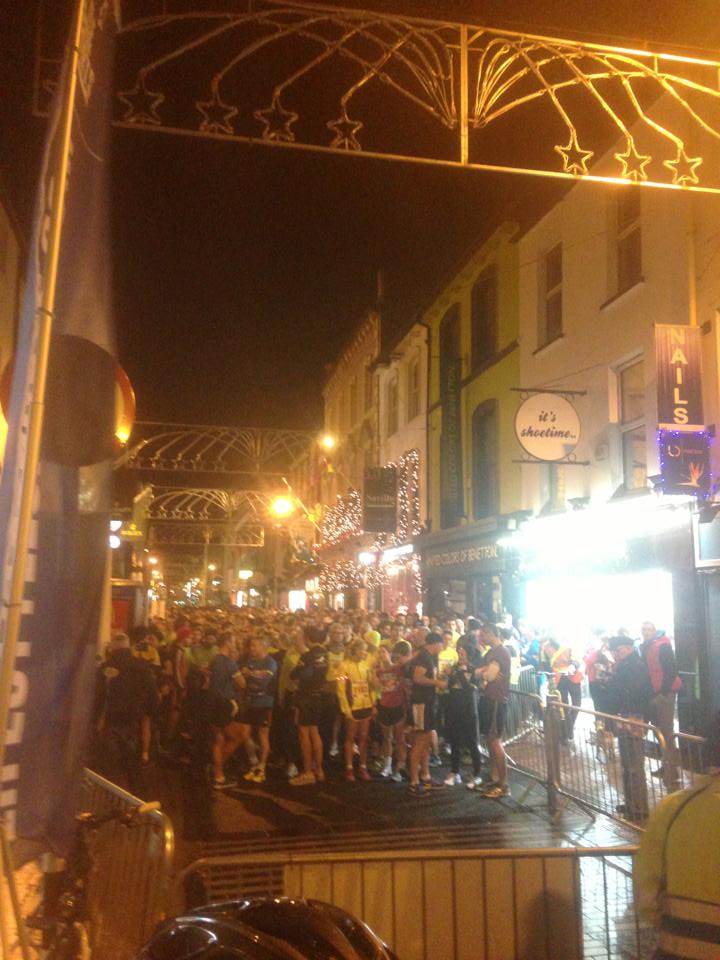
As darkness fell last Wednesday evening, thousands of enthusiastic runners took part in the Run in the Dark event to raise money for the Mark Pollock Trust and spinal cord injuries.
The 5k and 10k races took place simultaneously in Dublin, Cork, Belfast, London and Manchester with some unofficial runs taking place in other towns like Wexford. There were even runs taking place in Sydney, New York and Washington.
The Lifestyle Sports sponsored event was a great success, with neither the cold nor rain deterring participants.
Orry O’Donoghue, a keen runner, took part in the Run in the Dark event in Cork and praised its organisation and everyone’s attitude on the night.
Over 2000 runners took part in the event in Cork, despite the cold winter.
“It was very cool. There were over 2000 people at it. There was a great sense of togetherness and everyone was really enthusiastic. There was just a great feeling about the whole thing, it really was a success”.
The event was the brainchild of Mark Pollock, while other runners raised funds for other worthy charities.
Brother and sister Michael and Áine O’Sullivan took part in the Dublin 10k run, both finishing with great times.
“A lot of people raised funds for Alzheimer’s. I did the run for the Irish Cancer Society because it was something close to me”, said Orry.
Funds are still being counted but it is predicted that thousands of euro have been raised by the event.
A report published by the Royal College of Surgeons in Ireland last month pointed towards a crisis in the emotional well-being of young people in Ireland. The studies showed that one in two are likely to experience a significant problem by the age of 24 – worse rates than those in similar European societies.
From The Catcher in the Rye, back through The Sorrows of Young Werther and Hamlet, literature is full of evidence that the passage through late adolescence and young adulthood is one fraught with difficulties. But modern society has introduced a new set of pressures and expectations that serve to make the transition into adulthood even harder. It is at this age that young people are struggling to find their place in the world. They might be entering the world of work or living away from home for the first time and sometimes it is also a time of experimentation with drink and drugs.
But why do young people in Ireland seem to be faring worse than their peers in Europe? An economic recession, binge drinking culture and a traditionally taciturn approach to issues of mental health are all aggravating factors. Economic recession has put a strain on family life and sometimes left young people depressed or anxious about their future.
“Life in Ireland has changed in the past few years with the downturn of the economy. Family life has become pressurized and young people often find home life stressful,” said Marguerite Kiely, who is clinical manager at Pieta House. “Parents are struggling financially which puts pressure on relationships. Very often parents cannot afford to separate and the atmosphere at home becomes strained.”
Young people are still learning the life skills which allow them to adapt to difficult or new situations. And in a society where young people’s sense of self-worth and status among their peers is often wrapped up in their material possessions, financial pressure cannot often hit harder than we think.
There is still a negative social stigma attached to those suffering emotionally, an attitude which is especially prevalent amongst young people for whom image is all important. It is a pressure which young men feel particularly. At Pieta House they advise using the words emotional well-being instead of mental health because of the negative connotations of the word mental, especially amongst younger people.
The research was conducted by the RCSI Psychiatric Epidemiology Research across the Lifespan Group (PERL) and is the most comprehensive study on the subject ever conducted in Ireland, relying on over 400 first hand interviews conducted with young people aged between 16 and 24.
PERL found that high numbers of young Irish people are experiencing mental health problems at any given time. By the age of 13, one in three will have experienced some kind of mental disorder, a number which increases to one in two by the age of 24. The report revealed that high numbers of adolescents abused alcohol and other substances and engaged in self harm.
“There has being an increase in addictions because of an increase in alcohol consumption and drugs where young people can develop psychosis and become impulsive in their behaviour,” commented Marguerite Kiely.
Learning to spot the warning signs is an essential element in protecting young people who are experiencing difficulties. These might include changes of moods or angry outbursts, isolating themselves from family and friends and social media, giving away processions or a loss of interest in the future. Significant life events like bereavement or parental divorce can also be triggers.
At Pieta House they emphasise the need for young people to look out for each other. The organisation recently launched the ‘Mind Your Buddy’ campaign so that teens worried about their friends can approach a nominated teacher in confidence.
“If a young person is worried about a friend it is a big responsibility so they can really look after their friend by talking with an adult they trust,” said Marguerite Kelly.
Pieta House provide crisis intervention for those who have suicide ideation and engage in self harm. The service is free of charge and they also provide one to one therapy. Pieta provide a weekend service and anyone can make contact to arrange an appointment on 01 6010000.
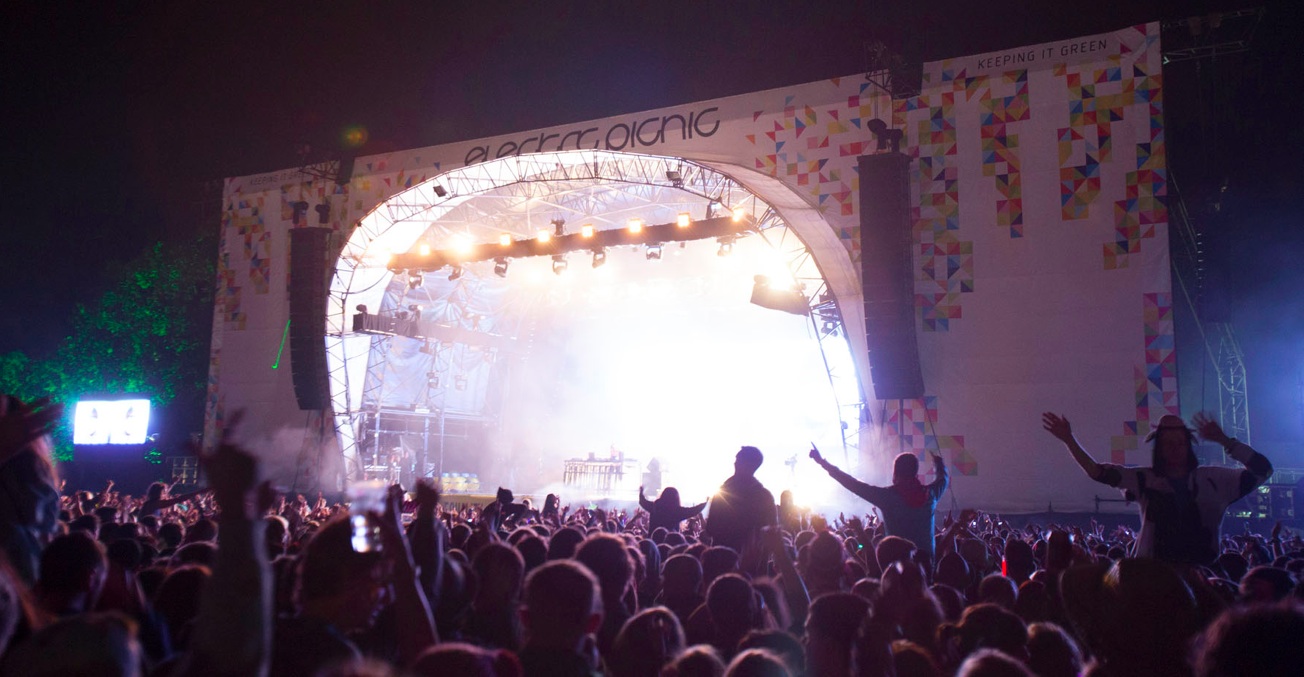
Electric Picnic’s early bid tickets to go on sale on December 2nd. Image by entertainment.ie
Electric Picnic organisers have just announced the dates for their 2014 festival. Similar to previous years the popular music festival will take place on the last weekend in August (Friday, 29th August – Sunday, 31st August 2014).
There is some exciting news for previous festival goers also as Electric Picnic promoters POD announced discounts for loyalty to the festival. Those who can prove they have been to the festival before will be able to avail of discounts and rewards. It is not clear yet how much tickets will cost with this discount but they will be available to buy from December 2nd.
General early Bird tickets are also to go on sale on December 2nd and tickets are expected to be snapped up fast due to hype surrounding this 2013 sell out weekend in Stradbally Hall, Co. Laois.
Lots of people were left disappointed when the 35,000 capacity event sold out for the first time in four years just weeks before it was due to take place. This was a shock to both fans of the festival and organisers who had worried the festival might not go ahead due to a legal dispute regarding ownership.
With a line-up not set to be announced until Easter next year, will you be rushing to grab yourself an early bird ticket? We went out onto the streets of Dublin to find out what some of you thought.
Laura Brady, 23 said “I was devastated tickets sold out last year I waited until the last minute as usual and missed out. I don’t think I will be getting mine right away though, it’s hard to plan something so far away”.
Brian McIvor, 28 said “Unfortunately my Electric picnic days are over sadly. I have been five times and took advantage of the loyalty discount this year. I would recommend it and it’s not too much hassle to save you a few bob”.
Ciaran Ward, 22 said “I think I will get mine in December to save the stress coming up to the festival. Plus its cheaper too, you would be silly not to if you are definitely planning on going”.
Ciara Jones, 20 said “Definitely getting the early bird. Christmas present sorted”.
Niamh McCauley, 19 said “It is so hard to judge without a line-up announced. It’s a toss-up between Electric Picnic and Oxegen for me. I will have to wait and see the line-ups.
Spirits were high on Thursday as crowds from all over came out to see the annual turning on of Grafton Street’s Christmas lights.
This year saw X Factor star Melanie McCabe, along with the Dublin football team lend a hand as the lights were switched on at 5.30pm outside St. Stephen’s Green shopping centre.
Jack White MC’d the event, while the Hallelujah gospel choir led the crowds in some festive singing.
A popular tradition among Irish people, previous years have seen Canadian popstar Michael Bublé and Downton Abbey actor Allen Leech do the honors of lighting up one of Ireland’s most iconic streets.
This occasion marks the beginning of the illumination of Dublin City as Henry Street is set to be lit up on the 17th of November, while O’ Connell Street’s lights will be turned on next Sunday.
When it ended just before Christmas last year, Love/Hate season three had provided Irish viewers with some of the best television ever produced by the national broadcaster.
Stuart Carolan had struck gold with his gritty crime drama set on the streets of Dublin. Drawing in viewers in the hundreds of thousands each week, Love/Hate had the perfect formula.
Carolan and his team of writers showed no loyalty to characters and were willing to wield the proverbial axe over any star on the show.
This past Sunday saw the conclusion of season four in the hit drama, and viewers across the country are feeling more than slightly disappointed.
After the colossal conclusion to season three, fans were expecting another major bombshell this time around. Unfortunately, this bombshell never came.
The final episode, as well as the season as whole, is best described as a let-down. The fourth season followed crime boss Nidge, portrayed brilliantly by Tom Vaughan-Lawlor, as he tries to import a major drug shipment through Dublin port.
Throughout the six episodes, audiences watched as the Garda drug squad monitored Nidge and his crew. The stage was set in the final episode for either a major drugs bust which would see Nidge and his “associates” arrested. When the moment came though, the Gardai, lead by Detective Mick Moynihan (Brian F O’Byrne) made their move to early, and could not pin anything to Nidge.
Much of the series is based around the importing of drugs through Dublin Port. Image by William Murphy on flickr
Many characters throughout the season, who had major roles in the previous season, were brought back simply to play bit parts culminating in them being killed off. I’m speaking of course of Dano, played by Jason Barry, and Debbie, played by Susan Loughnane.
In sporting terms, the writers behind season four of Love/Hate bottled it. They had the potential to create something fantastic, but the series went so slowly, and in such an elongated manner, it suggests that it was written just to set up season five.
While Carolan and his writers failed to kill off any major characters, the season finale saw two minor characters meet their maker. Young gun for hire Wayne Cardiff was gunned down by a former friend, while dentist Andrew played by Peter O’Meara was suffocated by Fran (Peter Coonan).
The deaths of these characters almost make much of the season’s events pointless. Wayne (Barry Keoghan) spent the majority of the series attempting to hunt down Nidge in order to kill him. However, almost miraculously, all was forgiven and forgotten between the two after a minor run in with the Gardaí.
O’Meara also had the potential to play a massive role in the outcome of the series, after he agreed to help Moynihan and his drugs squad before being killed by Fran, without the latter even knowing of the dentist’s involvement with Gardaí.
While the final episode did help to increase the mounting tension between Fran and Nidge, the series never reached the anticipated heights it was believed to be capable of.
The organisation, which is the world’s largest conservation network, maintains a “red list” of animals which are in danger of becoming extinct. The western black rhino is a subspecies of the black rhino, which is currently listed as “critically endangered”.
The official declaration of extinction of the western black rhino comes just weeks after a Texas hunting group announced its intention to auction off a permit to hunt a black rhino, drawing harsh criticism from conservation groups.
The western black rhino was last seen in 2006 in western Africa. It is estimated that there are as few as 4,000 black rhinos alive today. Reasons for the extinction of the species have been cited as poaching and a lack of conservation.
The horn of a rhino is fabled to hold a range of mystic properties, from fertility to having the ability cure cancer. As such, the species is extremely popular with poachers and hunters.
A picture of 2 rhino horns, taken by the uk home office
A favourite pastime of the wealthy and power elite, safari hunting is a cruel and violent practice which has contributed to the endangerment and indeed extinction of hundreds of different types of animals.
Last week, a bizarre case involving rhinos which has its roots in Ireland came before the courts in New York. Irishman Michael Slattery pled guilty to charges he used forged documents to sell horns from endangered black rhinos to a New York collector for more than €35,000.
Rhino horns are sought after for their alleged medicinal properties, as trophies, and are even used to make dagger handles in Yemen. The demand for Rhino horns has only increased as the size of the species has dwindled.
It’s a sad but true fact that animals are needlessly killed every day for the amusement or gratification of “hunters”. The extinction of the Western black rhino is not surprising, but it is a tragedy nonetheless.
I’ll never meet a mammoth, and I don’t know any dinosaurs. Extinct animals are mysterious creatures which we must accept we can only ever know so much about. But species are still going extinct today. Between poaching, competition and habitat loss, new species are constantly being added to the “critically endangered” list.
If current trends continue, many of the animals we are so familiar with today may be completely wiped out in a matter of decades. Here is a list of animals our children may never see.
Rhino
Photo of a Rhino by Jay Aremac
Almost every species of rhino is currently classified as endangered or critically endangered. One subspecies, the Western black rhino was recently officially declared extinct.
Antelope
A subspecies of the majestic antelope is one of the top 100 most endangered species in the world. It is estimated there are currently less than 1000 left.
Gorilla
Photo credit: Dave Stokes
In recent decades gorilla populations have been affected by habitat loss, disease and poaching. All species of gorillas have been classified as endangered.
Pygmy three-toed sloth
This slow moving species is listed as critically endangered and there is believed to be less than 5000 individuals left.
Giant panda
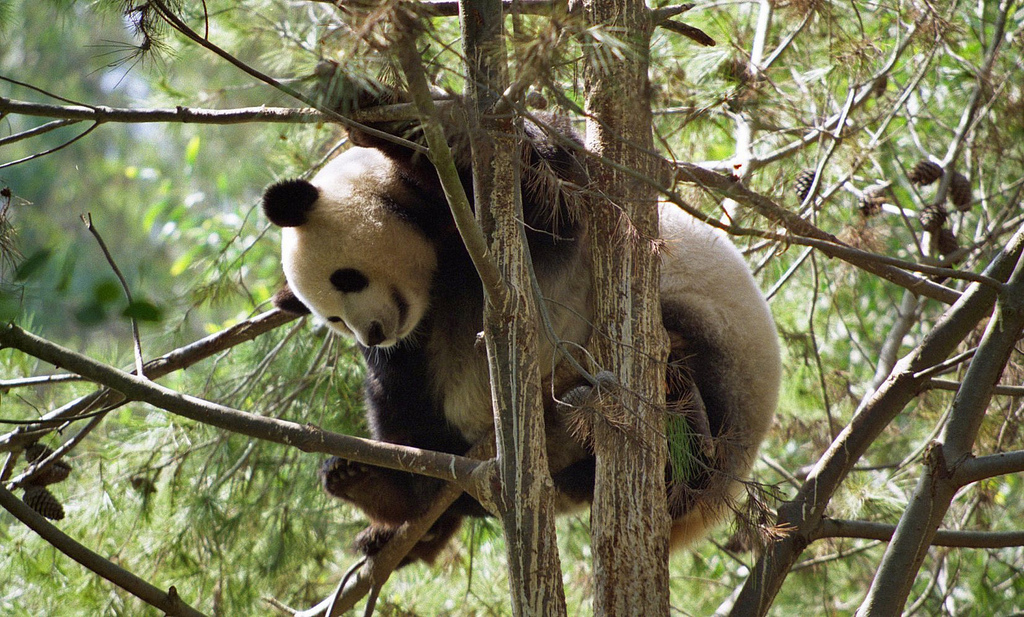
A Giant panda sits in a tree. By Brian Snelson
A native of China, the giant panda is threatened by low birth rates and habitat loss. The mating season of the giant panda lasts for just two or three days and only occurs once a year.
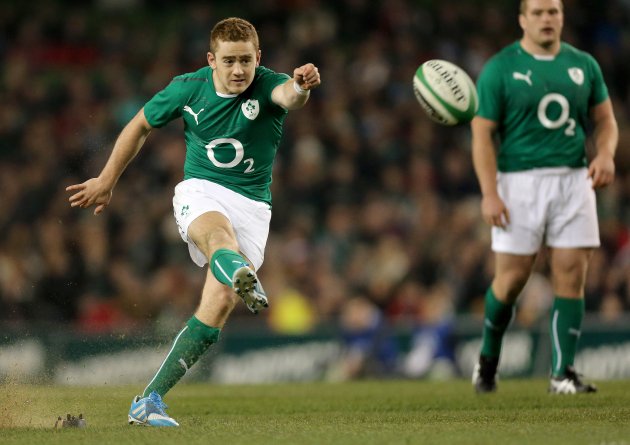
Irish rugby took a significant step toward forgetting last year’s horrific campaign with a 40-9 victory over a disappointing Samoa on Saturday.
Joe Schmidt’s first game in charge could not have gone better, though the New Zealander was eager to dampen enthusiasm and described his side’s performance as “untidy” but “earnest” in a post-match interview.
Regardless of Schmidt’s views, Ireland’s performance showed there are indeed several reasons to feel positive going into this season’s 6 Nations.
Debutantes have a Ball
Schmidt handed a starting debut to Jack McGrath in place of Cian Healy, while Dave Kearney made his first Ireland appearance as a substitute in the 60th minute. McGrath went on to win the RTÉ Man-of-the-Match while Kearney scored a try five minutes after being introduced, following it up with a second 13 minutes later.
McGrath’s performance in an impressive scrum, as well as his work in the loose, means Cian Healy will now have to fight the 24-year-old for the loosedhead position at both provincial and national level.
Captain Fantastic
Last season much focus was given (undeservedly) to Jamie Heaslip’s captaincy, critics pointing to his perceived lack of form or experience as proof the decision was a mistake. There can be no such discussion this time round, with the talismanic Paul O’Connell chosen to lead his country. Though Heaslip captained the side on Saturday due to O’Connell starting on the bench, the Munster second-row was introduced in the second-half and had a telling impact as Ireland scored three tries in that period.
However, with Heaslip and Munster captain Peter O’Mahony in the team alongside former Ireland captains Brian O’Driscoll and Rory Best, there will no shortage of leaders in the dressing room.
Strength in Depth
The calibre of the replacements available to Ireland on Saturday was great to see, especially after the previous injury-ravaged campaigns. The fact that the match-day squad was missing quality players such as Simon Zebo, Johnny Sexton, Stephen Ferris and Luke Marshall is testament to the resources available to the national manager.
Added to that, Paddy Jackson’s performance confirmed the fact that Ireland can now call on three top-quality No. 10’s. After years of needing utility-man Paddy Wallace to act as cover for Ronan O’Gara, there is a genuine competition for places with Jackson, Sexton and (despite his current situation at Leinster) Ian Madigan all vying for a starting berth.
The Man in Charge
Schmidt’s post-match comments made clear he will not be getting carried away after one match. Singling out Brian O’Driscoll, Irish rugby’s Messiah, shows that the Kiwi will not be phased by big names or past achievements.
The fact that two of the manager’s substitutions converted three of the teams five tries highlighted his tactical nous, Sean O’Brien with a trademark barn-storming run over the line five minutes into the second half. Dave Kearney will draw great confidence from his cameo, while the selection of O’Connell as captain and his decision to start Jackson over Madigan will prevent any whispers of a Leinster bias from the former Leinster manager.
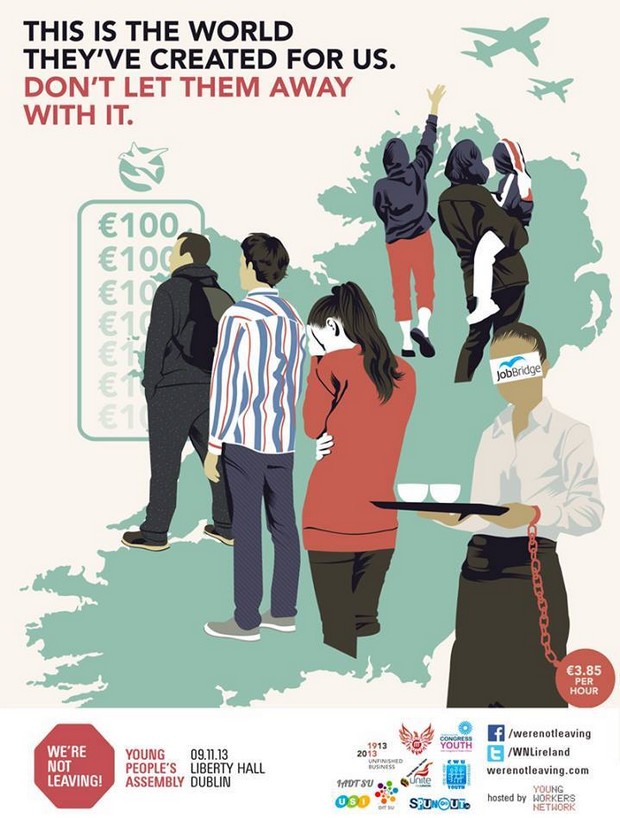
The ‘Young People’s Assembly’, organised by the We’re Not Leaving initiative and the Young Workers Network, met in Liberty Hall on Saturday to discuss the uncertain future of young people in Ireland.
The aim of the rally was to draw attention to the plight of those in this country under the age of 25, looking at the impact of fee increases and grant cuts, as well as the problems of housing, mental health and unemployment benefit.
Nearly 200 people attended the assembly, held between 11am and 5pm and accompanied by the #werenotleaving hashtag, which trended in Dublin and Ireland on Friday and Saturday as word of the event spread.
Laura McKenna of the Young Workers Network and Shane Fitzgerald from We’re Not Leaving, along with Moira Murphy, opened the debate and called for the youth of Ireland to organise and engage in an attempt to prevent what they see as a concerted attack on young people from those in power.
“Forced emigration is not a lifestyle choice, it’s a government policy” said Fitzgerald, as letters from the Department of Social Protection advising of jobs abroad were publicly destroyed.
As well as general debate, there were several helpful talks and inclusive workshops held, the pick of which concentrated on student issues and the raising of third level fees, ran by Joe O’Connor and Patrick Cole.
The topics of internships and unpaid work-experience were raised, with many of the attendees unhappy with the perceived exploitation of young workers by employers.
Stronger regulations for landlords were also a main talking point, with those present complaining of exorbitant prices and refusal of rent allowances.
It remains to be seen what impact, if any, this show of solidarity will have with those who can directly inspire the changes needed.
Every year after the dust settles and the All-Ireland has been won, the attention quickly turns to the Club game. Local pride, playing with family and friends, the parish team are all at the core of club football, but unfortunately our game’s biggest prize is flawed.
There are lots of reasons, out of the GAA’s control, that don’t allow the club model to function as well as the county one. I will look into some of the main reasons why the Andy Merrigan cup is over shadowed by Sam MaGuire.
Karl Lacey played every single game for club and county in 2012 but only played once in 2013 due to injury credit gaa.ie
1. Staggered championships
The County Championships are all staggered, depending on when your county exits the race for Sam. The Louth championship could start in early June whilst the Dublin equivalent won’t begin until late September. With no fixed start date but a fixed final date it can lead to too many games in short spaces. When Donegal won the 2012 All-Ireland their club championship was ran off in five weeks, champions St. Eunan’s played eight games in that period. ‘‘I remember going to games on Tuesday’s and Wednesday’s in the middle of November’’ said Mark Boyle of Ardra.
2. Bad Conditions
The club championships are usually played over the winter months, especially the provincial series’. By playing these games on soft pitches and in desperately cold conditions players don’t get to express themselves as they would do over the summer. Due to the conditions games are much slower and more players get injured. Leg injuries are ripe in the Provincial Club Championships.
3. External Commitments
Should you be lucky enough to prevail in your county and have county players or students on your team, it is nearly a burden. County players are wrecked after a tough seven months, at least, and both the colleges and schools are just beginning their campaigns. Also, the selection to play with your province and country are problems as both the Railway cup and the Cormac McAnallen cup squads are being finalised.
The distraction of playing for your country is hurting the club game. [image: zimbio.com]4. Burnout
A professional Rugby player and/or a professional soccer player gets six weeks off at the end of a season, this time is used to recover and allow the body to relax after a tough season. The most a club player gets due to one commitment or another is, at the very most, three weeks. Training for county and clubs starts the first Tuesday in January. Harry Dawson of Skerries Harps says that he feels mentally and physically wrecked all the time ‘’I find it hard to go training and all I want to do is sleep’’.
I don’t know whether its a coincidence or a fact, but if you look at the counties and provinces winning the All-Ireland’s you’ll very quickly see that the club football in those counties is struggling and vice versa.
The All-Ireland club championship is the pinnacle of every single player’s career but due to the above reasons we are endangering of ruining our game. The GAA need to reform their fixtures and get a more coherent agenda put in place.
I have taken the first step by giving GAA president nominee Aogan Farrell a copy of this article.












![The distraction of playing for your country is hurting the club game. [image: zimbio.com]](https://i0.wp.com/thecity.ie/wp-content/uploads/2013/10/tommywalshaustraliavirelandinternationalc4v4d7ub7ksx.jpg?ssl=1)
You must be logged in to post a comment.