An independent designer with flair for colour and texture
Peter Willis is a multi-disciplinary artist who graduated from Belfast Art College with an Honours degree in textile and fashion design, specialising in weaving. After graduating he worked for the National Trust as a textile conservator for two years. He then received a scholarship to go to business college in Canada to learn how to run a business in textiles. From there he went to Guatemala and worked with an artisan association in conjunction with Oxfam Trading. Guatemala inspired him to work with textiles and pottery. When he returned to Ireland, he worked as an interior designer for twenty years and has always believed in connecting people with their places. He enjoys working with ceramics. He also has a love of fabrics and colour and uses many different types of materials in his work. His masks are inspired from his time working with indigenous cultures. He says he has now come full circle and works as a muti disciplinary artist mainly in textiles and fashion. Peter works from home when not at fashion shoots and exhibitions.
For more information, contact Peter @peterw_illis
Navaho Shawl
This piece was inspired by the Navajo First Nations people – and the shawl was made in the shape of a dream catcher and made with alternative bands of textural yarn. One of them is a very soft chunky, fluffy yarn, and the other, a bright fluorescent pink, is more a flat yarn so each band when knitted up with different size knitting needles creates different textures.
Alien Monkey Fantasy Head Mask
A mask with a verdigris lustrous glaze which is quite a technical procedure. Layers of other glazes were applied, and a wax resist was finally applied. Patches of the eyes and cheeks are applied in several different layers. Then masked over which gives the textured effect.
Using the leftovers – Multi coloured hand knit scarves
Give peas a chance
A pun on “give peace a chance.” This is a shoulder piece; part of a costume made for a green party event. There was also a bag made from a pack of frozen peas which completed the ensemble. The green balls were made from pom poms.
The Head Piece
Head piece modelled in a fahion shoot for Culture Night in Gallery X, Hume Street
Neck and shoulder piece together
Moon in the Man
The mask represents nature within us. We are nature. The moon is in us.
Industrial Death Mask – Big mouth, no eyes
Big mouth is a reference to big loud politicians. An acknowledgement to indigenous cultures and how they lived a primitive life, but they were wiser in how they treated the planet. They lived in communities in relative peace without destroying the planet. Celebrating indigenous culture from all part of the world
A hand knit gilet
A colourful and practical garment worn over tunic with slightly heavier knit sleeves as worn by designer in first photo
There are no cheap shots when it comes to the price of coffee
The business of coffee, like any other business, has its up and downs. However, the cost of coffee in the last few years is showing an upward trend.
Statistics released by the Central Statistics Office show that coffee prices in Ireland will have risen by 10.6% by the beginning of November 2025. This is also in line with a general increase of the overall Consumer Price Index (CPI), which has increased by 2.9%.
Internationally, coffee prices have risen by 109% globally, and this is just in the past year. In the past five years there has been an increase of 145%, which is a very high jump from previous years. This has to do with the type of coffee beans being used, the most popular coffee bean being Arabica.
Stephen Kennedy, a café owner in Dublin has been involved in the business of coffee for ten years. “It is challenging. Coffee prices have risen by about 40% in the last three years,” said Kennedy. “There are several reasons for this. Firstly, the demand for coffee is increasing. There are issues around the supply chain because of weather events like floods and droughts, which result in crop damage, all of which contribute to the higher cost of our coffee beans.” Milk has gone up by 65 %, packaging has increased by 40%, insurance has gone up by anywhere between 45% and 70%. The highest cost increase is in the price of a latte, and that is a 25% increase over the last 3 years. So, our cost base has increased by anything up to 70% but we can’t pass that on to the customer. Businesses are absorbing the cost of the increases, and the only way to stay afloat in this sector is to get busier.”
The Central Statistics Office (CSO) released figures that show that dairy prices have soared since November 2024 with the national average price of two litres of full fat milk having gone up by 10c. As of November 2025, this has since shot up by a whopping 12.1%, or a total of 27c. This doesn’t seem like a lot but when running a business which buys in bulk supply, this is a significant increase.
Kennedy also said that rising electricity costs are another challenge to keeping the business going. “Prices increased by 200% because of the war in Ukraine. They have now fallen back to 122%. The minimum wage has also had an impact as it has increased by 4%. Although I am in favour of improving pay and conditions for lower paid workers, the real question is affordability and how businesses meet those increased costs.”
According to IBEC, 84% of businesses surveyed were planning a pay increase in 2025, with a forecast average increase of 3.4%. In 2024, the average increase was 4.1%.
“We have pushed very hard for a reduction in the VAT rate which will come into operation in July 2026. But there are other factors like national minimum wage increase, pension auto enrolment, statutory sick pay, and additional bank charges which must be factored in. These are all costs that businesses need to shoulder which make the business model very challenging and very tricky. It’s a balancing act to make it work.”
So how to keep afloat and stay profitable with all these charges?
“Get busier, have an excellent product that people will return to, create a neighbourhood style café that is part of the community and be sensitive to the environment you are working in.”
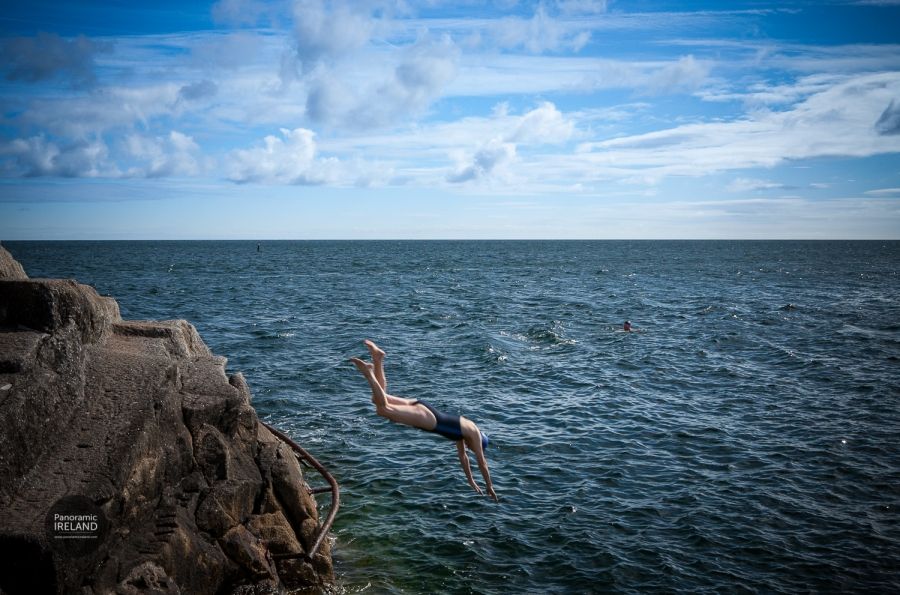
A sunny Sunday in autumn and the sea is still warm in Sandycove. Its a ritual for many people who have the time to make swimming a part of their routine. Some people shared their thoughts with me.
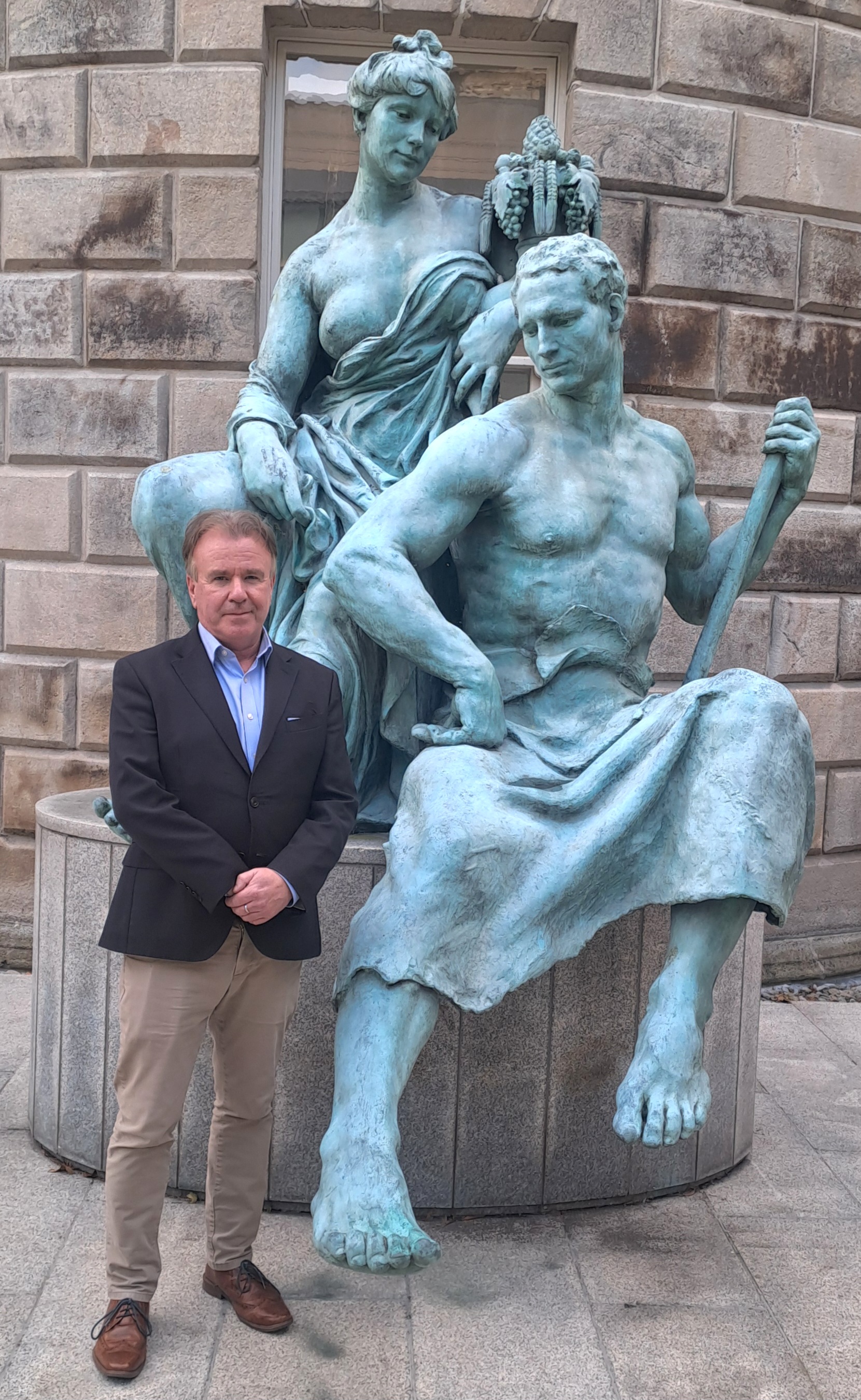
Senator Tom Clonan – retired army captain, security advisor, member of Seanad Eireann, author and carer
Tom Clonan is a busy man. He started his working life in the Army. He later became an academic, lecturing in the School of Media at TU Dublin. From 2001 to 2016 he was the Irish Times security analyst and since then has been an analyst for The Journal.ie.
He was elected 3 yrs ago as an independent senator from a constituency of over 100,000 Trinity graduates from all over the world.
The issue of disability rights is close to Clonan’s heart. He has recently drafted two important bills.
“The first is to give disabled citizens the legal right to services, supports, therapies and surgeries that are set out in their assessment of needs, said Clonan.” These socio-economic rights exist in every other jurisdiction in the European Union and in the UK.
“In many ways we are 30 to 50 years behind the rest of Europe in relation to fundamental legal rights for disabled citizens. The reasons for this are historical. When the state came into being in the 1920s the catholic church played a central role in carrying out many functions in our society, such as education and medicine, whereas issues around disabilities were often dealt with in congregated settings by the catholic church. This aspect of care was seen through the prism of charity.”
He hopes to bring this Bill to its final stage by christmas and then seek to have it introduced into the Dail.
“As a single lone independent senator and as a member of the opposition, I am very proud to bring a bill to completion. I’ve learnt a lot”.
The second bill is more complex. It is called the disability personalised budget bill of 2024. The plan is to progress this, so disabled people will have autonomy over the means of support they need to fulfil independent fulfilled lives. “Due to cultural and historical reasons, we are outliers and behind Europe in this regard”.
Even though today the religious orders no longer have the same level of control in society, the idea of charity compliance and conformity troubles Clonan. They have now been replaced by ‘for profit’ corporate care providers, which Clonan says is “an appalling vista” as they are still seen through the prism of charity, as the family, not the constitution, is considered the primary carer. We have chosen a very poor model due to our post-colonial catholic past.
“The Government is not listening to us. They listen to the financial sector, construction, big pharma and hospitality, but don’t listen to us because their views are framed by charity. They seem rather surprised when disabled citizens and carers like myself speak out because we are supposed to be happy with what we are given”.
Many of the disabled have major obstacles to overcome. They are living in enduring poverty or are enduring homelessness or suffering from sub-optimal care from not getting spinal surgery, occupational therapy, and speech and sports therapy.
There are a number of disabled persons organisations run by disabled persons. However, they are not Government funded, so the government is reluctant to deal with them. “They prefer to deal with more established corporate care providers, which is wholly inadequate”.
“It’s a bit like the Government dealing exclusively with IBEC and refusing to deal with trade unions. It is hostile to the idea of socio-economic rights for the disabled. They don’t believe they are worth it and see it as a matter for charity.”
Besides his interest in disability rights, he has a firm commitment to Ireland’s neutral status and is lobbying very hard to maintain the “triple lock” which the Government is trying to get rid of.
“It is intimately linked to our neutral status, and this is a very dangerous situation for Ireland. The Government is not modifying or amending it but removing it completely, and once it is gone the government can send any number of troops to any part of the world by a simple majority.”
“In the absence of the triple lock, we should have an explicit constitution on neutrality like in Switzerland and Austria, so decisions to send our troops anywhere would be tempered by what’s set out in our constitution”..
Whereas I trust the democratic process, I don’t necessarily trust the decision makers.
“Governments make mistakes, the current debacle concerning the Presidential election is one example”, said Clonan. Ireland is completely defenceless in air, ground, maritime and cyber domains. We need to invest in our own defence”. “If the government insists on removing the triple lock, I will table amendments to propose alternative safeguards to protect Irish citizens, particularly Gen Z and Gen Alpha, who have already been very badly treated in terms of their right to housing and homes”.
As far as he is concerned, the concept of future peacekeeping is gone. “It is now peace enforcement”.
“We are coming under pressure from our European partners”. The government believes this view would be good for research and development and financially attractive in terms of foreign direct investment. They have agreed to sign up to a package of weapons investment of nearly one trillion dollars over the next 5 to 10 years”.
He is adamant that more money needs to be spent on houses and the fundamental rights of disabled citizens, as very little has been done to address these issues in the budget.
In 1996 he did a PhD on how women were treated in the army. It looked at the discrimination and systematic sexual violence against female personnel. Military authorities alleged that he falsified the findings.
He was subjected to whistleblower reprisal, isolation and character assassination. He is the only person to have been sanctioned for his enquiry findings. In 2021 The Women of Honour from the army came forward and made fresh disclosures of sexual violence against them while serving in the Defence Forces.
His hopes for the future? That more money is spent on health, climate change measures and housing.
Does he have any down time?
.
“Apart from work and raising a family, I’m a full-time career. I have no hobbies or interests. It is simply not possible. This is the case for most carers”.
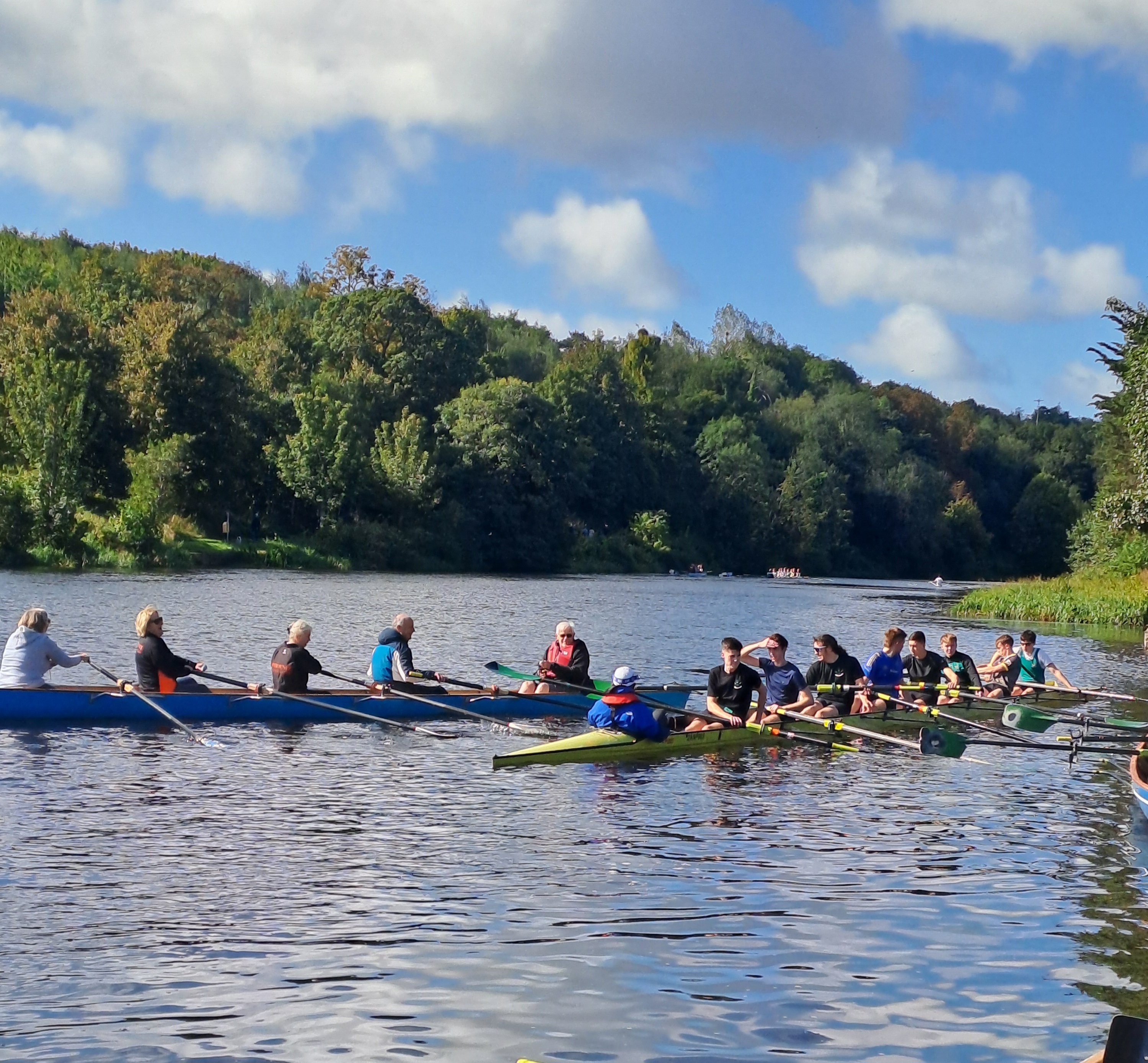
Rowing, which has been described as a natural anti-depressant, is gaining popularity in Ireland, and there are now over 100 clubs around the country which are affiliated with Rowing Ireland.
If you are looking for a low impact sport, but one which engages more than 80 per cent of your muscles, then rowing may be just the thing for you. According to Jennifer Butterly, a member of Neptune Club, It could even be life changing, She says “for that hour I’m not thinking about anything else, I’m completely in the moment. I’m so focused on trying to remember all the steps that I am removed from my everyday life. Whatever is going on is tuned out, and on the little breaks when a newbie is being instructed, I can take in the beautiful surroundings. It makes me so happy to be alive”.
Richard Ryan : Photo Mary Phelan
Richard Ryan is a coach with Neptune Rowing Club, Island bridge. After an invitation to the club over 30 years ago, he said he got hooked and just kept coming back. He rowed competitively for several years before becoming a coach.
“Rowing is like a natural anti-depressant”
Jennifer Butterly
He says “I just love the place, the river, and the setting. There are great health benefits with rowing, you’re using every bone in your body, from your neck to your toes. You learn a new skill; it’s a good all-round outdoors exercise – it‘s different”. He also enjoys teaching people who’ve never been in a boat before to master the skill of rowing.
“People often learn things about themselves too, like the need to be more flexible, or to stretch more, and to learn to concentrate and pay attention to detail as one false move, like stepping into the boat the wrong way, could cause damage to the boat, or endanger the lives of other rowers”.
Another reason why some people like the sport is because it is non-contact, which means you’re not going to collide with another player or get injured, unlike sports such as rugby or football. Richard adds “It’s not all about brawn, it’s also about engaging your brain, and mastering a technique”.
One of the reasons for the rising popularity in rowing is because of the success of Irish rowers in the Olympics over the last few years. Only last month Ireland won a double gold on the last day of the World Rowing Championships in Shanghai. One was for an individual gold, the other being won in a mixed double sculls.
“The main ingredients for success are “commitment, a good coach, a natural technique, and just showing up”.
Each rowing club is different, but in Neptune you can sign up for an 8-week course, for 1.5 hours on Saturday or Sunday mornings, all year round. If you miss a class for one week, it is not a problem, as they are run on a rolling basis, so you can go the following week instead. The classes consist of what they call ‘trips ‘– and for beginners, trips mean going up and down the river twice, which is the equivalent of 7 kms.
Another rower in the club, Ellen Roche, said that “apart from offering a full body workout, the personal benefits of learning something new feels like a great achievement. Also, the huge volunteer effort involved in making it all happen is very impressive”.
Here’s to learning new skills and the joy of being out in nature.
De Profundis – a story of love, loss, anger and acceptance
What an opportunity to feel the depth and sorrow of the love of one man for another.
To celebrate 125 years since Oscar Wilde’s death, the Museum of Literature Ireland (MOLI), has produced in film key passages of the letter described as a love letter called De Profundis – written by Wilde to his lover ‘Bosie’ while Wilde was in prison from 1892 to 1895.
Photo: Mary Phelan
Luke Fallon, Visitor Experience Assistant in the museum says “although primarily people will come to the museum for James Joyce, there has also been a great interest to learn more about Oscar Wilde”.
He says that apart from celebrating 125 years since Wilde’s death this year “most people will relate only to his witticisms, whereas this piece shows a very profound and different side to the man”.
The background story is that Wilde and Lord Alfred Douglas (Bosie) were in a relationship together, much to the disgust of Bosie’s father, the powerful Marquess of Queensbury, who was a very cruel man and was determined to ruin Wilde, which he succeeded in doing, by taking him to court for gross indecency. He won his case. Wilde was sent to Reading Gaol for two years.
The film consists of the reading of some passages of his letter written to Bosie by a number of artists, writers and activists from the LGBTQ+ community.
In the reading we learn how Wilde, after his conviction in London, was brought in shackles on a train from Reading Gaol where he spent two long years in prison. The conditions were rough.
In prison he goes through a whole gamut of emotions, including anger, sadness, and incomprehension as to why Bosie never wrote to him all the time he was incarcerated. He realises that he made a huge psychological error in going with Bosie’s suggestion to press criminal libel charges against his father. He contemplates the affection he had for Bosie, and how little it was returned. In hindsight he realises he should have got rid of him before his own ruination. He recalls the bills that Bosie ran up during his stay in a Brighton hotel with a friend and which were so onerous that Wilde could not pay them. As a result he could not leave the hotel, and was ultimately arrested.
As the letter continues, he concludes that hate was always stronger than love with Bosie. He says hate blinds people, and Bosie was blinded by hate. He questions if Bosie had ever known what love was, and also why Bosie never wrote to him, not even once while he was in prison. However, he realised Bosie was also suffering, and that he had to forgive him, and wanted to turn what happened to him into a spiritual experience. He makes references to God and of learning the meaning of sorrow and beauty.
He writes “beauty and sorrow is all that interests me now. I used to live purely for pleasure and lived a selfish life. I no longer want this life.” He writes that “pain unlike pleasure wears no mask.” Prison had given him new spirit. He used to say to himself “what an ending, now I think what a beginning.” He longs to be in nature again, seeing the flowers and trees bloom again. He looks forward to meeting Bosie when he is finally liberated from prison.
The film is approximately 50 minutes long and is in a quiet room, away from the main exhibition area on the 3rd floor.
The film runs until early October.
MOLI is open 7 days a week, and also has a café and outdoor dining area.




You must be logged in to post a comment.