Author: Ross Mc Govern

  • The Guarantee Film Review

    The Guarantee Film Review

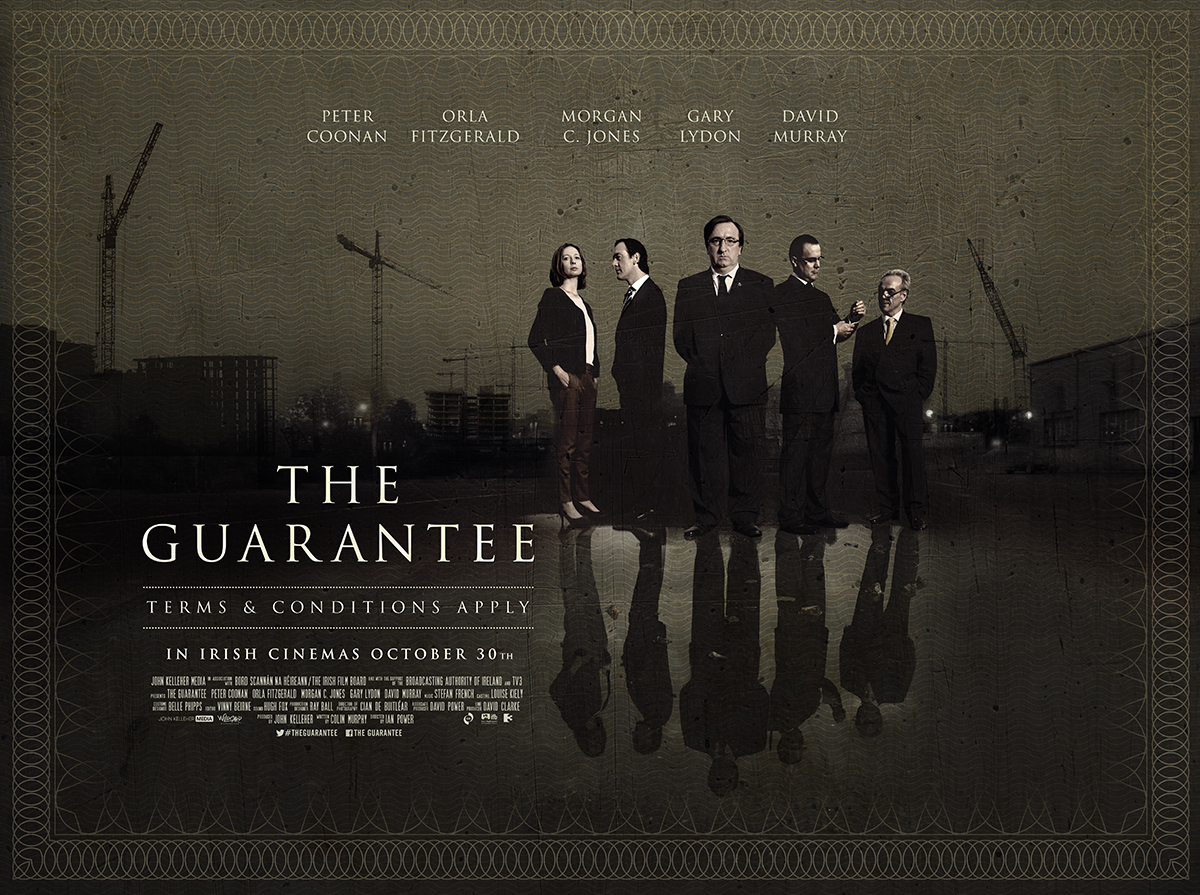
    If you’re confused about what actually happened when Ireland secured its banking guarantee from Europe (and who isn’t), then this film from director Ian Power and starring Peter Coonan from Love/Hate should go some way to have you at least sounding like you know what you’re talking about.

    The film is neither documentary nor drama; it falls somewhere in between. The problem is that it probably should have done one or the other. As a documentary it could have presented the events with authority, but if we call it a drama, then there is far too much financial jargon to keep the narrative attractive. It’s not a monument to the power of cinema, but it is an important document for us as a people.

    There is a certain pleasure to be taken from having the people involved at the time represented on the screen and acting out the events that caused the country so much financial hardship. It’s car-crash cinema if you will. The anger and frustration of seeing our politicians joking around while the country’s financial health crumbles is very satisfying in a hateful, gloomy, masochistic kind of way. Perfect for an Irish audience if you ask me!

    The film was originally a stage play and it shows. There are lots and lots of scenes of people talking in rooms that have been sexed up with flashy bits of emails and newspaper headlines running across the screen.  It’s a shame when filmmakers don’t stray further outside their comfort zones and try to tell a story in a fresh way.

    The point of watching a film like this though isn’t the film itself, it probably has more to do with who you watch it with and the conversation you have after the credits roll.

    Image: Wildcard Distribution Video: Limelight communications

  • 12 Pubs – Which ones to go to

    12 Pubs – Which ones to go to

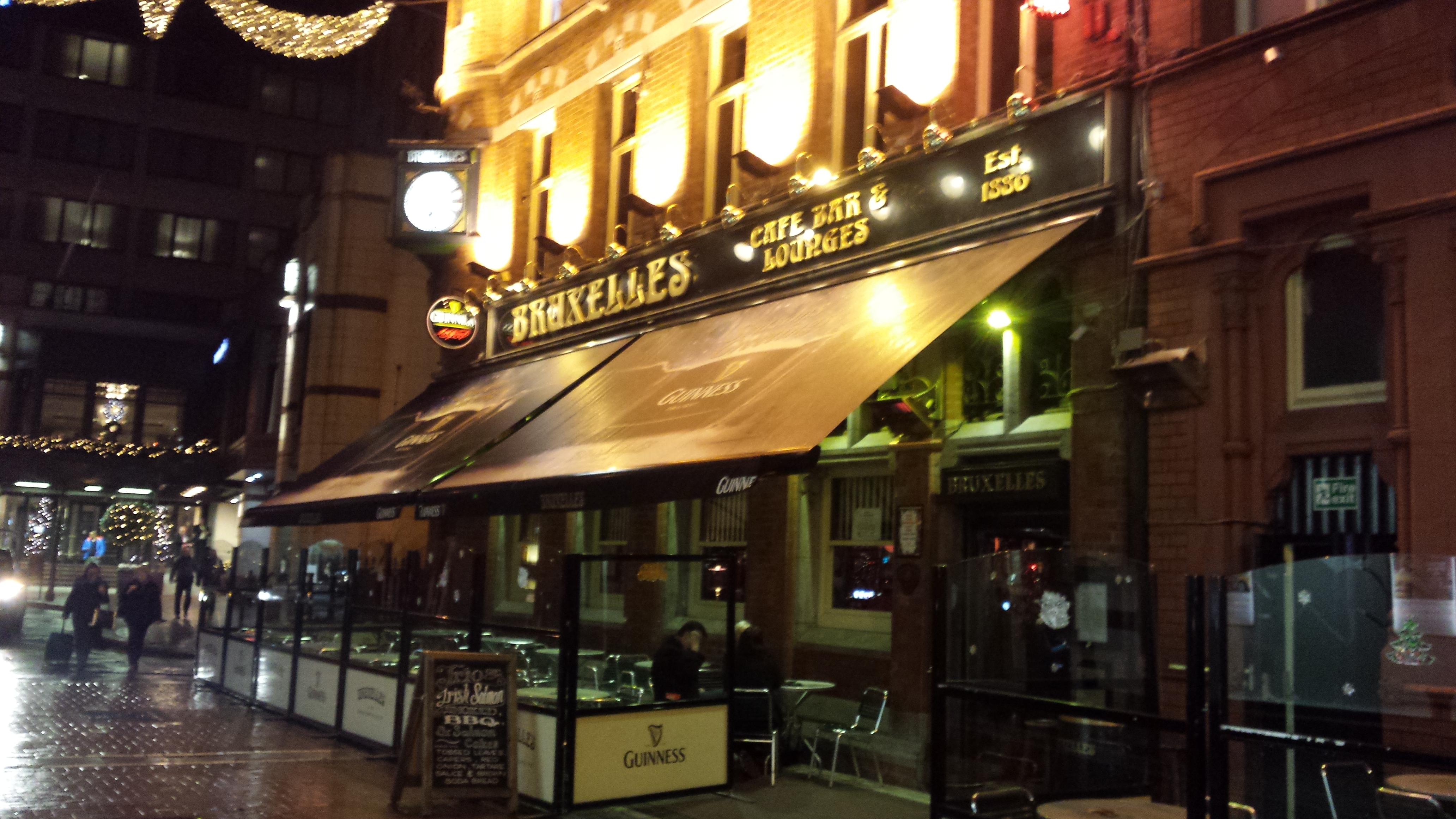
    The 12 Pubs has become a feature of the Christmas season for many Dubliners. For bar staff it can be a trying ordeal, because of this many establishments choose not to let large groups through their doors during the festive season. The City is always keen to lend a helping hand and here we present to you a list of places that are –shall we say- willing to accept you and your friends.  

    Some places complain that accepting large groups disturb their local customers and that due to size they’re not in a position to accommodate the larger numbers of patrons. However some places like The Bernard Shaw sum up how they feel about with the attitude that: “Sure, it’s Christmas”.

    But we would urge you that others are looking to strike a balance between regulars and still have you enjoy yourself. Cassidy’s on Camden Street told us that: “It’s fine as long as you can control it”.

    Others though like Flannery’s, also on Camden St, simply say: “Sure we’re designed for that type of thing”. Wherever you do go we ‘d like to suggest that you bear in mind the person behind the bar and on the floor, helping you enjoy your night of festive revelry.

  • LuxLeaks explained ahead of Juncker’s G20 appearance

    LuxLeaks explained ahead of Juncker’s G20 appearance

    800px-Jean-Claude_Juncker_2012-06-27_d
    Jean Claude Juncker Image: Zinneke bit.ly/1qExEq7

    European Commission president Jean Claude Juncker has accepted the political responsibility for Luxembourg’s tax practices but the country’s former finance minister, with a 27 year tenure, also added that he was not the “architect” of the problem.

    What is the problem exactly or how was money moved around Europe by multinationals in order to avoid paying large tax bills? Financing structures are in place in Luxembourg which help companies pay very little tax, these structures also have the benefit of giving these companies tax deductions in the country where they have their headquarters.

    So far so easy, but it gets complicated. Companies routinely loan money from a branch in one country to a branch in another. For the company receiving the loan there is a tax deduction, i.e. Ireland offers tax deductions for companies that wish to set up in its borders. This we know and are used to. The initial loan’s interest payments are taxable in the country the loan was issued from. It is at this point that a loop hole is needed.

    The company let’s call it ‘A’,( but we’ll still keep calling Luxembourg by its name), is based in Ireland but sets up another branch of itself in Luxembourg, but this is a branch of its headquarters, not just any old branch. At the same time the initial branch of ‘A’ sets up a financing wing of its operation. These are the offices that have one mail box and one person employed that have been reported on in the media.

    Like before, the initial branch of ‘A’ moves loans from its financing wing to itself, all inside Luxembourg’s borders. The financing wing would then have to pay interest payments, one would expect. At the same time ‘A’ makes an identical loan to its headquarters in Luxembourg.

    This is where the Luxembourg’s tax laws come to the party. An application is made to the tax authorities that both ‘A’s headquarter’s branch and the financial wing of the initial branch should be able to make one single tax return. The interest payable and the tax deduction meet in ‘holy taximony’ and cancel each other out, leaving albeit a negligible little tax bill to be looked after.

    On the point of the #LuxLeaks, as they have come to be known, Juncker said that it was an inevitable outcome of Europe having so many different standards. Some have called for his resignation over the issue, but this has been rejected by him stating: “There is nothing in my past indicating that my ambition was to organise tax evasion in Europe.”

    This all comes ahead of the G20 summit in Brisbane, Australia where he will represent the EU. One of the main topics at the summit will be signing off on new measures to try and curtail corporate tax evasion.  In an interview with The Guardian parliament member Margaret Hodge called it “the height of hypocrisy”.

  • The rebirth of Rathmines

    The rebirth of Rathmines

    Ross O’Carroll Kelly once described Rathmines as a shanty town when compared to Ranelagh and Rathgar. However, these days Ranelagh is something akin to a ghettoised shopping mall of restaurants, and Rathgar seems to just trundle along with old money, old families and little passion. Rathmines these days is experiencing a renaissance of sorts or as Niamh Creighton of Deveny’s Off Licence says: “It’s got its mojo back.”

    This slideshow requires JavaScript.

    One of the key components to this new sense of self that Rathmines has acquired has been brought about by Mart. Operated by Matthew Nevin and Ciara Scanlan. It comprises an art gallery housed in the old fire station, various artists’ studios and a café/collective space called the Martcade. I sat down with them in their studio and asked about Mart and Rathmines, Matthew says: “We really love Rathmines and we think the people are really nice here, our footfall is obscene, there are so many people, we cater not just for the art community but also the community.”

    Ciara spoke about establishing Mart and a scene:  “It wasn’t our intention to make a new scene in Rathmines, our desire was that we really loved this building, that was number one, and it nearly killed us to do it up.”

    They had to expand quickly in order to make the business self-sustainable. Matthew: “We have 30 studios, over 45 artists. We showcase 120 artists on our website. Over the last year we’ve probably shown 150 artists in this gallery, but actually our turnover is really quite tight so at the moment we’re looking at how we can expand because we had to get to a certain size before we could stay afloat.”

    They’re shrewd and ambitious, but this is what is needed in a place like Rathmines that has traditionally been very unforgiving of new businesses. The future is bright for them and expansion is not far from their minds. Matthew says:  “It’s opening other studios, going abroad, potentially opening another coffee shop, making this gallery internationally known as well and nationally and getting good big names.”

    The best way to describe what is happening in Rathmines is summed up by Niamh Creighton of Deveny’s Off Licence: “I think now Rathmines is a destination again rather than somewhere you just pass through…you could spend a whole day here.”

    Deveney’s has been going for over 100 years and won wine specialist of the year in 2013. They average over 400 different craft beers.

    She summed up how locals see Rathmines “It’s the rough diamond, whereas Ranelagh is the polished pearl, Rathmines has always been quite quirky, it’s a huge big eclectic mix of people.” The rebirth is  happening through a combination of a number of businesses that help and feed off each other. Niamh: “You’ve got The Blackbird for all your craft beers and obviously that’s helped us, you know people are coming from different areas with a thirst for all different types of beers.”

    The Blackbird,a bar, is another new addition to the area. Manager Shane Clifford sat down for a chat about their current success and what they do differently. “We’re in our fourth month and there are a few staples that we stick to. Our staff are very friendly, they go above and beyond to talk to anybody, we try to create a nice warm cosy atmosphere for people, we try to play some good music and we’re all about craft beer.”

    The Blackbird has two sister pubs in Dublin, P Mac’s and Cassidy’s, so they know what they’re doing. It shows too. Since opening it has become one of the more fashionable places to go to in Dublin. I wondered how Shane felt about Rathmines. “The customer base that exists for the two pubs in town, a lot of them are from this area so we knew that …but we don’t want to be stepping on the neighbour’s toes. Imagine if you were living beside a place that was extremely busy.” ¨

    Shane told me the opening was helped by the other businesses being there when they opened their doors for the first time. “It definitely lent a bit of levity to it…and I remember the online magazines noting that Rathmines is after getting a rebirth.”

    One business that is experiencing a renaissance is Abner Browns Barbershop. Originally opened 13 years ago by owner Dave Judge in the past year it has been hosting gigs and getting a lot of attention from the music world. Dave: “The cool thing for bands in Dublin now is to get a gig in here, I get about five emails a day, people are coming in with their music, it’s like another job, it’s ridiculous.”

    It all started when Dave sent his partner a picture of an old couch he had bought with a guitar resting beside it. She liked the idea. One day the singer/songwriter Blair Packham was getting his hair cut and said he’d play a few songs sitting on the couch, “instead of the radio” as Dave says. From there they’ve gone to a stage at Electric Picnic and hosting various gigs around the city.  Dave agrees that there is now a ‘scene’ in the area that he and others are part of, affectionately calling it “little Camden”.

    While talking to various people in the area about Rathmines’ rebirth I stopped off in The 3rd Policeman, a vintage and curios shop on the Lower Rathmines Road owned and operated by Alistair Elliman. While we were talking it dawned on the two us that we’re both natives to the area. So we ended up having more of a conversation about the changes we’ve both seen in recent times and how we feel about our area becoming, as Alistair and others put it, “a destination once again”.  Below you can hear that conversation.

  • Budget 2015: A student’s guide

    Budget 2015: A student’s guide

    The rise in the contribution charge announced in the budget leaves a bad taste in the mouth for many students. Fees are up €250 making it an even €3,000 to pay most college registration fees next year.

    The Back To Education Allowance and the Student Grant scheme however have been left unaffected.

    There has been no reversal of the government’s position on post-grad students who will continue to receive no assistance.

    This budget has been seen by many as the government giving something back after the many years of austerity. In that vein there are other areas where small improvements have been made that may make life a little easier.

    The USC rate has cut from the 2% rate to 1.5% and the 4% rate to 3.5%. If you earn below €12,000 a year you will be exempt from the charge. This means a little bit more money in the pocket of those that support themselves with part-time work

    An Investment of €10m in college facilities for Institutes of Technology has also been announced. This will be spent on improving facilities and equipment.

    If you live in the city and attend college while receiving the grant of Back To Education Allowance you will not be able to avail of the €500 tax relief on offer to those already receiving social protection.

    The minister for education Jan O’Sullivan said “This Budget is set against the background of an improving economic situation…These are positive developments that will be built upon in the coming Budgets. “

    The old faithful rise in cigarette prices has continued. A 20 pack will now be 40c more expensive, while large rolling tobacco pouches have gone up by 25c. Alcohol and fuel are unaffected by this year’s budget.

    While many other people in the population have seen a more positive affect from the budget, the student population has a more subdued outlook from Tuesday’s news. The President of the Union of Students in Ireland Laura Harmon said: “Whilst we’re glad that no new cuts to student supports will be introduced in this budget, we’re not exactly breathing sighs of relief. The escalator on student contribution fees adds €250 more on to fees which are the second highest student fees in Europe, placing enormous financial pressure on students and families.”

  • Food waste: A problem we produce but don’t talk about

    Food waste: A problem we produce but don’t talk about

    Image: Ross Mc Govern
    Image: Ross Mc Govern Mass amounts of waste

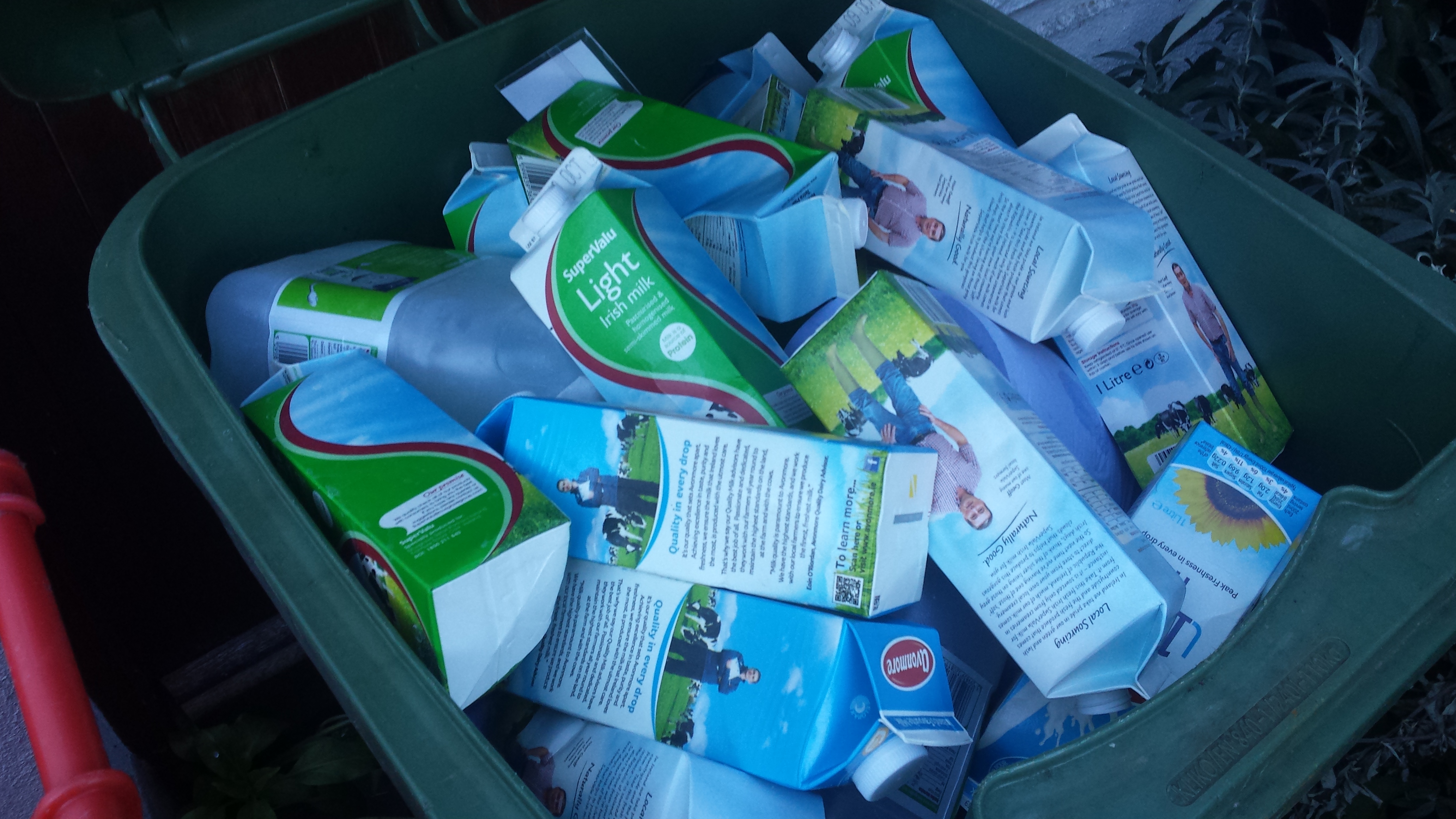
    In Ireland we produce about one million tonnes of food waste annually and if we give each tonne a value of roughly €2000 that equates to over €2 billion of food not being used and going in the bin. It is also estimated that 600,000 people experience some form of food poverty in this country.

    We are ranked fifth worst in Europe for dealing with the problem. Figures like these make sense to people, however many just furrow their brows and make solemn sounds and agree that things are bad, but until you actually see vast quantities of food being thrown out you don’t really understand the situation.

    Image: Ross Mc Govern
    Image: Ross Mc Govern Food in a waste bin in a supermarket

    Picture this: a chicken is born on a factory farm and reared along with a few thousand others. Once it is of killable age it is slaughtered, gutted, beheaded and de-feathered. It comes into a supermarket, via an 18 wheel articulated truck, and is prepared and put into an oven. This roast chicken is then left on a hot counter waiting for someone to buy it, if this doesn’t happen it is put into a trolley at the end of the night and dumped into a bin along with all the other food waste. The chicken’s life has been completely pointless. It has served no function and now only rots.

    In the shop where I work about €4,000 is thrown in the bin every week and this number rises sharply around Christmas to over €10,000. In case you’re wondering, yes I’ve seen whole turkeys being thrown out after the people who ordered the bird got theirs somewhere else. The situation has gotten better over the last few years. The ‘display until’ and ‘sell by’ dates have nearly all been removed from packing, these dates are used to make the stock controller’s job easier. The ‘best before’ and ‘use by’ dates are now the only form of shelf life indication that products have. Food manufactures are inclined to be very cautious when creating these dates for their products as it removes liability for them in case somebody were to ingest spoiled goods. God forbid anyone just used their nose. Fun fact: even ice that has been stored in a freezer has a best before date.

    Image: Ross Mc Govern
    Image: Ross Mc Govern Past the sell by goods are simply thrown out

    There are community based social enterprises that have been set up to combat both problems of food waste and hunger. One of them is foodcloud.ie set up by co-founders Iseult Ward and Aoibheann O’Brien and chef Sophie Morris. It works via a smartphone app or the website.

    A supermarket or restaurant uploads details of their surplus and when the food can be collected. A text is then sent to the nearest community organisation in the area, they accept the offer and collect it directly from the business. Iseult ward’s sees things clearly “one in every four calories produced from food in the world, is wasted. “We want Irish people to think about how they can reduce this waste”.

    Solutions like foodcloud.ie are fantastic but supermarkets are wary of giving away their waste as the fear of someone getting sick looms over their waste policies. Put simply, if half a carrot is a bit soft it can’t just be chopped up and the offending half thrown away, the whole thing needs to be chucked. Many of the organisations wishing to tackle the problem often state that “uncertain demand” in what supermarkets buy contributes to the problem and that reducing this more money can be saved.

    From being on the ground I would have to state that supermarkets accept that they will produce waste and if they remain competitive in their national market, then that means that waste will continue to be produced. Until Irish people are willing to talk about how much food is thrown out in their own houses, the glut that fills this “uncertain demand” will continue to grow in our landfills.