Author: Niki Georgo

  • This self-made couple will soon sell their last cup in the Dutch student city.

    This self-made couple will soon sell their last cup in the Dutch student city.

    The mythical market coffee stand run by Wilem and Natalie is about to be sold on with bigger hurdles awaiting the potential new owners.

    Wilem Rijtsma was born to a working-class family in 1961. The north of the Netherlands was always characteristically distinct from the urbanised Holland. Gras lands, windmills, infinite fields of kaleidoscopic tulips and a simple lifestyle strung together by bike friendly infrastructure and simple food, enjoyed with a side of Mayonnaise.  

    Eventually, the countryside played itself out for Wilem and he wanted to move into Groningen, the largest northern city of the Netherlands. There in 1983 he met his wife Natalie, a Dutch born shop worker with Filipino origins. Both motivated by their shared industriousness, they wanted to go beyond their marriage and materialise their bond. The tangible aspect to their love came in the form of a Bakfiets, a tricycle defined by its square tub hanging over the front wheels with a single wheel in the back.  

    Groningen was known for hosting a farmers’ market every Tuesday, Friday and Saturday. There, local producers, spice merchants and flower distributors could leave the quiet countryside and enrich the citizens of Groningen with their organic stuff. The newly married couple saw the market as a place of escapism, indulging in the local selection and making it their social event of the day. They would spend hours browsing, chatting and connecting with the town folk.  

    “I was never in love with the coffee,” said Wilem pointing out a gaping absence of his favourite beverage. “It was a shame that our experience was always dragged down after trying the coffee,” he said. Natalie suggested then, in sheer confidence “we can do it better”.  

    Natalie learned to always take control of her life; this included the things she consumed. After being blessed with a food centric family, flavour became her second language. “A lack of taste was always a lack of life,” she said and the same goes for coffee. The dark elixir remains a morning tradition for the working couple. Dissatisfied with the offerings, they took their passion for the roasted arabica and proceeded to book a spot for the Groningen market.  

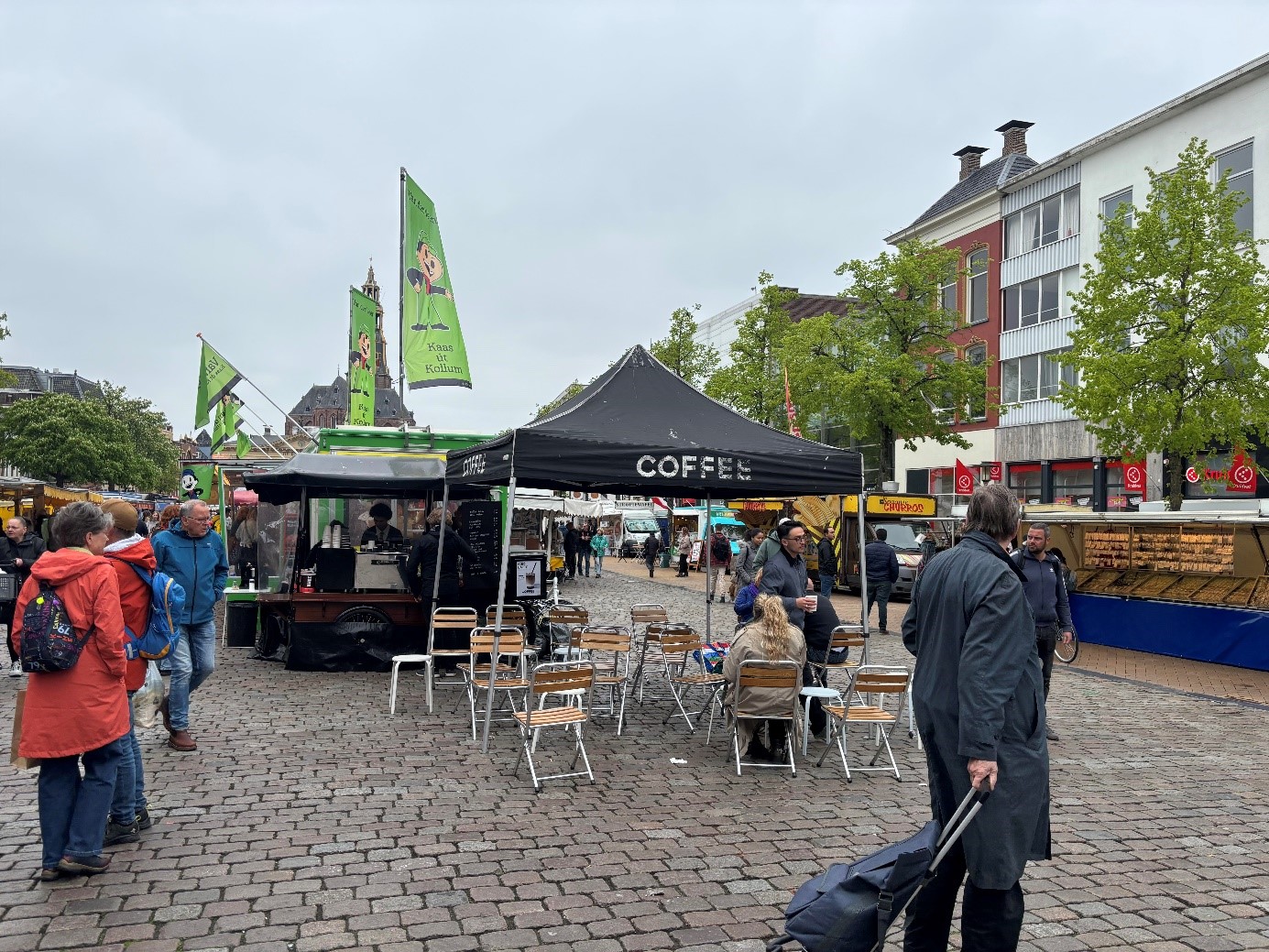
    Armed with their Bakfiets, coffee maker and litres of milk, they first arrived on a chilly Tuesday morning in 1987. It was six in the morning and the streets were desolate. The rumble of diesel engines and a mumble of distant voices filled the chilly air. They find their spot and start to unpack. “It was Natalie’s idea for the chalkboard” said Wilem, referring to an iconic chalkboard resting on the tricycle displaying their options. At first, they stuck to the Italian classics. Espresso, cappuccino, latte macchiato and americano.  

    “On our first day, we sold out by 2 o’clock in the afternoon,” said Wilem. Surprised by the demand of their special blend, they decided to come back with double the amount. A year later they bought a tent and seating arrangements. Wilem admitted “we were pleased that our investment made a mark and smiles on people’s faces made us happier than the money we made in the end.” 

    Their success supercharged their passion of bringing caffeine to the people. Soon they became a staple of the Groningen farmers market, with people greeting them on those cold mornings whilst they set up shop. “Students in particular, loved our coffee and always told us about their days,” said Natalie. They arrived in their Bakfiets everyday for almost 40 years, using up 60 litres of milk on a bad day and dealing out hundreds of coffees to undercaffeinated students.  

    A hand holding a cup of coffee topped with a heart-shaped froth design, set against a background of cobblestone pavement.

    Now however they face retirement. “I am getting tired,” said Wilem. “I used to be excited about the long lines and happy customers, now it feels like a job”. Indeed, the pedestrianisation efforts by the municipality twisted things for the coffee fanatics. “Now, if you want to have seating arrangements you will need to pay a different license” said Natalie, always handling the business side of things.  

    The business started making a lot less money due to their increased licensing costs and competition around the city centre. “I want to sell the business and go into retirement with my wife,” said Wilem.  

    Indeed, the market is always blessed with good coffee by their competition, however Wilem and Natalie were the first to do it and their Mocha still stands unchallenged.  
  • Artists seek reassurance from arts minister and launch a petition 

    Artists seek reassurance from arts minister and launch a petition 

    After failed attempts at communication in February, the Irish Artists Union wrote a strong letter to the Department of Arts, Culture and the Gaeltacht, followed by a petition to secure robust funding structures for Irish artists.  

    Last Thursday Patrick O’Donnovan – Minister of Arts and Culture – received a letter by the Artists union of Ireland called Praxis calling for more financial support and reinforcing their position in the Irish economy. The letter was titled “Minister O’Donovan: protect the future of artists and arts workers”.  

    The letter directly addressed Irish Artists’ need for adequate funding structures and reaffirmed the roles they play in moulding Irish culture. The union also addressed the failed delivery of a much-needed improvement to the Art Council’s IT infrastructure – where artists can request funding. 

    According to the letter, the mismanagement of the IT revitalisation meant that not only did resources get wasted, artists who request funding have to deal with an outdated and sluggish user experience.  

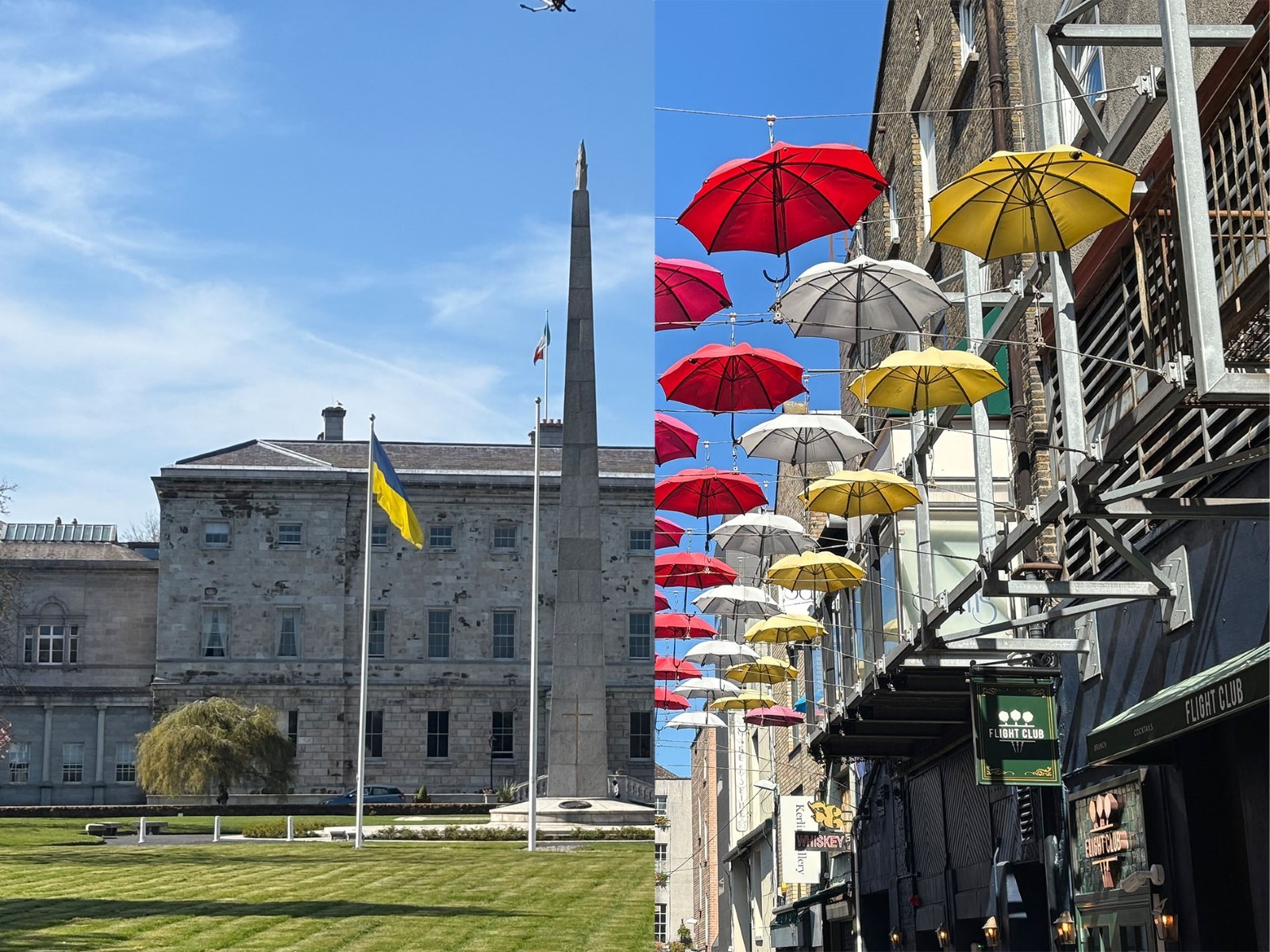
    The Arts council located near Merrion Square Park. 

    The update was kickstarted in 2019 by the Arts council with the help of an outside contractor designed to streamline the funding applications. In their 2023 report, council chair Maura McGrath said she was “deeply concerned” at the lack of completion which cost the Irish Exchequer 5.3 million Euro.  

    The IT update currently lies dormant, but the Arts Council remains “committed to finding an alternative solution”. Additionally, the report reassured artists by mentioning that “90% of our €143m expenditure directly supported artists and the public”.  

    Concerns were raised in the letter about the need for a resilient outlook tackling artist’s concern the minister might use this failed IT update as an excuse to lower the Art’s Council’s funding.   

    Cóilín O’Connell, the communications officer at Praxis said that they had “a very positive reaction 
    to the petition so far” with similar organisations throwing their weight behind the petition such as the National Campaign for the Arts, Irish Theatre Institute, Irish Street Acts Circus & Spectacle Network and Poetry Ireland. 

    “One of our main priorities as a trade union for artists is ensuring that artists are adequately paid for their labour,” said O’Connell. 

    “The arts council is one of the primary providers of income for artists in Ireland, so it is vital that their funding is not affected by the recent IT issues that occurred.”  

    Georgie Lynch

     Georgie Lynch has worked in the art’s sector for her whole adult life, running festivals such as “The next big thing” and organising gigs for the Workman’s club. She was denied funding from the Arts Council to organise her own festival in 2023.  

    “The arts world can feel like a secret members club sometimes,” she said. 

    “When your event is not landing in Forbes magazine or gets major sponsors, the journey for funding can be a long one.” 

    “How can we trust the minister and the council to oversee the IT project and possibly believe that they want to sustain smaller artists with new venues or at least prevent existing venues from closing,” she said. 

    Indeed, Farrier & Draper, an upmarket venue hosting parties every weekend, was liquidated last week and stands closed for the moment.  

    Ferrier & Draper 

    Lynch questioned the support for artists which are not backed up by corporations or “made it already” and hopes that this petition will put the smaller Irish artist, like herself, back on the map. 

    It has yet to be specified how the Arts Council are planning on accelerating their IT reboot and Praxis have yet to get a response from Minister O’Donovan.  

    Drury street, a famous social spot for artists.  
  • In conversation with KWI, the aspiring singer songwriter

    In conversation with KWI, the aspiring singer songwriter

    In conversation with KWI, the aspiring singer songwriter. She talked to Niki from the city.ie about collaborating with her peers to her origins as a “theatre kid”.

  • Europe scrambling after brawl in the white house

    Europe scrambling after brawl in the white house

    A historian is worried that post World War II measures are under attack after the leader’s exchange in the White House.

    European Nato members demonstrated strength and unity in London after the Ukrainian President Volodymyr Zelensky furiously left the White House.

    The leader displayed strength towards the 47th president which was met with retaliation by both Vance and Trump.

    American historian Alex Rakochy says that tensions “haven’t been like that since the early 1930’s”. The World War II expert detailed that the layered and long-standing agreements after the end of the war “were hit with a wrecking ball.

    “The North Atlantic treaty (Nato) was mainly established to unify the West and to answer communist tensions at the time.”

    “Nato was historically unified, always having a common enemy, which made this recent show of power by the US an unprecedented historical event.”

    The Ukraine war has put Europe between a hungry bear and an eagle sharpening its talons. The European leaders threw their whole weight behind Zelensky, expressing unity to rearm Europe.

    Ursula von der Leyen, the President of the EU commission, said that “we are in an era of rearmament” whilst simultaneously stripping back legislation to streamline the flow of money
    towards the military.

    The way has been paved by stripping back policy which caps defence spending between more and less advantaged EU nations. Von der Leyen is planning to raise close to 800 billion euros for the sake of Europe’s defence.

    Rakochy said that historically Europe was always trailing the US, its main ally, in terms of military spending. Indeed, Nato members agreed that they would spend at least 2% of their GDP on their
    individual military.

    In 2014, only three members reached the 2% goal. In 2024 23 out of 31 members reached the 2% goal with Poland leading the way the graphs with 4% of their GDP being spent on their military
    according to Statista.

    Now, Nato boss, Mark Rutte suggested that 3% and above is required. Rakochy said that “we are beyond suggestions about the allocation of EU money”.

    Historically, rearmament does not always result in a war. Rakochy mentioned various moments in history; where nations were fiercely spending money on their military. The Cold War and the arms race which unfolded between the US and the USSR saw great tensions and close calls without all out warfare.

    However, ties between the US and Europe were historically solid. Rakochy said that Nato was established to bind together Western ideology and encourage free trade between these nations.

    Rackochy also notes that Zelensky alone did not ruin, single handedly European ties with the White House.

    Trump’s swooping tariffs dented the established Western trade and his affiliation to Putin forced Europe into a corner, according to Rakochy. These “uncharted waters” require very careful and
    calculated diplomacy to quell tensions.

    There are now fears that the US wants to pull out of Nato, which Rakochy sees as a prideful move which goes against “the nature of the agreement of the West”.

    Dimitris Zamipoulos works for Nato in Luxembourg and told TheCity.ie about “a lot of stress at work recently”. He explained that the US pull out would not come into effect soon. In-fact, the
    administrative hoops are vast which result in a long process before the US can officially be considered out.

    Nato was built on a shared agreement which relies on cooperation and transparency said Zamipoulos.

    Trump’s relentless exercise of hard power clashes with systems that have been carefully built on a shared set of values.

    Ukraine’s reliance on US funding puts Trump in a position of power which he chose to wield without scruple. Zamipoulos said that Trump is playing both sides and questioned his ability to truly back his allies.

    Global news outlets are questioning Ukraine’s ability to repair their ties with the US as a European lead defence would leave them more vulnerable according to the New-York Times.

  • Taoiseach poised to replace rent pressure zones to attract foreign money

    Taoiseach poised to replace rent pressure zones to attract foreign money

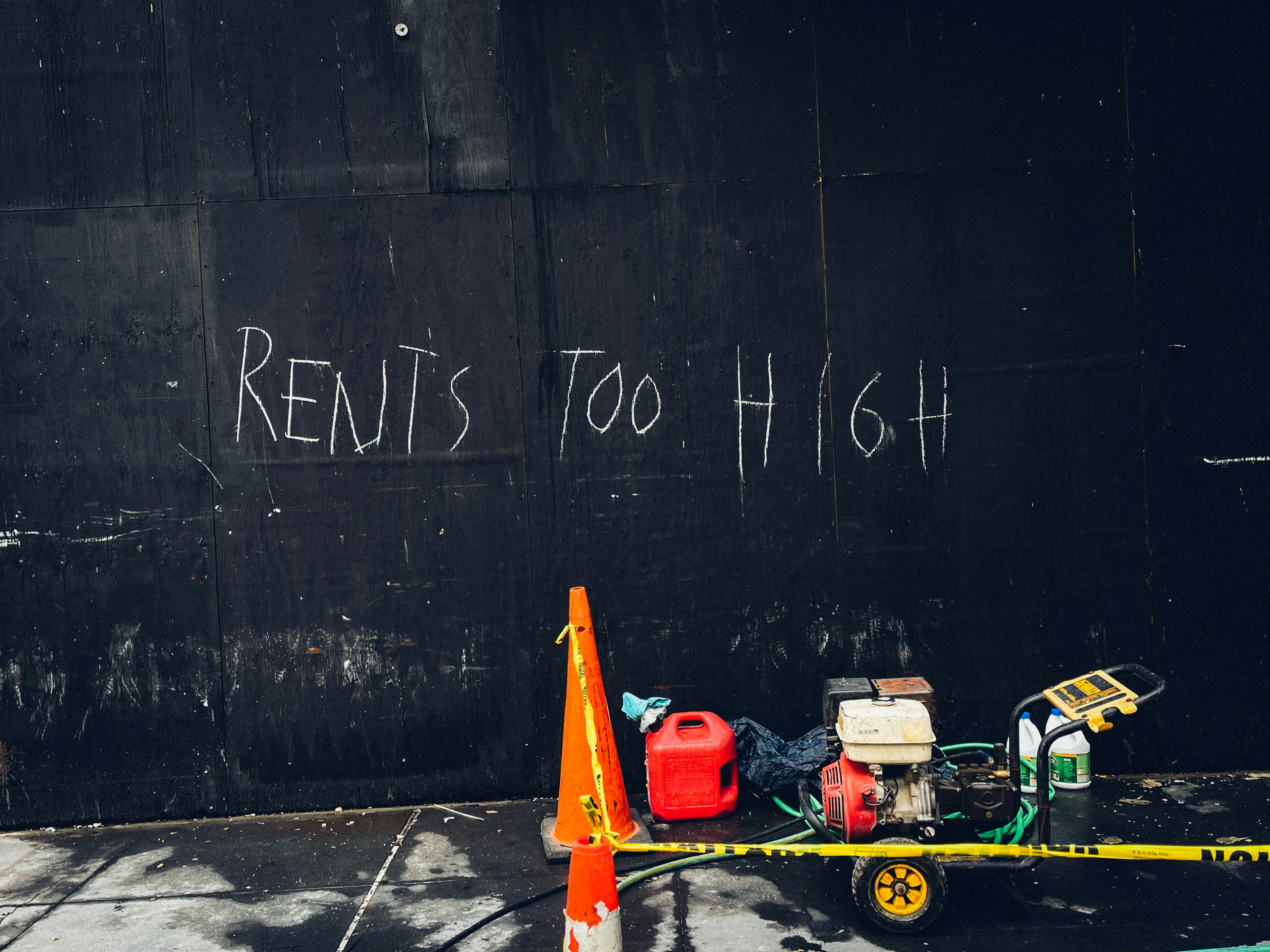
    Micheál Martin announced a replacement last week which sparked an uproar among renter
    consensus. However, foreign investment might benefit the economy in the long run
    .

    The Taoiseach’s plan to establish a more attractive market for foreign investors did not resonate with renters over the last week, but his reasoning is not random.

    Many renters are benefiting from rent pressure zone’s (RPZ’s) as they limit the rent increase annually at two percent.

    The replacement to the debated but effective RPZ’s will be called “reference rents”. Information about “reference rents” is scarce due to the current revisions being done by the government according to the Irish Times.

    Economist PJ Monaghan attributes the age-old principle of supply and demand to the current housing crisis. A sharply increasing population in Ireland nearly at full employment, which is demanding accommodation in urban areas.

    According to Monaghan securing a mortgage to buy a house has proven harder than ever, keeping buyers longer in rented accommodation.

    Furthermore, Monaghan explained that foreign investments into the property market has the benefits of having debt free money entering the economy.

    Private investment would mean that the government can start expanding the housing market without the burden of borrowing money and falling further into debt.

    If more foreign money enters Ireland, the government will benefit from taxing that money and more houses will be built with money which was raised outside of Ireland.

    Currently the Irish housing market is unattractive for foreign money because it doesn’t provide enough performance for investor’s equity. This is due to the RPZ’s 2% annual cap according to Monaghan.

    Mason Hayes & Curran wrote that the private rental sector has been in sharp decline over the past three years, representing the sharpest drop since RPZ were introduced in 2016. Ireland also saw a steeper decline compared to the global average of real estate investment.

    With inflation rising and rent not allowed – by the RPZ – to rise in parallel, it results in landlords who are facing a struggle to maintain their buildings.

    These concerns are exacerbated by rising interest rates for loans, building costs and maintenance costs – especially energy according to Mason Hayes & Curran. This has made housing expensive to own for Irish landlords which trickles down to the renters.

    Additionally, Irish landlord’s dissatisfaction with the market conditions is being amplified by the Irish Property Owner’s Association (IPOA).

    A press release from May 2024 by the IPOA shows major support for the abolishment of RPZ’s. The IPOA says that RPZ’s are “no longer fit for purpose” and emphasize a proven lack of functionality and worsen a dysfunctional property rental market.

    The IPOA feels an exodus of Irish landlords would result in dire consequences for the housing market and worsen the crisis. Mason Hayes & Curran echoed that 42% of landlords left the Irish market since 2022.

    Moreover, the IPOA lobbied members of the Dáil to influence housing legislation in January of 2024 according to lobbying.ie.

    Tensions between landlords and renters are simmering as sympathy for either has been noticeably absent in the public debate.

    Online comment sections act as a pressure valve for renters where frustrations are vocalised and sympathy for landlords is gone. An abundance of personal crisis stories, tales where landlords ignore the 2% cap and an omnipresent bitterness towards investors – often called out as money hungry – can
    all be found a few clicks away.

    According to Monaghan, the salient issue is that privately owned build-to-rent housing will be priced according to the investors return on investment and not to offer affordable housing for the people.
    Without government intervention, it is a free for all.

    The pressure rises from an imbalance of power most renters feel they lack. One renter in Dublin 7 who spoke to us on condition of anonymity said that “news like that have me genuinely worried”.

    “It is clear to me where the Government’s priorities are, if RPZ would be abolished I would be genuinely homeless”.

    They said that they gave up saving to buy a house because of their steep rent despite having a salary above the average wage. They are already struggling to afford basic needs, something that will be made even harder if their rent goes up again.

    “Its hard for me to have a sense of moral,” said the worried renter.

  • Storm Éowyn victims are facing an administrative jungle 

    Storm Éowyn victims are facing an administrative jungle 

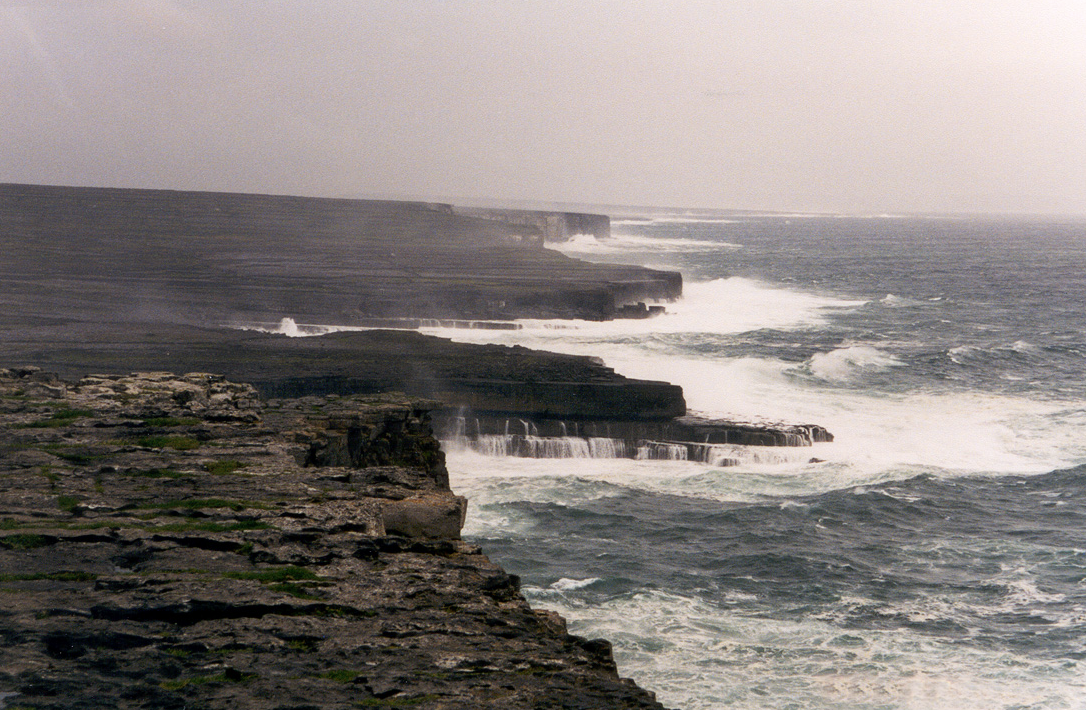
    “I had to leave the tree that fell on my barn’s roof,” said Paul (alias). It has been two weeks after storm Éowyn hit Ireland, now that power and water is mostly restored, farmers are battling to restart their operations.  

    Paul, a third-generation livestock farmer in county Galway – who spoke to us on condition of anonymity – slowly restarting his farm operations after it was hit by storm Éowyn. Water and power have been restored but Paul is still grappling with the damages to his farm. A hundred-year-old tree was ripped out of the ground and tossed onto the barn’s roof, tearing out part of his fence in the process. “I could hear the cows yelling out during the storm,” he said. The generational tree still rests on his barn, which was extensively photographed by Paul after the incident.  He leaves it there because he has yet to hear back from his insurance.   

    “I made the claims as quickly as humanly possible,” he said after studying his insurance package and finding out his fence falls under a different policy than his roof, which was only the tip of the administrative iceberg. Insurance companies require solid proof of damage – hence his meticulous documentation – but Paul was convinced he would get more money back if he left the damage as is to “avoid any ambiguity”.  

    The bureaucratic jungle is layered and represents Paul’s salt in the wounds. After suffering loss to his cattle as well, he made six different claims in total, hoping to “see some money back”. He disclosed that some damage would not be covered by his insurance due to the specific package he chose. His insurance provider covers up to 2,6 million worth of damages but only for gradual environmental damage, which storm Éowyn does not fall under. Coverage limits for storms – especially wind – fall under a different policy which varies between different insurance companies. Due to the unique nature of each damage, insurance companies are facing delays with responding to claims which can last years according to Insurance Business Magazine.  

    The smallest details matter when making claims, and Paul cannot afford to forget any details. Large loss of livestock or equipment damage means that onsite inspections need to take place, which extends the time before he receives his paycheck. He had to submit veterinary reports, photo libraries of the damage and detailed inventory lists.  

    Paul is not the only one suffering from this administrative battle. Online forums saw a lot of traffic as young farmers gathered to share their stories. It was easy to find stories of people chain sawing through fallen trees for hours to be able to reach their sheep, meanwhile others detailed the loss of their bulls and pedigree animals, which hold a high market value.  

    Reddit user GuireCara helps certified Irish angus farmers who suffered setbacks due to the loss of their cows. He told me that “high value” animals have to be specially insured and fall under a different insurance policy, which has to be filed separately, alongside the loss of “normal” cattle. Time is of the essence as insurance companies operate on a first come first serve basis. Farmers are given the choice which claims they want to redeem first, so many feel they need to prioritise their highest value items. This means that angus farmers felt forced to file claims for their farming equipment before they could start filing claims for their beloved cattle, which “was a hard choice to make”.  

    Storm Éowyn caused damages close to a hundred million euros, according to Irish sources, with many homes left without power or running water, weeks after the storm passed. Now that power is slowly returning, many are still (left) waiting to receive money from their insurance to start rebuilding their operations.  

    “I am tired of waiting around,” said Paul as he’s restless whilst his claims are being processed. The restoration of water and power “took long enough” but without economic help his farm can only recover in increments. 

    *not his real name.