Author: Patrice Brady

  • The Karate Kid

    The Karate Kid

    Our capital isn’t the world’s hub for karate expertise however this may all be about to change as Leeanne Royle has risen to become one of the country’s most exciting prospects in  martials art with a trophy cabinet filled with gold.


    Leeanne in Switzerland last year. Credit: USKFI
    Leeanne in Switzerland last year. Credit: USKFI

    The minority sport of karate has always played a major part in Leeanne Royle’s life. Her whole family is engrossed in the sport; from infancy she was eager to follow in the footsteps of her brother, sisters and father. They couldn’t hold her back.

    “I joined at the age of five and my Dad started training me,” recalls the protégé. “You are suppose to wait till you are six but I kept asking. I started entering competitions shortly after that when I was six or seven, and I got my first black belt when I was nine. I was the youngest in my federation to get one so it was a massive achievement,” said Leeanne.

    In karate, belts are earned by learning a cata, which is a sequence of movements. Each cata can have anything from 30 to 50 techniques and, to earn a black belt, you must learn a number of catas.

    There is a long list of belts to attain before you reach black. Lowest on the karate totem pole is white and then moves through orange, red, yellow, green, purple, purple stripes, three brown belts and then black.

    “I am now on my second black belt, which I got when I was 11, however I have to wait until I’m 21 for my next belt. In karate the highest level is eight black belts, so I still have a good bit to go.

    “I’ve done big competitions at home and internationally, but my first big competition was in 2011 [aged just 12], when I competed in Birmingham. I competed against people a lot older than me as the category was 10-16 years old. As well as wining the competition at under 16 level I received the stand out prize as well,” Leeanne told the City.

    However all this success comes at price. Competing at this level requires a level of training and commitment you would not expect from a 15-year-old.

    “I train a serious amount of hours, five or six days a week non-stop. It leaves very little time for anything else like social activities, although over Christmas I’ve taken a step back, only training two days a week. It means I have more time for friends and school work. It is tough to balance throughout the year but karate is all I want and when I want something, I will work hard for it; I push myself and I won’t let myself give up.”

    Since the move to Dublin from her native Cavan, Leeanne has gone from training four days a week, to five or six. The extra training has reflected in her recent success in Switzerland when she won the Youth Ladies Individual Kumite. Leeanne is also the reigning WSKA World Champion 2013 where she became the first Irish person to take gold in the junior female individual competition.

    “About 30 different countries entered the competition and it was my first time entering that big of a competition. In the junior female category I competed against two Americans, a Spanish and a Welsh girl. It was brilliant. I am the first Irish person to ever win, which was exceptional. It’s always been my goal to stand on top of the podium and listen to my national anthem be played,” Leeanne said.

    Unfortunately though as Karate is not an Olympic sport, Leeanne still only dreams of representing her country at that level.

    “I am hoping that someday I can represent Ireland at Olympic level, however that is not going to be in 2016 as karate is still not an Olympic sport. It’s because karate is not very unified and has a variety of different organisations. I don’t know why there are so many styles but I think mine is the best.”

    Leeanne’s focus and determination has been likened in the media to that of Ireland’s Olympic gold medalist boxer Katie Taylor who, unsurprisingly, is Leeanne’s sporting role model.

    “I’m happy with that comparison. I feel that although boxing is a different sport, the strategies needed in boxing are similar to karate. The way she fights is admirable. Although my other sporting role model is my dad.”

    Leeanne’s father, David Royle is an accomplished United Shotokan Karate Federation of Ireland (USKFI) expert who has represented Ireland at a European and world level. He has been practising the sport for over 25 years and trains students at the Corduff club. David has clearly inspired ambitious Leeanne.

    From left to right Michael Sherlock - Leeanne Royle and David Royle. Credit: USKFI
    From left to right Michael Sherlock – Leeanne Royle and David Royle. Credit: USKFI

    “He has trained me over the years. He is my karate role model and my teacher. When I leave school I still want to continue the way I am but I hope to open a club myself when I turn 18. I am already helping out as it is, with the little white belts in the club, so I feel that I have experience, but I want to own my own club and start teaching young students,” she enthused.

    For that ambition to become a reality, Leeanne knows what it will take.


  • Take the Plunge… Volunteering

    Take the Plunge… Volunteering

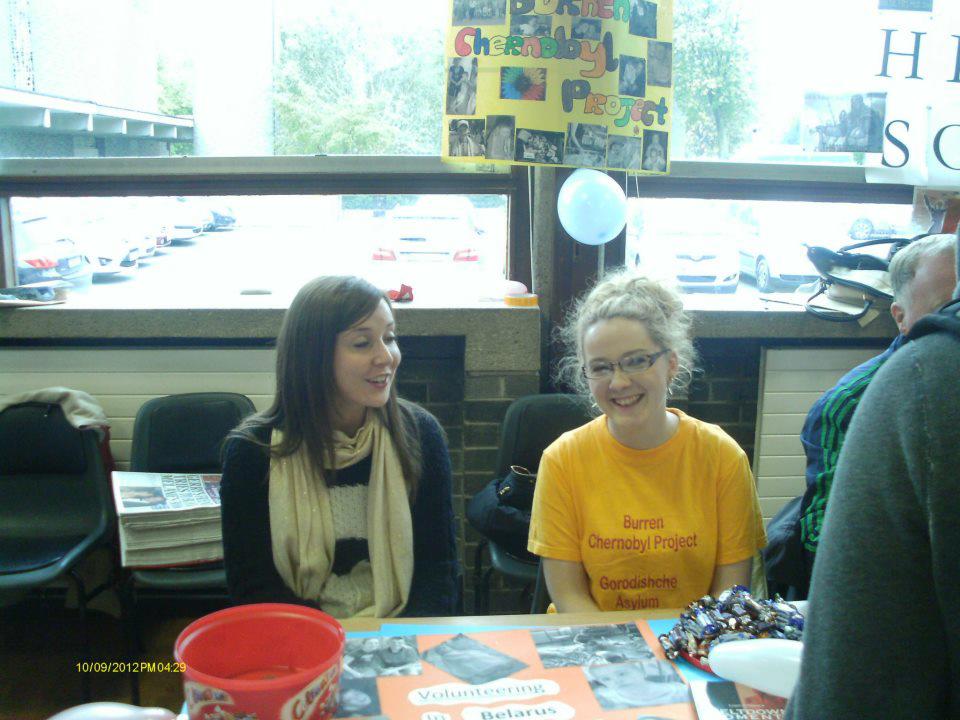
    Charity volunteering is one of those things that people talk of doing but never get round to it, and it becomes even more topical around Christmas time. TheCity’s Patrice Brady caught up with Chernobyl volunteer, Searlait McCann  from Dublin and asked her about the experience of Volunteering in Belarus with the Burren Chernobyl Project and why she took the plunge into volunteering.

    Credit; Searlait McCann
    Credit; Searlait McCann

    “Well, I’ve kind of always been involved in different kinds of fundraising because my father had a double transplant so we were very involved with the Irish Kidney Association. However, I had wanted to work with children and travelling to volunteer abroad always appealed to me,” explained Searlait

    “When I decided to finally take the plunge and actually go away I had initially planned to go to somewhere like India but one of my college friends travelled to Belarus with the Burren Chernobyl Project and as soon as she started talking about it I knew that it was what I wanted to do.”

    The Burren Chernobyl Project  is a relatively small organisation based in Ennistymon Co. Clare. It was  established in 1993 to help with the child victims of the fallout from the Chernobyl reactor explosion, However their work has now extended to looking after children and adults. Many projects have been carried out to assist the children and their families who are enduring the effects of exposure to radiation and the other social and economic problems facing them in Belarus.

    Credit: Searlait McCann
    Credit: Searlait McCann

    “It’s really hard to put into words the experience of travelling to Belarus to work in some pretty upsetting settings with some truly incredible people. No matter how much you hear about it and try to prepare for it, it’s completely different than what you expect once you get there, and different things stand out to different volunteers.

    “We arrived in Gorodishche Asylum late at night after a long day of travelling. Gorodishche is home to 220 children and adults, officially aged between 4 and 25, however due to the physical and mental abilities of some of the residents they have stayed in Gorodishche past their 25th birthdays as moving them to an adult asylum would be too upsetting and disorientating. On the first day we met Iryna, head ‘Mama’ (nurse) in the Asylum who was to be our translator and ‘minder’ for the next 10 days, but she turned out to be so much more,” said Searlait.

    “An absolutely incredible woman, who really has become something of a mother figure to all of the residents at Gorodishche. We then threw a party for one of the residents who was moving on to one of the adult homes. We were excited about this as it felt like we would be easing ourselves into the whole process. It was a great day, yet it was extremely sad to see how heartbroken his friends- who had become brothers to him- were to say goodbye, as they weren’t likely to ever see him again.”

    Belarus Care Centr. Credit: Searlait McCann
    Belarus Care Centre. Credit: Searlait McCann

    “The next few days we spent in the asylum helping out with the various groups, of which there are 7. We would get up at about 9 and would stay in the asylum until lunchtime and then again until around 7pm when we could get dinner. In the evenings we would go back outside and spend time with some of the older residents playing football, playing on the swings and going for walks.

    “Group one and two are made up mostly of teenagers with medium-severe mental disabilities. We spent time taking this group for walks, painting their nails and feeding yoghurts to those who cannot feed themselves.

    “Group three is perhaps one of the most upsetting groups for some volunteers. This is the group of the most physically disabled residents who are all bedbound. It is separated into two parts, each referred to simply as ‘Big 3’ and ‘Small 3’. Because of the lack of funding for Gorodishche from the Belarusian Government and the high costs of disposable nappies in Belarus the residents are limited to one disposable nappy per day, meaning they spend the rest of the day in stiff, makeshift nappies made from bedsheets.

    Credit: Searlait McCann
    Credit: Searlait McCann

    “This results in a smell that cannot be described but one you will never forget! One of the most upsetting thing about this group for me, and the other first time volunteers there, (apart from the smell) was the stunted growth of so many of the residents due to a lifetime confined to a crib. There were residents who looked like toddlers but who were actually 18 and 19 years old. This is something that is extremely hard to believe and accept even after seeing that it is reality. We fed group three their lunch and dinner, this was very difficult and upsetting at first as we had to feed them lying down which felt extremely inhumane,” explained Searlait.

    “Group four is the group that was most unsettling for me. I found it most upsetting as it seemed to me that the majority of the children in this group would be able to live relatively normal lives if they were receiving adequate medical attention or if they lived in a country that was ‘up to date’. Some of the illnesses of this group include epilepsy, autism and Cerebral Palsy, which has only recently been recognised as an illness in Belarus. We didn’t spend as much time with this group as we did with others, I’m not really sure why but the Mamas were extremely protective and were reluctant to allow us to photograph this room.”

    Credit: Searlait McCann
    Credit: Searlait McCann

    Searlait spoke of a lot of the children with emotion especially when she explained some of the children’s backgrounds. A lot of the background stories are extremely sad and often hard to take. Such as one little girl in this group who has down syndrome whose mother is a dentist in the local village but has never come to visit her daughter. Another example is Alosha in ‘Big 3’ who is epileptic. Alosha is the resident who had the biggest affect on me personally. He is the same age as my sister, 24. Alosha’s mother is a doctor, who unable or unwilling to cope with her son’s seizures and left him in bed until she eventually left him in Gorodishche. Alosha has become completely emaciated and is unable to hold down much food.

    “What struck me so strongly about him is that although he doesn’t talk, he has the saddest eyes I have ever seen and it struck me so strongly that he seemed to be the only resident of Gorodishche aware of how unfair his situation is.

    “Group 6 is made up of the older, most able bodied boys. These are the most independent of all the groups as they spend their days working on the Asylum’s farm. They also have their own little sitting room with a TV. It was mainly with this group that we spent our evenings.

    “Group seven is quite similar to groups one and two however they are generally more physically able. We did a lot of the same things with this group as we did with G1 and G2 however some of them took part in our games of football, we’d paint their nails and do their hair and they’d do the same for us.

    “I think it would be impossible to travel to Gorodishche and not remain involved with Burren Chernobyl Project. It is definitely something I want to do again in the future.”

    862986_4408571619204_1259930424_n

  • Vintage- Another hipster buzz word?

    Vintage- Another hipster buzz word?

    The word vintage can cause a serious debate nowadays, all depending on your company. To some it’s the idea of couture and nothing less, whereas for others it’s a unique find while bargain hunting off the beaten track.

    Opener

    However vintage branding to a lot of people is a fancy adjective to pawn off second hand goods, which is unfortunately the case in some shops. But Dublin itself has a buzzing vintage scene, that attracts not only hipsters but a range of individuals from brides looking for bargain couture gowns to people going that extra mile for a more alternative look.

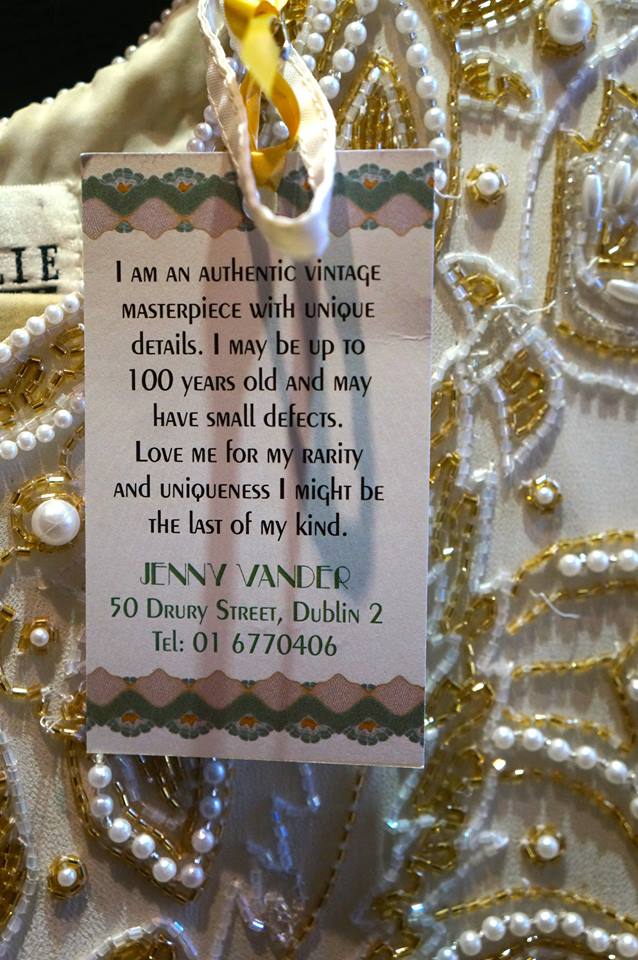
    Jenny Vander is the original vintage shop and is a treasure trove of unique handmade clothes from different eras. The clothes themselves have their own history. How often is it possible to say you own a dress that’s older that your parents, and is still in immaculate condition?

    Marion Sullivan from Jenny Vander explains what she would class as vintage and her opinion of how vintage is a new buzz word.

    “Vintage is normally 1950’s or older, really anything over 100 years is antique, but anything younger than the 1950’s is at it’s very best retro, so even very cool 70’s, 80’s and even 60’s is retro, more recent stuff is second hand.

    “Vintage is a buzz words in the last few years, a lot of places are throwing it around  and the thing is that people don’t know what is vintage and their not informed. People think that’s 80s era is vintage because it says it in the books but it’s not.”

    For anyone who hasn’t been inside Jenny Vander go even if it’s only to stare at the amazing selection of clothes – each era is represented. The shop itself had me in awe of the clothes, it was like a treasure chest of forgotten icons.

    “It’s beautiful to be able to wear a piece of history which has been cherished and is unique to you, no one will have anything like the piece that you have; it’s got the history and beautiful craftsmanship. What you’re buying is handmade couture,” said Marion.

    “If I’m being honest my favourite era is the 1920’s, the dresses were so beautiful and original, also the Victorian era, as nearly all the clothes are handmade and the materials were the best money could buy. The Victorian clothes here would have come from aristocrat or wealthy families. Back then it wasn’t like now where we can all afford nice things even though we would be considered the working class. The Victorian clothes are similar to the early style of Downton Abbey, all original and completely handmade with silk, it’s really unbelievable couture.”

    However the revival of vintage into everyday wear means that younger generations are putting their own spin on these historical pieces.

    “Young girls are still doing their own thing going out by themselves putting their look together with whatever they want that’s in fashion at the moment but there still putting the more unusual pieces with it and I think that’s the way to got with fashion,” said Marion.

    “Vintage is being brought into the modern era and funked up a bit. My advice for vintage style would be to walk the walk in your own shoes and don’t follow the crowd.”

    Vander

    The revival of vintage clothing comes with a sense of individuality especially in Dublin fashion at the moment. However is it possible that the uniqueness of clothing item is vintage itself?

    “ I think that vintage is open to interpretation, in my own philosophy it’s clothing from a different era or a somewhat special piece,” said Fiona Smith from The Harlequin.

    The Harlequin is another of the original vintage shops in Dublin, just off Drury street, both floors of the shopped are filled with not only different era pieces, but vintage designers pieces that inspired former seasonal trends.

    Harlequin

    “We’re selling one off pieces , not only stuff from different eras but more unique clothing. I think it is trendy at the moment to wear vintage and a lot of people are wearing it, but it comes in waves. We’ve been in it so long, but it’s a matter of taste. Some people have never worn vintage and never will. It’s a different case  for different customers and a lot of people who wore it for years will always wear it,” explained Fiona.


  • The top Christmas toy (Let It Go)

    The top Christmas toy (Let It Go)

    I’m no Scrooge; I love Christmas. I love everything about it especially the presents. I get so much amusement at hearing how my little cousins are being extra good this year to make sure they’re on Santa’s ‘nice’ list.

    Of course if you’re on that ‘nice’ list you’re likely to be first in line for this year’s most sought after Christmas toy: anything to do with Frozen.

    11315991545_f5b7f28483_o
    Photo Credit: Flickr; Eileen Neyon, http://bit.ly/1241Uo7

    I was in awe when I saw my 7 year old cousin’s list of Christmas presents. She had three categories: 1. If I’m good, 2.If I’m very good and 3. If I’m not good. To be honest I couldn’t see much difference between the presents in the very good category and the not good category, but one present I did notice was the Frozen Elsa doll.

    Yes, the very doll that was advertised at €500 on Donedeal recently. She’s also the doll that caused GardáÍ to be called to a toy store in Dublin after a fight broke out between parents all desperate to get this year’s top Christmas toy. Luckily for one 7-year-old, Santa bought her toys before she had even time to categorise them and a very merry Christmas will be had in her house. Unfortunately for many other children they will have to ‘let (it) go’ to their dream of having their very own Elsa, and really Anna is the hero of that film anyway.

    The demand for the Frozen doll this Christmas has intensified and for people who are planning to do the annual Christmas shop on December 8th it may be too late to get your Frozen merchandise. The cost is not what is frightening in this situation; it’s the fact that grown adults are willing to physically fight and risk being arrested to get a doll that in 6 months time will be lost, broken or completely forgotten about.

    This idea of the most sought after Christmas toy is not one that has appeared overnight; a few years ago it was the Nintendo DS. Remember that? My two younger sisters wanted one and even did chores to ensure they were on the ‘nice’ list.

    Fortunately and unfortunately for my parents a family friend managed to get one – the pink one – however how is it possible to explain that Santa loves one child more than the other?  For days, and what felt like weeks, those who no longer believed in the man in the red suit argued about what to do; give it one sibling or let another child have it and not cause a row. Sharing wasn’t an option as 21st century Celtic Tiger Cubs didn’t share.

    12522997185_6d41097d76_o
    Photo credit: Flickr; Tilaweed, http://bit.ly/1zZ2MWX

    When all hope was lost a shop announced a shipment of 20 Nintendos which would be in-store 9 am on a Monday morning. To my great amusement my father didn’t sleep that Sunday night and instead queued with a ridiculous amount of other people for the game console. He was 11th in the queue and at 6 am in the morning it hit him  that after 6 hours of queueing, if every person ahead of him bought two Nintendos he would have been left with none, not to mention the fact that he had taken the morning off work for this.

    A Christmas miracle happened and my father was triumphant in attaining the Nintendos DS. Christmas was saved in the Brady house, and the Nintendos in question, along with Super Mario, are now lodged at the back of some cupboard somewhere.

    My point? Every parent wants to give their child the most magical Christmas they’ll never forget, but put it in perspective there’s no point getting arrested over a Frozen doll. Some presents just aren’t worth melting for…

  • Ireland’s Frisbee Frenzy

    Ireland’s Frisbee Frenzy

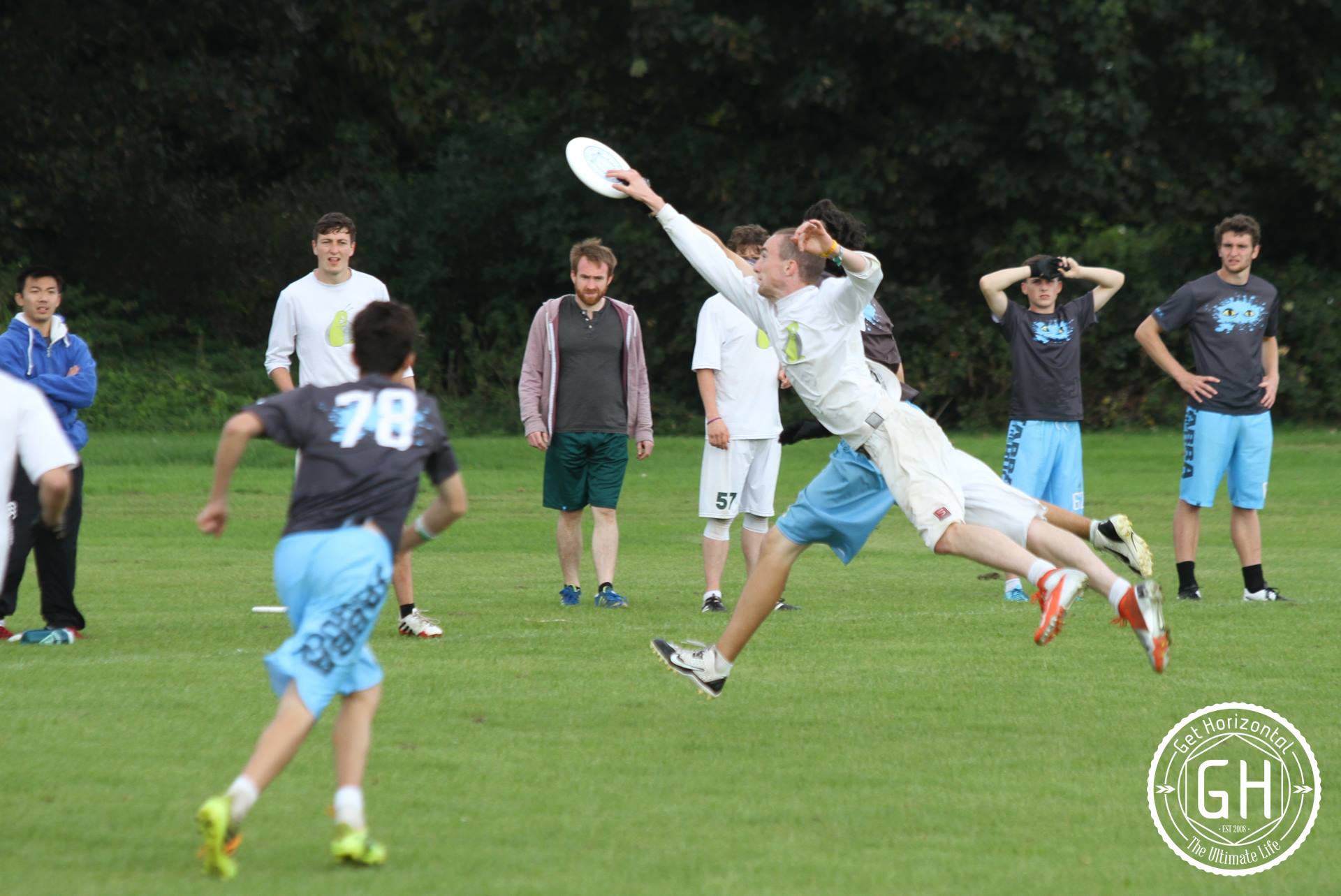
    With trends changing more often than the Irish weather it’s difficult to tell how long each new fad will last. However, Ultimate Frisbee is one sport trend that really does seem to have gained a strong fellowship, and with Ireland coming second in the mixed division of the sport in 2012, could Ultimate Frisbee eventually rival the GAA?

    Credited: gethorizontal.com
    Credit: gethorizontal.com

    The captain of the Dublin Institute of Technology (DIT) Ultimate Frisbee team, Aidan Kelly, spoke to The City about what Ultimate Frisbee actually is and why it is one of Ireland’s most up and coming sports.

    “Ultimate Frisbee is a sport that basically combines different aspects of soccer, basketball and American Football,” Kelly explained. “Obviously, it’s biggest unique standing point is that it uses a disc instead of a ball, like most sports. It’s getting extremely popular in Ireland and globally due to the fact that it teaches great fundamentals and because it is self-refereed, it is seen as a great example for kids to understand sportsmanship.”

    Aidan got involved in the sport through a friend’s brother who started a team in Meath. After being taught the basics, he carried on playing with DIT’s college team. The sport’s main aim is to pass the disc from player to player without it touching the ground from one endzone to another for a score. The player that has the disc cannot run whilst in possession and each team has seven players.

    Credit: gethorizontal.com
    Credit: gethorizontal.com

    “Ultimate Frisbee is for both genders and is split into divisions; Open, Women’s and Mixed. Open is mainly men, although girls sometimes play, while Mixed requires at least three of each gender on the pitch at a time. In Irish Ultimate Frisbee, there is a much larger percentage of guys playing than girls, but DIT has been strongly motivated into trying to strengthen it’s women’s team,” said Kelly.

    Credit: gethorizontal.com
    Credit: gethorizontal.com

    With the sport being self refereed, it gives a new angle to its players, but is it as skilled as Ireland’s beloved GAA?

    “From the outside looking in, I can imagine it must seem crazy, but at a high enough level the intensity of a game can match any GAA match,” argued Kelly. “Fitness and conditioning is crucial.Training differs at different levels. There are a few schools across the country that play it, where the aims are just to get them learning how to play. At college, where the majority of people pick it up, it is a lot more competitive. DIT train three times a week, along with having fitness sessions.”

    As well as being Ireland’s most up and coming sport, Ultimate Frisbee is also getting more recognition on an international level.

    “Ultimate Frisbee currently has two professional leagues in America, which are both growing each year. There are also many international tournaments that Ireland participate in,” said Kelly. ”I, myself, am going to Dubai to play for Ireland in March in the World Beach Ultimate Championships, which is pretty exciting. Ireland came second in the Mixed division at Euros in 2012 so we’re hoping to come home with more medals and some big wins!”

    The President of Ultimate Frisbee Ireland, Brian Boyle, also spoke to the City about what the organisation is doing to promote the sport.

    “In 2015 we are hoping to spread the sport more by involving secondary schools, and also move into primary schools which are great to spread awareness of the sport,” said Boyle. “It’s the perfect sport for PE classes and teachers tend to love the whole concept of self-officiating and ‘Spirit of the Game’. We also hope to receive Sports Council Recognition and may have as many as 10 national teams competing at the World and European championships.

    “I believe the sport is growing so strongly because of the friendliness of the community and the opportunities it has for meeting new people and seeing new places. I also personally believe it is the most fun team sport to play and offers the chance to get better and improve year after year. We have over 400 members nationwide, but estimate that there are well over 1,000 people actually playing disc sports in Ireland.”


    Catch the Sport in action in the video below.

  • PS “Love, Rosie”:  a rom com with a difference

    PS “Love, Rosie”: a rom com with a difference

    Lily Collins’ eyebrows. This was the main reason I wanted to see “Love, Rosie”. Obviously the trailer has me interested, who doesn’t love a good rom com.

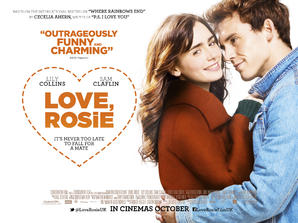
    The film is loose adaptation of Cecelia Ahern’s book, “Where Rainbows Ends…” and follows Rosie and Alex, childhood friends, and their constant conflict with bad timing in search of their happily ever after. Through flashbacks and passing years the film shows life’s strain on the typical boy/girl friendship. However despite the supposedly ageing lead characters, Lily Collins and Sam Claflin looked as young as ever by the end of the film.

    Cecelia Ahern’s latest book adaptation was shockingly good. I know not to judge a book by it’s cover but with the ‘Diddly aye potato’ accents that came with ‘PS I Love You’s’ adaptation I had my concerns, however I needn’t have with director, Christian Ditter abandoning half attempted Irish accents.

    The film is set in England and Boston, however Irish viewers will notice that all is not as it seems with the supposed backdrop of England really being set in our own fair city with views from St Stephen’s Green shopping centre and The Harlequin on Drury Street.

    The 102 minute rom com had laughs, sighs and a few tears as well from beginning to end. And although there was no complete plot twist, the film definitely had the viewer hooked from beginning to end with it’s cringe situations and witty one liners.The film itself was uplifted by it’s time travelling soundtrack with tunes from The Ketchup song to Lily Allen’s “F**k You”.

    The daughter of Rock’n’Roll royalty, Lily Collins is an ideal lead as the part of English Rose meets girl next door. Her portrayal of the hopeless heroine Rosie Dunne, without being the typical chick flick damsel in distress breaths a new lease of life into this romantic comedy. And her on-screen chemistry with the film’s eye candy, Sam Claflin brought the characters credibility.

    Overall “Love, Rosie” was an extremely enjoyable film which kept me entertained until the end and had me wanting to watch it again. And yes, Lily Collins’ eyebrows were fabulous and flawless throughout.

    Image courtesy: Lionsgate Publicity