

As college students are closing their books for the summer, TheCity takes to the streets to find out what are their thoughts of travelling to the US to work this summer.
Author: Rebecca Harding
-
“Prevention is better than the cure”- Examining the work of mental health services in rural Ireland
This article features themes of a sensitive and potentially distressing nature. If you or any person are affected by the topics addressed, resources are available at the end of this article.
Leah Cull grew up in the Arigna Mountains in county Roscommon, surrounded only by family, mountains and windmills.
As a teenager, Leah suffered with depression and anxiety and attended her first counselling session at the age of 15, a time in her life she still reflects on and is incredibly grateful for to this day.
Leah recalled how difficult it was for her mother to find a service for mental health at that time, especially considering that back then there was no such thing as deducted rates or free services for mental health counselling.
At the age of 18, Leah’s father took his own life, following a negative experience with the mental health system that he was in. This was not due to the people in the system, but rather the lack of “leadership and resources”.
“It was nothing to do with the doctors or nurses, our local GP was brilliant,” Leah said.
“I just felt like he wasn’t given a chance. He was thrown in a room with the door locked behind him, which in itself I feel is so wrong.”
Following her father’s passing, Leah moved to Australia while on her journey towards healing following such a tragic loss.
While in Australia, her brother James also sadly took his own life. He was 20 years old.
“James really did not want to die,” Leah said.
“He used to say that his mind was so sick, that he had no control over it.”
James had sought psychiatric help and counselling through a different service to his father, but unfortunately, he was deemed fine based on an assessment which Leah referred to as a “clipboard assessment”.
Leah would frequently communicate with James while he was in this facility, and James had often referred to the fact there were children being admitted into the adult ward that he was in.
“I never want to blame anyone for their deaths, that they could have had the best help in the world but still passed away, and I understand that.”
Leah’s story is unfortunately one that many people relate to and resonate with.
Following James’ death, Leah took to social media as a form of public letter to the Minister for Health at the time (Simon Harris) and posted a video talking about the need for reform in the mental health services.
The video went viral both nationally and internationally, with many people speaking out and agreeing with Leah’s thoughts.
Following the events mentioned, Leah became a local county counsellor in Roscommon and is currently studying psychotherapy.
When I asked Leah if these events are what caused her to pursue a role as a county counsellor, she said that while she was set on being an advocate for mental health, she realised the power being a local politician in helping to create genuine change.
“I started doing research into the mental health facilities in Ireland and I thought to myself: as one of the richest countries in Europe, why are we so underfunded and so understaffed [in the mental health sector]?” ….“So, I decided that I can’t change the entire mental health system, but I can try and better my community in some way or another.”
Leah currently volunteers with Northwest STOP – a charity founded in the North-West of Ireland that runs a hotline and counselling service for people in the area.
With Northwest STOP, you can call or text and receive a list of counsellors in your local area.
This charity, like many others, is not government-funded, therefore it completely relies on donations. Groups like Northwest STOP take the backlog from many other charities, as well as those on waiting lists.
Leah also delivers workshops to schools, colleges and businesses on mental health, wellbeing and advocating for speaking up about mental health issues.
When asked what she thinks could be changed or made to help the mental health services, Leah mentioned the need for counsellors in secondary schools would be vital in breaking down stigma and allowing people from a young age to talk about their emotions.
“I think there’s a societal pressure [on young people], to have things done by certain ages, and I think a lot of the time were just existing and were not really living.”
Leah’s work with Northwest STOP and delivering workshops is one of the many encouraging stories of communities coming together for the greater good.
An example of this is Fergal Guihen, a young man cycling from Roscommon to Australia to raise funds for both Northwest STOP and the Mayo Roscommon Hospice.
There is also Make the Moove, a charity that provides mental health support and counselling to rural farming families.
Supporting communities coming together to provide help to each other is something Leah is incredibly passionate about within reform in the mental health sector, as well as an emphasis on sufficient training for local GPs in mental health crises, and a reform of the youth services.
“Prevention is better than a cure as I keep saying, it’s better to build strong children than it is to fix broken adults.”
In speaking to Leah, the question arose as to whether this issue is a national problem, or whether rural Ireland is experiencing this lack of resources more than urban areas.
“I feel like we don’t have the same access to facilities that people in the city may have, even when it comes to things like transport, said Leah. We have one minister in county Mayo [Dara Calleary], but other than that there has been no emphasis on how to expand or benefit rural Ireland when it comes to anything – including mental health services.”
Leah’s story serves as a reminder that behind every statistic is a family forever changed.
In the silence left by those who are gone, their families and friends fight tooth and nail for adequate mental health services that reach every corner of this island.
Help is always available
Samaritans (Mental Health and Suicide Hotline): jo@samaritans.ie or call on 116 123
Make The Moove (Supporting the wellbeing of rural farming families across Ireland): Call/WhatsApp: 086 084 0442
Pieta House (Free 24/7 Crisis helpline):1800 247 247 or Text HELP to 51444
-

The Triple Lock: Outdated or a Safeguard?
With the discussion of the removal of the Triple Lock in full swing within the Irish government, we take a look at the background and what’s at stake in the arguments
Talks in Dáil Éireann have recently focused on removing the triple lock on the Irish Defence Forces, but many are questioning this decision and how it may affect Ireland’s neutrality.
In a statement on March 4th, Tánaiste Simon Harris said: “We are living in a new era in Europe, in which Ireland also faces significant new security and defence challenges, and we must consider how best to respond.”
So, what is the Triple Lock, and how does it work?

Photo Credit: Pexels The Triple Lock is a legislative device created in 2001, which requires that all overseas peacekeeping missions carried out by the Irish Defence Forces must be approved and mandated by the United Nations Security Council, Dáil Éireann and the Irish Government.
This means that if Irish Defence Forces are intending on going to or supporting a specific country, they must first receive approval from these three bodies, hence the term Triple Lock.
The argument for the removal of the Triple Lock is to ensure that permanent members of the UN Security Council – Russia, the United States, the United Kingdom, China and France – no longer have the power to ‘veto’ Irish peacekeeping missions.
The argument against the removal of the Triple Lock is whether this decision will impact Ireland’s status of neutrality when it comes to war.
As it stands, the Irish Defence Forces currently provide peacekeeping support to countries at war, including non-lethal aid (such as medical equipment, body armour, etc.), crisis management and humanitarian relief.
The removal of the Triple Lock would not change this support. However, it would no longer be at the discretion of the three bodies to determine where the Irish Defence Forces send troops on these peacekeeping missions.
The removal of the Triple Lock would mean that the decision would fall entirely on the Irish Government and Dáil Éireann.
In an interview with TheCity, Sinn Féin TD and spokesperson for communication Martin Kenny spoke about the importance of Irish neutrality, specifically to the Irish people.
“Irish society and Irish people for generations now have been very clear that we want to remain militarily neutral, that while we can have a political position on a conflict or a war that’s going on in the world, we are not a country that would take a military side on that,” he said.
Kenny also said that the current political climate internationally serves as an example of the need for frameworks in defence which serve the population, regardless of who is in government.
“It’s important that we have certain things in place to guard against the unforeseeable circumstances that we might not recognise happening in the future.”
However, some commentators, including the Irish Times columnist and former political editor Stephen Collins, are critical of Ireland’s current stance on neutrality. Collins said that other EU countries are also critical of what they consider Ireland’s “complacent” stance on the issue.
“I don’t think it makes sense. There has not been a new UN approved mission for over 10 years,” said Collins.
He also remarked on the issue of funding from the EU, and how it potentially conflicts with Ireland’s neutral stance.
“The EU is planning on issuing 150 billion euros worth of bombs to support EU defence, and as members of the EU, we will have to contribute to that, so it makes a mockery of the fact that we, in theory, cannot help another EU country but we can contribute money to their defence,” he said.

Understanding the arguments for and against the Triple Lock also raises the question: should the removal of the triple lock be subject to a referendum, or based on a government decision on behalf of the people?
We posed this question to both sides of the argument.
Martin Kenny and Sinn Féin believe that the Irish people should have a say in the removal of the triple lock, based off current opinion polls.
“We see the rise in fascism in some places around the world… The Irish people are very wise in their decisions in terms of what way they want to go,” according to Kenny.
Sinn Fein nevertheless holds the belief that the defence forces require reform.
“We also recognise that Irish people want Ireland to be a country which is safe and secure, and that we have an armed forces that is capable and competent.”
Stephen Collins said that the possibility of the decision to be brought to a referendum would lead to an array of “claims and counterclaims.”
“The thing about referendum campaigns that I have found is that people can make it up as they go along.
“People say a change in the Constitution would result in consequences which they would not necessarily have,” he said.
Having spoken to representatives from both sides of a complex situation, the argument in favour of the Triple Lock removal lies around the independence of the Irish Government to make their own decisions when it comes to foreign policy, and the argument against the Triple Lock removal lies around the fear of what conflicts may come in the future, and whether this would be the best for the country.
-
Female athletes at TU Dublin pave the way for the next generation of sport stars
From Cumann na mBunscoil to the global stage, Irish women in sport consistently push the boundaries, redefine the limits and act as inspirations to many young boys and girls.
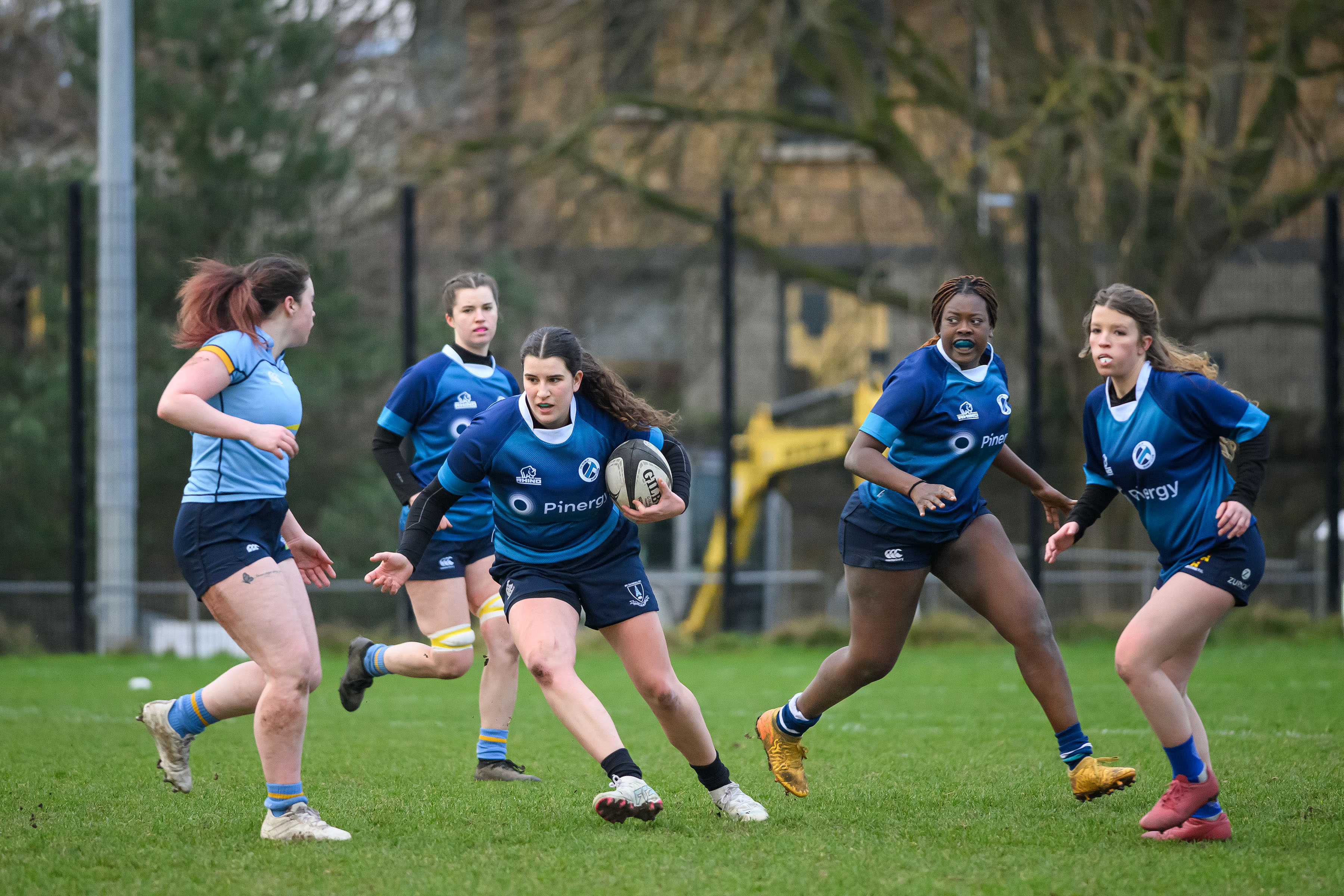
The TU Dublin women’s rugby team in action at their most recent match against UCD Credit: TU Dublin Sports
In honour of International Women’s Day, TheCity sat down with four of TU Dublin’s female athletes to discuss the journey of being a woman in sport- the journey, the trials and tribulations, and the changes needed for the next generation.
Carlota Meritxell Malaga Moran is a student in the School of Architecture, and is also a part of the TUDublin Athletics Club, where she is a sprinter. Carlota began running as a hobby, but found that once she began competing, she was able to disconnect from the world around her, something she said helped her a lot in life.
When it came to deciding whether to continue competing or attending university, Carlota felt that she faced major pushback from her original university in Barcelona. “The only thing they told me was that I had to choose between the career or the sport, they never tried to help me, they only tried to get me to give it up.” she said.
But Carlota was determined to do both at the same time.
“Being a female athlete is empowering for me. I love training, taking care of myself and facing the challenges that come with it.”
“All these things make us stronger and differentiate us; you develop a way of being, based on effort and sacrifice, that many people don’t have.”
Jade Gaffney, a student in the School of Mechanical Engineering, plays for TU Dublin’s Ladies Rugby Team. From a young age, Jade played Gaelic football for her local club, but after an initiative from her rugby club to encourage more girls to take part, she quickly fell in love with the sport.
Jade went on to join the Leinster senior rugby team, where she has received her first senior cap.
“Rugby is the biggest commitment that I have made,” Jade said. “It has given me lifelong friends and has thought me how to be the best version of myself. However, there will always be hardships with this level of dedication.
“But to do it all over again, I wouldn’t change a thing.”
When it comes to Irish women in sport, there can be assumptions and issues associated with the game that might not necessarily occur in men’s sports
Aimee Clarke, a graduate student from TU Dublin, is now a senior Leinster rugby player. She has played rugby internationally, while also being a personal trainer. She explained that because she started off playing mainly with boys, she never felt like she wasn’t taken seriously.
However, she sometimes struggled with the feeling of her rugby club being “second best” to the same men’s club.
“I know men who have done less in sports who get treated like royalty over some women who
’se sports CV is the length of the M50.”For Carlota, she felt that women’s sports can be sexualised, and spectators can be critical of aspects that would otherwise go unrecognised in men’s sports. “When I competed in Spain, there were photographers and cameras recording the girls and uploading the videos on YouTube and we were receiving comments about our bodies.”
When asked what it means to be a woman in sport, all of our athletes shared a sense of pride that comes with being a part of something so special.
“Being a woman in sports means dedicated hard work and a pure love for the sport,
.” said Aimee“It’s a gift to be a woman in sport, especially at a high level. Inspiring the younger generations to try out and commit to sport really pushes me to keep going”, said Jade.
Slowly but surely, the mindset around women in sport is changing and becoming more open, allowing for the next generation of future female athletes to “run like a girl” – and be proud of it.
-
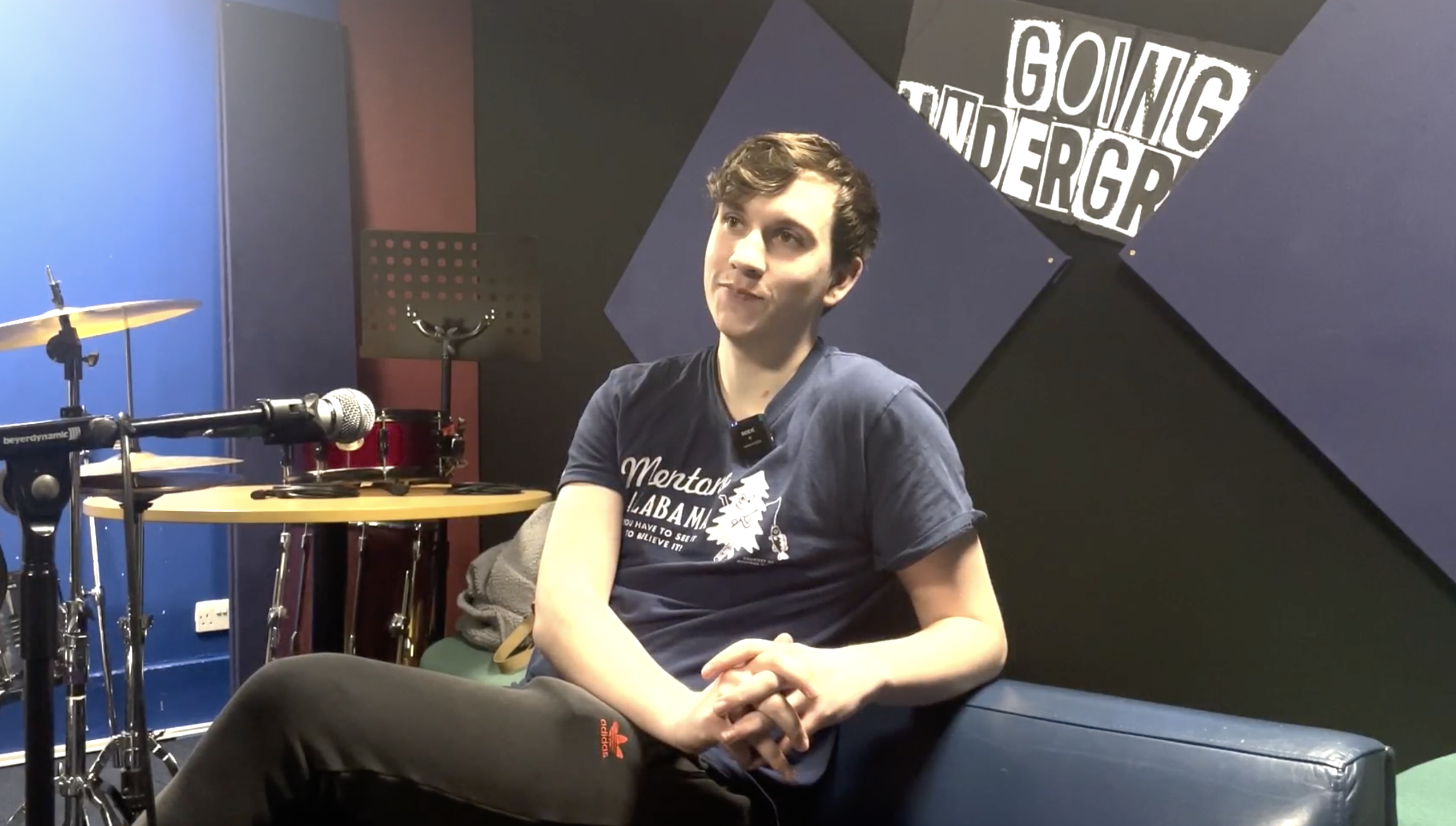
The Art of a One Man Show: Scene and Heard Festival Kicks off in The Smock AlleyTheatre
The Scene and Heard Festival is taking place from the 13th of February to the 1st of March 2025. As part of the coverage of the festival, TheCity sat down with James Doherty O’Brien to talk about his experience writing and rehearsing his one man show “Your Heart is An Empty Room”.
-

A deep dive into Deepseek – the rise of ai
With this new app developed in China taking the United States by storm, here is everything you need to know about Deepseek, and the rise of AI
AI has spread to every corner of the digital world, providing tools designed to make your experience online easier. But did you know that we have been using AI without even realising?
TheCity spoke to Alex Bradley – An AI and Computer Science researcher for Bloomberg- about AI and why exactly it has become so popular in recent years.
“Believe it or not, AI has already been an integral part of our day for a while now. For example, we’ve been using Google Maps to give us the fastest route to a certain location. Another example would be filtering all our emails into spam and non-spam. These require AI algorithms”
However, the main reason AI has come into the spotlight suddenly is due to a form of AI called LLM, or Large Language Models.
“LLM gives users a much more open-ended way of providing input and therefor gives AI more of a spotlight to show its potential in responding to a wide range of inputs.”
So, what is Deepseek?
Deepseek is an app that was developed in China in December 2023 by Liang Wenfeng and works almost the exact same as ChatGPT (also known as OpenAI), using the LLM format.
Both apps have similar models when it comes to mathematics, coding and even reasoning, imitating the way the human brain comes to reason on a problem.
But what is the difference?
Deepseek is cheaper to operate, as it uses less memory than its competitors.
The app itself cost only six million dollars to train, in comparison to ChatGPT’s alleged training price of over 100 million dollars.
The fact that the app was developed in China has led politicians across the globe to be concerned about the use of Deepseek, due to contrasting AI and cybersecurity regulations from those in the EU and US.
Deepseek also has an issue with providing certain information due to China’s censorship laws.
As it cannot answer certain questions related to topics such as historic events truthfully, the app will simply refuse to answer the question (example below)
Deepseek’s response to a historic event in China brings doubt to the apps ability to relay information neutrally. Photo: Deepseek
So, what is the likelihood of creating one singular AI app that can do everything?
TheCity spoke to Carol Cronin, educator for teachers in Computer Science about the possibility of a single app for AI generated information.
“As AI models develop, some will be used as broad tools for research and information much like search engines are used, while others will occupy a niche and trained for a particular purpose.”
“Between time, money and resources, the possibility of having a single AI tool is not looking likely in the short-term future, but the possibilities are endless once these factors are considered.”
After speaking with an expert, I realised how much AI has influenced people’s work, and we spoke to Michaela, a young person specialising in data protection for an international legal firm about how exactly AI has influenced her career.
Michaela’s job focuses on privacy and data protection, ensuring that the client’s information is protected within the privacy policy of the company.
She found that AI was being used constantly in her work, but not without regulations.
“Many clients have now drafted AI guidelines/policies that set out when AI tools may be deployed in their company and when they may not.”
This includes the use of AI through Grammarly, customer assistance, and data analytics.
Michaela said that the fines placed on certain companies for data protection violations is not sufficient for the problem to be solved
“It is more valuable to have a huge database of information than it is to have 1.2 billion euro”, referring to the recent fine on Meta for data privacy violations.
So, while AI comes with its benefits, it needs to be regulated in all aspects.
We asked Alex Bradley whether AI should be embraced or received with caution.
“AI relies on data that is collected in an unbiased manner to provide unbiased answers. However, a lot of the data that it is trained off has some level of bias, and therefore the AI models learn this bias when they are training off said data.”
“While I believe that AI is something that should be used to improve aspects of society, it does need a level of human intervention”.
You must be logged in to post a comment.