
From Cumann na mBunscoil to the global stage, Irish women in sport consistently push the boundaries, redefine the limits and act as inspirations to many young boys and girls.
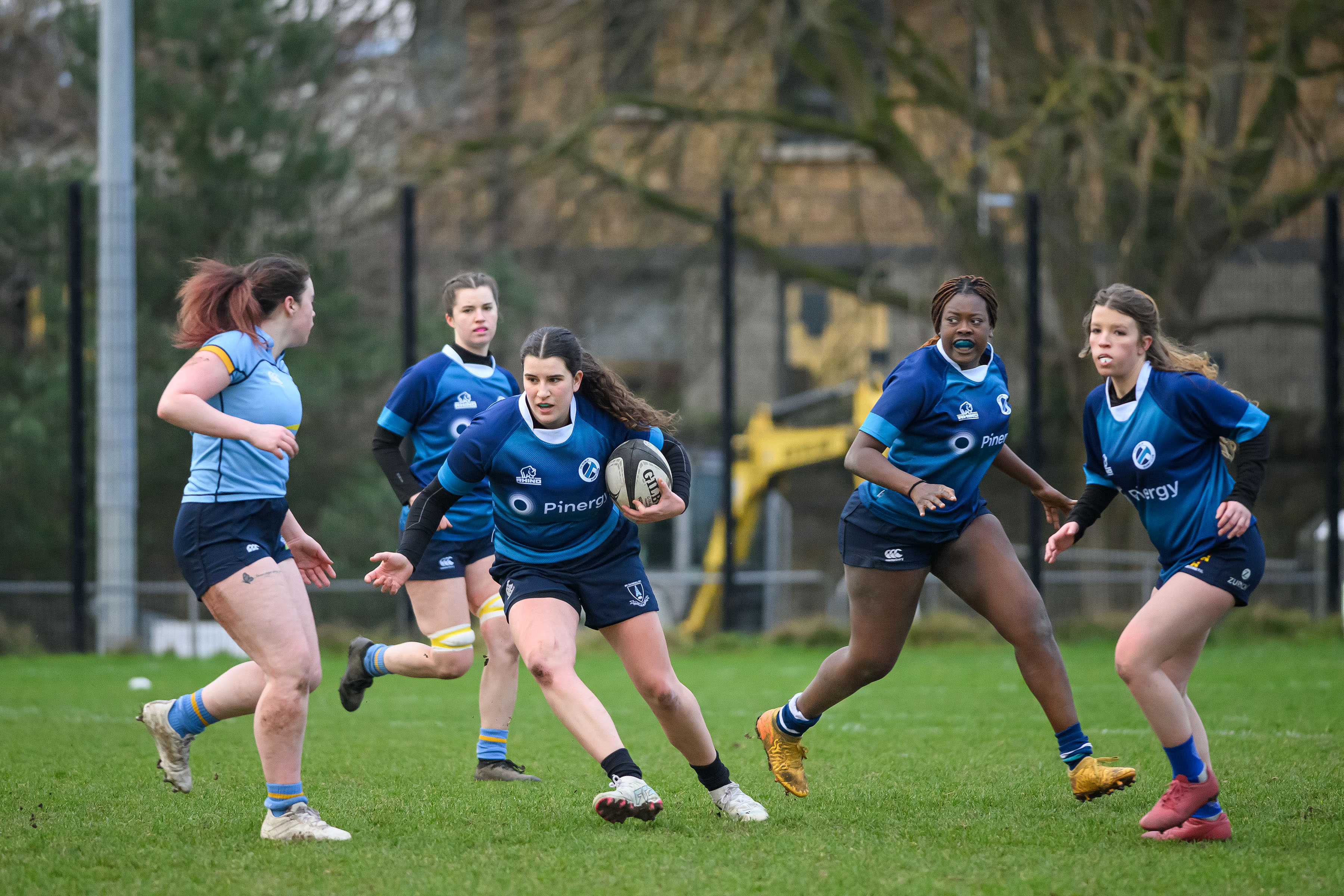
The TU Dublin women’s rugby team in action at their most recent match against UCD Credit: TU Dublin Sports
In honour of International Women’s Day, TheCity sat down with four of TU Dublin’s female athletes to discuss the journey of being a woman in sport- the journey, the trials and tribulations, and the changes needed for the next generation.
Carlota Meritxell Malaga Moran is a student in the School of Architecture, and is also a part of the TUDublin Athletics Club, where she is a sprinter. Carlota began running as a hobby, but found that once she began competing, she was able to disconnect from the world around her, something she said helped her a lot in life.
When it came to deciding whether to continue competing or attending university, Carlota felt that she faced major pushback from her original university in Barcelona. “The only thing they told me was that I had to choose between the career or the sport, they never tried to help me, they only tried to get me to give it up.” she said.
But Carlota was determined to do both at the same time.
“Being a female athlete is empowering for me. I love training, taking care of myself and facing the challenges that come with it.”
“All these things make us stronger and differentiate us; you develop a way of being, based on effort and sacrifice, that many people don’t have.”
Jade Gaffney, a student in the School of Mechanical Engineering, plays for TU Dublin’s Ladies Rugby Team. From a young age, Jade played Gaelic football for her local club, but after an initiative from her rugby club to encourage more girls to take part, she quickly fell in love with the sport.
Jade went on to join the Leinster senior rugby team, where she has received her first senior cap.
“Rugby is the biggest commitment that I have made,” Jade said. “It has given me lifelong friends and has thought me how to be the best version of myself. However, there will always be hardships with this level of dedication.
“But to do it all over again, I wouldn’t change a thing.”
When it comes to Irish women in sport, there can be assumptions and issues associated with the game that might not necessarily occur in men’s sports
Aimee Clarke, a graduate student from TU Dublin, is now a senior Leinster rugby player. She has played rugby internationally, while also being a personal trainer. She explained that because she started off playing mainly with boys, she never felt like she wasn’t taken seriously.
However, she sometimes struggled with the feeling of her rugby club being “second best” to the same men’s club.
“I know men who have done less in sports who get treated like royalty over some women who’se sports CV is the length of the M50.”
For Carlota, she felt that women’s sports can be sexualised, and spectators can be critical of aspects that would otherwise go unrecognised in men’s sports. “When I competed in Spain, there were photographers and cameras recording the girls and uploading the videos on YouTube and we were receiving comments about our bodies.”
When asked what it means to be a woman in sport, all of our athletes shared a sense of pride that comes with being a part of something so special.
“Being a woman in sports means dedicated hard work and a pure love for the sport,.” said Aimee
“It’s a gift to be a woman in sport, especially at a high level. Inspiring the younger generations to try out and commit to sport really pushes me to keep going”, said Jade.
Slowly but surely, the mindset around women in sport is changing and becoming more open, allowing for the next generation of future female athletes to “run like a girl” – and be proud of it.
You must be logged in to post a comment.