Author: Sara Booth

  • “The ‘Erdmann’, it’s German. I’m not.” – The story of an Irish emigrant

    “The ‘Erdmann’, it’s German. I’m not.” – The story of an Irish emigrant

    With a one-way ticket and little money, Sandra Erdmann came to Dresden 30 years ago. Since then, the beloved English lecturer has built a family, a social circle, and a career in Germany. And yet, being Irish is still at the core of who she is.

    “Next!” 

    After waiting in line for half an hour behind the slew of students who had come to see her during her office hours, Sandra Erdmann calls me into her room. 

    She greets me with a grin and a friendly “Hello, pet!” and waves me closer. She has bright red hair – which she assures me was her hairdresser’s choice but nevertheless fits well with her reputation as ‘the Irish lecturer’ of the English and American Studies department at the Technological University in Dresden, Germany. 

    Sandra teaches different language courses like ‘Listening and Speaking’, ‘Pronunciation and Intonation’, ‘Advanced Essay Writing’, or ‘Classroom English’ to English majors and future teachers. Known for her storytelling, she is popular with students and colleagues alike. 

    Originally from Newbridge, County Kildare, Sandra first came to Germany while completing her National Diploma in International Marketing, German and Spanish. In 1992, she spent a few months in Leipzig and Copenhagen, before returning to Ireland to finish her degree. 

    Throughout her life, Sandra has had a variety of jobs, starting right after her graduation. “There were no jobs when I finished my studies,” she said. So, she first worked as a cleaning lady in a hotel, then capped mouthwash bottles for a few months, before landing what she thought would be her dream job at an insurance company. 

    “My parents were thrilled. Safe job, good money.” But Sandra soon began to hate it there, not least because she wasn’t able to travel or use her language skills.  
    “So after a year, I quit, booked tickets to Germany and decided I was going to work and travel my way down to Australia.” 

    Like many young people, she wanted to leave Ireland to broaden her horizons and gain some international experiences. Even recently, of those emigrating from Ireland in 2024, over a third were between the ages of 15 and 24, according to figures from the Central Statistics Office. Overall, last year saw the highest number of emigrants from Ireland in the last decade. 

    “I think it’s a national neurosis in Ireland. The Irish have always left the country when times have gotten rough – to survive,” Sandra said, referencing the long tradition of Irish emigration, from the Great Famine of the 1850s to more recent economic crises. 

    “I think work is definitely still an issue why people leave the country, although things in Ireland are improving,” she added. As the CSO found, the number of people who return to Ireland is slowly increasing. Nevertheless, the number of Irish citizens who left the country last year still outweighed those who came back.  

    When Sandra left Ireland again, her first stop was Leipzig, where she still knew some friends. In the end, she only made it about 100 km further to Dresden. “I had no real plan. I had an open-end ticket when I left Ireland, so I thought, I just keep going until I’ve had enough or don’t get any further and then I’ll come back.” That was in 1995. 

    When she first came to Dresden, she didn’t have a lot of money. She started working in one of the few local Irish pubs, where she met many friends and the man who would become her first husband. They had a daughter together and Sandra’s travelling plans were put on hold indefinitely.  

    “I thought, okay, I’ll just stay maybe a year. And then I had my daughter and I said, okay, before she starts primary school, I’ll go back to Ireland. And then she started primary school. And then she was just finishing primary school before my second daughter started. So I said, maybe I’ll go back… – No!” 

    Working at a pub with children at home became more difficult, so she pivoted once again. She worked for a lawyer, even completing a year in German tax law, then went back to marketing, before starting to teach freelance at different companies – until she was approached by a friend with a job offer. 

    “They needed some people to give one or two courses here at the university. And I said no, I’m not qualified to do anything at the university. But he convinced me.” 

    Her classes were a success, and she soon became a full-time freelancer. 

    “And then I started to realize that my students possibly knew more than I did. So I studied again.” Over a decade after completing her first degree, she took on a Magister in British literature, British cultural studies and German literature at the TU Dresden. While writing her thesis, another unexpected job came along. A permanent position opened in the English and American Studies department, and although she didn’t think she had a chance, she applied. 

    “I got the job and I have been here ever since, and I am delighted that I am here.”  

    If someone were able to tell her younger self about her current job, she probably wouldn’t have believed it. “My mother told me when I was young, ‘Be a teacher’, and I always said, ‘No way José am I going to be a teacher’. The thought of standing up in front of so many people… I was actually quite shy, nobody believes that,” she said with a loud cackle. 

    “And then after the first session, I went: ‘Why didn’t I listen?’ So, I’m delighted that I ended up where I am now.” 

    Even though she has been living in Germany for 30 years now, feeling at home is something she can struggle with. “I always feel like I’m sitting between two chairs, kind of hanging in the air. When I’m in Ireland, I say I’m going home – meaning Dresden. When I’m in Dresden, I say I’m going home – meaning Ireland.” 

    But, she told me, there’s still a difference in how connected she feels to each country.  

    “Sometimes I feel lost at home because I’ve missed things, even political developments. Like, you try and read the newspaper, but you’re not talking to somebody about it. I feel like I’m more in the loop here. I know what’s going on here – politically, socially, culturally, also with young people because I’ve seen my own grow up here.” 

    Nevertheless, her Irish identity is incredibly important to Sandra – something that she hasn’t really found with her German peers. “The people still have some kind of hesitation or inhibition to express their pride in being who they are. I am proud to be Irish, and if anybody asks me, that is what I say.” For example, she said she never changed her passport to a German one. 

    Sandra’s daughters, on the other hand, are half German and half Irish, and therefore have dual citizenship. According to Sandra, their identity depends on the day. “If they’re being really well behaved, then they’re 90% Irish, and if they’re misbehaving, then they’re 90% German. That’s what I told them.” 

    Her daughters grew up bilingual, but sometimes “have a little slip on a word”, which she finds cute. Being a pronunciation teacher, however, Sandra does tease her children about their accents sometimes. 

    “Lily sounds like the Queen of England, it’s mortifying. I don’t know where she got it, it’s not from me. Emily has a bit of an Irish accent, but she’s got kind of a German touch every now and then. 

    “They weren’t listening enough,” she accused with a cheeky grin. After all, pronunciation is no joke to her, let alone being compared to the English. 

    When she first started working at the university, she was asked to teach British English pronunciation, among other things. “And I remember being told, when you go to the class, just tell them that you’re British,” she said and slapped the table indignantly.  

    “So that was my first day of work, and I nearly lost my job because I said no. ‘Yeah, but geographically speaking, …’ – I said, geographically speaking my elbow, I am not telling anybody I’m British, I’m Irish.” 

    Since then, her Irish heritage and her background have become an integral part of her classes, mostly through the tales of Irish people and places that she likes to regale her students with. “That’s a cliché about the Irish, but I actually do think it’s true because I love to tell stories,” she laughed. 

    Sandra told me that she misses her family back in Ireland, she wishes she could see her nieces and nephews growing up, and worries about her parents, who are getting older. Still, she loves her work and the friends she has made in Germany, and her husband is very attached to his hometown of Dresden. “He’s staying here forever, and I’m staying with him.”

  • ‘Butter was a currency’ – How Irish dairy became a global success 

    ‘Butter was a currency’ – How Irish dairy became a global success 

    As tariffs churn up trouble for Irish butter exports, TheCity reporter Sara Booth delves into the origins of the spreadable gold.

    In Ireland, butter has always been more than just food – it was once seen as a treasure, buried in bogs and preserved for thousands of years. Since then, the Irish have perfected their craft: today, their grass-fed butter is considered the cream of the crop worldwide. In the US especially, Irish butter has become a staple, with Kerrygold ranking as the country’s second most popular butter brand. But with Donald Trump’s unpredictable tariff policies, Ireland’s dairy success could soon face an uncertain future. 

  • New regulator to combat gambling epidemic among young people 

    New regulator to combat gambling epidemic among young people 

    With young people being exposed to more gambling opportunities than ever, Ireland’s new watchdog aims to limit illegal and problematic betting.

    For Irish young people, gambling is now more normalised than ever – even when it becomes a problem. With 1 in 23 engaging in problematic gambling, those under the age of 30 are especially affected.  

    As a response to Ireland’s gambling issues, the new Gambling Regulatory Authority of Ireland (GRAI) was officially established last month.  

    For over a decade, politicians and activists had campaigned for a stronger regulation of the advertising and licensing for gambling institutions in Ireland, before the Gambling Regulation Act was passed in the Oireachtas last autumn.  

    The 2024 Act replaced the Betting Act which dates back to 1931. For those working with gambling addicts like Helplink counsellor Gary McCready, an update was long overdue. 

    “I think it took so long before the idea actually surfaced because of the culture on gambling in Ireland, the income that comes from it in the country. There maybe wasn’t quite the political will to do something about it, but that has changed,” said McCready. 

    Primarily, the Gambling Regulation Act brought the patchwork of previous legislation into the hands of one authority. It grants the GRAI the power to make and enforce policies around licensing, advertising, sponsorship and problem gambling within the Irish gambling sector. This includes the regulation and licensing of betting, as well as gaming, lotteries, and gambling-related products and services. 

    Before the Minister for Justice formally appointed GRAI chief executive Anne Marie Caulfield, she and her team worked on laying the foundation for the regulatory body. Among other things, they commissioned several studies from the Economic & Social Research Institute (ESRI) , which illustrated the severity of the problem to the public. 

    “The primary finding of [one] study was that problem gambling was approximately ten times higher than had previously been believed. 3.3% of adults have a problem with gambling,” said Prof. Pete Lunn, head of the behavioural research unit at ESRI. 

    One in thirty adults in Ireland are problem gamblers – this was repeated across Irish headlines at the time of the study’s release. Not quite as widely discussed was the prevalence of gambling among young people. Thirty to 39-year-olds had the highest percentage of problem gamblers at 6.7% with those under thirty coming in second at 4.4%. 

    Mental health organisations like Helplink found that for those between 16 and 30, predominantly for young males, gambling has become normalised. 

    “What we tend to see now in the younger age group is that it’ll be part of their social experience; it’ll be talked about more openly,” McCready said.  

    “I’ve even had clients say to me that, rather than there being a stigma to problem gambling, in that age group, it’s almost glamorised. The more you’re gambling and the more you’re losing, the more it’s seen as something cool, which is a huge concern.” 

    In his research, Prof. Lunn also found evidence that young people gamble much more regularly than older groups. 

    “Our data might suggest that by the time people who are currently in their 20s and 30s, get into their 50s, they’re still going to be gambling at a high rate because it’s a generational thing, not an age thing. They’re not going to grow out of it, unless something is done about it,” he said. 

    One key difference he identifies is that for young people, gambling has become an intrinsic part of everyday activities – like watching sports. 

    “The total change in the TV market has completely changed the availability of live sport, which makes gambling a more attractive thing,” Prof. Lunn said. 

    According to McCready, this phenomenon is often referred to as the ‘gamblification of sport’. 

    “You’re watching your football team; you’ll have a bet on them. They’re invariably wearing a gambling logo across their shirt. There are gambling adverts going all the way around the pitch, at half time, there’s virtually nothing but gambling adverts. So, the whole thing revolves around gambling,” he said. 

    Modern gambling goes beyond online sports betting and casinos. McCready has dealt with young clients with addiction to trading cryptocurrency, while Prof. Lunn has observed young people’s increasing exposure to elements of gambling through video games. 

    “We find there’s potentially an association with things like loot boxes in video games, which doesn’t technically count as gambling, but is essentially gambling and is therefore potentially leading people into gambling more online,” said Prof. Lunn. 

    According to another ESRI study, underage gambling is very widespread in Ireland. Almost two thirds of adults say they gambled before the age of 18. This becomes worrisome when considering their other finding: Those who gambled as children were twice as likely to become problem gamblers later in life. 

    “Initially it’s fun, then it becomes fun with problems, and then it just becomes problems,” McCready said. 

    While, initially, many of the new regulations will tackle licensing issues, they also aim to ban all advertising that presents gambling as a desirable activity to children. Even jerseys with gambling brand logos will no longer be available to children, and gambling companies will not be allowed to sponsor events and organisations involving children anymore. 

    The Gambling Regulation Act also called for a general restriction of advertising for gambling platforms, announcing a ban on broadcasting of gambling ads between 5:30am and 9pm. 

    “The advertising restrictions are a good first port of call,” said McCready.  

    “But if you talk to a compulsive gambler, he doesn’t stop at 9:00 in the evening. You can gamble 24/7, so people will or gamble throughout the night. There’s scope for more to be done there.” 

    On social media and video sharing platforms, advertisements will only be directed at those who directly follow or subscribe to the relative licenced gambling business, according to the 2024 Act. At the time of writing this, YouTube still casts a wider net with their advertisements of betting apps like Novibet and William Hill, meaning that this may be one of the issues the GRAI will tackle at a later stage. 

    “As of now, it’s just a waiting game to see what the scope of [the GRAI] is and whether it addresses 2025 gambling environment or not,” said McCready. 

    If you or someone you know might be struggling with problem gambling, here are some additional resources for further information. 

    Helplink offers a free problem gambling counselling service available by phone or online. 

    Email: gamblingsupport@helplink.ie 

    National number: 0818 99 88 80 

    GamblingCare offers information on gambling, as well as support services, including a 24-hour helpline. 

    National Helpline: 1800 936 725 

  • Dublin International Film Festival 2025 shines light on the importance of Irish storytelling 

    Dublin International Film Festival 2025 shines light on the importance of Irish storytelling 

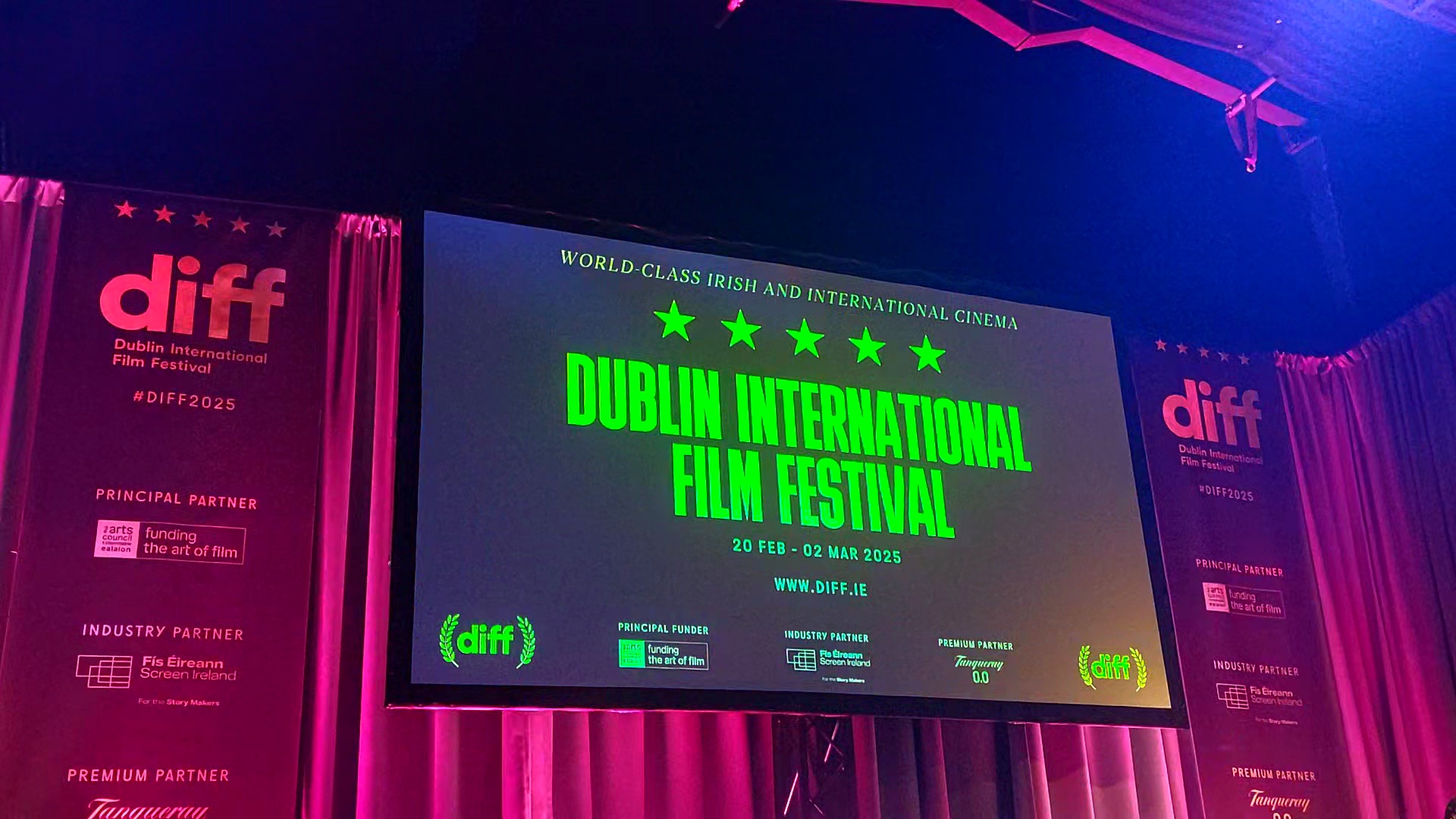
    Dublin International Film Festival (DIFF) is one of Ireland’s biggest events celebrating Irish and non-Irish stories on-screen. Every year, creatives and audiences come together in Dublin’s cinemas to honour remarkable achievements and discover what’s new in the world of film. This year, screenings, panels, Q&A’s and networking events took place between 20th February and 2nd March.  

    TheCity reporter Sara Booth was on site to recap some of the festival’s highlights and speak to filmmakers and cinephiles about the significance of film in Ireland. 

  • Skill shortages and sector innovation: How Covid changed Irish hospitality  

    Skill shortages and sector innovation: How Covid changed Irish hospitality  

    Five years after the global pandemic reached Ireland, TheCity looks back at how the Irish food and hospitality industry has evolved.

    On the 28th of February 2020, Ireland officially saw its first Covid-19 case, ringing in an era that would reshape Irish society. Although different sectors have undergone drastic changes during and after the global pandemic, social distancing measures completely overturned everyday operations in the food and hospitality sector. 

    “Restaurants and hotels and bars, coffee shops – businesses across the whole sector had taken such a heavy hit because they were either closed down or had to change their business model entirely,” said Margaret Connolly of the School of Culinary Arts and Food Technology in TU Dublin.  

    In 2021, the Central Statistics Office found that 9% of food and accommodation enterprises had shut down since the beginning of the pandemic. Others adapted, like Bowls Healthy Eating in Dublin. Founder Andy Irving said: “At first, we were doing takeaway, and when we fully reopened, we changed our opening hours and our menu. We do specials now, and in order to prepare them, we decided to open later.” 

    At first glance, food and hospitality seems to have mostly recovered. After the restrictions were scaled back, some even noticed an uptick in customers. 

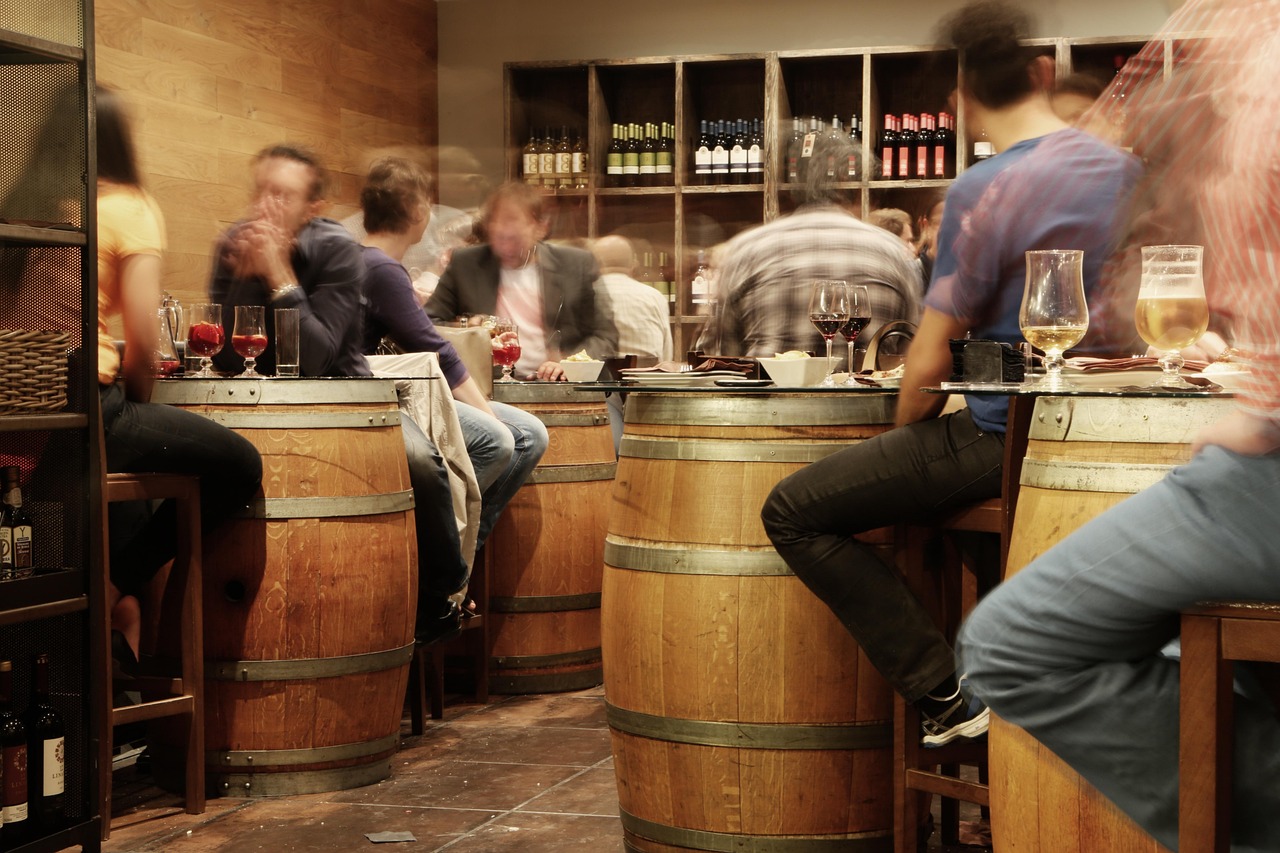
    At the Raheny Inn, for instance, barman Ben Cameron noticed that all the regular customers came back after the lockdown. “I have more people now than before, because they just want to go for a drink after Covid. So, it’s been a lot busier,” he said. 

    Dr Ralf Burbach, head of Hospitality Management at TU Dublin, also saw a “huge built-up demand” for travelling after restrictions were lifted. 

    “The [hospitality] industry is now back to pre-COVID levels in most respects, for instance in terms of occupancy rates.  

    “However, Covid did have a huge impact, particularly in terms of labor. Almost 40% of people that were working in the hospitality industry left or were furloughed and subsequently didn’t return.” 

    The shortage of skilled staff in food and hospitality has been a major issue in the industry. It’s a particular issue for rural restaurants, many of which struggle to find people who are willing to work in more remote locations. Consequently, many were forced to shorten their opening hours.  

    Although the overall revenue in hospitality has increased over the last years, profits aren’t necessarily higher because many businesses have higher expenses nowadays. Inflation and the rising food, electricity, and housing prices have made it harder for establishments to stay afloat. 

    “Our industry is always the first to be hit when there’s a cost-of-living crisis, when inflation rates go up, because it’s discretionary spending, it’s luxury spending. If there is not that much left in your budget at the end of the week, the first thing that’s going to be cut is going out for dinner or getting takeaway,” said Connolly. 

    Additionally, health concerns have changed the eating habits of many consumers. According to Connolly, especially elderly people seem to be going out far less since the pandemic.  

    “Even when we came out of Covid, there were so many legacy issues,” she said. 

    The changes in the Value Added Tax (VAT) – a tax paid for most imported goods and services within the EU – became another one of these issues. During the height of the pandemic, the VAT for food and hospitality was reduced from 13.5% to 9%, giving the industry a chance to recover. According to the Restaurants Association of Ireland, the return to a 13.5% VAT in 2023 proved “the final nail in the coffin” for many of the over 600 restaurants, bars, and cafes that have closed since then. Fine Gael has since committed to returning the 9% VAT rate for food and hospitality in the next budget. 

    “There’s been almost a perfect storm of negative things that have impacted the industry. It’s been relentless for hotels, restaurants, bars, coffee shops for the past five years,” said Connolly. 

    Lockdowns and other challenges have forced food and hospitality to rethink many of their practices and find solutions a lot quicker than they usually might. Especially in terms of technological advancements, “Covid has really catapulted us a couple centuries ahead,” according to Dr Burbach. 

    “One of the legacies of Covid is the idea of a cashless society, I can’t recall the last time I had cash with me.  

    “It’s made businesses a lot more innovative. QR codes on tables instead of menus, things like that, they’re very common now and they’re here to stay,” he said. 

    The pandemic has also birthed many entrepreneurial food companies that focus on at-home consumption like meal kits and veg. boxes. Initially used as a social distancing measure, outside seating areas have become much more prevalent in Irish restaurants. 

    Despite the challenges of recent years, Dr Burbach remained optimistic for the future of Irish hospitality. 

    “The numbers are looking very good. The employment levels are back to what they were in the industry with over 250,000 people involved in the broader tourism, hospitality, and accommodation sector. And that’s set to increase worldwide – one in three newly created jobs will be in the tourism/hospitality industry by 2030. That’s absolutely huge,” he said. 

    Overall, he thought that “the hospitality industry changed for the better” since the pandemic. 

  • Controversial vote in German parliament sparks Nazi comparisons 

    Controversial vote in German parliament sparks Nazi comparisons 

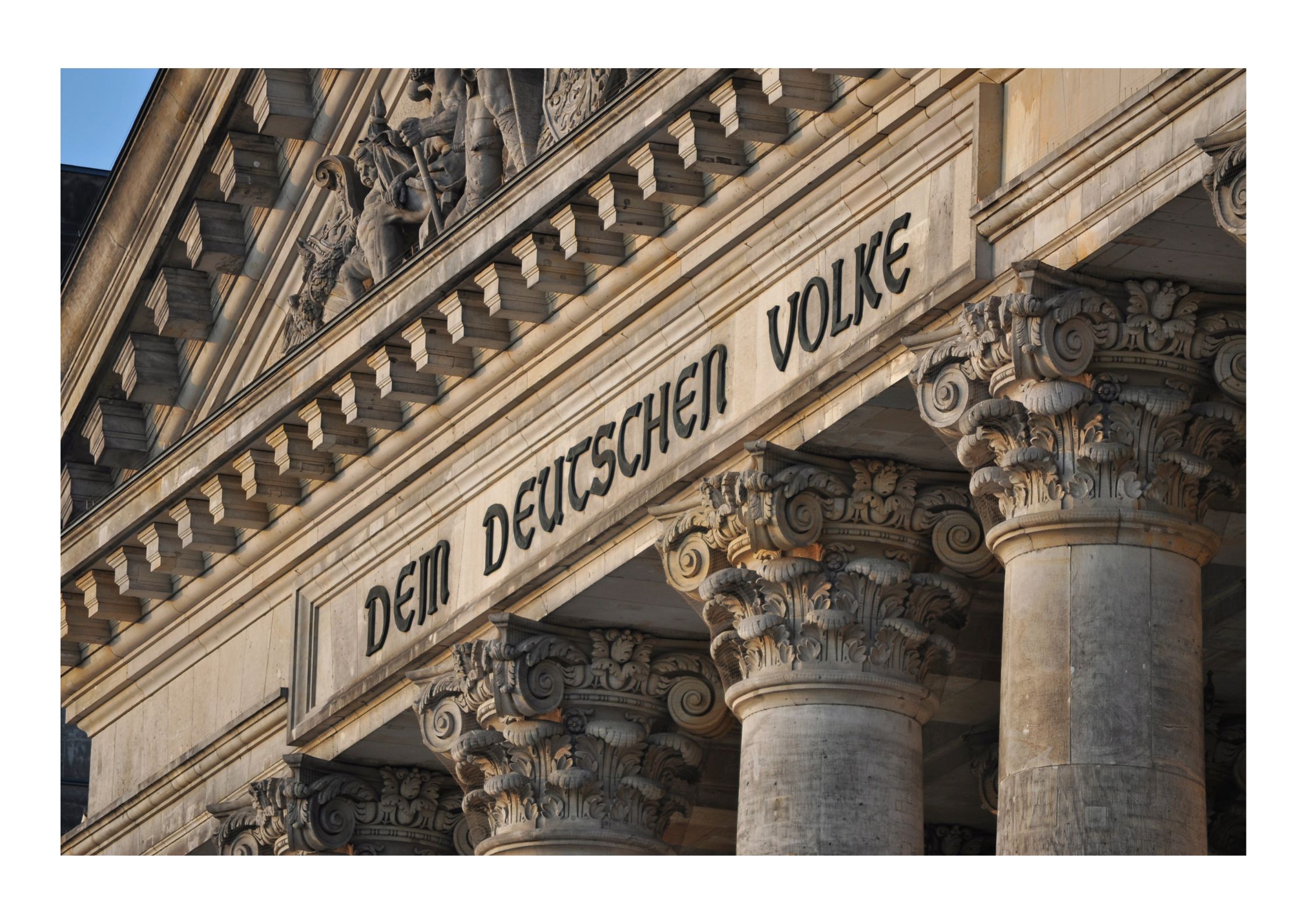
    Last week, the German Christian-democratic party crossed a line that hasn’t been crossed on a federal level since 1949 – they voted with the far right. Consequently, parallels to Germany’s extremist past are once again being brought into the open. 

    German flag frayed
    When the firewall against the far-right fractured, relationships between the parties in the Bundestag became even more frayed. Photo: Canva.

    In a parliamentary meeting on January 29, the conservative CDU presented a plan to drastically reduce migration to Germany and achieved a majority only thanks to the far-right party Alternative für Deutschland (AfD).  

    Journalist Martin Böhmer of the nonpartisan media outlet CORRECTIV said: 

    “The CDU introduced this draft bill knowing that the AfD would support them, and this has never happened before on a federal level. This is why a lot of left-wing parties and activists called out the CDU and their head candidate, Friedrich Merz, for breaking this so-called rule that they wouldn’t vote together with the AfD.” 

    Germans refer to this barrier as the ‘Brandmauer’, or firewall. Although there is disagreement on whether the CDU permanently tore down this wall – since their proposal was non-binding – it certainly seems to have cracked. 

    While the media speak of a ‘historic moment’ and ‘breaching a taboo’, some are making more direct comparisons to Nazi Germany – even current chancellor Olaf Scholz. In the debate leading up to Merz’ proposal, Scholz said: 

    “The right to asylum is the direct response to the horrors of Nazi rule. Back then, it was Germans and European Jews who were turned away at foreign borders. This must, as history teaches us, never happen again, Germany must never allow it to happen again.” 

    Martin Böhmer also felt that he’d seen Merz be called a neo-Nazi more often in these last weeks, as well as a “Steigbügelhalter”, or ‘stirrup holder’, referring to “a person or a party who’s enabling fascist or right-wing politicians to gain power”. 

    “Conservatives were labelled this in 1933, when Hitler and the Nazi Party came to power, and we’re seeing these comparisons being made again,” he said. “And the CDU are also being dubbed as Nazis.” This mostly happens during street protests, according to Böhmer, rather than in actual political discourse. 

    Historically, German politicians have often used comparisons with Nazi figures or methods rather than the term itself. In the 1970s, conservative Franz Josef Strauß (CSU) was likened to Nazi propagandist Joseph Goebbels. Strauß himself used the same insult against left-wing protesters, accusing them of being Goebbels’ best students and “the best Nazis that ever existed”. 

    “[Strauß] was inverting the meaning of ‘Nazi’ – a method that the AfD still applies today,” according to Maximilian Kreter, political scientist at the Hannah Arendt Institute for Totalitarianism Studies.  

    Kreter sees great value in drawing parallels between current events and history – in a scientific context.  

    “But most comparisons that are used in public discourse are not really justified or useful because, in most cases, they’re instrumentalised for political purposes,” he said. 

    He does not, however, believe that things should be represented as less severe than they are. “When somebody acts like a Nazi, speaks like a Nazi and behaves like a Nazi, it is a Nazi. And some of the current politicians of the AfD, that is what they’re doing.” 

    One of the media outlets calling the party out for their extremist views and actions is CORRECTIV, where Martin Böhmer works. In one of their biggest investigations to date, they looked into the AfD’s ties to extremist groups, exposing secret meetings where members allegedly planned mass deportations.  

    Although CORRECTIV’s Nazi allusions have been criticised, Böhmer insisted on a precise use of language. 

    “The term “Nazi” is extremely loaded in Germany – quite rightly so. There is no point in immediately labelling everything that is right-wing and conservative as Nazi. That doesn’t help democracy, it doesn’t help the discourse. And it is also simply journalistically wrong.” 

    Without using the Nazi label, Böhmer still warned against the rise of the AfD. “They’ve just become more and more extreme, and I feel we need to be very careful for democracy.” 

    AfD members are, of course, not a monolith, but many members share extremist views, as the government has found. As of now, the Federal Office for the Protection of the Constitution officially considers the AfD to be right-wing extremist in some states, and they’re under surveillance on a federal level, according to Maximilian Kreter. “It’s only a question of when they are qualified as a right-wing extremist party,” he said. 

    The AfD has repeatedly denied racism allegations and ties to the extreme right over the years. In their manifesto, they describe themselves as “liberals and conservatives”, “free citizens”, and “devoted democrats”. 

    In the upcoming election on February 23, they are estimated to receive 20 to 22% of all votes, according to Statista – which would make them the second strongest party, the first being the conservative CDU.