Author: Sarah Donoghue

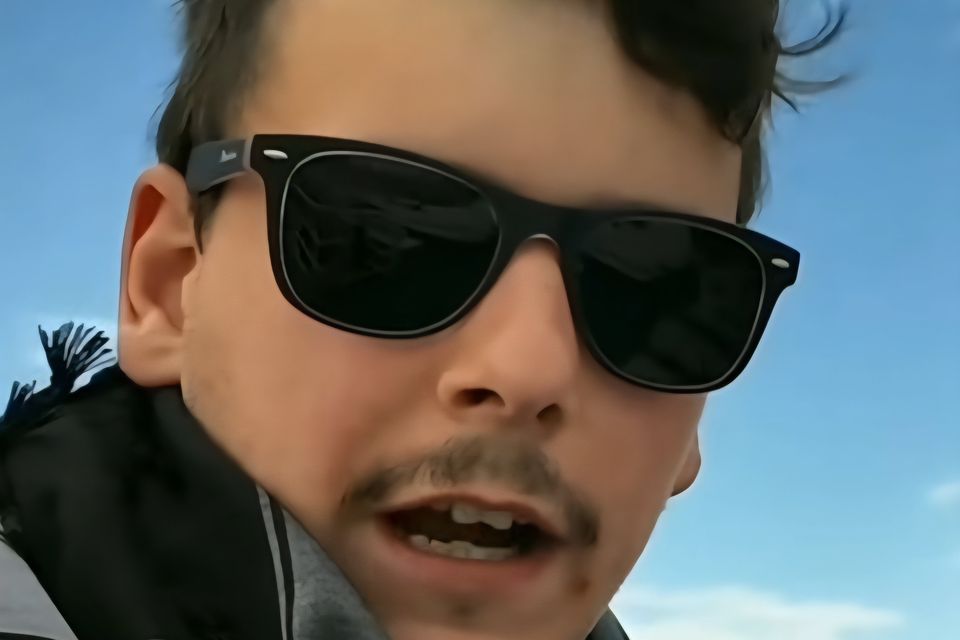
  • Fionn MacArthur – How do you go from living in a houseboat in Sligo to being in an Israeli detention centre? 

    Fionn MacArthur – How do you go from living in a houseboat in Sligo to being in an Israeli detention centre? 

    You’re awoken in the middle of the night to the deafening sound of an emergency siren. You scramble off the floor you’ve been sleeping on for the past 9 days; in the haze of panicked chaos, you manage to get on a life vest and make your way to the upper deck of the boat you’re travelling on. You and 90 other people sit there, unarmed, hands in the air as the military descends on you. Guns trained at your chest and screaming in a language you don’t understand, they herd you into the lower decks as you’re taken out of international waters towards imminent capture. At this point, many would be praying for this nightmare to end – but you signed up for this, you knew this was going to happen. This was the reality for Sligoman Fionn MacArthur when he was captured by Israeli Occupying Forces, the IOF, on a voyage to bring aid to Gaza.  

    MacArthur grew up living on a houseboat on Lough Gill, a lake around two kilometres from Sligo Town. He gained traction for his video journalism work during the Covid-19 pandemic documenting life in rural Sligo living in a boat during the lockdowns. He has continued to document life on Lough Gill while restoring old boats including one from World War II. But how did he move from his quiet life in rural Sligo to being in an Israeli detention centre?  

    His knowledge of boats and sailing lead MacArthur to volunteering after finishing his studies in filmmaking in 2017. MacArthur got involved with the Refugee Rescue organisation, a charity based out of Northern Ireland which operates a rescue boat in the waters surrounding the island of Lesvos in Greece. “For 10 years now, they’ve operated search and rescue on the sea looking for refugees. They saved 25,000 lives, most of them from Afghanistan,” he said. The two weeks MacArthur spent in the Moria Refugee Camp with Refugee Rescue in December 2017, kicked off his future in activism and volunteer work. 

    “They’ve been having various events and exhibitions over the last couple of months in the hopes to raise money. They are trying to raise €100,000 to get another rib [boat], to get back on the water, because after 10 years, their search and rescue vessel isn’t fit for the sea anymore,” he said. 

    “About two months ago, I was over in Denmark with them, kind of volunteering, helping them out at one of the fundraising exhibitions. It was the first time I actually met the founder in person. It was Joby Fox is an artist and musician from Belfast, and some of friends of his. They didn’t actually have any experience with working in search and rescue. I saw that there’s a void that needs to be filled and in hopes of saving people in the sea I went over to Denmark and volunteered with them,” said MacArthur. 

    “It was once I was back in Ireland that Joby reached out to see if I was interested or knew anyone interested in going on the Flotilla,” he said.  

    Eager to help out in any way possible, MacArthur dropped everything to join the Flotilla crew to see what he could offer. “Originally, I offered my filmmaking skills and knowledge of boats to the crew training. I didn’t know if I’d be going, if there was space for me, until the very last night; I was sort of only there in case someone got cold feet,” he said. 

    “I went over with Sicily, and that’s where the Madeline team and admin were based. They had eight boats there. That’s where Barry Henegan TD and Naoise Dolan, the author, were based. And so, I was living with them in their boat at the harbour for about 10 days before they departed. The rest of the crew, the Danish delegation and French Skipper, were also there but nothing was set in stone at this point,” he said.  

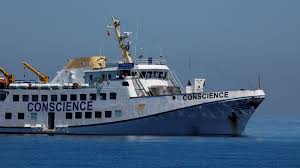
    “On the last night I found out there was no space for me. I thought I’d be coming back to Ireland in a couple of days’ time. And then I had heard that there couldn’t possibly be space on the Conscience, on the ferry boat that was made up of a media team, mainly journalists, and doctors that were to bring medical aid to Gaza,” he said. 

    Determined to finish what he had started and undeterred by the high risk of being captured, MacArthur focused his efforts on getting on the Conscience. “I contacted them, and eventually I got in contact with Dr Veronica O’Keen. Once they heard about me and I was able to get a place on the boat. So, I took a 10-hour bus from Sicily to Otranto, and I joined the last two days of training,” he said. 

    “They prepare you for everything, in terms of de-escalation, hostile environment awareness training and what to prepare for, in case of, being intercepted and kidnapped by the Israeli Navy, which, which did happen. Two days we set off from one Otranto, and we spent 10 days on the sea,” he said. 

    Like the rest of the flotilla activists, MacArthur was captured by the Israeli Navy and endured brutal treatment while in captivity. Every single member of the flotilla knew what they were about to endure “we had even been told when we would most likely be intercepted,” he said. However, he maintains what he did was not worthy of praise. “Unfortunately, people have put us in the limelight and said that we’re heroes, having tried to bring humanitarian aid to the people of Gaza. And we never wanted to have to do this. what we went through is nothing. It’s a fraction in terms of what the Palestinian people are going through every day,” he said. 
  • Freedom Flotilla activist feels “utterly abandoned” by Irish Government

    Freedom Flotilla activist feels “utterly abandoned” by Irish Government

    Freedom Flotilla activist Dr Veronica O’Keane told The City she felt “utterly abandoned” by the Irish Government in their response to their capture in international waters.  

    The group experienced “absolute brutality,” while in custody, according to Keane, “No opportunity was too small to be used as a weapon of humiliation,” she said. 

    O’Keane and Fionn MacAurthur were two of the 22 Irish citizens on the Freedom Flotilla mission delivering aid to Gaza when they were intercepted “120 nautical miles off Gaza strip,” MacAurthur told Tthe City. 

    O’Keane and MacAurthur, were travelling on the Conscience when they were intercepted by the Israeli Occupying Forces “We were a boat filled with 90 medics and journalists when a military machine descended on us,” said O’Keane. 

    “We sat there in life vests with our hands in the air while their guns’ lasers pointed at our chests,” said MacAurthur.  

    Once they reached the detention facility, they said the physical abuse began, “We had to kneel for hours with our heads down and if we looked up or to the side they came and hit us on the head,” said MacAurthur.  

    They only had access to “filthy water,” said O’Keane, and many of them refused food as you wouldn’t trust it,” said MacAurthur.  

    The activists maintain that what they went through pales in comparison to what others in the prison experienced.  

    “You could hear Palestinians being tortured from our cells,” said MacAurthur. 

    “One of my friends was a nurse, they took her to a room where there was a Palestinian who had just been tortured. He was just in his underwear and covered in blood, they had forced dogs on him,” said MacAurthur. 

    “One of the girls [on the Conscience] was Israeli, two Israeli police pulled her by her hair and kneed her twice in the stomach,” said MacAurthur. 

    In the prison, “there was a hierarchy of racial discrimination,” said O’Keane. 

    “I was in a cell with a black woman, she was heavily discriminated against, she was badly bruised and treated very unpleasantly,” said O’Keane. 

    When the Israeli military boarded the conscience “they singled out the Arab men, their hands were ziplocked behind their backs and they were kept on the upper deck,” said O’Keane. 

    The activists maintain that despite the brutality they faced it’s only a fraction of what Palestinians are experiencing, and they want attention to remain on Palestine rather than themselves. 

    “Unfortunately, people have put us in the limelight and said that we’re heroes having tried to bring humanitarian aid to Gaza, to people of Gaza. We’re not, we never wanted to have to do this. We wish we’d never have to go on these boats and put our own lives at risk to it for the Palestinian people. More focus needs to be put on Palestinian people rather than us,” said MacAurthur. 

  • Bleeper – the business behind the bunkers

    Bleeper – the business behind the bunkers

    Cycling is taking over Dublin – everywhere you look there’s commuters whizzing through the streets, young people on rented bike shares, and parents cycling with more children than you could ever have imagined fitting on one bike. Bike share companies have become increasingly popular in recent years, and in Ireland especially, small independent companies dominate the market. Even with the surge in popularity of cycle, it’s harder than ever for small companies to stay afloat. So that begs the question – how do you make yourself stand out?  

    One bike share company is using vibrant marketing and really tapping into the joy of cycling to promote the sustainable lifestyle. And even Dublin City Council has noticed. 

     On Oct 16, the council launched the BikeBunkers scheme, a scheme to install secure bunkers so Dublin City residents can safely store their bikes – making cycling more accessible to people living in apartments or with limited space. The BikeBunkers are being run with the bike share company Bleeper Bikes.  

    Bleeper’s BikeBunker promotional image – drawing by Emma Dutton

    Bleeper’s bikes – the white bikes with the purple Payzone logo on the side – operate in Dublin City, Fingal County and Dun Laoghaire Rathdown. They were the first bike share company to hit the Irish market – the independent company was set up 2017 and the first bikes were available to rent in 2018.  

    Kiernan Ryan, Bleeper’s head of marketing said “Hugh Cooney, our founder and current CEO, he had been living and working in China for a few years in the 2010s and he saw how popular stationless bikes were in China and saw that they were coming.” 

    After returning to Dublin, Cooney was inspired to take introduce stationless bike sharing to the Irish market. He began setting up company. The business plan was simple – they place their bikes all around the city and using the app customers can unlock their electronic locks and pay to rent the bike for a short period of time.  

    Since the bikes hit the streets in 2018, they’ve expanded their business model. “From a business perspective, we also do bike leasing now. It’s kind of a subscription e bike service. So, you sign up for your own e-bike, depending on what model it is, it’s between 20 and 40 euro per week. And then included in that subscription fee is any maintenance or repairs, replacements for that bike. So, if anything happens to your bike, you can just come back to showroom, swap out the bike, or our technicians will fix it,” said Ryan.  

    In the past year, they’ve heavily leaned on their unique marketing to drive business. “Recently we’re really tapping into the fact that cycling is one of the most purely joyful things you can do in your day-to-day life. Everyone knows there are difficulties with cycling, whether it’s infrastructure theft or danger from cars. But fundamentally being able to hop on a bike and cycle around the city, there’s a basic joy to that, and that’s something that we’re emphasising through our brand,” said Ryan. 

    Bleeper has been relying on colourful hand illustrations in their marketing, kicking against grey drab stock images and generative AI. “It is going against the grain, because outside stock imagery, there’s also this rise in generative AI imagery, and we don’t really see that as part of our identity, particularly given the environmental and emissions concerns around AI,” said Ryan.  

    “Our whole business model is about reducing emissions through cycling, and you know how much energy a single AI image can create so it doesn’t make sense for us,” said Ryan. 

    As a small company with only X employees, they are shaped by their employees’ talents. “We have skills within our workforce, and we’re really happy to use them. So we have a great employee who is very good at illustrations and hand drawings, and we’re supporting that,” said Ryan.  

    Bleeper’s promotional images – drawings by Emma Dutton

  • The Cearta protest – thousands march to save the Gaeltacht

    The Cearta protest – thousands march to save the Gaeltacht

    Over the last 15 years, the number of daily Irish speakers has fallen by 13%, from 83,000 to 72,000. With the government investing only 0.1% of state expenditure into the Department of the Gaeltacht, it’s not difficult to see why numbers are dropping so drastically. On Saturday, September 20, thousands of people took to the streets to protest and campaign for the Irish Language and Gaeltacht investment plan 2024-2029. We spoke to attendees and two top level members of Conradh na Gaeilge about their demands.