
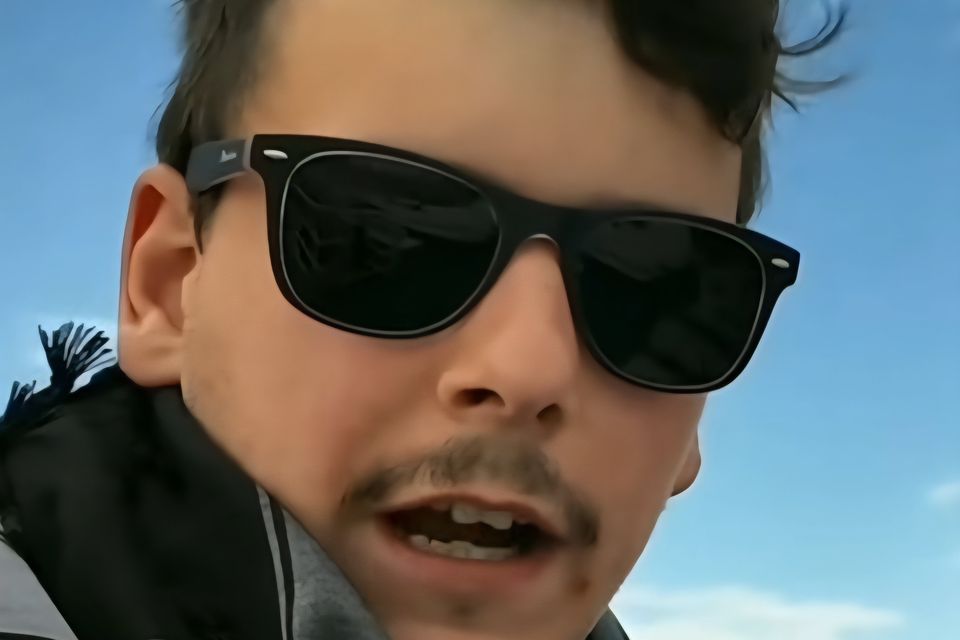
You’re awoken in the middle of the night to the deafening sound of an emergency siren. You scramble off the floor you’ve been sleeping on for the past 9 days; in the haze of panicked chaos, you manage to get on a life vest and make your way to the upper deck of the boat you’re travelling on. You and 90 other people sit there, unarmed, hands in the air as the military descends on you. Guns trained at your chest and screaming in a language you don’t understand, they herd you into the lower decks as you’re taken out of international waters towards imminent capture. At this point, many would be praying for this nightmare to end – but you signed up for this, you knew this was going to happen. This was the reality for Sligoman Fionn MacArthur when he was captured by Israeli Occupying Forces, the IOF, on a voyage to bring aid to Gaza.
MacArthur grew up living on a houseboat on Lough Gill, a lake around two kilometres from Sligo Town. He gained traction for his video journalism work during the Covid-19 pandemic documenting life in rural Sligo living in a boat during the lockdowns. He has continued to document life on Lough Gill while restoring old boats including one from World War II. But how did he move from his quiet life in rural Sligo to being in an Israeli detention centre?
His knowledge of boats and sailing lead MacArthur to volunteering after finishing his studies in filmmaking in 2017. MacArthur got involved with the Refugee Rescue organisation, a charity based out of Northern Ireland which operates a rescue boat in the waters surrounding the island of Lesvos in Greece. “For 10 years now, they’ve operated search and rescue on the sea looking for refugees. They saved 25,000 lives, most of them from Afghanistan,” he said. The two weeks MacArthur spent in the Moria Refugee Camp with Refugee Rescue in December 2017, kicked off his future in activism and volunteer work.
“They’ve been having various events and exhibitions over the last couple of months in the hopes to raise money. They are trying to raise €100,000 to get another rib [boat], to get back on the water, because after 10 years, their search and rescue vessel isn’t fit for the sea anymore,” he said.
“About two months ago, I was over in Denmark with them, kind of volunteering, helping them out at one of the fundraising exhibitions. It was the first time I actually met the founder in person. It was Joby Fox is an artist and musician from Belfast, and some of friends of his. They didn’t actually have any experience with working in search and rescue. I saw that there’s a void that needs to be filled and in hopes of saving people in the sea I went over to Denmark and volunteered with them,” said MacArthur.
“It was once I was back in Ireland that Joby reached out to see if I was interested or knew anyone interested in going on the Flotilla,” he said.
Eager to help out in any way possible, MacArthur dropped everything to join the Flotilla crew to see what he could offer. “Originally, I offered my filmmaking skills and knowledge of boats to the crew training. I didn’t know if I’d be going, if there was space for me, until the very last night; I was sort of only there in case someone got cold feet,” he said.
“I went over with Sicily, and that’s where the Madeline team and admin were based. They had eight boats there. That’s where Barry Henegan TD and Naoise Dolan, the author, were based. And so, I was living with them in their boat at the harbour for about 10 days before they departed. The rest of the crew, the Danish delegation and French Skipper, were also there but nothing was set in stone at this point,” he said.
“On the last night I found out there was no space for me. I thought I’d be coming back to Ireland in a couple of days’ time. And then I had heard that there couldn’t possibly be space on the Conscience, on the ferry boat that was made up of a media team, mainly journalists, and doctors that were to bring medical aid to Gaza,” he said.
Determined to finish what he had started and undeterred by the high risk of being captured, MacArthur focused his efforts on getting on the Conscience. “I contacted them, and eventually I got in contact with Dr Veronica O’Keen. Once they heard about me and I was able to get a place on the boat. So, I took a 10-hour bus from Sicily to Otranto, and I joined the last two days of training,” he said.
“They prepare you for everything, in terms of de-escalation, hostile environment awareness training and what to prepare for, in case of, being intercepted and kidnapped by the Israeli Navy, which, which did happen. Two days we set off from one Otranto, and we spent 10 days on the sea,” he said.
Like the rest of the flotilla activists, MacArthur was captured by the Israeli Navy and endured brutal treatment while in captivity. Every single member of the flotilla knew what they were about to endure “we had even been told when we would most likely be intercepted,” he said. However, he maintains what he did was not worthy of praise. “Unfortunately, people have put us in the limelight and said that we’re heroes, having tried to bring humanitarian aid to the people of Gaza. And we never wanted to have to do this. what we went through is nothing. It’s a fraction in terms of what the Palestinian people are going through every day,” he said.