Author: Synoah Penaflorida

  • Christmas Spending – The Value of Christmas

    Christmas Spending – The Value of Christmas

    The Central Statistics Office on November 13th released the consumer price index for this year, which shows a 2.9% increase in the inflation rate over the last 12 months, which is the fastest and highest rise of inflation since March of 2024.

    The increase will affect the prices of food items such as dairy and pastries. The price of poultry and meat increased by 6.6% which will affect the price of viands such as Chicken, beef, and turkey.

    Aside from household staples, an increase of 7.7% in health insurance, 3.7% in electricity, and 3.6% in rent was reported in the current figures.

    Going around Dublin city centre, TheCity asked a few people how much they will be spending this Christmas.

    Economist, Dr. Clare O’Mahony, will also be commenting on the hiking prices this holiday season.

  • The Comeback of Forgotten Irish Sports 

    The Comeback of Forgotten Irish Sports 

    Sports like hurling, football, and rugby are considered most popular in Ireland. Most athletes learn the rules and how to play at a young age. Ireland’s deep-rooted passion for sports stems from a long lineage of physical activities that date back to as early as the 19th century. While the Gaelic Athletic Association (GAA) keeps traditional sports like hurling and Gaelic football at the heart of local communities, other traditional sports have long been forgotten, while some are making a comeback in other counties or rural areas. 

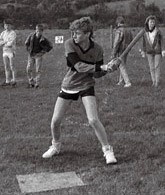
    One sport that is gaining popularity in Ireland is rounders. 

    This type of sport was played long before the term rounders was coined; its origins can be traced back to medieval Europe. 

    Sport historian Professor Paul Rouse said,“Hitting a ball with a stick is going out all across the world, and there are variations of this big game that can be seen in different cultures”. 

    In Ireland the history of rounders goes all the way back to 1744, where versions of the sport had been played for generations.

    Rounders is considered a traditional Irish sport and is one of the sports included in the GAA charter since 1884. 

    Shirley Lennon, secretary for GAA rounders, told The City, “When the GAA was first set up in 1884, there were four sports: hurling, football, handball, and rounders. The organization changed greatly over the years, and rounders was revived in the 1950s.” 

    Rounders is a bat and ball game team sport where two teams alternate between batting and fielding. 

    It’s similar to baseball and softball but it’s different in terms of mechanics and equipment. 

    “We would have more space between our bases… the ball we use is different; we use the slither, which is the same ball they use for hurling,” Lennon explained. 

    Currently, there is no official team for rounders, “just like all GAA sports, it’s all part-time volunteering,” Shirley Lennon said. 

    Despite this, rounders is slowly gaining popularity, especially in Dublin. 

    “I think we definitely are gaining in popularity, especially since COVID. During 2021 to 2022, there’s been quite an explosion of rounders clubs,” said Lennon. 

    Rounders is also the only sport in the GAA that features mixed teams, with both male and female players competing on the same team. 

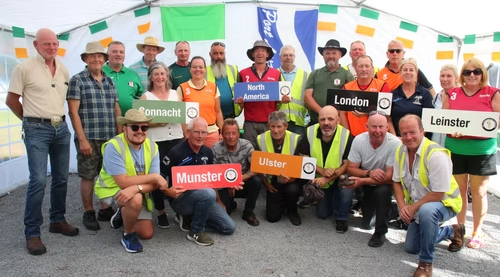
    Rounders is expected to be one of the games to be included in the upcoming 2026 Tailteann games, that is to be held in Kilkenny in the spring of next year. 

    Another sport that has made a comeback in Ireland in recent years is road bowling. 

    The origins of road bowling are unknown, but it is believed that stone-throwing traditions existed across Europe during the pre-1600s. 

    The earliest record of road bowling in Ireland started in the late 17th century to the early 18th century. The sport was commonly practiced in County Cork and Armagh. 

    Road bowling slowly faded during the 20th century due the fact that some impromptu gatherings with occasional betting led to the game to be banned by authorities, but the game was kept alive by small communities in rural areas.  

    The Road Bowling Association kept the sport alive throughout the years.  

    Seamus O’Tuama, public relations officer for the Road Bowling Association, told The City that “when the association was set up in 1954 it created competitions for players using the standard rules”.

    The association also included competitions for women and under 18s. “Then over time team competitions started, then in 1963 the association of Ireland got involved with two international road bowling associations, Germany and the Netherlands, which established European championships,” O’Tuama added.  

    Today, thanks to the influence of social media, road bowling is slowly making a comeback in Ireland; games are now being organized in County Cork and Armagh. 

    Paul Rouse said, “Road bowling is gaining its popularity because it offers something different and it’s incredibly compelling viewing.” This comeback is no surprise because “games go through queues of popularity and that’s normal. It’s not unusual,” Rouse added. 

    Road bowling competitions are continuously being held in Cork.

    Sports are an important aspect of Irish culture, and it’s a factor that shapes identity in Ireland. 

    “Sports are something that thrive both at the local level and at the international level. People have traditions in their lives, and one of the traditions is to play those sports; it’s about family, it’s about heritage, and it’s about locality… so the comeback of these sports would add to what’s there already,” said Rouse.

  • Celebrating Day of The Dead “Dia De Los Muertos” in Dublin

    Celebrating Day of The Dead “Dia De Los Muertos” in Dublin

    Dia De Los Muertos or the Day of the dead is a Mexican holiday that honors those who are no longer with us.

    Here in Dublin several events celebrated the occasion.

    The City covered the different events and explained what the occasion is all about.

  • “The people are your employers” – Former Labour party TD Eithne Fitzgerald

    “The people are your employers” – Former Labour party TD Eithne Fitzgerald

    Politicians come and go; some remain elected for years while others serve in government for a short term, and there are those who persist. The third could be said for former TD Eithne Fitzgerald, who ran for national office seven times.  

    Eithne Fitzgerald was a former Labour party member and a TD who served in the south Dublin constituency from 1992 to 1997. 

    Fitzgerald first joined the Labour Party when she was a college student in 1967 which fueled her interest in the field of politics. “I joined both the UCD branch and the one in my local area,” Fitzgerald said noting that back in the day “students were able to be in both a college branch and a local branch in their constituency” which for her was the south Dublin constituency branch.  

    Fitzgerald then left the Labour Party when she graduated in 1970 and worked in the civil service in the Department of Finance. “As the civil service must be politically neutral, I resigned from the Labour Party,” she said.  

    Eithne Fitzgerald worked in the Department of Finance for two years until she got married in 1972, she then lost her permanent job due to “the marriage bar still being in force for married women up to July 1973,” Fitzgerald explained. 

    After six years of not having a permanent job, she decided to put her name forward for city council candidate for the Labour Party in the 1979 local elections. “At that stage, Dublin County Council had no women members… I felt strongly that women’s perspective needed to be articulated in the council.” Fitzgerald wanted to discuss issues like play facilities for children, and the construction of streets and footpaths for people pushing prams and buggies. She eventually won that year’s election, the first time that she was elected for local office. 

    Fitzgerald was one out of 4 women who got elected to the local government that year. “It was considered kind of a big breakthrough and traditionally… there were 36 members of the county council, and four of us were women, and we came into a council that had no women,” she said.  

    Years in local office inspired her to go further in her career, and in 1981, she and a fellow councilor ran for election to the Dáil. That year she wasn’t successful in being elected but that didn’t stop her from running. “I ran in February of 1982…1987…1989…” Fitzgerald said. She then rejoined the Labour Party in 1986. 

    Despite losing several times she did not lose hope and ran again in 1992. 

    “My fifth attempt at running for the Dáil was in 1992, where I topped the poll not only in the constituency, but received the highest vote in the country of any candidate that year. I was an overnight success on my fifth try!” said Fitzgerald  

    Fitzgerald didn’t lose hope as this was what she wanted. “I felt I could make a difference, and I suppose having trained as an economist and having worked inside the public service, I knew how to make change,” she said.  

    Being part of the Dail presented her with more opportunities and challenges, like in 1993 when she had a dual role, she was appointed as minister for finance, and she also worked in the newly formed office of the Tánaiste.  

    Freedom of Information 

    One of Eithne Fitzgerald’s first pieces of legislation during her time working in the office of the Tánaiste was the freedom of information (FOI) legislation, which she and her fellow TDs wrote from scratch in 1992. 

    Fitzgerald was asked to write the legislation of the FOI as “it was a big part of the manifesto. The Labour Party’s manifesto was about putting justice into economics and trust into politics. That was the phrase that was used,” she said.  

    In writing the FOI they’ve had to take into consideration the British Official service act which was the preceding legislation before the FOI. “I knew that in changing this, that it wouldn’t work unless there was legislation behind it. You don’t change your culture overnight unless there are some strong guardrails,” Fitzgerald said.  

    During this time, they have reviewed several legislations from other countries which were used as models in forming the Irish version of the FOI. They spoke with several politicians worldwide who were involved in creating their country’s FOI.  

    Together with her team, they did thorough research on countries that have implemented their FOIs. “To do the nuts and bolts of the legislation, was a pure joy. It was delightful to do it. I was able to get my teeth into some research and there was less opposition to it,” she said.  

    In creating the legislation there was opposition to it as the FOI will be allowing the public to access vital information. “A lot of stuff that had to be dragged into the light,” Fitzgerald said.  

    The Fianna Fail party originally didn’t accept that there would be a Freedom of Information act but said that it should just be considered. Fitzgerald and her team took this as an opportunity to further their research and push through with the legislation.  

    “What we wanted to see was the practice change towards automatic publication of what should be published,” she said.  

    The first legislation of the Freedom of Information Act was first approved in 1997. “My proudest achievement is the Freedom of Information Act,” Fitzgerald said.  

    End of an Era 

    In 1997 Eithne Fitzgerald ran for the Dail elections for the sixth time but unfortunately, she lost her seat.  

    At this time there were two local issues that affected Fitzgeralds’ campaign “One would have been my support for the travelers, and the second one was about a school in Knocklyon in County Dublin,” she said.  

    Fitzgerald once again tried to run for national government in 2002, but she failed to garner enough votes to be re-elected.  

    After her seventh run she decided to throw in the towel and move on from politics.  

    Eithne Fitzgerald, though not in politics, is still in public service; she is currently working for the National Disability Authority.“I love the work, and I love the job,” she said.  

    Reflecting on her journey as a politician, Fitzgerald learned that

    “I suppose the people are your employers. They can vote you in with a big vote. They can vote you out with another vote. That’s democracy. It’s very personal when it happens, but you get on with life and there is a life after politics”

    -Eithne Fitzgerald 

     

  • From Pill to shot: Game-changing HIV medication available in the EU 

    From Pill to shot: Game-changing HIV medication available in the EU 

    A new HIV drug that can prevent HIV has been rolled out in Ireland. 

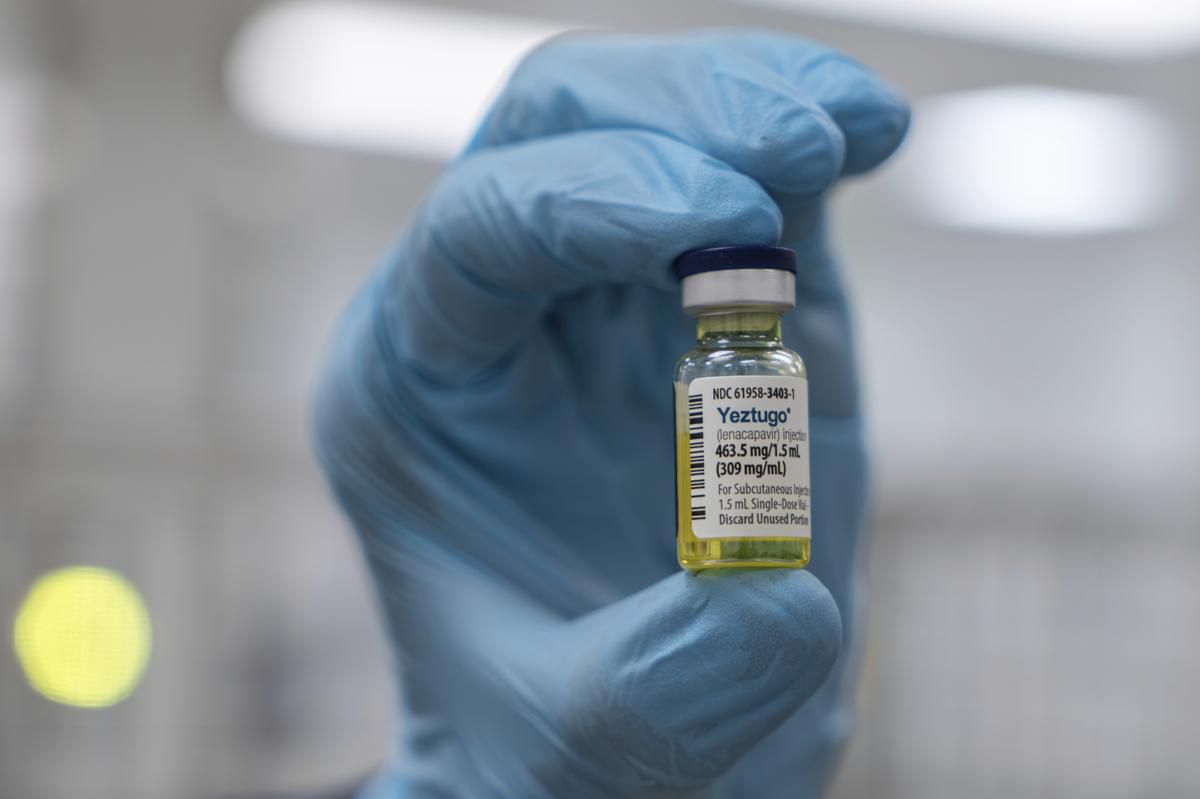
    The newly-approved HIV PrEP (pre-exposure prophylaxis) medication, called Yeytuo, is now available across the EU and will soon be available worldwide.  

    Lenacapavir was developed by GILEAD sciences back in 2010 and was approved by the US Federal Drug Administration (FDA) in August 2022. Three years later, in August 2025, Yeytuo, the EU version of Lenacapavir, was approved for PrEP medication.  

    The European Commission approved the new PrEP medication on Aug 26, 2025.  

    Yeytuo is in a class of HIV (Human Immunodeficiency Virus) medication called capsid inhibitors, which decreases the HIV in the blood.  

    Professor Jack Lambert, a consultant in infectious diseases at the Mater Hospital in Dublin said the medication represents a big leap forward in HIV treatment.  “I think the practical thing is that it’s one of the first treatments that you can give twice a year and then on top of that, it’s injectable,” said Professor Lambert. “It’s an incredible benefit on the current PrEP regimes.” 

    It is also accompanied by two tablets the day after the injection, and the patient should practice safe sex. 

    Yeytuo has also had  99.9% success rates in clinical trials in preventing HIV in patients, and it provides patients with easy uptake because it only needs to be administered twice a year, compared to taking PrEP pills daily.  

    The drug itself can be used “by people who have HIV or those who are trying to prevent it,” Professor Lambert added.  

    One underlying problem of the new medication is its very high cost, priced at $28,000 per patient.  

    Speaking to TheCity.ie, Professor Lambert said that “…it has to be cost effective, the current cost the company wants to charge for PrEP for this particular agent is beyond, and the current PrEP drugs like Truvada cost €20 to €30 a month, so huge difference in cost.” 

    At the beginning of October Gilead Sciences announced that it would make generic versions of the medication to be made available to low-income countries. 

    They are partnering with different laboratories worldwide by sharing their medical patent of Lenacapavir to lessen the cost of the medication from $28,000 to $40 a year.  

    GILEAD sciences, together with UN AIDS, Dr. Reddy Laboratories and several medical groups worldwide wide aim to make the medication more accessible by the end of 2026.  

    Countries like India have begun marketing Lenacapavir and it is to be supplied by Dr. Reddy’s Laboratories.  

    Dr. Reddy’s Laboratories aims to make the drug more accessible to 120 low-income countries.  

    Meanwhile, here in Ireland, there is still no information about the cost of the new medication, and it remains the US price, which is equivalent to more than €24,000. 

    Aside from the cost, there are also side effects to be considered when using Yeytuo, such as “major or minor reactions at the injection site,” Professor Lambert said.  

    Side-effects/Reactions could include swelling, redness, bruising, warmth, pain or discomfort, itching, hardened skin, small mass or lump/bump. 

    “I think there are very few downsides to the injectable HIV medications, both for treatment and for PrEP,” Professor Lambert added.  

    Though the medication itself is considered a game-changer in the field of HIV, its success is yet to be determined globally. 

    “What you’re going to have to do is look at the new cases over the next number of years. For example, in Ireland, there are 400 new HIV cases a year. If they implement a new PrEP program, those numbers would drop to 200. It’s just indirect evidence that the medication has been successful,” Professor Jack Lambert said 

  • The impact of Saint Carlo Acutis to the Catholic Church

    The impact of Saint Carlo Acutis to the Catholic Church

    Carlo Acutis, a 15-year-old teenager, was canonised by Pope Leo XIV at Saint Peter’s Square in Vatican City on Sept. 7, 2025.

    As the first saint born in the Millennial era, St. Carlo Acutis has captivated the hearts of hundreds of thousands of Catholics worldwide, with people of different nationalities and ages visiting his tomb.

    Carlo acutis was born in london in 1991, but was raise in Italy. Growing up he had developed a passion for catholicism and technology, which he used to spread the catholic faith. He died of leukemia in 2006 and after his death two miracles were accredited to him which led to his canonization.

    Carlo Acutis love for the Eucharist were recognised by the late Pope Francis. Father Michael Collins, a priest at the Archdiocese of Dublin, wrote a book on the new saint, God’s Influencer: A short biography of Carlo Acutis.

    Fr. Collins told TheCity.ie that there has already been an increase in young people who are showing interest in the new saint.

    “I regularly get people contacting me saying ‘that I’ve been interested in Carlo Acutis’ and they share with me their stories” he said.

    Nowadays, when the Church is experiencing a lack of young Christians, Saint Carlo Acutis serves as a reminder that even the younger generation can be influenced through modern Eucharistic practice.

    “The fact that he combined a reverence for the Eucharist, which has been in the church since the beginning, with new ways of presenting the Eucharist to the younger generation makes him an important saint,” Fr. Michael Collins added.

    Aside from being an inspiration to the youth, Saint Carlo Acutis has also impacted the development of the modern Eucharist.

    In his lifetime, St Carlo Acutis was fascinated with the internet. In his life the internet was still in its infancy, but that did not stop him from creating his own website and documenting the Eucharistic miracles from different places he visited.

    Dr. John Scally a lecturer in theology at Trinity College, Dublin, told TheCity.ie that although the new saint doesn’t have a huge theological significance, he has so much to offer to the development of the modern Eucharist.

    “I would see him as an innovator, I mean he’s gone bravely where no saint has gone before in terms of taking the church in a new direction.” Dr. Scally said.

    Dr. Scally explained that in this new generation, St Carlo Acutis has developed a method that would allow him to easily connect with people.

    “Jesus was a brilliant communicator because he communicated in the language of the time, in ways that people could understand. So young people can relate to Carlo, and he was able to come up with a new way of nurturing Eucharistic devotion” he said.

    In his first few weeks as saint, St Carlo Acutis has already caught the devotion of the masses and it could possibly help in promoting the Catholic faith to people and specifically the younger generation.

    Dr. John Scally said he “would not have great confidence in the fact that the church is using Carlo, as a poster boy to sell Catholicism […] Carlo’s story on his own is not going to be enough to save the church. We need much more people getting involved and living, being ambassadors for Jesus on Earth.”

    Fr. Michael also pointed out that having a saint from this era is more than a publicity stunt for the church. “The church would be foolish to look as if it’s looking for publicity […] all we want to do is share when there is good news.”

    St Carlo Acutis’ tomb is currently housed at the Santa Maria Maggiore church in Assisi, Italy, where devotees visit and pray to him daily.