Tag: addiction

  • HSE Safer Nightlife Programme Promotes Safe Festival Culture at District X 

    HSE Safer Nightlife Programme Promotes Safe Festival Culture at District X 

    By Sadie Murray 

    The highly anticipated debut of District X Festival took place last weekend in Kildare, with HSE teams making headway amongst the crowd. 

    The festival is the result of a collaboration between popular venues District 8 and Index and is the first of its kind in Ireland. The organisers had a strong emphasis on harm reduction measures, working closely with the HSE to create a safer festival environment.  

    There were spaces throughout the festival provided by the HSE for harm reduction outreach teams and ‘back of house’ drug checking as part of their Safer Nightlife Programme.  

    The Safer Nightlife programme was launched by the HSE in 2022 in response to the evolving drug landscape in Ireland. This campaign involved the development of tailored resources, media awareness and an outreach drug service to support people at events, including four festivals over the summer of 2024.  

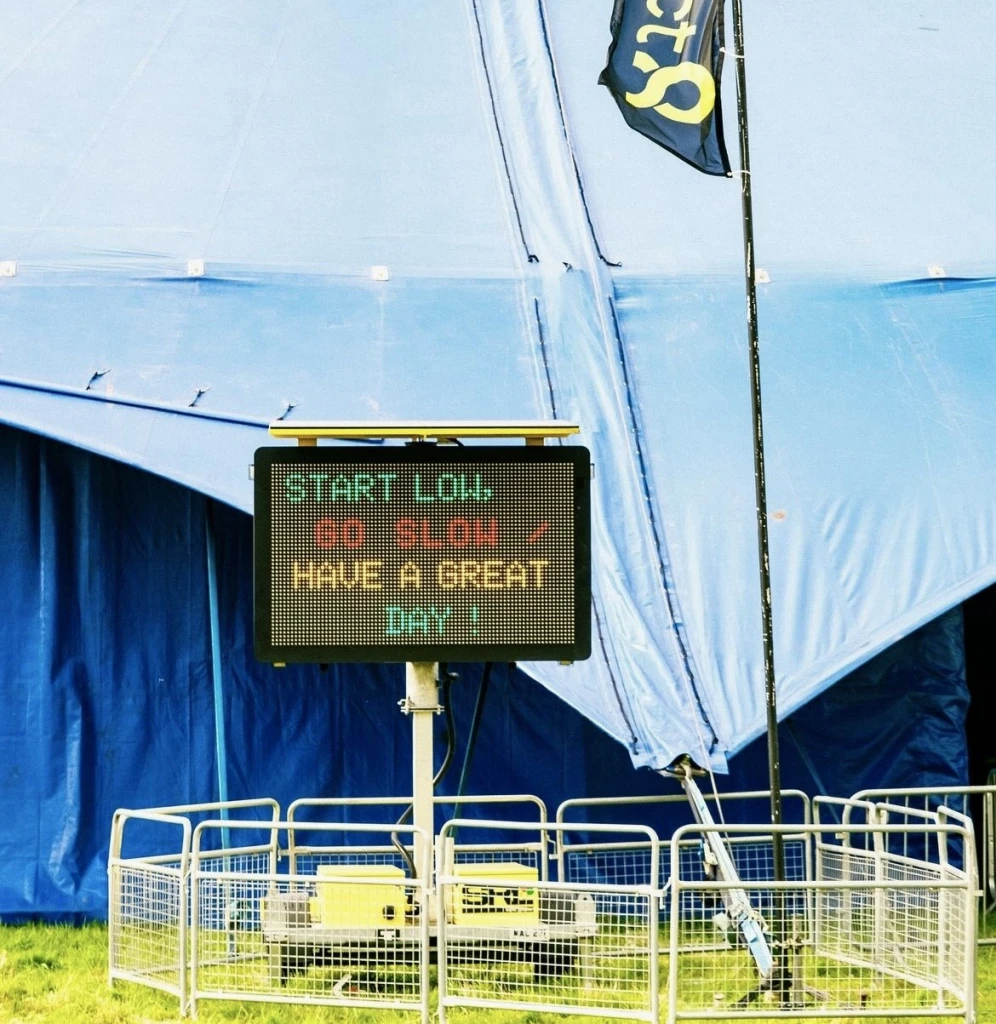
    The initiative has been successful in reaching festival goers. Karen O’Grady, from the HSE said, “Based on discussions at events this summer, we feel our message is reaching people, more and more people are reporting that they are aware of trends and are applying harm reduction measures like “start low, go slow.” 

    Photo Credits: http://www.drugs.ie/festivals  

    This is a key message from the HSE, to start low and go slow, meaning that if someone chooses to take drugs they should start with a small dose and pace themselves.  

    When the HSE’s festival campaign first began, there was a fear of Garda interference with the spaces. Karen O’Grady said:, “There is less fear of engaging with us now, people who come to the service see that it is not monitored and feel safe discussing use and surrendering drugs with us. 

    “We will continue to create awareness of drug trends and try to engage with more people to build trust,” said O’Grady.  

    Surrender bins were provided throughout the festival for people to submit drugs for analysis. The service relies on people surrendering drugs for harm reduction purposes- the more drug samples people provide, the more the HSE will know about what is in circulation. This process helps the HSE to issue alerts and spread awareness around particularly risky substances.  

    The ‘back of house’ approach means that the sample is destroyed upon analysis and the person will not be contacted directly with the results. If anything noteworthy is found, this information is broadcast on social media and on screens at events. 

    This HSE initiative was introduced following recommendations from the Government Emerging Drug Trends and Drug Checking Working Group, which examined nightlife environments including festivals.  

    The review identified these as risk-taking settings that can provide the HSE with more opportunity to engage with groups not typically presenting to traditional addiction services. 

    Photo by Sadie Murray 

    Karen O’Grady said:, “The overall aim of the programme is to engage with and support festival attendees in a non-judgemental way on the topic of substance use and related health issues that emerge in nightlife spaces. The programme is based on a harm reduction ethos to inform and support people to amend behaviours to help minimise harms caused by substance use.” 

    The development of a drug safety culture within festivals is crucial with an increasingly volatile drug market and substance abuse epidemic. 

    A recent report from The European Drug Report 2024 found that Ireland had the highest instance of drug deaths in the EU, with more than four times the average number of fatalities. The report showed that Ireland had 322 drug-related deaths in 2020 — 97 deaths per million people, compared to the EU average of 22.5. 

    The HSE’s core message is that it is safer not to use at all and that the drug market is currently very volatile. For those who do choose to use, it is advised that they stay up to date with drug trends and alerts on the HSE site and to follow harm reduction messages. 

    Photo from HSE’s Drugs.ie campaign 

  • All bets are on: are virtual sports feeding gambling addictions?

    All bets are on: are virtual sports feeding gambling addictions?

    The online gambling world has expanded. Photo: Pexels

    As people go without live sport to watch on their screens, TheCity.ie’s Kim O’Leary examines how certain fans are turning to gambling online to ease their boredom – with potentially harmful consequences for those battling an addiction.

    The global coronavirus pandemic has rocked the sporting world, with the cancellation and postponement of major live events ranging from the Tokyo Olympics to Wimbledon.

    As most countries respond to the Covid-19 threat with social distancing, sports fans who are missing live events are turning their attention to virtual sports, which have seen a surge in popularity thanks to technological advances.

    Betting companies, endeavouring to keep their punters gambling,d have set up their own online platforms to facilitate virtual sports such as horse racing, grey hound racing, cycling, football, and tennis as well as traditional casino games like roulette and the slots.

    What are virtual sports?

    Virtual sports are a selection of fixed odds games/events that use a random number generator to decide the outcome. All gamblers betting on these games and events view the same schedules and the same outcomes. Currently the most popular virtual sports include football, horse racing, motor racing, basketball, and virtual cycling.

    Despite their recent surge in popularity during the global Covid-19 pandemic, virtual sports have actually been around since the early 2000s. Virtual horses ran during the foot and mouth disease outbreak in 2001, when live racing was cancelled in Britain and Ireland.

    Earlier this month, hundreds of thousands of people watched ITV’s broadcast of the The Virtual Grand National – an AI version of the country’s biggest horse race, at the exact same time the real race was meant to be held.

    Virtual football games are proving a hit on Betway

    While real-world sporting attractions are limited this weekend to the likes of Belarusian Premier League clashes – FC Smoldvichi-STI versus Dinamo Minsk on Friday and Slavia Mozyr’s fixture against FC Minsk on Saturday at 1pm – there is a full-schedule of virtual sports for punters to tune into.

    There is, in theory, no physical limitation on the number of virtual sports events that could run, and punters are being reminded that the dangers of excessive gambling online are very real.

    Speaking to TheCity.ie, Barry Grant, counsellor and founder of charity Problem Gambling Ireland, says that the pull of virtual sports and gambling online can pose a very real danger.

    “The lockdown in Ireland started after the Cheltenham races which is a big event for betting, and now there is a risk certainly with people at home or off work where they are becoming bored and start gambling online and through virtual sports. In some ways we have seen an increase in the numbers taking to online gambling, yet our helpline has been fairly quiet so far which is a little worrying. But being at home and out of work all increase the risk for people to start gambling,” says Grant.

    Gambling problems may worsen

    Grant explains that counsellors around Ireland are working hard to continue offering counselling services during the Covid-19 pandemic, themselves taking to apps such as Zoom to talk to people who have contacted them for help.

    But Grant feels that more can be done by the Government and betting companies to try curb the rate of gambling addictions in Ireland, as many gambling companies are now tweeting advertisements and links to virtual markets.

    For example Boylesports’ Twitter feed shows messages such as “You can bet on virtual events every minute 24/7!” alongside a link to the nine different virtual markets.

    Some gambling companies like Paddy Power are also trying to be seen to encourage users to play responsibly by setting a deposit limit.

    Grant says that perhaps Ireland can look to other countries’ gambling restriction laws to help the current situation. “The Government and the gambling companies could follow the likes of Belgium and Sweden who have placed financial restrictions like on how much a person can bet, taking into account what people have to lose. The National Lottery here also has a restriction on its website for how much people can spend. I think something like this would help,” says Grant.

    And what advice would Grant give for those who have started gambling online through virtual sports?

    “The advice is that people should look at how much time and money they spend on gambling sites. it’s also possible to self-exclude yourself and block certain online sites through software such as Bet Blocker. And I would definitely recommend that people look at other hobbies like physical exercise instead,” says Grant.

    While virtual sports are all the rage during this pandemic, punters are reminded to not let the virtual world become an addiction.

    Contact Problem Gambling Ireland on 089 241 5401 (call-back service) or Gamblers Anonymous on 01-8721133 for assistance.

  • ‘Art and nature can help to erase the stigma associated with addiction,’ says founder of treatment centre

    ‘Art and nature can help to erase the stigma associated with addiction,’ says founder of treatment centre

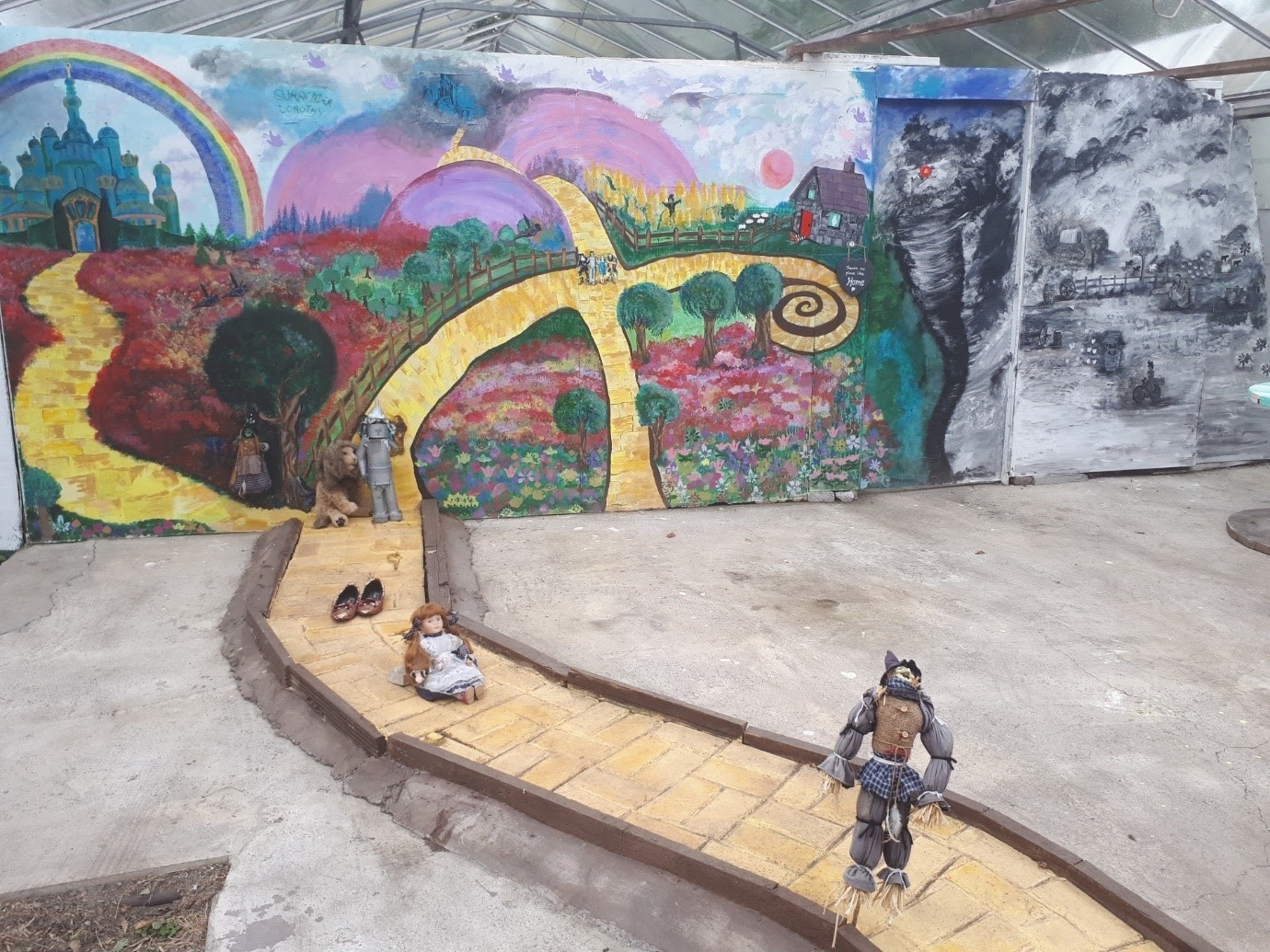
    A ‘Wizard of Oz’ mural in the greenhouse which the members created. Photo: Kim O’Leary.

    The founder of an addiction and mental health treatment centre in Athy, Co Kildare, has said that artwork and a return to nature can help people in their battle against addiction and mental health issues. TheCity.ie’s Kim O’Leary speaks to Declan Nolan, who has seen patients thrive by making art works and gardening, while also helping to bring local communities together.

    Declan Nolan is the founder of Discover Oneself (D1-S) in Athy, set up in the town three years ago. Drug use, he says, is “becoming less hidden and more obvious” there and nationwide as well.

    “It has been bad for years in Athy and people are talking about it now because it’s becoming less hidden and more obvious, it can affect the whole community. People talking about it now also allows those who have struggled with addiction to tell their story. “

    “It’s happening all around Ireland. People are afraid to talk about drugs and other addictions so we have to keep fighting to erase the stigma surrounding addiction and mental health,” explained Declan.

    The current national drug strategy, ‘Reducing harm, supporting recovery: a health-led response to drug and alcohol use in Ireland 2017-2025’, was launched in July 2017 and its main aim is to minimise the harms caused by the use and misuse of substances, and to promote rehabilitation and recovery by supporting the development of a range of treatment, rehabilitation and recovery services using the four-tier model.

    The strategy also recognises the need for timely access to appropriate services for the client. The integrated care pathways model forms the conceptual basis for the National Drug Rehabilitation Framework.

    The Health Service Executive (HSE), which manages Ireland’s public health sector, is responsible for the provision of all publicly funded drug treatment. The management of all drug treatment services falls under the remit of the Primary Care Division, which oversees a number of national care groups. Drug treatment is provided through a network of HSE services (public), but also non-statutory/voluntary agencies, many of which are funded by the HSE. Some private organisations also provide treatment.

    Most drug treatment is provided through publicly funded outpatient services. These include 314 specialised drug treatment centres, 82 low-threshold agencies and 356 specialised general practitioners, which provide opioid substitution treatment (OST) in the community.

    The latest figures from the Health Research Board (HRB) show that, while cocaine is the third most common problem drug reported to the National Drug Treatment Reporting System, its use has risen every year without fail.

    https://www.hrb.ie/data-collections-evidence/alcohol-and-drug-treatment/latest-data/

    The data shows that while problem cocaine use fell slightly between 2011 and 2013, it has risen every year since. The largest increase is from 12.3% in 2016 to 16.8% in 2017 — an increase of 32%.

    A total of 1,500 cases were treated for cocaine use in 2017, almost double the number of cases in 2011 (770 cases). The number of new cases treated has risen from 396 in 2011 to 748 in 2017.

    The HRB data shows that men account for four in every five cases reporting, while the most common additional drugs reported among cocaine cases were alcohol (58%), cannabis (48%), and benzodiazepines (25%).

    A total of 63,303 cases presented for treatment for problem drug use (excluding alcohol) between 2011 and 2017. The number of treated cases increased from 8,361 in 2011 to 9,892 in 2015, and then decreased to 8,922 in 2017.

    Declan said that there has been a surge in the use of cannabis in the last year. “Cannabis is a big problem, the situation is worsening year on year and we have seen this in the latest stats as well as the people we are trying to provide help and detox to,” he explained.

    HRB chief executive Darrin Morrissey said the latest figures show drug use continues to seriously impact people right across Irish society.

    “This is evident in the latest drug treatment data, as well as the HRB’s recent drug-related deaths and alcohol treatment reports,” he said.

    “Over the recent period of economic recovery, drug treatment trends are changing and the data we analyse from the HRB information systems helps to inform health services provision and the health policy responses to problem drug use in Ireland,” he added.

    Photo: Kim O’Leary

    Meanwhile, D1-S Athy also encourages the individuals who receive treatment at their clinic to also participate in art classes and gardening in the greenhouses at the facility, with the aim of re-introducing them to the local community.

    Photo: Pexels

    “The art classes and gardening in the green houses has been positively received, people are really enjoying creating murals and other creative works in our new rooms at the residential treatment centre. We feel that art and nature can help to erase the stigma associated with addiction and mental health because it shows that everyone has a creative side and we’re working hard to encourage people to let their creativity flow,” said Declan.

    In terms of the current situation nationwide, Declan said that much more needs to be done to tackle the cannabis crisis in particular. And he is insistent that art and nature can prove a welcome distraction to those recovering from addiction or even to keep vulnerable people away from drugs entirely.

    “In rural towns like Athy and even the urban cities like Dublin, drugs are rampant and anyone can become addicted. Also, a lot of people have very full, busy lifestyles that can mean their mental health may suffer so we are seeing people coming in more than ever to talk and get help. This is good because it means things are changing but there’s still a lot more work to do locally in Kildare and nationally as well. The government should really try to support local initiatives and programmes trying to treat addiction and mental health issues, it’s something that the new government coming in should consider,” said Declan.

    For more information on D1-S Athy visit www.d1-s.com

  • New movie takes quirky look at sex addiction

    New movie takes quirky look at sex addiction

    thanksfors

    Modern society is bombarded by sexually themed marketing but when it comes to getting personal, it often comes with an air of disillusionment.  People with a desire for sex may walk the walk but not talk the talk. Such an attitude seems unbelievable. In his new film Thanks for Sharing, director Stuart Blumberg attempts to remove this stigma.

    Starring Mark Ruffalo and Gwyneth Paltrow, Thanks for Sharing follows the lives of Adam, Mike, and Neil as they battle to overcome an addiction that has taken over their lives.

    Adam (Ruffalo) is a successful environmental consultant living in New York, who after being sober for five years seems to be well on the road to recovery. This is until he falls for attractive cancer survivor Phoebe (Paltrow), who begins to question her feelings upon hearing Adam’s revelation.

    Mike (Tim Robbins) is Adam’s sponsor, and also head co-ordinator of the group sessions. For the past 15  years, Adam has dedicated his life to providing support for recovering addicts. But, in the midst of helping others, Mike has neglected his relationship with his own son Danny (Patrick Fujit), who has returned to the family home after struggling with an addiction of his own.

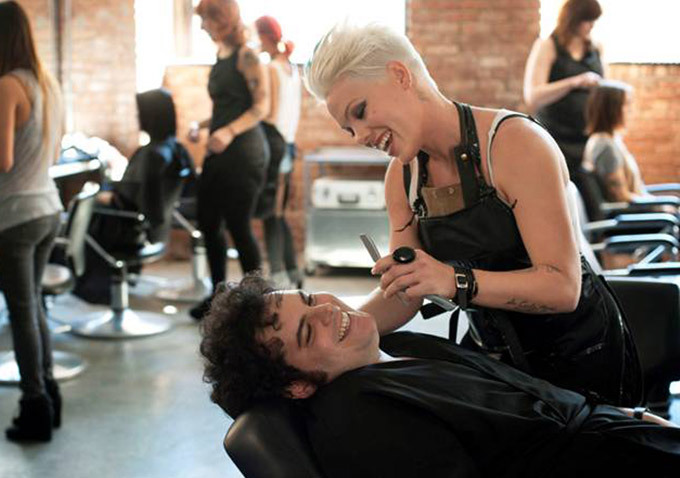
    Neil (Josh Gad) is an emergency room doctor and Adam’s mentor, who in the beginning is unwilling to take his addiction seriously.  However, when inappropriate behavior results in him losing his job, Neil is determined to turn his life around. It is during this time that he encounters fellow addict Dede, played by popstar Pink. Together, they keep each other in check, acting as a motivator each time one of them shows signs of faltering.

    With instances of subtle humour throughout, Thanks for Sharing is an insightful, yet surprisingly enjoyable drama that explores the dark and lonely side of addiction, while illustrating the importance of family and friends in striving for a positive outcome.

    Image top via Facebook