Tag: art

  • A match made in TUD: When flowers are no longer enough

    A match made in TUD: When flowers are no longer enough

    Technological University Dublin’s African society Valentine’s event represents love beyond just romance and serves as a medium for promoting cultural integration.

    By Samuel Adeleke

    Photo credit: Samuel Adeleke

     With Valentine’s Day around the corner, a time often seen as a period to show and express love, TUD African Society brought the celebration early by organizing a Valentine’s event on 10th of February, at Bst259 Bolton Street.

    For Sharon Ojuade, President of the TUD African society, the theme of ‘A match made in TUD’ was not chosen for love and romance alone.

    “With this event, we aimed to create a relaxed and comfortable environment where people from the same background, different backgrounds, and experiences gather in one room, enjoying the atmosphere,” said Ojuade.

    In organising the event, the committee also sought the support of student entrepreneurs who offered services or provided freebies to participants in an African style.

    This included DJs, photographers, MCs, and the types of foods to be served.

    “Events like this give people a sense of belonging and serve as an avenue to promote student entrepreneurs from Africa and allow them to thrive,” said Ojuade.

    “Before the world loves you, your community must also love,” she added.

    The committee has experienced a record number of ticket sales for the event. For the president, it is inspiring to see that they live in a country with a strong sense of community.

    “Just because we live here doesn’t mean we shouldn’t have fun moments; people should still pursue what they need to pursue outside the community,” said Ojuade.

    Although it is an African society gathering, the event is open to other nationalities. “The first person to get a ticket for the event is an Asian. He reached and said he wanted to be part of it.” said Ojuade.

    According to Divine Nebo, the social director of the society, “the event is not just about finding love, it is about finding people who are like you to bond with on a different level.”

    And by extension, the theme of the event, ‘A match made in TUD’, is to show that love can be found anywhere, not just in school, but in environments like this, outside of social media.

    With students outside the African community feeling the pull of the event, Divine said, “the event is not only about Africa, but expressing the depth of African culture to non-Africans to see what African culture is about, beyond what social media portrays.”

    John Ologunlola, the event manager, also collaborated and highlighted the potential of the event to serve as a platform for non-Africans to experience African culture.

    “Even though they might not fully understand the African culture in its entirety, it is a valuable learning process,” said Ologunlola.

     Ologunlola mentioned that, as a Nigerian, he is learning more about the African culture and finding expression in the community alongside other African nationals, including Ghanaians and Congolese.

    With students like River Rogers, who is half Irish and half Polish, the intentions of the TU African society executive came to light.

    “It is my first time being in an African event,” Rogers said. “I am not African, but I can still attend and make some new friends,” he added.

    Not only did Rivers find the Afrobeat songs being played amusing, but he also left with the intention of trying an African dish. “I definitely need to try the African jollof rice,” he said.

    Mark Ologunlola, a former executive of the society, commended the event as a brilliant way of promoting cultural pride.

     “Events like this help people develop real relationships, and give people a picture of what love is,” he said.

     Ologunlola expressed excitement at seeing other people at the event, “no matter what part of Africa or the world you come from, we are all one body.”

    While the event promotes communal love, in a friendly society that helps people socialise, Nicole Okerikre, an African national from Nigeria, who participated in the event as a contestant, said, “This is a period of love, but people should find love in themselves first.”

    Denoting that self-love is non-negotiable.

    For Jaeson Jang, an Asian, ‘A match made in TUD was not just a Valentine’s event, but an opportunity to find expression among people of other cultures.

    “The African culture is amazing, I feel like family, I feel welcome. Everyone is enjoying themselves; no one feels lonely,” Jang said.

    Jang’s experience underscored the aims of the TU African Society to promote an atmosphere where joy, laughter, and love are shared without identity being a barrier.

    “Everyone can integrate into every culture; you only have to do it respectfully,” said Jang.

    By the end of the night, a match was indeed made in TUD as the event ended with Jaeson Jang from Asia and Nicole Odunsin from Africa emerging as winners.

    It was a reminder that love in its most powerful form goes beyond just being African or giving flowers; it is in identifying with people from other nationalities and embracing a sense of community.


  • Peter Willis – a designer with flair

    Peter Willis – a designer with flair

    An independent designer with flair for colour and texture

    Peter Willis is a multi-disciplinary artist who graduated from Belfast Art College with an Honours degree in textile and fashion design, specialising in weaving.  After graduating he worked for the National Trust as a textile conservator for two years. He then received a scholarship to go to business college in Canada to learn how to run a business in textiles.    From there he went to Guatemala and worked with an artisan association in conjunction with Oxfam Trading. Guatemala inspired him to work with textiles and pottery.   When he returned to Ireland, he worked as an interior designer for twenty years and has always believed in connecting people with their places. He enjoys working with ceramics.  He also has a love of fabrics and colour and uses many different types of materials in his work. His masks are inspired from his time working with indigenous cultures. He says he has now come full circle and works as a muti disciplinary artist mainly in textiles and fashion.  Peter works from home when not at fashion shoots and exhibitions.

    For more information, contact Peter @peterw_illis

    Navaho Shawl

    This piece was inspired by the Navajo First Nations people – and the shawl was made in the shape of a dream catcher and made with alternative bands of textural yarn. One of them is a very soft chunky, fluffy yarn, and the other, a bright fluorescent pink, is more a flat yarn so each band when knitted up with different size knitting needles creates different textures.

    Alien Monkey Fantasy Head Mask

    A mask with a verdigris lustrous glaze which is quite a technical procedure. Layers of other glazes were applied, and a wax resist was finally applied. Patches of the eyes and cheeks are applied in several different layers. Then masked over which gives the textured effect. 


    Using the leftovers – Multi coloured hand knit scarves

    Give peas a chance

    A pun on “give peace a chance.”  This is a shoulder piece; part of a costume made for a green party event. There was also a bag made from a pack of frozen peas which completed the ensemble. The green balls were made from pom poms.

    The Head Piece

    Head piece modelled in a fahion shoot for Culture Night  in Gallery X, Hume Street

    Neck and shoulder piece together

    Moon in the Man

    The mask represents nature within us.  We are nature.  The moon is in us.

    Industrial Death Mask – Big mouth, no eyes

     Big mouth is a reference to big loud politicians.  An acknowledgement to indigenous cultures and how they lived a primitive life, but they were wiser in how they treated the planet. They lived in communities in relative peace without destroying the planet. Celebrating indigenous culture from all part of the world

    A hand knit gilet

    A colourful and practical garment worn over tunic with slightly heavier knit sleeves as worn by designer in first photo

  • The Picasso Exhibition Dublin 

    The Picasso Exhibition Dublin 

    By James Black

    A new exhibition celebrating the work of Picasso has opened at the National Gallery of Ireland. The exhibition spans several periods of Picasso ‘s   life, showcasing the evolution of his style and vision.

    The thoughtfully designed exhibition consists of four interconnected rooms arranged in an open plan that allows visitors to move freely between them.

    The first room shows Picasso’s early years and explores how he developed into the artist we know today.

    The remaining three rooms are arranged chronologically, tracing the evolution of his style across different periods of his life. Informative panels throughout the gallery explain how Picasso’s relationships and experiences influenced his art, making the exhibition engaging and accessible even for visitors unfamiliar with his work.


    Photo 1: This Picasso introduction is the first piece of information that visitors are greeted with as they enter the Picasso exhibition in the National Gallery. The piece provides background context to the artist and the works that are on display.

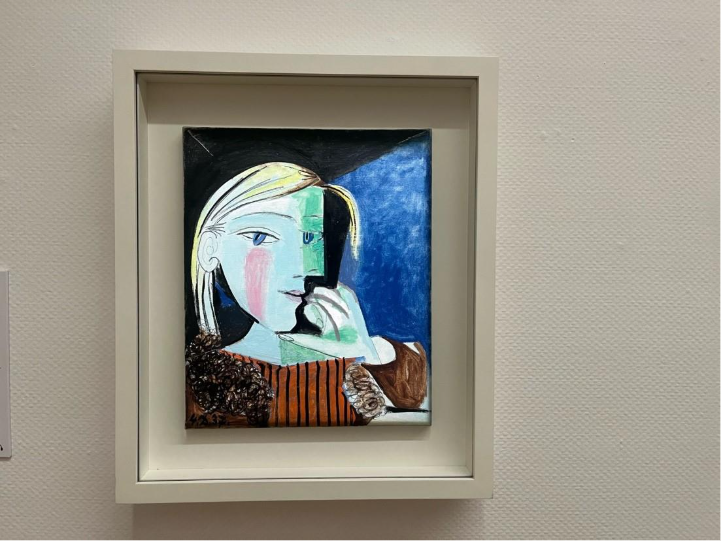
    Photo 2: One of the exhibitions most iconic works, this portrait of Marie-Therese Walter from 1937 was the chosen image for the exhibitions promotional run, given how symbolic it is; Picasso had been in a relationship with Marie-Therese Walter for a decade when he painted the picture.

    Photo 3: This standout piece displays Picasso’s change in style from portraits to scenes. Produced in January 1951, the image depicts a wintery view of Vallauris from Picasso’s studio. 

    Photo 4: This photo shows the layout of one of the rooms in which Picasso’s work is on display. The room is centered around a bronze statue of his, surrounded by other works of art from the same era with a video of Picasso discussing his works and creative process.

    Photo 5: This photo shows the range that Picasso had as an artist. The piece of art is positioned in the center of the room and is surrounded by different art works from the same period showing similarities and contrasts in his work.

    Photo 6: In this photograph we see the wide range of ceramics that Picasso produced during his lifetime. The image displays how his ceramics changed and developed over the late 1940s. He created over 1000 unique ceramic pieces between the years 1947 and 1948.

    Photo 7: In this photograph we can see people watching a projected recording of Picasso. In the video Picasso discussed both his art and what inspired him at various stages of his life. 

    Photo 8: This photograph displays another of Picasso’s paintings that he done during 1956 called Femmes E la toilette.

  • Hundreds line the streets of Nenagh to celebrate Shane MacGowan mural launch

    Hundreds line the streets of Nenagh to celebrate Shane MacGowan mural launch

    By Jason Quigley

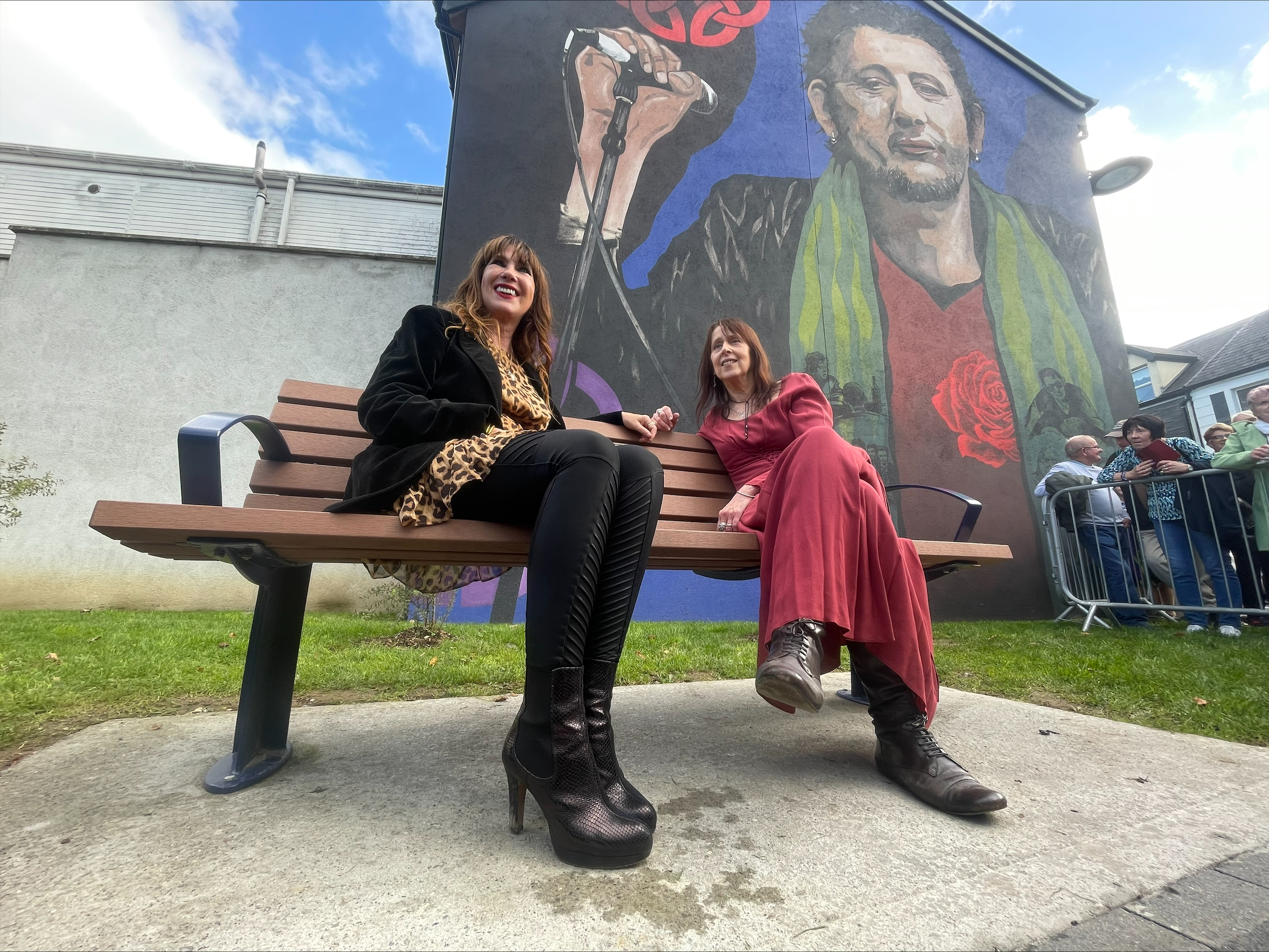
    The wait is finally over for locals in the town of Nenagh, Co Tipperary, many of whom have watched and waited for the mural of the late Shane MacGowan to be completed. 

    The official launch ceremony took place at the gable end of a building at Emmet Place just off Mitchell Street. 

    Shane’s wife, Victoria Mary Clark and his sister, Siobhan arrived marking the launch with speeches about the famous song writer. The painting of the mural was proposed by members of Tipperary County Council and for artist, Neil O’Dwyer it was the opportunity of a lifetime. We spent the day at the mural event in the “Premier County” and spoke with some familiar faces. 

  • ‘We’re New Here’ art exhibition launches in aid of MASI

    ‘We’re New Here’ art exhibition launches in aid of MASI

    Community group ‘The Useless Project’, founded by Geraldine Carton and Taz Kelleher, launched their first art exhibition over the weekend. The ‘We’re New Here’ art exhibition celebrated a variety of “emerging artists who are new to Ireland’s art scene, and new to its shore”, according to the community’s Instagram.  

    Text, whiteboard

Description automatically generated

    The exhibition was premiered in The Dean Art Studios, an eclectic creative hub located on Chatham Row, in the heart of Dublin city centre. The exhibition ran from Friday the 25th to Sunday the 27th of November, with complimentary wine and music offered on the launch night. 

    A group of people in a room

Description automatically generated with medium confidence

    Crowds of people arrived at the exhibition’s launch party on Friday night, in support of the new up-and-coming artists and to admire their talented pieces.  

    Photography from Richie O’ Sullivan (bottom left) and David Hannon (top left), was also featured. The acrylic painting (top middle) was created by Joe Moon and named, ‘Sunset’. Whilst the middle portrait was done using oils by Kamile Catala and titled, ‘Exist for Love’. The two paintings to the right were Rachel Brownlow (bottom right) and Naomi Zanardo (top right). 

    All the pieces featured at the exhibition were for sale, with 50% of all sales proceeds going towards MASI, a movement for Asylum Seekers in Ireland.  The event also held a raffle competition to raise funds and awareness for the movement. 

    A picture containing text, gallery, picture frame

Description automatically generated

    Co-founder of The Useless Project, Geraldine Carton, also had one of her own original paintings displayed at the exhibition. Titled ‘Careful Application’, the piece sold for €1,400 on the launch night. 

    The up-and-coming artists included, Ciara Maher a recent graduate of genetics from Dublin. Her piece ‘Visionary Woman’ which is featured above, was hand drawn using a range of coloured pencils. Ciara’s passion is in capturing details of people through realism portraits and abstract human bodies. 

    A person standing next to a wall with pictures on it

Description automatically generated with medium confidence

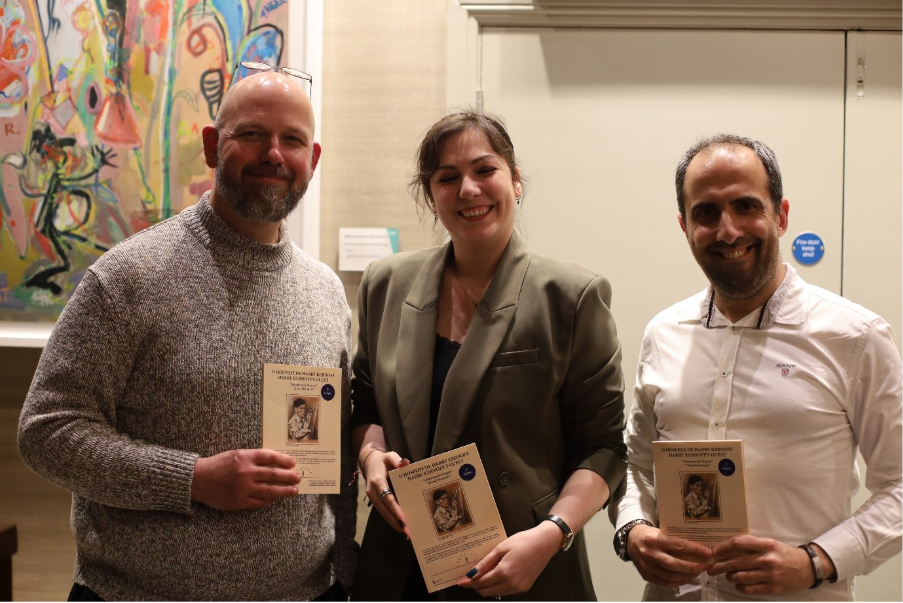
    Catalogues were handed out on the night to credit the artists and explain their background and passion in the artistic field. 

    A picture containing text, gallery, room, scene

Description automatically generated

    This Incredible piece titled ‘The Waitlist’ was created by Shirani Bolle, using acrylic paints. Shirani is the daughter of a Holocaust survivor and a Sri Lankan immigrant, and it is the unlikely union of these two narratives that informs her work. 

    Not only did the exhibition feature drawings and paintings, it also included 3-D work such as this cardboard based Diorama. The piece constructed by Grace Cuny, a Texas born dancer, consists only of food packaging, tiny found objects and general waste material. 

    The exhibition was an exciting opportunity to see the talent of up-and-coming artists. The Useless Project stated it had pieces ranging from “recent art graduates to asylum seekers, frontline healthcare workers, hobbyists and creative geniuses”. With music provided by Sing Along Social DJ on the launch night, which created a fun and energetic atmosphere.

  • Vale Tudo exhibition by Nelson Jamal

    Vale Tudo exhibition by Nelson Jamal

    Abderrahmen Ben Chouchane presents the artist Nelson Jamal, an ex-MMA champion who decided to retire to pursue his artistic career. From a young age he was involved with art and sports. In his latest exhibition called “Vale Tudo”, which means everything counts, he demonstrates how sports and art work perfectly together to describe us.

  • Sorolla: Spanish Master of Light

    Sorolla: Spanish Master of Light

    By Ana Novais

    Doctor Aoife Brady is a curator of Italian and Spanish Art at the National Gallery in Dublin and holds a Ph.D in History of Art from Trinity College Dublin. Dr Brady is also the co-curator of Sorolla: Spanish Master of Light, an exhibition on Valencian painter Joaquín Sorolla.

    “This project came to me rather than me going to it,” said Dr Brady. “I have been working with Spanish art for a long time and Sorolla was on my radar for several years and his house was always on the list as a place to see. It is an incredible museum and Sorolla’s family home. I always knew about the artist and years later, I started to work for the National Gallery in London and that’s where I began this project.

    Dr Aoife Brady, Curator of Spanish and Italian Art, National Gallery of Ireland
    Photo: Jack Caffrey The Pimlico Project 2019

    “A year later and I got a job in Dublin and took the exhibition with me,” said Dr Brady. “The partnership between London and Dublin was already planned, so I ended up working for both institutions which made my work easier.”

    Since beginning her career, Dr Brady says that her passion for art has found her in some very surreal situations. None more surreal then when she met Prince Charles and the Queen of Spain went at the opening of the London leg of the exhibition. And now the exhibition has finally come to the National Gallery.

    So who exactly was Sorolla and what can art enthusiasts expect from the exhibition?

     “Sorolla was a Spanish painter during the late nineties. He was born in 1863 in Valencia,” said Dr Brady. “During his time, he was widely known in Spanish painting tradition, but he was unknown in Ireland and the U.K, which was an incentive to bring Sorolla’s work to Ireland in conjunction with the National Gallery in London and the Sorolla Museum in Madrid.

    Joaquín Sorolla y Bastida (1863-1923)

    “He was a member of the international movement of vanguard painters. They used oil to experiment with their painting. Their paintings were very free and very fluid and were usually painted outdoors.

    Dr Aoife Brady, Curator of Spanish and Italian Art, National Gallery of Ireland
    Photo: Jack Caffrey The Pimlico Project 2019

    “Sorolla often painted social things, things that he saw on the streets such as difficult subjects and I suppose that’s what made him so unique,” said Dr Brady.

    “During the exhibition, visitors can transport themselves to Spain, particularly with the range of works painted by the sea. He is out there in the elements painting from the light, painting from what he sees and the sea itself is often the subject. He eliminates the sky and land from certain compositions, and he focuses himself on the water.

    One artistic choice which distinguishes Sorolla’s work from many others is his striking use of colour and bright shades, which make his paintings appear illuminated.

    “Sorolla said that one of his lead scholars needed sunglasses to look at some of his paintings,” explained Dr Brady. “Most of the paintings are so bright that when we were installing the exhibition, we were putting the paintings on the wall and some of them needed minimal light, they all have their sort of luminosity.

    Joaquín Sorolla y Bastida (1863-1923)

    “His oldest work dates from the eighteen eighties when he was beginning his career, he moved from his house in Valencia to Madrid which had a better market for painters at the time.

    “When we look at the paintings first, we establish an easy-going and sunny scene,” said Dr Brady. “He made a painting of his eldest daughter Maria in El Pardo sitting down with a big bright umbrella over her. We look at it and we think that this was just a happy family snapshot but this was made during a period of convalescence of his daughter. She was very sick from tuberculosis and they brought her up to the mountains in the hope that the cool air would help her to recover.

    “Aside from this particular painting, there are other portraits of Maria looking very ill,” said Dr Brady. “In some paintings, she appears to have a very grey face, but this one is when her recovery hits a turning point and her cheeks get rosy again. Hence, he painted her with bright purple and yellow colours. We can see his happiness, but it is sort of a secret meaning in a way, because we can’t see immediately that this was a painting of a sick woman.

    Joaquín Sorolla y Bastida (1863-1923)

    Sad inheritance is the most unique,” said Dr Brady. “It was a touchy piece, and Sorolla considers it a sacred image. He describes it as a portrait that awakens painful memories that he never wishes to go back to. The painting covers a sad scene of poor orphan boys. This painting was difficult to get because of its size and it took seven people to place the painting on the wall.

    “I think his work is incredibly important, when we consider that people have made art and looked at art for millenniums. It is not a modern concept idea of art being important, it’s a lot more than that.”

  • The art of mixology

    The art of mixology

    Megan Kavanagh speaks to Jarlath Stevenson about the art of mixology and what goes into making a great cocktail.

    Over the years, the rise of the speakeasy’s popularity has drawn great attention to the way drinks are made. Which brings us to mixology.

    The word speakeasy was first coined in the US during the Prohibition era, when the sale of alcohol was generally illegal from 1920 to 1933 and is the place you’re most likely to meet a mixologist.

    Mixology is a term used to describe the art of mixing cocktail drink recipes.

    Being a mixologist isn’t quite like being a bartender but according to Mr Stevenson the secret to being successful is to be an all rounder behind the bar.


  • Your next Netflix marathon? The Good Place is a great place to start

    Your next Netflix marathon? The Good Place is a great place to start

    We’re always looking for the next series to keep us occupied, whether you are the type to become engrossed – following all the stars across social media platforms and declaring how much you ‘stan’ them – or simply the person who needs background noise in their room and pays minimal attention to the actual plot of the show.

    From the co-creator of Parks and Recreation Michael Schur, The Good Place, is now available on Netflix.

    The Good Place revolves around Eleanor Shellstrop (Kristen Bell: Frozen, Forgetting Sarah Marshall) and starts with the beginning of her post-death life.

    This afterlife is explained as being split into ‘The Good Place’ and ‘The Bad Place’. It quickly becomes clear Eleanor does not belong in The Good Place despite finding herself there.

    She meets the architect of The Good Place Michael (Ted Danson), who then introduces her to her ‘soulmate’ Chidi (William Jackson Harper), an excruciatingly indecisive and kind-hearted ethics professor from Nigeria. She also meets Tahani (Jameela Jamil) who is a cheery and seemingly oxymoronically egocentric philanthropist from Pakistan along with Tahani’s soulmate Jianyu (Manny Jacinto), a supposedly silent Buddhist monk.

    It would be an understatement to label the group juxtaposed.

    A truly diverse group of people slowly bond together as outrageous details about Jianyu’s past emerge and Eleanor ducks and dodges the potential for Michael to discover she doesn’t belong there and send her to eternal damnation in The Bad Place.

    The end of the first season offers a shocking discovery by the gang about the afterlife which paves the way for the intriguing storyline that follows.

    Now into its third season, with a new 20 to 25-minute episode each Friday, The Good Place is a multifaceted series which offers plenty. From comedy to drama to education all the way to abnormal romance, its comparatively short episodes and quirky characters make it not only straight-forward viewing, but genuinely enjoyable.


  • Dublin’s Fusion Sundays Market is relocating

    Dublin’s Fusion Sundays Market is relocating

    Dublin’s world culture market, Fusion Sundays, is relocating from Newmarket Square. The market celebrates diversity and hosts over 40 international stalls.

    “The Fusion Sundays Market has been running in Newmarket for over six years, we are currently relocating due to [the] redevelopment of the area,” said Nadia Cassidy, creator and director of the market.  

    The Fusion Sundays market was one of five thriving Dublin markets to lose their home in Newmarket Square: Dublin Flea Market, The Brocante, Fusion Sundays World Culture Market, Newmarket Collective and The Pure Vintage Fair.  All of these markets have joined together in the search for a new city centre location.

    Fusion Sundays Market Facebook @fusionsundaysmarket
    Fusion Sundays Market hasn’t been active since June // Facebook @fusionsundaysmarket

    The last Fusion Sundays Market was held in June.  The markets were told to leave their operating space on June 12th.  

    There have been attempts to find suitable locations for the market over the last four months, but it has proven very difficult. The Dublin Flea Market team have approached Dublin City Council, the Office of Public Works, estate agents, landlords and community centres, all of which have turned them away.  However, Nadia assures that the market will be back up and running as soon as possible.

    “We have stalls from across the globe offering a great selection of ethnic food, craft and design, as well as souvenirs. More than just a market, we also offer cultural experiences with dance and music performances throughout the day and workshops for adults and kids.”

    The market’s objective is to provide a display of international cultures in Ireland.  Its aim is to create a way for people to integrate and become part of a wider community, while also giving support and opportunities to small businesses and start-ups.

    “You can meet people from every continent at the market. We have food stalls from India, Mexico and Japan. Kenyan craft, Polish designers, as well as representatives from various organisations, such as Amnesty International and people from Direct Provision offering information,” adds Nadia.

    Bollywood dancers at Fusion Sundays Market Facebook @fusionsundaysmarket
    Bollywood dancers at Fusion Sundays Market // Facebook @fusionsundaysmarket