Tag: Arts

  • Sorolla: Spanish Master of Light

    Sorolla: Spanish Master of Light

    By Ana Novais

    Doctor Aoife Brady is a curator of Italian and Spanish Art at the National Gallery in Dublin and holds a Ph.D in History of Art from Trinity College Dublin. Dr Brady is also the co-curator of Sorolla: Spanish Master of Light, an exhibition on Valencian painter Joaquín Sorolla.

    “This project came to me rather than me going to it,” said Dr Brady. “I have been working with Spanish art for a long time and Sorolla was on my radar for several years and his house was always on the list as a place to see. It is an incredible museum and Sorolla’s family home. I always knew about the artist and years later, I started to work for the National Gallery in London and that’s where I began this project.

    Dr Aoife Brady, Curator of Spanish and Italian Art, National Gallery of Ireland
    Photo: Jack Caffrey The Pimlico Project 2019

    “A year later and I got a job in Dublin and took the exhibition with me,” said Dr Brady. “The partnership between London and Dublin was already planned, so I ended up working for both institutions which made my work easier.”

    Since beginning her career, Dr Brady says that her passion for art has found her in some very surreal situations. None more surreal then when she met Prince Charles and the Queen of Spain went at the opening of the London leg of the exhibition. And now the exhibition has finally come to the National Gallery.

    So who exactly was Sorolla and what can art enthusiasts expect from the exhibition?

     “Sorolla was a Spanish painter during the late nineties. He was born in 1863 in Valencia,” said Dr Brady. “During his time, he was widely known in Spanish painting tradition, but he was unknown in Ireland and the U.K, which was an incentive to bring Sorolla’s work to Ireland in conjunction with the National Gallery in London and the Sorolla Museum in Madrid.

    Joaquín Sorolla y Bastida (1863-1923)

    “He was a member of the international movement of vanguard painters. They used oil to experiment with their painting. Their paintings were very free and very fluid and were usually painted outdoors.

    Dr Aoife Brady, Curator of Spanish and Italian Art, National Gallery of Ireland
    Photo: Jack Caffrey The Pimlico Project 2019

    “Sorolla often painted social things, things that he saw on the streets such as difficult subjects and I suppose that’s what made him so unique,” said Dr Brady.

    “During the exhibition, visitors can transport themselves to Spain, particularly with the range of works painted by the sea. He is out there in the elements painting from the light, painting from what he sees and the sea itself is often the subject. He eliminates the sky and land from certain compositions, and he focuses himself on the water.

    One artistic choice which distinguishes Sorolla’s work from many others is his striking use of colour and bright shades, which make his paintings appear illuminated.

    “Sorolla said that one of his lead scholars needed sunglasses to look at some of his paintings,” explained Dr Brady. “Most of the paintings are so bright that when we were installing the exhibition, we were putting the paintings on the wall and some of them needed minimal light, they all have their sort of luminosity.

    Joaquín Sorolla y Bastida (1863-1923)

    “His oldest work dates from the eighteen eighties when he was beginning his career, he moved from his house in Valencia to Madrid which had a better market for painters at the time.

    “When we look at the paintings first, we establish an easy-going and sunny scene,” said Dr Brady. “He made a painting of his eldest daughter Maria in El Pardo sitting down with a big bright umbrella over her. We look at it and we think that this was just a happy family snapshot but this was made during a period of convalescence of his daughter. She was very sick from tuberculosis and they brought her up to the mountains in the hope that the cool air would help her to recover.

    “Aside from this particular painting, there are other portraits of Maria looking very ill,” said Dr Brady. “In some paintings, she appears to have a very grey face, but this one is when her recovery hits a turning point and her cheeks get rosy again. Hence, he painted her with bright purple and yellow colours. We can see his happiness, but it is sort of a secret meaning in a way, because we can’t see immediately that this was a painting of a sick woman.

    Joaquín Sorolla y Bastida (1863-1923)

    Sad inheritance is the most unique,” said Dr Brady. “It was a touchy piece, and Sorolla considers it a sacred image. He describes it as a portrait that awakens painful memories that he never wishes to go back to. The painting covers a sad scene of poor orphan boys. This painting was difficult to get because of its size and it took seven people to place the painting on the wall.

    “I think his work is incredibly important, when we consider that people have made art and looked at art for millenniums. It is not a modern concept idea of art being important, it’s a lot more than that.”
  • Mis-Conceptions review: ‘The acting that came as a result was next to exceptional and really brought the audience in.’

    Mis-Conceptions review: ‘The acting that came as a result was next to exceptional and really brought the audience in.’

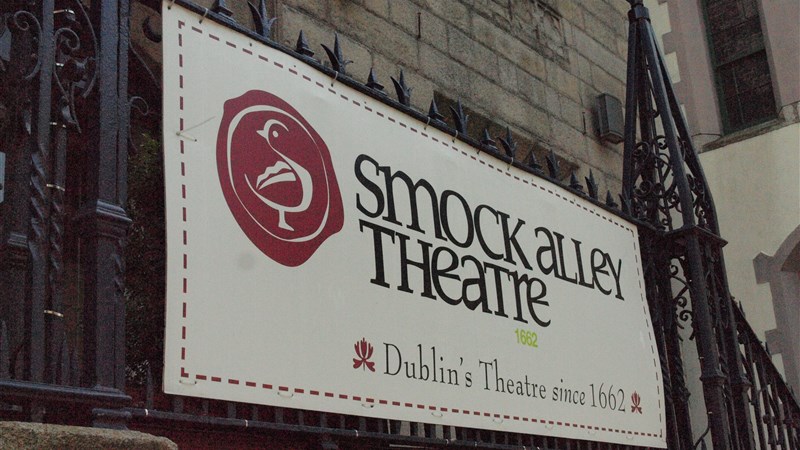
    Recently, I had the pleasure of seeing Helen McNamara’s fifth play, Mis-Conceptions, charmingly performed at Smock Alley Theatre in Temple Bar. Upon first inspection, the performance space seemed simplistic and minimalistic, however, this allowed for the focus to be on the plot, which gripped your attention right from the beginning.

    The set displayed different home-like settings for each scene for which the ‘Book Club meetings’ would take place, these meetings being crucial to the storyline.  Inside the set we are introduced to our six leading ladies and as described by Super Pie Theatre, it is all about “Six women. Six books. Six very unexpected misconceptions.”

    In the opening scene we are introduced to an angsty Sarah (Megan Bea Tiernan), adopted sister to Ann (Niamh Sweeney), upset and angry at a world where she feels she has no place, given up and never contacted again by her own birth mother. We are given slight insight throughout the play on each woman’s stance on having children, with the discussion of abortion popping up here and there.

    Misconceptions
    The play’s setting aims to evoke a home-like feel // Facebook

    The issue of women’s choices and women’s bodily rights is discussed frequently during the play and offers an insight into several different, and in some ways, opposing opinions from these six characters. There is mention of the Repeal campaign’s success in the play, which offers a new and exciting angle to the plot and ensures that, along with entertainment, this play addresses some real life issues faced in today’s Ireland.

    From beginning to end we are introduced to each woman’s own dealings with childbirth, or lack thereof, and are left feeling connected to each woman. They represent different, yet all equally strong, modern, Irish women. With each heartbreaking story comes feelings of pity, not lingering long before we are brought back into the story with a pop of humour.

    Spending the entire play trying to figure out the connection between all these women and their monthly book clubs, we are kept on the edge of our seat before finally the ultimate plot twist is revealed. We witness Grace (Rebecca Bloomfield) read aloud the missing chapter of her choice of book “The business of babies” where, in a surprising turn of events,  a character that had previously remained very much in the background suddenly becomes the centre of the storyline. The acting that came as a result was next to exceptional and really brought the audience in.

    Misconceptions2
    Megan Bea Tiernan gives one of the play’s standout performances // Facebook

    While all of the actors in this play are worth noting, the standouts include Michelle Costello playing the ever bubbly, humorous and, in some cases, goofy Elaine who continuously caused eruptions of laughter from the audience. Megan Bea Tiernan who played Sarah also gave a heart wrenching performance, and her acting chops are undeniable.

    The play is beautifully written by Helena McNamara and directed excellently by Niamh Cummins, offering smooth scene changes, a clear focus and united form that was impressive to witness, with each actor knowing when to pipe up and when to pull back. With everything discussed here it is easy to say that this play was exceptionally written, directed and performed by all of the cast and crew.


  • Dude-Fest – Where have all the women gone?

    Dude-Fest – Where have all the women gone?

    We, as Irish people, love a good festival. Every year we wait patiently for the likes of Electric Picnic or Body & Soul to throw out their ever-expanding lists of who’ll be rocking the fields that summer, before spending the equivalent of a month’s rent on tickets, tents and tins of Carlsberg … a typical cycle which we are well accustomed to. However, have we ever stopped to take a critical look at who exactly is playing our festivals? Well of course not, we’re too busy trying to decide which low-cut vests to buy or whether or not Penneys is the best choice for high-quality wellies.

    It’s a sensitive issue and one that has lead to vicious debates on certain online forums, but the notion of a gender gap within music festival line-ups is one that we shouldn’t actively ignore. Are less women being booked to make room for successful male artists? Are festival organisers conscious of this? In order to gauge this accurately, let’s take a look at the line-ups for the past five years of Forbidden Fruit, a popular Dublin music and arts festival which takes place each summer.

    Festival

    After a thorough examination of each year’s line-up, it was concluded that more than 260 male acts were booked for the festival, with only 34 female acts being booked within the same time. Bands and groups comprised of mostly male musicians totalled 19 while two groups which were comprised of mostly female members were booked during the same time period. Groups with a perfect balance of male and female artists came to 14. This shows, as displayed in the graph above, that over 79 percent of acts booked for the festival for the past five years have been solely male while only 10 percent have been female. The question lingers, is this acceptable?

    “As someone who has had experience in working at festivals in Ireland, everything from smaller niche festivals to Electric Picnic, I am not shocked by the current stats on the lack of female performers at festivals,” explained Ellen Clarke, a BA Creative Cultural Industries graduate who has bountiful experience in festival production after working on the likes of Electric Picnic.

    “In my opinion, even the smaller organisations that label themselves as conscious of these recurring issues are still falling into the trap of inviting more well-known male artists to be part of their events because they feel that it will give them the publicity they need. This is creating a vicious cycle which needs to be broken. I am not someone who believes that there should be a 50/50 split in male/female involvement but the representation of the female side is clearly extremely lacking and this, in my view, is not because the right people aren’t available. It’s more about organisers and management overlooking these people,” said Clarke.

    Breaking a cycle such as this one can be a difficult task. Festivals like Forbidden Fruit have been going on for a number of years now, typically run by the same promoters, booking agents, stage managers, etc. What they believe to be the right way of doing things, from booking acts to deciding which style of barriers they’re going to use, will undoubtedly be hard to change. However, we are beginning to see conversation take place surrounding the issue. This can only be positive of course.

    Last March, the popular Irish music blogger Nialler9 publicly voiced his concern surrounding the lack of female artists booked for Higher Visions, a electronic music festival which took place on St. Patrick’s Day in Bellurgan Park, Co. Louth. He openly tweeted his annoyance towards the festival promoters which in turn led to an open online debate with popular Dublin DJs such as DJ Deece and Kaily getting involved. Some praised the blogger for raising the issue, while others were quick to defend the new festival claiming that it wasn’t a conscious decision.

    Recently a local house DJ, Conor Foley, experienced a similar situation when he reiterated Nialler9’s point in the Four/Four music group, an open forum which focuses on Dublin’s nightclub scene, on Facebook. His post wasn’t warmly welcomed and was received with mixed opinions from commenters.

    “From my experience, most promoters are aware of the idea of a gender gap. Some choose to not believe it’s due to anything untoward or in their control such as structural sexism and whether that is due to convenience or not we’ll never know,” explained Foley.

    “Promoters do have a tough job booking the right lineup at the right price as is and often the equality of the lineup is understandably left til the last thought. A booker for the Red Bull stage at Life festival told me recently that one year he had the lineup locked in for the full weekend and only realised then that he hadn’t included a single female, which he regretted deeply,” he continued.

    A similar study was done in the US by Alanna Vagianos of HuffPost where she looked at the gender gap within American music festivals. To quote her, she believes…

    “The root of the disconnect between the number of women on stage and the number of women in the crowd may lie partially in the male-dominated subcultures these festivals were founded out of.”

    Should Ireland follow this example of ignoring the problem and pretend that everything’s all good? For the future of our incredible music scene, let’s hope not.

    By Conor Shields

  • Fingal Graduate Award Winner 2017

    Fingal Graduate Award Winner 2017

    Visual Artist Róisín McGannon has been awarded the Fingal County Council Arts with Block T Graduate Studio Award 2017.

    Róisín McGannon is a visual artist based in Dublin who will be graduating with a First Class Honours Degree in Fine Art from NCAD this month. According to Róisín, her work explores “the acute knowingness we have of our bodies, a causality brought by the activation of the body in space. It attempts to uncover the power balance between the physical and psychological state of being in the body.”

    The Graduate Studio Award winner is awarded with a year’s residence at Block T Studios in Dublin 8, home to many creative events and workshops. Then, at the end of the year, they will have their own solo exhibition; a fantastic opportunity for graduating artists.

    Róisín is determined make the most out of her studio space for the year.

    “It’s one of few opportunities for graduates, so it is very much needed and valued,” she said.

    When asked what her plans will be for the studio space, Róisín said she plans to explore projects she never had the chance to throughout her time in NCAD.

    “My first step is to look back on the work I made during my final year in college, evaluate and critique it, see what worked and what didn’t. I hope to explore thoughts that had to be put on the back burner due to time constraints, to build up a solid body of work. I’ll continue to apply to open calls, hopefully invite curators to discuss my work and bring what I’ve learnt to the show at the end of my time here.”

    The project that won Róisín the award was her degree show in NCAD titled ‘The Insidious Nature of Honey’. The show consisted of an immersive installation made of UV sensitive perspex, a video piece and large scale digital prints.

    Fingal Award 2

    Róisín put an immense amount of time and energy into her show to make it what it was and her efforts were rewarded.

    “I spent the entire year working on a self directed brief. My work is heavily supported by philosophical theory so I spent the first half of the year reading and researching what area of interest I wanted to explore and how to do that in a visual way. The second half of the year was testing and testing, really narrowing things down to be quite specific and then fine tuning that,” she explained.

    When asked for advice for future graduates hoping to win this award or others, Róisín said applying for them all is key.

    “I think when you’re in college you should be aware of the opportunities and awards and definitely apply for them all whether you think you’re able or not, but don’t let them distract or dictate the work. Make the work you need to make, not the work you think you should make. That’s what stands out to people.”

    The Graduate Award is awarded by Sarah O’Neill, the Deputy Arts Officer at Fingal County Council and Chris Cullen, Director of Block T Studios. Graduating artists who live, work, or study in Fingal are invited to apply for the award.

    You can visit Róisín’s website www.roisinmcgannon.com or follow her on Instagram @RoisinMcGannon.

    By Jenna Cox

  • Ireland’s improvisers: not just having a laugh

    Ireland’s improvisers: not just having a laugh

    Dublin’s improv scene is growing beyond slapstick with truthful stories, new talent, and fresh concepts, reports Hannah Lemass  (more…)

  • Judging the politics of awards shows

    Judging the politics of awards shows

     With award season upon us and some controversy about political speeches, Eimear Dodd suggests that award shows might provide a platform to start a wider conversation.

    (more…)

  • Review: Fantastic Beasts and Where to Find Them

    Review: Fantastic Beasts and Where to Find Them

    By Kieva McLaughlin

    If you are a fan of the Harry Potter franchise, Fantastic Beasts and Where To Find Them is a must see. JK Rowling and David Yeats came together again for the first of five movies about Newt Scamander, played by Eddie Redmayne, and his adventures with magical beasts.

    Vimeo FB.jpg
    (Source: Vimeo)

    While none of the main characters from Harry Potter appear in the movie, Grindelwald, a dark wizard and Dumbledore’s ex-best friend, is mentioned multiple times, with the headmaster himself even mentioned once. You do not need to have seen any of the Harry Potters to understand what is going on but if you are big fan, there’s plenty of exciting references you will recognise.

    Eddie Redmayne plays the part of Newt Scamander exceptionally, and he is incredibly believable as the animal loving wizard he is portraying. Katherine Waterston, Dan Fogler and Alison Sudol star alongside him. Dan Fogler plays the loveable ‘nomaj’ (American word for muggle) Kowalski, who you will leave the cinema only hoping he will reappear in the next movies. Katherine Waterston plays Tina, Newt’s love interest, with Alison Sudol playing her beautiful sister Queenie. My only criticism with the acting is that there is no real visible spark between Newt and Tina and the love story the audience is truly rooting for is the one between Kowalski and Queenie.

    FB Wikipedia.jpg
    (Source: Wikipedia)

    The special effects and graphics are superb, but with a budget of $250 million it ought to be. All of the magical beasts and spells are done amazingly and you really believe the little furry blue sloth-like animals and tiny trees are just as much there as the actors and actresses.

    There is a lot of humour throughout the film and you will be laughing throughout. There’s inside jokes for the true Harry Potter fans as well as new jokes especially for this newest magical franchise, ‘Fantastic Beasts and Where to Find Them’.

  • Preview: Dublin’s NYE festival

    Preview: Dublin’s NYE festival

    By Jack Popeley

    8326373791_82b3ca9006_b
    Flickr -Daniel Dudek

    The Dublin New Year’s Festival is back this year with a huge range of events. Now in its third year, the Fáilte Ireland initiative will run for three days from the 30th December to the 1st of January with amazing events across the city. We have picked an event everyday that is not to be missed.

    December 30th

    The festival kicks off on December 30th with spoken word events, street performances and a main event; the spectacle that is Luminosity. Dublin’s famous Custom House will be turned into a digital canvas with a 3D image mapping performance. The festival’s website says, “You’ll be awed by the optical illusions, the ultra-bright crisp and the richly coloured images. During this incredible visual experience, you’ll be completely immersed in a fresco of light.” Definitely an event not to be missed!

    New Year’s Eve – December 31st

    On New Year’s Eve, the 3 Countdown Concert will take place at St. Stephen’s Green headlined by Dublin natives Little Green Cars. The Blizzards and up and coming talent Little Hours and Brian Deady will also be taking part, making sure you end the year listening to great Irish acts in the heart of Dublin’s city centre.

    New Year’s Day – January 1st

    January 1st is the final day of the festival, with what looks like a day packed with family fun! The Dublin Gospel Choir will be performing amongst others at the New Year’s Day concert and Luminosity is back, so don’t worry if you can’t make it to town on the 30th. And for those of you with sore heads, we suggest a trip down to Meeting House Square where you can watch Inside Out from 4.30pm.

    For more information or to book tickets, head over to www.nyfdublin.com.

  • Dublin Book Festival: a novel idea

    Dublin Book Festival: a novel idea

    Dublin Book Festival took over the city last night, with the launch of Winter Pages, Ireland’s new annual arts anthology. 

    The festival is in its eighth year and aims to “showcase, support and develop Irish Publishing by programming, publicising and selling Irish published books, their authors, editors and contributors all in an entertaining, festive, friendly and accessible environment”.

    There will be over fifty events taking place and over one hundred authors present at the festival until Sunday. Best of all, most of the events are completely free.

    Highlights of the festival include walking tours with Pat Liddy, which will explore spots around the city which inspired some of our greatest authors and works of literature. The 25th anniversary of ‘Under the Hawthorn Tree’ by Marita Colon-McKenna will be celebrated in a live discussion with the author.

    RTÉ Radio 1’s popular Arena show will be broadcast live from the Smock Alley Theatre, Temple Bar, while host Sean Rocks will hold a discussion with Reggie Chamberlain-King, on his new book ‘Weird Dublin’. Kate Dempsey of the Poetry Divas Collective will read from her debut poetry collection ‘The Space Between’, while ‘The Healing’ and ‘The Matthews’ will also perform.

    The festival will see the launch of a number of new Irish titles such as ‘Waterford Whispers: News Takes Over the World’ by Colm Williamson (Blackstaff Press) and ‘The Uninvited’ by Dorothy Macardle (Tramp Press)

    Writing workshops will take place across the weekend including writing for children and young people featuring Eoin Colfer, author of the world famous ‘Artemis Fowl’ series.

    Events across the weekend will offer an insight into the world of Irish publishing and provide opportunities for small, independent Irish publishers to network and connect with authors, editors and readers.

    The festival also has a separate programme of events for schools, which proves hugely popular with many of the events already sold out.

    For more information and tickets visit dublinbookfestival.com.

  • Lingo showcases the future of spoken word

    Lingo showcases the future of spoken word

    Ireland’s first – and only – spoken word festival, Lingo, returned to Dublin for its second consecutive year last weekend.

    The festival saw a number of notable performers exhibiting their skills at a variety of locations during the three day event.

    Celebrated Los Angeles based performer Saul Williams was at the top of the bill with a show at the Button Factory on Sunday evening. Support on the night was provided by Dublin-based poet John Cummins, as well as UK-based teacher Mark Grist who caused a stir back in 2011 with a “Teacher vs Student” rap battle for the Don’t Flop battle collective.

    Culture journalist for the Irish Independent, Clara Rose Thornton, who is also a spoken word artist, performed at The Meeting House at 11.30am on Saturday morning. Talking about the LINGO festival on Twitter, Ms. Thornton said: “Lingo celebrates us and an awakened ritual. Ancients of Africa and the Celtic nations are dancing in their graves.”

    Festival goers also got the chance to see the legendary London band Tongue Fu provide improvised instrumentals for ten of Ireland’s top slam poets and spoken word artists. This opening event also saw last year’s Lingo poet laureate, the aforementioned John Cummins, pass the torch to his successor, John Moynes.

    A number of interesting performances also took place at the Smock Alley Theatre over the course of the weekend, including a showcase of Ireland’s most talented up and coming spoken word artists on Saturday. The Theatre described the event as a glimpse at the future of spoken word.

    With over fifty performers from a number of different countries set to take the stage in the city over the weekend, the second installment of the LINGO festival was most definitely an exciting one.