Bewley’s Café Theatre in Dublin City is currently staging a re-run of Barry McKinley’s “Elysium Nevada.” The Irish Times Best New Play Award nominee follows three residents of a sun-blasted retirement home as they dwell on fears of decline, memory and the approach of death.
Many rock bands take much consideration when coming up with the name of their group. Eddie Vedder and Jeff Ament reportedly spent over three months arguing about what they would name their grunge-rock startup before settling on the name Pearl Jam.
Precinct, however, took a slightly different approach.
“We had two names. One, I can’t even remember, it was that forgettable. The other one was Precinct, and we asked a waitress at the bar ‘which do you prefer?’,” guitarist Barry Fenton said.
“I can’t even remember the first one, I only remember precinct,” the waitress replied.
And so, they went with Precinct.
The group was formed in 2017 during a Junior Certificate music project by Fenton, fellow guitarist Oliver Grennan and drummer Simon McVeigh, before they were later joined by bassist Zap Dickinson.
They discovered their current lead singer, Andrew O’Donovan, at a ‘battle of the bands’ style event in University College Dublin shortly after Dickinson joined the band in 2022.
“We did our set with a different singer at the time, and then Andrew came on after on his own with just a guitar and f—ing blasted the place away,” Fenton said.
Soon after, Precinct parted ways with their original lead singer due to problems with punctuality and differing musical styles, though the group insists that the breakup was “nothing dramatic”.
The first choice for their new frontman was O’Donovan, whom they contacted through a mutual friend and asked to come and do an audition.
According to Fenton, there was an instant connection between the band and their new lead singer, and the moment Andrew left, the rest of the members knew that they had “hit the jackpot”.
“It’s almost like a relationship; you just hit it off.” Fenton said.
The first song the band wrote together was “We’ll Be Fine”, though the band decided not to release the track.
“If we’re going to record a song we all have to be fairly enthusiastic about that song. If there’s much questioning about it, we probably wouldn’t do it,” Fenton said.
But it didn’t take long for the fivesome to put together their first single-worthy track, “Marlay Park”.
The song originated from a chord progression written by Grennan just moments before a rehearsal began and turning it into a full composition took a collaborative effort from each member of the group.
“There wasn’t much buzz around [the song] at first, but I think once we got the full band on it and we got some lyrics, and Barry wrote a really nice riff, like you hear in the song. I think in that moment it all just clicked,” Grennan said.
This spontaneous collaboration is indicative of the groups writing style and Fenton says that there is no methodology behind their making of music. If it doesn’t come naturally, he says, then the entire process becomes an “uphill battle”.
Precinct then moved from their rehearsal studio in McVeigh’s house to Paradise Studio Dublin. They worked with producer Cian Tisdall, hoping that his expertise would add a level of professionalism to the record that they couldn’t get at home.
“I remember the first time we tried to record something, we just got out a laptop and tried to do it ourselves, and it went terribly. So, we learned that lesson,” Fenton said.
The song, like the band’s music in general, fuses jazz, rock and R&B to create a unique, fast-paced indie-rock sound that could be likened to The Strokes or fellow Irish band Two Door Cinema Club.
This style blends the musical interests of the three founding members, though the addition of O’Donovan, according to McVeigh, added “a little bit of sauce” to their music.
Although Precinct are yet to earn royalties from their music, they have begun to get paid to play at small venues and functions, which helps to fund their studio time.
The band’s first paid gig wasn’t exactly the rock’n’roll birthing you might expect, as they mainly performed cover songs in the Talbot Hotel to a group of pharmaceutical toxicology students at a ‘master’s ball’.
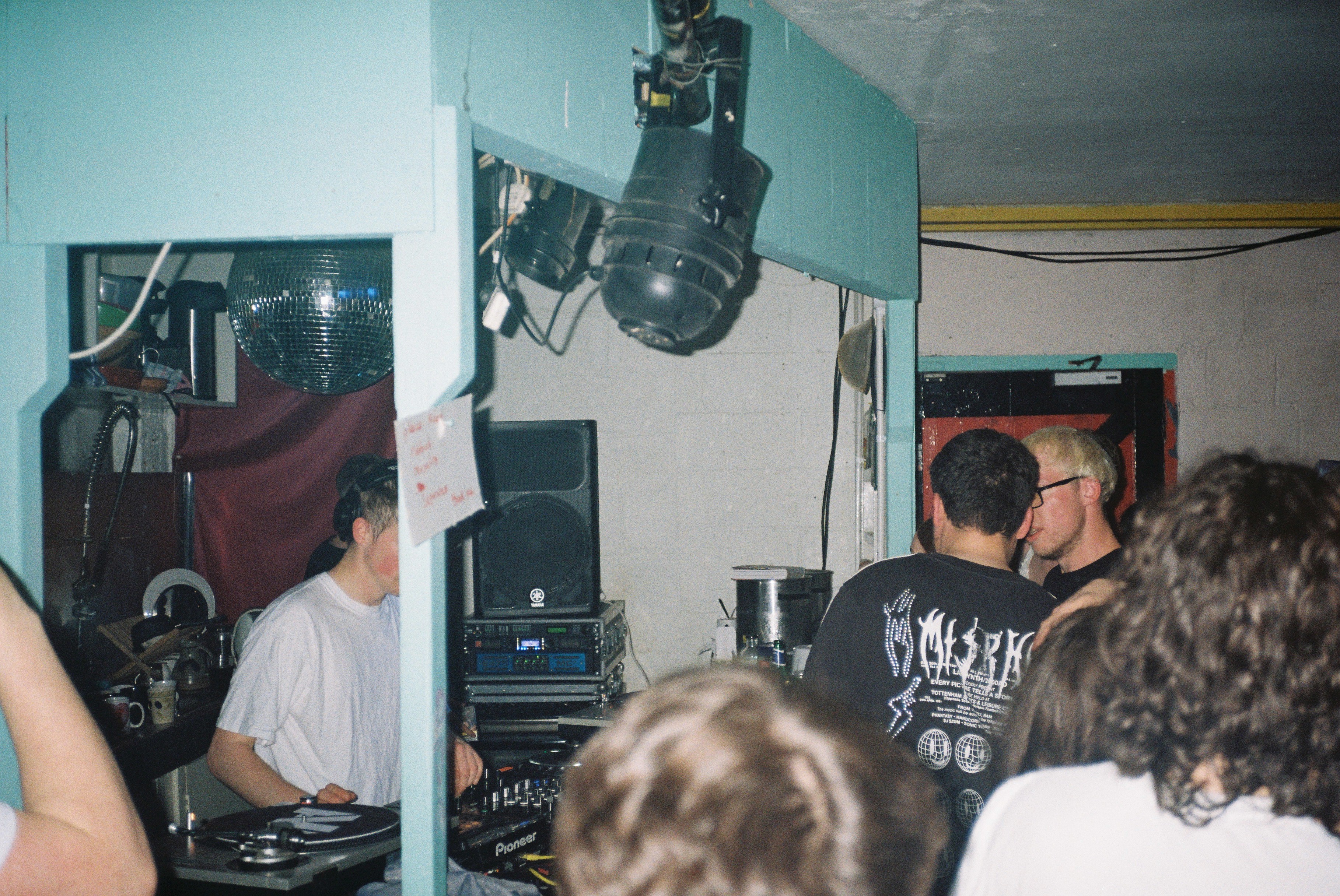
Precinct perform at a ‘battle of the bands’ event. Photo: Andrew O’Donovan
“I would 100% prefer to do our originals over covers. When we’re doing covers, they’re not judging us, they’re judging how the original band sound, and then our sound,” O’Donovan said.
“It was just an insane night. We were so underprepared,” Fenton added.
O’Donovan was no stranger to live performing prior to joining Precinct, having spent much of secondary school doing solo shows in front of classmates with his only backing being an acoustic guitar.
He still struggled in their first live shows, though, feeling naked without his guitar and unsure what to do with his hands. But as the band played more and more shows, O’Donovan has found his footing.
“I think we’re all still kind of finding out what our performances are like on stage, what kind of people we are as performers. I tend to run off the stage for Marley Park and then just literally run around everything. It feels great to interact that way on stage,” O’Donovan said.
Fenton also admits that the group struggles most with finding the balance between being musically accurate on stage, whilst still displaying the dynamism and showmanship that defines all great live performers.
Precinct’s two newest singles, “Take Me Home” and “Light Up The Ceiling”, are available to stream on Spotify and you can click here to follow them on Instagram.
The Dublin Fringe Festival 2025 has come to an end, with thousands of people attending different events of creative and performing arts.
The 31st annual edition of the festival showcased its usual sites of creative and performing arts, with some events being ticketed and some being free, providing an affordable experience for anybody interested in engaging with cultures such as this.
The festival is known for its inclusivity, with a diverse group of performers and attendees alike visible in every corner.
With ranges of performances, there is also art exhibits, such as the Minaw Collective, an outdoor visual art exhibition, completely free to the public to go and see.
Art piece at the Minaw Collective. Photo by Nathan Clarke
While there were many venues that transformed into a culture hub during the festival, Bewley’s Café Theatre turned into a hotspot for events, with five different events taking place over September.
I spoke to Colm Maher, who was involved in the running of these shows in the café theatre and described the importance the festival brings in providing “a platform to young artists starting their career in theatre.”
“It also gives a platform for artists in other disciplines to tell their story on stage. For example, in Bewley’s this year Davina Devine, who is a drag queen, put a show together telling her story. And Farah Elle, a singer/songwriter, got to tell her story about growing up in Libya.”
As well as this, Colm also explained the importance that events like this brings to the venues themselves, explaining that “for Bewley’s the Fringe brings in a demograph of young people that the café might not otherwise attract.”
Of course, it is mainly the performers who can reap the rewards from performing at the Fringe Festival, as Colm proudly explained the many success stories that have come from some of these shows:
“Dublin Old School that transferred to the National Theatre in London and was then made into a movie and My Left Nut, going on to become a TV series. They follow this format of one hour shows breaking out of a fertile festival environment, in Edinburgh they had Fleabag and Baby Reindeer. In short, a Fringe show mounted on a shoe-string budget has the potential to break out into the mainstream. That is the dream! Which is part of what Fringe is all about.”
Bewley’ Café. Photo by Nathan Clarke
Stories such as this perfectly encapsulate why it is so important to have shows such as this, opening the doors for young and talented performers to further develop their stage skills and provide a platform to be picked up by other venues.
Colm goes onto develop this point, as “the intense and concentrated atmosphere of a festival environment help incubate fresh and exciting talent, ensuring theatre is kept alive in our age of online streaming platforms; Fringe festival remind people that you can’t beat a live show!”
The festival is renowned for it’s incredible atmosphere, which evidently takes a lot of parties’ involvement to foster.
With the Fringe Festival entering it’s 32nd year next year, it is clear to see the impact it can have on businesses, performers and consumers alike, as Colm put it:
“Though, more importantly, I like to ensure all the companies have a good experience in the venue. I like to foster a collaborative and creative atmosphere, which is what the spirit of Fringe is all about.”
De Profundis – a story of love, loss, anger and acceptance
What an opportunity to feel the depth and sorrow of the love of one man for another.
To celebrate 125 years since Oscar Wilde’s death, the Museum of Literature Ireland (MOLI), has produced in film key passages of the letter described as a love letter called De Profundis – written by Wilde to his lover ‘Bosie’ while Wilde was in prison from 1892 to 1895.
Photo: Mary Phelan
Luke Fallon, Visitor Experience Assistant in the museum says “although primarily people will come to the museum for James Joyce, there has also been a great interest to learn more about Oscar Wilde”.
He says that apart from celebrating 125 years since Wilde’s death this year “most people will relate only to his witticisms, whereas this piece shows a very profound and different side to the man”.
The background story is that Wilde and Lord Alfred Douglas (Bosie) were in a relationship together, much to the disgust of Bosie’s father, the powerful Marquess of Queensbury, who was a very cruel man and was determined to ruin Wilde, which he succeeded in doing, by taking him to court for gross indecency. He won his case. Wilde was sent to Reading Gaol for two years.
The film consists of the reading of some passages of his letter written to Bosie by a number of artists, writers and activists from the LGBTQ+ community.
In the reading we learn how Wilde, after his conviction in London, was brought in shackles on a train from Reading Gaol where he spent two long years in prison. The conditions were rough.
In prison he goes through a whole gamut of emotions, including anger, sadness, and incomprehension as to why Bosie never wrote to him all the time he was incarcerated. He realises that he made a huge psychological error in going with Bosie’s suggestion to press criminal libel charges against his father. He contemplates the affection he had for Bosie, and how little it was returned. In hindsight he realises he should have got rid of him before his own ruination. He recalls the bills that Bosie ran up during his stay in a Brighton hotel with a friend and which were so onerous that Wilde could not pay them. As a result he could not leave the hotel, and was ultimately arrested.
As the letter continues, he concludes that hate was always stronger than love with Bosie. He says hate blinds people, and Bosie was blinded by hate. He questions if Bosie had ever known what love was, and also why Bosie never wrote to him, not even once while he was in prison. However, he realised Bosie was also suffering, and that he had to forgive him, and wanted to turn what happened to him into a spiritual experience. He makes references to God and of learning the meaning of sorrow and beauty.
He writes “beauty and sorrow is all that interests me now. I used to live purely for pleasure and lived a selfish life. I no longer want this life.” He writes that “pain unlike pleasure wears no mask.” Prison had given him new spirit. He used to say to himself “what an ending, now I think what a beginning.” He longs to be in nature again, seeing the flowers and trees bloom again. He looks forward to meeting Bosie when he is finally liberated from prison.
The film is approximately 50 minutes long and is in a quiet room, away from the main exhibition area on the 3rd floor.
The film runs until early October.
MOLI is open 7 days a week, and also has a café and outdoor dining area.
Allie Sherlock was just 9 years old when she first started playing music.
The Cork native then took to the streets busking just two years after, aged 11.
Since then, the singer songwriter, now aged 19, has gone on to gain an online following of almost 15 million, amassed over 1.5 billion views online, performed on The Ellen DeGeneres Show, the Late Late Toy Show, and at a concert for Queen Elizabeth’s Platinum Jubilee, has completed a sold-out UK and Ireland headline tour, and is now working on releasing her own music and growing herself.
Following a performance of her brand-new single ‘How Love Works’ on RTÉ’s Late Late Show on Friday, November 22, Sherlock spoke with The City about her career so far, and what’s next.
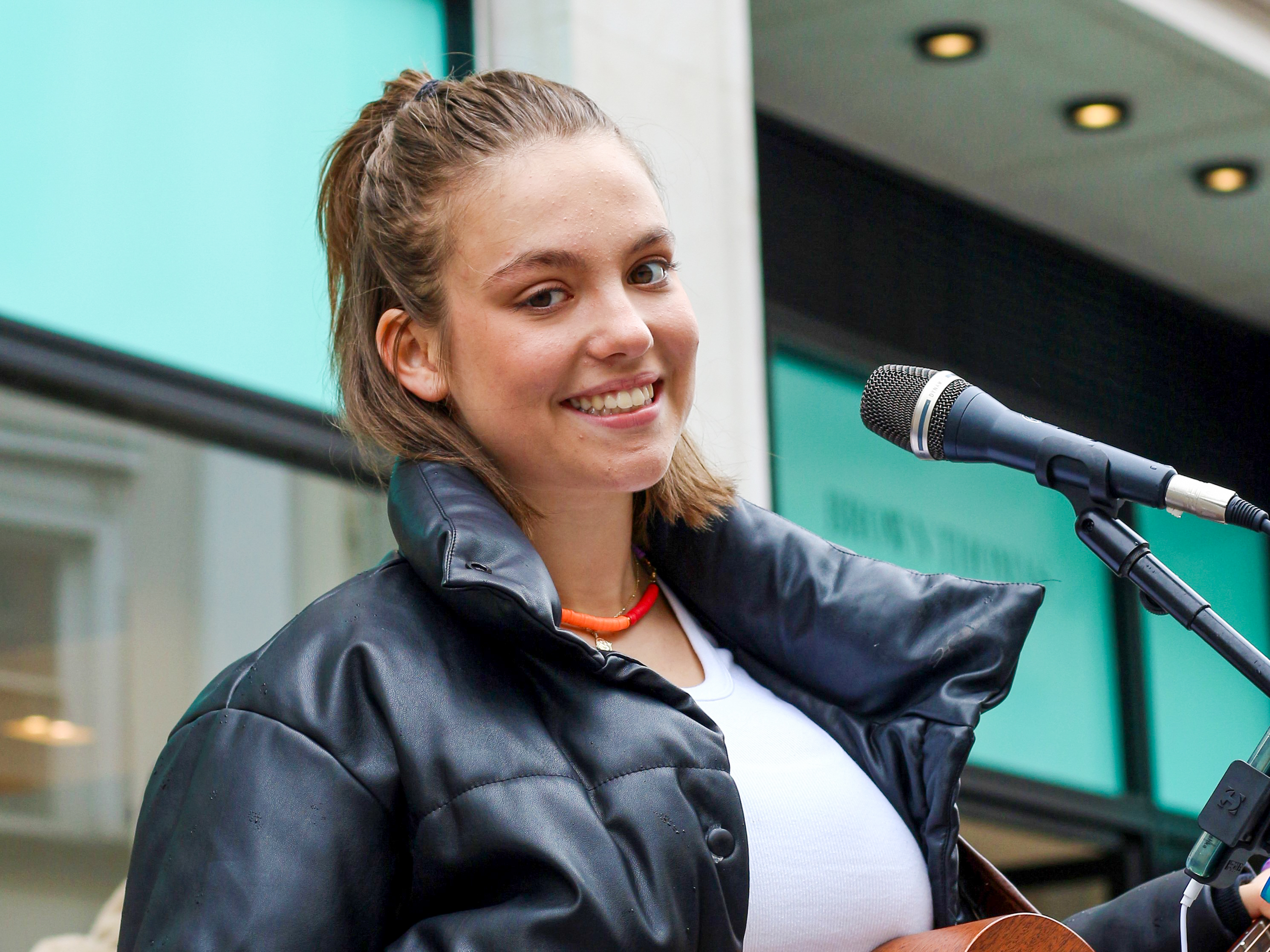
Allie Sherlock poses in front of Grafton Street’s Brown Thomas, a popular spot for buskers – Photo: Liam Murphy
“I started busking because I wanted to perform in front of people,” Sherlock said. “Also, just simply because I loved music.”
“Busking on the street is very unpredictable,” she said. “You never know what can happen.”
Allie says that although her performance on ABC’s The Ellen Show was six years ago, what followed afterwards was still her best day on Grafton Street.
“When I came back from The Ellen Show, I got one of the biggest crowds I have ever gotten,” she said, speaking of the success the show gave her.
“That whole day was crazy. The most amount of CD sales, most tips, most selfies. It was all so crazy.”
Allie Sherlock speaking with Ellen DeGeneres following a performance of Adele’s Million Years Ago. The show estimated 2.1 million views during 2018. Photo: TheEllenShow / YouTube
It’s clear while speaking with Sherlock just how much she loves Grafton Street.
After all, the Cork singer is touring, doing various TV and Radio appearances, topping the Spotify viral charts, but still continues to travel up from Cork to Dublin every weekend for busking.
But why is that?
“I love it,” she said. “I’ll stop when I can’t do it anymore or if I really don’t want to do it anymore.”
“I don’t plan on doing it forever. If this whole music thing works out, I’ll be touring more, charting more, and eventually it will stop, but for now I’ll continue.”
Allie Sherlock during a busking set on Grafton Street – Photo: Liam Murphy
‘This whole music thing’, as Allie calls it, has recently taken off following the release of Sherlock’s debut original single ‘How Love Works’.
The track, co-written by X Factor star Ella Henderson, released in October, has already gained almost 300,000 streams on Spotify, and is currently ranked number one on Spotify’s Viral 50 Irish charts, at time of writing.
Allie says that after all this time of writing songs in her room, with friends, and during writing sessions, she felt that now was the best time to start releasing her own music.
“Over the years I’ve been offered loads of label deals and record deals but never took them because I was always too young or it just wasn’t the right deal, but I’m now with a label and I’m thinking ‘I’m at a perfect age, this is a great deal, let’s do this’.”
“I wasn’t sure what to expect but I’m really happy with how it [the release of ‘How Love Works’] has gone.”
“I don’t let numbers get to me,” Allie said, of both streaming figures and her almost 15 million online followers.
“I never think that ‘oh my god this is so scary’ or that I have all these eyes on me. I just think it’s all crazy how many people decided to follow me, or watch my videos, like over a billion on YouTube is just crazy to me.”
“I’m just out here living my best life.”
‘Out here living my best life’ – A smiling Allie Sherlock plays for crowds on Grafton Street – Photo: Liam Murphy
But what’s next for a 19-year-old who has seemingly already made it?
“Next year will see more releasing and more touring,” Allie said, before hinting at a tour announcement for early next year, followed by an “I don’t know if I can say that.”
“But what I can say is definitely a lot more music and more tour dates.”
Supporting local has never been more important, with an increasing number of small businesses feeling the strain of the current cost of living crisis. TheCity.ie has created a guide to markets happening all over Dublin.
Munya Market is an up-and-coming late-night market, which takes place in Fegans 1924 on Chancery St. Dublin 7. The late-night market is one of Irelands firsts and started in June this year by Oran Lapettina.
Every Thursday and Saturday from 6pm-10pm, the café consists of stalls selling Jewellery, photo prints, crochet pieces and preloved clothes. Flash tattoos from tattoo artists such as big smoke ink, are also available from €30. The market also hosts open mic and hip hop nights for you to enjoy while browsing the stalls.
Speaking to Olivia Grimes, a student from Maynooth, she described how helpful the market has been for buying and selling clothes at reasonable prices. “I’ve rented a stall at the market before, and it’s really helped me make and save some money as a student”. She added, “it almost feels like a real life Depop, and there’s always a good atmosphere on the night”.
Munya Market have recently began collaborating with The Soundhouse Dublin, to host an extended late-night market. The event is free entry all night and celebrates local talent from tattoo artists to crochet designers. It’s a whole venue takeover, with local DJs playing until 2:30am. Dates for future Soundhouse collaborations can be found on Munya Market’s Instagram.
If you’re on the hunt for a good Flea Market somewhere in Dublin, The Useless Project, hosts a monthly market in The Workman’s Club located near Temple Bar. The founders, Geraldine Carton and Taz Kelleher, have announced they’ll be hosting a Christmas market on the 18th of December.
They stated on their Instagram it’s their biggest flea market yet, with over 50 stalls taking over three floors. Vintage fashion, candles, homeware, crafts, and prints will be found throughout the market, all sustainably sourced and made. Combined with complimentary drinks and music.
The Alternative, a Dublin based cultural hub, are also hosting a Dublin Christmas Flea Market in The Grand Social, on Liffey Street. The market will be taking place from Saturday the 10th of December to Sunday the 11th of December. From 11am to 4pm, the market will consist of 25+ stalls selling fashion, art, and some fun Christmas décor across all four rooms. The venue is expecting a large turn out so to guarantee entry, event tickets can be found here, free of charge.
WeloveMarkets is also hosting their annual Dandelion Christmas Markets, every Sunday from the 13th of November to the 19th of December in the Well located near Grafton St. If you’re looking to support local businesses this Christmas pop down between 12pm to 5pm for unique, personal, and handmade gifts with over 60 stalls across the whole venue.
Jewellery and accessories all handcrafted by Ciarna Pham are available at her own stall, ‘KIKI NA ART’ at this market. Ciarna specialises in hand painted earrings and necklaces of iconic public figures such as David Bowie, Kate Bush and many more.
According to her website, “I studied fine art painting and also love photography, so I wanted to find a way to mix my love for fashion, art and photography in a way that was funky and wearable.”
She added, “I always liked the idea of people wearing religious icons around their neck, however I am not religious myself, so I decided to work on the idea of modern icons.”
If you can’t make these dates, The Liberty Market takes places weekly in Dublin 8 from 9:30am to 4:30pm every Thursday through to Saturday. It’s one of Irelands’ longest running markets, selling freshly made pastries, cakes, and other sweet treats.
If you’re shopping on a budget this Christmas, the market is an ideal alternative to higher end retail shops, offering low prices and great bargains.
On The Liberty Market website they stated, “we work on tiny profit margins (a fraction of your average shop). We have vastly reduced overheads compared to average shops and the overheads which do apply are shared amongst all the traders”.
They added, “we simply have no time for overcharging customers.”
If you can’t find what you’re after there, you can always pop down to the Ha’penny market which takes place every Saturday from 12pm to 6pm. With no market the same as they rotate stall holders each week.
With an abundance of markets to choose from you’ll have no trouble finding the perfect Christmas gifts, that won’t break your bank account, whilst also supporting Irish local businesses.
Rupaul’s Drag Race Season 12 superstar Heidi N’Closet arrives in Dublin as part of her UK and Ireland tour
Heidi N’Closet posing during her show at the Radisson Blu– By Julia Brennan
On October 8th, popular RuPaul’s Drag Race Season 12 contestant Heidi N’ Closet appeared on stage live in the Radisson Blu Hotel as part of her UK and Ireland tour.
Accompanying the American drag superstar were well-known Irish drag acts Victoria Secret, Regina George, Paul Ryder, and Pixie Woo. They are all regular performers at the George Bar on George’s Street.
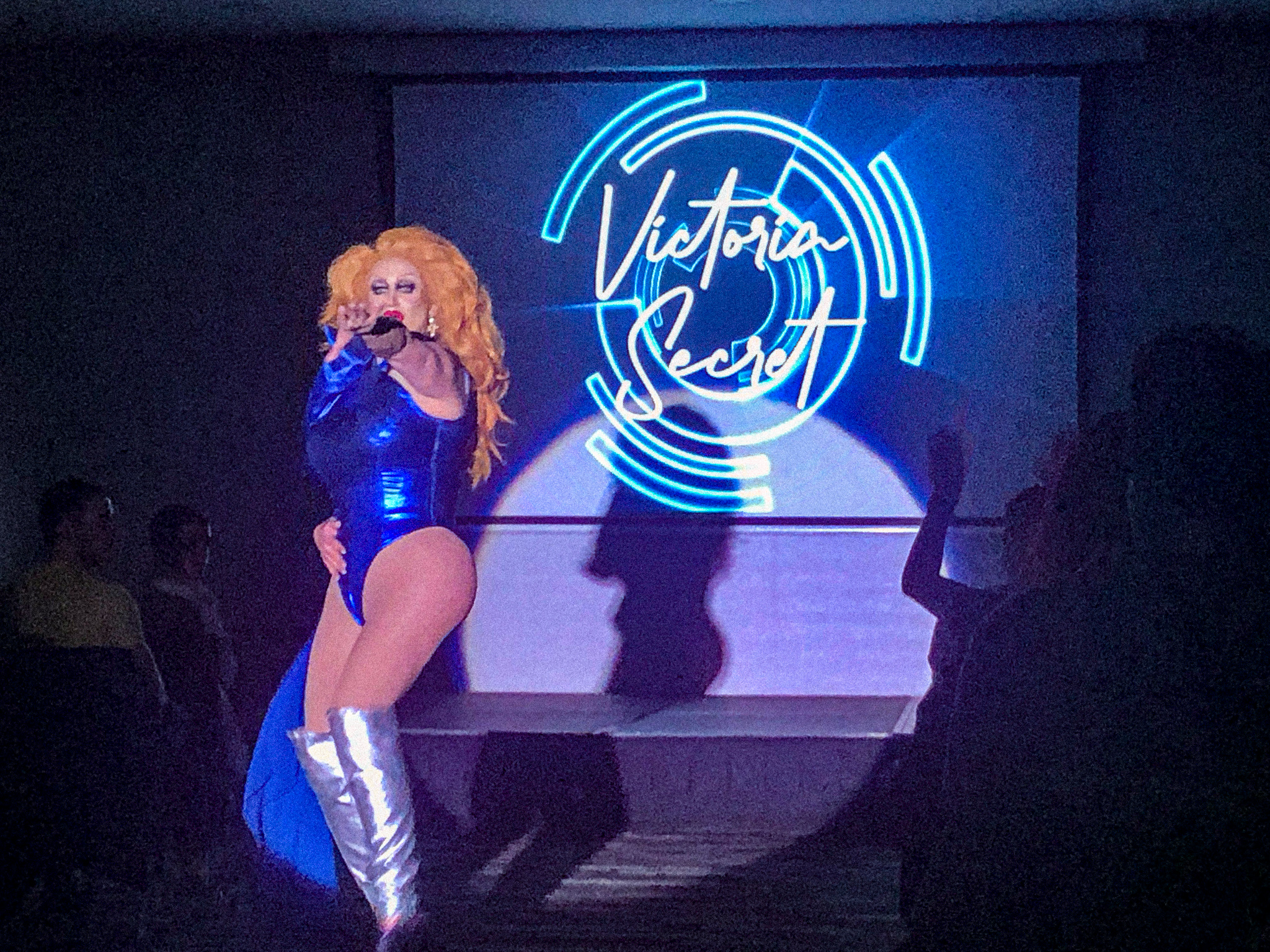
Victoria Secret hosted the long-awaited event with her trusty gal pal gang in tow, armed with avocado props, shiny leotards, and the tallest high heels that even I wouldn’t dare to wear on a night out!
Irish drag star host Victoria Secret performing her routine at the Radisson Blu– Julia Brennan
The show had been originally scheduled for October of 2020 in the George Bar, Central Dublin but was cancelled and pushed back due to the strict coronavirus restrictions at the time.
The shows were not only scheduled to be performed here in Dublin but also in Cardiff, Birmingham, Belfast, Manchester, London, and many other locations across the UK and Ireland.
After a whole year of waiting passed for fans, the glamourous and much anticipated event was finally able to go ahead and those attending were able to celebrate the wonderful, bright and eccentric drag artists set to perform.
The evening was comprised of two separate one and half hour shows, each as brilliantly comical and colourful as the other, with drag fans imploding the function room with cheers of explosive applause.
The night kicked off with all four Irish drag artists strutting their way to the main stage to the much-loved Euro-disco anthem “Rasputin” by Boney M. The audience could tell just by their stage poses that these drag queens certainly did not forget to show everyone who wore the crowns in the room.
Left to right: Pixie Woo, Paul Ryder, Victoria Secret and Regina George, performing to Rasputin– By Julia Brennan
After a warm welcome from the stunningly dragged up entertainment, the main event slowly unfurled as Heidi N’Closet dramatically entered the room. In the illuminating yet blinding spotlight she was dressed to the nines; sporting a multicoloured feathery two piece with thigh high boots, ready to deliver the drag experience of a lifetime, including multiple demonstrations of the timeless drag splits move ‘The Death Drop’ in all her routines.
Music varied marvellously from Paul Ryder singing Donna Summers’ “Hot Stuff” to the stars dancing to Beyonce’s “Partition” and Ariana Grande’s “Into You” reaching all the way to Celine Dion’s famous “All by Myself” track with a broken-hearted Pixie Woo pouring champagne into the mouths of unsuspecting fans in the aisle seats.
In between routine chats gave the audience a chance to get to know Heidi and her apparent love for Ireland with Victoria Secret confirming that Heidi was in fact taking a short-term holiday here after the completion of the Dublin shows on October 8th.
Having come all the way from America, it was only fair that the audience taught Heidi some phrases in Gaeilge. Victoria Secret leading the impromptu Irish language refresher’s class, passed the microphone from row to row to teach simple Irish phrases to the North Carolina native.
After a few pauses and confused eye darts, Heidi was off to a grand start, until near the end when she mistook me saying “Mas é do thoille” meaning please in Irish, for “mashed potatoes”.
Despite the stern conference room like setting of the Radisson Blu function area, the performers made the space their own with fabulous costumes, wigs, and more importantly their unmistakable lip-syncing talents.
Heidi N’Closet took to Instagram following the end of her tour stating that she had an amazing time in the UK and Ireland.
“Can’t wait to be back in April and possibly July next year but until then be sure to mind the GAP!!!!”.
The disenfranchisement of Dublin’s artistic community is no small issue. Photo from Jigsaw’s toilets courtesy of Jen O’Leary
Listen to Jake Hurley investigate the disappearance of Dublin’s cultural spaces
Since its first incarnation as the anti-capitalist social centre Seomra Spraoi, Jigsaw has served as a focal point for creativity in Dublin City – countless collectives of musicians, artists and activists called it home and it served as the base for the left-field programming of Dublin Digital Radio (DDR) for many years.
The announcement of its closure last week has reignited the ongoing conversation around the rapidly diminishing cultural infrastructure in Dublin. The growing sentiment amongst artists is that the policies of successive neoliberal governments have been at best indifferent and at worst hostile to creative expression in the capital.
To get a better sense of the discontent brewing Dublin’s creative quarters, DDR DJ Jack Hevey, who makes music under the Boyfren moniker and wrote a thesis on the cultural landscape of Dublin while studying at the University of Amsterdam, spoke to The City to give his perspective.
Hurley also consulted former Jigsaw and DDR regulars sohotsospicy, a DJ and producer who recently released her debut EP, and the up and coming Irish electronic producer Rory Sweeney who recently shared the track Freak as part of the City Imp Records compilation Chancers.
With Level 3 restrictions ordering galleries to close, Eibhin Kavanagh talks to the artists still able to display their work at the Merrion Square Open-Air Art Gallery.
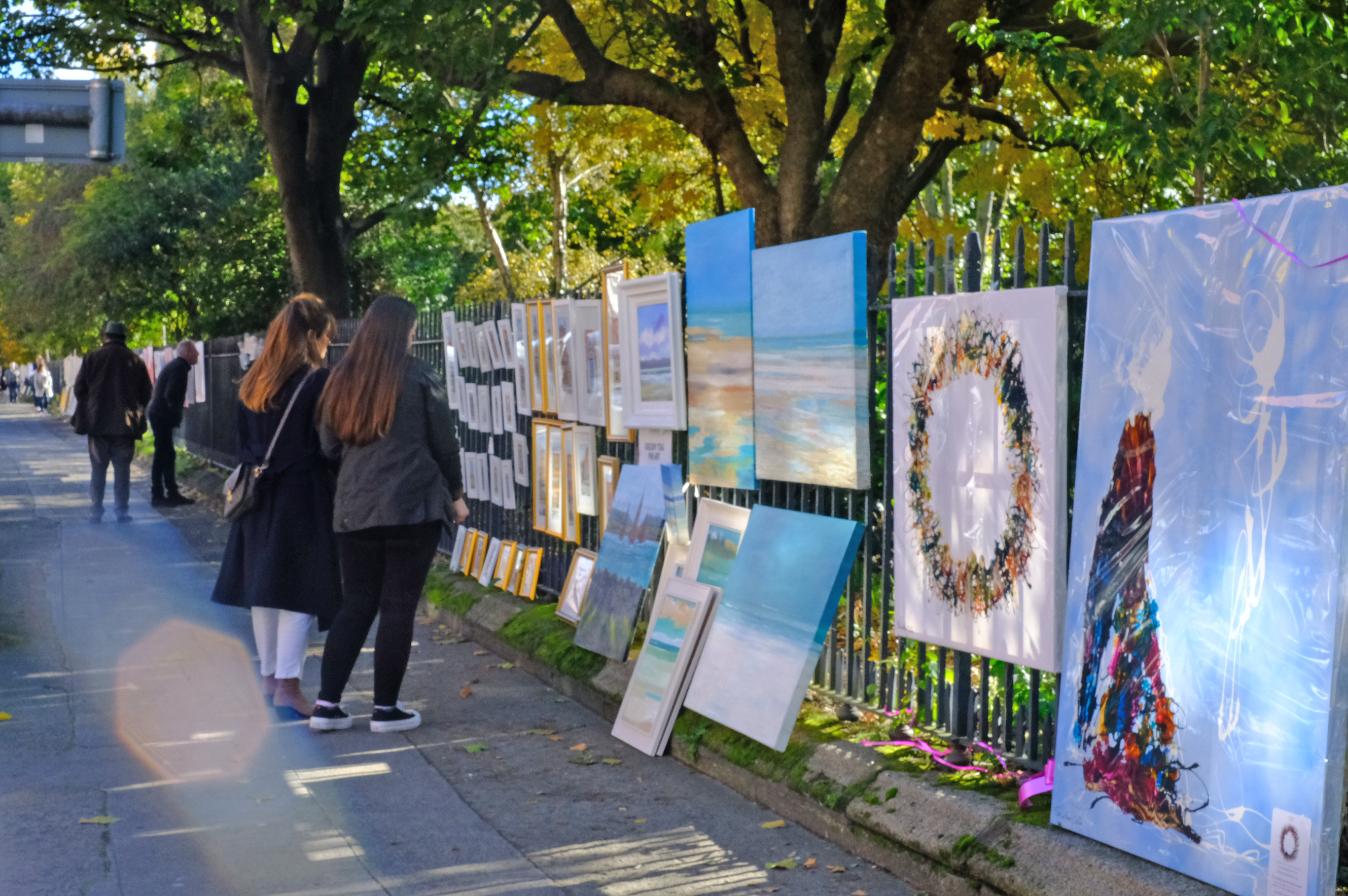
Artists display their work at Merrion Square every Sunday from 10am until 5pm. Photo by Eibhin Kavanagh
With the introduction of Level 3 restrictions in Dublin last month, art galleries and other cultural institutions have been forced to close.
Despite this, the Merrion Square Open-Air Art Gallery has weathered Level 3 restrictions, and every Sunday artists gather in this Georgian garden square to sell their work and bring colour to Dublin City Centre.
Brendan Higgins has been displaying his art at Merrion Square for over ten years. He talked to The City about the changes experienced since artists started exhibiting again in the Summer.
Brendan Higgins at Merrion Square with his artwork. Photo by Eibhin Kavanagh
“There was a huge drop in footfall,” he said. “It is a business area Monday-Friday and on the weekends, there were a lot of tourists.” he continued: “But business hasn’t been too bad, because people are coming in just to buy paintings.”
In regard to the level 3 restrictions, Brendan said: “We’re one of the only open-air events, when the galleries were open as well, they were also attracting people, so the last three weeks with the galleries closed we did notice a drop in footfall.”
Kevin Sharkey, who has been exhibiting for around five years now, said: “An open-air art market is perfectly suited to deal with the coronavirus because it’s not close contact. I find most people are very relaxed about it when they’re outside and they have space.”
“The main thing I noticed was that people who before would’ve done things like go to the cinema or go for a meal or whatever, are instead looking for outdoor activities. Merrion Square suits this perfectly.”
“For the last lockdown, most people were doing two things. They were staying home, and they were decorating. You can only paint so many rooms in your house but at some stage when you want to finish off your design you think, ‘ah we need a nice painting.’ In Ireland, there’s very few places where you can see such a wide breadth of different artistic talents in one sitting, and that is something people who are looking for art want; choice,” Kevin said.
Artist Kevin Sharkey with his work. Taken by Eibhin Kavanagh
Peadar Sheerin, who has been displaying his work at Merrion Square for nine years now, said: “Since this is an open-air exhibition it is reasonably safe Covid-wise.”
Peadar also reflected on how the exhibition used to be: “I miss the American tourists, they were great customers. ‘I like those three honey. Wrap em up’. Also the Germans, French, Japanese, Chinese, and good ole UK, to mention a few.”
Councillor Cat O’Driscoll, chair of the City Council Arts, Culture, Recreation and Leisure Strategic Policy Committee commented on the importance of the open-air gallery with restrictions limiting arts and culture in Dublin City.
“I’ve been inspired by how innovative so many have been to bring arts and culture to everyone safely,” Cat O’Driscoll said.
“The Merrion Square Open-Air Art Gallery is an institution and it is wonderful to have it while so many other spaces are closed.”
“It’s important we still get out and about in a safe way to keep well physically and mentally. Weather permitting, a social distanced stroll around the Merrion Square Gallery on a Sunday with a take away hot beverage is highly recommended.”
She also noted: “Don’t forget your mask.”
“With Merrion Square, you’re dealing with the artist directly. If I was going out to get a painting, I’d go to Merrion Square before I’d go to a gallery,” Brendan Higgins said.
“In Ireland there are very few things that you can bring your whole family to that doesn’t cost you anything,” Kevin Sharkey said.
The Merrion Square Open-Air Art Gallery takes place every Sunday from 10am until 5pm.













You must be logged in to post a comment.