Tag: betting

  • Hedging our bets in lockdown

    Hedging our bets in lockdown

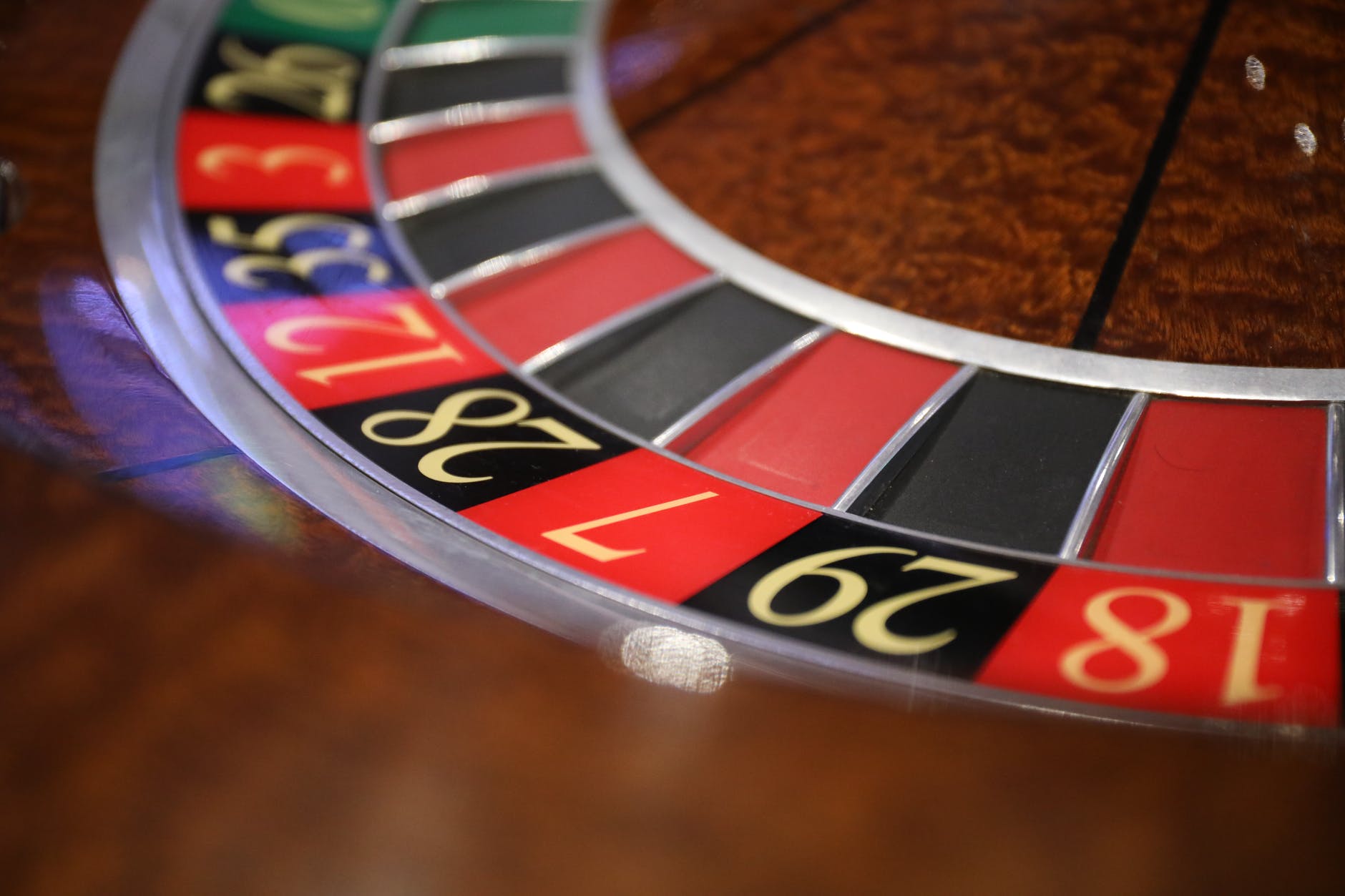
    Who really has the upper hand? Pictured above: a roulette wheel by Naim Benejoullon via Pexels.com

    A study by the Gambling Awareness Trust has concluded that online gambling in Ireland has increased “drastically” since the Covid-19 pandemic hit.

    The findings conclude that up to 0.8% of the population (50,000 people) in Ireland are believed to have a serious gambling problem, with almost two-thirds of the population taking part in gambling in some capacity.

    It says the most popular types of commercial gambling in Ireland include buying scratch cards, playing the lottery, betting at a horse or greyhound track and sports betting.

    Co-author of the report, Gambling trends, harms and responses: Ireland in an international context, Professor John O’Brennan says the gambling industry is growing at a “worrying” rate since the lockdown restrictions have been put in place.

    “It’s very clear that online gambling is one of the only industries that has actually thrived over the past year,” Professor O’Brennan tells The City.

    “Gambling companies are doing better than ever before, even though sport betting came to a halt for a number of months in 2020,” he added. 

    Advertisements

    In Ireland, 75.4% of sporting broadcasts show at least one gambling advertisement. They are the most common type of ad shown during any televised sporting event.

    “Advertising has been central to developing gambling problems in specific cohorts of the population. You can particularly notice that young people ages 18 to 25 are targeted through advertisements, with betting companies using young sports stars to promote special offers,” says Professor O’Brennan.

    Many countries throughout Europe such as Belgium and Italy have implemented a full-scale ban on gambling advertisements. However, Ireland is yet to apply any bans on gambling advertisements and they are the 7th most common form of ad shown on television.

    “Online gambling is like having a casino in your back pocket’’

    Professor John O’Brennan

    Regulation

    Professor O’Brennan says that Ireland is seriously “lagging behind” the UK in terms of handling problem gambling, as the Gambling Commission was set up over two decades ago. 

    “Almost every other country in Europe has a gambling regulator to help deal with the issue, but for some strange reason, Ireland still hasn’t established one. Governments in the past have promised but failed to deliver on establishing a gambling regulator in Ireland,’’ said Professor O’Brennan.

    Minister of State for Law Reform James Browne hopes to bring proposals for a gambling regulator to the government towards the end of 2021.

    After releasing a statement following a Cabinet meeting , Minister Browne said legislation that may be introduced will check age verification for mobile gambling and monitor spending limits for people on gambling apps, and a prohibition on promotions aimed at luring customers back into gambling.

    In a statement, the Department of Justice said work is underway on establishing legislation by developing “the necessary modern licensing and regulatory provisions for the gambling industry”.

    Problem gambling

    “It [online gambling] has increased exponentially during Covid-19 with so many people stuck at home on their mobile phones,” says Pam Bergin, the executive co-ordinator of The Gambling Awareness Trust.

    The Gambling Awareness Trust is an Independent charitable fund that helps the prevention and treatment of problem gambling in Ireland. They work in partnership with numerous problem gambling organisations and agencies to help reduce gambling-related harm.

    “This is an issue that will keep growing throughout lockdown. Online gambling is continuing to grow in terms of accessibility as people can place bets on any sporting event across the world, including 24-hour virtual events,’’ Bergin said.

    All bookmakers across Ireland currently remain closed under the level five Covid-19 restrictions.

    “That social outlet of being able to visit the bookies has been taken away for a lot of people, forcing people to move to online gambling instead.

    “Online gambling is growing in terms of accessibility with 24-hour virtual events”

    Pam Bergin

    “We noticed that a lot of the people who contacted problem gambling websites were people who conducted online gambling for the first time,’’ Bergin says.

    If you require more information regarding problem gambling, visit gamblingcare.ie

  • Do they Really Know? – An analysis of horse racing’s biggest gambles

    Do they Really Know? – An analysis of horse racing’s biggest gambles

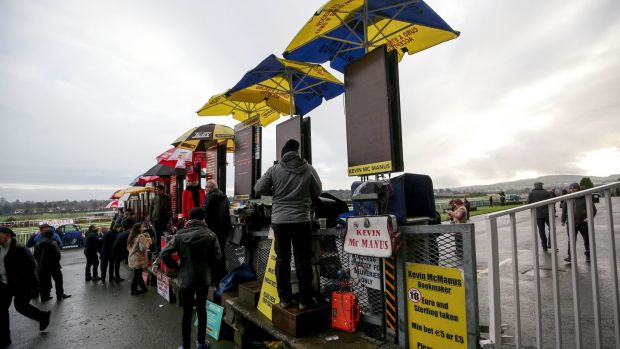
    Horse Racing is a sport synonymous with betting. A lot of people who go to the day at the races like to have a small bet on a race. However, every day, big gambles of a lot of money are put on horses in both Ireland and England. Andrew Blair White analyses whether these gambles are worth following or whether the old racing cliché that ‘the connections knew’ is not quite what it lives up to be.

    Picture by Andrew Blair White.

    First and foremost, what is a ‘gamble’ in horse racing terms? A gamble is when a lot of money is bet on a singular horse to win a race, often making the odds with a bookmaker contract as a result. The market support is sustained and is often assumed that it will go on and win. Over the last three weeks, many different races have been analysed to conduct this study. 220 races between Ireland and England – both with flat racing and jumps racing have been examined. 

    To make it easier to look at different types of market support, they have been split into three categories based upon the money on them. The first category is for horses who have been supported by up to three points in the betting book. (For example, from the odds of 3/1 into 2/1) The second category is market support from three to six points in the book. (For example, odds of 6/1 into 2/1.) And the final category is for much larger support at bigger prices, so from over six points downwards in the betting book. (For example, odds of 10/1 into 2/1.)

    The results that were garnered show that the market support for horses did usually give a decent long term effect for how well the horse ran – although that being said, there were many gambles that did not materialise. Of the category one support – there were 1462 horses that were in this criteria. Of those horses, 387 of those horses won and 516 were placed in either second or third. Overall, that meant that 62% of those horses that were backed in this category went on to run very well as a result. 

    In the second category, only 348 runners qualified for the criteria of being within that area of market support. Of this group of horses, only 58 horses ended up winning and 60 horses placed in second or third of their races. This was a percentage overall of 34% success of running well – which is well down on the previous category and maybe shows off that the bigger the price move, the less certain they are at times.

    The final category is for horses who have been backed from a bigger price into a short price by some distance and as a result – all winners in this category would be good gambles landed. There were 650 horses who ran across the races analyzed that were in this category, of which there were 53 winners and 165 places. Overall, this was a 34% strike rate of horses running very well in this category. 

    CategoryRunnersWinnersPlacedWin %Overall %
    Category 1 146238751626.561.7
    Category 2 348586016.733.9
    Category 3650531658.1533.5

    Barry Orr, Chief of Media Relations for Betfair, told theCity.ie:  “Everyday we get a lot of activity both on the Betfair Sportsbook and the Betfair Exchange. This gives the opportunity for punters to try to find overpriced horses and back them accordingly. We get a lot of steamers (well backed horses) each day and as a bookmaker – we have to be very cautious about which prices we are willing to lay (the odds being offered).”

    The data provided over a month long period shows a particular backing of horses at shorter prices and showing an overall decent percentage of good performances from those well backed horses. Also the percentage of good runs from bigger priced horses would make one more tempted to maybe back horses at bigger prices down the line. As is always the case with betting, if you’re backing horses at bigger odds – it doesn’t take as many winners to make a profit long term. 

    Orr said: “The customers that we are most concerned with are the shrewd punters. They look at overnight markets and highlight overpriced horses – if a punter is beating the price, he is well capable of beating the bookie.”

    Therefore, the data provided would indicate that despite the cliché ‘the connections knew’ – it is not as straightforward as that. Well supported horses have a chance of winning races there is no doubt about it, but horse racing is a complex sport and it is never just as simple as following the money. 

  • All bets are on: are virtual sports feeding gambling addictions?

    All bets are on: are virtual sports feeding gambling addictions?

    The online gambling world has expanded. Photo: Pexels

    As people go without live sport to watch on their screens, TheCity.ie’s Kim O’Leary examines how certain fans are turning to gambling online to ease their boredom – with potentially harmful consequences for those battling an addiction.

    The global coronavirus pandemic has rocked the sporting world, with the cancellation and postponement of major live events ranging from the Tokyo Olympics to Wimbledon.

    As most countries respond to the Covid-19 threat with social distancing, sports fans who are missing live events are turning their attention to virtual sports, which have seen a surge in popularity thanks to technological advances.

    Betting companies, endeavouring to keep their punters gambling,d have set up their own online platforms to facilitate virtual sports such as horse racing, grey hound racing, cycling, football, and tennis as well as traditional casino games like roulette and the slots.

    What are virtual sports?

    Virtual sports are a selection of fixed odds games/events that use a random number generator to decide the outcome. All gamblers betting on these games and events view the same schedules and the same outcomes. Currently the most popular virtual sports include football, horse racing, motor racing, basketball, and virtual cycling.

    Despite their recent surge in popularity during the global Covid-19 pandemic, virtual sports have actually been around since the early 2000s. Virtual horses ran during the foot and mouth disease outbreak in 2001, when live racing was cancelled in Britain and Ireland.

    Earlier this month, hundreds of thousands of people watched ITV’s broadcast of the The Virtual Grand National – an AI version of the country’s biggest horse race, at the exact same time the real race was meant to be held.

    Virtual football games are proving a hit on Betway

    While real-world sporting attractions are limited this weekend to the likes of Belarusian Premier League clashes – FC Smoldvichi-STI versus Dinamo Minsk on Friday and Slavia Mozyr’s fixture against FC Minsk on Saturday at 1pm – there is a full-schedule of virtual sports for punters to tune into.

    There is, in theory, no physical limitation on the number of virtual sports events that could run, and punters are being reminded that the dangers of excessive gambling online are very real.

    Speaking to TheCity.ie, Barry Grant, counsellor and founder of charity Problem Gambling Ireland, says that the pull of virtual sports and gambling online can pose a very real danger.

    “The lockdown in Ireland started after the Cheltenham races which is a big event for betting, and now there is a risk certainly with people at home or off work where they are becoming bored and start gambling online and through virtual sports. In some ways we have seen an increase in the numbers taking to online gambling, yet our helpline has been fairly quiet so far which is a little worrying. But being at home and out of work all increase the risk for people to start gambling,” says Grant.

    Gambling problems may worsen

    Grant explains that counsellors around Ireland are working hard to continue offering counselling services during the Covid-19 pandemic, themselves taking to apps such as Zoom to talk to people who have contacted them for help.

    But Grant feels that more can be done by the Government and betting companies to try curb the rate of gambling addictions in Ireland, as many gambling companies are now tweeting advertisements and links to virtual markets.

    For example Boylesports’ Twitter feed shows messages such as “You can bet on virtual events every minute 24/7!” alongside a link to the nine different virtual markets.

    Some gambling companies like Paddy Power are also trying to be seen to encourage users to play responsibly by setting a deposit limit.

    Grant says that perhaps Ireland can look to other countries’ gambling restriction laws to help the current situation. “The Government and the gambling companies could follow the likes of Belgium and Sweden who have placed financial restrictions like on how much a person can bet, taking into account what people have to lose. The National Lottery here also has a restriction on its website for how much people can spend. I think something like this would help,” says Grant.

    And what advice would Grant give for those who have started gambling online through virtual sports?

    “The advice is that people should look at how much time and money they spend on gambling sites. it’s also possible to self-exclude yourself and block certain online sites through software such as Bet Blocker. And I would definitely recommend that people look at other hobbies like physical exercise instead,” says Grant.

    While virtual sports are all the rage during this pandemic, punters are reminded to not let the virtual world become an addiction.

    Contact Problem Gambling Ireland on 089 241 5401 (call-back service) or Gamblers Anonymous on 01-8721133 for assistance.