By Rían Cahill
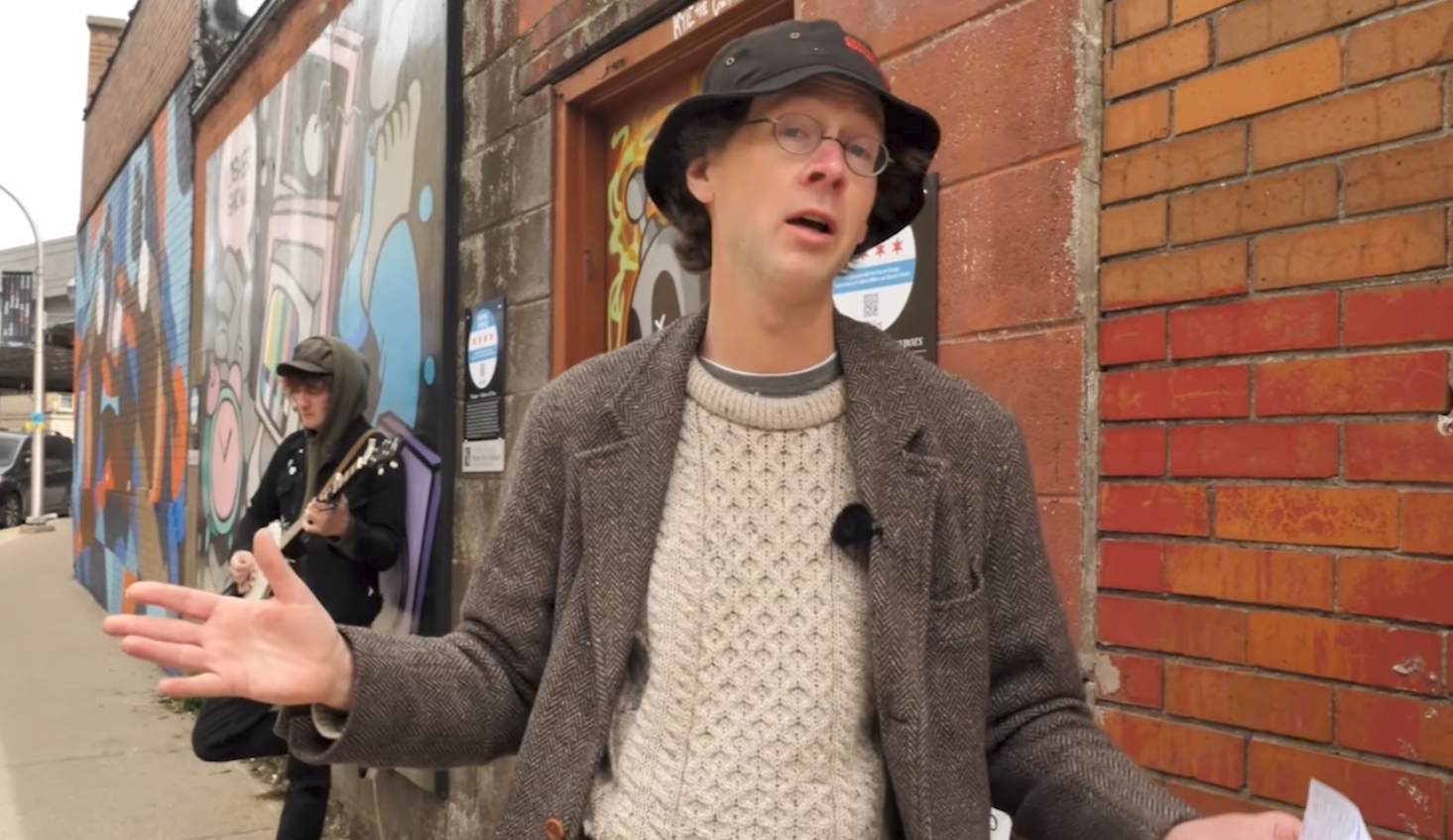
Aobh Magan, Niece of the late Irish author, and documentary maker Manchán Magan has raised nearly €800 for Breakthrough Cancer Research Ireland in honour of her Uncle.
By Rían Cahill
Aobh Magan, Niece of the late Irish author, and documentary maker Manchán Magan has raised nearly €800 for Breakthrough Cancer Research Ireland in honour of her Uncle.
By Mene Agbofodoh
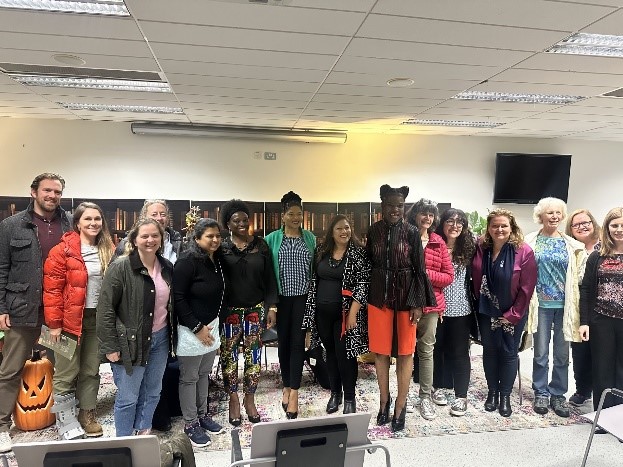
The Red Line Book Festival held a book conference for influential Black Women in Ireland to celebrate Black History Month.
The Red Line Book Festival is a cultural event that happens once every year.
It is held to appreciate and celebrate literature, storytelling, and creativity.
It aims to bring people together from across Dublin and Ireland, spark conversations, and inspire the next generation of writers and readers.
The Red Line Festival is normally held throughout an entire week with multiple events happening throughout the week. and one of the events was ‘Stories of Black Women in Ireland’.

Dr. Ebun Joesph, a special rapporteur for racial equality and racism Ireland and founder of Anti-Ireland and Black Studies was also in attendance for the talk.
Melissa Bosch, (Head of Diversity, Equity, and Inclusion at where?, Eya Lawani, a Special Needs assistant who has a background in assisting charities for Black Irish children, and Carline Thompson, a nurse, researcher, entrepreneur, and activist, also attended to talk about their new book, ‘Equity in the Workplace Stories of Black Irish Women in Ireland’.

The purpose of the book was to amplify the voices of black Irish women and examine their experiences within the Irish labour market.
It aims to uncover the challenges they face and their perceptions of achieving equity in the workplace.
Despite progress in gender parity, disparities still exist, with women being underrepresented in leadership roles and facing lower pay, poor working conditions, and instances of bullying and harassment.
Dr. Ebun Joesph spoke about the importance of women finding their voices within the workplace.
“I think it is important that us women find our voice especially us black women, so that our stories can be heard, to be told and not told from a perspective that doesn’t truly represent us,” she said
Melissa Bosch talked about understanding the power your voice has.
“When you see something that is wrong along the lines of racism and discrimination, your voice is so powerful and when speak out against these things, it can drive change,” she said.
“If we do not speak about things like this and if we don’t open our minds, our hearts to create those spaces for this kind of level of dialogue, we are not going to change anything. Ireland won’t be able to move forward”.
Melissa Bosch’s chapter in the book revolved around trying to help people see their place in the world and what they can do to help marginalized people.
“Whatever ethnic background you come from, whatever demographic background you come from, you have the power to make that change, it’s about understanding your privilege and position in this world.”.
Carline Thompson spoke about the challenges of writing her chapter in the book.
“One of the challenges I had when writing my chapter wasn’t the 2,500-word count even though I only had a week to do it, it was how do I write so much about this topic without exceeding the limit?”
“People think racism only happens in the workplace however, it’s everywhere around you. It’s in the supermarket where you feel you’re being watched by security whilst you’re shopping, it’s in the library, it’s in the restaurant when you’re going out to eat with family and you get stares throughout the night”.
Eya Lawani also spoke on her challenges when she was writing her chapter.
“My problem or challenge about writing my chapter was I didn’t know how I was going to convey the message that systematic racism is the problem in our society without blaming white people as a whole.”
“It was a very difficult topic to write because I had to relive certain moments in my life that made me feel belittled, moments when applications were rejected despite having my bachelor’s degree from Nigeria but because it wasn’t an Irish degree it wasn’t good enough”.
“I struggled with the fact people in society were willing to accept I could be discriminated against because I was a woman but If I said I felt discriminated against because I’m black suddenly it couldn’t possibly be because I’m black and having to convey that in my chapter was very challenging.”
Black History Month is observed in Ireland from the 1st of October until the 31st.

The October chill has hit which means the Bram Stoker festival has begun. It’s Dublin’s time to celebrate and honour Bram Stoker, the author of the most famous vampire around- Dracula. Events over four days and four nights lead you all around Dublin City, from the Casino of Marino to Dublin Castle, you are sure to learn all about Stoker and Dracula’s life.
On Friday the 25th of October a fantastic family friendly spectacle ‘Frank and McSteins Monster Laboratory- Out of the Lab and into the Fire’ took place in Dublin Castle.


By Derek Price.
Plans are underway for the return of the SPECIES Gothic and Industrial arts and culture festival to County Leitrim after a short absence.
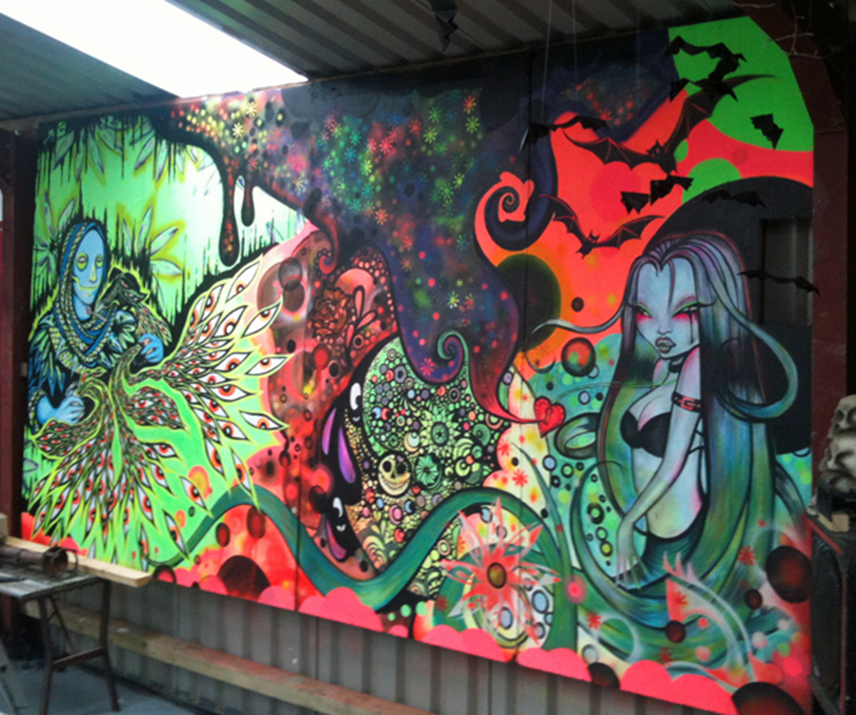
SPECIES is a yearly festival that takes place in the Iron Mountains in County Leitrim. The festival is organised and run by Ilíocht O’Brien and his wife Harriet at their mountain home, and it features a vast array of Irish talent from both sides of the border, and abroad. The festival venue site has a very striking appearance with psychedelic coloured spiritual (but fun) murals mixed with Halloween images dotted around the venue. The first SPECIES festival was held during the May bank holiday weekend in 2015.
Now, over at An Dómhan Ilíocht, as Mr O’Brien calls it, they are busy preparing for the next Gothic and Industrial arts and culture gathering.
On the subject of the SPECIES festival return, Ilíocht said: “We are taking a break from hosting festivals up here while we are working on upgrading the site. SPECIES will return when we are ready, and at that time we will advertise extensively, and hope to re-unite all the beautiful weirdos up here!”

Psychedelic looking mural on site at SPECIES (above). (Photo: Derek Price)

The Great Hall band and DJ performing area at SPECIES. (above). (Photo: Derek Price)

A colourful wall mural at the venue. (above). (Photo: Derek Price)

Dublin duo Freak Control onstage. (above). (Photo: courtesy of Kilian McLiam)

DJ Syrinx (above). (Photo: Derek Price)

Outdoor scenery at SPECIES. (above). (Photo: Derek Price)

There is a big selection of vendors at the festival, selling all types of wares like clothing, furniture throws, and various kinds of fun bric-a-brac and knick-knacks. (above). (Photo: Derek Price)

Cute cuddly items on sale at the stalls. (above). (Photo: Derek Price)

SPECIES revellers keep warm well into the night (above). (Photo: Derek Price)

A view from the camping area (above). (Photo: Derek Price)

Species spooky environment with appropriate mysterious figures (above). (Photo: Derek Price)

Ilíocht,- the festival organiser, on the right, with a friend. (above). (Photo: Derek Price)

The International Literature Festival Dublin has revealed the programme for this year. And like many of this year’s cultural events affected by the pandemic, this programme will take place online. Dhai Almutairi chats with those involved in the upcoming virtual festival.

Joey Kavanagh from the International Literature Festival Dublin spoke to The City about this year’s programme.
“Normally the festival takes place in May with physical events that people can attend in person, but due to the Covid 19 pandemic, we had to postpone this year,” said Joey Kavanagh,
The programme is scheduled to run from the 22nd to the 28th of October 2020. It offers pre-recorded conversations, live streams, and podcasts for literary fans of all ages.
Dublin City Council initiative, International Literature Festival Dublin annually presents a collection of great Irish and international authors and artists, and this year is no different.
There is a new podcast series, Tall Tales, which will feature interviews with children’s writers for the younger readers.
There will be discussions on representation in children’s books, book recommendations, and tips on how to get children reading.
The lineup of authors for younger readers includes Frank Cottrell Boyce, Adiba Jaigirdar, David Stevens, Sharna Jackson, Chris Riddell, Laureate na nÓg Áine Ní Ghlinn, Lorraine Levis, and David O’Callaghan, as well as events with Oliver Jeffers, Onjali Rauf, Robin Stevens, Sinead Burke, Chris Judge, Maggie O’Farrell.
There will be a fun family writing workshop with Gerard Siggins and the innovative Buggybird art and story workshop with Niamh Sharkey and Mary Murphy.
The lineup of participants for grown-up readers includes international famous authors and artists like Roxane Gay, Yanis Varoufakis, and artist Ai Weiwei. Irish participants include Roddy Doyle, Mark O’Connell, Elaine Feeney, Bob Geldof, Anne Enright, and Patrick Freyne.
The International Dublin Literary Award’s recipient will be announced during the festival. In its 25th year, the International Dublin Literary Award is the world’s most valuable annual prize for a single work of fiction published in English, with the winner receiving €100,000.
“The nomination process for the Award is unique as nominations are made by libraries in the capital and major cities throughout the world,” said Mr Kavanagh.
He added, “Participating libraries can nominate up to three novels each year. Over 400 library systems in 177 countries worldwide are invited to nominate books each year.”
The novels on this year’s shortlist were nominated by public libraries in Canada, France, Germany, Greece, Ireland, Jamaica, New Zealand, Poland, the UK, and the USA.
The Award is open for novels written in any language and by authors of any nationality, given the book has been published in English or has an English translation. The Award will be announced on Thursday the 22nd of October, at 11am. The shortlist includes one Irish author Anne Burns, author of Milkman, and winner of the 2018 Man booker Prize for Fiction.
Lord Mayor of Dublin and Patron of the Award, Hazel Chu, applauded the Award for the opportunity to promote Irish writing internationally and promote excellence in world literature.
“It’s more important than ever that Dublin City Council does its best to support the Arts in such challenging times, and the International Dublin Literary Award is a huge statement of encouragement for writers.” said Lord Mayor Chu.
The International Literature Festival Dublin has also started a new initiative, ‘Compass’, a series of events that celebrates contributions and stories of those whose roots lie outside of Ireland.
“With the Compass initiative, ILF Dublin is showcasing new voices and fresh perspectives from a number of people now living in Ireland whose roots lie outside of the country,” explained Kavanagh.
“Following an invitation for proposals in February 2020 from Black, Asian and Minority Ethnic (BAME) individuals and groups with stories to share, six events will be presented next week in the festival,” he added
The themes explored by the six events include the concept of Irishness, migration, and the power of language, stories, and multiculturalism with art forms ranging from poetry and theatre to music and dance.
Compass’s six events are free to attend, but the festival is inviting donations from audiences, and the donations go directly to the artists and writers in the programme.
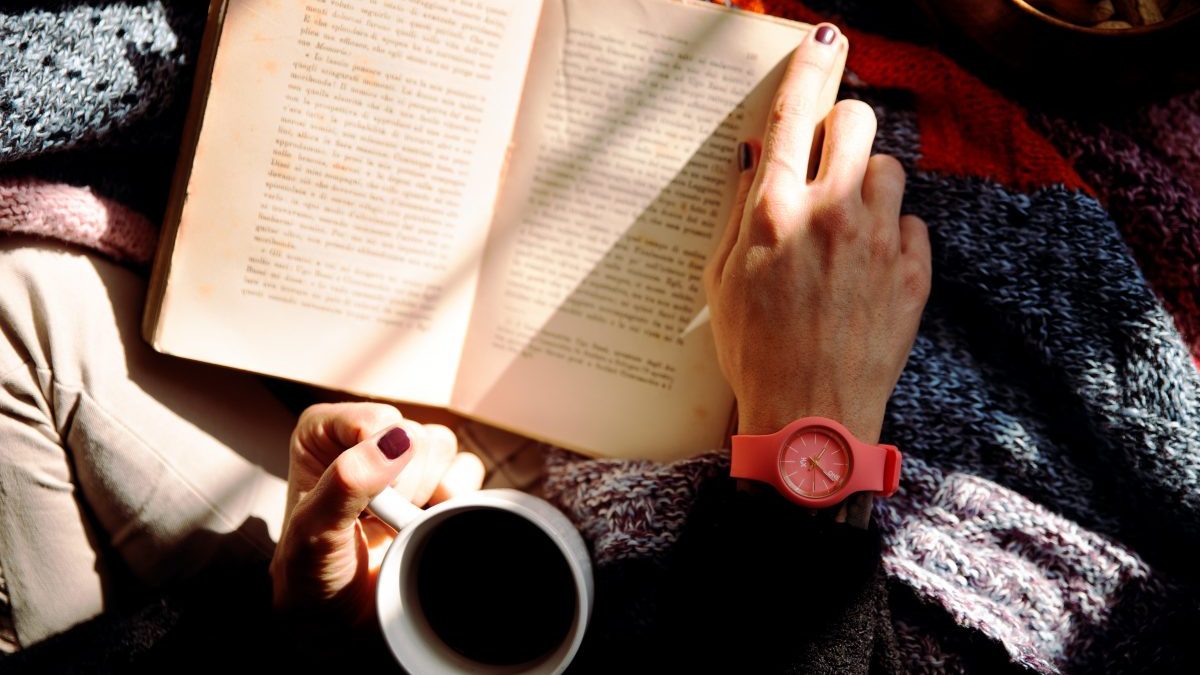

April 23 marks World Book and Copyright Day – an annual event created by the United Nations Educational, Scientific and Cultural Organisation. TheCity.ie’s Ayumi Miyano took advantage of lockdown to rediscover the power of reading, using solitude as an opportunity.
In Paris in 1995, UNESCO selected April 23 as World Book and Copyright Day. This date also marks the deaths of prominent authors William Shakespeare, Miguel Cervantes and Inca Garcilaso de la Vega. In Ireland and Britain, ‘World Book Day’ is held on the first Thursday of every March. This year, UNESCO selected Kuala Lumpur as the World Book Capital to maintain the impetus of the Day’s celebrations through its own initiatives.
In Britain, World Book Night — run by The Reading Agency — takes place on the same day. Their #ReadingHour event occurs between 7pm and 8pm on the day, used to motivate audiences to read a book at home.
“It’s all about encouraging people to slow down, take some time out and just focus on reading, and reading for pleasure — just reading anything that you want to and enjoying the process,” Kathryn Rose, assistant programme manager of The Reading Agency, tells TheCity.ie.
Under the current coronavirus lockdown, the inspiration of World Book Night sounds as persuasive as ever. Although it is currently impossible to physically attend the book events due to the pandemic, why not join online book clubs instead? Buy books on virtual bookshops, show support for small businesses in Ireland, or use an Amazon Kindle and you’ll have plenty of time to read by yourself at home during the lockdown.
I have been preparing myself for April 23 — I readied some books on my Kindle, and prepared stacks of back-up options in my room. I forced myself to read them. However, at first, my stay-at-home reading trial was not easy. Notifications from social media, online media publications, emails, calendar, to-do lists, banks, and app updates endlessly pull my concentration away from the pages of my books.
I admit that I used to be a bookworm — it reminds me of commuting to work, back when I was living in my hometown. The metro in Tokyo is normally overcrowded, and quiet. People pretend they are fine when minor or major disasters happen: somebody’s umbrella hits you, a train suddenly stops because the train hit a person at the platform, or a drunk woman suddenly gives you a big hug. No matter what happens, you have to keep yourself cool and relaxed — that is the way of the Tokyo commute.
To follow this unwritten rule, I always tended to keep a book with me as a shield. Looking at my bookshelf, choosing the one with which I thought I could kick-off my day, was part of my everyday routine. With a book, I could easily distance myself from the outside world and dive into my imaginary world — a different kind of social distancing.
However, my routine changed after I changed my old mobile phone to a brand-new smartphone. The impact of that transformation was life-changing. I could listen to music from my playlists, read newspapers from all over the world, observe the lives on my friends on social media, and even work from the phone. I knew that all books I loved were always on my shelf, but I no longer starting off my day with five minutes of “book selection” time. My biggest excuse for not reading books was that I could read anything on my phone, despite never actually following through.

Even before the current version of isolation began, The Irish Times reported last year that Irish people were using their phones for four-and-a-half hours every day, including 64 minutes on social media, 53 minutes on video platforms like YouTube, 32 minutes on browsing the internet, and 20 minutes on sending and reading emails.
I think part of it is the distractions we have; from games and phone apps to constant social media attention. One of the main tips we would offer people is to put your phone on silent, or even put it in another room for full solitude.
Of course, most of the time when we are browsing something on the phone, we are reading — reading newspaper articles, emails, posts and comments on social media — but in a speedy and spontaneous manner. When a notification pings, we tend to multitask checking on our social feed with whatever else we were doing so that we’re never quite apart from what’s going on with the digital world. Twitter, Facebook, Snapchat, TikTok and Instagram notifications plagues us with updates from acquaintances we haven’t spoken to in years, or from total strangers with filtered lives. We are unconsciously and endlessly consuming random information.
“One of the main tips we would give people is to put your phone on silent, put it in another room,” Kathryn Rose says. “It doesn’t have to be for a long amount of time just maybe 10, 15 minutes, and just set yourself like small goals, say I’m going to read a chapter, I’m going to read five pages — and you can gradually build that up.”
World Book Night was a great chance to get back to my reading routine. The challenging part was to create spare time without any distractions. Moreover, even when I am reading a book with my phone turned off, a voice is urging me to check the news, to exercise, to open my emails, to observe what my friends are doing online. The biggest distraction was always within my own head.
“If you’re reading fiction, then that can definitely be an escape from your life. If you’re reading a news article, it’s very much about what’s going on, making yourself think about the world,” says Rose.
I have decided to indulge myself in just reading a book on April 23, with no phone notifications, zero work-related worries and no pressure to catch up on information in the digital world. I will allow myself to spend my entire day enjoying the simple act of reading. World Book Night will definitely indulge my rediscovery of words, and their endless power.
Reading a book is a simple way to escape from the monotonous daily life of quarantine, and maybe even from yourself. You can be somebody else for World Book Night — embodying the true power of books.


Attempting to focus your mind on literally anything that isn’t related to the coronavirus takes a special sort of superhuman mind control, but the debut novel by zoologist and nature writer Delia Owens had me transported to another world (and another ecosystem) writes Kate Brayden.
Set in the swamplands of North Carolina during the 1960s, gradually building tension into the 1970s, the American wildlife author utilises the environment to paint a portrait about the cruelty of enforced isolation.
The tale follows Kya Clark from the age of six up to 25, as she copes with her own abandonment by each member of her family until — at ten years old — she must learn to fend for herself. The swamp takes the place of her guardian, and though she is illiterate, her prowess as a biologist becomes unmatched.

This takes inspiration from Owens’ own childhood in southern Georgia, where her mother used to tell her to “Go way out yonder where the crawdads sing.” Her mother taught her how to hike without stepping on rattle snakes, and not to fear the inhabitants of the ecosystem. Delia went on to spend most of her life in or near true wilderness, and since childhood has thought of the outdoors as a true companion and close friend.
Flicking back and forth through the timeline, the plot follows the mysterious murder of the town’s golden boy until the final answer is eventually revealed – but only after we witness Kya’s own fight for survival. Bigoted witnesses yearn to blame the murder on the “swamp girl”, with Owens using influences from crime fiction, nature writing and even YA romance to keep the reader consistently entertained. Owens also cleverly uses anecdotes of mating rituals of insects and animals as metaphors for the (usually fairly heartless) behaviour of the novel’s male characters.

As Kya grows, she acquires tricks from the marshlands surrounding her, learning how to fish and hunt in order to garner the cash for food. Later on, she utilises her observations of wildlife and applies them to dating when two boys of opposite backgrounds show an interest in her.
Despite being viewed as “white trash” and the epitome of a pariah, Kya is underestimated her entire life – learning camouflage to escape the clutches of those who target her.
The book cuts between the murder investigation and the progagonist’s lonely upbringing, dodging her abusive father while missing her mother and older brother, Jodie. Kya looks to nature for answers to the question of why everyone around her eventually leaves, but finds solace in guidance from a married couple who live in ‘Coloured Town’.
As a recluse with little vocabulary and a target of ridicule, she can relate to the prejudice ruthlessly handed down to the black people of the town.
The compelling character will presumably be spun into a film role in the future, with a star turn by an up-and-coming actress. It was refreshing to read such a three-dimensional character, a fast-paced plot which left room for beautiful writing and a study of racial tensions and social division in a country that has much progress to make to achieve equality.
In a pandemic which shines a light on the frailty and failure of capitalism in a crisis, the book demands respect for the natural world and its inhabitants. Let it transport you to another era, another landscape and another mindset while you self-isolate indoors.
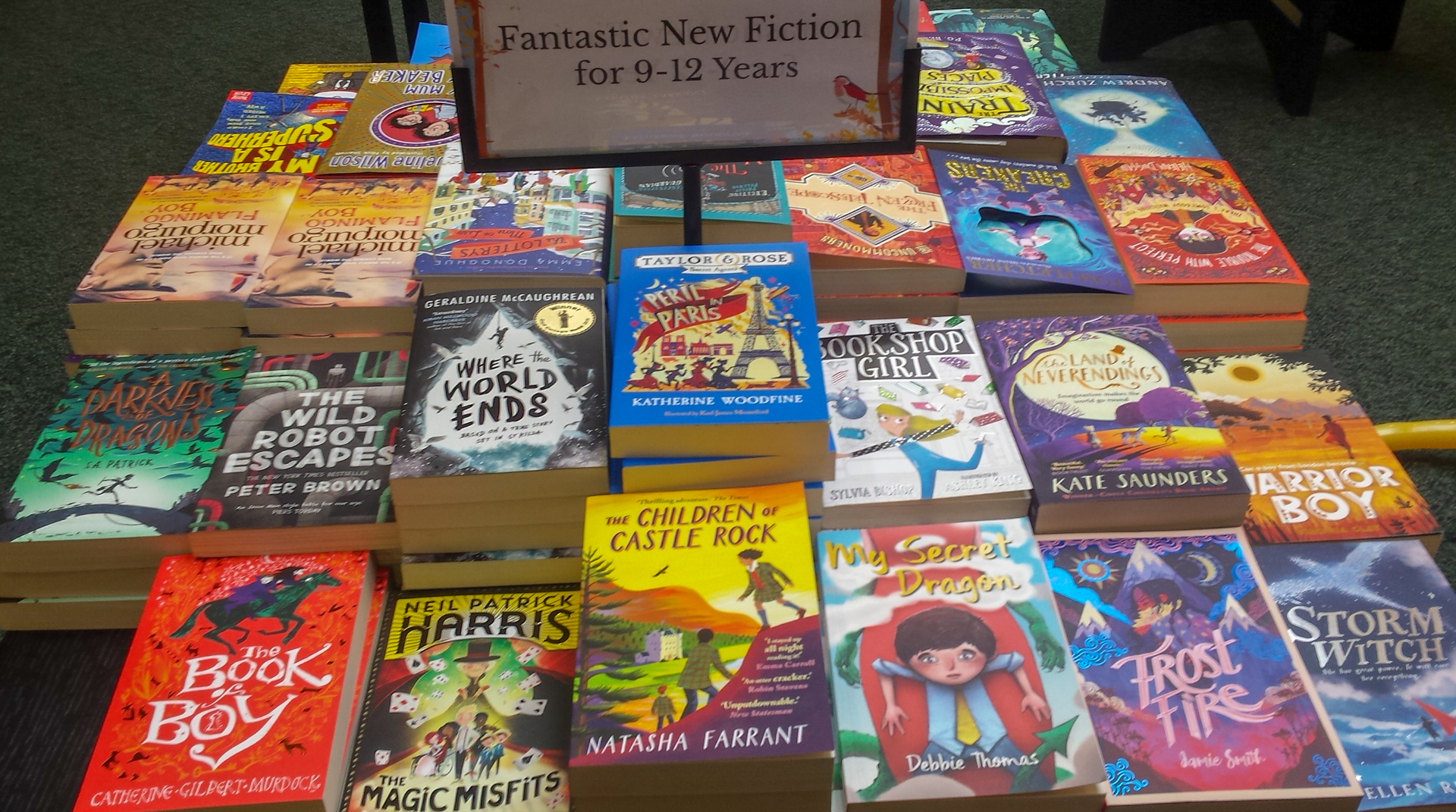
Diversity in children’s books has become a more and more popular topic over the last few years, with the majority of people in agreement that there is room for more stories about women and a wider variety of ethnicities in the genre.
The issue was recently brought back into the spotlight by teenage American activist Marley Dias who was tired of reading about “white boys and their dogs” and started the campaign ‘1000 Black Girl Books’. This movement is needed as only nine percent of children’s books published in the U.S. in 2017 featured an African or African-American character, according to data from the Cooperative Children’s Book Centre.
A quick look inside popular Irish bookshops will show you that there’s also a serious issue here in terms of what books are on offer to children in Ireland.
The research was carried out in three major bookstores, Eason’s in St. Stephen’s Green shopping centre, Dubray Books on Grafton St. and Hodges Figgis on Dawson St. Of the selection of children’s books looked at in these three bookshops 48.8 percent had male protagonists, 22.6 percent were about animals and 28.6 percent featured a female main character.

There was a similar imbalance in terms of the author’s gender with 54.8 percent of the books in the selection written by men, 31 percent by women and 14.2 percent by a collaboration of male and female authors.
When it came to individual bookshops, the selection in Eason’s had a lower level of diversity with 72 percent of the books sampled featuring male leading characters and 76 per cent written by men.
By comparison, 35.5 percent of the books in Dubray Books had male central characters with 45.2 percent of them written by men. In Hodges Figgis, 42.9 percent of the books in the sample featured male leads with the same percentage of 42.9 percent written by male authors.
Of course, this is only a small, random sample that could have been influenced by a multitude of factors such as the way in which employees are told to stack shelves, be it by genre or by author name.
In saying that, there was nothing intentionally biased in the selection methods as it was a randomised sample. This meant the first children’s bookshelf spotted out of one specific section such as the character or fiction for 9-12-year-olds in each shop.
To learn more about diversity in Ireland’s publications, Jenny Murray, Publications Manager at Children’s Books Ireland (CBI), spoke to The City. She said that diversity in books needs to be “wholeheartedly supported and encouraged” especially in children’s books. CBI is the national children’s books organisation of Ireland. Their aim is to make books central to children’s lives in Ireland through developing audiences for children’s books, and supporting and celebrating excellent authors and illustrators.

“You only have to walk into any school in Ireland, especially in Dublin, to encounter the most diverse age-group population in Ireland currently. It is an extraordinary time to be a child in Ireland, the sheer cultural range of language, religion, ethnicity and tradition in an average classroom in Ireland is so diverse.
“But while the environment is enriching it is also challenging to ensure everyone is represented. With regard to books, if children and young people cannot see themselves and their own experiences represented within the pages of books then their interest will wane, they will think that books are not for them. At CBI we think it is fundamental to all literature, but most especially within books for children and young people and especially when you are dealing with visual texts,” she said.
Recent figures released in the UK this year with regard to BAME (Black, Asian, Minority, Ethnic) representation within children’s books, show that of the 9,115 titles published for children and young people, only 4 percent featured BAME characters. The Centre for Literacy in Primary Education (CLPE) who carried out the study, found that only one per cent of British children’s books feature a main character who is black or minority ethnic. This compares to the 32.1 percent of schoolchildren of minority ethnic origins in England identified by the Department of Education last year
“We [CBI] do not as yet have comparable statistics for Ireland, but the UK and Irish markets are comparable so the statistics are relevant to us. The shockwave that the findings sent out across publishing was gigantic, with the majority of publishers swiftly responding and putting the publishing of representative titles to the very top of their to-do lists. Publishing, in general, is a reactive industry and is led by trends. While I don’t want to label this as a ‘trend’ per se it will essentially and hopefully have the same industry-wide effect, and in late 2019 we should see more titles hitting shelves that have BAME representation,” she explained.
Our research contained a sample from three bookstores and according to Ms Murray, although the results showed a majority of male characters compared to female, she’d have to disagree.
“If you take something like Children’s Books Ireland’s annual publication the Inis Reading Guide as a representative sample, this is an independent review of the best titles for children and young people aged 0-18. This year’s guide features 342 titles reviewed across age groups and including a poetry and non-fiction section. Within those 342 titles – 196 men were either author/illustrator/translator against 295 women. Almost 100 more women! I think female representation within books is lower, however,” she maintained.
“According to a survey published recently in the Observer, girls and female characters, in general, tend to be underrepresented in books for very young readers, where they account for only about 40 percent of the main protagonists found in the hundred bestselling picture books of 2017. They are almost never baddies or criminal masterminds and are more likely to have a non-speaking part. Girls, in short, are often limited to the role of sidekick, when they appear at all. Unless, of course, they are mothers or grannies; parent characters are overwhelmingly female and dads are alarmingly absent.”
Despite our finding showing the majority of characters and authors being male, Jenny believes that 2018 was the Year of the Girl.

“As I mentioned earlier, representation of strong female characters and role-models with children’s and young adult fiction was low in previous year’s. But publishers listened to campaigns and adapted, leading to an industry-wide change. It did help that 2018 was the centenary of suffrage in the UK and Ireland, but there was barely one children’s publisher in 2018 without at least one title that fitted these criteria, the majority had numerous titles and almost all had at least one non-fiction title highlighting extraordinary women throughout the ages. Some of these were women we all know very well but more often than not they were women history has forgotten and even more welcome, there were titles focusing on current inspiring women, which is almost even more important.
“We [CBI] ran our own Bold Girls campaign around this subject matter and gained huge media and public acclaim. There is a definite push for books celebrating women’s achievements in science, sport, the arts and history in general. This is all to be welcomed and celebrated, but there is still a lot of work to be done around the casual, invisible sexism that pervades books that are not specifically about restoring the imbalance. In those books, more males should be seen cooking, cleaning and caring, more females working and wrestling and wondering. It doesn’t have to be the main point of the book; it would be all the more powerful for it,” she continued.

As readers are turning to the classics of dystopian fiction to make sense of politically uncertain times, Eimear Dodd offers some reading suggestions.
Irish readers are involved in the trend for dystopian fiction that has seen sales of books such as George Orwell’s 1984 rise in recent months.
The increase in the sales figures began in November. A further spike was identified following President Donald Trump’s inauguration in January 2017.
The BBC reported on a 20% increase in sales of the book in the United Kingdom during the first three weeks of January. The American publisher has also ordered a reprint of 100,000 books to meet demand.
As of Saturday 11 February 2017, 1984 was number six on the list of Amazon’s best-selling books.
“1984 was getting a lot of profile in the USA where many media highlighted it was a perfect example of post-truth politics in use by Donald Trump” – Susan Walsh, Dubray Books
This popularity is also being reflected by the choices of Irish readers. Susan Walsh, Marketing Manager at Dubray Books said by email that “a few books along this vein have started to sell very well in the past few weeks, in particular, 1984.”
“The book was getting a lot of profile in the USA where many media highlighted it was a perfect example of post-truth politics in use by Donald Trump,” Susan Walsh continued.
Other Irish booksellers have also seen an increased interest in 1984. Staff from Charlie Byrne’s Bookshop in Galway city said they have also noticed a demand for Orwell’s other famous work Animal Farm.
Works by Philip K. Dick, Ray Bradbury and Aldous Huxley have also been included on lists of recommended reading since Donald Trump’s election win in November 2016.
Orwell’s dystopian novel is set in a Britain where the government uses mass surveillance and public manipulation to maintain control.

This is not the first time that parallels have been drawn between the fictional 1984 and real world politics. In fact, the book has a long association with American politics. In 2013, its imagery of state surveillance was once again conjured by details of the NSA’s programmes.
More recently, it was evoked following comments made by President Trump’s special adviser Kellyanne Conway in an interview on 22 January 2017. Ms Conway used the phrase “alternative facts” while defending White House press secretary Sean Spicer’s statements about the size of the crowd at the Trump inauguration.
Stories for Strange Times
To borrow a phrase from George Orwell, we could be forgiven for imagining that the clocks have recently started to strike thirteen. Extra second aside, clocks carry on as they always have.
But for some, the world feels different. And interesting fiction provides a space to explore the unfamiliar. The selected stories offer contrasting visions of how people can respond to surveillance and manipulation. It is a stretch to call them all dystopian. Instead, they are connected more by their urban landscapes than their storytelling category.
After all, this is The City.

‘I will tell you a story, but it comes with a warning; when you hear it, you will become someone else.’
Set in an unnamed Middle Eastern emirate around the time of the Arab Spring protests, this is an adventure which looks at how stories have the ability to change the status quo for both better and worse. The narrative blends computer code, state surveillance and culture into something immensely beautiful. A young hacker finds himself under attack from the authoritarian elite that rule the city.

In a future Dublin, the official story is not the whole truth. Instead, an old man uses it as a starting point for his own version of the events surrounding an assassination on Irish soil. For me, the narrative relied too heavily on the surveillance. However, the polluted and decaying city lingers in the reader’s subconscious for months after.

An epic of bickering gods and warring humans. Here, the urban landscapes come from the cultural narratives of Imperial China. The death of the emperor who united the seven kingdoms of Dara sparks a competition for power that makes rivals out of close friends.
The surveillance might be carried out by airship but the methods of manipulation are all too familiar. In one chilling sequence, an ‘alternative fact’ is used as both carrot and stick to secure the loyalty of the bureaucratic elites in the capital city.

A detective investigates a crime that threatens the stability of two intertwined but very different cities. Miéville’s novels have a way of challenging your understanding of social conditions. Here, he examines how societies can adapt to the restrictions of surveillance by learning to manipulate their perceptions of reality.

A word of warning. Thomas Ligotti’s work is not for everyone. His horror stories contain a profound pessimism about humanity and our willingness to manipulate one another.
The Town Manager features in his collection, Teatro Grottesco. A town’s inhabitants change their lives and surroundings to meet the bizarre requests of successive town managers. This is a tale of bleak humour. After all, it could always be worse.

Featured Image by Robin Jaffray via Flickr Creative Commons
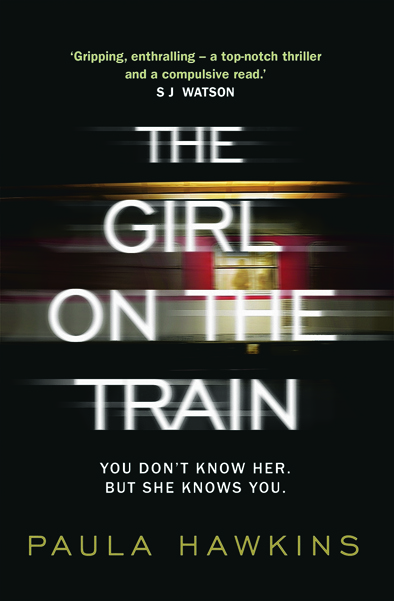

This could be the year of the domestic noir thriller. After the amazing success of Gillian Flynn’s Gone Girl, both book and film, there was bound to be a reaction in the publishing industry. There is nothing truly new in the world of commercial fiction and there was inevitably going to be a scramble to find the next great tale of poisonous relationships.
Enter Paula Hawkins, journalist turned author, and her first novel The Girl on the Train. Her book is already top of the New York Times bestsellers chart and is on its 10th re-printing. As if that isn’t enough, the book rights have been sold to 33 countries and has already been optioned by Dreamworks.
Like Gone Girl, The Girl on the Train also has an unreliable female narrator – in fact, it has three. The most prominent of these being Rachel, a miserable alcoholic who spends the majority of her days commuting to London. Rachel rides the same commuter train into London every day and when we meet her on a return journey, she has four cans of pre-mixed gin and tonic in her bag.
“I take another sip, and another; the can’s already half empty but it’s OK, I have three more in the plastic bag at my feet. It’s Friday, so I don’t have to feel guilty about drinking on the train.”
It isn’t long before we get a sense that this is a woman with serious problems. Like many of us who commute on a daily basis, from her train seat she looks into the same home which backs on to the railway line, each day. Unlike most of us, however, Rachel creates a fantasy world for the couple who live in the house – dubbing them “Jess” and “Jason”. Our second viewpoint comes from Megan, the real-life woman who lives in the house – she, of course, isn’t as perfect as Rachel imagines and has a terrible secret of her own.
The story gathers pace when Megan goes missing from her house and Rachel believes she has information that could help her husband Scott and the police in their enquiries. She was there the Saturday night Megan went missing, but being an alcoholic, with a habit of blacking out, she isn’t the most reliable witness and struggles with her own memory. The plot thickens even more when we discover Megan’s house is on the same street where Rachel used to live with her ex-husband Tom, who still lives there with the woman he left her for (Anna the third narrator) and their baby.
It’s difficult to say too much more about the plot of The Girl on the Train; like all thrillers, it’s best for readers to dive in spoiler-free. Alternating points of view can be tricky but Hawkins uses the technique very well, giving away just enough in each chapter to keep us on our toes. The tension builds steadily as we nibble away at Rachel’s muddled memories. The best thing about this novel, as about any good thriller, is that we are drip-fed subtle revelations about each character. Hawkins has a real talent for revealing inconsequential details that suddenly take on huge importance and give us a piece of the puzzle.
Sometimes I think authors get carried away with these thrillers, spending too much time picturing what they would look like on the big screen. However, when I say Hawkins’ writing is cinematic, I mean it as a compliment.
One negative thing I could say about the book is that I solved the puzzle a little bit before the big reveal and I felt the climax didn’t deliver the same satisfaction that some better books in the genre can give you. Is it the new Gone Girl? No. Gillian Flynn’s prose is on another level, in my opinion, and Hawkins’ characters fall a little flat. They are bland compared to the ones we have met in the likes of Gone Girl or Sharp Objects but it is great debut, a timely one and an enjoyable read. I would recommend it to fans of the genre.
By Donal Lucey
You must be logged in to post a comment.